
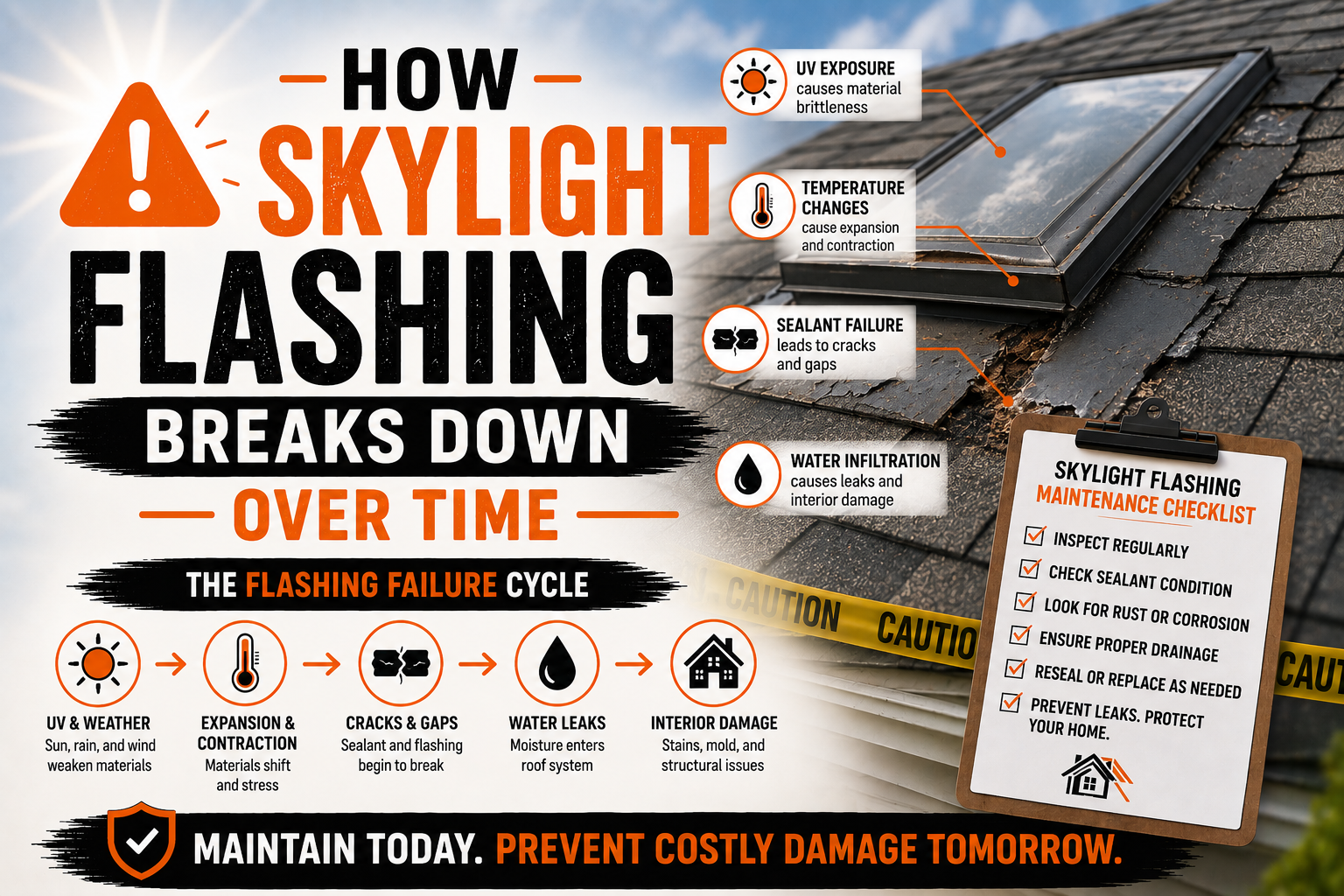
How Skylight Flashing Breaks Down Over Time
Introduction
Skylights are one of the most attractive additions to a home, bringing natural light into living spaces while creating a brighter and more open atmosphere. When installed correctly, they can improve both the appearance and functionality of a room without compromising the roof’s ability to keep out the elements. However, every skylight creates an opening in the roof, making proper waterproofing essential for long term performance.
One of the most important components protecting a skylight is its flashing system. Skylight flashing consists of specially designed metal pieces that work together with shingles and underlayment to direct rainwater, melting snow, and debris safely away from the skylight. Without properly functioning flashing, water can quickly find its way beneath the roofing materials and into the home.
Like every part of a roofing system, flashing does not last forever. Years of exposure to sunlight, heavy rain, snow, temperature changes, and strong winds gradually affect both the metal flashing and the surrounding roofing materials. These changes may seem minor at first, but they can eventually create gaps, corrosion, loose connections, and leaks that become increasingly expensive to repair.
Many homeowners mistakenly assume that skylight leaks always originate from the skylight itself. In reality, the surrounding flashing is often the primary source of water intrusion. When flashing begins to deteriorate, water can bypass the protective barriers designed to keep the roof watertight, allowing moisture to reach the roof deck, insulation, drywall, and interior finishes.
Understanding how skylight flashing breaks down over time helps homeowners recognize early warning signs, appreciate the importance of routine maintenance, and make informed decisions about repairs before small problems become major structural issues. This guide explains how skylight flashing works, why it is especially vulnerable to weather exposure, and the factors that contribute to its gradual deterioration.
What Is Skylight Flashing?
Skylight flashing is a system of specially shaped metal components installed around the perimeter of a skylight to prevent water from entering the roof. Rather than relying on sealants alone, flashing uses carefully overlapped metal sections that guide water safely around the skylight and back onto the roof surface.
Unlike a simple metal border, skylight flashing is designed as an integrated drainage system. Each flashing component works together with roofing shingles, underlayment, and other waterproofing materials to ensure rainwater flows naturally away from vulnerable joints.
The flashing is installed beneath and between the surrounding shingles, allowing gravity to direct water down the roof instead of beneath the roofing materials. This layered approach creates multiple barriers against water intrusion while accommodating the roof’s natural expansion and contraction throughout changing seasons.
Most skylight flashing systems are manufactured from durable metals chosen for their resistance to corrosion and weather exposure. Depending on the roofing system and local climate, flashing may be made from galvanized steel, aluminum, copper, or stainless steel.
Proper installation is just as important as material quality. Even the best flashing cannot protect the roof if it is installed incorrectly or fails to integrate properly with the surrounding roofing materials. Every flashing section must work together to maintain continuous water protection around the skylight opening.
Components of a Skylight Flashing System
Although homeowners often think of flashing as a single piece of metal, a complete skylight flashing system consists of several components that each serve a specific purpose. Together, these pieces create a coordinated drainage system capable of handling rain, melting snow, and wind driven moisture.
Head flashing is installed along the upper edge of the skylight where water first approaches the opening. Its primary function is to divert runoff around the skylight instead of allowing it to collect against the upper frame.
Step flashing protects the sides of the skylight. Individual pieces of metal are layered with each course of shingles, allowing water to flow naturally downward while preventing it from reaching the roof deck beneath.
Sill flashing is positioned along the lower edge of the skylight where water exits the flashing system. This component directs runoff safely back onto the roof surface and away from the skylight opening.
Some skylight installations also include counter flashing or decorative flashing covers that protect the primary flashing while improving the finished appearance. These additional components help shield vulnerable joints from prolonged weather exposure.
Ice and water shield beneath the flashing provides another important layer of protection. This waterproof membrane helps prevent moisture intrusion if severe weather allows water to bypass the primary flashing system.
Each component depends on the others for effective performance. Damage affecting one section often reduces the effectiveness of the entire flashing system.
Why Skylight Areas Are More Vulnerable to Leaks
Unlike uninterrupted roof surfaces where water flows smoothly downhill, skylights interrupt the natural drainage path across the roof. Every skylight creates additional joints, corners, and transitions where water must be redirected carefully to avoid entering the building.
Rainwater flowing down the roof naturally encounters the skylight opening. The flashing system is responsible for guiding this water around the skylight before returning it to its normal path. If any flashing component becomes damaged or improperly installed, water may begin entering beneath the roofing materials.
Wind driven rain creates additional challenges. During severe storms, water may be forced upward beneath shingles or sideways against flashing joints. Skylight flashing must resist these changing water patterns while maintaining a continuous waterproof barrier.
Snow and ice also increase stress on skylight flashing. Accumulated snow often melts unevenly around skylights because of heat escaping through the roof opening. This repeated freezing and thawing exposes flashing to prolonged moisture while increasing expansion and contraction of both metal and roofing materials.
Roof slope further influences skylight performance. Lower pitched roofs drain water more slowly, increasing the amount of time moisture remains in contact with flashing components. Steeper roofs generally drain more efficiently but may experience greater water velocity during heavy rainfall.
Because skylights combine multiple roofing transitions within a relatively small area, even minor flashing defects can lead to noticeable leaks if maintenance is delayed.
Common Causes of Skylight Flashing Deterioration
Skylight flashing is designed to provide years of reliable service, but continuous exposure to the environment gradually affects every roofing material. Several different factors contribute to flashing deterioration, often working together over many years.
Natural aging remains one of the most significant causes. As flashing materials endure repeated exposure to changing weather, protective coatings slowly wear away while surrounding roofing components experience normal material fatigue.
Ultraviolet radiation from sunlight also contributes to long term deterioration. Although metal flashing itself resists direct UV damage better than many roofing materials, prolonged exposure affects protective finishes, surrounding sealants, and adjacent roofing products that help maintain a watertight system.
Temperature changes place additional stress on flashing. Metal expands during hot weather and contracts when temperatures fall. These repeated cycles gradually affect fasteners, joints, and overlapping sections, especially if installation was not completed according to manufacturer recommendations.
Corrosion develops in certain environments as protective coatings wear away or incompatible metals come into contact with one another. Moisture trapped beneath debris can accelerate this process by keeping flashing surfaces damp for extended periods.
Storm damage presents another common concern. High winds may loosen flashing, falling branches can bend metal components, and hail may dent or damage protective coatings. While these issues are not always immediately visible, they often contribute to future water intrusion if repairs are delayed.
Early Warning Signs of Flashing Failure
Skylight flashing rarely fails without first showing warning signs. Recognizing these symptoms early allows homeowners to arrange repairs before water damage spreads into the home’s structure.
Interior water stains near the skylight are among the most common indicators. Brown ceiling discoloration, peeling paint, or damp drywall often suggests moisture entering around the flashing rather than through the skylight glass itself.
Homeowners should also distinguish between condensation and roof leaks. Interior condensation usually forms directly on the glass because of indoor humidity, while flashing leaks typically create moisture around the skylight frame or surrounding ceiling.
Visible rust on exposed flashing deserves careful attention. Although minor surface discoloration may not immediately affect performance, advanced corrosion weakens the flashing and increases the likelihood of leaks developing.
Lifted shingles surrounding the skylight may indicate that the flashing beneath has shifted or become damaged. Because shingles and flashing function together, movement affecting one component frequently influences the other.
Water entering the attic near the skylight is another important warning sign. Damp insulation, stained roof decking, or mold growth often indicates that moisture has bypassed the flashing system before becoming visible inside the living space.
Prompt inspection after these symptoms appear helps limit repair costs while preserving the surrounding roofing structure.
How Weather Continuously Affects Skylight Flashing
Weather places constant demands on skylight flashing throughout every season of the year. Unlike many other roofing components, flashing around skylights experiences repeated water exposure from multiple directions while remaining fully exposed to changing environmental conditions.
Heavy rainfall subjects flashing to continuous water flow as runoff from the upper roof moves around the skylight opening. During intense storms, flashing must handle large volumes of water without allowing any moisture to penetrate beneath the roofing system.
Strong winds introduce another challenge by driving rain sideways against flashing joints. Properly installed flashing is designed to resist these conditions, but years of repeated exposure gradually weaken sealants, fasteners, and overlapping metal sections.
Winter weather creates additional stress. Snow accumulation around skylights often melts unevenly because warmer indoor temperatures transfer heat through the roof opening. As meltwater refreezes overnight, expanding ice places pressure on flashing joints and surrounding shingles.
Seasonal debris also affects flashing performance. Leaves, pine needles, and small branches frequently collect around skylights where water naturally changes direction. Moisture trapped beneath this debris remains in contact with flashing for extended periods, increasing the risk of corrosion and reducing drainage efficiency.
These ongoing environmental conditions explain why skylight flashing requires periodic inspection even when no obvious leaks are present.
Why Routine Maintenance Is So Important
Many flashing problems develop gradually over several years rather than appearing suddenly after a single storm. Regular maintenance allows homeowners to identify these small changes before they evolve into significant roof leaks or structural repairs.
Routine roof inspections help detect loose flashing, deteriorating sealants, damaged shingles, and minor corrosion while repairs remain relatively simple. Addressing these issues early often prevents moisture from reaching the roof deck and interior finishes.
Cleaning debris from around skylights also improves drainage. Removing leaves, twigs, and accumulated dirt allows water to flow freely across the flashing system while reducing prolonged moisture exposure that can accelerate deterioration.
Homeowners should also inspect skylights following severe weather events. High winds, hail, or falling tree branches may damage flashing even when no leaks are immediately visible. Early inspection after storms helps identify hidden problems before repeated rainfall causes further damage.
Maintaining surrounding roofing materials is equally important because flashing relies on properly functioning shingles and underlayment to complete the roof’s waterproofing system. Keeping every component in good condition supports the long term performance of the flashing itself.
With consistent maintenance and timely repairs, homeowners can significantly extend the lifespan of skylight flashing while reducing the likelihood of unexpected leaks and expensive restoration projects.
The Effects of Continuous Weather Exposure
Skylight flashing is exposed to weather every day of the year, making it one of the hardest working components of the roofing system. Unlike many roof surfaces where water simply flows downhill, flashing around skylights constantly redirects water around roof openings while remaining exposed to sunlight, rain, snow, wind, and airborne debris.
Rainfall is one of the most persistent sources of stress. Every storm sends water across the roof toward the skylight, requiring the flashing to channel it safely around the opening. Over many years, this continuous flow gradually wears protective coatings and increases the likelihood of minor defects becoming larger problems.
Wind driven rain places even greater demands on the flashing system. During severe storms, water does not always travel straight down the roof. Strong winds can force rain sideways or upward beneath shingles, exposing flashing joints to moisture from multiple directions.
Snow accumulation also affects flashing performance. Snow often remains around skylights longer than on surrounding roof areas because the roof opening alters normal drainage patterns. As snow melts and refreezes repeatedly, flashing experiences prolonged moisture exposure that accelerates aging.
Even dry weather contributes to deterioration. Dust, pollen, and airborne debris settle around skylights throughout the year, gradually trapping moisture after rainfall and reducing the flashing’s ability to dry completely between storms.
These environmental conditions work together continuously, slowly reducing the effectiveness of the flashing system if regular maintenance is neglected.
How UV Radiation Damages Flashing Systems
Although metal flashing is highly resistant to direct sunlight, ultraviolet radiation still contributes significantly to the long term deterioration of the overall flashing system. The damage often affects surrounding materials before the flashing itself begins showing visible wear.
Protective coatings applied to metal flashing gradually weaken after years of UV exposure. As these coatings deteriorate, the underlying metal becomes more vulnerable to oxidation, corrosion, and environmental wear. This process usually develops slowly but becomes increasingly important as the roof ages.
Sealants surrounding skylights are particularly sensitive to sunlight. Continuous UV exposure causes many sealants to dry out, shrink, crack, or lose flexibility over time. Once these materials begin deteriorating, small gaps may develop around flashing joints, increasing the possibility of moisture intrusion.
Adjacent roofing materials are also affected. Asphalt shingles gradually lose flexibility as sunlight accelerates the aging of their asphalt compounds. When surrounding shingles become brittle or begin curling, they place additional stress on the flashing system by altering the way water flows around the skylight.
Painted flashing systems may experience fading or surface deterioration as ultraviolet radiation breaks down protective finishes. While color changes alone may not affect performance immediately, damaged finishes often allow weathering to progress more rapidly.
Regular roof inspections help identify UV related deterioration before it progresses to the point where water protection becomes compromised.
Expansion and Contraction From Temperature Changes
Metal flashing constantly responds to changing temperatures. During hot weather, the metal expands slightly, while cooler temperatures cause it to contract. Although these movements are small, they occur repeatedly throughout every season and gradually influence the flashing system’s long term performance.
Daily temperature fluctuations create frequent movement, especially on roofs receiving direct sunlight for much of the day. Flashing may warm rapidly during the afternoon before cooling significantly overnight, causing continuous expansion and contraction cycles.
Seasonal temperature differences produce even greater movement. Summer heat and winter cold expose flashing to wide temperature ranges that gradually stress fasteners, joints, and overlapping sections. These repeated cycles can slowly loosen connections if the flashing was not installed correctly.
Surrounding roofing materials expand and contract at different rates than metal flashing. Asphalt shingles, underlayment, wood decking, and skylight frames each respond differently to temperature changes, creating additional stress where these materials meet.
Over many years, this constant movement may enlarge nail holes, weaken sealant bonds, or slightly shift flashing sections. Individually these changes appear minor, but together they gradually reduce the flashing system’s ability to resist water intrusion.
Proper installation allows flashing to accommodate these natural movements while maintaining reliable weather protection throughout changing seasons.
Corrosion and Metal Deterioration
Corrosion is one of the most common long term causes of flashing failure. Although modern flashing materials are designed to resist rust and environmental damage, continuous exposure to moisture eventually affects many metal roofing components if protective barriers begin deteriorating.
Galvanized steel flashing relies on a protective zinc coating to resist corrosion. Once this coating becomes worn through weather exposure or physical damage, the underlying steel becomes increasingly susceptible to rust when repeatedly exposed to moisture.
Aluminum flashing naturally resists rust but may still experience oxidation or surface deterioration under certain environmental conditions. Coastal regions with salt laden air often accelerate this process because airborne salt remains on roofing materials between storms.
Copper flashing performs exceptionally well over long periods because it develops a protective surface known as a patina. This natural layer slows additional corrosion while contributing to copper’s long service life on residential roofs.
Debris accumulation can accelerate corrosion regardless of the flashing material. Wet leaves, dirt, and organic matter trap moisture against metal surfaces for extended periods, preventing proper drying after rainfall.
Corrosion typically begins as surface discoloration but eventually progresses to pitting, thinning metal, or small holes that allow water to bypass the flashing system. Identifying these changes early often allows localized repairs before widespread replacement becomes necessary.
Sealant Failure Around Skylights
Although flashing should never rely solely on sealants for waterproofing, sealants still play an important supporting role around skylight installations. Over time, however, these materials naturally deteriorate because of weather exposure and continuous movement.
Most roofing sealants remain flexible when new, allowing them to accommodate slight expansion and contraction between flashing, skylight frames, and surrounding roofing materials. As the sealants age, they gradually lose elasticity and become more brittle.
Cracking is one of the first visible signs of sealant failure. Small surface cracks may initially appear harmless, but they often enlarge with continued weather exposure and temperature changes, creating pathways for moisture.
Shrinkage presents another concern. Aging sealants may gradually pull away from the surfaces they were designed to protect, leaving narrow gaps where water can enter beneath flashing components during heavy rainfall.
Repeated movement around skylights also contributes to sealant deterioration. Expansion, contraction, wind vibration, and normal building movement place continuous stress on these materials throughout their service life.
While replacing deteriorated sealants can help maintain water resistance, recurring sealant failure often indicates that the flashing system itself should be inspected to ensure the underlying waterproofing remains intact.
Comparing Common Skylight Flashing Problems
Different types of flashing deterioration affect roof performance in different ways. Understanding these common problems helps homeowners recognize why timely inspections and repairs are so important.
| Flashing Issue | Primary Cause | Common Symptoms | Potential Consequences |
|---|---|---|---|
| Rust and Corrosion | Long term moisture exposure | Rust, discoloration, weakened metal | Water intrusion and flashing failure |
| Loose Flashing | Wind, aging fasteners, roof movement | Lifted flashing edges and shifting metal | Leaks during heavy rainfall |
| Cracked Sealant | UV exposure and aging | Visible cracks and separated joints | Moisture penetration around skylights |
| Bent Flashing | Storm damage or falling debris | Distorted flashing and uneven water flow | Reduced drainage and localized leaks |
| Improper Overlap | Incorrect installation | Persistent leaks despite new sealant | Water bypassing the flashing system |
Each of these conditions weakens the flashing system differently, but all reduce its ability to guide water safely away from the skylight opening.
Common Installation Mistakes That Accelerate Flashing Failure
Many flashing problems develop more quickly when installation errors exist from the beginning. Even durable flashing materials cannot provide reliable long term protection if they are not installed according to manufacturer recommendations.
One of the most common mistakes involves incorrect overlap between flashing sections. Proper overlap allows gravity to move water continuously down the roof. Gaps or reversed overlaps interrupt this drainage path and increase the likelihood of leaks.
Improper fastening also contributes to premature deterioration. Nails placed in vulnerable locations may create unnecessary openings for water, while loose fasteners allow flashing to shift during wind events and seasonal roof movement.
Some installations rely too heavily on roofing sealants instead of correctly layered flashing. While sealants provide valuable supplemental protection, they naturally age and should never replace proper mechanical water shedding.
Poor integration with shingles and underlayment creates another weakness. Flashing functions as part of a complete roofing system, so incorrect installation of surrounding materials often reduces the effectiveness of the flashing even if the metal itself remains undamaged.
Using incompatible materials may also shorten flashing lifespan. Certain combinations of metals increase the possibility of galvanic corrosion, leading to faster deterioration under wet conditions.
Avoiding these installation mistakes greatly improves the durability and long term reliability of skylight flashing.
How Roof Age Affects Skylight Flashing Performance
As roofs grow older, skylight flashing naturally experiences greater stress because surrounding roofing materials gradually lose the flexibility and durability they had when originally installed. Even flashing that remains structurally sound may become less effective if neighboring components begin deteriorating.
Older asphalt shingles often become brittle after years of sun exposure. Cracked or curled shingles no longer fit tightly against the flashing, allowing more water and wind driven moisture to reach vulnerable joints around the skylight.
Roof movement also becomes more noticeable with age. Wood roof decking, fasteners, and structural framing respond to decades of seasonal expansion and contraction, placing additional pressure on flashing joints and overlapping sections.
Previous repairs may further influence flashing performance. Multiple roofing projects completed over many years sometimes introduce incompatible materials or modified flashing details that alter normal water flow around the skylight.
The condition of the underlayment beneath the flashing also becomes increasingly important. Aging underlayment may provide less secondary moisture protection if water bypasses the flashing during severe weather.
Because all roofing components age together, routine inspections become even more valuable as the roof approaches the later stages of its expected service life.
Why Small Flashing Problems Should Never Be Ignored
One of the most common misconceptions about skylight leaks is that small amounts of moisture are harmless if they occur only occasionally. In reality, even minor flashing defects can gradually lead to extensive structural damage when left unaddressed.
A tiny opening around deteriorated flashing allows repeated moisture exposure every time it rains. Although each individual leak may introduce only a small amount of water, the cumulative effect over months or years can be significant.
Moisture reaching the roof deck encourages wood deterioration while reducing the structural strength of the roofing system. Wet insulation also loses much of its thermal performance and creates favorable conditions for mold growth.
Interior finishes eventually begin showing signs of damage as well. Ceiling stains, peeling paint, warped drywall, and damaged trim often develop long after the original flashing problem first appeared.
Repair costs generally increase the longer flashing problems remain unresolved. What might have required only localized flashing replacement can eventually involve roof decking, insulation, drywall, framing, and interior restoration if moisture continues entering the home.
Addressing small flashing issues promptly protects both the roof and the home’s interior while helping homeowners avoid much larger repair projects in the future.
Inspecting Skylight Flashing Safely
Routine inspections are one of the most effective ways to identify flashing problems before they develop into costly roof leaks. Because skylight flashing is constantly exposed to changing weather conditions, regular evaluations help detect early signs of deterioration while repairs remain relatively simple.
The inspection should begin inside the home. Homeowners should look for water stains on ceilings, peeling paint, damp drywall, or discoloration around the skylight opening. These interior warning signs often appear before damage becomes obvious on the roof itself.
The attic should also be inspected whenever possible. Damp insulation, stained roof decking, mold growth, or visible daylight around the skylight may indicate that moisture has entered through deteriorating flashing rather than the skylight unit itself.
Exterior inspections should only be performed under safe weather conditions. Dry roofing surfaces provide much better footing than wet shingles, and inspections should never be attempted during storms or high winds.
When examining the roof, attention should be given to more than just the flashing. Surrounding shingles, underlayment, sealants, gutters, and roof valleys all influence how water flows around the skylight. Evaluating the complete area provides a more accurate understanding of the flashing system’s overall condition.
Documenting any visible concerns with photographs also creates a useful reference for future inspections and helps roofing contractors evaluate changes over time.
When Flashing Repairs Are Enough Versus Full Replacement
Not every flashing problem requires replacing the entire skylight or surrounding roof. In many situations, localized flashing repairs provide an effective solution, especially when deterioration is identified early and the remaining roofing materials remain in good condition.
Minor corrosion affecting only a small flashing section can often be addressed by replacing the damaged metal while leaving the surrounding flashing intact. Similarly, isolated sealant failure or a loose flashing piece may require only limited repairs if no additional damage has occurred.
More extensive deterioration requires a broader approach. Widespread corrosion, repeated leaks, significant storm damage, or improper installation throughout the flashing system often justify replacing all flashing around the skylight rather than attempting multiple individual repairs.
The condition of the surrounding roof should also influence the decision. If the shingles are nearing the end of their expected lifespan, replacing flashing during a future roof replacement project often provides greater long term value than performing isolated repairs.
Age is another important consideration. Older skylights may have flashing systems that no longer meet current installation standards or have experienced decades of weather exposure. In these cases, replacing both the flashing and the skylight may improve long term performance while reducing future maintenance needs.
A professional inspection helps determine the most practical solution based on the overall condition of the roofing system rather than focusing solely on the visible flashing damage.
Skylight Flashing Maintenance Checklist
Consistent maintenance significantly reduces the likelihood of unexpected flashing failures. Small preventive actions performed throughout the year help preserve the flashing system while protecting the surrounding roof from moisture damage.
- Inspect skylight flashing at least once each year.
- Check the roof after major storms or periods of strong wind.
- Remove leaves, branches, and debris from around the skylight.
- Replace damaged or missing shingles promptly.
- Schedule periodic professional roof inspections.
- Investigate even small ceiling stains without delay.
Following this routine helps identify developing problems early while extending the lifespan of both the flashing and the surrounding roofing materials.
Preventing Future Skylight Flashing Problems
Although flashing naturally ages over time, proper maintenance and preventive care greatly reduce the likelihood of premature deterioration. Protecting the flashing begins with maintaining the entire roofing system rather than focusing only on the skylight itself.
Keeping the roof clean is one of the simplest preventive measures. Leaves, pine needles, and dirt often accumulate around skylights because they interrupt the natural flow of debris across the roof. Removing this buildup allows water to drain efficiently while reducing prolonged moisture exposure.
Maintaining gutters also improves skylight performance. Proper drainage prevents water from backing up onto the roof during heavy rainfall, reducing unnecessary stress on flashing and surrounding shingles.
Nearby tree branches should be trimmed regularly. Overhanging limbs can scrape flashing during windy conditions or fall onto the roof during storms, bending or damaging metal components that would otherwise remain protected.
Prompt repair of damaged shingles is equally important. Missing or loose shingles alter normal water flow around the skylight, placing greater demands on the flashing system and increasing the likelihood of leaks during severe weather.
Preventive maintenance extends beyond the roof surface. Controlling attic ventilation and indoor humidity also helps reduce excessive moisture that may contribute to condensation around skylights, allowing homeowners to distinguish between condensation issues and actual roof leaks more accurately.
Best Flashing Materials for Long Term Durability
The longevity of skylight flashing depends partly on the material selected during installation or replacement. Modern flashing products are designed to withstand years of weather exposure, but different metals provide varying levels of durability depending on the local climate.
Galvanized steel remains one of the most widely used flashing materials because it combines strength with reliable corrosion resistance. Its protective zinc coating helps shield the underlying steel from moisture while providing long term performance under normal weather conditions.
Aluminum flashing offers another popular option because it is lightweight and naturally resistant to rust. It performs well in many residential roofing applications, although material compatibility should always be considered when other metals are present on the roof.
Copper flashing is known for exceptional longevity. Over time, it develops a protective patina that slows further corrosion while maintaining structural integrity for decades. Although copper typically costs more than other materials, its long lifespan often justifies the investment.
Stainless steel provides excellent durability in demanding environments where heavy rainfall, snow, or coastal conditions expose roofing materials to increased moisture. Its resistance to corrosion makes it particularly suitable for regions experiencing frequent severe weather.
Selecting quality flashing materials helps maximize roof performance, but proper installation remains equally important. Even premium materials cannot provide dependable protection if they are installed incorrectly.
Professional Installation Best Practices
Long lasting skylight flashing begins with careful installation. Professional roofers follow established procedures that allow every component of the flashing system to work together while directing water safely around the skylight opening.
Preparation starts by inspecting the roof deck and surrounding materials before any new flashing is installed. Damaged decking, deteriorated underlayment, or weakened shingles should be repaired first because these components support the flashing system throughout its lifespan.
Each flashing section is then installed according to the manufacturer’s recommended sequence. Head flashing, step flashing, and sill flashing overlap carefully to create a continuous drainage path that relies on gravity rather than sealants alone.
Fasteners are placed where they secure the flashing without creating unnecessary water entry points. Proper fastening also allows the flashing to accommodate natural expansion and contraction caused by seasonal temperature changes.
Professional installers also ensure the flashing integrates correctly with underlayment, ice and water shield, and surrounding shingles. These materials work together to provide multiple layers of moisture protection in case severe weather forces water beyond the primary flashing system.
Before completing the project, experienced roofers inspect the finished installation carefully. Confirming proper overlap, alignment, drainage, and shingle placement helps ensure the flashing will perform reliably for many years.
Why Regular Roof Inspections Protect Skylight Flashing
Skylights require more frequent attention than many other roof areas because they interrupt the roof surface and create multiple transitions where water changes direction. Routine inspections help identify developing issues before they become visible inside the home.
Professional inspections often reveal problems that homeowners cannot easily recognize. Slight flashing movement, early corrosion, deteriorating sealants, or subtle shingle displacement may not produce immediate leaks but often indicate that maintenance will soon be necessary.
Inspections following major storms are particularly valuable. Wind, hail, and falling branches frequently damage flashing without creating immediate interior symptoms. Identifying these issues promptly prevents repeated weather exposure from enlarging the affected areas.
Routine inspections also evaluate surrounding roofing components that influence flashing performance. Gutters, roof valleys, nearby vents, and adjacent shingles all affect drainage around skylights. Maintaining these areas reduces unnecessary stress on the flashing system.
Another advantage of regular inspections is long term planning. Contractors can monitor gradual changes in flashing condition and recommend maintenance before deterioration reaches the point where complete replacement becomes necessary.
Consistent inspections therefore protect not only the flashing itself but also the roof deck, attic, insulation, and interior finishes that depend on a watertight roofing system.
Coordinating Skylight Maintenance With Overall Roof Care
Skylight flashing performs best when it is maintained as part of a comprehensive roof care program. Since every roofing component works together, keeping the entire system in good condition reduces unnecessary stress on the flashing while extending its service life.
Seasonal roof maintenance should include cleaning gutters, removing roof debris, inspecting roof penetrations, and checking flashing around chimneys, vents, and valleys in addition to skylights. Problems in one area often influence drainage patterns elsewhere on the roof.
Maintaining accurate records of roof inspections and repairs also benefits future maintenance. Knowing when flashing was installed, repaired, or inspected allows homeowners and contractors to monitor its condition more effectively over time.
If roof replacement becomes necessary, replacing aging skylight flashing at the same time often provides the most reliable long term solution. Installing new flashing with a new roofing system ensures all waterproofing components work together under current installation standards.
Taking a comprehensive approach to roof maintenance minimizes unexpected leaks while helping every roofing component perform as intended throughout its expected lifespan.
Conclusion
Skylight flashing plays a vital role in protecting one of the most vulnerable areas of any roofing system. By directing water safely around the skylight opening, properly installed flashing prevents moisture from reaching the roof deck, insulation, framing, and interior living spaces. Although often hidden beneath surrounding shingles, this flashing system is essential for maintaining a leak resistant roof.
Over time, however, continuous exposure to sunlight, rain, snow, wind, temperature changes, and natural roof movement gradually affects both the flashing and the materials surrounding it. Corrosion, deteriorating sealants, loose flashing, installation defects, and aging shingles all contribute to reduced waterproofing performance if regular maintenance is neglected.
Recognizing early warning signs such as ceiling stains, damp drywall, rusted flashing, loose shingles, or recurring leaks allows homeowners to address problems before they lead to extensive structural damage. Routine inspections, prompt repairs, proper drainage, and professional evaluations after severe storms all help preserve the integrity of the flashing system while extending its service life.
When repairs become necessary, selecting durable materials and following proper installation practices are just as important as replacing damaged components. A well designed flashing system depends on correct overlap, secure fastening, and seamless integration with shingles, underlayment, and other waterproofing layers. Every component must work together to direct water away from the skylight under all weather conditions.
With consistent maintenance and timely professional care, skylight flashing can continue protecting the roof for many years. Understanding how skylight flashing breaks down over time enables homeowners to make informed maintenance decisions, reduce the risk of costly leaks, and preserve both the beauty of their skylights and the long term performance of their entire roofing system.