
How Fallen Trees Damage Residential Roofing Structures
Introduction
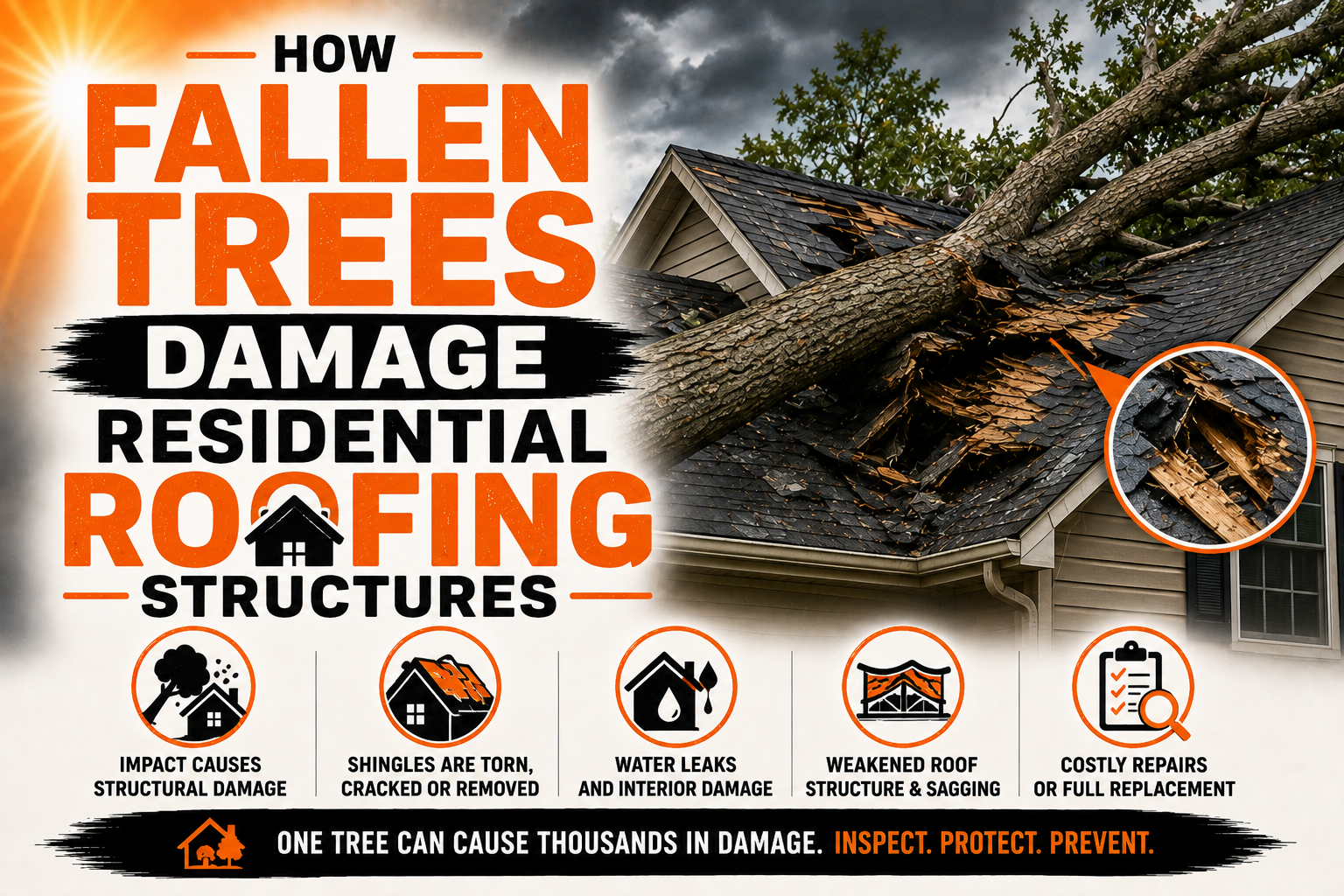
Fallen trees can cause some of the most serious forms of residential roofing damage because their weight and impact can affect more than the visible roof covering. A tree or large branch can break shingles, puncture the roof deck, damage rafters, bend flashing, crush gutters, and create openings that allow rainwater to enter the home. In severe cases, the impact can extend into the attic, ceilings, walls, and other structural components.
Tree-related roof damage can happen during hurricanes, thunderstorms, strong wind events, heavy rainfall, or other severe weather conditions. Trees may also fall because of disease, decay, unstable roots, soil problems, or poor maintenance. Even a healthy tree can become a serious hazard when strong winds or saturated ground weaken its stability.
The extent of damage depends on several factors, including the tree’s size, weight, height, species, direction of fall, roof design, roofing material, and impact location. A small branch may damage a few shingles, while a large tree can penetrate several roofing layers and place substantial loads on the home’s structural framing.
Homeowners should treat a fallen tree on a roof as a serious safety concern. The damaged structure may be unstable, electrical lines may be involved, and additional branches may still be at risk of falling. Attempting to climb onto or cut a tree from a damaged roof can create dangerous conditions.
Understanding how fallen trees affect residential roofing structures helps homeowners recognize damage early and seek appropriate professional assistance. A careful inspection should consider both visible damage and hidden structural problems because the most serious consequences may not be obvious from the ground.
How Fallen Trees Affect Residential Roofing Structures
When a tree falls onto a residential roof, the impact transfers significant force to the roofing system. The roof is designed to carry normal loads such as its own weight, rain, wind, and sometimes snow, but a falling tree creates a concentrated and sudden force that can exceed the capacity of individual components.
The first point of contact may be the shingles or other roof covering. These materials can crack, tear, break, or become completely displaced. However, the damage does not necessarily stop at the surface because the impact can continue through underlayment and roof decking.
Roof decking is an important structural layer installed beneath many roof coverings. It provides a surface for roofing materials and contributes to the overall roof assembly. A heavy tree impact can crack, puncture, split, or displace decking, leaving openings through which water can enter.
The roof framing beneath the decking may also be affected. Rafters and trusses support the roof’s weight and transfer loads to the walls of the home. A large tree can bend, crack, or break these structural members, potentially changing the shape and stability of the roof.
The impact can also affect roof connections. Fasteners, brackets, framing joints, and other connections may experience unusual forces when a heavy object lands on the roof. Damage to these connections may not be visible from outside but can affect the structural performance of the system.
Roof edges and overhangs can be especially vulnerable when branches strike them. Damage in these areas can affect fascia boards, soffits, gutters, and edge flashing. Because these components contribute to drainage and weather protection, even localized damage can create additional problems.
The slope and design of the roof can influence how the tree lands. A steep roof may cause branches to slide or roll before coming to rest, while a flatter roof may receive a more concentrated load. Complex roof designs may also have vulnerable intersections where multiple surfaces meet.
The size of the tree is another major factor. A small branch may cause limited surface damage, while a large trunk can penetrate multiple layers and affect framing. The weight of wet branches can make the situation more severe, particularly after heavy rainfall.
Homeowners should not assume that visible damage represents the full extent of the problem. A roof can appear relatively intact from the outside while the underlying decking or framing has been damaged. Professional inspection is therefore important after any substantial tree impact.
Common Types of Tree-Related Roof Damage
One of the most common forms of tree-related roof damage is broken or displaced shingles. Branches can scrape across the roof, tear shingles away, or crush them beneath the weight of the tree. Missing or damaged shingles can expose underlying layers to rain and sunlight.
Hail or wind damage that already weakened the roof can make it more vulnerable to falling branches. A tree impact may then enlarge existing weaknesses and create a larger damaged area. The combined effects of multiple weather events can make the roof more difficult to evaluate.
Roof punctures are another serious concern. Sharp branches can penetrate shingles, underlayment, and decking, creating openings that allow water to enter the attic. Larger branches may create substantial holes that require immediate temporary protection.
Cracked or broken tiles can occur on tile roofing systems. The impact of a branch or trunk can fracture individual tiles or damage several adjacent sections. Because broken tiles can expose underlying materials, repairs should be addressed promptly.
Metal roofing can also be damaged by falling trees. Panels may become dented, bent, torn, or separated from their connections. Severe impact can affect seams and fasteners, potentially compromising the roof’s ability to resist water.
Flashing can be bent or displaced by falling branches. Flashing protects vulnerable areas such as roof edges, valleys, chimneys, skylights, and roof-to-wall transitions. Damage in these locations can increase the possibility of water intrusion.
Gutters and downspouts are frequently affected because they are located along roof edges. A branch can crush a gutter section, pull it away from the fascia, or damage its connections. This can interfere with drainage and cause water to collect near the roof edge.
Roof vents can also be struck. A damaged vent may develop cracks or separation around its base, creating another possible entry point for rainwater. The surrounding roofing material may also require inspection even when the vent itself appears intact.
Chimneys and skylights can be vulnerable when a tree falls across the roof. A heavy impact can crack masonry, damage skylight surfaces, or affect the flashing surrounding these features. Such damage can extend beyond the immediate point of impact.
The roof’s protective layers can also be affected. Underlayment, insulation, vapor-control materials, and other components may become damaged even when the surface damage appears limited. A complete inspection should consider these layers when the impact is significant.
Structural Damage to Roof Decking and Framing
Structural damage is one of the most important concerns after a tree falls on a residential roof. Roofing materials can often be replaced, but damage to the supporting structure may require more extensive work. The roof decking and framing must therefore be evaluated carefully.
Roof decking is commonly made from wood-based panels or other structural materials installed across the roof framing. When a heavy branch or trunk strikes the roof, it can crack or puncture the decking. Large openings may be visible, but smaller fractures can remain hidden beneath roofing materials.
Water exposure can make damaged decking more vulnerable. If the impact creates an opening and rain enters the roof assembly, the wood can absorb moisture. Prolonged wet conditions may contribute to swelling, deterioration, or other problems.
Rafters are structural members that support the roof deck and transfer loads toward the walls. A direct tree impact can crack or bend a rafter. When several rafters are affected, the roof may lose part of its intended structural support.
Trusses can also be damaged. Modern residential roofs often use engineered truss systems designed to distribute loads through interconnected members. A tree impact can damage one or more members, affecting the performance of the entire assembly.
Changes in roof shape can sometimes provide clues of structural damage. Sagging, uneven roof lines, displaced decking, or visible depressions may indicate that the supporting structure has been affected. However, homeowners should not approach or touch an unstable roof to investigate these conditions.
Walls may also be affected when a major tree impact transfers force through the roof structure. A damaged rafter or truss can place unusual loads on supporting walls. In severe cases, the impact may cause cracking, movement, or other structural concerns.
Connections between structural components should also be evaluated. Nails, screws, metal connectors, brackets, and other fastening systems may have been damaged or pulled out during the impact. These issues may require specialized evaluation even when they are not visible from outside.
The attic can provide useful information about structural conditions, but homeowners should avoid entering an attic if the roof appears unstable or there is significant damage. A professional can assess the area safely and determine whether the framing remains structurally sound.
Structural damage should never be treated as a cosmetic roofing problem. Repairs may require coordination between roofing professionals, structural specialists, and tree removal experts. The appropriate sequence of work depends on the severity and safety conditions at the property.
Damage to Shingles and Other Roofing Materials
Shingles are often the first roofing component affected when a tree or branch lands on a roof. The force of the impact can break, tear, crease, or dislodge shingles. Even when only a small section is visibly damaged, the surrounding area should be examined for additional impact effects.
Asphalt shingles can lose their protective granules when crushed or scraped by branches. Granule loss exposes the underlying material to weather and can reduce the protective surface of the shingle. Heavily damaged shingles may need to be replaced rather than left in place.
Wood shingles and shakes can split or break under impact. Their individual pieces may become displaced, leaving exposed areas beneath. Broken material should be assessed carefully because nearby pieces may also have been loosened.
Tile roofing can crack under concentrated pressure. Clay and concrete tiles can be particularly vulnerable to direct impact from heavy branches or trunks. Replacement should be performed carefully because walking on undamaged tiles can cause additional breakage.
Metal panels may bend or deform when struck. Severe impacts can affect seams, fasteners, coatings, and panel connections. A damaged metal roof should be inspected to determine whether the affected section can be repaired or requires replacement.
Synthetic roofing materials can also experience impact damage. Their response depends on the product’s composition and design. Surface damage should be assessed based on the specific roofing system rather than general assumptions about synthetic materials.
Underlayment can become torn or punctured even when some roofing materials remain in place. Because underlayment provides an additional layer of protection against water, damage to this component can increase moisture risk.
Roof edges can experience additional stress when branches slide across the surface. Fascia, soffits, drip edges, and gutters may be pulled or crushed. These components should be evaluated together because damage to one can affect the performance of another.
Homeowners should avoid attempting to pull heavy branches across roofing materials. Moving a large branch can scrape away additional shingles or place extra force on already damaged framing. Professional tree removal and roofing teams have the equipment needed to manage the situation more safely.
How Tree Impact Leads to Water Intrusion
Water intrusion is one of the most common secondary problems following tree-related roof damage. A falling tree can create openings through shingles, underlayment, decking, flashing, or roof penetrations. Rainwater can then enter the roof assembly and spread into areas that were not directly struck.
The location of the opening does not always match the location of an interior leak. Water can travel along decking, rafters, insulation, and other building materials before reaching a ceiling. This means an interior stain may appear some distance from the actual exterior damage.
Attic insulation can become wet when water enters through the roof. Moisture trapped in insulation can take time to dry and may contribute to additional building problems. The source of the moisture should be identified before damaged materials are simply covered or replaced.
Ceiling stains can appear after rainfall following the tree impact. Brown or discolored areas may indicate that water has entered the structure. Homeowners should document these signs and arrange professional assessment rather than assuming the problem will disappear when the weather becomes dry.
Water can also affect electrical components if it travels through ceilings or walls. Wet electrical fixtures or wiring can create serious safety concerns. Homeowners should avoid touching affected equipment and seek qualified assistance when water reaches electrical areas.
The longer a damaged roof remains exposed, the greater the potential for additional moisture-related problems. Temporary protection may be necessary after a significant impact. However, homeowners should not climb onto an unstable roof to install a covering themselves.
Prompt professional inspection helps determine where water may be entering and which components require repair. Addressing openings quickly can reduce the chance that a roof impact becomes a larger interior restoration problem.
Immediate Safety and Inspection Considerations
A fallen tree on a residential roof should be treated as a potentially hazardous situation. The tree may continue moving, branches may fall unexpectedly, and the roof structure may have become unstable. Homeowners should keep people and pets away from the affected area until the property can be assessed safely.
Electrical hazards require particular attention. If the fallen tree has contacted overhead electrical lines or equipment, homeowners should maintain a safe distance and contact the appropriate utility or emergency professionals. No one should attempt to move the tree or damaged roofing materials while electrical hazards may be present.
The tree itself should be removed by qualified professionals when it is large, unstable, or resting on the structure. Cutting branches without understanding how the tree is supported can cause sudden movement or additional damage. Professional tree removal specialists can assess the safest approach.
After immediate hazards are controlled, a roofing professional can inspect the damaged structure. The inspection should consider roofing materials, decking, framing, flashing, roof penetrations, gutters, and interior conditions. Severe structural concerns may also require evaluation by an appropriately qualified structural professional.
Homeowners should photograph the damage from safe locations before major cleanup when practical. Wide photographs can show the position of the tree, while closer images can document visible roof and exterior damage without requiring unsafe access. These records can also help with later repair planning and insurance documentation.
The key priority is to avoid turning an already serious roofing problem into a personal injury. Fallen trees can create unstable conditions that are difficult to judge without professional experience. Once the area is safe and properly assessed, the repair process can proceed with a clearer understanding of the damage.
How to Assess Roof Damage After a Tree Falls
After a tree falls onto a residential roof, the first step is to assess the property without creating additional safety risks. Homeowners should remain on the ground and look for obvious signs such as broken roofing materials, visible holes, sagging areas, damaged gutters, fallen branches, and debris. A roof that has been struck by a large tree should not be climbed until qualified professionals have determined that it is safe.
The size and position of the fallen tree can provide an initial indication of the potential damage. A small branch resting on a roof may cause localized damage, while a large trunk can place substantial weight on the structure. The impact location also matters because a tree landing near a roof edge may damage gutters and fascia, while one landing near the center can affect decking and structural framing.
Homeowners should inspect the surrounding property for related damage from a safe location. Broken branches, damaged siding, cracked windows, displaced outdoor equipment, and damaged fences may indicate the force of the event. These conditions can help professionals understand what happened, although they do not replace a detailed roof inspection.
The roof should be evaluated in sections rather than treated as one surface. Professionals can inspect different slopes, ridges, valleys, edges, and roof penetrations to determine how far the impact effects extend. Damage may spread beyond the area where the tree is visibly resting.
A careful assessment should consider both immediate and secondary damage. Immediate damage includes broken shingles, punctured decking, damaged framing, and crushed roof components, while secondary damage can include water intrusion, wet insulation, and deteriorating interior finishes. Identifying both types helps create a more complete repair plan.
Homeowners should also document the condition before cleanup whenever it is safe to do so. Photographs can show the position of the tree, affected roof areas, damaged gutters, broken materials, and interior signs of moisture. These records can be useful for repair planning and may also support an insurance claim.
Professional tree removal should normally be coordinated carefully with roofing inspection. Removing a large tree too quickly can sometimes expose additional damage that was previously hidden or cause movement across the roof. Experienced professionals can plan the removal to reduce additional stress on the structure.
Once the tree has been safely removed, another inspection may be necessary. Some damage can remain hidden beneath branches or sections of the tree. A second assessment can reveal punctures, cracked decking, damaged flashing, and other conditions that were difficult to see before removal.
Signs of Hidden Structural Damage
Visible roof damage does not always show the full extent of a tree impact. A heavy tree can transfer force through shingles and decking into rafters, trusses, walls, and other structural components. Some of these problems may remain concealed until a professional examines the roof assembly more closely.
Sagging is one warning sign that deserves immediate attention. An uneven or depressed section of roof may indicate damage to the decking or supporting framing. Homeowners should not approach a visibly sagging roof because the structural condition may be unstable.
Cracked roof decking can also remain hidden beneath roofing materials. A tree impact may fracture the decking without creating a large visible opening from outside. If water enters through the damaged area, the decking may become weaker over time.
Rafter damage is another serious concern. Rafters support the roof deck and transfer loads toward the walls. A heavy impact can crack, bend, or displace these members, potentially affecting the stability of the roof.
Truss systems may experience similar problems. Because trusses rely on interconnected members to distribute loads, damage to one component can affect the behavior of the larger assembly. A qualified professional should evaluate suspected truss damage rather than attempting to repair or reinforce it without proper assessment.
The attic can sometimes reveal evidence of structural damage. Cracked wood, displaced insulation, daylight visible through roof openings, water staining, or unusual movement can indicate that the roof has been compromised. However, homeowners should avoid entering the attic when there is visible structural damage or significant water intrusion.
Changes in interior ceilings can also provide clues. Cracks, new stains, sagging drywall, or separation around ceiling fixtures may occur when the roof structure has been affected. These symptoms should be documented and professionally evaluated.
Structural damage may extend into supporting walls when a large tree lands with considerable force. The impact can transfer loads downward through the roof framing and affect wall connections. Cracks or unusual movement around upper walls should therefore be reported during the inspection.
The severity of structural damage depends on the tree’s weight, impact speed, location, and the existing condition of the roof. A newer roof may still experience serious framing damage from a large tree, while an older roof may be more vulnerable because of previous deterioration.
Professional structural evaluation becomes particularly important when there is significant sagging, movement, large openings, damaged framing, or uncertainty about the roof’s stability. Repairs should address the underlying structure rather than simply covering visible damage.
Damage to Gutters, Flashing, Vents, and Roof Edges
Fallen trees frequently damage components around the edges and penetrations of residential roofing systems. Gutters, flashing, vents, fascia, soffits, and drip edges can be struck or pulled away when branches land on the roof. Although these components may appear less important than the main roof covering, they play important roles in water management and weather protection.
Gutters can become crushed when a branch or trunk lands directly on them. The impact may bend the gutter channel, pull fasteners from the fascia, or separate connections between sections. A damaged gutter may no longer direct rainwater away from the roof and foundation properly.
Downspouts can also be displaced or crushed. If the connection between the gutter and downspout is damaged, water may spill against exterior walls or accumulate near the foundation. These drainage problems can continue even after the main roof has been repaired.
Flashing around chimneys, skylights, valleys, and roof-to-wall transitions can be bent or torn by falling branches. Damaged flashing can create openings that allow rainwater to enter the roof assembly. Because flashing often sits beneath or between roofing materials, the full extent of damage may not be obvious from the ground.
Roof vents can also be affected. A branch may crack the vent housing or damage the flashing around its base. Even a relatively small opening can become a source of repeated moisture intrusion during future rainfall.
Fascia boards along the roof edge can be pulled away when gutters are damaged. Soffits may also crack or become displaced, especially when a branch strikes the overhang. These components should be inspected because openings around the roof edge can allow insects, moisture, and debris to enter.
Drip edges can become bent or detached after impact. Although they are relatively narrow components, they help direct water away from vulnerable roof edges. Replacement may be necessary if they have been significantly damaged.
Skylights require special attention because both the skylight itself and its surrounding flashing can be affected. Cracked glazing, damaged frames, or displaced flashing can allow water into the interior. Homeowners should document visible damage and arrange professional inspection rather than attempting repairs themselves.
Chimney areas can also sustain impact damage. A large branch can damage chimney caps, masonry, flashing, or nearby roofing materials. If the chimney appears cracked or displaced, professional evaluation should be arranged before the area is exposed to additional weather.
Repairing these components should be coordinated with the overall roofing repair. Replacing damaged shingles while leaving compromised flashing or gutters in place may allow water problems to continue. A complete assessment helps ensure that interconnected components are repaired together.
Interior Signs of Tree-Related Roof Damage
Interior damage can reveal problems that are difficult to identify from outside the home. When a fallen tree punctures or compromises the roof, rainwater may travel through the opening and enter the attic or living areas. Some signs appear immediately, while others develop after repeated rainfall.
Ceiling stains are among the most recognizable signs. A new brown, yellow, or darkened area may indicate moisture intrusion after the tree impact. Homeowners should photograph the stain and record when it first appeared.
Water dripping from a ceiling or wall should be treated seriously. Continued moisture can damage drywall, insulation, framing, flooring, and personal belongings. If water is actively entering the home, temporary protection may be necessary while professional repairs are arranged.
Attic insulation can become wet after a roof puncture. Damp insulation may lose some of its effectiveness and can remain wet if ventilation and drying are inadequate. The source of the moisture should be identified before affected insulation is simply replaced.
Roof decking visible from the attic may show dark staining or holes. Daylight coming through an unexpected opening can be a clear indication that the roof has been punctured. Homeowners should not approach damaged areas if the roof structure appears unstable.
Cracks around ceilings and upper walls can also occur after a major impact. These cracks may indicate movement of the framing or building materials. Their significance depends on their size, location, and relationship to the tree impact, so professional evaluation may be necessary.
Doors and windows can sometimes behave differently after structural movement. A door that suddenly becomes difficult to close or a window that no longer operates normally may indicate movement in the surrounding structure. These signs should be reported when a large tree has struck the home.
Electrical fixtures require special caution. Water can travel through ceilings and reach light fixtures, wiring, or other electrical components. Homeowners should avoid touching wet electrical equipment and seek qualified assistance if moisture has reached electrical areas.
Interior signs should not be dismissed simply because the roof looks repaired from outside. Water can travel away from the original opening and remain trapped inside building materials. A professional should confirm that the source has been properly addressed.
Documenting interior conditions before restoration work begins can also help preserve a record of the damage. Photographs should show both the affected area and enough surrounding detail to establish its location. This information can assist roofing, restoration, and insurance professionals.
Temporary Protection After a Tree Impacts the Roof
Temporary protection may be necessary when a fallen tree creates an opening in the roof. The purpose is to reduce additional exposure to rain and other weather until permanent repairs can be completed. However, homeowners should never attempt to climb onto an unstable or severely damaged roof to install temporary protection.
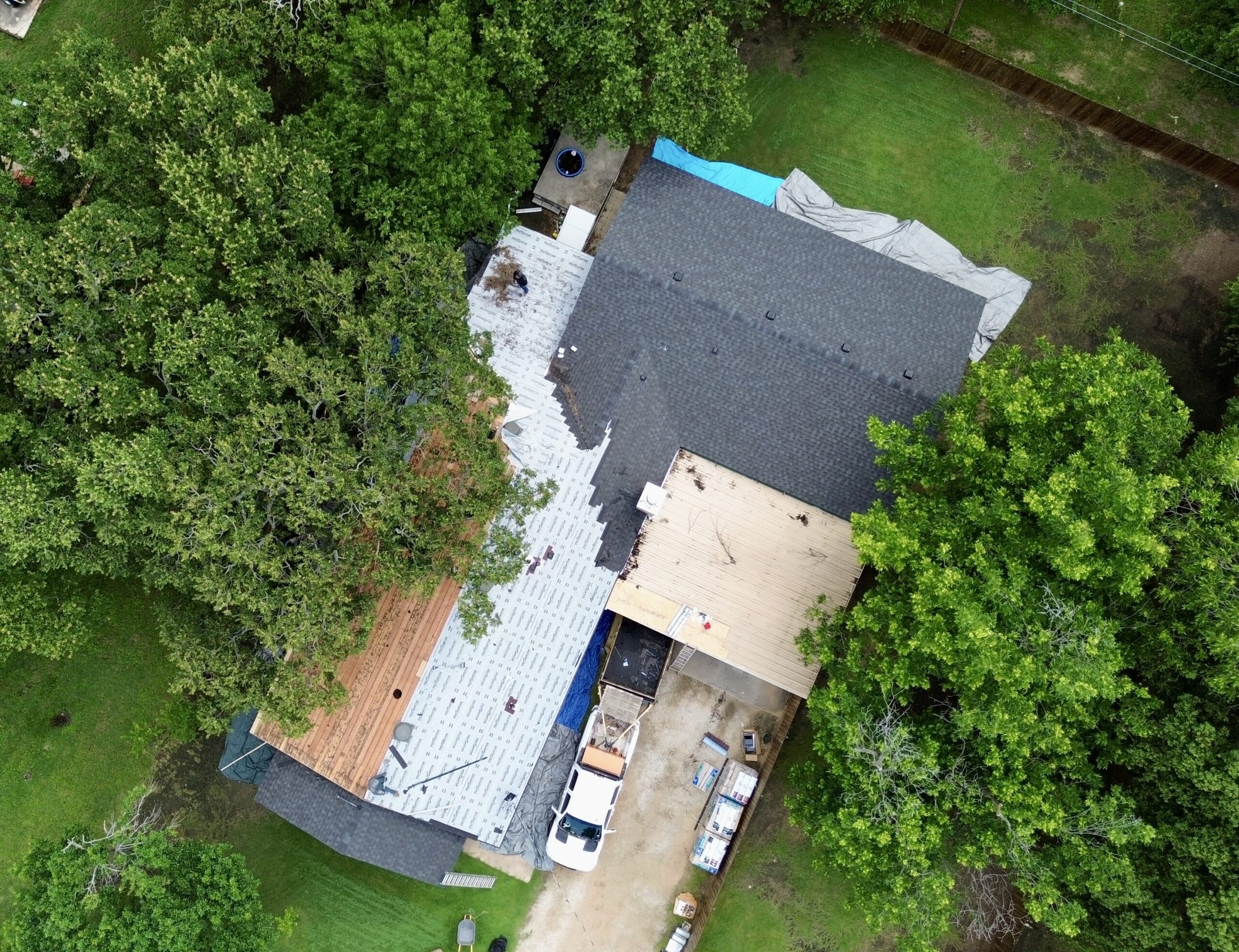
A professional roofing or emergency restoration team can determine the safest temporary solution. Depending on the situation, protective coverings or other measures may be installed over exposed areas. The appropriate method depends on the size, location, and structural condition of the opening.
Tree removal should also be approached carefully. A heavy trunk resting on a damaged roof can shift when cut or moved. Improper removal can increase the load on already weakened areas or cause additional roof damage.
Temporary protection should not be treated as a permanent repair. A covering may reduce immediate water exposure but does not restore damaged shingles, decking, flashing, or structural framing. Permanent repairs should follow once the site has been properly assessed.
Homeowners should document the original damage before temporary protection is installed when practical. Photographs can show the opening, fallen tree, damaged materials, and interior moisture. Receipts for emergency services and temporary protection should also be retained.
After temporary protection is installed, homeowners should continue monitoring the interior for signs of water intrusion. New stains, damp materials, or dripping water should be reported promptly. Additional rainfall can reveal areas that were not completely protected.
The property should remain restricted until dangerous conditions have been resolved. Children and pets should not be allowed near fallen trees, unstable roof sections, or debris. Professional teams should handle heavy materials and elevated work.
Temporary protection is most effective when combined with prompt permanent repair planning. Delaying repairs for too long can expose damaged materials to repeated weather. Moisture can worsen decking and interior damage, while wind can loosen already compromised roofing components.
Working With Roofing and Tree Removal Professionals
Repairing a roof after a fallen tree often requires coordination between multiple professionals. Tree removal specialists can safely remove the fallen tree and branches, while roofing professionals assess and repair the damaged roof. Structural specialists may also be needed when framing or supporting components have been affected.
Homeowners should select professionals based on relevant experience rather than choosing a provider solely because they are available immediately. A major tree impact requires careful handling, particularly when the roof may be structurally compromised. Qualified professionals should be able to explain the work they recommend and why it is necessary.
The tree removal process should be coordinated with the roofing inspection. If possible, photographs should be taken before the tree is removed so the original condition is documented. Once the tree has been removed, the roof can be examined more thoroughly for concealed damage.
Roofing contractors should inspect more than the visible shingles. Their assessment should consider decking, flashing, roof penetrations, gutters, roof edges, and other components affected by the impact. When structural damage is suspected, the contractor may recommend evaluation by an appropriately qualified structural professional.
Homeowners should request written estimates for significant work. The estimate should identify the proposed repairs, materials, labor, and other major costs. If additional damage is discovered during repairs, the contractor should explain the reason for the change before substantial additional work is authorized.
Insurance documentation may also be important. Homeowners should keep photographs, inspection reports, estimates, invoices, and records of temporary protection. These documents can help establish the extent of the damage and provide a clear history of the repair process.
Good communication between the tree removal and roofing teams can reduce unnecessary damage. Removing a heavy tree without considering the condition of the roof can create additional stress or impact. Coordinated planning allows professionals to address the hazard while protecting as much of the remaining structure as possible.
After repairs are complete, homeowners should retain warranties and final documentation. Future inspections can use these records to understand what was repaired and which areas were affected by the tree impact. A complete repair history can also help homeowners maintain the roof more effectively over the long term.
Repairing Residential Roofs After Tree Impact
Repairing a residential roof after a fallen tree requires more than replacing visible shingles. The repair process should address every affected component, including the roof covering, underlayment, decking, flashing, gutters, vents, and structural framing when necessary. The extent of work depends on the size of the tree, impact location, roofing material, and severity of the damage.
The first stage is usually safe removal of the fallen tree and remaining hazardous branches. Tree removal should be handled by qualified professionals because cutting or moving a large tree can change the weight distribution and place additional pressure on a damaged roof. Once the tree is removed, the roofing system can be examined more thoroughly.
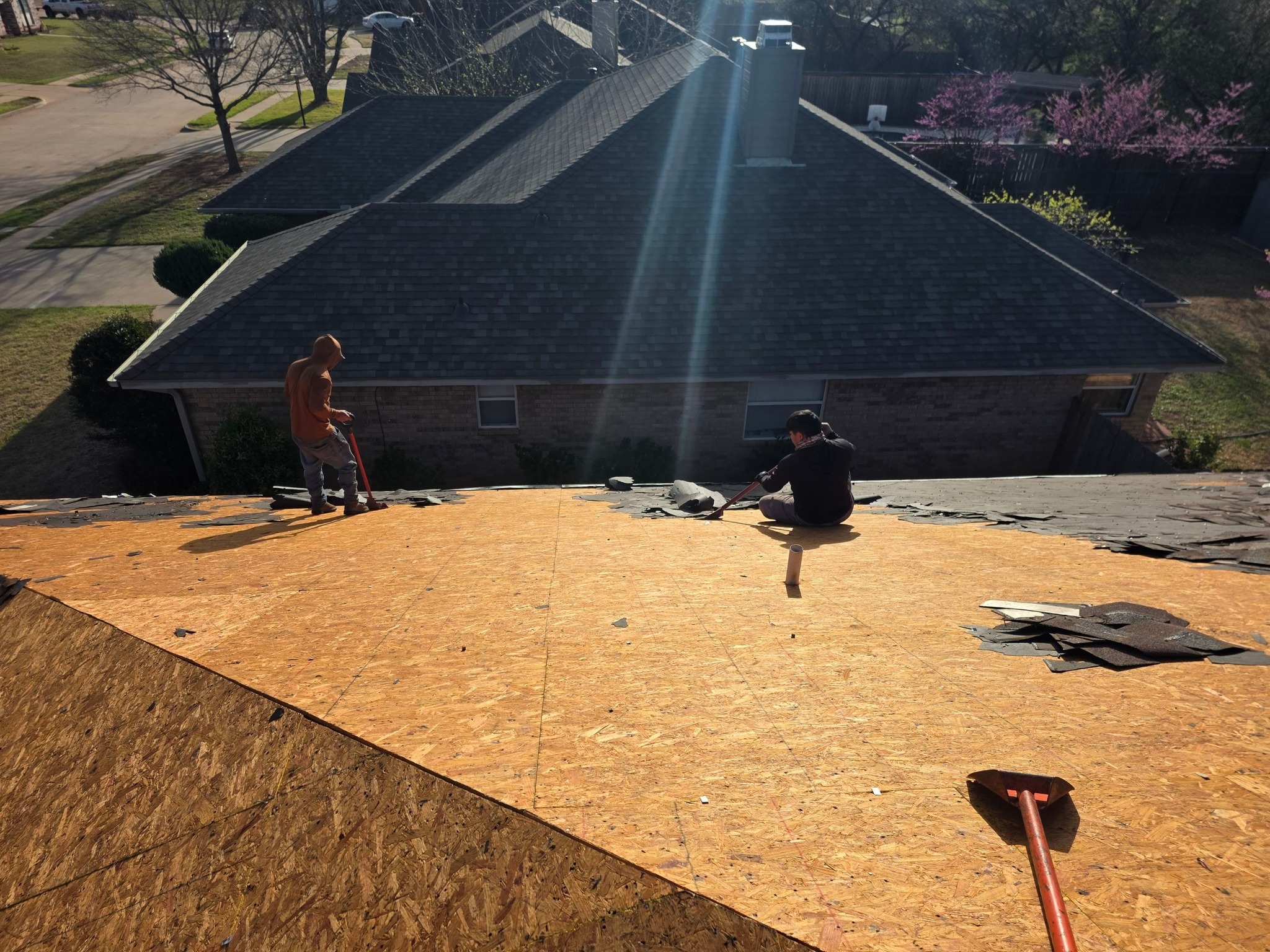
Damaged shingles or other roofing materials may then be removed to expose the underlying layers. If the decking is cracked, punctured, or weakened, damaged sections may need to be replaced before new roofing materials are installed. Simply covering damaged decking can leave structural and moisture problems unresolved.
Roof framing should be evaluated when the impact was substantial. Cracked or displaced rafters and trusses may require specialized repair or reinforcement. Structural work should be completed according to appropriate professional recommendations rather than being treated as ordinary roofing maintenance.
Flashing around roof penetrations and edges should also be checked. A tree can bend or displace flashing even when the main roof covering appears repairable. Replacing damaged flashing helps restore the roof’s ability to direct water away from vulnerable areas.
Gutters and downspouts may need repair or replacement as part of the project. A crushed gutter can prevent proper drainage and may cause water to collect near the roof edge. Restoring the drainage system helps prevent additional moisture problems after the roof has been repaired.
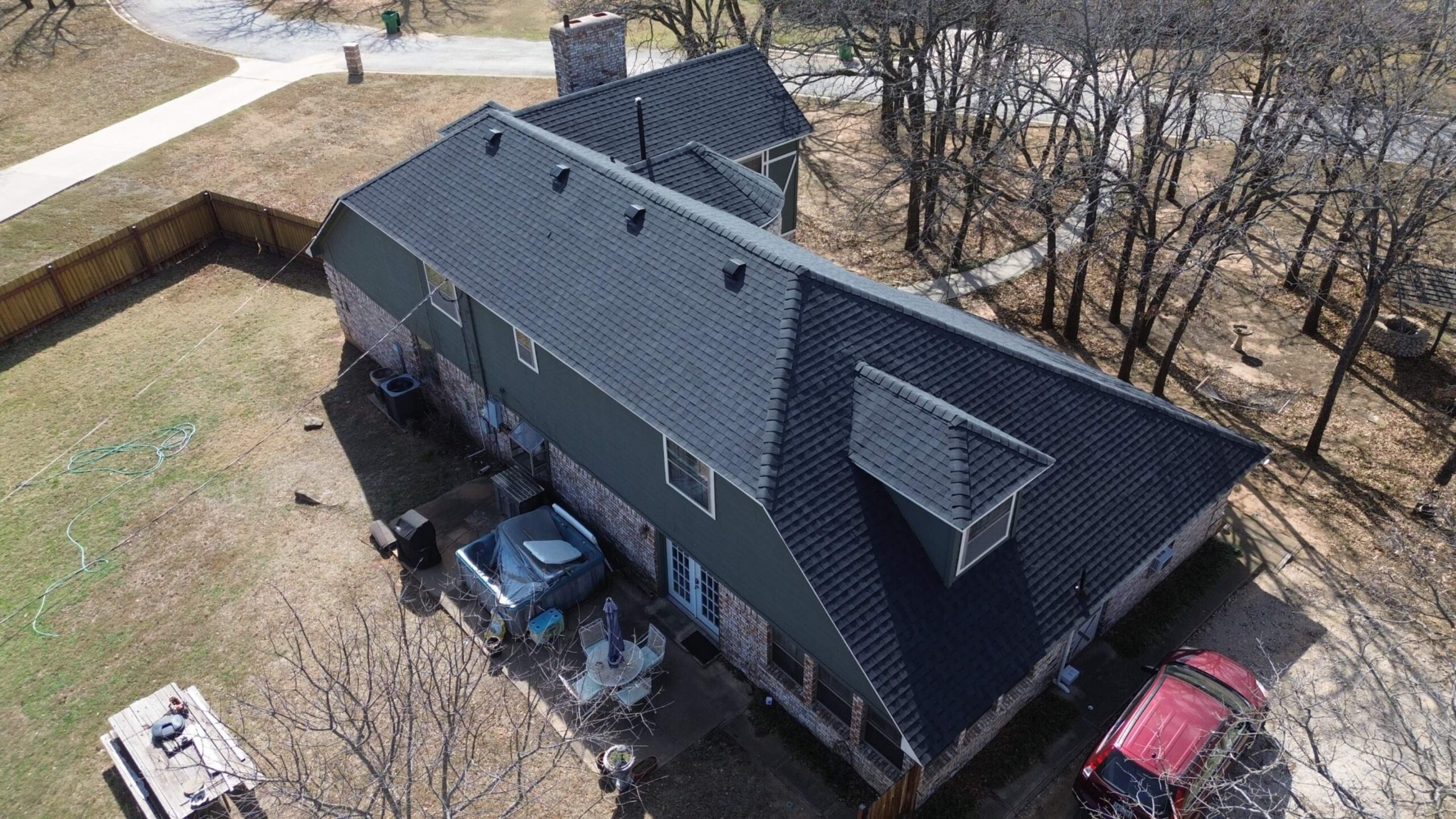
Once structural and underlying repairs are complete, new roofing materials can be installed. The replacement materials should be compatible with the existing roof or the new roofing system. Proper installation is important because even high-quality materials can fail when installed incorrectly.
After completion, the repaired areas should be inspected for proper integration. Homeowners should receive documentation describing the completed work and retain invoices, warranties, photographs, and other records. These documents can support future maintenance and help establish the history of the roof.
When Tree Damage Requires Partial or Full Roof Replacement
Not every fallen tree requires complete roof replacement. Minor damage may affect only a limited section of the roof, making localized repair practical. The decision depends on the extent of damage and whether the remaining roofing system can continue providing reliable protection.
Partial replacement may be appropriate when the tree affects a small, clearly defined area. Several shingles, a section of decking, flashing, or a limited number of tiles may be replaced while the rest of the roof remains intact. The replacement materials should be properly integrated with the existing system.
Extensive damage may require replacement of a larger roof section. If multiple slopes are affected or the impact has compromised significant areas of decking and framing, localized repairs may not provide an effective long-term solution. A professional should explain the reasoning behind any broader recommendation.
The age and condition of the roof also matter. An older roof with significant existing deterioration may have fewer practical repair options than a newer system. However, roof age alone should not automatically determine whether a complete replacement is necessary.
Matching existing materials can become difficult on older roofs. Shingles may have changed color through weather exposure, and some products may no longer be available. If an exact match cannot be achieved, homeowners should discuss suitable alternatives with the roofing professional.
Structural damage is one of the strongest reasons for more extensive work. When rafters, trusses, decking, or supporting connections are significantly affected, repairing only the surface materials may not restore the roof properly. The structural condition should be resolved before final roofing materials are installed.
Homeowners should request a clear explanation of the recommended scope. A professional should identify which components are damaged, which can remain, and why replacement is preferable to repair when that is the recommendation. Written estimates and photographs can make the decision easier to understand.
Insurance Considerations for Fallen Tree Roof Damage
Insurance coverage for fallen tree damage depends on the specific policy and circumstances of the loss. Homeowners should review their policy and contact their insurer to understand the applicable coverage, deductible, exclusions, limits, and claim requirements. General assumptions about tree damage should not replace the actual policy language.
The cause of the tree fall may be relevant to the claim. A tree that falls during a covered storm may be evaluated differently from a tree that falls because of long-term decay or another excluded condition. The insurer may consider the circumstances and available evidence when evaluating the claim.
Homeowners should document the scene before major cleanup when it is safe. Photographs can show the position of the tree, damaged roof sections, broken branches, interior damage, and affected exterior components. These records can help establish the original condition.
Temporary measures may be necessary to prevent further damage. Homeowners should keep receipts and documentation for emergency tree removal, temporary roof protection, or other necessary services. The policy may contain specific requirements concerning mitigation and reporting, so homeowners should follow the insurer’s instructions.
A roofing contractor can provide an estimate for physical repairs, but the contractor does not determine insurance coverage. The insurer evaluates the claim according to the policy. Homeowners should therefore keep communication with both parties clear and understand the different roles they play.
If the insurer requests an inspection, homeowners should provide available documentation and cooperate with the process. If additional damage becomes visible after the tree is removed, updated photographs and professional reports may help document the newly discovered conditions.
Homeowners should retain claim correspondence, inspection reports, estimates, receipts, and final repair documents. Keeping these records together makes it easier to track the claim from the original incident through completion.
When a claim decision is unclear, homeowners should ask the insurer for an explanation in understandable terms. If a portion of the damage is excluded or denied, reviewing the written reason and applicable policy provisions can help the homeowner understand the decision.
Preventing Future Tree-Related Roofing Damage
Preventing every tree-related roofing incident is not possible, especially during severe storms, but homeowners can reduce certain risks through regular property maintenance. Trees near a home should be monitored for signs of instability, disease, decay, or structural weakness. Early attention can reduce the chance of a vulnerable tree becoming a major roof hazard.
Branches that extend heavily over the roof deserve particular attention. During strong winds, these branches can strike shingles, gutters, vents, and other components even if the tree itself does not fall. Appropriate trimming can reduce contact with the roof.
Dead or weakened branches can become dangerous during storms. Homeowners should avoid removing large or high branches themselves because cutting them incorrectly can cause injury or property damage. Qualified tree professionals can assess and manage difficult branches safely.
Root conditions should also be considered. A tree may become unstable when roots are damaged, soil becomes saturated, or surrounding ground conditions change. Warning signs such as leaning, exposed roots, or unusual movement should receive professional attention.
Roof maintenance can also reduce vulnerability. Loose shingles, deteriorated flashing, damaged gutters, and other existing weaknesses should be repaired before severe weather arrives. A well-maintained roofing system may be better prepared to handle ordinary weather exposure.
Homeowners should also keep the roof and drainage areas clear of unnecessary debris. Leaves and branches can accumulate around valleys, gutters, and roof penetrations. Regular maintenance helps keep water moving away from the roof and reduces moisture-related problems.
After severe weather, trees should be checked from a safe location. Broken branches may remain suspended and could fall later. Homeowners should not approach unstable trees or attempt to remove large storm debris without appropriate equipment and experience.
Preventive maintenance should focus on both the roof and surrounding landscape. Roofing and tree conditions can influence each other, so managing only one side of the property may leave significant risks unresolved.
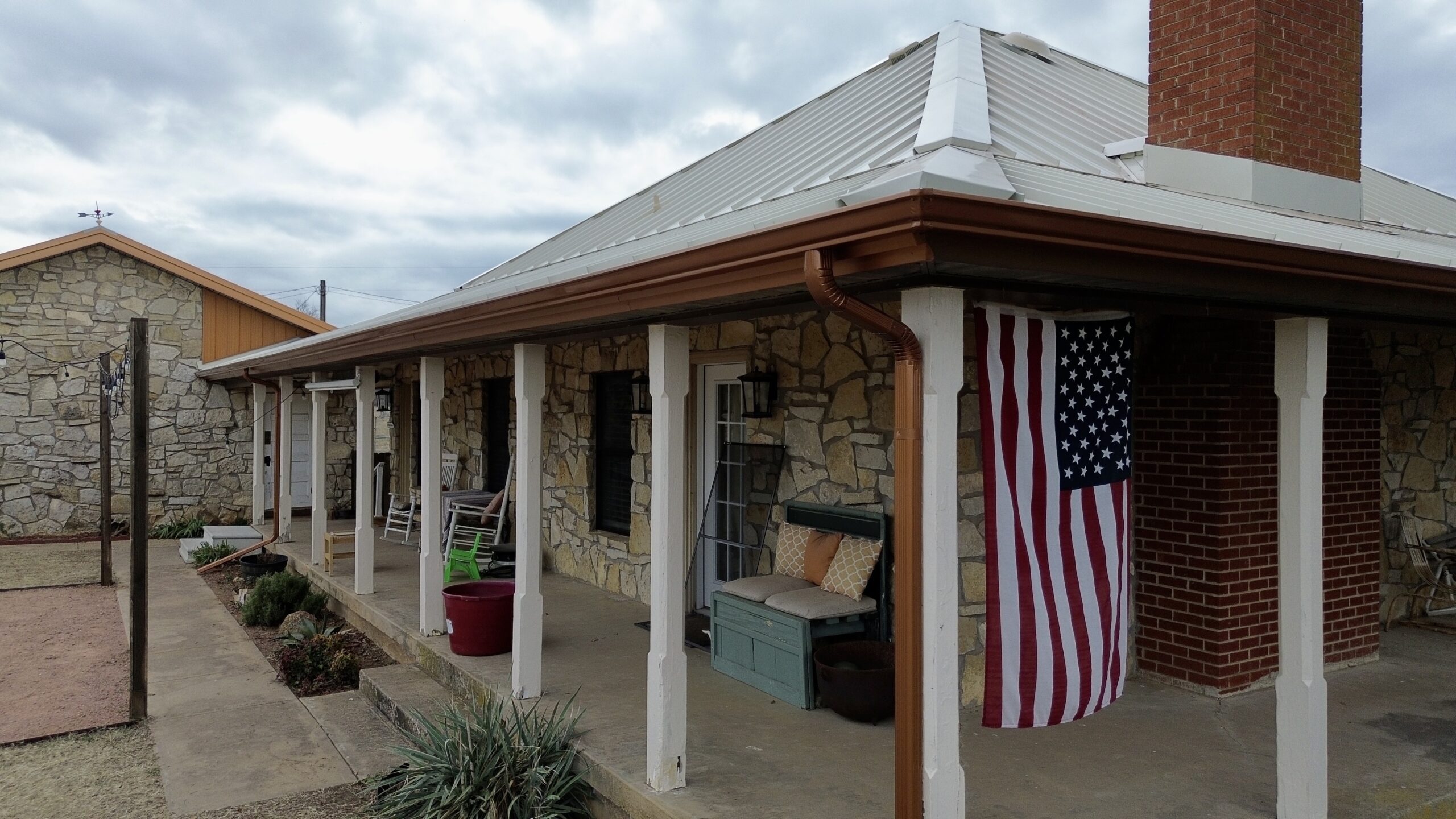
Maintaining the Roof and Surrounding Trees
Long-term maintenance is one of the most effective ways to identify potential problems before they become expensive repairs. Homeowners should arrange periodic roof inspections based on the roof’s age, material, condition, and local weather exposure. Professional inspections can identify issues that are difficult to see from the ground.
Tree maintenance should be treated as part of overall property care. Regularly evaluating branches, trunks, and root conditions can help identify potential hazards. Trees that show signs of disease, decay, or instability should be assessed by qualified professionals.
Gutters should be kept clear so rainwater can drain properly. After storms, homeowners can safely observe whether gutters remain aligned and whether downspouts appear damaged. Problems that require roof access should be handled by professionals.
Flashing and roof penetrations should receive attention during inspections. These areas can become vulnerable when seals deteriorate or materials are displaced. Early repairs may help prevent water intrusion after future storms.
Homeowners should also maintain accurate records of roof and tree-related work. Inspection reports, repair invoices, photographs, tree maintenance records, and warranties can provide a useful history of the property. These records can help professionals understand previous conditions and repairs.
A simple maintenance routine can include observing the roof after major storms, monitoring nearby trees, keeping drainage systems clear, and arranging professional inspections when needed. Consistent attention is generally more effective than waiting until visible damage becomes severe.
Conclusion
Fallen trees can cause serious residential roofing damage because their weight and impact can affect both visible roofing materials and hidden structural components. Shingles, tiles, metal panels, flashing, gutters, roof decking, rafters, trusses, and interior finishes may all be affected during a major tree impact.
The most important priority after a tree falls on a roof is safety. Homeowners should stay away from unstable structures, damaged electrical lines, and hazardous trees while arranging qualified professional assistance. Attempting to climb onto the damaged roof or remove a large tree without appropriate equipment can create additional risks.
A thorough assessment should look beyond the obvious surface damage. Hidden problems involving decking, framing, insulation, flashing, and roof connections can continue causing issues even after the visible debris has been removed. Interior stains, damp insulation, ceiling cracks, and other moisture-related signs can provide additional evidence that the roof has been compromised.
Repairs should address the entire affected roofing system. Replacing damaged shingles without correcting damaged decking or flashing may leave the home vulnerable to future water intrusion. When structural components are affected, appropriate professional evaluation and repair should take place before the roofing surface is restored.
Insurance may help with eligible storm-related losses depending on the specific policy and circumstances. Homeowners should document the damage, keep records of emergency work, review their policy, and communicate with the insurer. Accurate photographs, inspection reports, estimates, receipts, and repair records can make the process easier to manage.
Prevention also plays an important role. Regular tree maintenance can reduce hazards from weak or overhanging branches, while routine roof inspections can identify existing weaknesses before another storm occurs. Keeping gutters, flashing, roof edges, and drainage systems in good condition can further support the roof’s long-term performance.
Ultimately, fallen tree damage should never be treated as a simple cosmetic roofing problem. A careful assessment, safe tree removal, proper structural evaluation, and complete roofing repair can help restore the home’s protection and reduce the risk of additional damage. By combining roof maintenance with responsible tree care, homeowners can better protect their residential roofing structures from future storm-related hazards.