
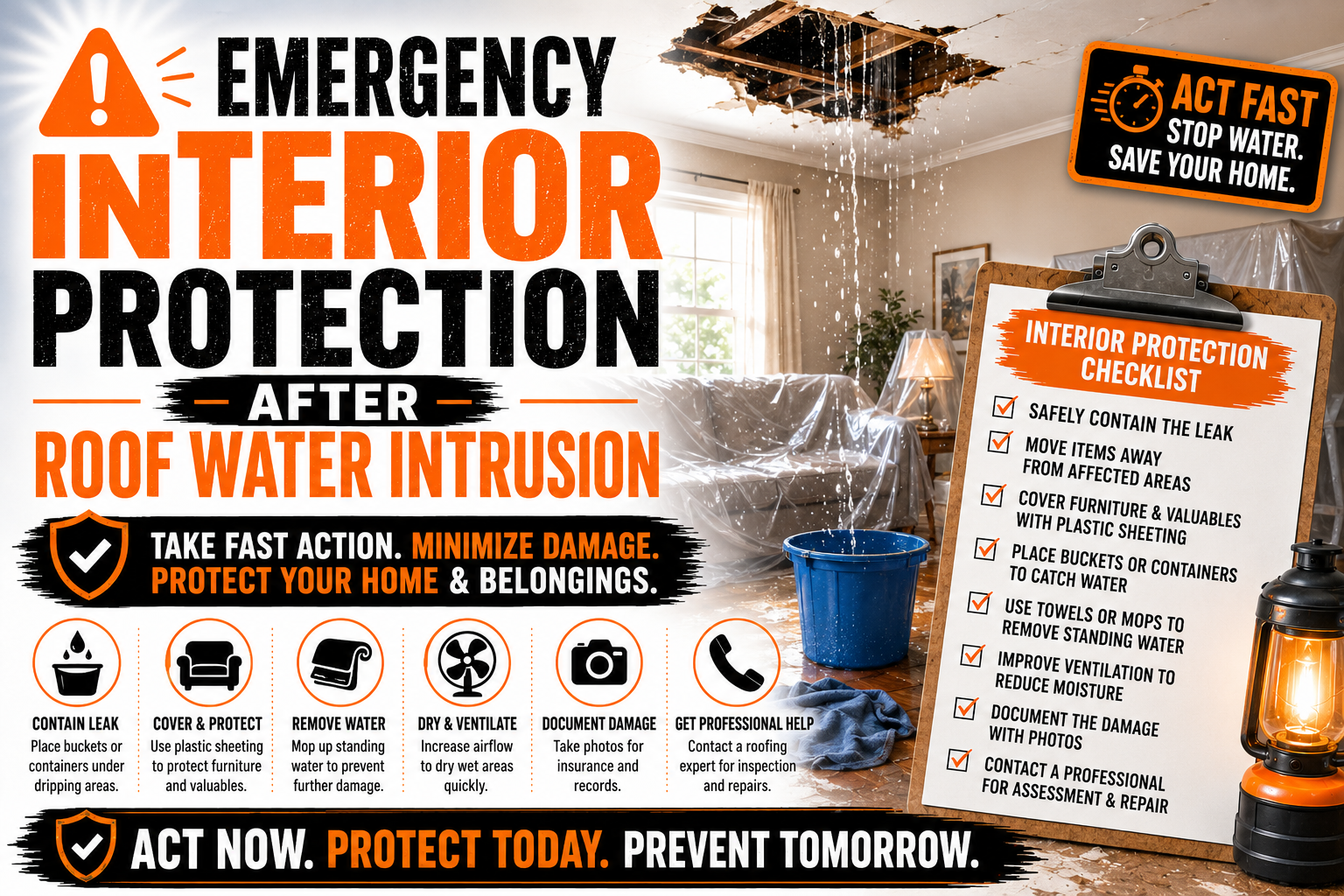
Emergency Interior Protection After Roof Water Intrusion
Introduction
Roof water intrusion is one of the most stressful situations a property owner can face. Whether caused by a severe storm, fallen tree, damaged flashing, aging shingles, or a sudden roof failure, water entering a home can quickly damage ceilings, walls, flooring, insulation, furniture, and valuable belongings. Taking immediate action inside the property is often just as important as repairing the roof itself.
Many people focus only on stopping the leak from above, but interior protection plays an equally important role during the first hours after water intrusion begins. Every minute that water remains inside the building increases the risk of structural deterioration, mold growth, electrical hazards, and costly restoration work. Proper emergency measures can significantly reduce the amount of damage before professional roofing and restoration teams arrive.
Emergency interior protection does not require permanent repairs. Instead, it involves practical steps that help limit water spread, safeguard personal belongings, and create a safer environment while waiting for the roof to be repaired. Understanding these measures allows homeowners to respond calmly and effectively during an unexpected roofing emergency.
This guide explains how to protect the interior of your home after roof water intrusion, why each step matters, and how professional contractors approach emergency situations to minimize long term damage.
Why Immediate Interior Protection Matters After Roof Water Intrusion
Water rarely stays where it first enters a building. After passing through damaged roofing materials, it often follows rafters, insulation, wiring, and framing before reaching ceilings or walls. By the time water becomes visible indoors, moisture may have already spread throughout multiple areas of the home.
Delaying interior protection allows water to soak into porous materials such as drywall, wood, insulation, carpeting, and furniture. These materials absorb moisture quickly, making them more difficult to dry and increasing the likelihood of permanent damage.
Moisture also weakens many structural components over time. Ceiling drywall can become heavy enough to sag or collapse, while wooden framing may begin to swell, warp, or deteriorate if it remains wet for extended periods. Preventing this progression is one of the primary goals of emergency interior protection.
Another important concern is indoor air quality. Damp building materials create favorable conditions for mold growth, especially in warm, poorly ventilated spaces. Acting quickly helps reduce excess moisture before mold colonies have an opportunity to develop.
Early intervention also protects personal belongings. Family photographs, important documents, electronics, clothing, furniture, and sentimental items often suffer unnecessary damage simply because water is allowed to continue spreading after the initial leak begins.
The Most Common Causes of Roof Water Intrusion
Roof water intrusion can occur for many different reasons, and identifying the cause helps determine the most appropriate response. While professional inspection is necessary for accurate diagnosis, understanding common causes helps homeowners recognize potential problems sooner.
Severe weather remains one of the leading contributors to emergency roof leaks. High winds can lift shingles, loosen flashing, or remove roofing materials entirely, allowing rainwater to enter the building. Heavy rainfall may also expose weaknesses that previously went unnoticed.
Aging roofing systems naturally become more vulnerable over time. Roofing materials gradually deteriorate due to continuous exposure to sunlight, temperature changes, moisture, and seasonal weather patterns. Small cracks or worn sealants can eventually develop into active leaks.
Roof penetrations represent another common source of water intrusion. Areas surrounding chimneys, skylights, vents, and plumbing pipes rely on flashing and sealants to remain watertight. When these protective components deteriorate, water often enters around these openings instead of through the main roofing surface.
Blocked gutters and downspouts can also contribute to interior water damage. When rainwater cannot drain properly, it may back up beneath roofing materials or overflow near roof edges, increasing the risk of leaks along fascia boards and exterior walls.
Unexpected impact damage presents another challenge. Fallen branches, hail, or airborne debris may puncture roofing materials without creating immediately obvious openings. Even relatively small impacts can compromise the roof’s waterproof barrier enough to allow water infiltration during future storms.
Identifying the Early Signs of Interior Water Damage
The sooner water intrusion is identified, the easier it becomes to limit interior damage. Unfortunately, roof leaks do not always announce themselves with obvious dripping water. In many cases, early warning signs appear gradually as moisture spreads through the structure.
Ceiling discoloration is one of the most recognizable indicators. Yellow, brown, or dark stains often develop before water begins dripping into living spaces. These stains usually indicate ongoing moisture intrusion rather than a single isolated incident.
Paint and wallpaper may also provide important clues. Bubbling paint, peeling finishes, or loose wallpaper frequently signal moisture trapped behind finished surfaces. These symptoms often appear long before significant structural damage becomes visible.
Homeowners should also pay attention to unusual odors. Persistent musty smells may indicate hidden moisture within walls, ceilings, or insulation. Even if visible water is absent, these odors often suggest conditions favorable for mold development.
Other warning signs include warped flooring, damp carpeting, swollen trim, or unexpected condensation around ceiling fixtures. While each symptom may seem minor individually, together they often point toward a developing roof leak that requires prompt attention.
During periods of heavy rainfall, homeowners should periodically inspect attics if they can do so safely. Fresh water stains, wet insulation, or damp roof framing frequently reveal leaks before they affect finished interior spaces.
Ensuring Personal Safety Before Protecting the Interior
Protecting property should never come at the expense of personal safety. Before taking any emergency measures inside the home, occupants should evaluate potential hazards created by the water intrusion.
Electrical safety deserves immediate attention whenever water enters the building. Leaks near light fixtures, electrical outlets, breaker panels, appliances, or exposed wiring may create dangerous conditions. If there is any concern that electrical systems have been affected, the safest approach is to avoid the area until the power can be safely disconnected if necessary.
Ceilings saturated with water may also become unstable. Sagging drywall indicates that significant moisture has accumulated above, increasing the possibility of collapse. People should avoid standing directly beneath visibly weakened ceiling sections until professionals can assess the situation.
Slippery floors present another hazard during indoor flooding. Water spreading across hardwood, tile, or laminate flooring increases the risk of slips and falls, particularly in hallways and staircases where visibility may be limited.
Property owners should also remain aware of air quality concerns. If mold is already visible or insulation has become heavily saturated, prolonged exposure should be minimized until proper cleanup and drying procedures begin.
If structural damage appears severe or the roof shows signs of partial collapse, evacuating the affected area may be the safest decision until emergency responders or roofing professionals determine that the building is secure.
The First Steps to Minimize Interior Water Damage
Once immediate safety concerns have been addressed, homeowners can begin taking practical steps to reduce interior damage. The goal during this stage is to control water movement rather than attempt permanent repairs.
The first priority is identifying active leaks. Water may drip directly from the ceiling, travel along beams, or emerge through light fixtures and wall joints. Locating these entry points allows homeowners to place containers beneath dripping water before it spreads across floors and furnishings.
If water has collected behind a ceiling without creating an opening, homeowners should avoid puncturing the ceiling unless they understand the risks involved. Improper drainage may enlarge damaged areas or expose occupants to falling debris. When in doubt, waiting for professional guidance is generally the safer option.
Absorbent materials such as towels or clean cloths can help contain small amounts of water around affected areas. Replacing saturated towels regularly prevents moisture from spreading into adjacent flooring or nearby furniture.
Improving airflow also supports temporary moisture control. Opening windows during suitable weather or using portable fans can encourage evaporation while reducing humidity levels inside the home. However, this should only be done when outdoor conditions are dry enough to prevent additional moisture from entering.
Keeping interior doors open between affected rooms may further improve air circulation, helping reduce moisture buildup while emergency roof repairs are being arranged.
Protecting Furniture, Electronics, and Personal Belongings
Personal belongings often represent the most significant financial and emotional losses following roof water intrusion. Acting quickly to protect valuable items can substantially reduce replacement costs and simplify the recovery process.
Whenever possible, furniture should be moved away from active leaks and damp areas. Upholstered items absorb moisture rapidly, making prompt relocation especially important. If large furniture cannot be moved, placing waterproof coverings over exposed surfaces provides temporary protection until the leak is controlled.
Electronic devices require special attention because water and electricity create obvious safety concerns. Computers, televisions, gaming systems, speakers, and other electronics should be disconnected from power if it is safe to do so and relocated to dry areas whenever possible.
Important documents should also receive priority. Passports, insurance records, financial paperwork, family photographs, certificates, and other irreplaceable items should be transferred to waterproof containers or dry storage areas immediately after water intrusion is discovered.
Items that deserve immediate protection include:
- Electronic devices and charging equipment
- Important documents and identification records
- Family photographs and keepsakes
- Upholstered furniture and mattresses
- Area rugs and decorative textiles
- Valuable artwork and collectibles
Taking these protective measures early often prevents significant secondary damage while allowing restoration professionals to focus on drying the building itself.
Containing Active Leaks Until Professional Help Arrives
Temporary containment helps reduce interior damage while homeowners wait for emergency roofing contractors to address the source of the leak. Although these measures do not repair the roof, they can slow the spread of water and protect surrounding areas.
Buckets, storage containers, or other waterproof receptacles should be positioned beneath active drips to collect incoming water. Emptying these containers regularly prevents overflow and keeps nearby flooring as dry as possible.
If water splashes outside the collection container, placing towels or absorbent cloths around the base helps capture excess moisture. These materials should be replaced as they become saturated to maintain their effectiveness.
Plastic sheeting may also provide temporary protection for furniture, flooring, and household belongings that cannot easily be moved. Care should be taken to secure coverings without trapping excessive moisture beneath them, especially over upholstered surfaces.
Throughout the emergency, homeowners should continue monitoring the affected area because roof leaks often change as weather conditions evolve. A slow drip can become a steady stream during heavy rainfall, while new leak locations may appear as water travels through different sections of the roof structure.
These temporary containment efforts help reduce interior damage until roofing professionals arrive to stabilize the roof and begin the process of restoring the home.
Preventing Water From Spreading Throughout the Home
Once water enters the home, preventing it from spreading becomes the next priority. Water naturally follows the path of least resistance, moving through ceilings, wall cavities, floor joists, and even beneath finished flooring. Limiting this movement reduces both repair costs and the amount of restoration work required later.
One of the most effective strategies is isolating the affected area whenever possible. Closing doors to damaged rooms helps contain humidity, while placing absorbent materials near entry points can prevent water from migrating into adjacent spaces. This approach also allows drying efforts to remain concentrated where they are needed most.
Floor protection is equally important. Water can quickly spread across hardwood, laminate, tile, and carpeted surfaces, reaching rooms that were not originally affected by the roof leak. Using waterproof coverings in vulnerable pathways can reduce the chance of moisture reaching unaffected areas.
Homeowners should also check nearby closets, storage spaces, and hallways. Water often travels farther than expected, especially when it follows framing members or hidden structural components before emerging in another part of the house.
Monitoring the situation regularly is essential because water movement changes as rainfall continues. Areas that appear dry during the first inspection may begin showing signs of moisture several hours later.
How to Protect Walls, Ceilings, and Flooring
Interior building materials absorb moisture at different rates, making it important to understand how each surface should be protected during an emergency. Quick action helps preserve structural integrity while reducing the likelihood of expensive repairs.
Ceilings deserve immediate attention because they often hold significant amounts of trapped water. If a ceiling begins to sag noticeably, homeowners should avoid placing furniture or valuable belongings beneath it. The area should remain clear until roofing or restoration professionals determine whether the ceiling remains stable.
Walls may also absorb water through drywall, insulation, and wooden framing. Removing pictures, mirrors, decorative shelves, and wall mounted electronics from affected sections helps prevent additional damage while making inspections easier once professionals arrive.
Flooring protection depends on the material involved. Hardwood floors benefit from immediate moisture removal because prolonged exposure can cause swelling and permanent warping. Carpeting should be dried as quickly as possible since damp fibers retain moisture and may support mold growth if left untreated.
Area rugs deserve separate attention because they trap water underneath. Lifting rugs from wet flooring allows both surfaces to begin drying more effectively while preventing additional moisture from becoming trapped.
Throughout the process, homeowners should avoid using excessive heat in an attempt to speed drying. Controlled airflow generally provides better results while reducing the risk of damaging sensitive building materials.
Managing Moisture to Reduce Mold Growth
Moisture control is one of the most important aspects of emergency interior protection. Mold does not require standing water to develop. Damp building materials combined with limited ventilation often create suitable conditions for growth within a relatively short period.
Lowering indoor humidity begins with improving air circulation whenever outdoor conditions permit. Opening windows during dry weather allows moist indoor air to escape while encouraging fresh air to enter the home. Portable fans positioned strategically around affected areas can further improve airflow and assist with evaporation.
Dehumidifiers also provide valuable support during the drying process. By removing excess moisture from the air, these machines help reduce the amount of water absorbed by walls, ceilings, furniture, and flooring. Maintaining lower humidity levels improves drying efficiency while limiting favorable conditions for mold development.
Wet materials should receive attention as soon as possible. Towels, clothing, curtains, and other absorbent household items that become saturated should be dried or removed from the affected area promptly to prevent them from contributing additional moisture to the indoor environment.
Attics should not be overlooked during moisture management. Damp insulation and roof framing often retain hidden moisture even after visible leaks stop. Professional inspections help determine whether these concealed areas require additional drying or replacement.
Temporary Interior Drying Methods That Help
Emergency drying focuses on slowing damage until professional restoration can begin. While temporary methods cannot replace commercial drying equipment, they often make a meaningful difference during the first stages of recovery.
Air movement remains one of the simplest and most effective drying techniques. Fans should circulate air across damp surfaces rather than blowing directly into active leaks. This approach encourages evaporation while reducing moisture accumulation in surrounding materials.
Portable dehumidifiers complement airflow by extracting moisture from indoor air. Emptying the collection reservoir regularly allows the unit to continue operating efficiently throughout the drying process.
Homeowners should also remove standing water whenever it is safe to do so. Small amounts can often be absorbed using clean towels or mops, while larger accumulations may require professional extraction equipment designed for emergency water removal.
Drying efforts become more effective when unnecessary sources of humidity are minimized. Limiting activities such as long hot showers, indoor clothes drying, or excessive cooking during the emergency helps prevent additional moisture from entering the indoor environment.
The following comparison highlights common temporary drying methods and their primary purposes.
| Drying Method | Primary Purpose | Best Used For |
|---|---|---|
| Portable fans | Improve air circulation | Damp rooms and wet surfaces |
| Dehumidifiers | Lower indoor humidity | Ongoing moisture control |
| Towels and mops | Remove small amounts of water | Localized leaks and wet flooring |
| Opening windows during dry weather | Increase ventilation | Low humidity outdoor conditions |
| Professional extraction equipment | Remove large water accumulations | Significant indoor flooding |
These temporary measures work best when combined with prompt roof repairs. Removing interior moisture without addressing the source of the leak will rarely provide lasting protection.
Common Mistakes to Avoid After Roof Water Intrusion
Responding calmly during a roofing emergency helps prevent decisions that could increase property damage. Some well intentioned actions may actually complicate repairs or create additional safety concerns.
One common mistake is assuming that the leak has ended simply because dripping water stops. Moisture often remains trapped within insulation, ceiling cavities, or wall systems long after rainfall has ended. Hidden water can continue causing damage even when visible signs appear to improve.
Another mistake involves delaying professional inspections after temporary drying efforts seem successful. Surface materials may appear dry while structural components remain saturated beneath finished surfaces. Professional evaluations help identify these hidden issues before they worsen.
Some homeowners also place valuable belongings back into affected rooms too soon. Until moisture levels have been properly reduced, furniture, electronics, and important documents remain vulnerable to additional damage if leaks resume.
Using household heaters to accelerate drying can create uneven moisture removal. Excessive heat may warp wood, crack drywall, or damage flooring materials while leaving hidden moisture trapped deeper within the structure.
Finally, ignoring small leaks because they appear manageable often leads to larger restoration projects later. Even minor roof water intrusion deserves prompt attention before future storms increase the severity of the damage.
When Emergency Water Extraction Becomes Necessary
Some roofing emergencies produce more water than household cleanup methods can reasonably handle. In these situations, professional water extraction becomes an important part of protecting the home’s interior.
Large volumes of standing water quickly soak into flooring systems, insulation, and structural framing. The longer water remains in contact with these materials, the greater the likelihood of permanent deterioration. Professional extraction equipment removes water much faster than standard household tools.
Contractors evaluate several factors when determining whether emergency extraction is needed. The amount of standing water, the types of affected materials, the duration of exposure, and the potential for structural damage all influence this decision.
Signs that professional extraction may be necessary include widespread flooding across multiple rooms, heavily saturated carpeting, persistent water pooling despite cleanup efforts, or moisture reaching lower building levels. These conditions often require specialized pumps, industrial vacuums, and commercial drying equipment.
Professional extraction also supports more effective restoration. Removing water quickly reduces drying time, limits damage to building materials, and creates better conditions for repairing the roof once the source of intrusion has been addressed.
Working With Roofing and Water Damage Restoration Professionals
Roof water intrusion often requires expertise from more than one type of contractor. Roofing professionals focus on stopping water from entering the building, while water damage restoration specialists concentrate on drying, cleaning, and restoring the interior.
The roofing contractor typically begins by inspecting the damaged roof, identifying the source of the leak, and installing temporary protective measures if permanent repairs cannot be completed immediately. Preventing additional water intrusion remains the highest priority during this stage.
Once the roof has been stabilized, restoration professionals evaluate the interior. They inspect ceilings, walls, flooring, insulation, and hidden structural spaces to determine how far moisture has spread. Their findings guide the drying and restoration process while helping identify materials that may require replacement.
Effective communication between both teams allows repairs to progress efficiently. Roofing contractors provide information about the location and severity of roof damage, while restoration specialists report areas where hidden moisture suggests additional inspection may be necessary.
Property owners also play an important role throughout this process. Keeping records of observations, photographs, repair estimates, and contractor recommendations helps organize the recovery while ensuring that all aspects of the emergency receive appropriate attention.
By combining prompt roof repairs with thorough interior drying and restoration, homeowners place themselves in the best position to minimize long term damage and restore the property safely. Part of this process also prepares the home for the final stages of recovery, including complete repairs, preventive improvements, and long term protection against future roof water intrusion.
What Happens After the Leak Is Stopped
Stopping the roof leak is a major milestone, but it does not mean the emergency is completely over. Water that entered the home before the leak was contained may remain trapped inside walls, ceilings, insulation, and flooring. These hidden pockets of moisture require careful attention to prevent future problems.
Roofing contractors typically perform a final inspection of the repaired area to confirm that water is no longer entering the structure. They also check nearby roof components to ensure no additional weaknesses were overlooked during the emergency response. This comprehensive evaluation reduces the likelihood of new leaks developing during the next storm.
Inside the home, restoration professionals continue monitoring moisture levels as materials dry. Depending on the amount of water involved, drying may take several days before normal humidity levels are restored. Rushing this process can leave hidden moisture behind, increasing the risk of mold or structural deterioration.
Once moisture readings indicate that affected materials are sufficiently dry, contractors begin repairing or replacing damaged interior finishes. This stage restores both the appearance and functionality of the home while ensuring the building remains structurally sound.
Inspecting Hidden Damage Throughout the Interior
Visible water damage tells only part of the story after roof water intrusion. Moisture often spreads behind finished surfaces where it cannot be detected without specialized inspection techniques. Identifying these hidden areas is essential before restoration is considered complete.
Professionals inspect wall cavities, ceiling spaces, attic insulation, framing, and flooring systems using moisture detection equipment. Thermal imaging cameras and moisture meters help locate damp materials without unnecessary demolition, allowing repairs to remain focused on affected areas.
Insulation deserves particular attention because it loses much of its effectiveness once saturated. Wet insulation also retains moisture longer than many surrounding materials, creating conditions that may support mold growth if replacement is delayed.
Wooden framing is another important inspection area. Although wood can often dry successfully when treated promptly, prolonged moisture exposure may cause swelling, warping, or gradual decay. Contractors verify that structural components remain stable before completing interior repairs.
Hidden damage assessments also include ventilation systems when necessary. If moisture has entered ductwork or mechanical spaces, additional cleaning or drying procedures may be recommended to maintain indoor air quality.
Restoring the Home After Water Intrusion
Interior restoration begins once the property has been thoroughly dried and all active sources of water intrusion have been eliminated. The objective is not only to repair visible damage but also to return the home to a safe and comfortable condition.
Restoration work varies according to the severity of the leak. Minor incidents may require little more than repainting stained ceilings or replacing a small section of drywall. More extensive water intrusion can involve insulation replacement, flooring repairs, trim installation, and reconstruction of affected wall or ceiling sections.
Matching existing materials is an important part of quality restoration. Contractors aim to blend repairs with surrounding finishes so the completed work maintains a consistent appearance throughout the home. Careful material selection also supports long term durability.
Cleaning is another essential step before the project is finished. Dust, construction debris, and any remaining moisture related residue are removed to improve indoor air quality and prepare the space for normal use.
A final walkthrough allows homeowners and contractors to review the completed work together. Any remaining questions can be addressed before the restoration project is officially closed.
Preventing Future Interior Water Damage From Roof Leaks
Although severe weather cannot be prevented, many cases of roof water intrusion can be minimized through routine maintenance and timely repairs. Preventive care helps identify small roofing issues before they develop into interior emergencies.
Scheduling regular roof inspections is one of the most effective preventive measures. Professional evaluations can identify loose shingles, deteriorated flashing, damaged sealants, clogged drainage systems, and other developing problems that may not be visible from the ground.
Keeping gutters and downspouts clean also supports proper drainage. Water that flows freely away from the roof is far less likely to back up beneath roofing materials or overflow into vulnerable areas around the home.
Attic maintenance plays an important role as well. Adequate ventilation helps regulate moisture and temperature, reducing condensation that may contribute to hidden water damage over time. Periodic attic inspections can also reveal small roof leaks before they affect finished living spaces.
Property owners should trim tree branches that extend over the roof whenever practical. Falling limbs and constant branch contact can damage roofing materials, increasing the likelihood of future water intrusion during storms.
Preventive maintenance offers several long term advantages:
- Reduces the likelihood of emergency roof leaks.
- Extends the lifespan of roofing materials.
- Protects ceilings, walls, and flooring from moisture damage.
- Improves overall drainage around the roof.
- Supports lower long term repair and restoration costs.
Regular maintenance represents a relatively small investment compared to the expense of repairing widespread interior water damage after a major roof failure.

Creating an Emergency Roof Leak Response Plan
Preparing for a roofing emergency before it happens allows homeowners to respond more efficiently when unexpected water intrusion occurs. A simple response plan reduces confusion while helping protect both occupants and property.
Emergency supplies should be stored in an easily accessible location. Buckets, waterproof plastic sheeting, absorbent towels, flashlights, batteries, and basic protective equipment can all be useful during the first stages of a roof leak.
Important documents should also be protected before emergencies occur. Storing insurance records, identification documents, property information, and valuable photographs in waterproof containers or secure digital backups simplifies recovery if water damage affects the home.
Every household benefits from having a clear emergency response process:
- Ensure everyone inside the home is safe.
- Identify the location of active leaks.
- Protect valuable belongings from water exposure.
- Contain water using safe temporary measures.
- Contact qualified roofing professionals.
- Monitor affected areas until repairs begin.
Reviewing this plan periodically helps family members understand their responsibilities during an emergency, reducing unnecessary delays when quick action is needed.
Frequently Asked Questions
How long should wet building materials take to dry?
Drying times vary depending on the amount of water, indoor humidity, ventilation, and the types of materials involved. Some surfaces dry within a few days, while heavily saturated structural components may require a longer period under professional drying conditions.
Can I remain in my home after roof water intrusion?
Many homeowners can safely remain in the home if the damage is limited and there are no electrical or structural hazards. However, significant roof failures, ceiling instability, or widespread flooding may require temporary relocation until the property is safe.
Should ceiling stains always be investigated?
Yes. Ceiling stains often indicate ongoing moisture intrusion even if active dripping is not visible. Early inspection helps identify the source of the leak before additional damage develops.
Is mold guaranteed after a roof leak?
Not necessarily. Prompt drying, effective moisture control, and timely roof repairs greatly reduce the likelihood of mold growth. Delayed cleanup and prolonged damp conditions increase the risk considerably.
Why is professional moisture detection important?
Specialized equipment identifies hidden moisture that cannot be seen during a visual inspection. Detecting these concealed wet areas helps ensure repairs address the full extent of the damage rather than only the visible symptoms.
Conclusion
Emergency interior protection is a critical part of responding to roof water intrusion. While repairing the roof stops additional water from entering the building, protecting the home’s interior limits damage that can continue long after the leak itself has been controlled. Quick action during the first hours often makes a significant difference in both restoration costs and recovery time.
Effective interior protection begins with safety, followed by containing water, protecting personal belongings, improving airflow, and reducing indoor moisture. These temporary measures help preserve ceilings, walls, flooring, furniture, and structural components until professional roofing and restoration teams can complete permanent repairs.
Homeowners should also recognize that hidden moisture can remain even after visible water disappears. Thorough inspections, proper drying, and careful restoration ensure that the home returns to a safe, healthy, and structurally sound condition. Addressing concealed damage early helps prevent future issues such as mold growth, weakened building materials, and recurring repairs.
Routine roof maintenance, regular inspections, and a well prepared emergency response plan provide the best defense against future water intrusion. By understanding how to protect the interior during a roofing emergency and working closely with experienced professionals, property owners can reduce long term damage, safeguard their belongings, and restore their homes with confidence.