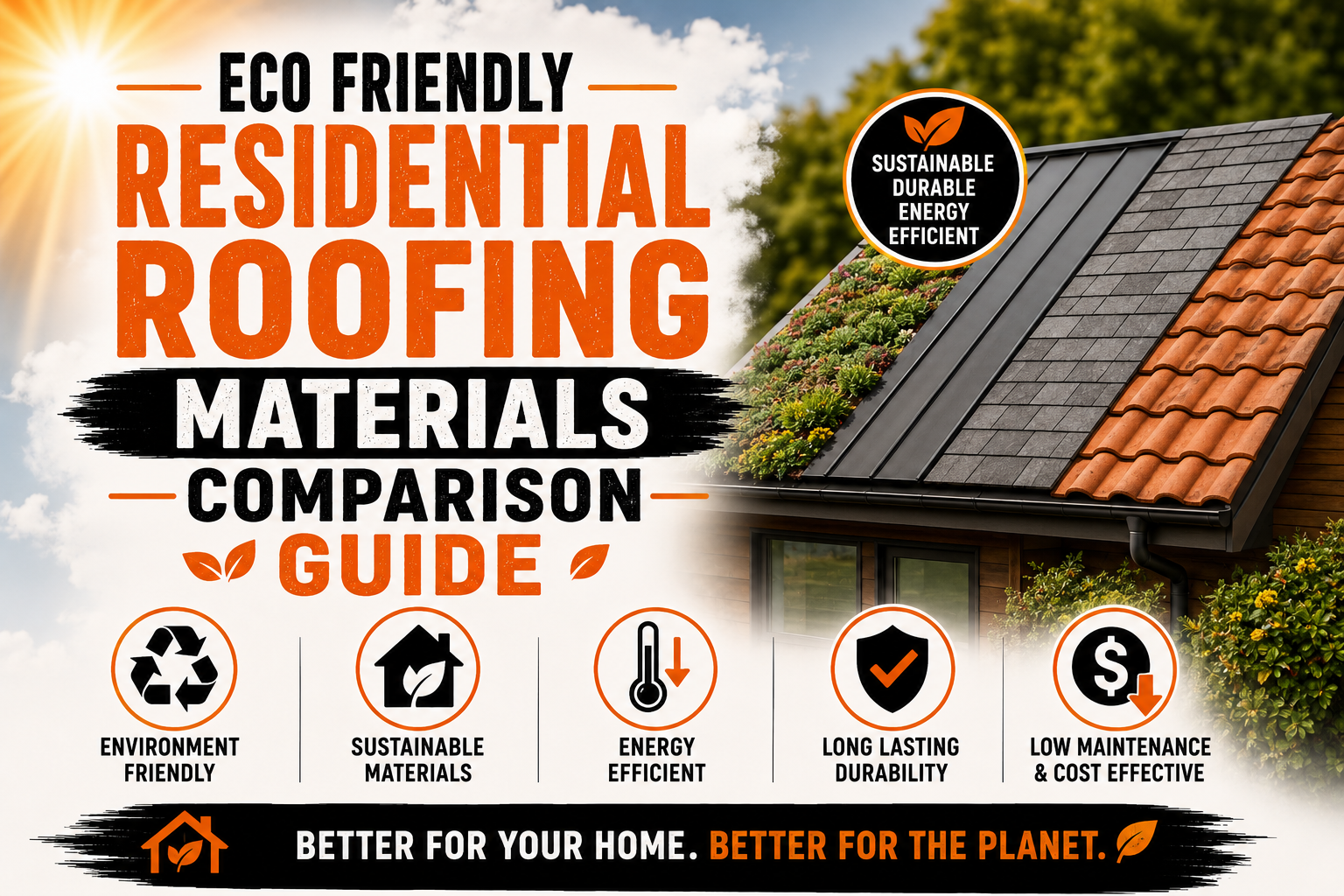
Eco Friendly Residential Roofing Materials Comparison Guide
Introduction
Eco friendly residential roofing has become an important consideration for homeowners who want to reduce the environmental impact of their properties while maintaining reliable protection from weather. A roof can influence energy consumption, material waste, maintenance requirements, and the long term sustainability of a home. Choosing a suitable roofing material can therefore contribute to both environmental responsibility and practical household performance.
Traditional roofing materials can differ significantly in how they are manufactured, transported, maintained, and disposed of after their useful life. Some materials require frequent replacement, while others can remain functional for several decades. Certain roofing products can also be recycled or reused, reducing the amount of construction waste sent to landfills.
An environmentally responsible roof does not necessarily mean choosing the most expensive or unusual material available. A sustainable roofing decision should consider the complete life cycle of the product, including its production, expected lifespan, energy performance, maintenance, repairability, and end of life options. The climate and design of the home are equally important because a material that performs efficiently in one environment may not provide the same benefits in another.
Energy efficiency is another major part of sustainable roofing. Some roofing materials and finishes can reflect more sunlight and reduce heat absorption, potentially lowering cooling requirements in suitable climates. Proper insulation and ventilation also play major roles, so roofing material should always be considered as part of the complete building envelope.
Durability can have an equally important environmental benefit. A roof that lasts longer may require fewer replacement projects, reducing the amount of new material, transportation, labor, and disposal associated with repeated roofing work. Repairability also matters because replacing a small damaged area is generally less wasteful than replacing an entire roof.
This guide examines several environmentally friendly residential roofing materials and explains their practical advantages and limitations. Understanding these differences can help homeowners select a roofing system that balances sustainability, durability, appearance, energy performance, and budget.
What Makes a Residential Roofing Material Eco Friendly?
A roofing material can be considered more environmentally friendly when it performs well across several sustainability factors rather than simply having one green feature. Manufacturing methods, raw materials, transportation, durability, energy efficiency, maintenance, recyclability, and disposal all contribute to the overall environmental impact.
The expected lifespan is one of the most important factors. A durable material that remains functional for many decades may reduce the need for repeated replacements. Every replacement requires additional raw materials, transportation, labor, and disposal, so extending the useful life of a roof can reduce its overall environmental burden.
Recyclability is another important consideration. Some roofing materials can be recovered and processed into new products or other useful applications. Recycling does not eliminate all environmental impacts, but it can reduce the amount of material sent to landfills and decrease the demand for certain virgin resources.
The source of the material also matters. Products containing recycled content may reduce reliance on newly extracted raw materials. Reclaimed roofing materials can potentially provide an even greater benefit when they are suitable for safe reuse because their original manufacturing process has already occurred.
Energy performance should also be evaluated. A reflective roof can reduce the amount of solar heat absorbed by the building in appropriate climates. This may help reduce air conditioning demand, although the actual energy savings depend on insulation, ventilation, windows, building orientation, local weather, and household energy use.
Manufacturing energy can influence sustainability as well. Some roofing materials require significant heat or energy during production, while others have different manufacturing requirements. Homeowners interested in sustainability should consider the complete life cycle instead of focusing only on whether a material is made from natural or recycled ingredients.
Maintenance requirements are another factor. A roof that requires frequent coatings, repairs, or replacement may have a greater long term environmental impact than a durable material requiring relatively little intervention.
Transportation should also be considered. Heavy materials may require more energy to transport, particularly over long distances. Locally available products can sometimes reduce transportation impacts, although local availability alone does not determine whether a material is environmentally superior.
The following factors can help homeowners compare roofing materials more effectively:
- Expected service life and durability
- Recycled or renewable material content
- Recyclability and end of life options
- Energy efficiency and solar reflectivity
- Maintenance and repair requirements
- Manufacturing and transportation impacts
A genuinely sustainable roofing decision usually involves balancing several of these characteristics. No single material is automatically the most environmentally friendly for every home, climate, or budget.
Recycled and Recyclable Metal Roofing
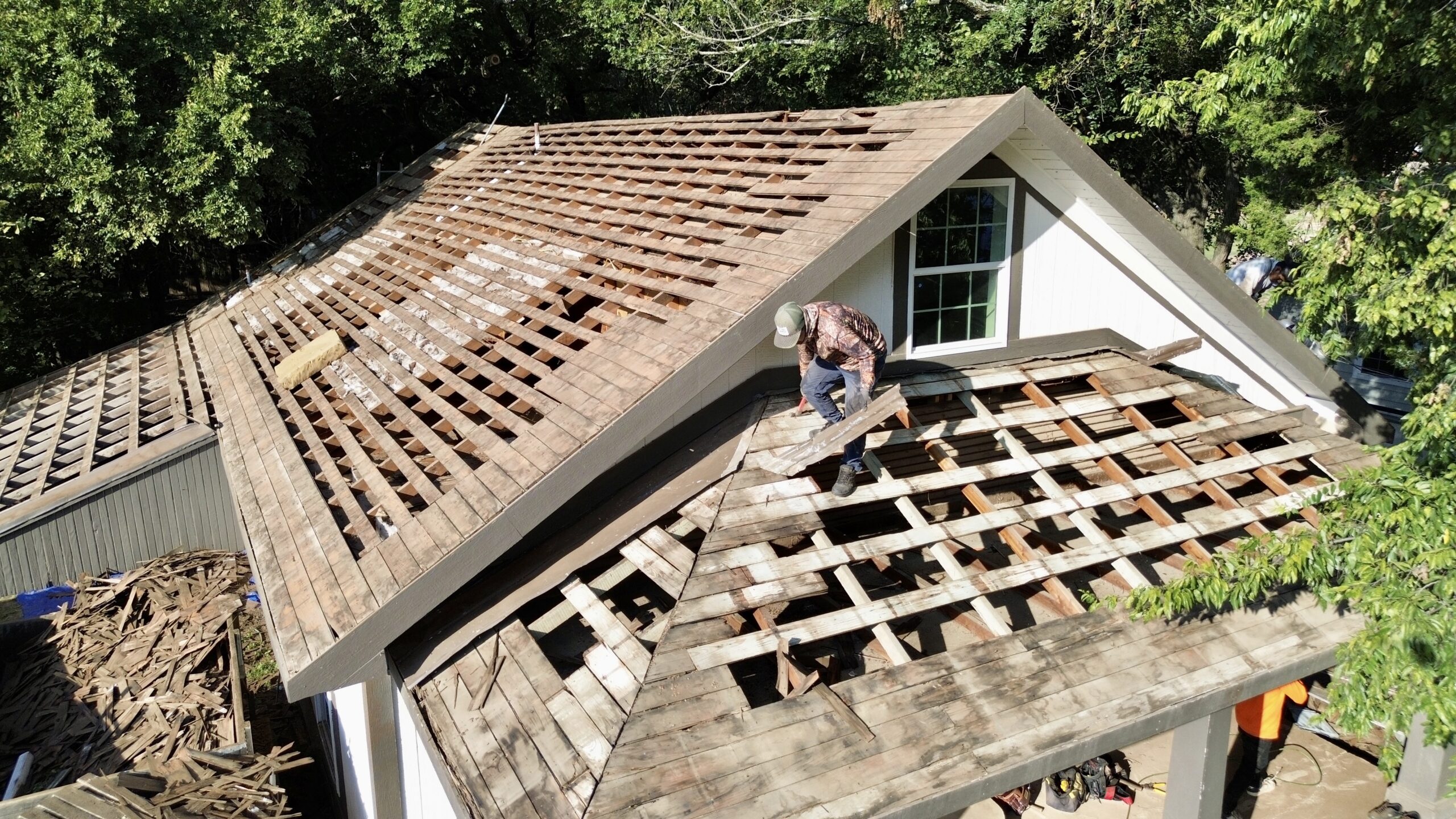
Metal roofing is often considered an environmentally attractive option because many metal products contain recycled material and can be recycled again at the end of their service life. Steel and aluminum are commonly used for residential roofing, and both can provide long lasting performance when properly selected and installed.
One of the strongest sustainability advantages of metal roofing is durability. A well installed metal roof can remain functional for several decades, reducing the frequency of complete replacement. Longer service life can reduce material consumption and construction waste over the life of a home.
Metal roofing can also be highly recyclable. Unlike some roofing materials that are difficult to recover economically, metal can have established recycling pathways. This can help keep valuable materials in circulation instead of sending them to landfills.
Another benefit is the availability of reflective finishes. Light colored or specially designed metal roofing can reflect a significant portion of incoming solar radiation, which may help reduce heat absorption during hot weather. The actual energy benefit depends on the roof design and the building’s insulation and ventilation.
Metal roofing is also available in many styles. Homeowners can choose panels, standing seam systems, or metal products designed to resemble traditional roofing materials. This makes it possible to incorporate sustainability without sacrificing the architectural appearance of the property.
However, metal roofing also has limitations. Manufacturing metal requires energy and raw materials, and the environmental impact depends on the specific manufacturing process and amount of recycled content. Transportation can also be significant because metal roofing products may be manufactured far from the property.
Installation quality is important as well. Improperly installed metal panels can create water management problems or reduce expected service life. Fasteners, flashing, seams, roof penetrations, and drainage details require careful attention.
Metal can also have a higher initial cost than some conventional asphalt shingle systems. Homeowners should compare the initial investment with expected lifespan, maintenance, energy performance, and potential recycling benefits.
Overall, recycled and recyclable metal roofing can be an excellent sustainability option for homeowners who want durability and strong end of life recycling potential. Its long service life can further strengthen its environmental value when the system is properly maintained.
Clay and Concrete Tile Roofing
Clay and concrete tiles can provide long lasting residential roofing systems and are another option for homeowners considering sustainability. Their durability is one of their strongest environmental advantages because a well maintained tile roof can remain functional for many decades.
Clay tiles are produced from natural clay and hardened through firing. Their long service life can reduce the frequency of roof replacement, which can help reduce construction waste and the environmental impacts associated with repeated roofing projects.
Concrete tiles are manufactured using cement-based mixtures and can be produced in a wide range of shapes, colors, and profiles. They can provide substantial durability, although their environmental profile should be considered carefully because cement production requires significant energy and generates emissions.
Both clay and concrete tiles can contribute to thermal performance. Their shape can create an air space between the tile surface and the underlying roof assembly, which may help reduce direct heat transfer. When combined with appropriate insulation and ventilation, this design can support more comfortable indoor temperatures.
Tile roofing can also provide excellent durability in sunny environments. Properly installed tiles can withstand long periods of exposure to sunlight without the same type of surface deterioration associated with some shorter lived materials.
Repairability is another advantage. If a limited number of tiles become cracked or damaged, individual units can often be replaced rather than removing the entire roof. This can reduce unnecessary material waste and extend the useful life of the existing system.
The major environmental limitation of tile roofing is its weight. Clay and concrete tiles are heavier than many alternative roofing products, which can increase transportation requirements and may require stronger structural support. A home should be evaluated before a heavy tile system is installed.
Manufacturing processes also differ. Clay requires high-temperature firing, while concrete relies on cement, so neither material should automatically be considered environmentally superior simply because it is durable.
End of life options depend on local recycling and reuse facilities. Some tiles can potentially be reused when removed carefully and remain in good condition, while damaged material may have other recovery options depending on local infrastructure.
For homeowners who prioritize durability and traditional appearance, tile can offer strong long term value. Its sustainability benefits are greatest when the roof is designed correctly, maintained properly, and kept in service for an extended period.
Recycled and Composite Roofing Materials
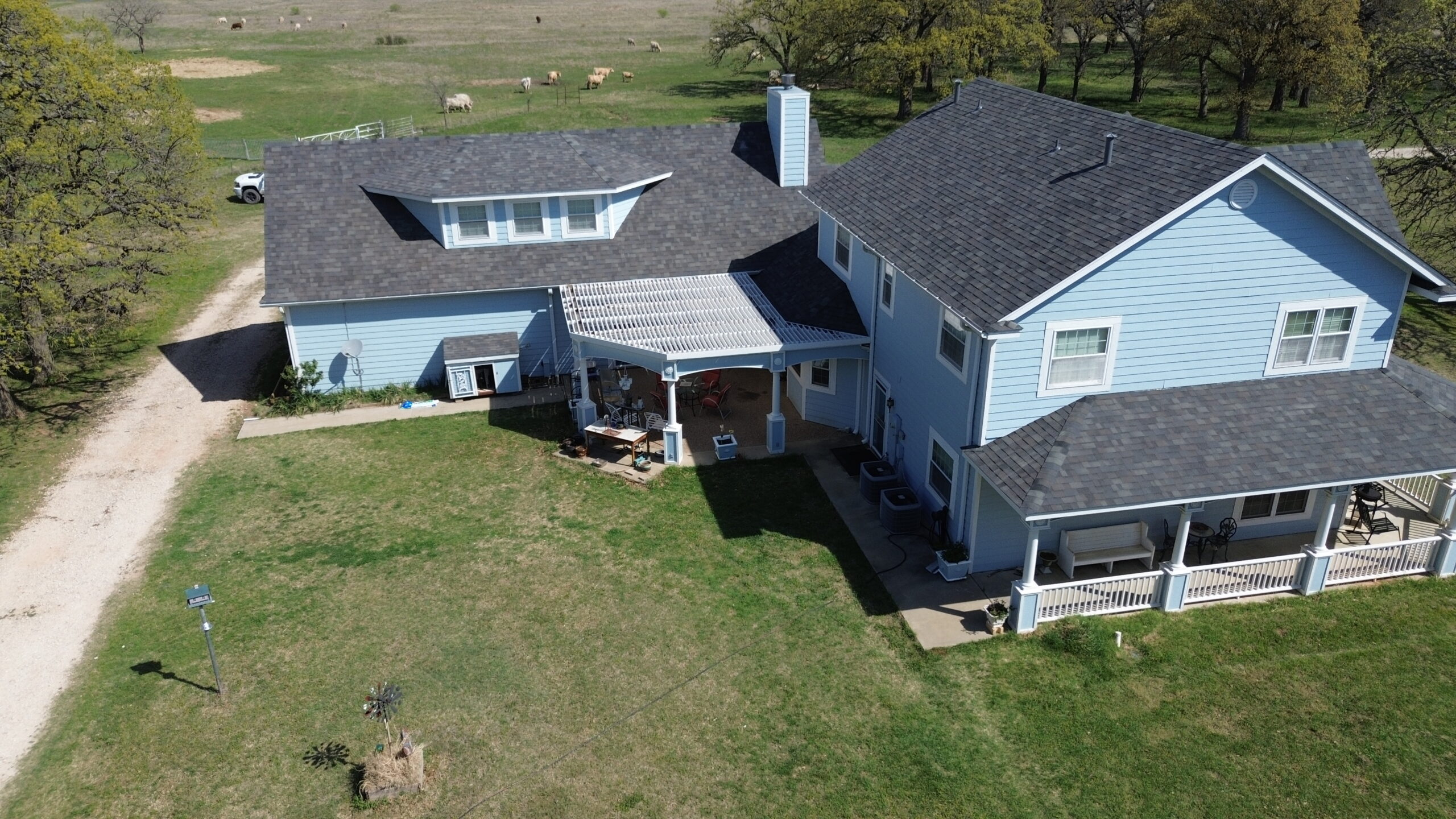
Recycled and composite roofing products provide another approach to sustainable residential roofing. These materials can be manufactured using recycled plastics, rubber, reclaimed materials, or combinations of different components. Some products are designed to reproduce the appearance of slate, wood shakes, or other traditional roofing materials.
Using recycled content can help reduce demand for certain virgin resources. For example, some composite roofing products incorporate materials that might otherwise become waste. Turning these materials into durable roofing products can give them a longer useful life.
Composite roofing can also offer design flexibility. Homeowners may be able to achieve the appearance of premium materials without using natural slate or other heavy products. This can make certain composite systems attractive for homes where structural limitations or budget considerations make traditional materials less practical.
Durability varies significantly between products. Some composite roofing materials are designed to resist impact, moisture, and weather exposure, while others may perform differently depending on their construction and installation. Homeowners should review product specifications rather than assuming all recycled roofing products offer the same service life.
Weight can be another advantage. Certain composite products are lighter than natural slate or concrete tile, potentially reducing structural demands and transportation requirements. This can make them easier to handle during installation.
Maintenance requirements also vary. A durable composite product that requires limited maintenance can provide sustainability benefits over its service life. However, homeowners should investigate how the material behaves after years of exposure to sunlight, temperature changes, and moisture.
End of life recycling is an important question for composite products. A material containing recycled content is not automatically recyclable after installation. Different combinations of plastics, rubber, resins, and other components may be difficult to separate or process.
Homeowners should therefore ask manufacturers about both recycled content and end of life options. Information about product lifespan, warranties, maintenance, and recycling can provide a clearer picture of the material’s overall environmental performance.
Composite roofing can be a practical choice when homeowners want durability, design flexibility, and recycled material content. The most sustainable option will depend on the specific product and how it performs throughout its complete life cycle.
Green and Living Roof Systems
Green roofs, sometimes called living roofs, are designed with vegetation and growing media over a waterproof roofing system. Instead of relying only on a conventional exposed roofing surface, a green roof creates a layered system that can include a waterproof membrane, drainage layer, growing medium, and plants. This approach can provide environmental benefits while creating a distinctive feature for a residential property.
One major advantage of a green roof is its ability to manage rainwater. Vegetation and growing media can absorb and temporarily retain some rainfall, reducing the amount of water immediately flowing into gutters and stormwater systems. This can be particularly useful in urban environments where heavy rainfall can place pressure on drainage infrastructure.
Green roofs can also provide additional insulation. The growing medium and vegetation can help moderate temperatures at the roof surface, potentially reducing heat transfer into the building. The actual energy benefit depends on the roof design, climate, insulation, vegetation, and construction quality.
Another benefit is the potential reduction of the urban heat island effect. Traditional roof surfaces can become extremely hot under direct sunlight, while vegetation can provide shading and release moisture through natural processes. When used across many buildings, green roofs can contribute to cooler urban environments.
However, green roofs require careful structural planning. The complete system becomes significantly heavier when the growing medium is saturated with water. The supporting structure must therefore be evaluated before installation.
Waterproofing is also critical. A green roof should have a reliable waterproof membrane and drainage system because leaks can be difficult to identify once vegetation and growing media cover the surface. Professional design and installation are particularly important for this type of roofing.
Maintenance requirements vary depending on the type of green roof. Extensive systems generally use lower-growing plants and require less maintenance, while intensive systems may support a wider variety of vegetation but require more attention.
Green roofs may not be practical for every residential property. Roof slope, structural capacity, local climate, access, maintenance requirements, and budget all need to be considered. They can be an environmentally valuable option when properly designed, but they require more planning than conventional roofing systems.
Solar Roofing and Energy Generation
Solar roofing combines roofing functions with solar energy generation. Traditional solar panels can be installed above many roofing materials, while newer solar roofing products integrate photovoltaic technology into roof components. Both approaches can help homeowners generate renewable electricity from sunlight.
The environmental advantage of solar roofing comes primarily from its ability to produce electricity without directly burning fossil fuels during operation. The amount of electricity generated depends on factors such as roof orientation, available sunlight, shading, system size, and local climate.
Solar panels can often be installed over durable roofing materials such as metal or tile. This approach allows homeowners to combine a long-lasting roofing system with renewable energy generation. When the roof and solar system are planned together, installation and future maintenance can sometimes be managed more efficiently.
Solar shingles provide another option by incorporating photovoltaic cells into roofing products. They can create a more uniform appearance than traditional panels, although availability, cost, installation requirements, and performance vary by product.
The roof’s condition should be evaluated before adding solar equipment. Installing solar components on an aging roof may create complications if the roof requires replacement later. In some situations, replacing the roof before installing solar equipment may be more practical.
Energy efficiency should also be considered alongside energy generation. A well-insulated home with an appropriately designed roof can reduce energy demand, while solar technology can help supply part of the remaining electricity requirement. These strategies can work together rather than being treated as separate improvements.
Solar roofing has environmental costs as well. Manufacturing photovoltaic equipment requires raw materials, energy, and transportation, and the panels have a finite service life. However, the electricity generated during their operating period can provide significant renewable energy benefits.
Homeowners should also consider roof maintenance and access. Solar equipment can make certain roof repairs more complicated, so the roofing and solar systems should be designed with future servicing in mind.
For homeowners with suitable roofs and adequate sunlight, solar roofing can be an effective way to combine sustainable energy generation with a roofing project. Professional assessment is important to determine whether the roof can accommodate the system and whether the expected energy production justifies the investment.
Sustainable Wood Shingles and Shakes
Wood shingles and shakes can provide a natural roofing appearance and may be considered a sustainable option when responsibly sourced materials are used. Wood is a renewable resource, but the environmental benefits depend heavily on how it is harvested, manufactured, transported, treated, and maintained.
Responsible forestry practices are important. Wood sourced from well-managed forests can support renewable material use while helping maintain forest resources. Homeowners interested in sustainable wood roofing should ask about the source and certification of the material where applicable.
Wood roofing can also provide a distinctive appearance that changes naturally over time. The material can develop a weathered character that complements certain architectural styles.
However, wood roofing requires more maintenance than some other roofing materials. Moisture, insects, fungal growth, sunlight, and weather exposure can affect performance. Proper design, ventilation, installation, and maintenance are therefore essential.
Fire resistance is another important consideration. Wood is combustible, so local regulations and fire-risk conditions must be evaluated before choosing wood roofing. Some wood products can receive treatments that improve fire performance, but homeowners should confirm whether the product meets applicable requirements.
The expected service life also varies. Properly maintained wood roofing can perform for many years, but environmental conditions and maintenance quality can significantly affect longevity.
Sustainability should therefore be considered across the material’s complete life cycle. A responsibly sourced wood product that lasts for many years may have a different environmental profile from a poorly sourced or frequently replaced product.
Homeowners should also consider the availability of replacement materials. If individual shingles or shakes become damaged, matching the existing material may be easier when the product remains readily available.
Wood roofing can be a suitable choice for homeowners who value natural materials and are prepared for regular maintenance. Its environmental benefits are strongest when responsibly sourced materials are selected and the roof is maintained well enough to achieve a long useful life.
Reclaimed and Reused Roofing Materials
Reclaimed and reused roofing materials offer another way to reduce the environmental impact of residential construction. Instead of manufacturing entirely new products, homeowners can use materials recovered from previous buildings or renovation projects when those materials remain suitable for safe installation.
Reclaimed clay tiles are one example. Older tiles can sometimes be carefully removed, inspected, cleaned, and reused on another property. Because the material has already been manufactured, reusing it can avoid some of the environmental impacts associated with producing new roofing products.
Reclaimed slate can also be reused in appropriate circumstances. Natural slate can have a very long service life, and individual pieces may remain usable even when they are removed from an older roof. However, handling and installation require care because slate can be fragile.
Reusing roofing materials can also provide unique visual benefits. Older products may have colors, textures, and characteristics that are difficult to reproduce with newly manufactured materials. This can be particularly appealing for historic or character-rich homes.
There are limitations, however. Reclaimed materials may have inconsistent dimensions, availability, or condition. A contractor may need to inspect each piece carefully before determining whether it can be reused.
Structural compatibility must also be considered. A reclaimed material may be heavier or require a particular installation method that does not match the existing roof.
Safety and building requirements remain important. Reclaimed materials should be suitable for their intended application and comply with applicable requirements. Homeowners should not use salvaged roofing products simply because they appear to be in good condition.
Transportation can also influence the environmental impact. If reclaimed materials must be transported over very long distances, some of the sustainability benefits may be reduced.
The following comparison illustrates how several roofing options can differ across important sustainability factors:
| Roofing material | Durability potential | Sustainability advantage | Main consideration |
|---|---|---|---|
| Recycled metal | High | Recycled content and recyclability | Manufacturing and initial cost |
| Clay tile | Very high | Long service life and potential reuse | Weight and transportation |
| Concrete tile | High | Long service life | Cement-related environmental impact |
| Composite roofing | Varies | May use recycled materials | End-of-life recycling |
| Green roof | Varies by system | Stormwater and heat management | Structural and maintenance needs |
| Wood roofing | Moderate to high | Renewable when responsibly sourced | Maintenance and fire considerations |
| Reclaimed materials | Potentially high | Reuse avoids new manufacturing | Availability and condition |
The table shows why sustainability cannot be judged by a single feature. Durability, recycling, material sourcing, transportation, maintenance, and installation all influence the overall environmental performance of a roofing system.
Comparing Roofing Materials by Lifespan and Environmental Impact
Lifespan is one of the most useful factors when comparing environmentally friendly roofing materials. A roof that lasts longer can reduce the frequency of replacement and the associated consumption of raw materials, labor, transportation, and disposal resources.
However, lifespan should not be considered independently. A material may last for decades but require energy-intensive manufacturing or substantial transportation. Another material may have a lower manufacturing impact but require more frequent replacement.
Metal roofing provides a useful example. Recycled metal can have a strong sustainability profile because the material may contain recycled content and can often be recycled again. Its long service life can further reduce the need for replacement.
Tile roofing also has strong longevity potential. Clay and concrete tiles can remain functional for decades, and individual damaged tiles can often be replaced without removing the entire roof. However, the weight of tile can increase transportation and structural requirements.
Composite roofing products vary significantly. Some use recycled materials and offer good durability, while others may be difficult to recycle at the end of their service life. Product-specific information is therefore essential.
Green roofs offer environmental benefits that are different from conventional roofing materials. Their value may come from stormwater management, vegetation, temperature moderation, and habitat support rather than simply long service life.
Solar roofing adds another dimension because its sustainability depends partly on renewable electricity generation. The environmental value must be considered alongside manufacturing impacts, system lifespan, maintenance, and eventual replacement.
Homeowners should also consider the expected lifespan of the underlying roofing system. Installing solar equipment over a roof that needs replacement soon may result in unnecessary additional work.
A sustainable roof should ideally provide reliable protection for a long period while minimizing unnecessary material use and energy consumption. The best choice depends on the home’s climate, structure, location, budget, and long-term plans.
Rather than asking which roofing material is the greenest, homeowners can ask which system provides the best balance of durability, energy performance, responsible material sourcing, repairability, and end-of-life options for their particular property. This broader approach provides a more realistic way to evaluate eco friendly residential roofing.
Maintenance, Durability, and Long Term Sustainability
The sustainability of a residential roof depends heavily on how long it remains functional and how much maintenance it requires throughout its service life. A roofing material may contain recycled content or come from a renewable source, but frequent repairs and early replacement can reduce some of its environmental advantages. Homeowners should therefore consider durability and maintenance together when comparing eco friendly roofing options.
Regular maintenance can extend the useful life of almost any roofing system. Cleaning gutters, removing excessive debris, checking flashing, maintaining drainage, and addressing minor damage early can prevent larger problems. A small leak that is repaired promptly may require only localized work, while prolonged moisture intrusion can damage decking, insulation, and interior materials.
Different roofing materials have different maintenance needs. Metal roofing may require periodic inspections of seams, fasteners, coatings, and flashing. Tile roofing may require replacement of cracked or displaced tiles, while wood shingles and shakes generally need more attention to moisture, biological growth, and weathering.
Green roofs have their own maintenance requirements because vegetation must be managed and drainage systems must remain functional. Solar roofing also requires attention to both the roofing surface and electrical components, particularly when repairs are needed.
Durability can reduce environmental impact because fewer complete roof replacements mean less material consumption and construction waste. A roof that lasts several decades may ultimately require fewer resources than a cheaper material that needs replacement more frequently.
Repairability is equally valuable. When individual tiles, metal panels, or shingles can be repaired or replaced without removing the entire roof, homeowners can extend the life of the existing system. This avoids unnecessary disposal of roofing materials that are still performing well.
Climate should also be considered when evaluating durability. Intense sunlight, high temperatures, heavy rainfall, strong winds, hail, snow, and temperature fluctuations can affect different materials in different ways. The most sustainable roofing material is one that can withstand the property’s actual environmental conditions.
Installation quality also has a direct effect on sustainability. Even a highly durable material may fail prematurely if underlayment, flashing, drainage, ventilation, or fastening is handled incorrectly. Professional installation can therefore contribute to environmental responsibility by helping the roof achieve its intended service life.
Homeowners should keep records of inspections and repairs as well. These records can help identify recurring problems and make future maintenance more efficient. They can also provide useful information when the property is eventually sold or the roof needs to be replaced.
A sustainable roofing strategy should focus on keeping the existing roof functional for as long as reasonably possible. Selecting durable materials, performing appropriate maintenance, and repairing localized problems can reduce unnecessary resource consumption over time.
Choosing Eco Friendly Roofing for Different Climates
Climate is one of the most important factors in selecting an environmentally responsible roofing material. A material that performs efficiently in a hot, sunny region may not provide the same benefits in a cold or extremely wet environment. Choosing a roof that naturally suits local conditions can improve durability and reduce maintenance requirements.
In hot climates, solar reflectivity and heat management can be especially important. Light-colored or reflective roofing materials can reduce the amount of solar energy absorbed by the roof surface. Metal roofing with suitable reflective finishes and certain tile systems can provide useful thermal performance when combined with proper insulation and ventilation.
In regions with frequent heavy rainfall, drainage and water resistance become major priorities. Roofing systems should have appropriate slopes, underlayment, flashing, and gutters to move water away from the structure. Materials that remain durable under prolonged moisture exposure may provide better long-term value.
Areas with strong winds require careful attention to fastening and structural performance. A roofing material with excellent environmental credentials is not a sustainable choice if it cannot withstand local weather conditions. Wind-resistant installation methods and suitable products can help reduce storm-related repairs and premature replacement.
Hail-prone regions may require impact-resistant roofing products. Reducing the frequency of storm damage can have environmental benefits because fewer repairs and replacements mean lower material consumption. Homeowners should compare product ratings and local requirements before making a decision.
Humid environments can create conditions favorable to algae, moss, and other biological growth. Some roofing materials and finishes are more resistant to these conditions than others. Proper ventilation and drainage can also help manage moisture around the roof.
Cold climates introduce different concerns, including snow accumulation, freezing temperatures, and ice-related water movement. The roof structure must be capable of supporting applicable loads, while waterproofing and drainage details should be designed to manage moisture effectively.
Green roofs can be particularly valuable in some urban environments because they can help manage stormwater and moderate roof temperatures. However, their structural and maintenance requirements make them unsuitable for some homes.
Solar roofing can be beneficial where adequate sunlight is available. Roof orientation, shading from trees or nearby buildings, and local weather conditions should be evaluated before installation.
Climate-appropriate selection can improve sustainability in a simple but important way. When a roofing material performs naturally well in its environment, it may require fewer repairs, coatings, replacements, and other interventions over its lifetime.
Homeowners should therefore evaluate local weather before focusing on product features. A professional roofing assessment can help identify which sustainable materials are best suited to the property’s climate and roof design.
Comparing Initial Cost and Lifetime Value
Eco friendly roofing materials can vary considerably in price, so homeowners should look beyond the initial installation cost. A less expensive roof may require more frequent replacement, while a higher-priced system may remain functional for decades. Lifetime value provides a more useful basis for comparing these options.
Initial cost can include the roofing material, labor, underlayment, flashing, structural preparation, removal of the existing roof, transportation, and disposal. Some sustainable systems may require specialized installation, increasing labor costs.
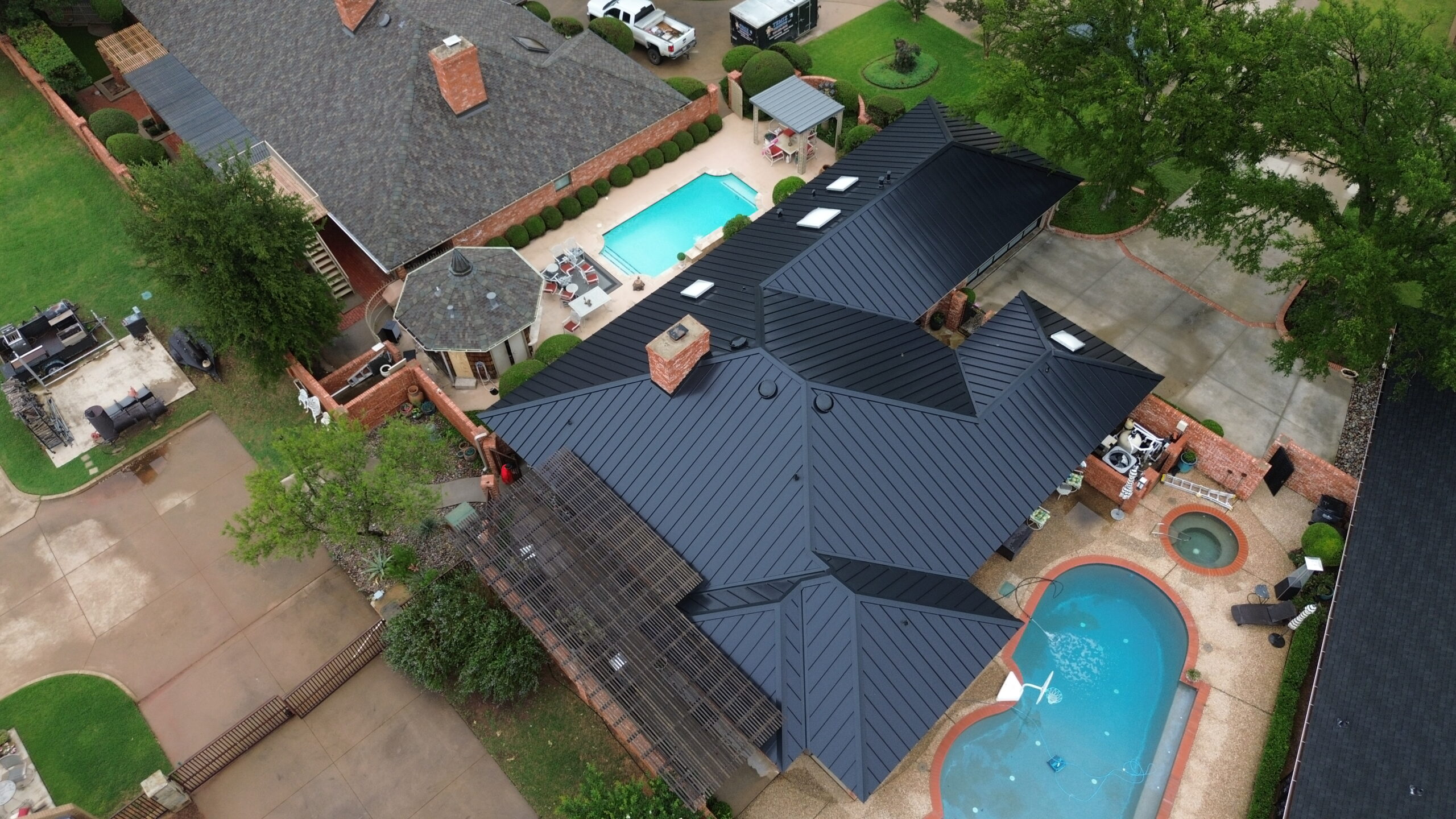
Metal roofing may have a higher initial cost than basic asphalt shingles, but its durability and recyclability can contribute to long-term value. Tile can also require a significant investment, particularly when structural reinforcement is necessary, but its long service life can make it attractive for long-term homeowners.
Recycled or composite materials occupy a broad range of price points. Some products are designed to provide premium appearance and durability, while others focus more strongly on affordability. Product specifications should be reviewed carefully because recycled content alone does not indicate expected lifespan.
Green roofs can involve higher design and installation costs because they require waterproofing, drainage, growing media, and vegetation. Maintenance expenses should also be included when evaluating their lifetime value.
Solar roofing is a different investment because it can potentially generate electricity in addition to providing a roofing function. The financial value depends on installation cost, energy production, electricity rates, system lifespan, maintenance, and other local factors.
Homeowners should also consider repair costs. A roofing system that allows individual damaged components to be replaced can provide better long-term value than one that requires large sections to be removed for relatively minor damage.
The expected replacement date should be part of financial planning. If a homeowner plans to remain in the property for decades, investing in a durable roofing system may make more sense than choosing a material primarily for its low initial price.
A useful comparison should include these factors:
| Factor | Why It Matters |
|---|---|
| Initial installation | Determines upfront investment |
| Expected lifespan | Indicates how often replacement may be needed |
| Maintenance | Affects long-term expenses and resource use |
| Repairability | Can reduce unnecessary material replacement |
| Energy performance | May reduce household energy demand |
| Recyclability | Can reduce end-of-life waste |
| Weather resistance | Helps prevent premature replacement |
Lifetime value is therefore closely connected to sustainability. A durable roof that requires limited intervention can conserve resources while also reducing long-term ownership costs.
Structural and Installation Considerations
A sustainable roofing material must be suitable for the structure supporting it. Before installation, homeowners should determine whether the existing roof can safely accommodate the selected material and whether any structural improvements are necessary.
Weight is particularly important when considering clay tile, concrete tile, green roofs, and certain other heavy systems. A roof structure designed for lightweight shingles may not automatically be appropriate for a heavier roofing assembly.
Solar equipment can also add structural and installation considerations. The roof should be in suitable condition before panels or integrated solar products are installed. Installing renewable energy equipment on an aging roof may create additional work if replacement becomes necessary soon afterward.
Green roofs require especially careful structural planning because saturated growing media can become significantly heavier. Drainage and waterproofing must also be designed to protect the underlying structure.
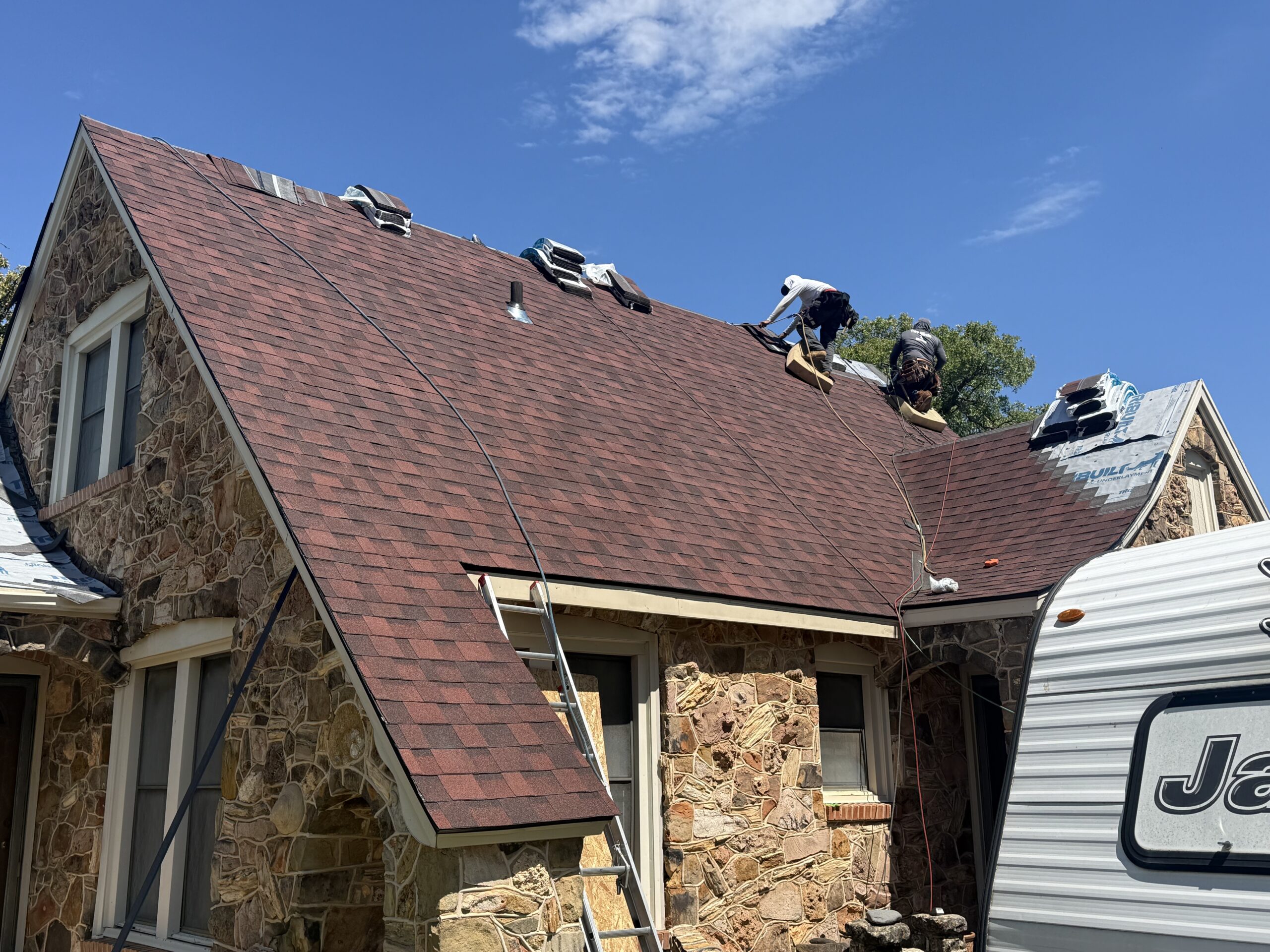
Installation quality affects sustainability regardless of material. Poorly installed flashing can cause leaks, inadequate fastening can result in storm damage, and poor ventilation can contribute to premature deterioration. These problems can shorten the useful life of even the most environmentally responsible roofing product.
Homeowners should select contractors who have experience with the specific roofing system being considered. Installation requirements can vary significantly between metal, tile, wood, composite, green, and solar roofing.
A detailed project proposal should identify the major roofing components. This can include the primary roofing material, underlayment, flashing, ventilation, fasteners, drainage components, insulation work, and removal or disposal procedures.
Proper disposal of existing roofing materials should also be part of the project plan. Homeowners can ask whether old materials can be recycled, reused, or otherwise diverted from landfill disposal where suitable facilities are available.
Local building requirements should be reviewed before installation. Requirements may address structural capacity, fire performance, wind resistance, roof slope, drainage, or other aspects of roofing construction.
Careful planning can prevent unnecessary material waste. Measuring the roof accurately, ordering appropriate quantities, protecting materials during installation, and avoiding unnecessary removal of reusable components can all improve project efficiency.
The installation stage is therefore a major part of environmental responsibility. A sustainable product only provides its full potential when it is installed correctly and integrated into a complete roofing system.
Selecting the Most Sustainable Roofing System
There is no single roofing material that is automatically the most sustainable for every residential property. The best option depends on climate, building structure, budget, energy goals, expected lifespan, maintenance preferences, and available recycling or reuse infrastructure.
For homeowners prioritizing recyclability and durability, recycled metal roofing can be an attractive choice. It can provide long service life and may have strong end-of-life recycling potential when the material is properly recovered.
Tile can be appealing to homeowners who prioritize longevity and traditional appearance. Clay and concrete tiles can remain functional for many decades, although their weight and manufacturing impacts should be considered.
Recycled composite roofing may suit homeowners who want alternative appearances or products containing recycled materials. However, the specific product’s durability and end-of-life options should be investigated rather than assuming all composite materials have the same environmental profile.
Wood roofing may be appropriate when renewable materials and natural appearance are priorities. Responsible sourcing and maintenance are essential because the environmental benefits depend heavily on how the material is produced and maintained.
Green roofs can provide benefits beyond conventional roofing, including stormwater management, vegetation, and heat reduction. They require more structural planning and maintenance, so they are best suited to properties where those requirements can be accommodated.
Solar roofing can be particularly valuable for homeowners interested in renewable electricity generation. It should be evaluated alongside the roof’s condition, available sunlight, expected energy production, and long-term maintenance requirements.
The most sustainable decision often involves combining several strategies. For example, a durable recyclable roof can be paired with effective insulation, appropriate ventilation, reflective finishes, and solar energy equipment where suitable.
Homeowners should also avoid replacing a functional roof solely because a newer product has stronger sustainability claims. Extending the useful life of an existing roof through appropriate maintenance and localized repair can sometimes be more environmentally responsible than removing usable materials prematurely.
A professional assessment can help determine whether repair, restoration, or complete replacement is the best approach. If replacement is necessary, homeowners can then compare materials based on their complete life cycle rather than focusing on one environmental feature.
Conclusion
Choosing an eco friendly residential roofing material requires more than selecting a product labeled as sustainable. A truly responsible decision considers durability, manufacturing, recycled or renewable content, energy performance, maintenance, repairability, transportation, and end-of-life disposal.
Long-lasting roofing materials can provide an important environmental advantage because they reduce the frequency of replacement. Metal, tile, certain composite products, responsibly sourced wood, and other systems can all provide sustainability benefits when they are appropriate for the property and maintained properly.
Energy efficiency should also remain part of the decision. Reflective roofing, adequate insulation, proper ventilation, green roof systems, and solar technology can each contribute to improved building performance when used appropriately.
Climate and structural suitability are equally important. The most environmentally attractive material will not provide good long-term results if it cannot handle local weather conditions or places excessive demands on the building structure.
Homeowners should compare lifetime value rather than focusing only on initial cost. Installation, maintenance, repairs, energy performance, expected lifespan, and eventual replacement all contribute to the overall financial and environmental impact of a roof.
Ultimately, the most sustainable roofing system is one that performs reliably for a long time while using resources responsibly. By evaluating the complete life cycle of each option and working with qualified roofing professionals, homeowners can choose a roof that protects the property while supporting practical environmental goals.