
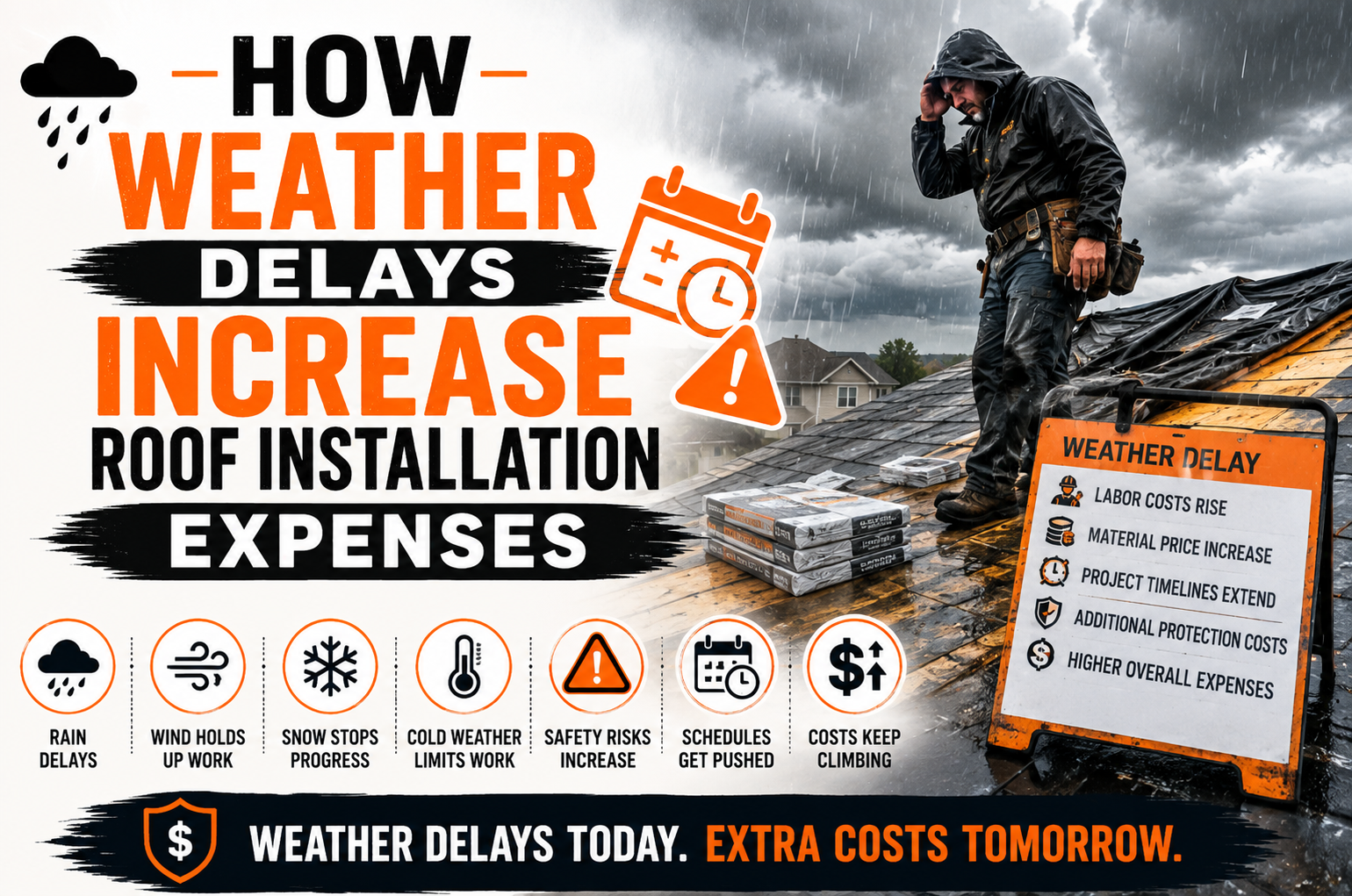
How Weather Delays Increase Roof Installation Expenses
Introduction
Weather is one of the most unpredictable factors affecting a roof installation project. Even when a homeowner, contractor, and material supplier have carefully planned the work, rain, strong winds, extreme temperatures, storms, or other unfavorable conditions can force the installation schedule to change. These delays can increase project expenses in several ways, from extending labor time to creating additional material handling and site protection requirements.
Roofing work depends heavily on suitable weather conditions because much of the installation takes place outdoors and at elevation. Certain roofing materials also require specific environmental conditions for proper installation, sealing, fastening, or curing. Attempting to continue work during unsafe or unsuitable weather can increase the risk of accidents and installation defects.
A weather delay does not always mean that a contractor is charging homeowners for doing nothing. Additional costs can arise because crews need to return to the property, equipment may remain on-site longer, temporary protection may be required, and other scheduled projects can be affected. Understanding these factors can help homeowners prepare for possible changes in their roofing budget and timeline.
Understanding Weather Delays in Roof Installation
A weather delay occurs when conditions prevent a roofing crew from safely or properly performing scheduled work. The decision to postpone work may be based on precipitation, wind speed, temperature, lightning, severe weather warnings, or the requirements of the specific roofing material being installed.
Weather can affect different stages of a roofing project in different ways. A crew may be able to perform some preparation work during light unfavorable conditions but may need to stop completely when the roof surface becomes wet or dangerous. Once roofing materials are exposed, however, protecting the structure from moisture becomes an immediate priority.
A delay can occur before the project begins or after installation has already started. If bad weather arrives before materials are installed, the contractor may simply reschedule the crew, but if the roof has already been opened, additional measures may be needed to prevent water from entering the building.
This distinction is important because an ordinary scheduling delay may have a smaller financial impact than a delay involving an exposed roof. The longer an unfinished roof remains vulnerable to weather, the more planning and protection may be required.
Why Weather Matters During Roofing Work
Roof installation requires workers to operate on elevated surfaces while carrying materials and using tools. Wet surfaces can become slippery, while strong winds can make handling large roofing materials more difficult and dangerous. Severe conditions can therefore create safety risks for both workers and the property.
Weather can also affect the performance of roofing materials. Certain adhesives, sealants, coatings, and other products may require specific temperature or moisture conditions to perform correctly. Contractors need to follow manufacturer requirements rather than installing materials under conditions that could compromise their performance.
Rain presents another major concern because roofing systems are designed to protect the structure from water. If underlayment, decking, insulation, or other components are exposed before the roofing system is completed, water can potentially cause damage or create additional drying and repair requirements.
Strong winds can create a different set of challenges. Loose materials can become difficult to control, and some products may be unsafe to handle in high winds. Contractors may need to secure materials, postpone installation, or return when conditions become more suitable.
Rain Delays and Roofing Expenses
Rain is one of the most common causes of roofing delays. Even a relatively short period of precipitation can interrupt work because crews may not be able to safely walk on wet roof surfaces or install certain materials while moisture is present.
When rain is expected, contractors may adjust the day’s schedule before arriving at the property. This can help prevent unnecessary mobilization, but it may also require the crew to reschedule the project for another available date. During busy roofing seasons, finding another suitable opening can sometimes extend the project timeline.
If rain begins after the roof has been partially removed, the situation becomes more complicated. Workers may need to stop installation and cover exposed areas with temporary protection. Additional labor may then be required to inspect the roof after the weather clears and determine whether any moisture has reached vulnerable areas.
Repeated rain can create a cycle of delays when several days of unsuitable weather occur close together. The crew may need to move between projects or repeatedly adjust its schedule, which can affect the expected completion date and potentially increase labor and administrative costs.
How Rain Can Increase Labor Costs
Labor is often one of the largest components of a roofing installation budget, so weather-related changes to the work schedule can have a noticeable financial impact. When a crew loses productive working hours because of rain, the contractor may need additional workdays to complete the original scope.
A delay does not necessarily mean homeowners are directly charged for every hour that workers cannot perform their duties. Instead, additional labor costs may arise from returning to the property, completing temporary protection, moving equipment, performing cleanup again, or extending the duration of certain project activities.
For example, a roofing crew may begin removing an existing roof in the morning before weather conditions deteriorate. If the crew must stop and protect the exposed area, workers may spend additional time securing the property before leaving and then return later to continue the project.
Longer projects can also create additional supervision and coordination requirements. The contractor may need to communicate revised schedules with suppliers, workers, inspectors, and homeowners, particularly when several projects are being managed simultaneously.
Wind-Related Installation Delays
Wind can create significant problems for roofing crews because many roofing materials are lightweight or have large surface areas. Shingles, underlayment, insulation materials, protective sheets, and other products can become difficult to handle when wind speeds increase.
Working on a roof during strong winds can also create serious safety concerns. Workers may have difficulty maintaining balance, carrying materials, or positioning products accurately. Contractors may therefore postpone installation until conditions become safe.
Wind can also affect material placement. Roofing products need to be positioned and secured according to the appropriate installation requirements, and strong gusts can interfere with this process. Attempting to work too quickly under such conditions could increase the likelihood of improper installation.
A wind delay can affect more than the hours lost on a particular day. If the contractor has other projects scheduled, the postponed work may need to be moved into another available time slot. This can extend the overall project timeline and create additional coordination costs.
Extreme Heat and Roofing Labor
High temperatures can affect roofing projects even when there is no rain or storm activity. Roof surfaces can become significantly hotter than the surrounding air, creating demanding working conditions for crews. Contractors may need to adjust working hours, increase breaks, or take other safety measures during periods of extreme heat.
Heat can also affect certain roofing materials. Some products are designed to be installed within particular temperature ranges, and manufacturers may provide specific instructions for handling or application during hot weather.
Asphalt-based roofing products can become more flexible when exposed to high temperatures. This can make handling easier in some circumstances but may also require additional care to prevent damage during installation.
Extreme heat may therefore reduce daily productivity. A crew that normally completes a certain amount of work in a day may require additional time when working conditions become unusually difficult. This can contribute to increased labor requirements without representing poor performance by the contractor.
Cold Weather and Roofing Delays
Cold temperatures can create another set of challenges for roof installation. Some roofing materials and installation products may require certain temperatures for proper adhesion, sealing, or application. If those conditions are not met, contractors may need to delay specific parts of the project.
Cold weather can also affect worker productivity and safety. Handling materials in low temperatures may be more difficult, while icy or frozen surfaces can increase the risk of slips and falls.
Certain roofing systems rely on adhesives or sealants that behave differently under cold conditions. Contractors may need to use approved installation methods or wait for suitable temperatures rather than attempting to force the work forward.
Homeowners should therefore understand that a winter delay may be related to material requirements as well as worker safety. A contractor who postpones installation to maintain proper conditions may be protecting the expected performance of the new roof.
Snow and Ice Complications
In areas where snow and ice occur, winter weather can significantly affect roof installation schedules. Accumulated snow may need to be cleared before work can begin, while ice can create unsafe conditions on roof surfaces, ladders, walkways, and staging areas.
Snow can also add moisture to the roofing system if the roof is not adequately protected during a delay. Contractors may need to take additional steps to keep materials and exposed areas dry before installation continues.
Repeated freeze and thaw cycles can make scheduling more difficult. A day that initially appears suitable may become unsuitable as temperatures change and moisture freezes on the roof surface.
The cost impact depends on the duration and severity of the conditions. A short delay may have minimal financial consequences, while prolonged winter weather can extend the project over several additional workdays or weeks.
Storms and Severe Weather
Severe weather can create some of the most significant disruptions to roofing projects. Thunderstorms, hail, hurricanes, tropical storms, tornadoes, and other major weather events can make roofing work unsafe and may also damage materials or temporary protection already installed.
When severe weather is approaching, contractors may need to secure equipment and roofing materials before leaving the property. If the roof has been partially opened, temporary coverings may be installed to reduce the risk of water intrusion.
After the storm passes, the contractor may need to inspect the work area before continuing. Damage to materials, equipment, temporary protection, or the existing roof can create additional work that was not included in the original installation plan.
Severe weather can also affect the availability of roofing contractors. When multiple homes in an area experience storm damage, local crews may become heavily booked. This can make rescheduling more difficult and potentially increase the waiting period before installation can resume.
Temporary Roof Protection During Delays
Temporary protection can become necessary when weather interrupts a roofing project after the existing system has been removed or damaged. Tarps, temporary membranes, coverings, or other protective measures may be used to reduce exposure to rain and other environmental conditions.
Installing temporary protection requires labor and materials. Workers must secure the covering properly and ensure that vulnerable sections of the roof are protected. If the delay continues, the temporary protection may need to be inspected or adjusted.
Temporary protection is particularly important when an unfinished roof is exposed overnight. A contractor may need to spend additional time securing the property before leaving, even though the final roofing installation cannot continue until the weather improves.
These costs can sometimes be viewed as part of responsible project management rather than unnecessary expenses. Protecting an exposed structure during a weather delay can help prevent much more expensive interior or structural damage.
Material Storage and Weather Protection
Weather delays can also affect how roofing materials are stored. Roofing products may need to remain on-site while the project is paused, but they must be protected from moisture, wind, and other conditions that could damage them.
Some materials require specific storage conditions according to the manufacturer’s instructions. If products are exposed to unsuitable conditions, the contractor may need to inspect or replace them before installation.
Material handling may also become more complicated when the project is extended. Supplies that were originally planned for immediate installation may need to be moved, covered, or secured for several additional days.
These activities can add labor time that homeowners may not immediately associate with weather delays. However, proper material protection is an important part of maintaining the quality of the roofing system.
Scheduling and Contractor Availability
Weather delays can create a chain reaction throughout a contractor’s schedule. Roofing companies often plan multiple projects in advance, so postponing one installation can affect the timing of other jobs.
For example, if a crew loses several days to rain, the contractor may need to move the delayed project into a later opening. The projects originally scheduled after it may also need to be adjusted, particularly when the weather problem affects several properties at the same time.
Busy seasons can make these scheduling challenges more noticeable. During periods of high demand, contractors may already have limited availability, making it harder to find an immediate replacement date.
Homeowners should therefore recognize that a weather delay may affect the calendar even when the actual amount of additional roofing work is relatively small. A project that was expected to take several days can sometimes extend because suitable installation windows are limited.
Equipment Costs During Weather Delays
Roof installation projects often require equipment such as ladders, scaffolding, lifts, generators, safety systems, and material-handling tools. When unfavorable weather extends the project, some of this equipment may need to remain available for a longer period than originally planned.
Equipment rentals are often calculated according to a rental period rather than only the number of hours the equipment is actively being used. If a roofing project is delayed for several days, the contractor may incur additional rental expenses while waiting for suitable conditions.
Some equipment may also need to be removed and returned if the delay is expected to continue. Bringing the equipment back to the property later can create additional transportation and setup requirements.
These costs will not necessarily appear as a separate weather charge on every roofing estimate. They may instead be reflected in the contractor’s overall project price, particularly when the delay affects the company’s operating schedule and resources.
Additional Labor From Repeated Setup
A weather delay can require roofing crews to perform certain tasks more than once. Equipment may need to be positioned, protective coverings installed, materials secured, and work areas prepared again when the project resumes.
For example, a crew may spend part of one day preparing the property and beginning installation before rain forces the work to stop. When the crew returns, some of the preparation may need to be repeated to ensure the site is safe and ready for continued work.
Repeated setup can increase labor without changing the actual size of the roof. This is one reason why weather delays can raise the total expense even when no additional roofing material is ultimately required.
Homeowners should understand that this additional labor is different from unnecessary work. Preparing a site safely after an interruption can be essential to maintaining installation quality and protecting the property.
Material Waste and Replacement Costs
Weather can sometimes damage roofing materials before they are installed. Strong winds, heavy rain, or improper exposure can affect packaging, underlayment, adhesives, sealants, or other products.
If materials become unsuitable for installation, the contractor may need to replace them. The financial impact depends on the amount and type of material affected and whether the manufacturer or supplier provides any applicable protection.
Even when materials are not visibly damaged, contractors may need to inspect them before installation resumes. This additional inspection can help determine whether products remain suitable for use after being exposed to unfavorable conditions.
Material waste can also occur when roofing components are cut or prepared for a project that is later significantly altered. Careful scheduling and storage can reduce this possibility, but extended weather interruptions can make material management more complicated.
Delays Caused by Roofing Material Requirements
Different roofing materials respond differently to weather conditions. Some products have specific installation requirements related to temperature, moisture, wind, or the use of adhesives and sealants.
Asphalt shingles, for example, may rely partly on heat to help certain sealing features activate properly. In cooler conditions, contractors may need to follow additional installation procedures or wait for appropriate conditions rather than assuming that the material will perform normally.
Metal roofing can also require precise installation during suitable conditions. Handling large panels in strong winds can create safety and alignment problems, while moisture can complicate certain stages of preparation.
Tile, slate, and other specialty materials may have their own handling and installation considerations. Homeowners should therefore understand that a weather delay can sometimes be necessary to protect the manufacturer’s installation requirements and the long-term performance of the roof.
Delays and Roof Deck Exposure
The roof deck is an important structural surface beneath the visible roofing material. During a replacement project, portions of the deck may become exposed after the old roofing system is removed.
If rain arrives before the new roofing system is installed, the exposed deck may become wet. Contractors may need to cover the area and later inspect it for moisture-related problems before continuing.
Prolonged exposure can create additional concerns, particularly if water penetrates into materials that were not intended to remain exposed. Drying time may be necessary before new roofing components can be installed correctly.
This situation can increase both labor and project duration. Workers may need to return for inspection, drying, repairs, or replacement of damaged sections before the original installation plan can continue.
How Weather Delays Affect Project Timelines
A weather delay can extend a roofing project beyond its original completion date. While one day of rain may seem minor, several interruptions can accumulate and create a much longer schedule.
The effect can be particularly noticeable when a project already requires several consecutive days of work. If the installation depends on dry conditions and suitable temperatures, even short periods of bad weather can interrupt the sequence of work.
Delays can also affect homeowners’ personal schedules. A longer project may require additional coordination for parking, property access, landscaping protection, pets, children, or other household considerations.
Contractors should provide reasonable updates when weather affects the expected schedule. Clear communication can help homeowners understand whether the delay is likely to last a few hours, several days, or longer.
Permits and Inspections After Weather Delays
Some roofing projects require permits and inspections, and changes to the schedule can affect when these activities occur. If an inspection was already scheduled, a weather delay may require the contractor or homeowner to coordinate a new appointment.
Inspection timing can be particularly important when work cannot proceed to the next stage until the appropriate approval has been received. A delay in one part of the process can therefore create additional waiting time.
Weather can also affect an inspector’s ability to evaluate certain roofing work. Unsafe roof conditions may prevent an inspection from taking place until the surface is accessible and suitable.
Homeowners should ask the contractor who is responsible for coordinating inspections and whether weather-related rescheduling could affect the project timeline. Clear responsibilities can reduce confusion when the original schedule changes.
Insurance Considerations During Weather Delays
Insurance may become relevant when severe weather causes damage to an unfinished or existing roof. However, coverage depends on the policy, cause of damage, circumstances, and specific terms of the insurance agreement.
A homeowner should not assume that every weather-related cost will automatically be covered. Normal deterioration, poor maintenance, construction-related issues, and certain types of damage may be treated differently from damage caused by a covered weather event.
If a storm damages the property during an installation delay, homeowners should document the condition and contact their insurance provider when appropriate. Photographs, contractor records, invoices, and other documentation may help establish what happened and when.
Contractors should not guarantee insurance coverage on behalf of the insurer. Homeowners should rely on their policy and communication with the insurance company when determining whether a weather-related expense may qualify for coverage.
Financing Costs When Projects Take Longer
A longer roofing project can also create indirect financial effects when financing is involved. The loan itself may not automatically become more expensive simply because the installation takes additional days, but unexpected project costs can increase the amount the homeowner needs to finance.
For example, if a weather delay leads to water damage or requires additional repairs, the final project cost could exceed the original estimate. Homeowners may then need to determine how to cover the additional expense.
This is one reason a contingency amount can be useful when planning a roofing budget. Having some funds available for unexpected costs can reduce the need to take on additional high-cost borrowing.
Homeowners using contractor financing should also understand whether changes to the project price require a new financing agreement or an adjustment to the existing arrangement. The financing terms should be reviewed before approving significant additional work.
Weather Delays and Contractor Overhead
Roofing contractors have operating expenses that continue even when crews cannot work. Vehicles, insurance, administrative staff, equipment, storage, scheduling, and other business costs do not necessarily stop during a weather interruption.
When delays extend the time required to complete a project, some of these expenses may be distributed across the contractor’s overall workload. This can influence the final cost of roofing services.
However, homeowners should distinguish between legitimate project costs and unexplained charges. A contractor should be able to explain significant changes to the original estimate and identify why additional work or expenses became necessary.
A written change order can be useful when the scope or cost of the project changes. It gives the homeowner an opportunity to understand and approve additional expenses before they become part of the final bill.
How Multiple Weather Delays Can Compound Costs
One weather delay may have a relatively small effect, but several delays can create a larger financial impact. Each interruption can require additional scheduling, setup, protection, inspection, and material handling.
The effect can become more significant when the project is partially completed. An unfinished roof may require repeated temporary protection, while equipment and materials may need to remain secured for longer periods.
Multiple delays can also affect the contractor’s future schedule. A crew that falls behind on one project may need to adjust several subsequent jobs, creating a more complicated scheduling process.
This does not mean every delayed project will experience a major cost increase. The actual impact depends on the severity of the weather, project size, contractor scheduling practices, material requirements, and how effectively the site is protected.
Weather Delays and Cleanup Costs
Roof installation creates considerable debris even under normal conditions. When weather interrupts the work, cleanup may need to occur more than once, especially if loose materials or protective coverings must be secured before a storm.
A contractor may perform temporary cleanup before leaving the property and then complete final cleanup after installation resumes. This can require additional labor and disposal services.
Strong winds can also spread lightweight debris around the property. The crew may need to collect materials from landscaping, driveways, walkways, and other areas before work can safely continue.
Proper cleanup is important for both safety and property protection. Although it adds to the labor involved, careful site management can prevent injuries and reduce the possibility of damage caused by loose roofing materials.
Protecting Landscaping and Property During Delays
Roofing contractors often take steps to protect landscaping, windows, siding, driveways, and other parts of the property during installation. Weather interruptions can make this protection more important because coverings and protective materials may need to remain in place longer.
Heavy rain can create drainage and runoff concerns around the work area. Strong winds may require temporary coverings or materials to be secured more firmly.
If protective systems become damaged by weather, they may need to be repaired or replaced before work resumes. In severe circumstances, landscaping or exterior property may also require additional attention.
Homeowners should discuss property protection with the contractor before work begins. Knowing how the site will be secured during an unexpected weather delay can provide greater confidence that the project is being managed responsibly.
Planning Around Seasonal Weather
The time of year can have a major effect on the likelihood of weather-related roofing delays. Some seasons may provide more consistent conditions, while others can bring frequent storms, heavy rainfall, extreme heat, snow, or freezing temperatures.
Homeowners who have flexibility may benefit from discussing seasonal scheduling with their contractor. Choosing a period with generally favorable conditions can reduce the likelihood of repeated interruptions, although no season can guarantee perfect roofing weather.
Seasonal demand can also affect contractor availability. Roofing companies may be busiest during periods when homeowners are preparing for or recovering from severe weather. Planning early can provide more scheduling flexibility.
However, homeowners should not delay an urgent roof replacement indefinitely simply to wait for ideal conditions. If the existing roof is failing, addressing the problem promptly may prevent more expensive damage.
Reducing the Financial Impact of Weather Delays
Although homeowners cannot control the weather, they can take steps to reduce the financial impact of delays. Choosing an experienced contractor, discussing weather procedures in advance, and maintaining a reasonable contingency budget can make unexpected interruptions easier to manage.
The following practices can help:
- Schedule the project with realistic weather expectations rather than assuming every planned workday will be usable.
- Ask how the contractor protects an unfinished roof when bad weather is approaching.
- Confirm whether equipment, material storage, and additional labor costs are addressed in the contract.
- Keep a reasonable financial reserve for unexpected repairs or weather-related project changes.
- Maintain communication with the contractor when the schedule changes.
Good planning does not eliminate weather delays, but it can reduce the chance that a delay turns into a major financial problem. Contractors who have clear procedures for temporary protection, scheduling, and communication are generally better prepared to manage changing conditions.
Why Rushing After a Weather Delay Can Cost More
Once weather improves, homeowners may naturally want the roofing crew to finish as quickly as possible. However, rushing installation can create problems if the roof, materials, or working conditions are not yet ready.
A roof may need time to dry before certain components can be installed. The contractor may also need to inspect previously exposed areas for moisture or damage before covering them.
Trying to recover lost time by skipping preparation or rushing detailed work can increase the risk of installation defects. Problems that develop later can result in repair costs that are much higher than the original weather-related delay.
A professional contractor should therefore balance schedule recovery with installation quality. Completing the roof correctly is more important than finishing a few days earlier if rushing could compromise the roofing system.
Budgeting for Weather-Related Roofing Expenses
Planning a roofing budget should include some flexibility for weather-related interruptions. Even when a contractor provides a detailed estimate and schedule, outdoor construction is affected by conditions that cannot always be predicted accurately several weeks in advance. Setting aside a reasonable contingency amount can help homeowners manage unexpected expenses without disrupting the entire project.
The contingency does not necessarily need to cover every possible weather event. Instead, it can provide financial room for additional labor, temporary protection, minor repairs, equipment use, or other reasonable changes that may occur when weather interrupts the work.
Homeowners should also distinguish between a legitimate weather-related cost and an unexplained increase in price. If the contractor requests additional payment, the homeowner should ask what changed, why the expense occurred, and whether the additional work is supported by the project agreement.
Reviewing Weather Delay Provisions in the Contract
A roofing contract should explain how weather-related delays are handled whenever possible. The agreement may identify circumstances that allow the contractor to adjust the completion date, particularly when conditions make it unsafe or inappropriate to continue working.
Homeowners should review whether the contract addresses rain, high winds, extreme temperatures, severe storms, material availability, and other circumstances that could affect the schedule. Understanding these provisions before work begins can prevent disagreements later.
The contract should also make clear how additional work is approved. If unexpected damage is discovered after a weather event, homeowners should know whether the contractor must obtain approval before performing repairs and how those repairs will be priced.
Clear documentation is particularly useful when a project extends beyond its original completion date. Both the homeowner and contractor can refer to the agreed terms when discussing schedule changes or additional expenses.
Communicating With the Roofing Contractor
Good communication can significantly reduce the stress associated with weather delays. Homeowners should expect contractors to provide updates when conditions affect the planned schedule, particularly when the roof has already been partially opened.
A contractor should be able to explain whether the delay is expected to last for a few hours, several days, or an uncertain period. While exact predictions may not always be possible, regular communication helps homeowners understand what is happening and what steps are being taken to protect the property.
Homeowners can also ask when the crew expects to return and whether any additional preparation will be required. If the schedule changes repeatedly, documenting important conversations through written messages or emails can help maintain a clear record.
Communication should remain focused on safety and project quality rather than pressuring the crew to work during unsuitable conditions. A short delay is generally preferable to an installation performed under conditions that could compromise workers or the roof itself.
Comparing Weather-Related Costs Between Contractors
When comparing roofing estimates, homeowners may want to understand how each contractor handles weather interruptions. Two contractors may provide similar initial prices but have different approaches to scheduling, temporary protection, equipment, and unexpected conditions.
A contractor with a detailed weather policy may provide greater clarity about what happens if rain or severe weather interrupts the project. This does not automatically mean the contractor will have the lowest final cost, but it can reduce uncertainty.
Homeowners should ask whether temporary roof protection is included when necessary and whether additional equipment or return visits could create extra charges. The answers can help identify differences between proposals that are not obvious from the initial total.
The goal is not to find a contractor who promises that weather will never increase costs. Such a promise may be unrealistic. Instead, homeowners should look for a contractor who explains potential risks clearly and manages them responsibly.
Weather Delays and Long-Term Roof Performance
Allowing appropriate weather conditions for installation can contribute to the long-term performance of a roofing system. Roofing materials need to be installed according to manufacturer requirements, and certain products may not perform as intended when applied under unsuitable conditions.
For example, adhesives and sealants may require specific temperatures or dry surfaces. If these requirements are ignored simply to avoid a schedule delay, the roof could experience problems that become apparent only after installation.
Moisture can also create concerns when roofing components are covered before they are sufficiently dry. Proper installation requires contractors to assess the condition of the roof and determine whether it is ready for the next stage.
A weather delay can therefore be viewed as an investment in installation quality. Although postponing work may be inconvenient, allowing the contractor to work under suitable conditions can reduce the risk of future problems.
When a Weather Delay Can Actually Save Money
A delay may initially appear to increase expenses, but stopping work at the right time can sometimes prevent much larger costs. Continuing to install roofing materials during unsafe or unsuitable conditions can result in damaged materials, poor workmanship, accidents, or water intrusion.
For example, installing roofing components during heavy rain could expose the property to moisture and make proper installation more difficult. Stopping the work and temporarily protecting the structure may cost less than repairing extensive damage later.
Similarly, postponing work during high winds can prevent materials from being damaged or workers from being injured. A responsible contractor considers the potential consequences of continuing work before deciding whether the schedule should change.
This makes weather management an important part of professional roofing rather than simply an inconvenience. The cheapest approach on a particular day is not necessarily the least expensive approach over the entire life of the roof.
Understanding the Difference Between Delay and Poor Planning
Not every project delay should automatically be attributed to weather. Homeowners should distinguish between legitimate weather interruptions and delays caused by poor organization, material shortages, scheduling problems, or inadequate staffing.
Weather is a valid reason to postpone roofing work when conditions genuinely make installation unsafe or unsuitable. However, a contractor should still manage the project efficiently and communicate clearly about changes that are within the company’s control.
If a project repeatedly misses scheduled dates without clear weather-related reasons, homeowners may reasonably ask for an explanation. Reviewing the contract and maintaining written records can help establish whether the delays are consistent with the agreed project terms.
Professional project management involves preparing for weather while also managing the factors that the contractor can control. A well-organized company should have procedures for responding to changing conditions without creating unnecessary delays.
The Financial Effect of Prolonged Roofing Delays
A short weather interruption may have little effect on the overall project cost, while prolonged delays can have a much greater impact. Several consecutive days of unsuitable conditions can extend labor requirements, equipment rental periods, material storage, and site protection.
The financial effect can become more significant when the project is already partially completed. An exposed roof may require repeated temporary protection, while the homeowner may need to continue making arrangements around the construction site.
Long delays can also affect other household plans. If the roofing project was scheduled around travel, property maintenance, or another renovation, a change in the completion date may create additional inconvenience or expenses.
Homeowners should therefore maintain realistic expectations when scheduling outdoor construction. A contractor can establish an estimated timeline, but weather conditions may prevent that timeline from being guaranteed.
Preparing for Weather Before Installation Begins
Good preparation can reduce the impact of weather once a roofing project starts. Homeowners can discuss the expected installation period with the contractor and ask how the company monitors weather forecasts before each workday.
The contractor can also plan material deliveries around the anticipated schedule. Delivering every material too early may create unnecessary storage concerns, while waiting too long can create additional delays if suppliers are unavailable.
The property should be prepared for the possibility of changing conditions. Homeowners may need to move vehicles, secure outdoor furniture, trim branches that interfere with the work area, or make arrangements for pets and other household considerations.
These steps may seem minor, but they can help the crew respond more efficiently when weather conditions change. Better preparation can reduce downtime and make it easier to resume work once conditions improve.
The Importance of Professional Weather Management
Experienced roofing contractors understand that weather is part of outdoor construction. They typically plan projects with weather conditions in mind and make decisions based on worker safety, material requirements, and protection of the property.
Professional weather management may involve monitoring forecasts, adjusting crew schedules, securing materials, protecting unfinished areas, and communicating changes to homeowners. These activities require planning but can reduce the risk of costly mistakes.
A contractor who refuses to work during dangerous conditions should not automatically be viewed as unreliable. In many circumstances, stopping work demonstrates that the company is prioritizing safety and proper installation.
Homeowners can support this process by remaining flexible when conditions genuinely require a schedule adjustment. Cooperation between the homeowner and contractor can make weather-related interruptions easier to manage.
Final Considerations for Homeowners
Weather delays are an unavoidable possibility when installing a roof, but their financial impact can often be managed with careful planning. Understanding the potential effects on labor, equipment, materials, temporary protection, scheduling, and repairs allows homeowners to prepare a more realistic budget.
Before signing a roofing contract, homeowners should ask how weather delays are handled and what costs may result from extended project periods. They should also understand how additional work is approved and documented if weather exposes damage or creates new problems.
Choosing an experienced contractor is another important part of reducing risk. A professional roofing company should have procedures for protecting unfinished work, managing changing schedules, and following material installation requirements.
Homeowners should also remember that finishing quickly is not always the best financial outcome. Allowing roofing work to pause during unsafe or unsuitable conditions can protect the property, workers, materials, and long-term performance of the finished roof.
Conclusion
Weather delays can increase roof installation expenses in several ways, but the financial impact is not limited to lost working hours. Rain, wind, extreme heat, cold temperatures, snow, and severe storms can affect labor productivity, equipment use, material storage, temporary protection, scheduling, inspections, cleanup, and unexpected repairs.
The extent of the additional expense depends on the type and duration of the weather event, the stage of the roofing project, the property’s design, the roofing material, and the contractor’s ability to manage interruptions. A short delay before work begins may have a relatively small effect, while a prolonged interruption after the roof has been opened can require substantially more protection and coordination.
Homeowners can reduce uncertainty by reviewing weather-related provisions in the roofing contract before installation begins. They should understand how schedule changes are handled, whether temporary protection is included, how additional repairs are approved, and what circumstances could result in additional charges.
Maintaining a reasonable contingency budget can also provide protection against unexpected expenses. Having funds available for additional labor, minor repairs, equipment, or other project changes can prevent a weather-related interruption from creating unnecessary financial pressure.
Communication with the roofing contractor is equally important. Regular updates can help homeowners understand why work has stopped, how the property is being protected, and when the crew expects to resume installation.
Most importantly, homeowners should not encourage contractors to rush roofing work simply to recover lost time. Roofing materials and installation procedures often depend on suitable environmental conditions, and completing the work correctly is more important than meeting an unrealistic deadline.
A professionally managed weather delay may add some expense to a roofing project, but it can also prevent much more costly problems. By planning realistically, reviewing the contract, maintaining financial flexibility, and working with an experienced contractor, homeowners can manage weather-related interruptions while protecting the quality, safety, and long-term value of their new roof.