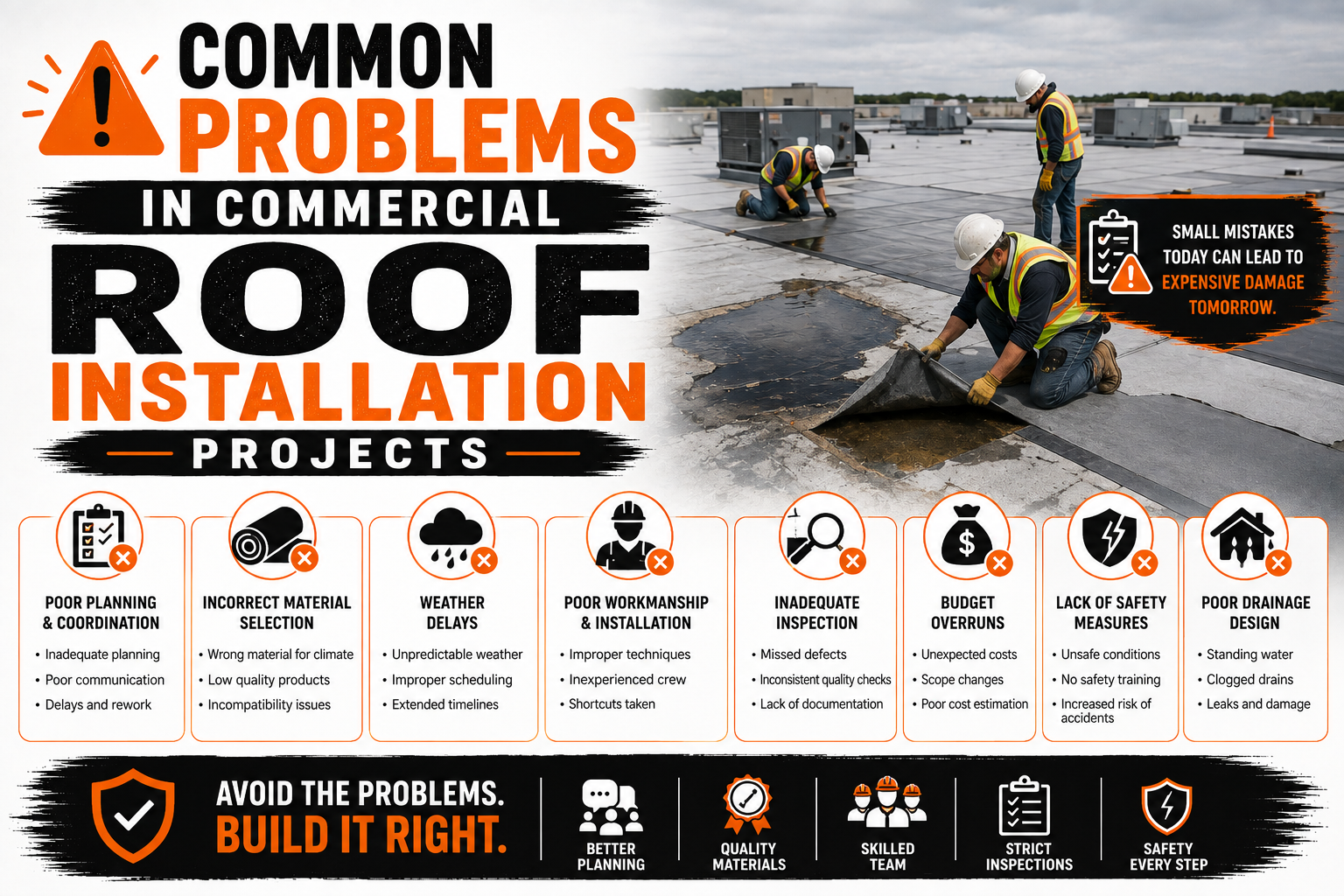
Common Problems in Commercial Roof Installation Projects
Introduction
Commercial roof installation is a major investment that protects a building, its occupants, valuable equipment, and daily business operations. Whether the project involves an office complex, retail center, warehouse, manufacturing facility, healthcare institution, or educational campus, the roofing system must provide reliable performance for many years. However, achieving that goal depends not only on selecting quality materials but also on avoiding the common problems that can arise before and during installation.
Unlike residential roofing, commercial roofing projects are typically larger, more complex, and more demanding. They often involve expansive roof surfaces, multiple contractors, specialized equipment, strict building codes, and carefully coordinated schedules. Because so many moving parts are involved, even a small mistake during planning or installation can lead to costly repairs, project delays, or long-term performance issues.
Many roofing problems do not become visible immediately after installation. Water infiltration, insulation damage, flashing failures, drainage issues, and structural concerns may take months or even years to appear. By the time these problems become noticeable, repairs are often more expensive and disruptive than if the issues had been identified during the installation process.
Project delays represent another common challenge. Weather conditions, material shortages, labor availability, permit approvals, and unexpected structural discoveries can all affect the installation schedule. Without proper planning, these delays may increase project costs while disrupting normal business operations.
Commercial buildings frequently remain occupied while roof installation is underway. Contractors must therefore complete the work while minimizing noise, maintaining safe access, protecting employees and customers, and ensuring that business activities continue with minimal interruption. This balancing act requires careful coordination throughout every stage of the project.
Quality control is equally important because roofing systems are expected to perform under constant exposure to sunlight, wind, rain, snow, temperature fluctuations, and other environmental conditions. Every roofing component, including insulation, membranes, flashing, drainage systems, and fasteners, must work together as a complete system. Weakness in any one component can affect the overall performance of the roof.
Communication also plays a significant role in preventing problems. Property owners, project managers, roofing contractors, suppliers, inspectors, and maintenance personnel all contribute to project success. Misunderstandings between these groups can lead to scheduling conflicts, installation errors, or delays that affect the entire project.
Understanding the common problems associated with commercial roof installation allows property owners and contractors to recognize potential risks before they become major concerns. Instead of reacting after issues occur, they can implement preventive strategies that improve project quality, protect budgets, and reduce future maintenance requirements.
In this guide, we will examine the most common problems encountered during commercial roof installation projects. Beginning with planning, site evaluation, structural conditions, and material selection, we will explore why these challenges occur and how experienced contractors work to prevent them.
Why Problems Occur During Commercial Roof Installation
Commercial roofing projects rarely encounter problems because of a single mistake. Instead, difficulties usually result from a combination of technical, environmental, organizational, and operational factors. Understanding these underlying causes helps contractors develop more effective project management strategies.
One of the primary reasons problems occur is project complexity. Large commercial roofs contain numerous components that must function together. Roofing membranes, insulation, vapor barriers, flashing systems, expansion joints, drainage assemblies, and rooftop equipment all require careful coordination during installation.
Every commercial building is different. An office building has different structural requirements than a hospital or manufacturing facility. Warehouses often contain large uninterrupted roof spans, while shopping centers may include multiple roof elevations and complex drainage layouts. These differences require customized installation plans rather than standardized construction methods.
Building age also influences project complexity. Older structures may contain hidden structural deterioration, outdated construction methods, or previous repairs that are not immediately visible during initial inspections. Contractors occasionally discover unexpected conditions after removing existing roofing materials, requiring adjustments to the project schedule and budget.
Weather remains one of the most unpredictable influences on commercial roofing. Rain, high winds, extreme temperatures, humidity, and sudden storms can interrupt installation activities, damage exposed roofing materials, or create unsafe working conditions. Contractors must remain flexible while protecting both workers and partially completed roofing systems.
Material handling also contributes to installation challenges. Roofing materials must be transported, stored, and installed according to manufacturer recommendations. Improper storage can expose insulation, membranes, adhesives, or sealants to moisture, excessive heat, or contamination before installation even begins.
Communication gaps frequently contribute to project problems. Large roofing projects involve architects, engineers, contractors, suppliers, inspectors, building owners, and facility managers. If important information is not communicated accurately, misunderstandings can affect scheduling, material selection, or installation procedures.
Human error represents another unavoidable factor. Even experienced roofing professionals may occasionally make installation mistakes, particularly when working under tight deadlines or changing weather conditions. Continuous supervision and quality inspections help reduce these risks.
Budget limitations sometimes influence project decisions as well. Attempting to reduce costs by selecting unsuitable materials, shortening project schedules, or reducing inspection activities may create more expensive problems later. Successful projects balance financial considerations with long-term roofing performance.
Changes requested during construction can also introduce unexpected complications. Adding rooftop equipment, modifying drainage systems, or changing roofing materials after installation has begun may require design revisions that affect both schedules and budgets.
Many common roofing problems originate from the interaction of several factors rather than one isolated issue. Contractors who recognize these relationships are generally better prepared to anticipate challenges before they affect project progress.
Poor Planning Before Installation Begins
Many commercial roofing problems can be traced back to decisions made long before installation begins. Effective planning provides the foundation for a successful roofing project, while inadequate preparation often leads to delays, increased costs, and avoidable construction issues.
One of the most common planning mistakes is performing an incomplete roof inspection. Contractors who fail to evaluate the existing roofing system thoroughly may overlook deteriorated insulation, damaged roof decking, drainage problems, or structural weaknesses. These hidden conditions often become apparent only after construction begins, forcing project schedules to change unexpectedly.
Accurate project estimation is equally important. Estimating only labor and material quantities without considering equipment, permits, inspections, weather delays, or waste disposal creates unrealistic budgets. Comprehensive estimates provide a more accurate understanding of total project requirements.
Scheduling errors frequently create unnecessary pressure throughout the installation process. Contractors who establish overly aggressive completion dates may encourage rushed workmanship or insufficient quality inspections. While clients often prefer shorter construction periods, realistic schedules generally produce better long-term results.
Another planning weakness involves inadequate risk assessment. Every commercial roofing project contains uncertainties, including weather changes, material availability, structural discoveries, and operational constraints. Ignoring these possibilities during planning leaves contractors with limited options when problems arise.
Contingency planning is often overlooked despite its importance. Successful contractors prepare alternative strategies for common challenges before construction begins. Backup material suppliers, weather response plans, and flexible work schedules help maintain project momentum even when unexpected situations occur.
Poor coordination with building owners can also affect project success. Contractors should clearly understand operating hours, restricted work areas, security procedures, and special business requirements before installation begins. Failure to gather this information may result in unnecessary disruptions for building occupants.
Permit and regulatory planning deserves equal attention. Commercial roofing projects frequently require permits, inspections, environmental approvals, or safety documentation before work can proceed. Delays in obtaining these approvals may postpone project start dates or interrupt construction unexpectedly.
Material procurement planning also influences project performance. Ordering roofing materials too late may create supply shortages, while ordering everything too early may create storage challenges or expose products to unnecessary environmental conditions.
Effective planning typically addresses several important areas before installation begins.
- Complete roof inspection and structural assessment.
- Accurate budgeting and cost estimation.
- Realistic project scheduling.
- Risk identification and contingency planning.
- Material procurement and delivery coordination.
- Regulatory approvals and permit requirements.
Investing additional time in project planning often reduces both construction delays and long-term maintenance costs. Well-prepared projects generally progress more smoothly because many potential problems have already been identified and addressed before work begins.
Structural and Site Related Challenges
Commercial roofing projects frequently encounter structural and site-related challenges that are not immediately obvious during initial planning. These conditions may increase project complexity while requiring contractors to modify installation procedures to maintain safety and roofing performance.
Hidden structural damage is one of the most common discoveries during roof replacement projects. Moisture infiltration over many years may weaken roof decking, structural supports, or insulation without producing obvious interior signs. Contractors often identify these problems only after removing existing roofing materials.
Weak roof decking requires immediate attention because it forms the foundation for the new roofing system. Installing new roofing materials over damaged decking may compromise structural integrity and reduce the lifespan of the completed roof. Necessary repairs should be completed before installation continues.
Drainage problems are another frequent concern. Commercial roofs depend on properly designed slopes, drains, gutters, and downspouts to remove rainwater efficiently. Poor drainage allows water to accumulate on the roof surface, increasing structural loads while accelerating roofing deterioration.
Rooftop equipment creates additional installation challenges. HVAC systems, ventilation units, satellite equipment, communication antennas, skylights, and solar panels require careful coordination during roofing work. Contractors must protect these systems while maintaining continuous building operations whenever possible.
Limited building access can also complicate commercial roof installation. Urban buildings often provide little space for cranes, material staging, dumpsters, or equipment storage. Contractors must carefully organize deliveries and work areas to maintain efficient construction while minimizing disruption to surrounding businesses.
Roof geometry further influences installation complexity. Buildings with multiple roof elevations, expansion joints, parapet walls, skylights, and architectural features require more detailed installation procedures than simple flat roof designs. Every transition point introduces additional waterproofing requirements.
Older buildings sometimes contain undocumented modifications made during previous renovations. Contractors may discover abandoned equipment, concealed utilities, or unexpected structural changes that require revised installation methods.
Environmental conditions surrounding the property also affect site management. Nearby buildings, landscaping, utility lines, parking areas, and pedestrian traffic influence equipment placement and material handling throughout the project.
Safety considerations become more demanding when site access is limited. Contractors must establish secure work zones while maintaining emergency access, protecting pedestrians, and allowing normal business activities to continue safely.
Structural and site evaluations should continue throughout construction rather than ending after the initial inspection. Ongoing assessments allow contractors to identify changing conditions and respond before they affect project quality or safety.
Material Selection and Delivery Issues
Even when planning and structural evaluations are completed successfully, material-related problems can still affect commercial roofing projects. Roofing materials must be carefully selected, delivered, stored, and installed to achieve their expected performance throughout the roof’s lifespan.
Choosing unsuitable roofing materials is one of the most significant mistakes property owners can make. Roofing systems should match the building’s climate, structural capacity, operational requirements, and maintenance capabilities. Selecting materials based solely on purchase price may increase future repair costs or reduce roofing performance.
Compatibility between roofing components is equally important. Membranes, insulation, adhesives, sealants, fasteners, and flashing systems should function together as an integrated assembly. Mixing incompatible products may affect waterproof performance or manufacturer warranty coverage.
Material shortages have become increasingly common because of changing supply chain conditions. Delayed deliveries may interrupt construction schedules while forcing contractors to adjust installation sequences or postpone certain project activities.
Transportation delays can also affect roofing projects. Weather conditions, traffic disruptions, manufacturing schedules, or shipping issues occasionally prevent materials from arriving according to plan. Contractors who maintain strong supplier relationships often respond more effectively to these situations.
Improper material storage represents another preventable problem. Roofing products exposed to moisture, direct sunlight, contamination, or physical damage before installation may not perform as intended. Contractors should follow manufacturer storage recommendations throughout the project.
Material inspection upon delivery is another important quality control measure. Contractors should verify product quantities, specifications, manufacturing dates, and visible condition before accepting deliveries. Identifying damaged or incorrect materials early helps prevent installation delays later.
Handling procedures also influence roofing quality. Heavy insulation boards, roofing membranes, metal panels, and delicate accessories require careful transportation across the construction site. Rough handling may damage materials before installation even begins.
Weather protection remains essential during storage. Temporary coverings, elevated storage platforms, and organized staging areas help protect roofing products from rain, standing water, and excessive heat while awaiting installation.
Successful material management depends on careful coordination between contractors, suppliers, manufacturers, and project managers. When every stage of procurement, delivery, storage, and handling is managed effectively, contractors reduce the likelihood of installation delays while improving the long-term performance of the completed roofing system.
Common Installation Mistakes
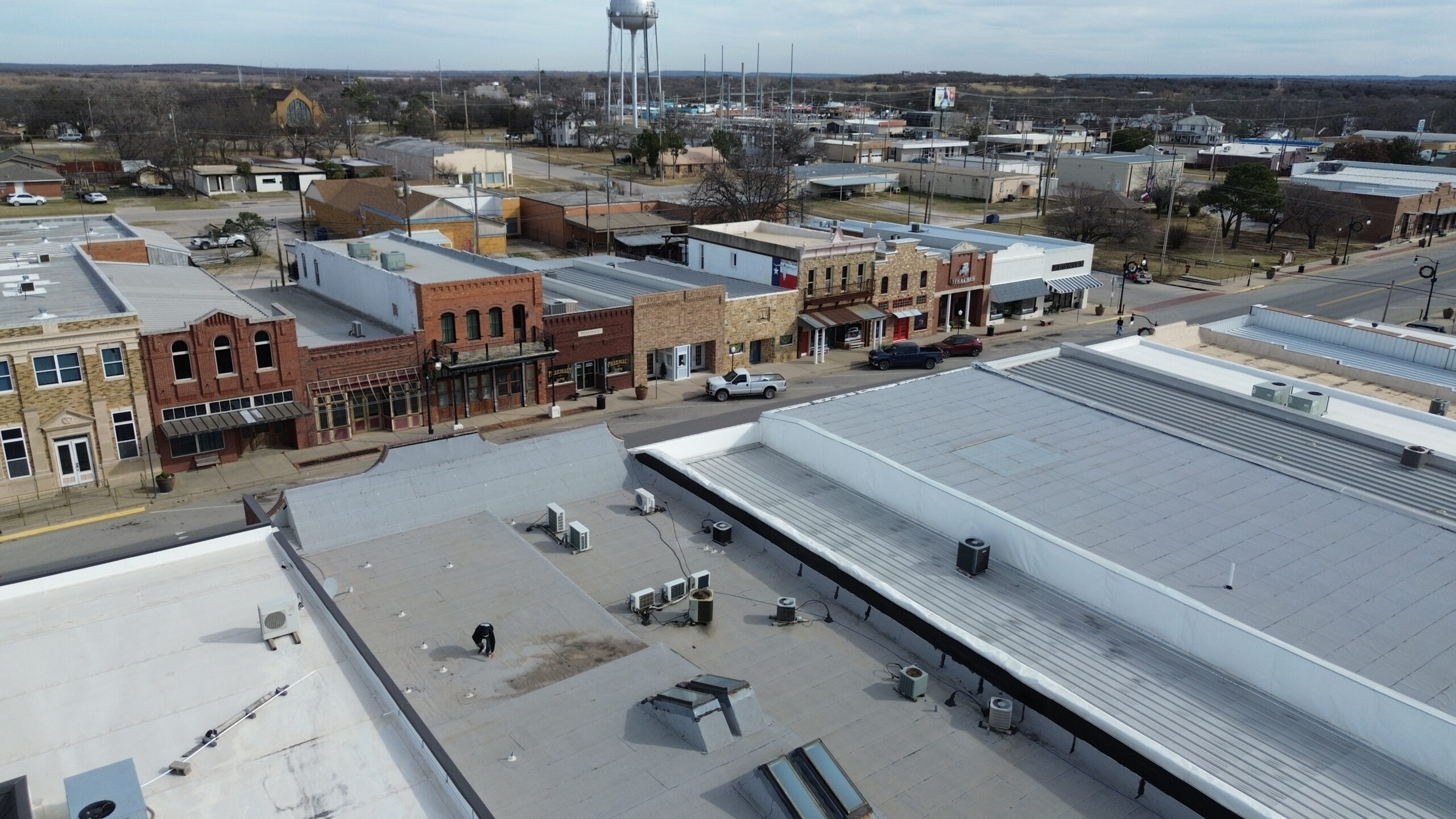
Installation errors remain one of the leading causes of commercial roofing failures. These mistakes may not always be visible immediately after construction is complete, but they often reduce the lifespan of the roofing system and increase maintenance costs over time.
One of the most common installation problems involves improper membrane placement. Commercial roofing membranes must be aligned carefully, installed without wrinkles or trapped air pockets, and secured according to manufacturer requirements. Poor alignment can create weak points that allow moisture to penetrate the roofing system.
Incorrect seam installation is another frequent issue. Many commercial roofing systems rely on welded, adhered, or sealed seams to create a continuous waterproof barrier. If seams are not prepared properly or receive insufficient heat, pressure, or adhesive, water infiltration may occur long before the roofing membrane itself begins to deteriorate.
Flashing installation also requires exceptional attention to detail. Flashing protects vulnerable areas around walls, roof edges, skylights, drains, vents, HVAC equipment, and other penetrations. Improperly installed flashing is one of the most common sources of roof leaks because these transition areas experience continuous movement caused by temperature changes and building expansion.
Fastening techniques also influence roofing performance. Mechanical fasteners must be installed at the correct spacing, depth, and location to resist wind uplift while maintaining membrane stability. Overdriven or underdriven fasteners can reduce attachment strength and compromise the roof’s structural performance.
Insulation installation presents another potential challenge. Gaps between insulation boards, uneven placement, or damaged insulation reduce thermal performance while creating an uneven roofing surface. Proper insulation installation supports both energy efficiency and membrane durability.
Another common mistake involves overlooking roof drainage during installation. Roofing crews should ensure that drains remain unobstructed and that roof slopes continue directing water toward drainage outlets. Blocking drainage pathways with construction debris or improperly installed materials may create ponding water after project completion.
Roof penetrations require careful coordination throughout installation. Pipes, vents, communication equipment, skylights, and rooftop mechanical systems should all receive properly fitted flashing and waterproof seals. Even a small installation error around these features can allow water to enter the building.
Contractors also encounter problems when installation sequences are not followed correctly. Many roofing systems require insulation, vapor barriers, membranes, flashing, and protective layers to be installed in a specific order. Skipping steps or changing the sequence may reduce system performance and affect manufacturer warranty coverage.
Quality control inspections during installation significantly reduce the likelihood of these mistakes becoming permanent defects. Continuous supervision allows contractors to correct problems immediately rather than discovering them after the project has been completed.
Weather Related Construction Problems
Weather remains one of the few project variables that contractors cannot control. However, they can prepare for changing conditions and adjust construction activities to minimize their impact. Failure to respond appropriately to weather conditions often creates installation problems that affect both project schedules and roof performance.
Rain is one of the most obvious challenges during commercial roof installation. Exposed roof surfaces become vulnerable to moisture intrusion whenever existing roofing materials have been removed. Unexpected rainfall may saturate insulation, damage structural components, and delay construction until affected areas are dried or replaced.
High winds introduce another set of concerns. Large roofing membranes, insulation boards, and lightweight materials can become difficult to control under windy conditions. Strong winds also increase safety risks by affecting worker stability and equipment operation.
Extreme heat influences both workers and roofing materials. Adhesives, sealants, and certain roofing membranes may behave differently under high temperatures, requiring contractors to modify installation procedures. Workers also require additional rest periods and hydration to maintain safe working conditions.
Cold weather presents different installation challenges. Some roofing materials become less flexible at lower temperatures, making them more difficult to position correctly. Adhesives and sealants may also require longer curing times before achieving full performance.
Humidity is another environmental factor that can influence roofing installation. Excess moisture in the air may affect adhesives, coatings, or curing processes, particularly for roofing systems that rely on chemical bonding during installation.
One of the most significant weather-related problems is trapping moisture beneath roofing materials. If insulation or roof decking becomes wet before installation is completed, moisture may remain hidden within the roofing assembly. Over time, trapped moisture can reduce insulation performance, encourage mold growth, and contribute to premature roofing deterioration.
Frequent weather interruptions also affect project schedules. Repeated delays may increase labor costs, postpone material deliveries, and extend equipment rental periods. Contractors who include weather contingency time within the original schedule generally manage these disruptions more effectively.
Temporary weather protection plays an important role during commercial roofing projects. Waterproof coverings, temporary membranes, and organized material storage help protect partially completed roofing systems whenever weather conditions change unexpectedly.
Successful contractors monitor weather forecasts continuously rather than relying only on daily predictions. This proactive approach allows them to plan material deliveries, organize installation sequences, and protect exposed roof sections before unfavorable conditions develop.
Workforce and Project Management Challenges
Managing people effectively is just as important as managing roofing materials. Large commercial roof installation projects often involve numerous workers, supervisors, subcontractors, suppliers, inspectors, and client representatives. Coordinating these individuals efficiently remains one of the greatest management challenges throughout construction.
Labor shortages have become increasingly common in the construction industry. Finding experienced roofing professionals can be difficult, particularly during periods of high construction activity. Limited workforce availability may affect project schedules while increasing pressure on existing installation crews.
Inexperienced workers present another challenge. Commercial roofing requires specialized knowledge that cannot be replaced by general construction experience alone. Workers unfamiliar with specific roofing systems may require additional supervision and training before performing complex installation tasks independently.
Communication breakdowns frequently contribute to project delays. Instructions that are misunderstood or incomplete may result in incorrect material installation, scheduling conflicts, or duplicated work. Contractors reduce these risks through regular meetings and clearly documented project procedures.
Coordination between subcontractors also affects project efficiency. Roofing crews often work alongside electricians, HVAC technicians, mechanical contractors, and communication specialists during commercial construction. Without proper scheduling, these teams may interfere with one another’s activities or delay project progress.
Workforce productivity can also fluctuate throughout long projects. Fatigue, changing weather conditions, equipment issues, and repetitive tasks sometimes reduce efficiency over time. Contractors maintain productivity by rotating responsibilities, providing appropriate rest periods, and monitoring crew performance regularly.
Scheduling multiple roofing crews introduces additional complexity. Different sections of the roof may progress at different speeds depending on roof design, weather exposure, or equipment availability. Project managers continuously adjust workforce assignments to maintain balanced progress across the entire installation.
Another challenge involves maintaining consistent workmanship among different crews. Every installer should follow the same quality standards regardless of which roof section they complete. Standardized installation procedures and regular inspections help ensure uniform results.
Project managers also face the responsibility of balancing productivity with quality. Attempting to accelerate installation by skipping inspections or reducing supervision often leads to more expensive repairs later. Maintaining a steady pace generally produces better long-term outcomes than rushing construction.
Strong leadership remains essential throughout workforce management. Supervisors who communicate clearly, solve problems quickly, and support collaboration create more organized and productive construction environments.
Safety and Compliance Problems
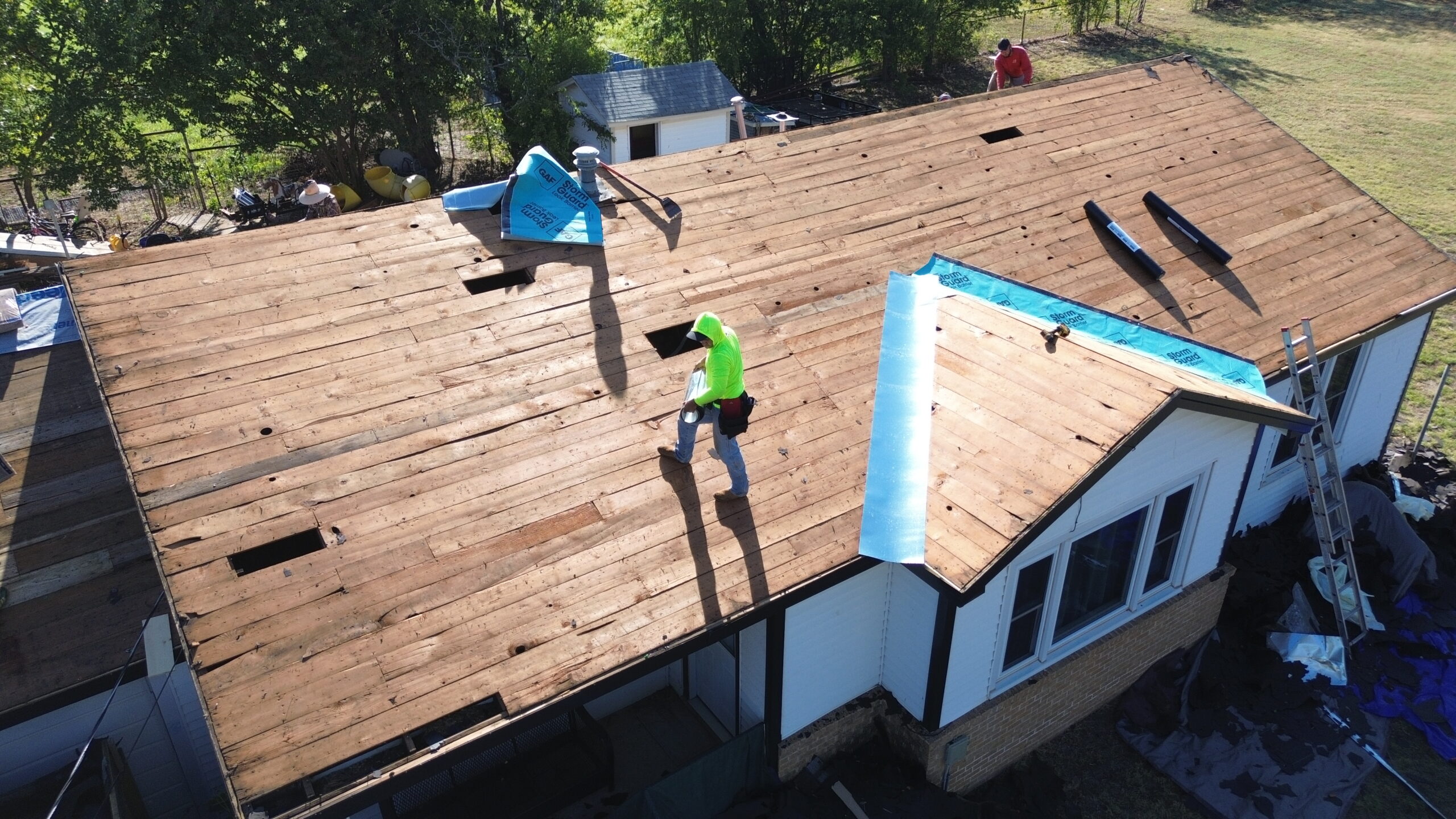
Commercial roofing is one of the most hazardous construction activities because workers operate at significant heights while handling heavy materials and specialized equipment. Maintaining safe working conditions requires continuous attention from project managers, supervisors, and every member of the installation team.
Fall protection failures remain one of the most serious safety concerns during roofing projects. Missing guardrails, improperly used harnesses, damaged anchor points, or inadequate warning systems increase the risk of serious accidents. Contractors should inspect fall protection equipment regularly and replace damaged components immediately.
Unsafe work practices also contribute to many job site incidents. Workers rushing tasks, ignoring safety procedures, or using equipment incorrectly create unnecessary hazards for themselves and others. Ongoing training and active supervision help reinforce safe working habits throughout the project.
Material handling presents additional safety challenges. Roofing rolls, insulation boards, metal panels, and equipment often weigh hundreds of kilograms or pounds. Improper lifting techniques may result in worker injuries or accidental material damage.
Equipment operation requires qualified personnel and regular inspections. Cranes, forklifts, aerial lifts, compressors, and generators should be maintained according to manufacturer recommendations while operators follow established safety procedures.
Electrical hazards frequently exist on commercial rooftops because of HVAC equipment, communication systems, lighting, and nearby utility lines. Contractors must identify these hazards before installation begins and establish safe working distances where necessary.
Emergency preparedness should never be overlooked. Contractors need clearly defined procedures for responding to injuries, severe weather, fires, equipment failures, and medical emergencies. Every worker should understand emergency contacts, evacuation routes, and reporting procedures.
Regulatory compliance represents another important aspect of commercial roofing safety. Contractors must follow applicable occupational safety regulations, local building requirements, environmental standards, and manufacturer installation guidelines throughout construction.
Maintaining a safe work environment generally depends on several important practices:
- Inspect safety equipment before each workday.
- Conduct regular worker safety meetings.
- Monitor weather conditions continuously.
- Maintain organized and hazard-free work areas.
- Train workers on proper equipment operation.
- Report and correct hazards immediately.
Safety management is not limited to preventing accidents. Organized safety procedures also improve productivity by reducing interruptions, protecting equipment, and creating a more disciplined work environment.
Quality Control During Installation
Quality control is the final defense against installation problems before a commercial roofing project reaches completion. Continuous inspections throughout construction allow contractors to identify deficiencies early while corrections remain relatively simple and inexpensive.
One common quality control problem occurs when inspections are delayed until the project is nearly complete. Waiting until the end makes repairs more complicated because finished roofing layers may need to be removed to correct hidden installation defects.
Inspection consistency also affects project quality. Different inspectors should evaluate roofing work according to standardized criteria rather than personal preferences. Clearly defined inspection procedures improve fairness while ensuring every roof section receives the same level of attention.
Documentation errors create additional challenges during quality management. Missing inspection records, incomplete photographs, or inaccurate installation reports may complicate warranty claims and future maintenance activities. Accurate documentation provides valuable evidence that installation requirements were met.
Delayed identification of workmanship problems often increases repair costs. Small seam defects, flashing gaps, or insulation alignment issues are easier to correct immediately after installation than several weeks later when additional roofing layers have already been completed.
Material verification should also continue throughout construction. Contractors should confirm that installation crews use the correct products in the appropriate locations according to project specifications. Substituting incompatible materials without approval may reduce roofing performance or affect warranty coverage.
Testing procedures support quality assurance as well. Seam testing, moisture detection, adhesion verification, and drainage evaluations help confirm that completed roofing sections perform as intended before construction progresses further.
Communication between inspectors and installation crews is equally important. Inspection findings should be shared promptly so corrective actions can be completed without delaying subsequent work. Effective communication transforms inspections into opportunities for continuous improvement rather than simply identifying mistakes.
Quality management should remain active until every roofing component has been inspected, documented, and approved. Contractors who maintain rigorous quality control throughout installation generally deliver roofing systems with greater durability, improved waterproof performance, and lower long-term maintenance requirements.
Final Inspection and Project Closeout Challenges
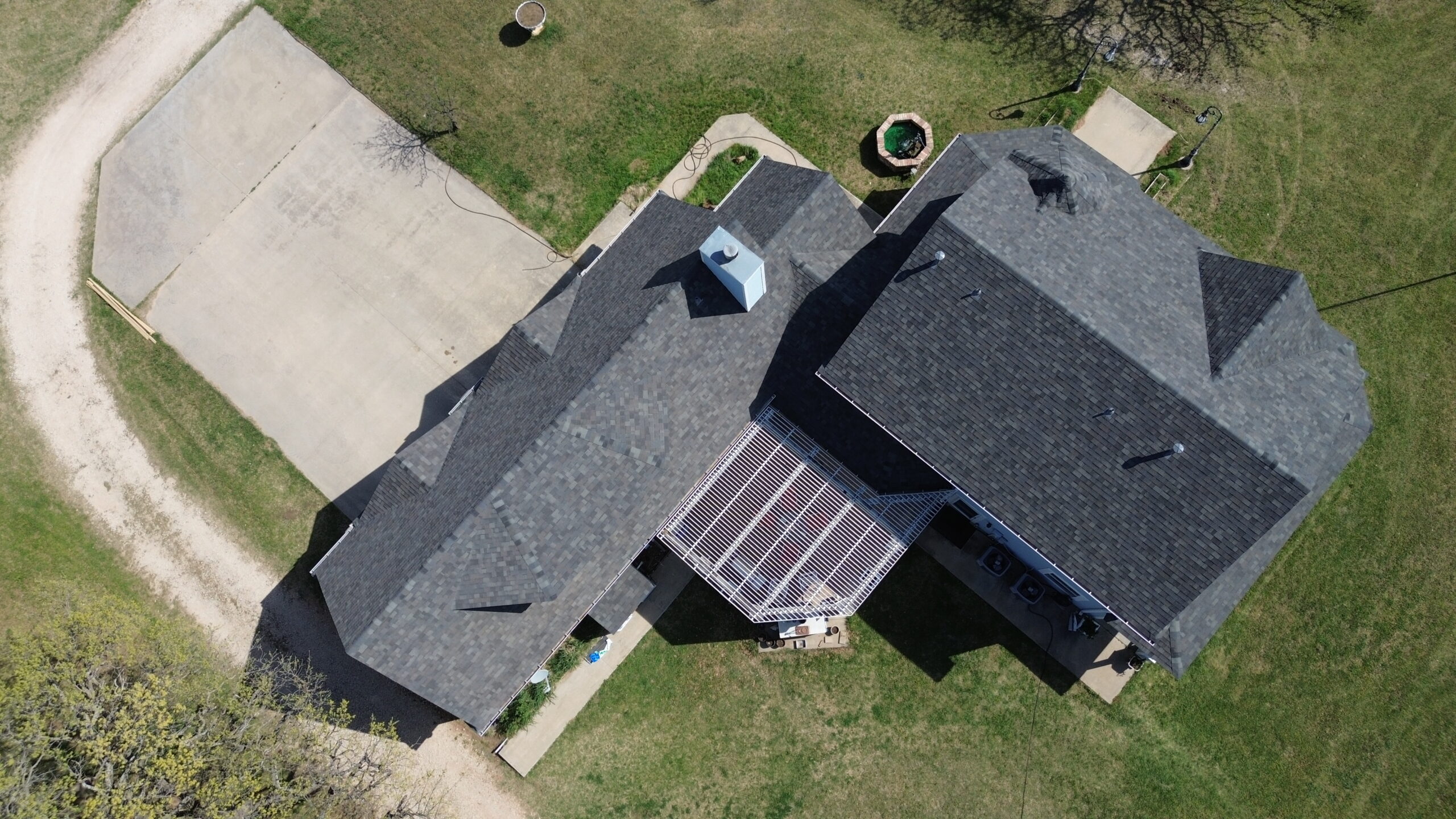
As a commercial roof installation project nears completion, contractors enter one of the most important phases of the entire process. Final inspections and project closeout determine whether the roofing system meets performance expectations and whether every installation requirement has been satisfied. Even if construction has progressed smoothly, problems identified during this stage can delay project completion if they are not addressed promptly.
The final inspection begins with a comprehensive review of the completed roofing system. Contractors examine membranes, flashing, insulation, drainage systems, roof penetrations, edge details, and mechanical attachments to verify that installation complies with project specifications and manufacturer recommendations. This detailed evaluation helps identify any remaining deficiencies before the roof is officially accepted.
One common challenge during project closeout is the punch list. A punch list contains items that require correction before final approval, such as minor flashing adjustments, sealant touch-ups, drainage improvements, or documentation updates. Although these issues are often small, delays in completing them can postpone project handover and affect client satisfaction.
Documentation problems also occur more frequently than many property owners expect. Missing warranty certificates, incomplete inspection reports, inaccurate as-built drawings, or absent maintenance instructions may create confusion after project completion. Contractors should organize all project records before the final handover to ensure the client receives complete documentation.
Quality verification remains another critical responsibility. Contractors often perform final moisture inspections, seam evaluations, drainage assessments, and visual reviews to confirm that every roofing component performs as intended. Addressing concerns immediately prevents future warranty claims and reduces the likelihood of early repairs.
Manufacturer inspections may also be required for certain roofing systems. These inspections verify that approved installation methods were followed throughout construction and that warranty conditions have been satisfied. Failure to meet manufacturer requirements could affect warranty coverage even if the roof appears to be installed correctly.
Client acceptance can occasionally present challenges as well. Building owners may request additional inspections, ask questions about maintenance procedures, or identify concerns requiring clarification before signing final project documentation. Clear communication during this stage helps build confidence while completing the project smoothly.
Another important consideration is restoring the property after construction. Contractors should remove temporary barriers, equipment, debris, unused materials, and construction signage while ensuring parking areas, entrances, and landscaping have returned to normal conditions.
Successful project closeout demonstrates professionalism while providing the client with confidence that the completed roofing system is ready for long-term service.
Practical Solutions to Common Roofing Problems
While commercial roofing projects present numerous challenges, many common problems can be prevented through careful planning, organized management, and continuous quality control. Contractors who focus on prevention rather than correction generally achieve better project outcomes while reducing overall costs.
The first solution involves improving project planning before installation begins. Comprehensive roof inspections, structural evaluations, realistic scheduling, and accurate budgeting allow contractors to identify potential issues before construction starts. Better preparation reduces uncertainty while supporting smoother project execution.
Material management also plays an important role in preventing installation problems. Contractors should coordinate deliveries carefully, inspect products upon arrival, store materials according to manufacturer recommendations, and monitor inventory throughout construction. These practices reduce delays while protecting roofing materials from unnecessary damage.
Strong communication remains one of the most effective problem-solving tools available. Regular meetings between project managers, supervisors, clients, suppliers, and installation crews ensure that everyone understands project objectives, schedule updates, and changing site conditions. Prompt communication also allows concerns to be addressed before they become major obstacles.
Continuous inspections throughout construction help prevent small workmanship issues from developing into significant roofing failures. Rather than waiting until project completion, contractors should evaluate completed work after each major installation stage. Early corrections are generally faster, less expensive, and less disruptive.
Preventive risk management also contributes to project success. Contractors who anticipate weather delays, supply chain disruptions, equipment breakdowns, and labor shortages are better prepared to respond when these situations occur. Developing contingency plans before construction begins improves project flexibility.
Training and education provide another long-term solution. Installation crews should receive regular instruction on roofing materials, manufacturer specifications, safety procedures, and quality standards. Well-trained workers are more likely to recognize potential problems before they affect the roofing system.
Technology can also support problem prevention. Digital scheduling software, cloud-based documentation, drone inspections, and real-time communication platforms improve project visibility while helping managers identify issues more quickly.
Effective problem-solving depends on cooperation between everyone involved in the project. Contractors, property owners, consultants, inspectors, and suppliers all contribute valuable information that supports successful decision-making throughout installation.
Best Practices for Successful Commercial Roof Installation
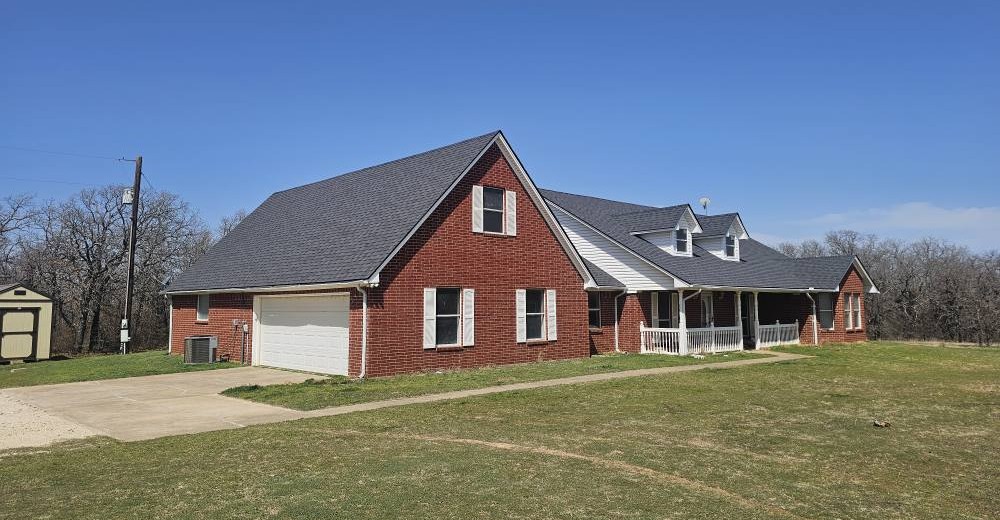
Experienced roofing contractors consistently follow proven practices that reduce installation problems while improving long-term roof performance. Although every commercial project has unique requirements, several principles remain valuable regardless of building type or roofing material.
Selecting experienced contractors is one of the most important decisions property owners can make. Contractors with extensive commercial roofing experience understand installation requirements, project coordination, safety management, and quality control procedures that contribute to successful outcomes.
Using high-quality roofing materials also influences long-term performance. Premium materials may involve higher initial costs, but they often provide greater durability, improved energy efficiency, longer service life, and lower maintenance expenses over time.
Following manufacturer specifications throughout installation is equally important. Roofing systems are tested and designed to perform according to specific installation procedures. Ignoring these recommendations may reduce performance while affecting warranty eligibility.
Project documentation should remain organized from beginning to end. Inspection reports, delivery records, photographs, safety documentation, change orders, and maintenance recommendations provide valuable reference information throughout the roof’s service life.
Regular inspections should continue even after installation has been completed. Preventive maintenance allows contractors to identify minor issues before they become major repairs, helping property owners maximize the value of their roofing investment.
Successful roofing contractors also emphasize collaboration throughout every project. Architects, engineers, suppliers, inspectors, project managers, and installation crews should communicate openly while working toward shared project objectives.
Another valuable practice involves maintaining realistic project schedules. Allowing adequate time for inspections, weather delays, material deliveries, and quality control reduces pressure while improving installation accuracy.
Contractors who consistently deliver successful roofing projects often follow these important practices:
- Perform detailed site inspections before installation begins.
- Develop realistic project schedules with contingency planning.
- Select roofing materials appropriate for the building and climate.
- Follow manufacturer installation specifications carefully.
- Conduct inspections throughout every stage of construction.
- Maintain accurate documentation from project start to completion.
- Schedule routine maintenance after installation to protect long-term performance.
Applying these practices consistently helps contractors reduce risks while improving both project quality and client satisfaction.
Future Trends Reducing Installation Problems
Commercial roofing continues evolving as new technologies improve project planning, installation accuracy, and long-term maintenance. These innovations help contractors reduce many of the common problems traditionally associated with large roofing projects.
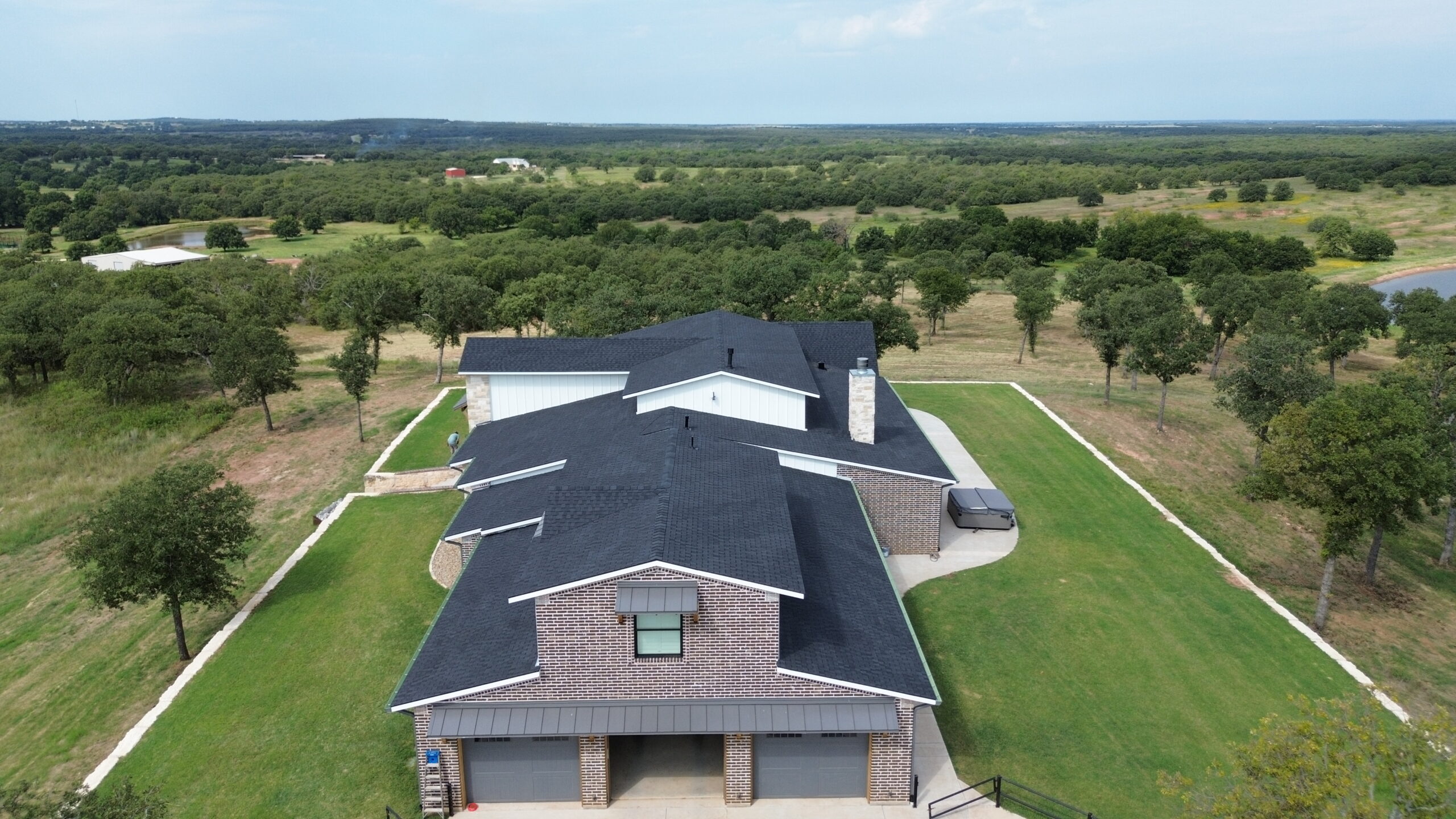
Drone technology has become increasingly valuable for commercial roof inspections. Drones provide detailed aerial images that allow contractors to evaluate roof conditions, monitor construction progress, and identify potential concerns without requiring workers to access every roof section manually.
Digital project management software has transformed communication throughout commercial roofing projects. Contractors can now track schedules, document inspections, monitor material deliveries, and share progress updates through centralized cloud-based platforms. Improved information sharing reduces misunderstandings while supporting faster decision-making.
Smart roofing technologies are also becoming more common. Moisture sensors, temperature monitoring devices, and structural movement detectors provide continuous information about roof performance after installation. Facility managers can identify developing problems earlier, reducing repair costs and extending roof lifespan.
Roofing materials themselves continue improving as manufacturers develop stronger membranes, more durable insulation products, advanced coatings, and environmentally responsible solutions. These innovations improve weather resistance while reducing maintenance requirements.
Artificial intelligence is beginning to influence roofing project planning. AI-assisted software can analyze weather forecasts, estimate material requirements, predict scheduling risks, and optimize project timelines based on previous construction data. Although still developing, these tools have significant potential to improve project management.
Building Information Modeling, commonly known as BIM, also supports better project coordination. Contractors can visualize roofing systems alongside mechanical, structural, and electrical components before installation begins, reducing conflicts that might otherwise delay construction.
Thermal imaging has become another valuable inspection tool. Infrared cameras allow contractors to identify hidden moisture, insulation deficiencies, and temperature variations that are not visible during standard visual inspections. Early detection supports more effective repairs and quality assurance.
Sustainability continues influencing commercial roofing as well. Recyclable materials, cool roofing technologies, green roof systems, and energy-efficient designs contribute to environmentally responsible construction while reducing operating costs for building owners.
Although technology cannot eliminate every installation challenge, it provides contractors with better information, improved planning capabilities, and more accurate quality control throughout the roofing process.
Lessons Learned from Commercial Roofing Projects
Every completed commercial roofing project provides valuable experience that helps improve future installations. Contractors who evaluate completed projects carefully often identify opportunities to strengthen planning, communication, and construction procedures.
One of the most important lessons is that thorough preparation consistently reduces project risks. Investing additional time in inspections, structural evaluations, scheduling, and material planning often prevents far more expensive problems later in the project.
Teamwork also proves essential throughout commercial roofing installations. Successful projects depend on collaboration between contractors, suppliers, inspectors, consultants, and property owners. Open communication allows concerns to be resolved quickly while maintaining project momentum.
Quality should never be sacrificed for speed. Although meeting deadlines remains important, rushing installation often creates defects that require costly repairs after construction has ended. Maintaining consistent workmanship throughout every installation stage produces stronger long-term results.
Continuous improvement helps contractors refine their project management practices over time. Reviewing completed projects allows companies to identify successful strategies, improve training programs, strengthen quality control procedures, and enhance future project planning.
Long-term maintenance planning also emerges as an important lesson from many roofing projects. Even professionally installed roofing systems require routine inspections, cleaning, and preventive maintenance throughout their service life. Property owners who establish maintenance programs immediately after installation generally experience fewer unexpected repairs.
Contractors also learn the value of documenting every stage of construction. Accurate records support warranty claims, simplify future maintenance, and provide valuable information whenever renovations or roof modifications become necessary.
Ultimately, every successful roofing project reinforces the importance of planning, communication, quality workmanship, and ongoing maintenance as the foundation of reliable commercial roofing performance.
Conclusion
Commercial roof installation projects involve numerous technical, logistical, and environmental challenges that require careful management from beginning to end. Problems can develop during planning, material selection, structural evaluation, installation, quality control, or project closeout, making proactive management essential for long-term success.
Many of the most common roofing issues, including poor planning, installation errors, weather delays, material shortages, communication breakdowns, and safety concerns, can be significantly reduced through detailed preparation and disciplined project management. Contractors who invest time in thorough inspections, realistic scheduling, continuous quality control, and effective communication create stronger foundations for successful projects.
Installation quality remains one of the most influential factors affecting roof performance. Even premium roofing materials cannot compensate for poor workmanship or neglected inspections. Following manufacturer specifications, maintaining organized documentation, and correcting deficiencies promptly help ensure the completed roofing system performs as intended.
Advances in technology continue improving commercial roofing by supporting better inspections, digital project management, predictive planning, and enhanced material performance. Combined with experienced contractors and skilled installation teams, these innovations help reduce many traditional roofing challenges while improving efficiency and reliability.
Ultimately, successful commercial roof installation is achieved through preparation, teamwork, quality craftsmanship, and ongoing maintenance. Property owners who work with experienced contractors and prioritize long-term performance over short-term savings are better positioned to receive durable, weather-resistant roofing systems that protect their buildings and support business operations for many years to come.