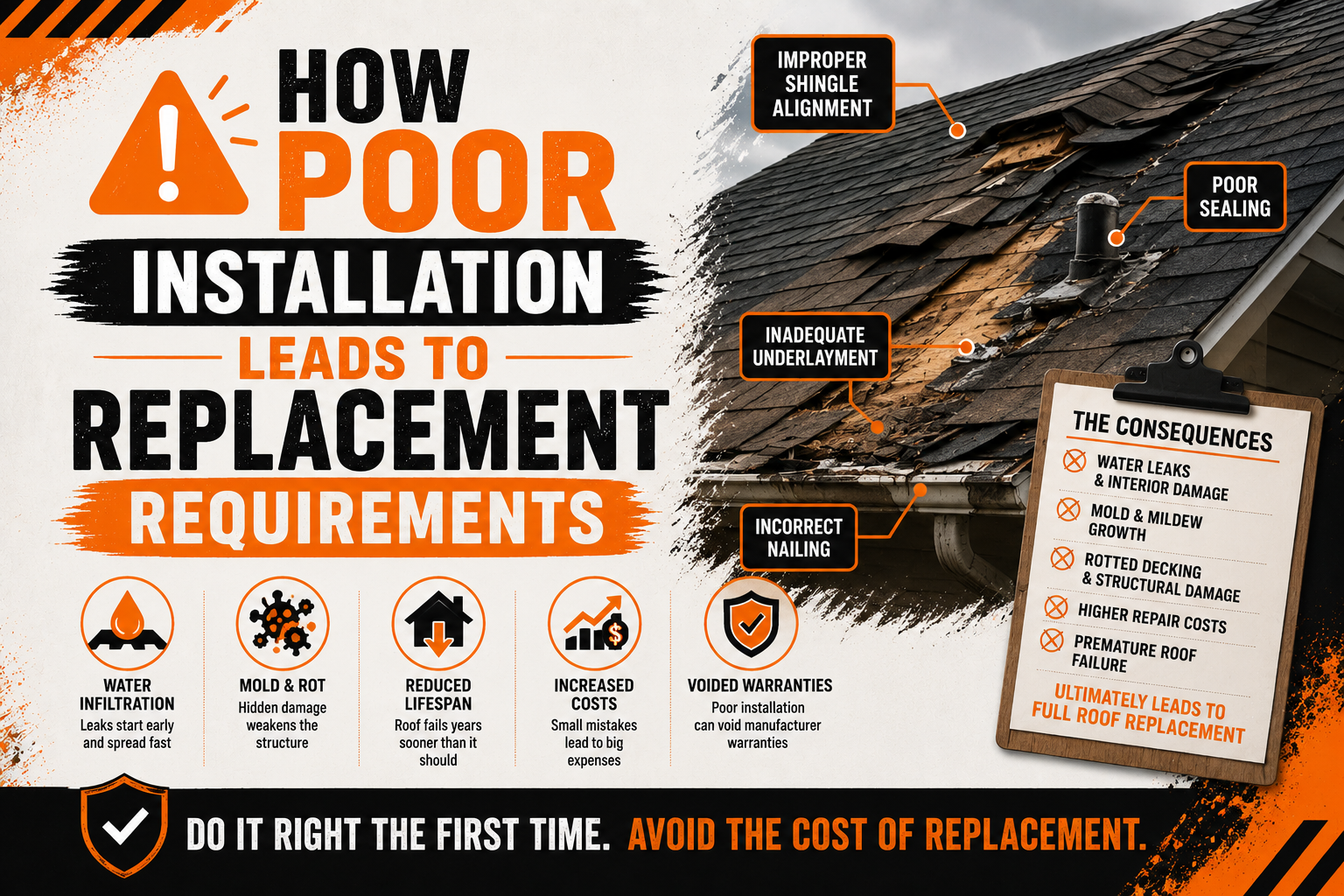
How Poor Installation Leads to Replacement Requirements
Introduction
A roof is one of the most important components of any building because it protects the structure from weather, regulates indoor comfort, and preserves the overall value of the property. While homeowners often focus on choosing premium roofing materials, the quality of installation plays an equally important role in determining how long a roof will last.
Even the most durable roofing products can fail years earlier than expected if they are installed incorrectly. Small mistakes made during installation may not be immediately visible, but they often create conditions that gradually weaken the roofing system. Over time, these hidden problems can grow into serious issues that require extensive repairs or even complete roof replacement.
Many premature roof replacements are not caused by aging materials or severe storms. Instead, they result from installation defects that compromise the roof’s ability to resist moisture, wind, temperature changes, and structural movement. Understanding how these problems develop helps homeowners make informed decisions when investing in a new roof.
This article explores the most common installation mistakes, explains how they reduce the lifespan of roofing systems, and shows why proper workmanship is just as important as selecting high quality materials.
Why Proper Roof Installation Matters More Than Most Homeowners Realize
Roof installation is much more than placing shingles or panels over a structure. Every component must work together to create a complete weather resistant system that protects the home for decades. If even one part is installed incorrectly, the entire roofing system may become vulnerable.
A properly installed roof distributes loads evenly, prevents water infiltration, supports efficient ventilation, and withstands changing weather conditions throughout the year. These benefits depend on careful planning, accurate measurements, and attention to manufacturer specifications during installation.
Professional installation also ensures that each roofing layer performs its intended function. Underlayment, flashing, fasteners, ventilation components, and drainage systems all contribute to the roof’s long term performance. Ignoring any of these elements can reduce the effectiveness of the entire system.
Many homeowners assume that roofing problems always result from poor materials. In reality, installation quality often determines whether premium materials reach their expected service life or fail prematurely.
Understanding the Difference Between Installation Defects and Material Failure
It is important to distinguish between roofing materials that naturally wear out over time and roofs that fail because they were installed improperly. This difference helps identify the real cause of roofing problems and prevents unnecessary confusion when repairs become necessary.
Material failure usually occurs after years of exposure to sunlight, moisture, temperature fluctuations, and environmental conditions. Roofing products gradually age, lose flexibility, and eventually require replacement as part of their normal lifecycle.
Installation defects, however, can appear almost immediately after construction or remain hidden for several years before causing visible damage. In many cases, the roofing material itself remains perfectly functional while incorrect installation creates conditions that lead to leaks, structural deterioration, and shortened roof life.
The following comparison highlights the difference between these two situations.
| Installation Defects | Material Failure |
|---|---|
| Caused by poor workmanship | Caused by natural aging |
| May appear within months or a few years | Usually develops after many years |
| Often localized around specific areas | Usually affects larger roof sections gradually |
| Frequently preventable | Expected over the lifespan of the roof |
| May void manufacturer warranties | Usually covered within normal product expectations |
Recognizing this distinction helps homeowners understand why a relatively new roof might require replacement even though the roofing materials themselves were designed to last much longer.
Common Installation Mistakes That Shorten Roof Lifespan
Roof installation involves dozens of detailed procedures that must be completed correctly from beginning to end. Even experienced contractors follow detailed guidelines because overlooking small details can create long term performance problems.
Several installation mistakes repeatedly appear during inspections of roofs that fail long before their expected lifespan. These errors often begin as minor issues but gradually affect larger sections of the roofing system.
Some of the most common installation mistakes include:
- Improper roof deck preparation before installation
- Incorrect placement of underlayment
- Poor flashing installation around roof penetrations
- Incorrect nail placement and fastening patterns
- Misaligned shingles or roofing panels
- Inadequate attic ventilation
- Poor drainage planning
- Failure to follow manufacturer installation instructions
Each of these mistakes may seem minor when viewed individually. However, multiple installation errors often interact with one another, accelerating roof deterioration and increasing the likelihood of premature replacement.
Poor Workmanship During Roof Deck Preparation
Every roofing system depends on a solid and properly prepared roof deck. The deck serves as the structural foundation that supports every roofing component installed above it. If the foundation is weak or damaged, even perfectly installed shingles cannot compensate for the underlying problems.
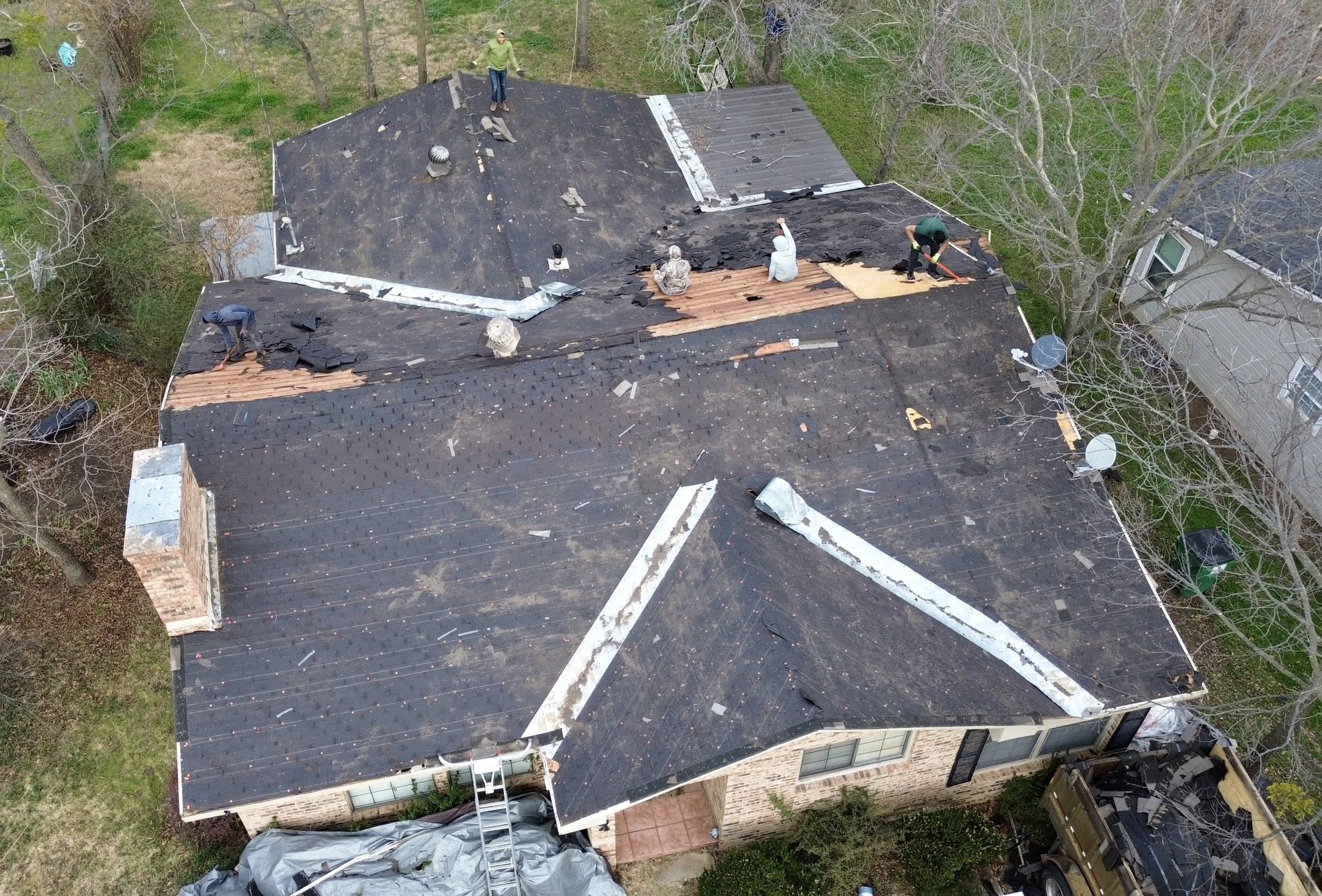
Unfortunately, roof deck preparation is sometimes rushed during replacement projects. Contractors may install new roofing materials over damaged wood, uneven surfaces, or moisture affected decking instead of repairing these issues before continuing the installation.
Uneven decking creates irregular surfaces that prevent shingles from lying flat. This allows wind to lift roofing materials more easily while creating gaps where water can accumulate during heavy rainfall.
Moisture damaged decking introduces another serious concern. Rotting wood gradually loses structural strength and may no longer provide secure support for roofing fasteners. As nails loosen over time, shingles become increasingly vulnerable to wind damage and displacement.
Proper roof deck preparation generally includes several important steps.
- Inspecting the existing deck for structural damage.
- Replacing rotted or weakened wood panels.
- Securing loose decking materials.
- Removing debris and old fasteners.
- Verifying that the deck surface is smooth and level before installing underlayment.
Skipping any of these steps increases the likelihood that future roofing problems will originate beneath the visible roofing materials rather than on the surface itself.
Incorrect Underlayment Installation and Moisture Problems
Roof underlayment serves as the secondary barrier that protects the home if water penetrates the outer roofing materials. Although it remains hidden beneath shingles or metal panels, it performs one of the most critical functions within the roofing system.
Improper underlayment installation significantly increases the risk of moisture intrusion. Wrinkles, gaps, torn sections, or poorly overlapped seams create pathways that allow water to reach the roof deck during storms.
Incorrect fastening can also reduce underlayment performance. Too many fasteners may puncture the protective barrier unnecessarily, while too few fasteners allow movement that creates openings under strong winds.
Installation sequence is equally important. Underlayment should overlap correctly so that water naturally flows downward without reaching exposed seams. Reversing overlap directions or leaving insufficient overlap can allow rainwater to travel beneath the protective layer.
Moisture that enters beneath the roofing surface often remains undetected for extended periods. During this time, water may damage insulation, wooden framing, ceilings, and interior finishes before visible leaks finally appear inside the home.
Because underlayment is concealed after installation, correcting these mistakes usually requires removing portions of the roofing system. In severe cases, widespread moisture damage eventually makes complete roof replacement more practical than repeated repairs.
Improper Shingle Alignment, Fastening, and Nailing Techniques
Shingles are designed to work together as an integrated protective surface rather than as individual pieces. Proper alignment ensures that water flows efficiently toward gutters while maintaining consistent resistance against wind uplift.
Improper alignment affects both appearance and performance. Crooked rows create uneven overlaps that expose vulnerable sections of the roof to moisture and weather damage. These irregularities often become more noticeable as the roof ages.
Fastener placement is another critical aspect of roof installation. Manufacturers specify exact nail locations because these positions provide the strongest attachment while maintaining the integrity of each shingle.
Several common nailing mistakes frequently contribute to premature roof failure.
- Nails driven too high instead of within the designated nailing strip.
- Nails placed at incorrect angles.
- Overdriven nails that cut through shingles.
- Underdriven nails that prevent shingles from sealing properly.
- Using too few fasteners in high wind areas.
- Using nails that are too short for the roofing system.
Improper fastening allows shingles to loosen gradually during repeated wind events. Once a few shingles become displaced, surrounding materials experience greater stress, increasing the likelihood of widespread roof damage.
Poor fastening practices also reduce resistance against seasonal expansion and contraction. Over time, repeated movement weakens roofing materials and creates additional opportunities for water infiltration.
Early Warning Signs That Installation Problems Already Exist
Many installation defects remain hidden during the first few months after construction. However, as weather conditions repeatedly stress the roofing system, visible warning signs gradually begin to appear.
Recognizing these symptoms early allows homeowners to schedule inspections before minor problems develop into costly structural damage. Prompt attention may also preserve warranty coverage if installation defects are identified soon after completion.
Some warning signs appear on the roof itself, while others become visible inside the home. Both deserve careful evaluation because they often indicate underlying installation problems rather than simple cosmetic issues.
Common warning signs include uneven shingle patterns, lifted edges, missing fasteners, recurring leaks after rainfall, damp attic insulation, water stains on ceilings, mold growth, sagging roof sections, and excessive granule accumulation in gutters.
Homeowners should also pay attention if roofing problems repeatedly occur in the same location after repairs. Recurring issues often indicate that the original installation defect remains unresolved beneath the repaired surface.
Regular inspections following major storms can identify developing problems before they spread throughout the roofing system. Detecting installation defects early often reduces repair costs and helps prevent unnecessary full roof replacement.
How Small Installation Errors Become Major Structural Problems
One of the most challenging aspects of roofing defects is that small mistakes rarely remain small for long. Roofing systems operate as interconnected structures where damage in one area gradually affects surrounding components.
A tiny gap around improperly installed flashing may initially allow only small amounts of moisture into the roof assembly. Over several seasons, repeated water exposure can weaken wooden framing, damage insulation, encourage mold growth, and reduce the structural integrity of supporting materials.
Similarly, a few incorrectly placed nails may seem insignificant immediately after installation. As wind repeatedly lifts the affected shingles, surrounding fasteners experience additional stress until larger roof sections become vulnerable to displacement during severe weather.
Poor ventilation creates another example of gradual deterioration. Excess heat and trapped moisture accelerate the aging of roofing materials while increasing expansion and contraction cycles. These conditions shorten the lifespan of shingles, underlayment, and wooden roof components simultaneously.
Because installation defects often interact with natural weather conditions, their effects become cumulative rather than isolated. Each rainy season, heat wave, or winter freeze adds another layer of stress to an already compromised roofing system.
Eventually, the accumulated damage reaches a point where repairing individual components no longer addresses the underlying problems. At that stage, complete roof replacement becomes the safest and most cost effective solution, even though the original issue may have started with a relatively minor installation mistake.
How Water Intrusion Accelerates Roof Deterioration
Water is one of the most destructive forces affecting any roofing system. When a roof is installed correctly, rainwater flows safely away from the structure without entering vulnerable areas. However, installation mistakes create openings that allow moisture to bypass the protective layers and enter the roof assembly.
Once water penetrates beneath the roofing materials, the damage rarely remains limited to one location. Moisture spreads through wooden decking, insulation, rafters, and ceiling materials, often traveling several feet before visible signs appear inside the home. This makes identifying the original source of the leak much more difficult.
Repeated exposure to moisture gradually weakens structural wood by encouraging rot and fungal growth. Wet insulation also loses much of its thermal performance, increasing heating and cooling costs while creating a favorable environment for mold development.
Water intrusion can continue unnoticed for months or even years if the leaks remain hidden beneath the roofing system. By the time stains appear on ceilings or walls, the underlying structural damage may already be extensive enough to require major reconstruction in addition to roof replacement.
Ventilation Mistakes That Reduce Roof Performance
Proper attic ventilation plays a significant role in extending the lifespan of a roof. A balanced ventilation system allows warm, moist air to escape while drawing cooler outside air into the attic. This continuous airflow helps regulate temperature and moisture levels throughout the year.
Installation errors involving ventilation often occur when contractors overlook intake vents, improperly position exhaust vents, or block airflow with insulation. Although these mistakes may not seem serious during construction, they create long term problems that steadily reduce roof performance.
Poor ventilation causes excessive heat to build up beneath the roof during summer months. High temperatures accelerate the aging of roofing materials, causing shingles to become brittle and lose their protective qualities much earlier than expected.
During colder months, trapped moisture from household activities condenses inside the attic when ventilation is inadequate. Over time, this moisture damages wooden framing, encourages mold growth, and weakens structural components that support the roofing system.
Temperature fluctuations also become more severe when ventilation is restricted. Roofing materials repeatedly expand and contract, increasing stress on fasteners, flashing, sealants, and joints. These repeated movements eventually create openings that allow additional moisture to enter the roof.
Flashing Installation Errors Around Roof Penetrations
Flashing protects the areas where roofing materials meet chimneys, skylights, vents, valleys, dormers, and walls. These locations are naturally more vulnerable because different building materials intersect, creating potential pathways for water infiltration.
Proper flashing installation requires careful fitting, secure fastening, and correct overlapping with surrounding roofing materials. Even minor mistakes during this process can leave small gaps that gradually allow rainwater into the roof assembly.
Incorrect flashing installation often includes improperly sealed joints, insufficient overlap, missing fasteners, or flashing pieces cut to incorrect dimensions. In some cases, contractors rely excessively on roofing sealants instead of installing flashing correctly, creating temporary solutions that eventually fail as sealants deteriorate.
Because flashing protects high risk areas, defects frequently produce recurring leaks that appear after heavy rainfall. Homeowners sometimes replace interior ceiling finishes multiple times before discovering that improperly installed flashing remains the true source of the problem.
Once water repeatedly enters around roof penetrations, nearby wood framing, insulation, drywall, and finishes begin to deteriorate. Eventually, repairing only the flashing may no longer be enough because surrounding structural materials have already sustained significant damage.
The Impact of Poor Drainage and Roof Slope Management
A roofing system must direct water away from the building efficiently regardless of rainfall intensity. Proper drainage depends on roof slope, accurate installation, correctly positioned gutters, and unobstructed drainage paths.
Installation mistakes that interfere with drainage often cause water to remain on the roof longer than intended. Standing water increases the likelihood of leaks because prolonged moisture exposure places additional stress on roofing materials and protective membranes.
Improperly aligned shingles or roofing panels may create small depressions where water collects after storms. These areas remain wet longer than surrounding sections, accelerating material deterioration and increasing the risk of moisture infiltration.
Incorrect gutter placement can also contribute to drainage problems. If gutters are installed with insufficient slope or become separated from the roof edge, rainwater may overflow onto fascia boards, soffits, and exterior walls instead of draining safely away.
Poor drainage affects more than the roof surface alone. Continuous water exposure around the building perimeter may weaken foundations, damage landscaping, erode soil, and increase basement moisture problems. What begins as a roofing installation mistake can therefore influence multiple parts of the property.
Structural Damage Caused by Continuous Installation Defects
Roof installation problems rarely affect only the visible roofing materials. As defects continue allowing moisture, heat, and movement into the roofing system, the supporting structure gradually begins to weaken.
Roof decking is often the first structural component to suffer. Repeated moisture exposure causes wood fibers to soften, reducing their ability to support roofing materials securely. Fasteners lose their holding strength as the surrounding wood deteriorates, allowing additional movement during high winds.
Supporting rafters and trusses may also experience gradual weakening if moisture remains trapped within the roof assembly. Although these structural elements are designed for long service lives, continuous water exposure significantly reduces their durability.
As structural members weaken, roof surfaces may begin to sag or develop uneven areas. These changes alter drainage patterns, allowing additional water to accumulate in low spots and accelerating the cycle of deterioration.
The effects are not limited to the roof itself. Interior ceilings may begin cracking as framing shifts slightly under changing structural loads. Doors and windows can become more difficult to operate if roof movement influences the overall stability of the building.
Because structural deterioration progresses slowly, homeowners often underestimate its seriousness until repairs become extensive. At this stage, replacing damaged roofing materials alone does not solve the problem because the supporting framework also requires restoration.
Financial Costs of Poor Roof Installation
Poor roof installation often appears less expensive during construction because shortcuts reduce labor time and material usage. Unfortunately, these initial savings usually disappear once defects begin affecting the roof’s long term performance.
Minor installation errors frequently result in repeated repair visits over several years. Homeowners may pay for leak repairs, ceiling restoration, insulation replacement, mold removal, repainting, and damaged flooring before realizing that the original installation defect remains unresolved.
Insurance claims may also become more complicated when damage results from poor workmanship rather than unexpected weather events. Some policies distinguish between accidental damage and construction related defects, making coverage more limited in certain situations.
Premature roof replacement represents one of the largest financial consequences of poor installation. Instead of receiving the expected lifespan from the roofing system, homeowners may need to replace the entire roof many years earlier than planned.
Indirect expenses continue accumulating throughout this process. Higher energy bills caused by damaged insulation, reduced property value, temporary accommodation during repairs, and ongoing maintenance costs all increase the total financial impact of installation defects.
Investing in qualified installation professionals generally costs less than repeatedly correcting avoidable workmanship errors over the life of the roof.
Comparing Repairable Problems and Full Replacement Situations
Not every installation mistake automatically requires complete roof replacement. Some defects can be corrected successfully if they are discovered early before moisture reaches structural components.
The decision depends on the severity of the damage, the extent of moisture infiltration, the condition of supporting materials, and whether repairs can restore the roofing system to reliable long term performance.
| Repair May Be Sufficient | Full Replacement Is Often Necessary |
|---|---|
| Isolated flashing defects | Widespread moisture damage beneath roofing materials |
| Small areas of missing shingles | Extensive roof deck deterioration |
| Limited fastener replacement | Multiple recurring leaks across the roof |
| Minor ventilation improvements | Structural sagging caused by long term moisture |
| Localized sealant repairs | Large sections installed incorrectly from the beginning |
| Small underlayment corrections during partial reroofing | Roofing system has experienced repeated installation failures |
Professional inspections are essential because visible surface damage does not always reflect the true condition beneath the roofing materials. A roof that appears repairable from the outside may contain widespread hidden deterioration requiring more comprehensive work.
Situations Where Repairs Are No Longer Enough
Roof repairs are most effective when problems remain isolated and the overall roofing system is still structurally sound. However, there comes a point where replacing individual components no longer provides a reliable or cost effective solution.
Repeated leaks occurring in different locations often indicate that installation defects exist throughout the roofing system rather than in one isolated area. Continuing to repair these individual leaks becomes increasingly expensive while failing to address the underlying workmanship problems.
Replacement also becomes the preferred option when water damage extends into the roof deck, insulation, or structural framing. Installing new shingles over compromised structural components only hides the damage temporarily without restoring the roof’s integrity.
Another situation involves roofs where multiple installation errors occurred simultaneously. Improper fastening, poor flashing, inadequate ventilation, and incorrect underlayment installation often interact with one another, making isolated repairs ineffective.
Homeowners should also consider replacement if repairs approach a significant percentage of the cost of a new roofing system. Investing repeatedly in temporary fixes may ultimately cost more than installing a properly constructed roof designed to perform reliably for decades.
How Professional Installation Prevents Premature Roof Replacement
Professional roof installation is about much more than completing a project that looks attractive from the street. Experienced roofing contractors understand that every layer of the roofing system contributes to its long term durability. Their attention to detail helps ensure that the roof performs as a complete system instead of a collection of separate materials.
Professional installers begin by evaluating the existing roof structure before any new materials are installed. They inspect the roof deck for moisture damage, loose panels, rot, and structural weaknesses that could shorten the lifespan of the new roof. Addressing these issues before installation creates a stable foundation for every component that follows.
Qualified contractors also follow manufacturer specifications throughout the installation process. Roofing manufacturers spend years testing their products under different weather conditions, and their installation guidelines are designed to maximize durability. Ignoring these instructions may not only reduce roof performance but can also void valuable warranty protection.
Another advantage of professional installation is proper material handling. Roofing products should be stored, transported, and installed according to recommended procedures. Mishandling materials before installation can weaken them even before they are exposed to weather.
Experienced installers also understand how local climate affects roofing performance. Areas that experience heavy rainfall, strong winds, snow, or prolonged heat require installation methods suited to those conditions. Selecting appropriate fasteners, underlayment, ventilation systems, and flashing details improves the roof’s ability to withstand regional weather challenges.
Quality installation also includes thorough inspections during every stage of construction. Rather than waiting until the roof is complete, professional contractors continually verify alignment, fastening patterns, flashing placement, and drainage performance. This ongoing quality control reduces the likelihood of hidden defects remaining inside the completed roofing system.
Perhaps most importantly, professional installation focuses on long term reliability rather than short term completion speed. Taking additional time to install each component correctly often prevents years of future maintenance, repairs, and premature replacement costs.
Questions Homeowners Should Ask Before Hiring a Roofing Contractor
Selecting the right contractor is one of the most important decisions in any roof replacement project. Even the highest quality roofing materials cannot compensate for poor workmanship, making contractor selection just as important as material selection.
Many homeowners compare only project prices when evaluating roofing companies. While cost certainly matters, installation quality should receive equal consideration because the cheapest proposal may result in significantly higher expenses later.
Before signing a roofing contract, homeowners should ask several important questions that help evaluate the contractor’s qualifications and installation practices.
- How many years have you been installing this type of roofing system?
- Are you licensed, insured, and familiar with local building codes?
- Will damaged roof decking be replaced if problems are discovered?
- Do you follow the manufacturer’s installation guidelines?
- What warranties cover both materials and workmanship?
- How will ventilation and flashing be addressed during installation?
- Will the project include a final quality inspection before completion?
The answers to these questions often reveal whether a contractor prioritizes quality or simply focuses on completing projects as quickly as possible. Contractors who willingly explain their installation methods usually demonstrate greater confidence in their workmanship.
Homeowners should also request references from previous customers with similar roofing projects. Speaking with past clients provides valuable insight into installation quality, communication, project cleanliness, and long term satisfaction after the work has been completed.
Obtaining multiple written estimates allows homeowners to compare not only pricing but also project scope. Estimates should clearly describe materials, labor, ventilation improvements, flashing replacement, cleanup procedures, and warranty information rather than simply listing a total project cost.
Best Practices That Ensure Long Lasting Roof Performance
A durable roof results from combining quality materials with proper installation techniques and consistent attention to detail. Every stage of construction influences how well the roofing system will perform over the coming decades.
Preparation remains one of the most important phases of installation. Contractors should carefully inspect the existing structure, remove damaged materials, replace deteriorated decking, and verify that the roof surface provides a stable foundation before installing new components.
Weather conditions should also be considered during installation. Installing roofing materials during severe rain, excessive moisture, or extremely high winds may reduce product performance or interfere with proper sealing.
Correct installation sequencing is equally important. Components should be installed in the proper order so each layer overlaps the previous one correctly, creating continuous protection against water intrusion. Skipping steps or changing installation order increases the likelihood of future leaks.
Fastener selection and placement deserve particular attention because they secure the roofing system against wind uplift and daily thermal movement. Using the recommended fasteners in the correct locations significantly improves long term stability.
Proper ventilation should always be integrated into the roofing design rather than treated as an optional upgrade. Balanced airflow helps regulate attic temperature, reduces moisture accumulation, and minimizes thermal stress on roofing materials throughout the year.
Drainage systems should also be carefully evaluated before project completion. Gutters, downspouts, valleys, and roof slopes must work together to remove water efficiently during heavy rainfall. Even small drainage improvements can significantly reduce long term moisture exposure.
Routine inspections after installation further contribute to roof longevity. Annual evaluations help identify loose flashing, damaged shingles, clogged gutters, or minor wear before these issues develop into larger structural problems requiring expensive repairs.
Checklist for Inspecting a Newly Installed Roof
After a roof replacement project is complete, homeowners should perform a careful visual inspection or request a final walkthrough with the contractor. This inspection does not replace a professional evaluation, but it helps confirm that the work appears complete and consistent.
- Verify that shingles or roofing panels are aligned evenly across the roof surface.
- Confirm that flashing has been installed around chimneys, skylights, vents, and wall intersections.
- Check that gutters and downspouts remain securely attached and free from construction debris.
- Inspect roof edges for consistent installation without visible gaps or lifted materials.
- Ensure attic ventilation openings remain unobstructed after construction.
- Remove leftover roofing nails and debris from the property.
- Request warranty documents, maintenance recommendations, and project photographs if available.
- Schedule a follow up inspection after the first major rainstorm to confirm that the roof performs as expected.
Completing this checklist immediately after installation helps identify potential concerns while the project is still recent. Addressing issues early is generally easier and less expensive than correcting them after months of weather exposure.
Common Quality Control Measures Used by Experienced Roofing Contractors
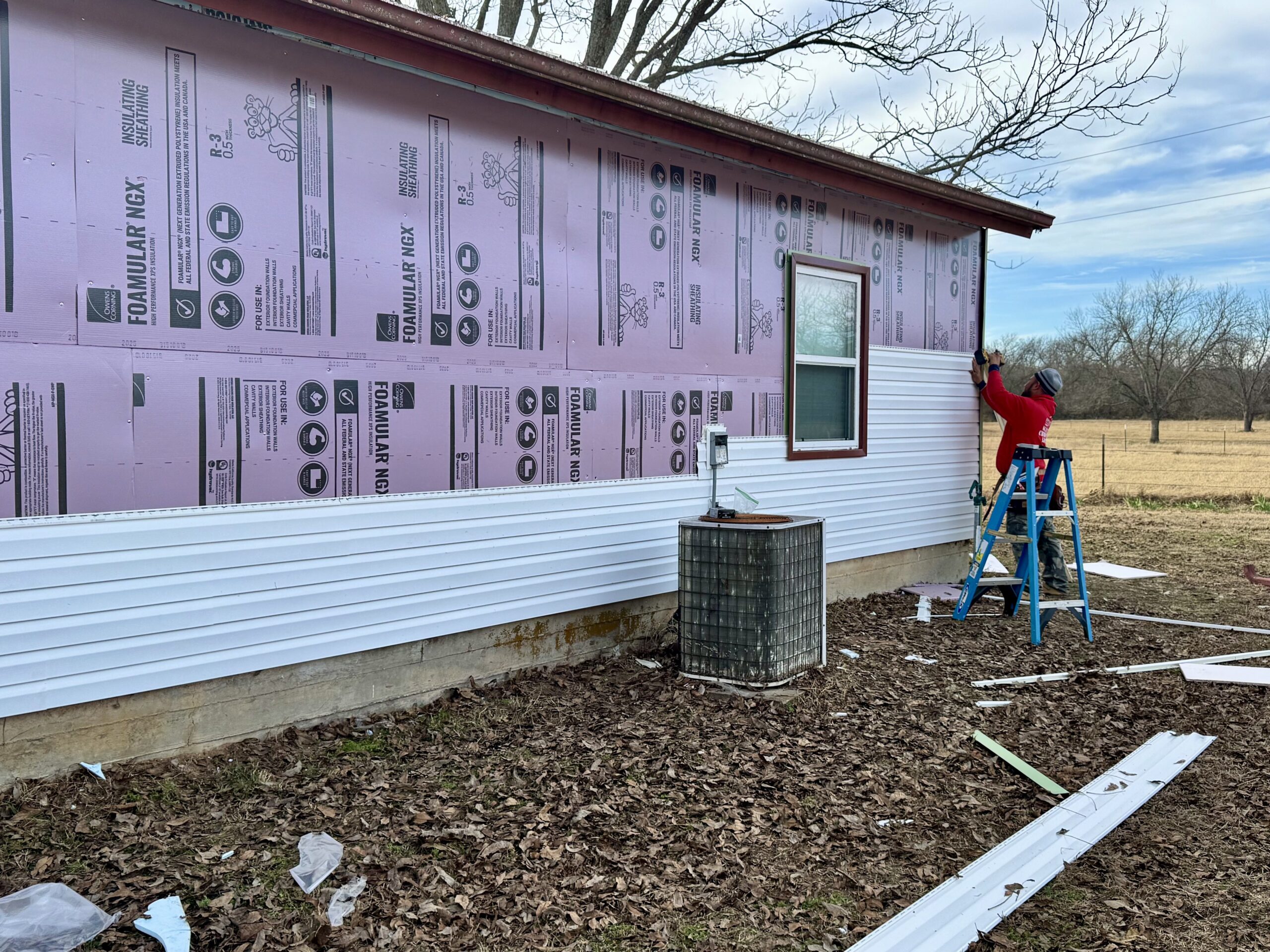
Reliable roofing contractors follow quality control procedures throughout the installation process rather than inspecting only the finished roof. These practices help identify small problems before they become permanent defects hidden beneath completed roofing materials.
Common quality control measures include:
- Inspecting roof decking before underlayment installation.
- Confirming proper underlayment overlap and fastening patterns.
- Verifying accurate shingle alignment throughout installation.
- Checking flashing installation at every roof penetration.
- Confirming ventilation openings remain clear.
- Inspecting fastener placement according to manufacturer guidelines.
- Testing drainage paths before project completion.
- Conducting a final walkthrough with the homeowner.
These procedures reduce the possibility of overlooked defects while improving overall project consistency. Although quality control requires additional time, it often prevents costly warranty claims and customer dissatisfaction in the future.
What to Do If You Discover Installation Defects After Completion
Discovering roofing defects after installation can be frustrating, particularly when the roof is relatively new. However, taking prompt action usually limits further damage and improves the chances of resolving the problem successfully.
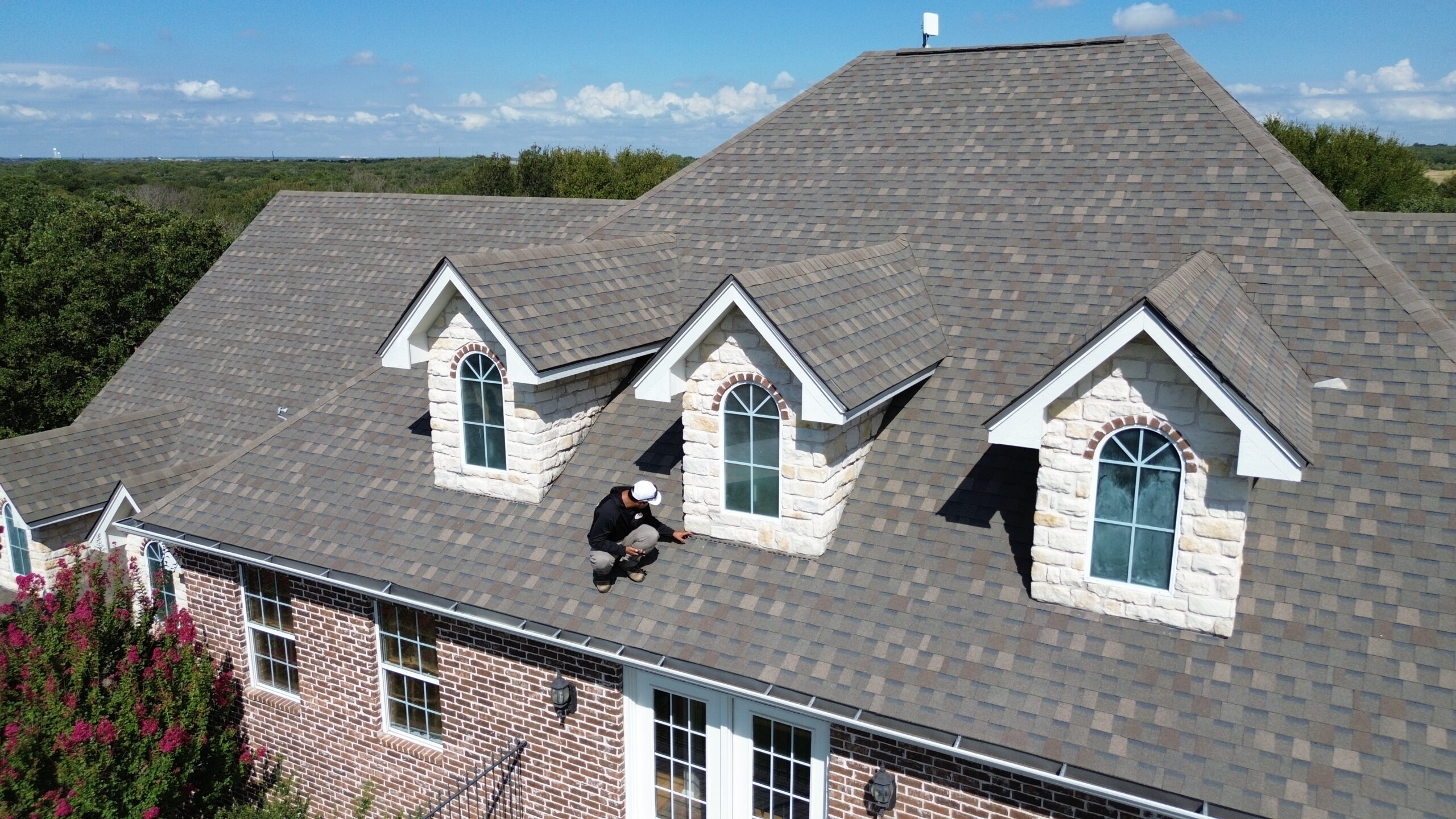
The first step is documenting every visible issue. Homeowners should take clear photographs of damaged areas, water stains, lifted shingles, exposed flashing, or any other signs of poor workmanship. Recording dates and weather conditions when problems occur also helps establish a clear timeline.
Next, the roofing contractor should be contacted as soon as possible. Many workmanship warranties require homeowners to report defects promptly after they are discovered. Delaying notification may complicate warranty claims or allow additional damage to develop.
If the contractor is unresponsive or the cause of the problem remains uncertain, an independent roofing inspection may provide valuable documentation. A qualified inspector can determine whether the damage resulted from installation defects, material failure, weather events, or inadequate maintenance.
Homeowners should avoid making unauthorized repairs before warranty discussions are complete unless emergency action is necessary to prevent additional damage. Temporary protective measures may be appropriate during severe weather, but permanent repairs should generally follow professional evaluation.
Insurance companies may also need to be informed if interior water damage has occurred. Keeping detailed records of inspections, repair estimates, invoices, and correspondence simplifies future claims and provides evidence if disputes arise.
Most importantly, homeowners should not ignore recurring roofing problems simply because they appear minor. Small leaks often indicate larger hidden defects beneath the roofing surface. Addressing installation issues early usually reduces repair costs and prevents widespread structural deterioration.
Why Investing in Quality Installation Saves Money Over Time
Roof replacement represents one of the largest maintenance investments most property owners make. Because of this significant cost, it is understandable that many homeowners compare bids carefully and look for opportunities to reduce expenses.
However, selecting the lowest installation price without considering workmanship quality often proves more expensive over the life of the roof. Poor installation introduces defects that gradually increase maintenance costs, shorten roof lifespan, and reduce overall property value.
A properly installed roof typically requires fewer repairs because every component functions as intended. Water flows efficiently away from the structure, ventilation controls moisture buildup, flashing protects vulnerable transitions, and fasteners maintain secure attachment during severe weather.
Improved installation quality also contributes to better energy efficiency. Well installed insulation, ventilation systems, and roofing materials help maintain stable indoor temperatures, reducing heating and cooling demands throughout the year. These energy savings continue accumulating long after construction is complete.
Quality installation also protects interior finishes, structural framing, insulation, and personal belongings from water damage. Preventing a single major leak can save thousands of dollars in restoration costs while avoiding the inconvenience of repeated repairs.
Another financial advantage involves warranty protection. Many manufacturers require roofing products to be installed according to their published specifications before warranty coverage remains valid. Professional installation therefore protects not only the roof itself but also the long term value of warranty benefits.
A well installed roof also improves resale confidence. Prospective buyers often view a recently installed roof as a valuable feature only if documentation demonstrates professional workmanship and proper maintenance. A history of recurring roofing problems may instead reduce buyer confidence and influence property negotiations.
When evaluated over twenty or thirty years, investing in skilled installation generally costs far less than paying for repeated repairs, water damage restoration, early roof replacement, and lost property value resulting from avoidable workmanship defects.
Conclusion
Poor roof installation is one of the leading causes of premature roof replacement, yet it often receives less attention than roofing materials themselves. While shingles, metal panels, tiles, and membranes are designed to provide decades of reliable protection, their performance depends heavily on the quality of the installation beneath them. Even small workmanship errors can gradually compromise the entire roofing system and shorten its expected lifespan.
Installation defects rarely remain isolated problems. Improper flashing, incorrect fastening, poor ventilation, inadequate drainage, and poorly prepared roof decking interact with weather, moisture, and temperature changes to create increasingly serious structural issues. What begins as a minor installation mistake can eventually lead to recurring leaks, mold growth, weakened framing, damaged insulation, and complete roof replacement.
Fortunately, most of these problems are preventable. Careful contractor selection, proper planning, adherence to manufacturer guidelines, thorough quality control, and regular inspections all contribute to a roofing system that performs reliably for many years. Homeowners who prioritize workmanship alongside material quality significantly reduce the risk of unexpected repairs and costly premature replacement.
A roof should be viewed as a long term investment rather than a short term construction project. Choosing experienced professionals, insisting on proper installation practices, and addressing small defects before they expand into larger problems helps ensure that the roof delivers the protection, durability, and value it was designed to provide. By recognizing the critical role installation plays in overall roof performance, homeowners can make informed decisions that protect both their property and their investment for decades to come.