

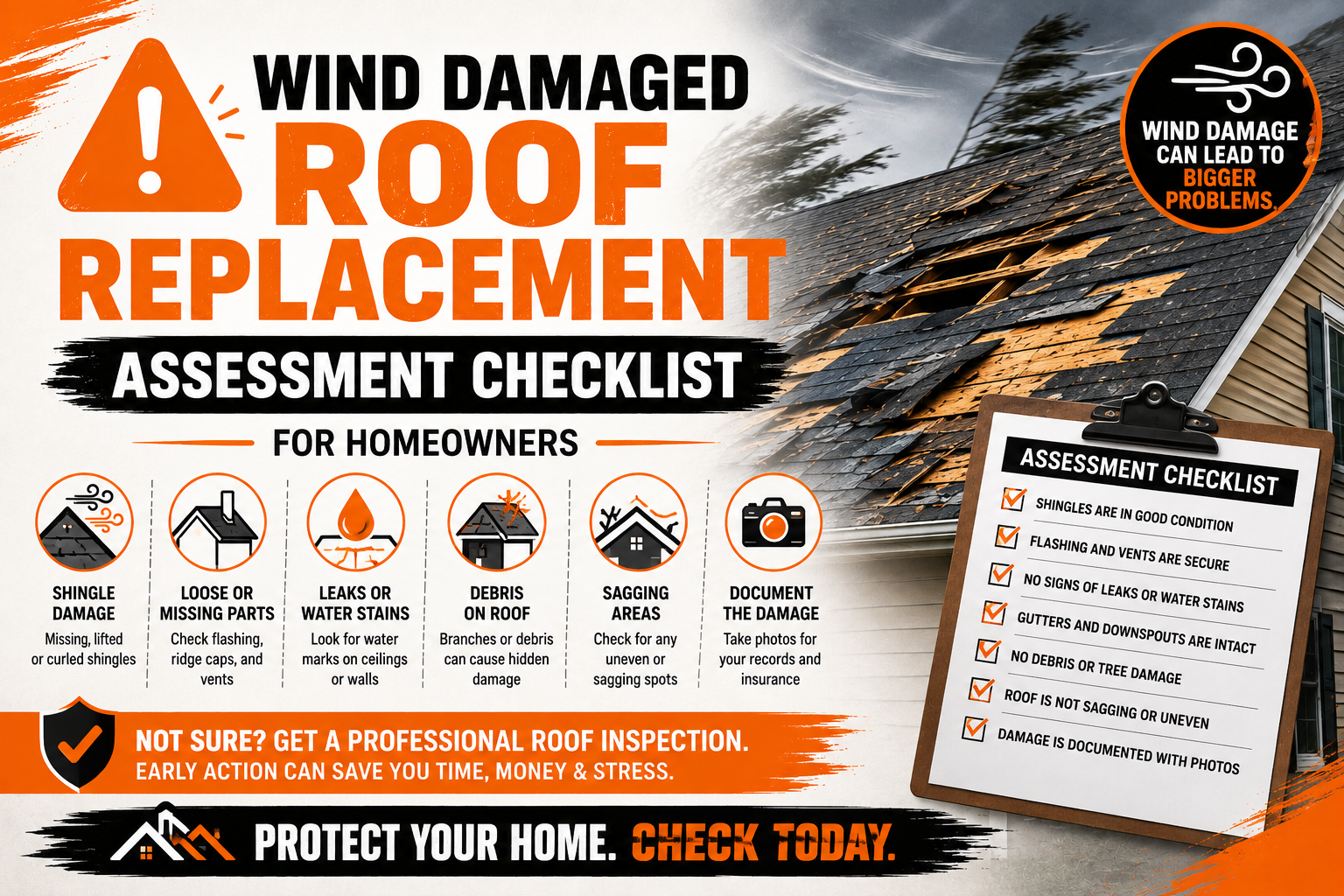
Wind Damaged Roof Replacement Assessment Checklist for Homeowners
Introduction
Windstorms can damage a roof in ways that are both obvious and hidden. While a few missing shingles may seem like a minor issue, strong winds often create structural weaknesses that become more serious over time. What appears to be a small problem today can eventually lead to widespread leaks, mold growth, and expensive repairs if left unaddressed.
Many homeowners assume that if water is not immediately entering the home, the roof is still in good condition. Unfortunately, wind damage does not always produce instant leaks. High winds can loosen shingles, weaken flashing, separate roofing layers, and expose vulnerable areas that allow moisture to enter during the next rainfall.
Knowing how to assess wind damage safely is an important first step after any severe weather event. A careful inspection helps identify visible problems, documents evidence for insurance claims, and determines whether repairs are sufficient or if a complete roof replacement is the better solution.
This guide provides homeowners with a practical assessment checklist for evaluating wind damaged roofs. It explains how wind affects roofing systems, identifies warning signs that should never be ignored, and outlines the initial inspection process before professional roofing contractors perform a detailed evaluation.
Understanding How Wind Damages a Roof
Wind affects roofing systems differently than many other weather events. Instead of striking the roof directly like hail, wind creates lifting forces that pull roofing materials away from the structure. As wind speed increases, these forces become powerful enough to loosen or completely remove roofing components.
The edges, corners, and ridges of a roof experience the greatest wind pressure. These locations are naturally more vulnerable because changing air currents create strong uplift forces that attempt to separate shingles and flashing from the roof deck. Once one section becomes loose, surrounding materials become increasingly vulnerable.
Wind also carries debris that can strike the roof at high speed. Tree branches, loose building materials, outdoor furniture, and other airborne objects may puncture roofing materials or damage flashing. Even relatively small debris can create openings that allow water to penetrate beneath the roof surface.
Heavy rain often accompanies severe windstorms, making the situation even more challenging. Water driven beneath lifted shingles can soak underlayment, roof decking, insulation, and framing before visible leaks appear inside the home. Hidden moisture continues spreading long after the storm has passed.
Older roofing systems are generally more susceptible to wind damage because years of sunlight, temperature changes, and weather exposure gradually reduce the flexibility and strength of roofing materials. When strong winds arrive, aging shingles may crack or separate more easily than newer products.
The quality of the original installation also influences how well a roof performs during severe weather. Proper fastening, flashing installation, and ventilation all contribute to the roof’s ability to resist high winds. Even premium materials can fail prematurely if installation standards were not followed correctly.
The Science Behind Wind Uplift
Understanding wind uplift helps explain why severe storms can damage roofs even without large amounts of rain. As wind flows across the roof surface, air pressure above the roof decreases while pressure inside the attic remains relatively higher. This pressure difference creates an upward force that attempts to lift roofing materials away from the structure.
If shingles, tiles, or metal panels have weakened over time, the uplift force may break their seal or loosen fasteners. Once a small section separates, wind easily enters beneath the roofing material and increases the lifting force across a much larger area.
This process often occurs progressively rather than all at once. A few loosened shingles during one storm may lead to major roof failure during the next high wind event because the protective barrier has already been weakened.
Common Signs of Wind Damage Homeowners Can Identify
Although professional inspections remain essential, homeowners can safely identify many warning signs from the ground and inside the home. Early recognition allows temporary protection to begin quickly while preventing additional damage.
Missing shingles are among the most obvious indicators of wind damage. Bare sections of roof decking or exposed underlayment should never be ignored because these areas allow water to enter directly during rainfall. Even a small number of missing shingles can expose surrounding materials to further deterioration.
Lifted shingles present another serious concern. Shingles that have partially separated from the roof may still appear attached from a distance, yet their waterproof seal has already failed. Strong winds during future storms can easily remove these weakened materials completely.
Creased shingles often indicate that wind has bent the material beyond its normal flexibility. These creases weaken the shingle and reduce its ability to shed water effectively. Over time, cracked areas become increasingly vulnerable to leaks.
Flashing around chimneys, skylights, roof vents, and wall intersections should also receive careful attention. Wind can loosen or bend flashing, allowing water to enter at locations that are naturally more susceptible to leaks.
Roof ridges deserve close inspection because ridge caps experience some of the strongest wind forces. Missing or displaced ridge materials frequently indicate that the roof has experienced significant uplift during the storm.
Gutters and downspouts may also reveal important clues about roof damage. Detached gutters, bent supports, or unusual accumulations of roofing granules suggest that wind has affected more than just the visible roofing surface.
Outside the home, scattered shingles or roofing fragments around the yard often indicate widespread roof damage. Even if the roof still appears largely intact, missing pieces should prompt a professional inspection to identify hidden problems.
Interior Warning Signs of Wind Damage
Not every roofing problem is visible from outside the home. Interior inspections frequently reveal evidence of hidden moisture that entered through damaged roofing materials during or after the storm.
Water stains on ceilings remain one of the most common warning signs. Fresh discoloration usually appears as yellow, brown, or dark circular marks that gradually expand if leaks continue. These stains often develop several days after the storm because moisture travels through insulation before becoming visible.
Peeling paint or bubbling drywall may indicate that moisture has accumulated behind finished surfaces. Although these symptoms sometimes appear gradually, they frequently trace back to roof leaks created during severe wind events.
A damp attic should also receive immediate attention. Wet insulation loses much of its insulating effectiveness while creating favorable conditions for mold growth. Damp wooden framing may eventually weaken if moisture remains trapped for extended periods.
Musty odors inside upper floors or attic spaces often suggest hidden moisture problems. Even without visible leaks, persistent odors may indicate that water has entered the roofing system and begun affecting surrounding materials.
Sunlight entering through the attic is another important warning sign. Small openings created by displaced roofing materials may allow daylight to become visible through the roof structure. These openings almost always permit water intrusion during rainfall.
Initial Safety Assessment After a Windstorm
Before inspecting any storm damaged property, personal safety should always come first. Severe weather may leave behind hazards that are not immediately obvious. Taking a cautious approach reduces the risk of injury while allowing a more organized assessment.
Begin by checking the overall condition of the property from a safe distance. Look for leaning walls, fallen trees, damaged utility poles, broken windows, or sections of roof that appear unstable. If major structural damage is visible, avoid entering the building until emergency personnel or qualified professionals determine it is safe.
Never climb onto a roof immediately after a windstorm. Damaged decking, loose shingles, wet surfaces, and weakened structural components create extremely dangerous conditions. Ground level observations usually provide enough information to determine whether professional assistance is required.
Electrical hazards deserve particular attention. Downed power lines, damaged electrical service equipment, or water entering areas containing electrical wiring should be treated as emergencies. Stay well away from these hazards and contact the appropriate utility company if necessary.
If the storm has caused widespread community damage, emergency services may require time to respond. During this period, continue monitoring conditions from a safe location while avoiding unnecessary exposure to damaged structures.
Homeowner Exterior Assessment Checklist
Once conditions are safe, homeowners can perform a careful exterior assessment without climbing onto the roof. The goal is to identify visible damage while gathering information for insurance claims and professional inspections.
During the exterior assessment, look for the following:
- Missing, lifted, or curled shingles.
- Damaged ridge caps or flashing.
- Fallen tree branches resting on the roof.
- Bent or detached gutters and downspouts.
- Debris impacts on roofing materials.
- Loose soffits or fascia boards.
- Roofing materials scattered around the property.
- Visible sagging or uneven roof sections.
Photographs should be taken from multiple angles whenever possible. Wide images showing the entire roof help establish the overall condition, while close-up photographs document specific areas of concern.
Include surrounding damage as well. Fallen trees, broken fences, damaged siding, and debris fields provide additional evidence of the storm’s intensity and support insurance documentation.
Homeowner Interior Assessment Checklist
After completing the exterior inspection, move inside the home to evaluate areas directly beneath the roof. Interior observations often reveal hidden damage that cannot be identified from outside.
Start by examining ceilings throughout the home. Look carefully for fresh stains, bubbling paint, cracked drywall, or damp spots around light fixtures and ceiling fans. Any new discoloration following a windstorm deserves further investigation.
Next, inspect the attic if it can be entered safely. Carry a flashlight and check insulation, rafters, roof decking, and ventilation openings for moisture, mold, daylight penetration, or displaced materials. Avoid walking on insulation because concealed ceiling framing may not safely support your weight.
Document every observation with photographs and written notes. Recording the location and extent of damage creates a useful reference for contractors and insurance adjusters during future inspections.
If active leaks are present, place containers beneath dripping water and move furniture or valuable belongings away from affected areas. These temporary measures help reduce additional interior damage while professional roof replacement plans are being developed.
Why Early Documentation Makes a Difference
The information gathered during the initial assessment plays a valuable role throughout the roof replacement process. Accurate documentation helps establish the condition of the property immediately after the storm and provides important evidence when discussing repairs with contractors and insurance representatives.
Photographs should remain organized according to location and date whenever possible. Keeping inspection notes together with contractor estimates, insurance correspondence, and receipts creates a complete record that may simplify claim processing and future warranty questions.
Early documentation also allows roofing professionals to compare changing conditions if additional storms occur before replacement begins. This organized approach supports better decision making while ensuring that no important damage is overlooked during the evaluation process.
Professional Roof Inspection Process
After a homeowner completes an initial assessment, the next step is a comprehensive inspection by a qualified roofing professional. While ground level observations provide valuable information, they cannot reveal every form of wind damage. Professional inspections identify hidden structural problems that may determine whether repairs are sufficient or if complete roof replacement is necessary.
Experienced roofing contractors follow a systematic inspection process to evaluate every major component of the roofing system. Their goal is not only to identify visible damage but also to determine how the storm affected the roof’s overall strength, waterproofing, and expected lifespan. A detailed inspection also provides documentation that supports insurance claims and replacement planning.
The inspection usually begins with a visual assessment of the entire property. Contractors examine surrounding trees, nearby structures, fences, gutters, and outdoor equipment because these features often provide clues about wind direction and storm intensity. Understanding how the storm affected the property helps inspectors focus on the areas most likely to have sustained damage.
Photographs are taken throughout the inspection to document every significant finding. These images become part of the inspection report and provide valuable evidence for homeowners, insurance adjusters, and contractors involved in the replacement process.
Exterior Roof Evaluation
The roof surface receives a thorough examination to identify both obvious and subtle forms of damage. Inspectors carefully evaluate shingles, flashing, ridge caps, valleys, vents, skylights, chimneys, and roof edges to determine whether wind has compromised their performance.
Missing shingles are recorded along with their exact location and approximate quantity. Inspectors also look for shingles that remain attached but have broken seals or lifted edges. These areas may appear intact initially, yet they often fail during the next severe weather event if left unrepaired.
Granule loss is another important observation on asphalt shingles. Strong winds combined with airborne debris may remove protective granules, exposing the underlying material to accelerated weathering. Significant granule loss reduces the roof’s resistance to sunlight and moisture over time.
Metal roofing systems are evaluated for loose fasteners, separated seams, bent panels, and damaged flashing. Even small gaps between metal panels can allow water to penetrate beneath the roofing system during heavy rainfall.
Tile and slate roofs require a different inspection approach. Contractors check for cracked tiles, displaced sections, broken fasteners, and impact damage caused by flying debris. Individual broken tiles may seem minor, but widespread damage often indicates that replacement is more practical than repeated repairs.
Roof Deck Assessment
Once the exterior materials have been evaluated, attention shifts to the roof deck beneath them. The decking forms the structural foundation that supports every roofing component above it. If this layer has been weakened, replacing only the surface materials will not restore the roof’s long term performance.
Inspectors look for soft areas, moisture damage, delamination, cracking, and warping. Wind driven rain frequently enters beneath lifted shingles and gradually saturates wooden decking. Over time, prolonged moisture weakens the wood and reduces its ability to support the roofing system safely.
Even if only one portion of the roof appears visibly damaged, moisture may have spread much farther beneath the surface. A careful deck inspection helps identify these hidden problems before new roofing materials are installed.
Structural Inspection
The supporting framework beneath the roof also receives careful evaluation. Rafters, trusses, braces, and load bearing connections are inspected for movement, cracking, or other signs of structural stress caused by severe wind.
Powerful windstorms create forces that affect more than roofing materials alone. In extreme cases, uplift pressure transfers stress throughout the framing system, causing subtle shifts that may not be immediately visible from outside the home.
Inspectors also examine the alignment of the roof structure. Uneven ridges, sagging rooflines, or changes in roof geometry may indicate structural movement requiring correction before replacement begins.
Moisture Detection Technology
Modern roofing inspections often include specialized equipment capable of detecting hidden moisture that cannot be seen with the naked eye. These tools improve inspection accuracy and help identify areas requiring additional repairs.
Moisture meters measure water content within wooden structural components. Elevated moisture levels suggest ongoing leaks or trapped water beneath roofing materials, even if visible stains have not yet appeared inside the home.
Infrared imaging is another valuable inspection method. Thermal cameras identify temperature differences caused by moisture accumulation beneath roofing materials. Wet insulation and damp decking retain heat differently than dry materials, allowing inspectors to locate hidden damage without removing large sections of the roof.
These technologies help create a more complete understanding of the roof’s condition before replacement decisions are made.
When Wind Damage Requires Full Roof Replacement
Not every wind damaged roof needs complete replacement. Localized damage affecting only a small portion of a relatively new roof can often be repaired successfully. However, several conditions strongly suggest that replacement offers the safest and most cost effective solution.
One of the most important considerations is the overall extent of the damage. If large sections of roofing material have been removed or weakened, repairing isolated areas may leave surrounding sections vulnerable to future failure. A patchwork roof often performs inconsistently because older materials continue aging while newer sections remain in better condition.
The condition of the roof deck also influences replacement decisions. Widespread moisture damage, rotting wood, or structural weakening beneath the roofing surface generally requires more than cosmetic repairs. Installing new shingles over deteriorated decking simply hides the problem instead of correcting it.
Roof age is another significant factor. Older roofing systems nearing the end of their expected lifespan often do not justify extensive repairs after severe wind damage. Investing in complete replacement typically provides greater long term value while reducing future maintenance expenses.
Water intrusion throughout multiple areas of the home also points toward replacement. Leaks affecting ceilings, insulation, attic spaces, and structural framing suggest that the roofing system has experienced widespread failure rather than isolated damage.
Current building codes may also influence the decision. In some jurisdictions, replacing a certain percentage of the roof requires the entire system to be upgraded to meet modern construction standards. Contractors evaluate these requirements during project planning.
Factors Contractors Consider Before Recommending Replacement
Every roof presents unique circumstances, so contractors evaluate multiple factors before recommending complete replacement.
Some of the primary considerations include:
- Overall age of the existing roof.
- Percentage of roofing materials damaged.
- Condition of the roof decking.
- Evidence of structural movement.
- Extent of water intrusion.
- Availability of matching replacement materials.
- Local building code requirements.
- Long term repair costs compared with replacement.
Evaluating these factors together allows contractors to recommend solutions that provide lasting protection rather than temporary improvements.
Insurance Assessment and Documentation
Insurance documentation becomes increasingly important once professional inspections confirm significant wind damage. Well prepared records help demonstrate that the damage resulted directly from the storm rather than long term deterioration or deferred maintenance.
Inspection reports prepared by licensed roofing contractors provide detailed technical information that supports insurance claims. These reports describe damaged components, estimate replacement requirements, and include photographs documenting the roof’s condition.
Homeowners should organize all documentation in one location. Inspection reports, repair estimates, photographs, emergency service invoices, weather reports, and insurance correspondence create a complete record of the event.
Insurance adjusters perform their own evaluation after the claim is submitted. Their inspection determines whether the observed damage falls within policy coverage and whether repairs or replacement represent the appropriate solution under the policy terms.
Clear communication throughout this process benefits everyone involved. Homeowners should ask questions whenever policy language or inspection findings appear unclear. Understanding each stage reduces misunderstandings and supports more efficient claim resolution.
Preventing Insurance Claim Delays
Insurance claims move more efficiently when homeowners provide complete and accurate documentation from the beginning. Waiting weeks before reporting damage or failing to document conditions immediately after the storm may complicate the review process.
Respond quickly to requests for additional information. Insurance companies sometimes require supplemental photographs, contractor estimates, or clarification regarding previous repairs before finalizing coverage decisions.
Maintaining records of every phone call, email, inspection, and document submitted also creates a helpful timeline. Organized records simplify future communication if questions arise later in the claim process.
Roof Replacement Planning
Once replacement has been approved, careful planning ensures the project proceeds smoothly. Although homeowners often focus primarily on selecting roofing materials, several additional decisions influence the quality and efficiency of the completed installation.
Scheduling begins with confirming material availability and selecting an appropriate installation date. Weather forecasts, contractor availability, and permit requirements all affect project timing. Planning ahead reduces unnecessary delays once work begins.
Contractors also review property access before construction starts. Driveways, landscaping, fences, and outdoor furniture may require temporary protection to create a safe and efficient work environment for the roofing crew.
Communication remains important throughout the planning stage. Homeowners should understand the expected project timeline, daily work schedule, cleanup procedures, and any temporary disruptions that may occur during installation.
Selecting Roofing Materials
Material selection affects both appearance and long term performance. Homeowners should consider durability, maintenance requirements, energy efficiency, warranty coverage, and local climate rather than focusing solely on initial cost.
Modern asphalt shingles remain the most common residential roofing material because they balance affordability with dependable protection. Architectural shingles designed for high wind regions provide improved resistance compared with older standard products.
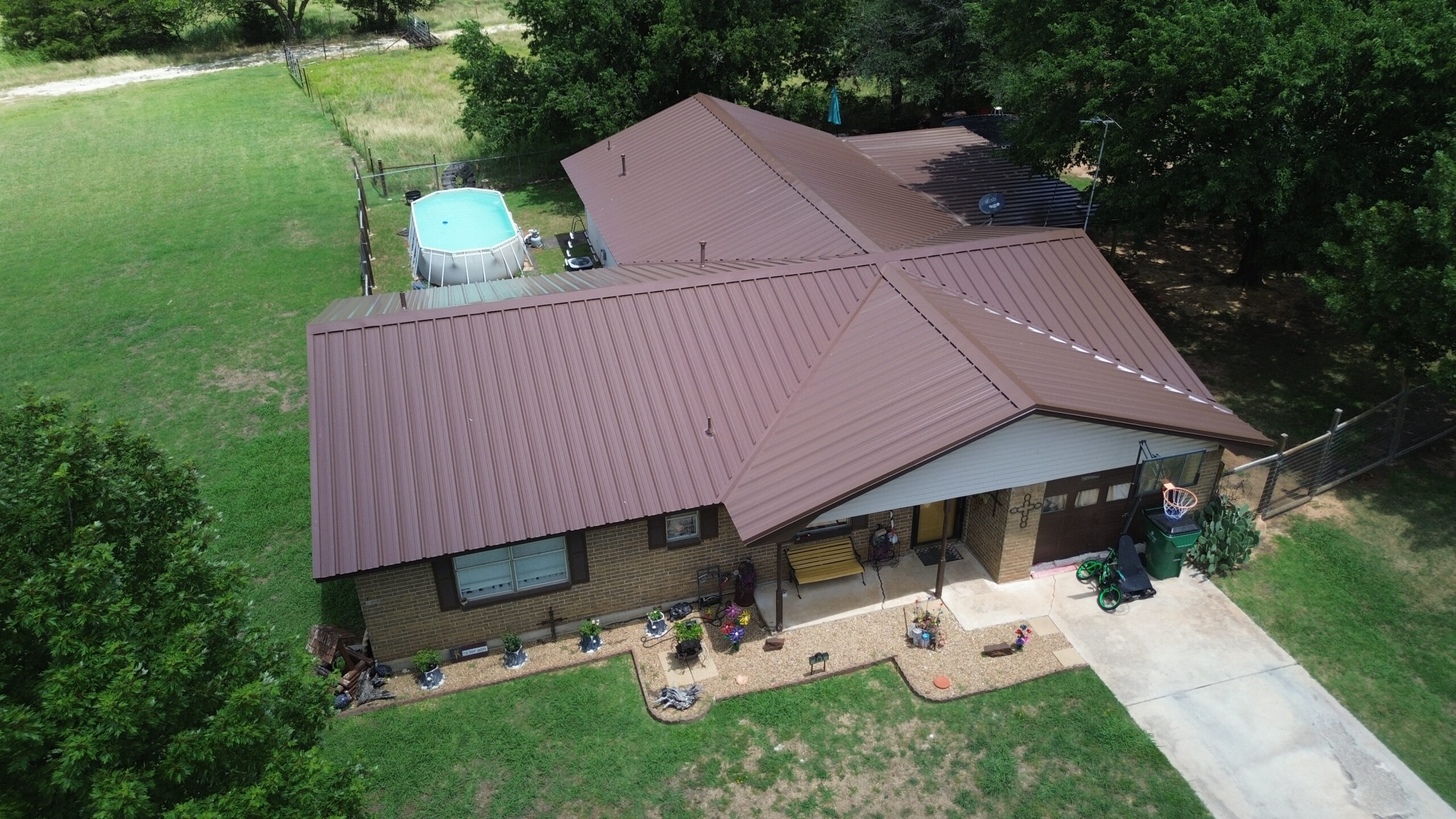
Metal roofing continues growing in popularity because of its exceptional wind performance and long service life. Properly installed metal systems withstand high winds while requiring relatively little maintenance over several decades.
Synthetic roofing materials also provide attractive alternatives for homeowners seeking improved durability without the weight of natural slate or tile. Many products closely resemble traditional materials while offering enhanced impact resistance.
Preparing the Property Before Installation
Preparing the home before replacement day improves safety and allows contractors to work more efficiently. Vehicles should be moved away from the work area, and outdoor furniture, decorations, and fragile landscaping should be protected whenever possible.
Homeowners should also inform family members about expected construction noise and temporary access restrictions. Roof replacement involves significant activity throughout the day, making advance preparation beneficial for everyone in the household.
Pets deserve special consideration as well. Construction noise and unfamiliar workers may create stress for animals, so arranging a quiet indoor space or temporary alternative location often improves their comfort during the project.
Comparing Popular Roofing Materials for Wind Resistance
Choosing the right roofing material after wind damage is an opportunity to improve future storm protection. The following comparison highlights several commonly used residential roofing options.
| Roofing Material | Typical Lifespan | Wind Resistance | Maintenance Requirements | Relative Cost |
|---|---|---|---|---|
| Asphalt Shingles | 20 to 30 years | Good to Very Good | Moderate | Low |
| Metal Roofing | 40 to 70 years | Excellent | Low | Moderate to High |
| Clay or Concrete Tile | 50 to 100 years | Very Good | Low | High |
| Slate Roofing | 75 to 150 years | Excellent | Low | Very High |
| Synthetic Roofing | 30 to 50 years | Very Good | Low | Moderate |
Selecting the best roofing material depends on more than wind resistance alone. Homeowners should also evaluate climate conditions, architectural style, maintenance expectations, local building codes, and long term ownership plans before making a final decision.
Mistakes Homeowners Should Avoid After Wind Damage
The period immediately following a windstorm is often stressful and filled with uncertainty. Homeowners may feel pressure to make quick decisions, especially if the roof is leaking or additional storms are expected. While acting promptly is important, making rushed decisions can lead to unnecessary expenses and long term problems.
One of the most common mistakes is assuming that a roof is undamaged simply because no leaks are visible. Wind can loosen shingles, damage flashing, and weaken the roof deck without allowing immediate water intrusion. By the time interior damage appears, moisture may have already spread throughout the roofing system.
Another mistake is delaying professional inspections. Even if damage appears minor, hidden issues can worsen after repeated exposure to rain, sunlight, and changing temperatures. Scheduling an inspection soon after the storm provides a clear understanding of the roof’s condition before small problems become major repairs.
Attempting extensive do it yourself repairs is another risk homeowners should avoid. Walking on a storm damaged roof is dangerous because roofing materials may be unstable or the roof deck may have been weakened. Professional roofers have the equipment and training needed to inspect damaged areas safely.
Choosing a contractor without verifying credentials can also create serious problems. Storms often attract temporary contractors who travel into affected communities and offer quick repairs. Homeowners should always verify licensing, insurance, references, and local experience before signing any agreement.
Incomplete documentation is another issue that can complicate insurance claims. Failing to photograph damage, save inspection reports, or retain receipts for emergency services may make it more difficult to demonstrate the full extent of the storm’s impact.
Finally, homeowners should avoid accepting unusually low estimates without understanding what is included. Some proposals exclude important components such as underlayment, flashing replacement, ventilation improvements, or damaged decking repairs. A detailed written estimate provides a much clearer basis for comparison.
Protecting the Home Until Replacement Begins
Even after a contractor has been selected, several days or weeks may pass before the replacement project begins. During this period, protecting the home from additional damage remains extremely important. Temporary measures cannot replace a new roof, but they significantly reduce the risk of worsening conditions.
Professional emergency tarping is one of the most effective temporary solutions. Heavy duty waterproof coverings are securely fastened over exposed sections of the roof to reduce water intrusion. Proper installation is essential because poorly secured tarps may loosen during strong winds and become ineffective.
Homeowners should also monitor the interior of the house after every rainfall. New ceiling stains, damp insulation, or active leaks may indicate that temporary protection requires adjustment. Prompt attention prevents moisture from spreading to unaffected areas.
Furniture, electronics, and valuable belongings should be moved away from damaged sections whenever possible. Plastic coverings can provide additional protection if water begins entering the home before replacement starts.
Maintaining proper attic ventilation also helps reduce moisture buildup. Good airflow minimizes condensation and decreases the likelihood of mold development while the damaged roof awaits replacement.
Regular communication with the roofing contractor is beneficial throughout this waiting period. If weather conditions change or additional damage occurs, updated information allows replacement plans to be adjusted accordingly.
Choosing a Roofing Contractor You Can Trust
A successful roof replacement depends heavily on selecting the right contractor. Beyond installing roofing materials, experienced professionals coordinate inspections, communicate with homeowners, maintain safety standards, and ensure the completed roof meets current building codes.
Start by confirming that the contractor holds all required licenses for your area. Liability insurance and workers’ compensation coverage should also be verified before any work begins. These protections benefit both the homeowner and the installation crew throughout the project.
Experience with wind damage restoration is another valuable qualification. Contractors familiar with severe weather damage understand how to identify hidden structural issues, prepare insurance documentation, and recommend durable replacement solutions designed for local climate conditions.
Good communication is equally important. Reliable contractors explain every stage of the project, answer questions clearly, and provide realistic timelines. Homeowners should feel comfortable discussing materials, warranties, cleanup procedures, and any concerns before signing a contract.
Written warranties deserve careful review as well. Manufacturer warranties typically cover roofing materials, while workmanship warranties protect against installation defects. Understanding both types of coverage provides additional confidence in the completed project.
Wind Resistant Roofing Upgrades
Replacing a wind damaged roof provides an excellent opportunity to improve the home’s ability to withstand future storms. Modern roofing technology offers several features that significantly increase wind resistance while improving overall roof performance.
High wind rated shingles are specifically engineered to resist uplift forces during severe weather. Improved adhesive strips and stronger fastening systems help these shingles remain securely attached during powerful wind events.
Metal roofing is another excellent option for regions that experience frequent windstorms. Properly installed metal panels provide exceptional durability while resisting uplift better than many traditional roofing materials.
Enhanced flashing systems also contribute to better storm protection. Stronger flashing around chimneys, skylights, valleys, and roof penetrations reduces the likelihood of water intrusion if roofing materials become damaged during high winds.
Roof decking can also be upgraded when replacement is underway. Stronger fastening methods and improved attachment techniques help the roof structure resist uplift forces generated during extreme weather.
Ventilation improvements provide additional long term benefits. Balanced attic ventilation reduces heat buildup, controls moisture, and helps roofing materials maintain their performance over a longer period.
Regular maintenance remains an important part of storm preparedness even after installing a new roof. Annual inspections, gutter cleaning, and tree trimming all contribute to improved wind resistance throughout the life of the roofing system.
Building a Long Term Roof Maintenance Plan
A new roof performs best when it receives regular attention throughout its lifespan. Preventive maintenance identifies small issues before they develop into costly structural repairs.
Homeowners should perform visual inspections from the ground after every major windstorm. Looking for missing shingles, damaged flashing, fallen branches, or loose gutters helps identify problems while they are still relatively minor.
Seasonal gutter cleaning also plays an important role in roof protection. Clogged gutters allow water to back up beneath roofing materials, increasing the likelihood of moisture related damage during heavy rainfall.
Professional inspections every few years provide a more detailed evaluation than homeowners can perform themselves. Roofing specialists identify early signs of wear, monitor flashing performance, and verify that ventilation systems continue functioning properly.
Keeping maintenance records is also worthwhile. Inspection reports, repair invoices, warranty documents, and photographs create a complete history of the roof that may prove valuable during future insurance claims or property sales.
Frequently Asked Questions
How much wind is required to damage a roof?
The exact wind speed varies depending on roofing material, installation quality, roof age, and maintenance history. Older roofs generally experience damage at lower wind speeds than newer systems built with modern materials and fastening methods.
Can a few missing shingles always be repaired?
Not necessarily. A small number of missing shingles may appear to require only minor repairs, but hidden damage beneath the surface could affect the roof deck or surrounding materials. Professional inspections determine whether repairs or replacement provide the better long term solution.
How soon should a roof be inspected after a windstorm?
The inspection should take place as soon as conditions are safe. Early evaluations identify hidden damage before additional rainfall increases repair costs or creates more serious structural problems.
Will homeowners insurance cover wind damage?
Many homeowners insurance policies cover sudden wind damage, provided the damage results from a covered weather event rather than normal wear or poor maintenance. Coverage depends on individual policy terms and the findings of the insurance inspection.
How long does a complete roof replacement usually take?
Most residential roof replacements are completed within one to several days. The exact timeline depends on roof size, material selection, weather conditions, structural repairs, and overall project complexity.
Should I replace my roof if only one section was damaged?
That decision depends on several factors, including the roof’s age, overall condition, extent of hidden damage, and the availability of matching roofing materials. A qualified roofing contractor can explain whether localized repairs or complete replacement will provide better long term value.
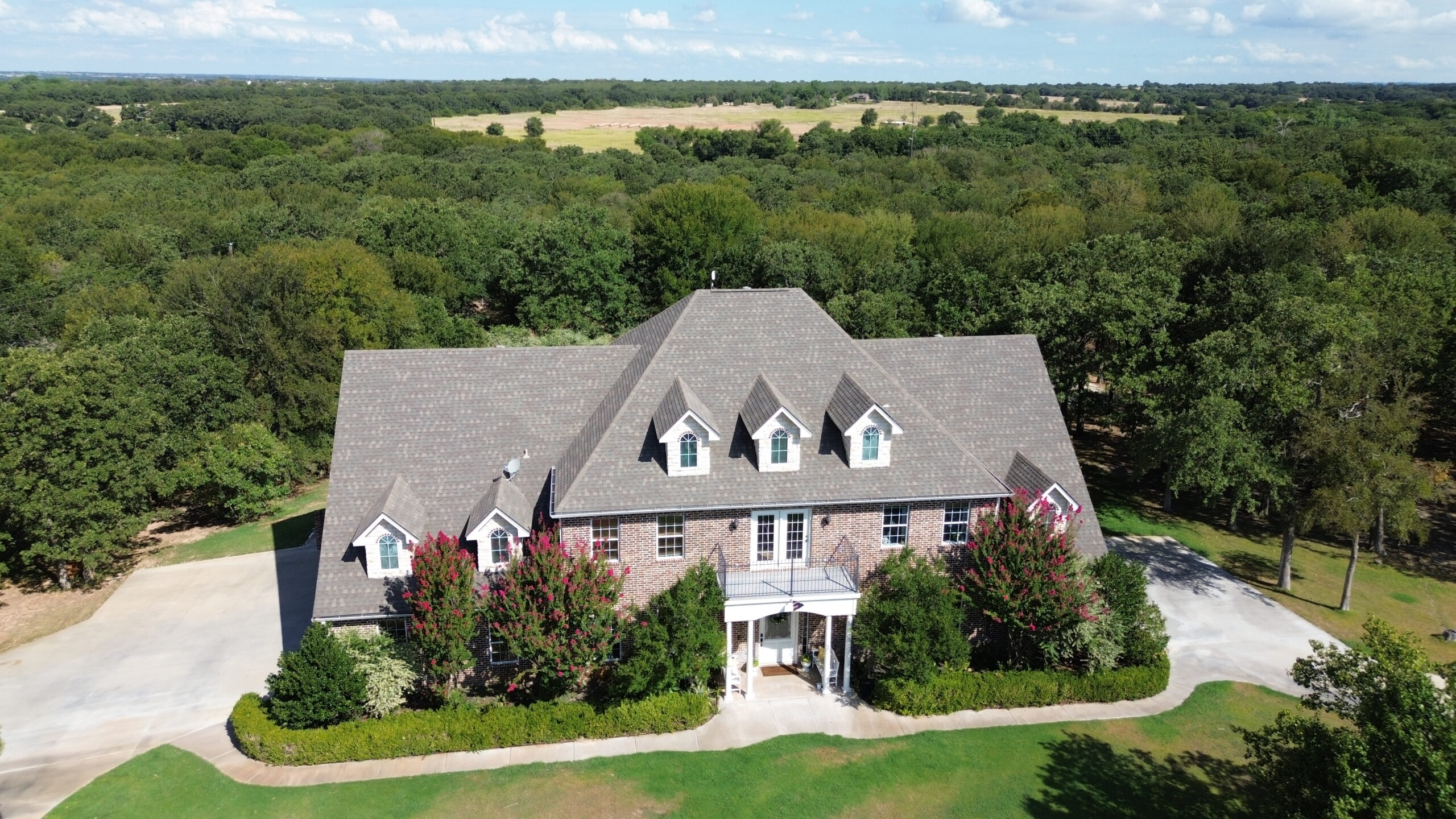
Wind Damage Roof Assessment Checklist
Use this checklist after a windstorm to organize your response before beginning the replacement process.
- Confirm that everyone is safe before inspecting the property.
- Stay off the roof and inspect only from the ground.
- Look for missing, lifted, or damaged roofing materials.
- Examine gutters, flashing, soffits, and fascia for damage.
- Photograph every visible area of concern.
- Inspect ceilings, walls, and the attic for signs of moisture.
- Document damaged personal belongings if water entered the home.
- Contact a qualified roofing contractor for a professional inspection.
- Notify your insurance company and begin the claims process.
- Install temporary protection if active leaks are present.
- Review replacement estimates carefully before signing a contract.
- Schedule roof replacement as soon as practical after approval.
Following this checklist helps homeowners respond methodically rather than reacting under pressure. Organized documentation and timely inspections improve the likelihood of a smoother insurance claim and a more successful roof replacement project.
Conclusion
Wind damage is not always as visible as homeowners expect. While missing shingles and fallen branches are obvious warning signs, many of the most serious problems remain hidden beneath the roofing surface. Water intrusion, weakened decking, damaged flashing, and structural movement can continue affecting the home long after the storm has passed if they are not identified promptly.
A careful assessment begins with safety and a thorough ground level inspection. Documenting visible damage, checking interior spaces for signs of moisture, and arranging a professional evaluation provide the information needed to determine whether repairs are appropriate or if complete roof replacement offers the safest solution. Early action also helps minimize additional damage while supporting insurance claims.
Professional inspections play a critical role because they uncover issues that homeowners cannot easily detect. Advanced inspection methods, structural evaluations, and moisture detection technologies provide a complete picture of the roof’s condition. These findings guide replacement decisions and ensure that underlying problems are corrected before new roofing materials are installed.
Choosing quality materials and experienced contractors further strengthens the investment in a new roof. High wind rated roofing products, improved fastening systems, enhanced flashing, and proper ventilation all contribute to better long term performance during future storms. Combined with routine maintenance, these improvements reduce the likelihood of major wind related damage over the years.
Severe weather cannot be avoided, but its impact can be managed through preparation, timely inspections, and informed decision making. By following a structured assessment process, documenting damage carefully, and working with qualified roofing professionals, homeowners can protect their property, simplify the replacement process, and restore confidence that their home is ready to withstand the next windstorm.