
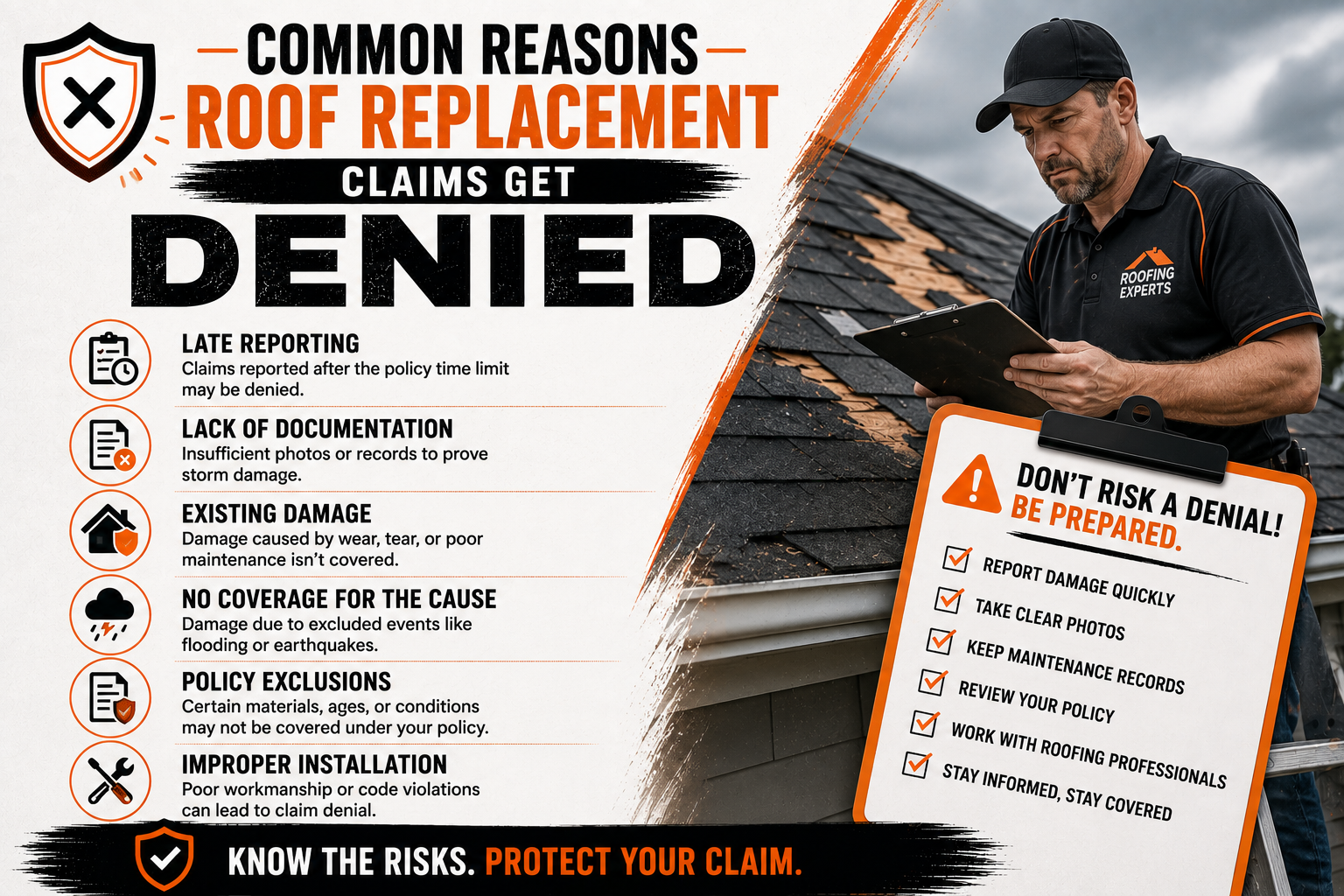
Common Reasons Roof Replacement Claims Get Denied
Introduction
A roof replacement is one of the largest investments a homeowner may face, and insurance coverage can significantly reduce the financial burden when unexpected damage occurs. After severe weather, falling trees, hailstorms, or other covered events, many homeowners rely on their insurance policy to help restore their property. However, not every roof replacement claim receives approval, and claim denials are more common than many people expect.
Receiving a denial can be frustrating, especially when the roof appears to have significant damage. Many homeowners assume that visible damage automatically qualifies for insurance coverage, only to discover that the insurer has identified issues with maintenance, documentation, policy exclusions, or the cause of the damage. Understanding these factors before filing a claim can improve your chances of success and help you avoid costly mistakes.
Insurance companies evaluate every roof replacement claim carefully because their responsibility is to pay only for losses covered under the policy. Adjusters inspect the roof, review maintenance history, examine weather reports, and determine whether the damage resulted from a covered event or from gradual deterioration over time. Even small details can influence whether a claim is approved, partially approved, or denied completely.
Many claim denials occur not because homeowners intentionally did something wrong, but because they were unfamiliar with the claims process. Delayed reporting, missing photographs, incomplete records, or misunderstanding policy coverage can all create unnecessary complications. Learning how insurers evaluate roof damage helps homeowners prepare stronger claims and avoid common pitfalls.
This guide explores the most common reasons roof replacement claims get denied and explains how each issue affects the insurance company’s decision. By understanding these challenges, homeowners can take proactive steps to protect their property, document damage properly, and improve the likelihood of receiving fair insurance coverage when roof replacement becomes necessary.
How Roof Replacement Insurance Claims Are Evaluated
Before discussing the reasons claims are denied, it is important to understand how insurance companies evaluate roof replacement requests. Many homeowners believe the claims process simply involves reporting damage and waiting for payment. In reality, insurers follow a structured investigation designed to verify whether the loss qualifies under the policy.
The evaluation begins when the homeowner reports roof damage to the insurance company. During this initial stage, basic information is collected, including the date of the incident, the suspected cause of the damage, and a description of the affected areas. The insurer then opens a claim file and assigns a claims adjuster to investigate the situation.
The adjuster’s primary responsibility is determining whether the damage resulted from a covered event. They inspect roofing materials, flashing, gutters, vents, and surrounding structures while looking for evidence that supports or contradicts the reported cause of the damage. In some cases, the adjuster also reviews the attic or interior ceilings for signs of water intrusion.
Insurance companies rarely rely on visual inspection alone. Weather records, satellite imagery, maintenance history, contractor reports, and previous claims may all become part of the evaluation process. Combining multiple sources of information helps insurers build a complete picture of the roof’s condition before and after the reported event.
Adjusters also consider the age and overall condition of the roof. An older roof is not automatically denied coverage, but if the inspection reveals long-term deterioration or neglected maintenance, the insurer may conclude that the damage developed gradually rather than from a sudden covered event.
The insurance company also compares the inspection findings with the language contained in the homeowner’s policy. Every policy defines covered perils, exclusions, deductibles, and payment methods differently. Even when two neighboring homes experience the same storm, claim outcomes may differ because the policies themselves are not identical.
Understanding how claims are evaluated makes it easier to see why insurance companies sometimes deny roof replacement requests. The decision is usually based on evidence collected during the investigation rather than on the homeowner’s personal opinion about the damage.
Lack of Proper Maintenance and Neglect
One of the leading reasons roof replacement claims are denied is poor maintenance. Homeowners insurance is designed to cover sudden and accidental damage, not problems that develop because routine maintenance was ignored. Insurance companies expect homeowners to take reasonable care of their roofs throughout their lifespan.
Regular maintenance helps identify small problems before they become expensive repairs. Loose shingles, damaged flashing, clogged gutters, cracked sealant, and minor leaks can often be corrected quickly if discovered early. When these issues remain unresolved for months or years, they may eventually lead to major structural damage that insurance companies classify as homeowner neglect.
During the inspection process, adjusters carefully examine whether the roof showed signs of ongoing deterioration before the reported incident. Water stains, rotted decking, mold growth, repeated patch repairs, and extensive weathering may indicate that the roof had existing maintenance problems unrelated to the recent event.
Insurance companies generally expect homeowners to perform reasonable upkeep throughout the life of the roofing system. While they do not expect roofs to remain perfect forever, they do expect owners to respond appropriately when maintenance issues appear. Ignoring obvious damage increases the likelihood that future claims will be questioned.
For example, imagine a homeowner notices several missing shingles after a minor storm but decides not to replace them. Months later, another storm causes water to enter through the exposed roof deck, damaging insulation and interior ceilings. During the inspection, the adjuster may determine that the earlier unrepaired damage contributed significantly to the loss. As a result, the insurance company may deny all or part of the claim.
Maintenance records can become valuable evidence during claim reviews. Receipts for inspections, gutter cleaning, roof repairs, and preventive maintenance demonstrate that the homeowner made reasonable efforts to protect the property. These documents help establish that the roof was properly maintained before the covered event occurred.
Common examples of neglected roof maintenance include:
- Ignoring loose or missing shingles.
- Allowing gutters to remain clogged for extended periods.
- Failing to repair flashing around chimneys and vents.
- Leaving roof leaks unresolved.
- Ignoring damaged fascia or soffits.
- Allowing tree branches to scrape against roofing materials.
Insurance companies understand that every roof experiences normal aging. However, they expect homeowners to address maintenance issues before they become severe enough to threaten the structure. Preventive maintenance is often one of the strongest defenses against future claim denials.
Normal Wear and Tear Instead of Sudden Damage
Another common reason roof replacement claims are denied is that the damage results from normal wear and tear rather than a sudden covered event. This distinction is one of the most misunderstood aspects of homeowners insurance.
Every roofing system gradually deteriorates over time due to exposure to sunlight, rain, wind, changing temperatures, and seasonal weather conditions. Asphalt shingles slowly lose protective granules, sealants dry out, flashing weakens, and roofing materials naturally become less durable as they age. These changes are considered expected aging rather than accidental damage.
Insurance policies are designed to protect homeowners against unexpected losses, not predictable deterioration. Because aging occurs gradually, insurers generally classify it as a maintenance responsibility rather than an insurable event. Even if replacing an old roof is expensive, insurance coverage typically does not apply unless a covered event caused the damage.
The challenge arises when an older roof experiences storm damage. Adjusters must determine whether the storm caused the roof to fail or whether the roof was already near the end of its useful life before the storm occurred. This evaluation often requires careful inspection of shingles, flashing, fasteners, and supporting structures.
For instance, a hailstorm may leave visible dents across the roof, but if the adjuster concludes that widespread deterioration existed before the storm, the insurer may approve only limited repairs or deny the claim altogether. The decision depends on whether the storm created new damage or simply revealed existing weaknesses.
Homeowners sometimes believe that any leak following a storm proves storm damage occurred. However, if water entered through long-standing cracks, deteriorated flashing, or worn roofing materials, the insurance company may determine that maintenance rather than the storm caused the loss.
The following comparison highlights the difference between normal aging and sudden covered damage.
| Normal Wear and Tear | Sudden Covered Damage |
|---|---|
| Gradual shingle aging | Wind removing shingles during a storm |
| Faded roofing materials | Hail impact damaging shingles |
| Sealant cracking over time | Tree falling onto the roof |
| Minor deterioration from sunlight | Lightning strike damaging roofing components |
| Aging flashing | Fire damaging the roofing system |
Understanding this distinction helps homeowners develop realistic expectations before filing a roof replacement claim. Insurance companies are generally willing to cover unexpected events but not the inevitable effects of time and weather.
Filing the Claim Too Late
Timing plays an important role in the insurance claims process. Even when roof damage results from a covered event, waiting too long before notifying the insurance company can create serious complications. Many claims are delayed, reduced, or denied because homeowners fail to report the damage promptly.
Most insurance policies require homeowners to notify the insurer within a reasonable period after discovering the damage. While exact deadlines vary by policy and local regulations, reporting the loss quickly allows adjusters to investigate before additional weather changes the condition of the roof.
One reason prompt reporting matters is that roofing materials continue to deteriorate after the initial damage occurs. Missing shingles expose the roof deck to rain, sunlight, and debris, while small leaks may gradually expand into larger structural problems. The longer the delay, the more difficult it becomes to determine which damage resulted from the original covered event and which developed afterward.
Delayed claims can also make documentation more challenging. Homeowners may struggle to locate photographs, weather information, repair receipts, or witness statements months after the event. Without strong evidence, proving the cause of the damage becomes significantly harder.
Insurance companies may also question why temporary protective measures were not taken sooner. Homeowners are generally expected to prevent additional damage whenever it is safe to do so. Failing to install temporary tarps or arrange emergency repairs may allow preventable losses to occur, potentially affecting the claim outcome.
Several factors commonly contribute to delayed filing:
- The homeowner did not notice the damage immediately.
- Minor leaks appeared insignificant at first.
- The homeowner hoped repairs would not be necessary.
- Bad weather delayed a professional roof inspection.
- The homeowner misunderstood the policy reporting requirements.
Although these situations are understandable, they can complicate the investigation. Reporting roof damage promptly helps preserve evidence, strengthens documentation, and allows the insurance company to begin evaluating the claim while conditions remain relatively unchanged.
Insufficient Evidence and Poor Documentation
Strong documentation is one of the most important elements of a successful roof replacement insurance claim. Even when damage clearly exists, the insurance company still requires evidence demonstrating what happened, when it occurred, and how the loss affected the roof. Without sufficient documentation, adjusters may not have enough information to approve the claim.
Photographs provide some of the strongest supporting evidence available to homeowners. Wide-angle images showing the overall roof condition should be combined with close-up photographs highlighting damaged shingles, flashing, gutters, vents, fallen debris, and interior water stains. Taking photographs immediately after the event helps establish an accurate timeline before additional deterioration occurs.
Video recordings can also strengthen the claim by capturing details that still images may not fully show. Slowly documenting the roof, surrounding property, and interior damage creates a more complete record of the incident. When combined with photographs, videos help adjusters understand the extent of the damage more clearly.
Maintenance records are equally valuable because they demonstrate responsible roof ownership before the incident occurred. Inspection reports, repair invoices, gutter cleaning receipts, warranty documents, and contractor records all help establish that the roof was properly maintained. These documents may become especially important if the insurer questions whether the damage developed gradually.
Weather information can also support a claim. Reports showing hail, high winds, or severe storms in your area provide independent evidence that a covered weather event occurred near the reported date. While weather records alone do not prove roof damage, they strengthen the overall claim when combined with photographs and inspection reports.
Another common documentation mistake involves discarding damaged roofing materials too quickly. Broken shingles, damaged flashing, or other removed materials may serve as physical evidence during the insurance investigation. Unless safety concerns require immediate disposal, homeowners should ask their contractor whether these materials should be retained until the inspection is complete.
Good organization is just as important as collecting evidence. Keeping photographs, inspection reports, receipts, contractor estimates, insurance correspondence, and claim numbers together in one dedicated folder makes communication much easier throughout the claims process. Organized documentation also helps homeowners respond quickly if the insurance company requests additional information.
Proper documentation cannot guarantee claim approval, but it significantly reduces uncertainty during the investigation. When evidence clearly supports the reported cause of the damage and demonstrates responsible roof maintenance, homeowners place themselves in a much stronger position as the insurance company continues evaluating the claim in the next stages of the process.
Damage Not Covered Under the Insurance Policy
One of the most common reasons roof replacement claims are denied is that the damage simply falls outside the coverage provided by the homeowner’s insurance policy. Many homeowners assume their insurance protects them against every type of roof problem, but policies are designed to cover specific risks rather than every situation that may require a new roof.
Insurance policies typically list covered perils, which are the events that qualify for financial protection. Common covered events include hail, windstorms, fire, lightning, and damage caused by falling trees or other objects. If the roof damage results directly from one of these covered events, the claim has a much better chance of being approved, provided all policy requirements are met.
However, policies also contain exclusions that clearly identify situations where coverage does not apply. These exclusions are often overlooked because homeowners focus primarily on what the policy covers rather than what it excludes. Understanding both sections is equally important before filing a claim.
For example, damage caused by earthquakes or floods is generally excluded from standard homeowners insurance policies unless additional coverage has been purchased. Likewise, damage caused by pests, mold resulting from neglect, faulty workmanship, or manufacturing defects is usually considered outside the scope of standard roof insurance coverage.
Some homeowners are surprised when gradual leaks are denied even though water entered the home. Insurance companies often distinguish between sudden water intrusion caused by a storm and slow leaks resulting from deteriorated roofing materials. If the damage occurred over an extended period, it is generally classified as a maintenance issue rather than an insured loss.
Roof age may also influence coverage depending on the insurer. Some companies reduce coverage for older roofs or apply different settlement methods once the roof exceeds a certain age. While older roofs are not automatically excluded, policy conditions may limit the amount paid after a covered event.
Homeowners should carefully review their insurance documents before assuming that every roofing issue qualifies for reimbursement. Reading the policy carefully and discussing unclear provisions with the insurance agent can prevent disappointment during the claims process.
Pre Existing Roof Damage
Pre existing roof damage is another major reason insurance companies deny roof replacement claims. Homeowners insurance is intended to cover new damage resulting from covered events, not problems that already existed before the reported incident. Determining when the damage actually occurred is therefore one of the adjuster’s most important responsibilities.
During an inspection, adjusters look for evidence indicating whether the roof had unresolved issues before the claim was filed. They examine weathering patterns, previous repairs, water stains, deteriorated flashing, mold growth, and structural conditions that may suggest long-term damage rather than recent storm impacts.
Many homeowners discover pre existing issues only after a severe storm exposes weaknesses that had gone unnoticed. Although the storm may have contributed to the roof’s failure, the insurance company may conclude that much of the damage developed over several years. In these situations, only the newly damaged sections may qualify for coverage while older deterioration remains the homeowner’s responsibility.
Previous insurance claims can also influence the evaluation process. If earlier inspections documented damage that was never repaired, the insurer may question whether the current claim involves the same unresolved issues. Maintaining complete repair records after previous claims helps avoid confusion during future investigations.
Routine inspections play an important role in preventing disputes about pre existing damage. Professional roof inspections performed every few years create a documented history of the roof’s condition. These records can demonstrate that the roof remained in good condition before the covered event occurred.
Homeowners should also retain invoices for previous repairs because they show that earlier issues were corrected properly. Repair documentation establishes a timeline that may become valuable evidence if the insurance company questions when the damage actually developed.
Being proactive with maintenance not only protects the roof itself but also strengthens future insurance claims by reducing uncertainty about the roof’s condition before the reported loss.
Incorrect or Incomplete Information on the Claim
Insurance companies rely on accurate information when evaluating roof replacement claims. Even small errors, missing details, or inconsistent statements can slow the investigation or raise concerns about the accuracy of the claim. While honest mistakes are common, incomplete information sometimes leads to unnecessary denials.
When submitting a claim, homeowners should provide factual information based on what they know rather than making assumptions. If the exact cause of the damage is uncertain, it is better to explain the observed conditions than to speculate about events that cannot be confirmed. Accurate communication helps the adjuster conduct an objective investigation.
Claim forms typically request information about the date of the incident, the suspected cause, the location of the damage, and any emergency repairs that were completed. Leaving important sections blank or providing conflicting information may require additional investigation before the insurance company can make a decision.
Supporting documentation should also match the information provided in the claim. Photographs, contractor reports, weather records, and repair receipts should all tell a consistent story regarding when the damage occurred and how it affected the roof. Contradictory evidence can delay claim approval while adjusters request clarification.
Homeowners sometimes unintentionally provide different dates during separate conversations with the insurance company. Keeping written notes about the incident before contacting the insurer helps maintain consistency throughout the process. Organized communication reduces confusion and creates a clearer timeline for everyone involved.
It is equally important to notify the insurance company if new information becomes available after the claim has been submitted. Hidden damage discovered during inspections or construction should be reported promptly rather than omitted from the claim. Transparent communication builds credibility and helps prevent misunderstandings.
Insurance companies recognize that homeowners are not roofing experts. Honest mistakes usually can be corrected, but complete and accurate information from the beginning helps the claim proceed much more efficiently.
Unauthorized Repairs Before the Insurance Inspection
After discovering roof damage, many homeowners understandably want to repair the problem immediately. While protecting the property from additional damage is important, completing permanent repairs before the insurance inspection can complicate the claims process. Insurance companies need an opportunity to examine the original damage before evidence disappears.
Emergency measures designed to prevent further deterioration are generally encouraged. Installing temporary tarps, covering exposed roof sections, placing containers beneath leaks, and removing immediate hazards demonstrate responsible property ownership. These actions help minimize additional losses while preserving the roof for inspection.
Permanent repairs are different because they may remove evidence the adjuster needs to determine the cause and extent of the damage. Replacing shingles, repairing flashing, or installing a completely new roof before the insurance company conducts its inspection makes it more difficult to verify what actually occurred.
Adjusters depend on physical evidence when determining whether damage resulted from a covered event or from long-term deterioration. Once damaged materials have been removed, important clues may no longer be available. This lack of evidence can sometimes result in partial payment or claim denial.
If emergency repairs are unavoidable, document everything carefully before work begins. Take photographs from multiple angles, record videos of the damaged areas, save samples of damaged roofing materials if possible, and keep all repair invoices. These records help preserve evidence even when immediate action is necessary.
Homeowners should also inform the insurance company about emergency repairs as soon as practical. Prompt communication demonstrates that the repairs were completed to prevent additional losses rather than to interfere with the investigation.
Working closely with both the insurance company and your roofing contractor helps balance the need for immediate protection with the insurer’s need to inspect the original damage.
Contractor Related Issues That Affect Claim Approval
Choosing the right roofing contractor can significantly influence the outcome of a roof replacement insurance claim. While insurance companies do not usually require homeowners to use a specific contractor, the quality of inspections, estimates, and documentation provided by the contractor can affect how smoothly the claim progresses.
Some contractors specialize in insurance restoration projects and understand how to document storm damage thoroughly. Others may have limited experience with insurance claims or provide estimates lacking important details. Incomplete or inaccurate documentation can create unnecessary questions during the insurer’s review.
Insurance companies also become cautious when contractor estimates differ dramatically from market pricing without adequate explanation. While pricing variations are normal, unusually high estimates unsupported by detailed documentation may receive additional scrutiny. Clear descriptions of labor, materials, code upgrades, and repair methods help justify the proposed costs.
Another concern involves contractors who encourage homeowners to exaggerate damage or file questionable insurance claims. Ethical roofing professionals document legitimate storm damage accurately and communicate honestly with both homeowners and insurers. Misrepresenting the condition of the roof can create legal and financial problems for everyone involved.
Storm chasing contractors are another potential risk after severe weather events. These companies often travel into disaster areas, offer immediate roof replacement services, and pressure homeowners to sign contracts before insurance inspections occur. Some provide quality work, but others disappear after receiving payment or fail to honor warranties.
When evaluating roofing contractors, homeowners should verify several important qualifications before making a decision.
| Contractor Factor | Why It Matters | Potential Risk if Ignored |
|---|---|---|
| Licensing | Demonstrates compliance with local requirements | Unqualified work |
| Insurance Coverage | Protects against liability during construction | Financial responsibility for accidents |
| Written Estimate | Provides clear project details | Cost disputes |
| Local References | Confirms previous customer satisfaction | Poor workmanship |
| Warranty Information | Protects future roof performance | Limited post-installation support |
Taking time to verify contractor credentials reduces the likelihood of complications during both the insurance claim and the roof replacement project itself.
Misunderstanding Policy Coverage and Exclusions
Many roof replacement claim denials result from simple misunderstandings about what the insurance policy actually covers. Homeowners often assume that because they pay insurance premiums regularly, any roof problem should qualify for reimbursement. Unfortunately, insurance policies contain detailed conditions that determine when coverage applies and when it does not.
Coverage sections describe the types of losses the insurer agrees to protect against, while exclusions identify situations that remain the homeowner’s responsibility. Reading only the summary page without reviewing the complete policy can lead to unrealistic expectations during the claims process.
Replacement cost coverage and actual cash value coverage are frequently misunderstood. Homeowners may expect full reimbursement for a new roof without realizing that depreciation or deductible requirements affect the settlement amount. Understanding these payment methods before filing a claim helps prevent confusion when reviewing the insurer’s estimate.
Some policies also include endorsements or optional coverages that modify standard protection. Building code upgrades, matching materials, or ordinance coverage may require additional policy endorsements rather than being included automatically. Reviewing these provisions with an insurance agent provides a clearer understanding of available protection.
Policy limits are another important consideration. Every insurance policy specifies the maximum amount payable under certain circumstances. Even when a roof replacement claim is approved, payment cannot exceed applicable policy limits.
Homeowners should schedule periodic policy reviews, especially after replacing a roof or making major home improvements. Updating coverage ensures the insurance policy continues reflecting the current value and condition of the property.
Understanding your insurance policy before damage occurs is one of the most effective ways to reduce claim denials. When homeowners know exactly what is covered, what is excluded, and what documentation the insurer expects, they are better prepared to file accurate claims and avoid many of the common issues that lead to delayed decisions or denials.
How to Avoid Roof Replacement Claim Denials
While not every roof replacement claim can be guaranteed approval, homeowners can significantly improve their chances by preparing before damage occurs and following the proper claims process. Insurance companies are more likely to approve claims that are supported by strong evidence, timely reporting, and proof of responsible home maintenance. Taking a proactive approach helps eliminate many of the issues that commonly result in claim denials.
One of the best ways to avoid claim problems is to inspect your roof regularly. Professional inspections every few years, along with visual checks after severe weather, help identify minor issues before they become major structural problems. Addressing loose shingles, damaged flashing, or clogged gutters early demonstrates that the roof has been properly maintained throughout its lifespan.
Keeping detailed maintenance records is equally important. Save invoices for roof repairs, inspections, gutter cleaning, tree trimming, and any other work performed on the roofing system. These documents create a history showing that the homeowner acted responsibly rather than allowing problems to worsen over time.
When storm damage occurs, document everything before making repairs whenever it is safe to do so. Take clear photographs from multiple angles, record videos, note the date of the event, and keep copies of weather reports if available. Thorough documentation provides the insurance company with reliable evidence during the investigation.
Prompt reporting also plays a significant role in claim approval. Contact the insurance company as soon as practical after discovering roof damage instead of waiting to see whether the problem becomes worse. Early reporting allows adjusters to inspect the roof while evidence remains fresh and conditions closely reflect the original event.
Working with an experienced roofing contractor can also strengthen your claim. Reputable contractors understand how to identify storm damage, prepare detailed inspection reports, and communicate effectively with insurance companies. Their expertise often helps homeowners avoid documentation mistakes and estimate disputes.
The following practices can reduce the likelihood of claim denials:
- Schedule routine roof inspections and maintenance.
- Repair small roofing issues before they become serious.
- Keep maintenance and repair records organized.
- Document storm damage immediately with photographs and videos.
- Report roof damage to the insurance company promptly.
- Review your insurance policy before filing a claim.
- Hire qualified roofing contractors with insurance claim experience.
- Preserve damaged roofing materials until inspections are complete.
These steps require relatively little effort compared to the cost and inconvenience of replacing a roof without insurance assistance. Consistent maintenance and careful documentation create a strong foundation for any future insurance claim.
What to Do If Your Roof Replacement Claim Is Denied
Receiving a claim denial does not always mean the matter is permanently resolved. Many homeowners successfully challenge denied claims after providing additional evidence or requesting further review. Remaining calm and understanding the reason for the denial are the first steps toward deciding how to proceed.
Begin by carefully reading the denial letter from your insurance company. This document should explain why the claim was denied and identify the specific policy provisions that influenced the decision. Understanding the insurer’s reasoning allows you to determine whether additional documentation or clarification may change the outcome.
If the denial resulted from insufficient evidence, gather any missing information that supports your claim. Additional photographs, contractor reports, maintenance records, weather documentation, and repair invoices may strengthen your case. Organizing these materials before contacting the insurance company demonstrates that your request is supported by facts rather than assumptions.
It is often helpful to discuss the denial with your insurance adjuster or claims representative. Ask for a detailed explanation of the inspection findings and request clarification regarding any technical conclusions that seem unclear. Professional communication frequently resolves misunderstandings without requiring a formal appeal.
A second opinion from an experienced roofing contractor may also be valuable. Another inspection could identify storm damage or structural concerns that were overlooked during the original evaluation. Detailed written reports from qualified professionals often provide useful evidence when requesting reconsideration.
If you believe the insurance company made an incorrect decision after reviewing all available evidence, you may submit a formal appeal. Most insurers have an established appeals process that allows homeowners to present additional documentation for further review. Following the required procedures and meeting all deadlines improves the likelihood that your appeal will receive careful consideration.
Some insurance policies also include an appraisal process for resolving disputes regarding the value of the loss. Under this process, independent appraisers evaluate the damage and help determine an appropriate settlement. The availability of appraisal depends on the terms of your insurance policy.
If disagreements remain unresolved after the appeal process, homeowners may consider consulting an attorney or public adjuster who specializes in property insurance claims. Professional guidance may be appropriate for complex or high-value disputes where significant financial issues are involved.
Although claim denials are disappointing, many can be resolved through careful documentation, professional inspections, and respectful communication with the insurance company.
Frequently Asked Questions About Roof Replacement Claim Denials
Why do insurance companies deny roof replacement claims?
Insurance companies usually deny claims because the damage is not covered under the policy, resulted from normal wear and tear, involved poor maintenance, lacked sufficient documentation, or was reported too late. Each claim is evaluated individually based on the policy terms and available evidence.
Will an old roof automatically cause my claim to be denied?
No. An older roof does not automatically prevent insurance coverage. However, the insurer may examine whether the roof failed because of age and deterioration rather than a covered event such as hail or wind damage.
Can I file another claim after my first claim is denied?
You generally cannot file the exact same claim again without new information, but you may request reconsideration or submit an appeal if you have additional evidence supporting your position. Follow the procedures outlined by your insurance company.
Should I get my roof inspected before filing an insurance claim?
Yes. A professional inspection can identify storm-related damage, estimate repair costs, and help determine whether filing a claim is appropriate. An experienced roofing contractor may also identify issues that are difficult for homeowners to recognize safely.
What documents are most important during a roof insurance claim?
The most useful documents include photographs of the damage, maintenance records, contractor inspection reports, repair invoices, weather information, insurance policy details, and all correspondence related to the claim. Keeping these records organized simplifies communication with the insurance company.
Does replacing my roof improve future insurance claims?
A properly installed new roof with complete maintenance records may strengthen future claims because it provides a documented starting point for the roof’s condition. Regular inspections and maintenance after replacement continue to be important throughout the roof’s lifespan.
Conclusion
Roof replacement insurance claims are denied for many different reasons, but most denials fall into a few common categories. Poor maintenance, normal wear and tear, delayed reporting, inadequate documentation, policy exclusions, pre existing damage, unauthorized repairs, and misunderstandings about coverage are among the most frequent factors that influence insurance decisions. Understanding these issues before filing a claim allows homeowners to prepare more effectively and avoid preventable mistakes.
A successful claim begins long before severe weather damages the roof. Regular maintenance, routine inspections, organized records, and a clear understanding of your insurance policy all contribute to a stronger claim when unexpected damage occurs. These proactive measures not only protect the roofing system but also provide valuable evidence if an insurance company later questions the cause or extent of the damage.
When damage does occur, acting promptly is essential. Documenting the roof carefully, reporting the claim without unnecessary delay, protecting the property from additional damage, and working with experienced roofing professionals all improve the quality of the claim. Honest communication and complete documentation help insurance adjusters make informed decisions based on reliable evidence.
Even if a claim is denied, homeowners should remember that the process does not always end there. Reviewing the denial carefully, gathering additional supporting information, requesting clarification, and using the available appeal procedures may lead to a different outcome. Many disputes are resolved after further documentation or additional inspections provide a clearer understanding of the damage.
By understanding why roof replacement claims get denied and following best practices before, during, and after the claims process, homeowners can reduce unnecessary complications and improve their chances of receiving fair insurance coverage. Careful preparation, responsible roof maintenance, and informed decision making remain the most effective strategies for protecting both your home and your financial investment when unexpected roof damage occurs.