
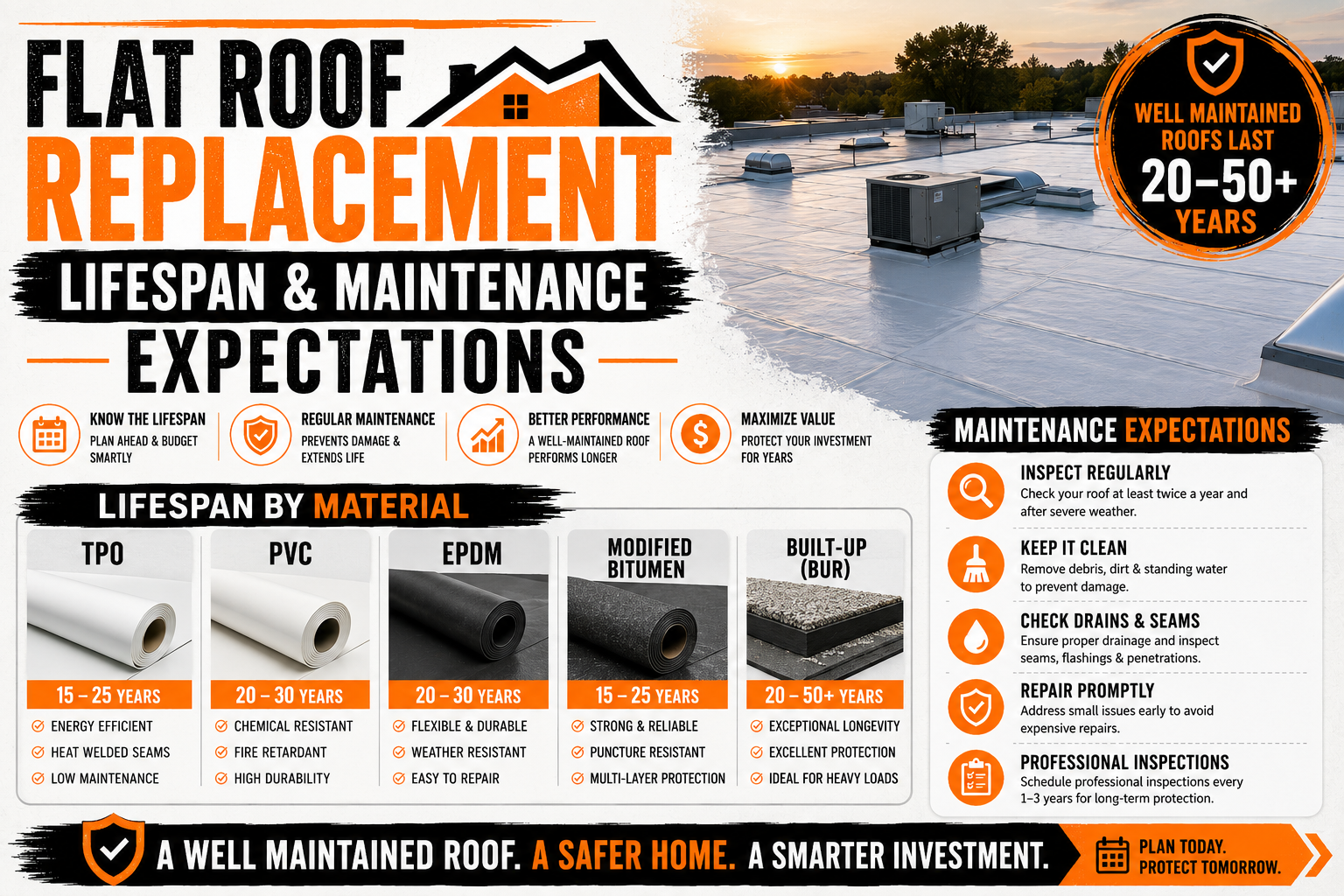
Flat Roof Replacement Lifespan and Maintenance Expectations
Introduction
A flat roof is one of the most important structural components of any residential or commercial property. It provides protection from rain, wind, sunlight, and changing temperatures while supporting essential systems such as HVAC equipment, solar panels, and ventilation units. Although modern flat roofing materials are designed to be durable, no roof lasts forever. Every flat roof eventually reaches the point where replacement becomes necessary, making it important for property owners to understand what influences its lifespan and how to maximize its performance.
Many people assume that a new flat roof will perform well for decades without requiring much attention. In reality, roof longevity depends on several interconnected factors, including material quality, installation standards, weather exposure, drainage efficiency, and routine maintenance. Two roofs installed on similar buildings can have very different service lives simply because one receives regular care while the other is neglected.
Understanding lifespan expectations helps property owners make informed financial decisions. Knowing when a roof is approaching the end of its expected service life allows owners to budget for replacement, schedule inspections, and avoid emergency situations caused by sudden roof failure. Proper planning also reduces the likelihood of expensive interior damage resulting from unexpected leaks.
Flat roof replacement is not simply about installing new materials. It is an opportunity to improve insulation, waterproofing, drainage, and energy efficiency while addressing hidden structural concerns that may have developed over time. A well planned replacement creates the foundation for many years of reliable performance.
This guide explains what determines the lifespan of a flat roof, how different materials compare, the role of weather and installation quality, and the warning signs that indicate a roof is beginning to age. Understanding these factors provides the knowledge needed to protect a roofing investment and prepare for the maintenance practices discussed in the next part of this article.
What Determines the Lifespan of a Flat Roof
No single factor determines how long a flat roof will last. Instead, roof longevity is influenced by a combination of construction quality, environmental conditions, maintenance practices, and the materials selected during installation. Understanding these factors allows property owners to make better decisions throughout the roof’s life.
The roofing material itself plays a major role in determining expected lifespan. Different membranes have varying levels of resistance to ultraviolet radiation, temperature changes, moisture, chemicals, and physical damage. Premium materials generally provide longer service lives when installed correctly and maintained consistently.
Installation quality is equally important. Even the highest quality roofing membrane can fail prematurely if seams are poorly welded, flashing is incorrectly installed, or drainage systems are overlooked. Professional workmanship ensures that every component functions together as a complete waterproofing system.
Environmental conditions continuously affect roof performance. Buildings located in regions with intense sunlight, heavy rainfall, snow accumulation, strong winds, or frequent storms experience greater stress than those in milder climates. These conditions gradually influence membrane flexibility, waterproofing performance, and structural stability.
Maintenance practices often determine whether a roof reaches its full expected lifespan. Routine inspections, drain cleaning, timely repairs, and preventive maintenance help prevent small issues from developing into widespread damage. Neglected roofs frequently require replacement years earlier than properly maintained systems.
Building usage also influences roof longevity. Rooftops that support heavy mechanical equipment or experience frequent maintenance traffic generally experience greater wear than roofs with limited access. Managing rooftop activities helps reduce unnecessary membrane damage throughout the roof’s service life.
Average Lifespan of Different Flat Roofing Materials
Modern flat roofing systems are available in several materials, each offering unique advantages and expected service lives. Choosing the right material requires balancing installation costs, maintenance expectations, climate conditions, and long term performance objectives.
EPDM remains one of the most widely used flat roofing materials because of its flexibility and weather resistance. It performs well under changing temperatures and offers dependable waterproofing when properly maintained. Many EPDM roofs continue performing effectively for several decades.
TPO roofing has become increasingly popular due to its reflective surface and energy efficiency. Heat welded seams create strong waterproof connections while the bright membrane helps reduce heat absorption during warmer months. Proper installation and routine maintenance support consistent long term performance.
PVC roofing is valued for its resistance to chemicals, grease, and fire. These characteristics make it particularly suitable for restaurants, manufacturing facilities, and buildings where rooftop contaminants may be present. Its durable seams also contribute to reliable waterproofing over time.
Modified bitumen roofing combines multiple protective layers that improve puncture resistance and durability. Buildings with regular rooftop maintenance activity often benefit from its ability to withstand foot traffic better than some single ply systems.
Built up roofing has served commercial buildings for many decades. Multiple reinforcing layers create a thick waterproofing system that performs well under demanding conditions. Although installation requires more labor than some modern alternatives, built up roofing remains a dependable option for many property owners.
Material selection should always consider more than lifespan alone. Maintenance requirements, repair accessibility, warranty coverage, energy efficiency, and compatibility with building design all contribute to the long term value of a roofing system.
How Climate and Weather Affect Roof Longevity
Weather is one of the few factors that property owners cannot control, yet it has a significant impact on flat roof performance. Every season introduces environmental conditions that gradually influence roofing materials throughout their service life.
Ultraviolet radiation from continuous sunlight slowly breaks down roofing membranes over many years. Constant exposure can reduce material flexibility, increase surface deterioration, and accelerate aging if the roofing system lacks adequate UV resistance. Reflective roofing materials help reduce some of these effects by limiting heat absorption.
Heavy rainfall places continuous stress on drainage systems and waterproofing components. Flat roofs depend on efficient drainage because standing water increases membrane loading and prolongs moisture exposure. Even small drainage problems can contribute to premature deterioration when repeated over many seasons.
Snow and ice create different challenges in colder climates. Accumulated snow increases structural loading while repeated freezing and thawing cause roofing materials to expand and contract. These cycles gradually affect seams, flashing, and roof penetrations if maintenance is neglected.
Strong winds may lift membrane edges, loosen flashing, or carry debris across the roof surface. Wind driven branches and airborne objects can puncture roofing materials during severe storms. Regular inspections after major weather events help identify damage before leaks develop.
Temperature fluctuations influence roofing materials every day. Expansion during warm conditions followed by contraction during cooler temperatures creates ongoing movement throughout the roofing system. Materials designed to accommodate thermal movement generally perform better over long periods.
Installation Quality and Its Impact on Roof Performance
The lifespan of a flat roof depends as much on installation quality as it does on material selection. A premium roofing system installed incorrectly often performs worse than a standard system installed with exceptional workmanship.
Proper surface preparation forms the foundation of successful installation. Roof decks should be clean, dry, structurally sound, and properly repaired before new roofing materials are installed. Skipping this step increases the likelihood of future membrane failures.
Membrane installation requires careful attention to alignment, attachment, and seam construction. Small installation errors may not become visible immediately, but they often develop into significant waterproofing problems after years of weather exposure. Following manufacturer specifications ensures that roofing materials perform as intended.
Flashing installation deserves particular attention because roof transitions represent the most common sources of water intrusion. Walls, parapets, roof penetrations, expansion joints, and equipment curbs all require detailed waterproofing that accommodates building movement while maintaining reliable seals.
Insulation placement also influences roof performance. Properly installed insulation improves energy efficiency, creates a stable membrane support surface, and helps maintain consistent indoor temperatures. Uneven insulation installation can contribute to drainage issues and premature membrane wear.
Experienced roofing contractors understand how every component works together as a complete system. Their knowledge helps ensure that waterproofing, insulation, drainage, structural support, and rooftop equipment all function effectively throughout the roof’s expected service life.
Importance of Proper Drainage for Long Lasting Flat Roofs
Although they are commonly called flat roofs, these roofing systems are designed with slight slopes that direct water toward designated drainage points. Effective drainage remains one of the most important factors influencing roof lifespan because standing water accelerates material deterioration.
Ponding water increases the amount of time roofing membranes remain saturated after rainfall. Extended moisture exposure weakens seams, increases membrane stress, and may eventually allow water to penetrate beneath the roofing system. Preventing standing water significantly improves long term durability.
Proper drainage begins during roof design. Tapered insulation, roof slopes, drain placement, scuppers, gutters, and overflow systems work together to move water away from the roof surface. Every component must function correctly for the drainage system to perform efficiently.
Routine maintenance plays an equally important role. Leaves, dirt, branches, and other debris frequently block roof drains and gutters, reducing water flow during storms. Regular cleaning keeps drainage systems operating as designed while minimizing the risk of water accumulation.
Structural movement can also affect drainage performance over time. Buildings naturally settle, and roof decks may develop low areas where water collects after rainfall. Periodic inspections help identify these changes before they cause widespread roofing problems.
Investing in proper drainage during installation and maintaining drainage components throughout the roof’s life provides substantial long term benefits. Effective water management reduces maintenance costs, extends membrane lifespan, and protects the building structure beneath the roof.
Common Causes of Premature Flat Roof Failure
Many flat roofs require replacement earlier than expected because preventable problems gradually reduce their performance. Understanding these causes allows property owners to take proactive steps that extend roof lifespan.
Poor installation remains one of the leading causes of premature failure. Incorrect seam construction, inadequate flashing, improper fastener placement, and insufficient drainage planning all increase the likelihood of leaks and membrane deterioration. Choosing qualified contractors significantly reduces these risks.
Lack of routine maintenance also shortens roof life. Small punctures, clogged drains, loose flashing, and damaged sealants often remain unnoticed until water enters the building. Early maintenance prevents minor defects from developing into major structural problems.
Physical damage caused by maintenance personnel is another common issue. Technicians servicing HVAC systems, communication equipment, or solar panels may accidentally puncture roofing membranes or damage flashing while working on the roof. Designated walk pads help minimize this type of wear.
Extreme weather events can accelerate aging even when roofs are properly maintained. Hail, high winds, severe storms, and prolonged flooding place extraordinary stress on roofing systems. Prompt inspections after significant weather events allow contractors to repair damage before deterioration spreads.
Ignoring early warning signs frequently results in more extensive damage. Small leaks, standing water, bubbling membranes, or visible seam separation should never be overlooked. Addressing these conditions quickly protects insulation, structural components, and interior building finishes.
Flat Roof Material Lifespan Comparison
| Roofing Material | Average Lifespan | Maintenance Requirement | Primary Strength |
|---|---|---|---|
| EPDM | 25 to 35 years | Moderate | Excellent weather resistance |
| TPO | 20 to 30 years | Low to Moderate | High energy efficiency |
| PVC | 25 to 35 years | Moderate | Chemical and fire resistance |
| Modified Bitumen | 20 to 30 years | Moderate | Strong puncture resistance |
| Built Up Roofing | 25 to 40 years | Moderate | Exceptional durability |
Signs Your Flat Roof Is Aging
Every roof shows signs of aging before complete failure occurs. Recognizing these indicators allows property owners to plan maintenance or replacement before costly water damage develops inside the building.
Visible cracks, shrinking membranes, loose seams, and deteriorating flashing often indicate that roofing materials are approaching the end of their useful life. These conditions may initially appear minor, but they frequently worsen as weather exposure continues.
Repeated leaks are another important warning sign. While isolated leaks can usually be repaired, frequent water intrusion across multiple areas often suggests widespread membrane deterioration or moisture damage beneath the roofing system. Continually repairing isolated leaks becomes less practical over time.
Standing water that remains long after rainfall may indicate drainage problems or structural settlement. Persistent ponding increases membrane stress while accelerating material deterioration. Correcting drainage issues early helps preserve overall roof performance.
Interior warning signs should also be taken seriously. Water stains, peeling paint, damp insulation, mold growth, or unusual odors may indicate hidden roof leaks that require immediate professional evaluation. Interior symptoms often appear after moisture has already spread beneath the roofing membrane.
Regular inspections allow these warning signs to be identified before significant structural damage occurs. Monitoring roof condition throughout its lifespan helps property owners make informed decisions about repairs, maintenance, and future replacement planning.
Planning for Long Term Roof Performance
Flat roof replacement should be viewed as a long term investment rather than a short term construction project. Planning beyond the installation phase allows property owners to maximize roof lifespan while reducing future maintenance expenses.
Long term planning begins with selecting materials that match the building’s operational needs, climate conditions, and maintenance capabilities. Choosing the most appropriate roofing system provides a stronger foundation for decades of reliable performance.
Property owners should also establish inspection schedules before the new roof is installed. Routine professional evaluations help identify developing concerns while repairs remain relatively simple and affordable. Consistent monitoring protects both the roofing system and the building beneath it.
Budget planning should include future maintenance rather than focusing only on installation costs. Setting aside funds for inspections, minor repairs, and preventive maintenance helps avoid emergency expenses later in the roof’s life. This proactive approach generally provides better financial value over the long term.
Finally, maintaining accurate documentation supports effective roof management. Inspection reports, warranty information, repair records, and maintenance histories provide valuable reference information that simplifies future decisions and protects warranty coverage.
Understanding what influences flat roof lifespan is the first step toward protecting a roofing investment. While quality materials and professional installation create a strong starting point, consistent maintenance ultimately determines whether a roof reaches its full expected service life. The next part of this guide explores the maintenance practices, inspection schedules, and preventive care strategies that help flat roofs perform reliably year after year.
Why Routine Maintenance Is Essential
A newly installed flat roof is built to withstand years of exposure to weather and environmental conditions, but its performance depends on consistent maintenance throughout its lifespan. Even the most durable roofing materials gradually experience wear from sunlight, rainfall, wind, temperature changes, and regular rooftop activity. Routine maintenance helps manage this natural aging process while reducing the likelihood of expensive repairs.
Many roofing problems begin as small defects that are difficult to notice without regular inspections. A loose flashing section, a minor membrane puncture, or a partially blocked drain may seem insignificant at first. However, these issues often allow moisture to enter the roofing system, leading to insulation damage, structural deterioration, and interior leaks if they remain unaddressed.
Preventive maintenance also protects the financial investment made during roof replacement. A commercial or residential flat roof represents a significant expense, and replacing it earlier than necessary can place unnecessary pressure on property budgets. Spending a relatively small amount on routine maintenance often prevents major repair costs later.
Regular maintenance improves overall roof performance as well. Clean drainage systems, properly sealed flashing, and intact waterproofing materials help the roof function as originally designed. This supports better energy efficiency, improved moisture protection, and greater reliability throughout changing seasons.
Another important benefit is warranty protection. Many roofing manufacturers require documented maintenance and periodic inspections as part of their warranty conditions. Maintaining accurate service records demonstrates responsible ownership while simplifying future warranty claims if problems arise.
Recommended Inspection Schedule
Roof inspections form the foundation of every successful maintenance program. Rather than waiting for visible leaks, property owners should inspect flat roofs on a consistent schedule that allows developing problems to be identified early.
Most roofing professionals recommend conducting comprehensive inspections at least twice each year. Spring inspections evaluate the roof after winter weather, while autumn inspections prepare the roofing system for colder months ahead. These seasonal evaluations provide regular opportunities to identify changes in roof condition.
Additional inspections should follow major weather events. Severe storms, hail, strong winds, heavy rainfall, or snow accumulation can damage roofing materials even when no immediate leaks are visible. Prompt inspections help detect hidden problems before they worsen.
Buildings with high rooftop activity may benefit from more frequent inspections. Facilities that regularly service HVAC equipment, communication systems, or solar panels often experience greater foot traffic than typical buildings. Increased rooftop activity raises the risk of accidental membrane damage, making more frequent evaluations worthwhile.
Professional inspections generally include examining roofing membranes, flashing, seams, roof penetrations, drainage systems, insulation performance, and visible structural conditions. Inspectors also document any developing concerns with photographs and written reports that become valuable references for future maintenance planning.
Consistent inspection schedules provide a clear picture of roof performance over time. Comparing inspection reports from year to year helps identify gradual changes that may otherwise go unnoticed until significant deterioration occurs.
Seasonal Maintenance Tasks
Each season presents unique challenges that affect flat roof performance. Organizing maintenance activities around seasonal weather patterns helps prepare the roofing system for changing environmental conditions while reducing unnecessary wear.
Spring maintenance often focuses on removing debris that accumulated during winter. Leaves, branches, dirt, and other materials should be cleared from roof surfaces, gutters, and drains to restore proper water flow before seasonal rainfall increases. Inspectors also look for damage caused by freezing temperatures or winter storms.
Summer maintenance emphasizes protecting roofing materials from prolonged sunlight and heat. Contractors inspect membranes for signs of ultraviolet deterioration, seam separation, or surface damage that may develop during extended periods of high temperatures. Roof coatings may also be evaluated for continued effectiveness.
Autumn inspections prepare the roof for colder weather by confirming that drainage systems remain clear before falling leaves create blockages. Flashing, sealants, and roof penetrations receive careful attention to ensure they remain watertight before winter precipitation begins.
Winter maintenance often involves monitoring snow accumulation and checking for ice related drainage problems. While unnecessary rooftop traffic should generally be avoided during icy conditions, visual observations help identify potential issues that require attention once weather conditions improve.
Adapting maintenance activities to seasonal conditions reduces the cumulative effects of weather exposure while supporting consistent roof performance throughout the year.
Cleaning Drains, Gutters, and Roof Surfaces
Proper drainage remains one of the most important factors affecting flat roof lifespan. Even a high quality roofing system cannot perform effectively if water is unable to leave the roof surface after rainfall. Routine cleaning ensures that drainage components continue functioning as designed.
Roof drains should be inspected regularly for leaves, dirt, branches, roofing granules, and other debris that may restrict water flow. Small blockages often develop gradually, making routine cleaning much easier than responding to severe ponding after heavy rainfall.
Gutters and downspouts also require regular maintenance. Debris accumulation can prevent water from flowing away from the building efficiently, increasing the likelihood of overflow and water damage near roof edges. Cleaning these systems helps maintain proper drainage capacity throughout the year.
The roof surface itself should remain free from unnecessary debris. Loose branches, construction materials, discarded equipment, and accumulated dirt can trap moisture while creating conditions that encourage membrane deterioration. A clean roof also allows inspectors to identify developing problems more easily.
Cleaning activities should be performed carefully to avoid damaging roofing materials. Sharp tools, aggressive scraping, and harsh chemicals may compromise membrane integrity if used improperly. Gentle cleaning methods preserve roofing materials while effectively removing unwanted debris.
Regular drainage maintenance significantly reduces the risk of standing water. Proper water movement protects waterproofing materials, reduces structural loading, and helps extend the overall service life of the roofing system.
Identifying Minor Problems Before They Become Major Repairs
One of the greatest advantages of routine maintenance is the ability to detect small issues before they require extensive repairs. Early intervention reduces repair costs while preventing damage from spreading beneath the roofing system.
Small membrane punctures often result from falling debris or accidental foot traffic. Although these openings may appear insignificant, they allow water to enter insulation layers where moisture spreads beyond the visible damage. Prompt repairs restore waterproofing before larger problems develop.
Loose flashing is another issue that frequently appears during routine inspections. Flashing protects roof transitions around walls, equipment, skylights, and penetrations. Even slight separation can allow water intrusion during wind driven rain, making early repairs especially valuable.
Sealants around roof penetrations naturally age over time. Temperature changes and continuous weather exposure gradually reduce their flexibility, increasing the likelihood of cracking. Replacing aging sealants before failure occurs helps maintain continuous waterproof protection.
Drainage problems should also be addressed immediately. Water that remains on the roof long after rainfall indicates blocked drains, structural settlement, or inadequate roof slope. Correcting these conditions protects both the roofing membrane and supporting structure.
Routine inspections create opportunities to resolve these issues while repairs remain relatively simple. Delaying maintenance often transforms inexpensive repairs into major restoration projects involving insulation replacement and structural repairs.
Protecting Flat Roofs From Foot Traffic and Equipment Damage
Many flat roofs support equipment that requires regular servicing throughout the year. HVAC systems, solar panels, communication equipment, ventilation units, and exhaust systems all bring maintenance personnel onto the roof, increasing the potential for accidental damage.
Foot traffic gradually wears roofing materials, particularly around frequently accessed equipment. Repeated walking in the same areas may scuff protective surfaces, stress seams, or increase the likelihood of punctures over time. Installing designated walk pads helps distribute weight while protecting the roofing membrane.
Service contractors should also understand proper rooftop safety and access procedures. Dragging tools, placing heavy equipment directly on the membrane, or using sharp objects without protection can damage roofing materials. Clear maintenance guidelines reduce these unnecessary risks.
Equipment supports should be inspected regularly as well. Loose mounting systems may shift during operation or severe weather, placing additional stress on surrounding roofing materials. Maintaining stable equipment supports helps preserve membrane integrity.
Property owners should require contractors to report any accidental roof damage immediately. Prompt repair prevents moisture intrusion while avoiding larger maintenance expenses later. Open communication between maintenance personnel and roofing professionals supports better long term roof performance.
Managing rooftop activity carefully protects the investment made during roof replacement. Reducing unnecessary physical damage allows roofing materials to perform according to their expected lifespan.
Professional Maintenance Versus DIY Maintenance
Many property owners wonder whether flat roof maintenance should be handled personally or performed by professional roofing contractors. The answer often depends on the complexity of the task, the size of the building, and the owner’s experience.
Basic maintenance activities such as removing loose debris from the roof surface, visually checking drains, and observing obvious changes can often be completed safely by knowledgeable property owners when conditions permit. These simple tasks help maintain roof cleanliness between professional inspections.
However, professional roofing contractors provide advantages that extend beyond routine cleaning. They understand roofing system design, recognize subtle warning signs, and use specialized equipment to identify hidden moisture or membrane defects. Their experience allows them to detect developing issues that may not be obvious during casual visual inspections.
Repairs should almost always be performed by qualified professionals. Using incompatible materials, applying incorrect repair methods, or overlooking underlying damage may reduce roof performance or even void manufacturer warranties. Professional repairs help ensure long term reliability.
Safety is another important consideration. Flat roofs may appear easy to access, but working at height always involves risk. Wet surfaces, roof edges, skylights, and rooftop equipment create hazards that require appropriate training and protective equipment.
Combining routine owner observations with scheduled professional inspections often provides the most effective maintenance strategy. This balanced approach ensures continuous monitoring while preserving installation quality and warranty protection.
Common Maintenance Mistakes to Avoid
Even well intentioned maintenance efforts can reduce roof lifespan if important practices are overlooked. Avoiding these common mistakes helps preserve roofing performance and minimizes unnecessary repair expenses.
Some of the most frequent maintenance errors include:
- Ignoring small leaks or minor membrane damage.
- Allowing drains and gutters to remain clogged.
- Walking on the roof unnecessarily or without designated pathways.
- Hiring unqualified contractors for rooftop modifications.
- Delaying scheduled inspections after major storms.
- Using incompatible repair materials or temporary sealants.
Preventing these mistakes requires consistent attention rather than expensive maintenance programs. Small improvements in maintenance habits often produce significant long term benefits for roof performance and durability.
Creating a Preventive Roof Maintenance Program
A preventive maintenance program provides structure and consistency throughout the life of a flat roof. Rather than responding only after problems develop, preventive maintenance focuses on identifying potential concerns before they affect building performance.
An effective program begins by establishing a written inspection schedule. Property owners should define when inspections will occur, who will perform them, and what roofing components require evaluation during each visit. Consistency is more valuable than performing inspections only when problems become visible.
Maintenance responsibilities should also be clearly assigned. Facility managers, maintenance staff, and roofing contractors should understand their respective roles to ensure that inspections, cleaning, documentation, and repairs are completed on time. Clear responsibility improves accountability throughout the roof’s lifespan.
Accurate record keeping strengthens every preventive maintenance program. Inspection reports, repair histories, warranty information, photographs, and contractor recommendations create valuable documentation that supports future maintenance decisions. These records also help identify recurring issues that may require long term solutions.
Finally, preventive maintenance should remain flexible enough to adapt as the roof ages. Inspection frequency, repair priorities, and maintenance activities may change over time as roofing materials experience normal wear. Adjusting the maintenance program according to roof condition helps maximize service life while controlling long term costs.
Routine maintenance is not simply an optional task after flat roof replacement. It is an ongoing investment that protects waterproofing performance, improves energy efficiency, and extends the useful life of the roofing system. In the final part of this guide, we will examine how proper care, informed decision making, and long term planning help property owners maximize roof lifespan while recognizing when repairs or complete replacement become the better solution.
When Repairs Are Better Than Replacement
Not every roofing problem requires a complete roof replacement. In many situations, timely repairs can restore waterproofing performance and extend the service life of the existing roof by several years. Knowing when repairs are appropriate helps property owners make financially responsible decisions while avoiding unnecessary construction costs.
Repairs are usually the preferred option when damage is limited to a small area. Isolated membrane punctures, loose flashing, minor seam separation, or localized storm damage can often be corrected without affecting the remainder of the roofing system. Professional repairs restore protection while preserving the overall structure of the roof.
The age of the roof is another important consideration. A relatively new roof with isolated damage typically benefits more from repairs than replacement. Investing in maintenance during the early and middle years of a roof’s lifespan often produces excellent long term value.
Moisture levels beneath the roofing membrane also influence repair decisions. If insulation remains dry and the structural deck is in good condition, localized repairs may be sufficient. However, widespread moisture intrusion beneath the roofing system often indicates more extensive deterioration that may justify replacement.
Repair history should also be reviewed carefully. A roof that requires repeated repairs in multiple locations may be approaching the end of its useful life. Continuing to repair an aging roof often becomes less cost effective than installing a new roofing system with improved materials and updated warranties.
A professional roof assessment provides the most reliable basis for choosing between repair and replacement. Experienced roofing contractors evaluate membrane condition, insulation performance, structural integrity, and remaining service life before recommending the most practical solution.
Factors That Shorten Flat Roof Lifespan
Although modern roofing systems are designed for long term durability, several conditions can significantly reduce their expected lifespan. Understanding these factors allows property owners to minimize unnecessary wear and protect their investment.
Poor maintenance remains one of the most common reasons roofs fail earlier than expected. Small leaks, clogged drains, damaged flashing, and membrane punctures gradually develop into larger problems when routine inspections are neglected. Consistent maintenance helps interrupt this cycle before major deterioration occurs.
Improper installation can also shorten roof life regardless of material quality. Weak seams, inadequate flashing, poor drainage design, or incorrect insulation placement create vulnerabilities that become more noticeable as the roof ages. Selecting qualified contractors is one of the most effective ways to prevent premature failure.
Standing water places continuous stress on flat roofing systems. Water that remains on the roof for extended periods increases membrane deterioration while adding unnecessary structural weight. Proper drainage design and routine cleaning help prevent this condition.
Uncontrolled rooftop traffic contributes to gradual membrane wear as well. Frequent movement by maintenance personnel, contractors, or equipment installers may damage roofing materials if designated walk paths are not provided. Managing roof access reduces unnecessary physical stress.
Environmental conditions also influence roof longevity. Continuous exposure to intense sunlight, severe storms, hail, heavy snowfall, and large temperature fluctuations gradually affects roofing materials throughout their service life. Although weather cannot be controlled, regular inspections after extreme events help limit long term damage.
Long Term Cost Benefits of Preventive Maintenance
Some property owners view roof maintenance as an additional expense, but preventive care often produces substantial financial savings over the life of the roofing system. Small maintenance investments typically reduce repair costs while extending roof lifespan and delaying future replacement.
Preventive maintenance helps identify problems before water reaches interior building spaces. Preventing leaks protects insulation, ceilings, walls, flooring, electrical systems, inventory, and valuable equipment from moisture damage. These avoided repair costs often exceed the maintenance expense itself.
Energy efficiency also benefits from proper roof care. Damaged insulation or moisture trapped beneath the roofing membrane reduces thermal performance, forcing heating and cooling systems to work harder. Maintaining roof integrity helps preserve insulation performance while reducing utility expenses.
Regular maintenance extends the useful life of roofing materials by reducing unnecessary deterioration. Delaying roof replacement by even a few years can significantly improve the overall return on the original installation investment. Longer service life provides greater value without requiring major structural modifications.
Well maintained roofs also reduce business disruptions. Emergency leaks often interrupt normal operations, require urgent repairs, and create inconvenience for building occupants. Preventive maintenance allows repairs to be scheduled under controlled conditions rather than during unexpected emergencies.
From a financial perspective, preventive maintenance represents one of the most cost effective strategies for protecting commercial and residential roofing investments over the long term.
Roof Warranties and Maintenance Requirements
Most new flat roofing systems include manufacturer warranties that provide protection against specified material defects or installation issues. However, warranty coverage often depends on proper maintenance throughout the roof’s service life.
Manufacturers typically require regular inspections and documented maintenance activities to keep warranties valid. These requirements demonstrate that the roofing system has been properly cared for and that any developing issues have been addressed promptly. Neglecting maintenance may affect warranty eligibility if problems occur later.
Owners should carefully review warranty documentation immediately after installation. Understanding inspection schedules, maintenance responsibilities, repair procedures, and reporting requirements helps avoid misunderstandings during future warranty claims.
Using approved repair materials is equally important. Applying incompatible products or allowing unauthorized modifications may compromise roofing performance while affecting warranty coverage. Professional roofing contractors understand manufacturer requirements and help ensure that repairs remain compliant.
Documentation should be organized and retained throughout the roof’s lifespan. Inspection reports, photographs, invoices, repair records, and maintenance logs provide valuable evidence if warranty claims become necessary. Maintaining complete records simplifies communication with manufacturers and contractors.
A warranty provides valuable protection, but it should never replace routine maintenance. Combining warranty compliance with preventive care offers the greatest opportunity for achieving maximum roof performance and longevity.
When to Schedule Professional Roof Assessments
While routine visual observations are helpful, professional roof assessments provide a much deeper understanding of overall roof condition. Scheduling comprehensive evaluations at appropriate intervals allows property owners to make informed maintenance and budgeting decisions.
Professional assessments are recommended at least once each year in addition to routine seasonal inspections. Experienced inspectors evaluate membrane condition, flashing, insulation performance, drainage systems, roof penetrations, and structural components using techniques that may reveal hidden concerns.
Assessments should also be scheduled after severe weather events. Hailstorms, hurricanes, high winds, heavy snowfall, and prolonged rainfall can create damage that is not immediately visible from ground level. Early detection allows repairs to be completed before water intrusion develops.
Buildings approaching the later stages of their expected roof lifespan benefit from more detailed evaluations. As roofing materials naturally age, professional inspections help determine whether repairs remain practical or whether replacement planning should begin. This information supports more accurate budgeting for future capital improvements.
Property owners should also arrange assessments before installing new rooftop equipment. Additional HVAC systems, solar panels, communication equipment, or other structural modifications may require reinforcing certain roof areas or updating flashing details. Professional evaluation helps ensure compatibility between new equipment and the existing roofing system.
Consistent professional assessments create a proactive approach to roof management rather than waiting for visible failures to occur. This strategy improves decision making while supporting long term roof performance.
Best Practices for Extending Flat Roof Life
Following proven maintenance practices helps flat roofs perform reliably throughout their expected lifespan and often allows them to exceed original service life estimates.
- Schedule professional roof inspections at least twice each year.
- Clean roof drains, gutters, and scuppers regularly to maintain proper drainage.
- Repair small membrane defects as soon as they are identified.
- Limit unnecessary foot traffic and install walk pads near rooftop equipment.
- Inspect the roof immediately after severe weather events.
- Keep detailed maintenance and repair records for warranty support.
- Hire qualified roofing professionals for all repairs and rooftop modifications.
- Review roof condition regularly and begin replacement planning before major failures develop.
Following these practices consistently creates a maintenance routine that protects roofing materials while reducing long term repair expenses. Small preventive actions performed regularly often provide greater benefits than expensive emergency repairs after significant damage has already occurred.
Frequently Asked Questions
| Question | Answer |
|---|---|
| How long should a properly maintained flat roof last? | Depending on the roofing material and maintenance quality, many flat roofs last between 20 and 40 years. |
| How often should roof drains be cleaned? | Drains should be checked regularly and cleaned whenever debris begins restricting water flow, especially during autumn and after storms. |
| Can standing water always be ignored if there are no leaks? | No. Persistent ponding increases stress on roofing materials and should be professionally evaluated even if leaks have not yet appeared. |
| Is annual professional inspection enough? | Most roofing professionals recommend inspections at least twice each year along with additional inspections after severe weather events. |
| What is the most important maintenance activity? | Regular inspections combined with prompt repairs provide the greatest benefit for extending roof lifespan. |
Conclusion
Flat roof replacement provides the opportunity to install a durable roofing system capable of protecting a building for decades, but achieving that full lifespan depends on consistent maintenance after installation. Material quality and professional workmanship create a strong foundation, while routine inspections, preventive care, and timely repairs determine how effectively the roof performs throughout its service life. Understanding these responsibilities allows property owners to protect both the roof and the building beneath it.
Every stage of roof ownership contributes to long term performance. Selecting suitable materials, ensuring proper drainage, managing rooftop traffic, monitoring weather related damage, and maintaining accurate maintenance records all work together to reduce deterioration. Addressing small issues early prevents them from developing into widespread structural or waterproofing problems that require expensive corrective work.
Property owners should also recognize that maintenance is an ongoing process rather than a one time task. Seasonal inspections, professional assessments, drainage cleaning, and careful monitoring of rooftop equipment help preserve waterproofing integrity while supporting energy efficiency and structural reliability. These routine efforts often extend roof lifespan far beyond what would be possible through reactive repairs alone.
Ultimately, the most successful flat roofs are those managed with a long term perspective. By combining quality installation with proactive maintenance, informed decision making, and regular professional evaluations, property owners can maximize the value of their roofing investment, reduce unexpected expenses, and enjoy dependable protection for many years before another replacement is needed.