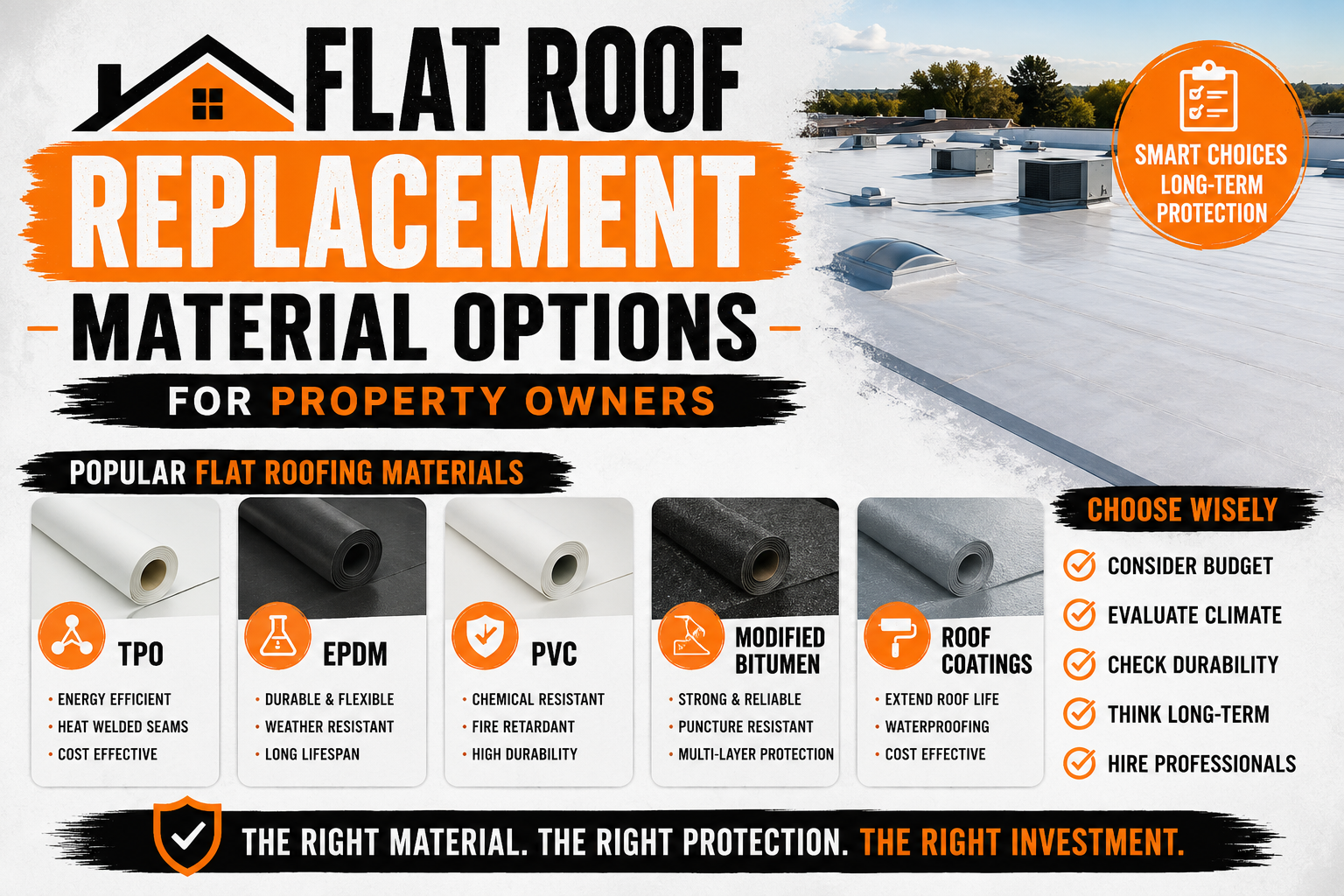
Flat Roof Replacement Material Options for Property Owners
Introduction
Replacing a flat roof is one of the most significant investments a property owner can make. Whether the building is a commercial office, warehouse, apartment complex, retail center, or modern residential home, the roofing material selected during replacement directly affects long term durability, maintenance requirements, energy efficiency, and overall ownership costs. Since a new flat roof is expected to protect the building for decades, choosing the right material is just as important as selecting an experienced roofing contractor.
Modern roofing technology provides property owners with a wide range of material options, each designed to perform under different environmental conditions and building requirements. Some roofing systems focus on affordability and ease of installation, while others prioritize exceptional durability, chemical resistance, or energy savings. Understanding the advantages and limitations of each option helps property owners make informed decisions rather than relying solely on initial installation costs.
No single roofing material is ideal for every building. Climate conditions, roof size, drainage design, rooftop equipment, maintenance expectations, and future ownership plans all influence which material provides the greatest long term value. A warehouse located in a hot climate may benefit from a different roofing system than a restaurant, manufacturing facility, or residential property.
Many property owners are familiar with the names of popular roofing materials such as EPDM, TPO, and PVC, but they may not fully understand how these systems differ or which situations favor one material over another. In addition to these well known membranes, several other flat roofing systems remain excellent choices depending on project requirements.
This guide explores the most common flat roof replacement materials available today. It explains how each roofing system performs, where it is commonly used, and what factors property owners should consider before making a final decision. By understanding the strengths of each material, owners can select a roofing system that provides dependable protection while supporting the long term performance of their property.
Why Choosing the Right Flat Roof Replacement Material Matters
The roofing material installed during a replacement project influences much more than weather protection. It affects maintenance expenses, energy consumption, repair frequency, structural performance, and even the future resale value of the property. Because a roof remains in service for many years, selecting the most suitable material provides benefits long after installation has been completed.
Durability is one of the first considerations. Different roofing materials respond differently to sunlight, rain, snow, wind, temperature changes, rooftop traffic, and environmental pollutants. A material that performs exceptionally well in one climate may not be the best choice in another. Understanding these differences helps property owners avoid premature deterioration.
Maintenance requirements also vary between roofing systems. Some materials require relatively little routine care, while others benefit from more frequent inspections or periodic surface treatments. Owners should consider the maintenance resources available for the building before selecting a roofing system.
Energy efficiency has become increasingly important as utility costs continue to rise. Reflective roofing materials reduce solar heat absorption, lowering cooling demands during warm weather. Improved insulation installed alongside the roofing membrane can further increase energy savings throughout the building’s lifespan.
Roof replacement also provides an opportunity to improve overall building performance. Modern roofing systems often incorporate stronger waterproofing technology, better drainage integration, improved seam construction, and enhanced insulation compared to older roofing materials. These improvements contribute to lower operating costs while extending the service life of the roof.
Long term financial value should always be considered alongside installation cost. A roofing material with a higher initial price may ultimately provide lower maintenance expenses, fewer repairs, and a longer service life than a less expensive alternative. Evaluating total ownership costs helps property owners make more informed investment decisions.
Choosing the right roofing material also simplifies future maintenance because replacement components, repair procedures, and manufacturer support remain more readily available when widely recognized roofing systems are selected.
Factors Property Owners Should Consider Before Selecting a Roofing Material
Every building has unique roofing requirements, which means selecting the best replacement material requires evaluating several important factors rather than focusing on one characteristic alone. Careful planning helps ensure the chosen roofing system delivers dependable performance throughout its expected lifespan.
The building’s location is one of the most important considerations. Regions experiencing intense sunlight, frequent storms, heavy snowfall, or prolonged rainfall place different demands on roofing materials. Understanding local weather patterns helps identify roofing systems capable of performing reliably under those conditions.
Building usage also influences material selection. Commercial kitchens, manufacturing plants, warehouses, office buildings, healthcare facilities, schools, and residential homes all expose roofing systems to different operating environments. Chemical exposure, rooftop equipment, and maintenance traffic should be considered during material selection.
Roof size and design affect installation methods as well. Large commercial roofs may benefit from membranes manufactured in wide rolls that reduce the number of seams, while smaller buildings may offer greater flexibility in material choice because installation complexity is reduced.
Maintenance expectations deserve careful attention. Property owners with dedicated maintenance teams may comfortably manage roofing systems requiring periodic inspections, while others may prefer lower maintenance materials that require less frequent service.
Budget planning should include more than installation expenses. Material lifespan, maintenance costs, repair frequency, energy efficiency, and warranty coverage all contribute to the true cost of ownership throughout the roof’s service life.
Property owners should evaluate several key factors before making a decision.
- Local climate and weather conditions.
- Building type and daily operations.
- Energy efficiency goals.
- Long term maintenance expectations.
- Available project budget.
- Expected roof lifespan.
- Rooftop equipment and traffic.
- Contractor experience with the selected material.
Considering these factors together allows owners to select a roofing system that matches both current requirements and future operational goals.
Overview of Modern Flat Roofing Systems
Modern flat roofing technology has advanced significantly over the past several decades. Today’s roofing systems offer improved durability, stronger waterproof performance, greater energy efficiency, and more reliable installation methods than many older materials. These improvements provide property owners with a wider range of options capable of meeting diverse building requirements.
Most modern flat roofing materials fall into two general categories. Single ply membranes use one waterproof sheet as the primary roofing surface, while multi layer systems rely on several protective layers working together to provide waterproofing and structural performance. Each approach offers distinct advantages depending on project requirements.
Single ply membranes have become especially popular because of their relatively lightweight construction, efficient installation, and excellent weather resistance. Large membrane rolls reduce seam numbers while modern heat welding and adhesive technologies create dependable waterproof connections.
Multi layer roofing systems remain valuable for many applications requiring additional durability or specialized performance characteristics. Built up roofing, modified bitumen, and certain foam roofing systems continue serving commercial buildings successfully because of their proven reliability under demanding conditions.
Many replacement projects also include significant insulation improvements. Modern roofing systems often combine advanced insulation products with reflective membranes, improving thermal performance while reducing heating and cooling costs throughout the building.
Another important development involves environmental performance. Manufacturers continue improving roofing materials to increase reflectivity, reduce energy consumption, and enhance long term durability. These innovations allow property owners to replace aging roofs with systems that often outperform their predecessors in multiple ways.
Understanding the major categories of roofing materials provides a helpful foundation before examining the individual systems available for flat roof replacement.
EPDM Roofing Material
EPDM, which stands for Ethylene Propylene Diene Monomer, is one of the most widely used flat roofing materials in the world. This synthetic rubber membrane has earned an excellent reputation because of its durability, flexibility, and dependable long term performance. Many commercial buildings continue using EPDM successfully after decades of service.
One of EPDM’s greatest strengths is its flexibility. The membrane expands and contracts with changing temperatures without becoming excessively brittle under normal conditions. This flexibility allows the roofing system to accommodate seasonal building movement while maintaining waterproof protection.
EPDM also performs well under prolonged exposure to ultraviolet radiation. Continuous sunlight gradually affects every roofing material, but EPDM resists weather related deterioration effectively when properly installed and maintained. Its resistance to ozone and environmental aging contributes to its long service life.
Large membrane sheets reduce the number of seams required during installation, minimizing potential locations for water infiltration. Contractors install EPDM using fully adhered, mechanically attached, or ballasted methods depending on project requirements and building design.
Maintenance requirements remain relatively modest. Routine inspections, prompt repair of punctures, and regular drainage maintenance help preserve membrane performance throughout its lifespan. Properly maintained EPDM systems often continue protecting buildings for many years before replacement becomes necessary.
EPDM is especially well suited for commercial buildings, warehouses, schools, office complexes, and residential flat roofs where flexibility, durability, and dependable waterproof performance are primary considerations. Property owners seeking a proven roofing material frequently consider EPDM among their leading options.
Although EPDM performs exceptionally well in many environments, property owners should still evaluate climate conditions, rooftop usage, and long term maintenance expectations before making a final selection.
TPO Roofing Material
Thermoplastic Polyolefin, commonly known as TPO, has become one of the fastest growing roofing materials in the flat roofing industry. Its popularity results from combining excellent energy efficiency with strong weather resistance and competitive installation costs. Many new commercial construction projects and replacement installations now use TPO as their preferred roofing membrane.
TPO membranes are manufactured using blends of polypropylene and ethylene propylene rubber. This combination creates a roofing material that remains flexible while offering good resistance to ultraviolet radiation, moisture, and environmental exposure. Reinforcing fabrics within the membrane improve tear resistance and dimensional stability.
One of TPO’s most attractive features is its highly reflective surface. Most membranes are manufactured in white or light colors that reflect significant amounts of solar radiation. Lower roof temperatures reduce heat transfer into the building, helping decrease cooling costs during warm weather.
Heat welded seams provide another important advantage. Roofing professionals use specialized equipment to fuse overlapping membrane sections together, creating strong waterproof connections that resist moisture infiltration. Properly welded seams often become among the strongest portions of the roofing system.
TPO also accommodates modern insulation upgrades, allowing property owners to improve both waterproof protection and building energy efficiency during the same replacement project. This combination often results in noticeable operational savings over time.
Commercial offices, retail buildings, warehouses, educational facilities, and residential properties frequently benefit from TPO roofing because it balances affordability with dependable long term performance. Many owners appreciate its combination of reflective performance, weather resistance, and relatively straightforward maintenance requirements.
Selecting experienced contractors remains essential because installation quality strongly influences the long term performance of any TPO roofing system.
PVC Roofing Material
PVC, or Polyvinyl Chloride roofing, has been used successfully on commercial buildings for many decades. Known for its exceptional durability and outstanding resistance to chemicals, grease, oils, and industrial pollutants, PVC remains one of the most dependable flat roofing materials available for demanding operating environments.
PVC membranes are manufactured using vinyl compounds combined with reinforcing materials that provide both strength and flexibility. These membranes maintain excellent waterproof performance while resisting many contaminants that may gradually affect other roofing systems.
Restaurants represent one of the most common applications for PVC roofing. Grease exhausted through commercial kitchen ventilation systems settles onto roof surfaces over time, creating conditions that challenge many roofing materials. PVC demonstrates exceptional resistance to these substances, making it a preferred option for food service facilities.
Industrial buildings also benefit from PVC because of its ability to withstand exposure to certain chemicals and manufacturing related pollutants. Laboratories, processing facilities, healthcare buildings, and manufacturing plants often select PVC when chemical resistance is an important project requirement.
Like TPO, PVC uses heat welded seams that create durable waterproof connections between membrane sections. These seams contribute significantly to long term roof reliability while reducing opportunities for moisture infiltration.
PVC also provides strong reflective performance when manufactured in light colors. Reducing heat absorption improves indoor comfort while lowering cooling requirements during warm weather. Combined with upgraded insulation, PVC roofing contributes to improved building energy efficiency throughout its service life.
Although PVC generally involves a higher initial investment than some other roofing materials, many property owners consider the additional cost worthwhile because of its exceptional durability and specialized performance characteristics. Buildings operating under demanding environmental conditions often achieve excellent long term value through PVC roofing systems.
In the next part, we will examine additional flat roof replacement materials, including modified bitumen, built up roofing, spray polyurethane foam, and metal roofing for low slope applications. We will also compare these materials in a detailed table covering cost, lifespan, maintenance requirements, energy efficiency, and the types of buildings where each roofing system performs best.
Modified Bitumen Roofing Systems
Modified bitumen roofing has been a trusted flat roofing solution for many years because it combines the proven performance of traditional asphalt roofing with modern polymer technology. This roofing system consists of asphalt that has been enhanced with specialized modifiers, improving flexibility, durability, and weather resistance compared to conventional asphalt materials.
Modified bitumen is commonly installed in multiple layers, creating a durable roofing assembly capable of withstanding demanding weather conditions. Depending on project requirements, the material may be applied using heat welding, cold adhesives, self adhering membranes, or mechanical attachment methods. This flexibility allows contractors to select the installation approach best suited to the building and local conditions.
One of the material’s greatest strengths is its resistance to physical damage. The reinforced construction performs well in areas where rooftop maintenance is common because it offers good resistance to punctures and surface wear. Buildings with frequent service access often benefit from this added durability.
Weather performance is another advantage. Modified bitumen remains flexible through seasonal temperature changes while providing dependable waterproof protection against rain and snow. Proper installation and regular maintenance help maximize its service life.
Routine inspections remain important because seams, flashing details, and surface coatings require periodic evaluation. Prompt maintenance prevents localized damage from spreading while preserving the overall integrity of the roofing system.
Commercial buildings, apartment complexes, educational facilities, and certain residential properties continue using modified bitumen successfully because it provides a reliable balance between durability, maintenance requirements, and long term value. Property owners seeking a proven multi layer roofing system often consider modified bitumen among their preferred options.
Although newer single ply membranes have become increasingly popular, modified bitumen remains a dependable solution for buildings requiring a robust roofing assembly capable of handling varied environmental conditions.
Built Up Roofing Systems
Built up roofing, commonly referred to as BUR, is one of the oldest and most established flat roofing systems still in use today. It has protected commercial buildings for well over a century and continues serving many facilities because of its layered construction and proven reliability.
A built up roof consists of alternating layers of bitumen and reinforcing fabrics that create multiple waterproof barriers. The completed assembly is usually finished with a protective surface such as gravel or mineral granules that shield the underlying roofing materials from sunlight and weather exposure.
One of the primary advantages of BUR is redundancy. Since multiple waterproof layers work together, localized damage to one layer does not necessarily result in immediate water infiltration. This layered design contributes to dependable long term weather protection when the system is properly maintained.
Built up roofing also provides excellent resistance to foot traffic. Commercial buildings requiring regular rooftop access for maintenance personnel often benefit from its durable surface. Heating and cooling equipment, communication systems, and other rooftop installations can be serviced without exposing the roofing membrane to excessive wear when appropriate walkways are maintained.
Thermal performance depends largely on the insulation installed beneath the roofing assembly. Modern replacement projects frequently combine BUR with upgraded insulation systems that improve overall building energy efficiency while preserving the proven durability of the roofing material.
Maintenance generally includes periodic inspections, gravel redistribution where necessary, flashing evaluation, and prompt repair of localized defects. Although BUR systems require more labor during installation than some single ply membranes, their long history of dependable service continues making them a valuable option for many commercial applications.
Property owners considering BUR should evaluate building structure, installation requirements, maintenance expectations, and overall project goals before selecting this traditional roofing system.
Spray Polyurethane Foam Roofing
Spray Polyurethane Foam, commonly known as SPF roofing, offers a unique approach to flat roof replacement because it combines insulation and waterproofing into a single integrated system. Rather than installing large membrane sheets, contractors spray liquid foam directly onto the prepared roof surface where it expands into a seamless insulating layer.
One of SPF roofing’s greatest advantages is the absence of seams across the primary roof surface. Since seams often represent potential locations for water infiltration, eliminating them reduces many traditional waterproofing concerns associated with membrane based roofing systems.
The foam also provides exceptional insulation performance. Because the material expands into a continuous layer, it fills small gaps and irregularities while reducing thermal bridging across the roof. Many buildings experience noticeable improvements in heating and cooling efficiency after installing SPF roofing.
A protective coating is applied over the foam to shield it from ultraviolet radiation and weather exposure. This coating plays an essential role in preserving the roofing system and must be maintained according to manufacturer recommendations. Periodic recoating extends the life of the roof while maintaining waterproof performance.
SPF also adapts well to roofs with complex layouts. Rooftop equipment, irregular shapes, and numerous penetrations can often be accommodated more easily because the sprayed foam conforms to surrounding surfaces without requiring extensive cutting or seam construction.
However, installation quality is extremely important. Weather conditions, surface preparation, and contractor experience all influence the finished product. Improper application may affect insulation performance or waterproof reliability, making contractor selection particularly important for SPF projects.
Commercial buildings seeking improved insulation and seamless waterproof protection frequently consider spray polyurethane foam as an alternative to traditional membrane roofing systems.
Metal Roofing for Low Slope Applications
Although metal roofing is commonly associated with steep sloped roofs, specially designed metal systems are also suitable for certain low slope commercial applications. These engineered systems use carefully designed panel profiles and waterproof connections that provide dependable weather protection while maintaining efficient drainage.
Metal roofing offers exceptional durability. High quality metal panels resist ultraviolet radiation, wind, rain, and many environmental conditions with relatively little deterioration over time. Properly installed systems often remain in service for many decades with routine maintenance.
One significant advantage is structural strength. Metal panels withstand impact well while providing excellent resistance to many forms of weather related damage. Their lightweight construction also reduces structural loading compared to some traditional roofing assemblies.
Reflective coatings further improve energy efficiency by reducing solar heat absorption. Modern finishes maintain attractive appearance while helping lower roof temperatures during hot weather. Combined with proper insulation, these coatings contribute to improved indoor comfort and reduced cooling costs.
Maintenance generally focuses on inspecting fasteners, sealants, panel joints, flashing details, and drainage components. Because metal expands and contracts with changing temperatures, routine inspections help identify movement related maintenance needs before leaks develop.
Not every flat roof is appropriate for metal roofing. Buildings must provide adequate slope to support proper drainage according to manufacturer requirements. Roofing professionals evaluate roof geometry carefully before recommending metal systems for low slope applications.
Commercial buildings, industrial facilities, agricultural structures, and certain institutional properties frequently benefit from low slope metal roofing where long service life and structural durability are primary priorities.
Comparing Flat Roof Replacement Materials
Choosing among multiple roofing materials becomes easier when their key characteristics are compared directly. Every roofing system offers specific strengths, and understanding these differences helps property owners select the option that best matches their building requirements and long term goals.
Installation cost is often the first factor considered, but it should never be evaluated in isolation. Expected lifespan, maintenance requirements, energy efficiency, environmental resistance, and repair costs all contribute to the total value provided throughout the roof’s operational life.
Climate also influences material performance. Buildings exposed to intense sunlight, industrial pollutants, frequent storms, heavy snowfall, or rooftop grease require roofing systems capable of performing under those specific conditions. Matching roofing materials to environmental demands often produces better long term results than selecting based solely on initial price.
Maintenance expectations vary significantly as well. Some property owners prefer roofing systems requiring minimal routine attention, while others prioritize maximum durability even if additional inspections become necessary. Understanding available maintenance resources helps support a more practical material selection.
The following comparison summarizes the major characteristics of the most common flat roof replacement materials.
| Roofing Material | Initial Cost | Typical Lifespan | Maintenance | Energy Efficiency | Best Applications |
|---|---|---|---|---|---|
| EPDM | Moderate | Long | Low | Good | Commercial buildings, warehouses, residential flat roofs |
| TPO | Moderate | Long | Low | Excellent | Offices, retail buildings, educational facilities |
| PVC | Higher | Long | Low | Excellent | Restaurants, healthcare facilities, industrial buildings |
| Modified Bitumen | Moderate | Long | Moderate | Good | Commercial and residential flat roofs with regular maintenance |
| Built Up Roofing | Moderate to High | Long | Moderate | Good | Large commercial buildings with frequent roof access |
| Spray Polyurethane Foam | Moderate to High | Long with recoating | Moderate | Excellent | Buildings prioritizing insulation and seamless waterproofing |
| Low Slope Metal Roofing | Higher | Very Long | Low | Excellent | Industrial, agricultural, and selected commercial buildings |
Every roofing material performs best when installed according to manufacturer specifications by experienced professionals. Proper installation, routine inspections, and timely maintenance often have just as much influence on roof lifespan as the material itself.
In the final part of this guide, we will explain how property owners can determine which roofing material is best for their building, discuss common mistakes to avoid when selecting flat roof materials, answer frequently asked questions, and conclude with practical recommendations for making a confident long term roofing investment.
How to Choose the Best Flat Roof Material for Your Property
Selecting the best flat roof replacement material involves much more than comparing prices. Every property has unique requirements based on its location, construction, daily operations, and long term ownership goals. Evaluating these factors together helps property owners choose a roofing system that delivers dependable performance throughout its service life.
The first consideration should always be the building’s purpose. A warehouse storing packaged goods has different roofing needs than a restaurant, apartment building, healthcare facility, or manufacturing plant. Buildings exposed to grease, chemicals, or heavy rooftop traffic often benefit from materials specifically designed to withstand those conditions.
Climate is another major factor. Regions with intense sunlight require roofing materials capable of resisting ultraviolet exposure while reflecting heat efficiently. Areas experiencing heavy snowfall, strong winds, or frequent rainfall demand roofing systems designed to perform reliably under those weather conditions.
Property owners should also evaluate how long they expect to own the building. Those planning long term ownership often prioritize durability, energy efficiency, and reduced maintenance over lower installation costs. In contrast, owners with shorter investment timelines may place greater emphasis on initial project budgets while still ensuring dependable roof performance.
Maintenance capabilities deserve careful consideration as well. Some roofing systems require more frequent inspections or periodic protective coatings, while others perform well with relatively limited routine maintenance. Choosing a material that aligns with available maintenance resources helps preserve long term roof performance.
Energy efficiency goals may also influence the final decision. Reflective roofing materials combined with modern insulation systems reduce heat absorption, improving indoor comfort while lowering cooling costs. Buildings located in warmer climates often experience measurable operational savings through these energy efficient roofing assemblies.
Professional guidance remains one of the most valuable resources during material selection. Experienced roofing contractors evaluate the roof structure, drainage system, building use, environmental conditions, and budget before recommending suitable materials. Their expertise helps property owners avoid costly mistakes while selecting a roofing system that matches both current and future requirements.
Common Mistakes to Avoid When Selecting Roofing Materials
Choosing the wrong roofing material can lead to unnecessary maintenance, reduced roof lifespan, and higher long term ownership costs. Fortunately, many common mistakes can be avoided through careful planning and informed decision making before replacement begins.
One of the most frequent mistakes is focusing entirely on installation cost. Although budget considerations are important, selecting the least expensive material without evaluating durability, maintenance requirements, or expected lifespan often results in greater overall expenses over time. Long term value should always receive equal consideration.
Another mistake is ignoring the building’s operating environment. Roofing materials that perform exceptionally well on office buildings may not be appropriate for restaurants, manufacturing facilities, or chemical processing plants. Matching material characteristics to actual building conditions improves long term reliability.
Some property owners also overlook drainage conditions. Installing a premium roofing membrane over an existing roof with poor drainage allows standing water to continue affecting the new system. Drainage improvements should be evaluated alongside material selection whenever replacement is planned.
Choosing contractors based only on price is another common error. Even the highest quality roofing material cannot compensate for poor workmanship. Experienced contractors understand manufacturer installation requirements, flashing details, seam construction, and quality control procedures that directly influence roof performance.
Ignoring insulation upgrades is another missed opportunity. Roof replacement provides convenient access to insulation beneath the roofing membrane. Improving insulation during replacement enhances energy efficiency while increasing the overall value of the project.
Finally, postponing replacement after the roofing system has reached the end of its service life often increases repair expenses. Continuing to repair an aging roof experiencing repeated failures may eventually cost more than replacing it with a modern roofing system designed for current building requirements.
Avoiding these mistakes helps property owners maximize their roofing investment while reducing future maintenance concerns and improving overall building performance.
Frequently Asked Questions
Which flat roofing material lasts the longest?
Several modern roofing systems provide excellent longevity when installed correctly and maintained properly. Metal roofing generally offers one of the longest service lives, while EPDM, PVC, TPO, modified bitumen, and built up roofing also provide many years of dependable performance depending on environmental conditions and maintenance practices.
Which flat roof material is the most energy efficient?
TPO, PVC, spray polyurethane foam, and reflective metal roofing all offer excellent energy efficiency. Their reflective surfaces reduce heat absorption, while modern insulation systems installed beneath the roofing material further improve thermal performance.
Is EPDM better than TPO?
Neither material is universally better. EPDM is valued for its flexibility and proven long term durability, while TPO is widely recognized for its highly reflective surface and excellent energy efficiency. The best choice depends on climate, building use, maintenance expectations, and project goals.
Which roofing material is best for restaurants?
PVC roofing is often recommended for restaurants because it provides outstanding resistance to grease, oils, and many chemicals commonly released through commercial kitchen exhaust systems. This resistance contributes to dependable long term performance in food service environments.
Can insulation be upgraded during roof replacement?
Yes. Flat roof replacement provides an excellent opportunity to install modern insulation products that improve energy efficiency, indoor comfort, and overall building performance. Many replacement projects include insulation upgrades alongside the new roofing membrane.
Conclusion
Choosing the right flat roof replacement material is one of the most important decisions property owners make during a roofing project. Every material offers unique strengths, and understanding how those characteristics relate to the building’s specific needs is essential for achieving dependable long term performance. Rather than relying on initial installation cost alone, property owners should evaluate durability, maintenance requirements, energy efficiency, climate suitability, and expected service life before making a final selection.
EPDM remains a trusted choice because of its flexibility, proven durability, and reliable waterproof performance across a wide range of commercial and residential applications. TPO continues gaining popularity by combining excellent energy efficiency with competitive installation costs and dependable weather resistance. PVC stands out for buildings exposed to grease, chemicals, and demanding industrial environments where superior chemical resistance is especially valuable.
Other roofing systems also provide significant advantages depending on project requirements. Modified bitumen offers durable multi layer protection, built up roofing delivers proven long term reliability, spray polyurethane foam combines seamless waterproofing with outstanding insulation performance, and low slope metal roofing provides exceptional durability and extended service life for suitable building designs.
The success of any flat roof replacement ultimately depends on more than material selection alone. Proper roof inspections, effective drainage design, quality insulation, professional installation, and routine maintenance all contribute directly to the performance and longevity of the finished roofing system. Investing in these areas helps protect the building while reducing future repair and operating costs.
Working with experienced roofing professionals ensures that material recommendations are based on the property’s actual conditions rather than general assumptions. Their knowledge allows property owners to balance performance, budget, maintenance expectations, and long term ownership goals when selecting a roofing system.
By carefully evaluating all available material options and choosing a roofing system that matches the building’s specific requirements, property owners can complete a flat roof replacement with confidence. The result is a durable, energy efficient roof that protects the property, improves operational performance, and delivers lasting value for many years to come.