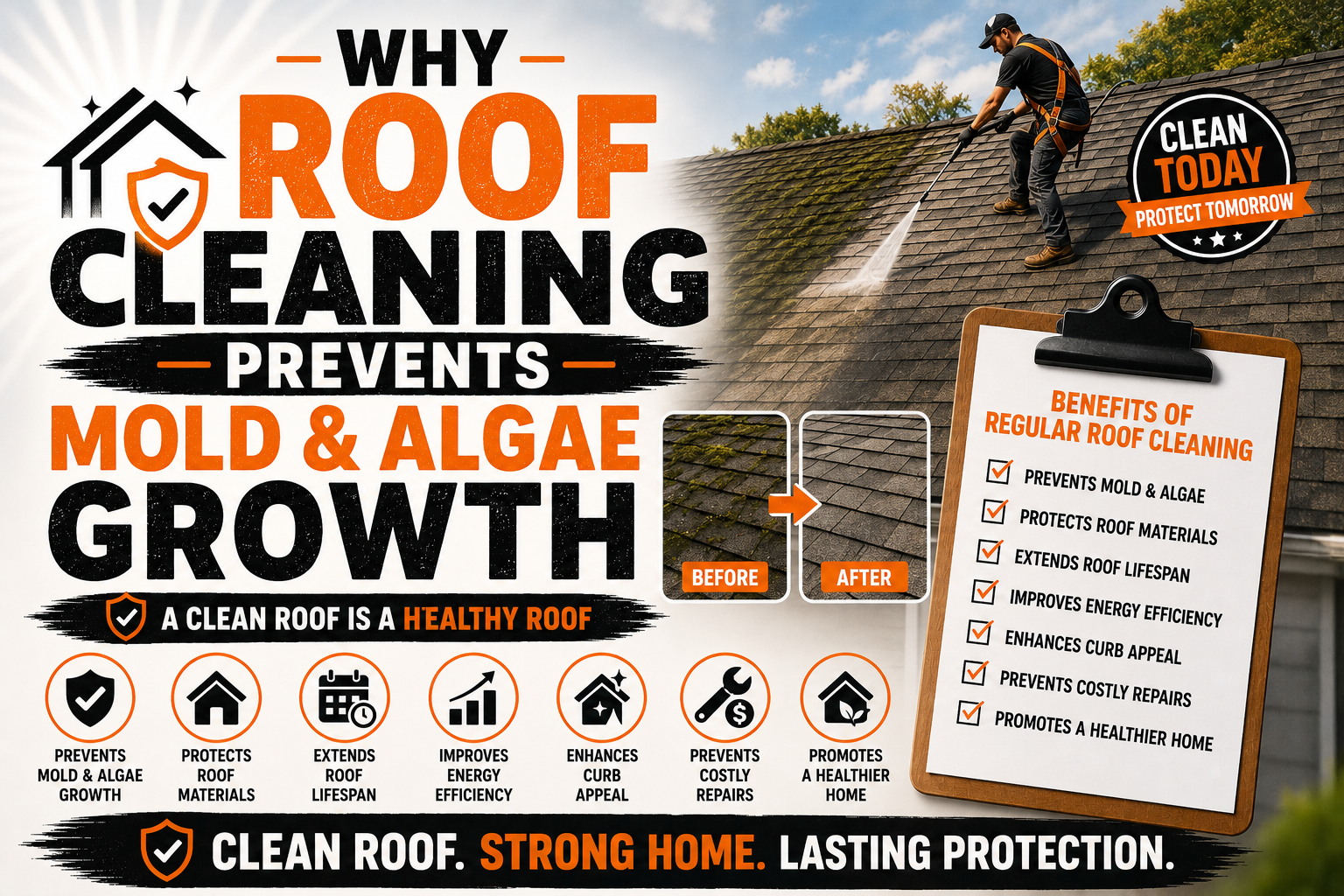
Why Roof Cleaning Prevents Mold and Algae Growth
Introduction
A roof is constantly exposed to changing weather conditions throughout the year. Rain, humidity, wind, fallen leaves, tree branches, dust, pollen, and other debris gradually accumulate on its surface. While these natural elements may seem harmless at first, they create an environment where mold, algae, moss, and other biological growth can develop if the roof is not cleaned regularly.
Many homeowners think of roof cleaning as a cosmetic task that simply improves the appearance of the home. Although a clean roof certainly enhances curb appeal, its true value extends much further. Regular roof cleaning is an essential maintenance practice that protects roofing materials, improves drainage, reduces moisture retention, and prevents the growth of organisms that can shorten the lifespan of the roof.
Mold and algae rarely appear overnight. They develop slowly in areas where moisture remains trapped for long periods, particularly on shaded sections of the roof or beneath accumulated organic debris. Once established, these organisms continue spreading across the roof surface, gradually weakening roofing materials and increasing the likelihood of expensive repairs.
Ignoring biological growth can also affect other parts of the home. Moisture trapped by mold or moss may eventually reach roof decking, flashing, gutters, insulation, and even interior ceilings if maintenance is delayed. What begins as surface discoloration can eventually become a much larger structural problem.
Preventive roof cleaning interrupts this process before it causes significant damage. By removing debris, improving drainage, and eliminating the conditions that allow mold and algae to thrive, homeowners can preserve the performance and appearance of their roofing system for many years.
This guide explains why roof cleaning is essential for preventing mold and algae growth, how these organisms develop, what conditions encourage their spread, and why regular maintenance remains one of the most effective ways to extend roof lifespan.
Why Roof Cleaning Is Essential for Long Term Roof Health
A roof performs best when its surface remains clean, dry, and free from materials that trap moisture. Dirt, leaves, pine needles, branches, and other debris gradually collect on roofing surfaces throughout the year. Without routine cleaning, this buildup interferes with the roof’s ability to shed water efficiently.
Organic debris absorbs rainwater and morning dew, keeping roofing materials damp long after surrounding areas have dried. This prolonged moisture exposure creates ideal conditions for mold, algae, and moss to establish themselves.
Cleaning the roof removes these moisture retaining materials before biological growth begins. It also allows roofing materials to dry more quickly after storms, reducing unnecessary stress on shingles, flashing, and underlayment.
Another important benefit is improved drainage. Clean roof valleys and gutters allow rainwater to flow freely away from the roof rather than collecting in low areas where moisture remains trapped.
Routine cleaning also makes inspections more effective. Dirt, leaves, and biological growth often hide cracked shingles, damaged flashing, or other developing maintenance concerns. A clean roof allows these issues to be identified and repaired before they worsen.
Roof cleaning therefore serves both preventive and protective purposes. It preserves roofing materials while creating conditions that discourage mold, algae, and moisture related deterioration.
Understanding Mold, Algae, and Moss on Roofs
Although mold, algae, and moss are often mentioned together, they are different organisms that affect roofs in different ways. Understanding these differences helps homeowners recognize potential problems earlier and choose appropriate maintenance strategies.
Algae are among the most common forms of biological growth found on residential roofs. They often appear as dark black or green streaks running down asphalt shingles. These streaks develop when airborne algae spores settle on damp roofing surfaces and begin multiplying.
Moss grows differently from algae. Instead of forming thin streaks, moss creates thick green patches that retain large amounts of moisture. As moss expands, it gradually lifts the edges of shingles, creating openings where water can penetrate beneath the roofing material.
Mold develops wherever moisture remains trapped for extended periods. Although mold may not always be visible from the ground, it can spread beneath roofing materials, inside attic spaces, and around damp structural components if conditions remain favorable.
Lichen represents another common biological growth. It combines characteristics of algae and fungi, forming tightly attached patches that adhere strongly to roofing materials. Lichen is often more difficult to remove than algae because of its stronger attachment to the roof surface.
Each of these organisms thrives under similar conditions involving moisture, shade, and accumulated debris. Preventive roof cleaning addresses these shared conditions before biological growth becomes widespread.
How Mold and Algae Develop on Roofing Materials
Mold and algae require moisture, nutrients, and suitable temperatures to grow. Roofing systems naturally provide these conditions when regular maintenance is neglected.
The process usually begins when airborne spores settle onto the roof surface. These microscopic organisms are present in the environment throughout the year and are carried by wind, rain, birds, and nearby vegetation.
On a clean, dry roof, spores often fail to establish themselves because moisture evaporates quickly. Problems develop when leaves, dirt, pollen, or other organic debris accumulate on the roof and retain water after rainfall.
As moisture remains trapped, spores begin reproducing and spreading across the roofing surface. Algae often appear first as faint discoloration before developing into darker streaks. Moss gradually thickens into dense cushions that hold additional moisture against the roof.
Repeated rainfall accelerates this process because damp conditions persist for longer periods. Shaded roof sections remain wet even longer, allowing biological growth to expand more rapidly.
Once established, mold and algae continue spreading until the underlying conditions change. Removing visible growth without correcting moisture retention often results in the organisms returning within a relatively short period.
Regular roof cleaning interrupts this cycle by removing debris and reducing the moisture necessary for continued biological growth.
Common Causes of Roof Moisture Buildup
Moisture is the single most important factor contributing to mold and algae growth. Identifying the causes of moisture buildup helps homeowners understand why routine roof maintenance is so valuable.
Clogged gutters are among the most common contributors. When gutters become blocked with leaves and debris, rainwater backs up along roof edges instead of draining away efficiently. This standing water increases moisture exposure across nearby roofing materials.
Roof valleys also collect debris naturally because they channel large amounts of rainwater during storms. Leaves and branches trapped in valleys slow drainage and create damp conditions that encourage biological growth.
Poor attic ventilation contributes indirectly by increasing condensation beneath the roof deck. Warm, humid air trapped inside the attic creates moisture that affects roofing materials from below while reducing overall roof performance.
Overhanging tree branches create additional moisture problems by blocking sunlight and reducing airflow. Roof surfaces beneath dense tree canopies remain damp much longer after rain than areas exposed to direct sunlight.
Improper roof drainage, damaged flashing, and small leaks also contribute to persistent moisture. Even minor water infiltration may keep sections of the roof damp enough to support mold and algae development.
Addressing these moisture sources significantly reduces the likelihood of biological growth while improving the overall health of the roofing system.
Environmental Factors That Encourage Biological Growth
Some environmental conditions naturally make roofs more vulnerable to mold and algae than others. While homeowners cannot control the weather, understanding these factors helps explain why certain roofs require more frequent maintenance.
Homes located in humid climates experience higher moisture levels throughout the year. Frequent rainfall, morning dew, and elevated humidity provide favorable conditions for algae and mold to establish themselves.
Properties surrounded by mature trees often experience greater biological growth because dense canopies reduce sunlight and increase the amount of leaves and organic debris reaching the roof.
North facing roof slopes typically remain cooler and receive less direct sunlight than south facing sections. As a result, these areas often stay damp longer and develop algae more readily.
Poor air circulation around the roof also contributes to moisture retention. Closely spaced buildings, dense landscaping, and heavy vegetation reduce airflow that would otherwise help roofing materials dry more quickly.
Seasonal weather patterns further influence biological growth. Extended rainy periods provide continuous moisture, while mild temperatures encourage organisms to reproduce rapidly.
Although these environmental conditions cannot always be changed, regular roof cleaning minimizes their impact by removing the debris and moisture that support biological growth.
Early Warning Signs of Mold and Algae on Your Roof
Recognizing the earliest signs of biological growth allows homeowners to take corrective action before widespread damage develops. Many warning signs appear long before serious structural problems occur.
Dark streaks running down asphalt shingles are among the most recognizable indicators of algae growth. These streaks often begin near shaded areas before spreading across larger sections of the roof.
Green patches forming between shingles usually indicate moss development. Moss commonly appears in roof valleys, beneath overhanging trees, and along roof edges where moisture remains trapped.
White or gray crusty growth attached tightly to roofing materials may indicate lichen. Unlike moss, lichen often appears flatter but can still contribute to gradual roofing deterioration.
Persistent damp areas after rainfall also deserve attention. If certain roof sections remain wet significantly longer than surrounding areas, moisture retention may already be encouraging biological growth.
Homeowners should also monitor gutters for excessive organic debris. Frequent gutter blockages often suggest that leaves and branches are also accumulating on the roof surface.
Inside the home, musty odors, attic condensation, or visible mold near roof framing may indicate hidden moisture problems related to poor roof drainage or biological growth above.
Early recognition allows maintenance to remain relatively simple while preventing organisms from spreading throughout the roofing system.
Risks of Ignoring Roof Cleaning
Postponing roof cleaning allows moisture and biological growth to continue affecting roofing materials year after year. Although the damage often develops gradually, the long term consequences can be significant.
Moss gradually lifts shingle edges, allowing water to penetrate beneath the roof covering. Once moisture reaches the underlayment or roof decking, structural deterioration becomes increasingly likely.
Algae reduce the visual appearance of the roof while indicating moisture conditions that accelerate material aging. Over time, prolonged dampness weakens roofing surfaces and shortens their expected lifespan.
Organic debris also creates drainage problems by blocking roof valleys and gutters. Standing water increases the likelihood of leaks while exposing roofing materials to unnecessary moisture.
Hidden mold growth may eventually affect attic insulation, wooden framing, and interior air quality if moisture remains uncontrolled. These secondary problems often require considerably more expensive repairs than routine roof cleaning.
Ignoring roof maintenance also makes inspections more difficult. Debris and biological growth conceal damaged shingles, flashing failures, and other developing problems that could otherwise be corrected early.
Regular roof cleaning therefore protects much more than the roof surface itself. It preserves the health of the entire roofing system while reducing the likelihood of costly structural repairs.
How Regular Roof Cleaning Prevents Biological Growth
Preventing mold and algae begins with eliminating the conditions these organisms need to survive. Regular roof cleaning removes debris before it traps moisture, reducing the damp environment required for biological growth.
Cleaning also restores proper drainage by clearing roof valleys and gutters. Water flows away from the roof more efficiently, allowing roofing materials to dry sooner after rainfall.
Improved sunlight exposure further supports prevention. Removing debris and trimming nearby tree branches increases airflow and natural drying, making the roof less hospitable to mold and algae.
Routine maintenance also provides opportunities to inspect roofing materials closely. Small cracks, damaged flashing, clogged drainage systems, and other moisture related issues can be corrected before biological growth becomes established.
Another important advantage is consistency. Cleaning the roof regularly prevents debris from accumulating to the point where mold and algae gain a foothold. Instead of repeatedly removing established biological growth, homeowners maintain conditions that discourage it from developing in the first place.
Preventive roof cleaning is therefore one of the simplest and most effective ways to protect roofing materials, preserve drainage efficiency, and extend the lifespan of the entire roofing system.
Safe Roof Cleaning Methods for Different Roofing Materials
Not every roof should be cleaned using the same method. Roofing materials vary in strength, texture, and durability, which means the cleaning approach must be selected carefully. Using the wrong technique may remove biological growth temporarily but can also damage the roof and reduce its lifespan.
Asphalt shingles require gentle cleaning methods because excessive force can strip away the protective mineral granules that shield the shingles from ultraviolet rays and weather. Soft washing is widely considered one of the safest methods because it uses low pressure combined with cleaning solutions designed to remove mold, algae, and mildew without harming the roofing material.
Metal roofs generally tolerate cleaning better than asphalt shingles, but they should still be cleaned using non abrasive tools and mild cleaning solutions. Abrasive brushes or harsh chemicals may scratch protective coatings and increase the likelihood of corrosion over time.
Tile roofs are durable but often become slippery when covered with algae or moss. Cleaning should be performed carefully to avoid cracking or dislodging individual tiles. Walking directly on certain types of tile roofs can also cause unnecessary damage if weight is not distributed properly.
Wood shake roofs require special attention because wood naturally absorbs moisture. Gentle cleaning helps remove mold and algae while preserving the wood’s protective surface. Strong chemicals or excessive water pressure can shorten the lifespan of wooden roofing materials.
Slate roofs are among the longest lasting roofing systems, but individual tiles can crack if handled improperly. Professional cleaning is often recommended because the material is both durable and fragile depending on how weight is applied during maintenance.
Selecting the correct cleaning method protects the roofing material while effectively removing the biological growth that threatens long term roof performance.
How Often Should You Clean Your Roof?
There is no universal schedule for roof cleaning because every property experiences different environmental conditions. The frequency depends on factors such as climate, nearby vegetation, roof material, humidity levels, and the amount of debris that accumulates throughout the year.
Homes located in humid climates generally require more frequent cleaning because moisture remains on roofing materials for longer periods. Warm temperatures combined with high humidity create ideal conditions for algae and mold to spread rapidly.
Properties surrounded by mature trees also benefit from more regular maintenance. Leaves, pine needles, seed pods, and branches continuously fall onto the roof, trapping moisture and increasing the likelihood of biological growth.
Roofs exposed to full sunlight typically dry more quickly after rain and may require less frequent cleaning than heavily shaded roofs. Sunlight naturally discourages mold and algae by reducing surface moisture.
Homeowners should not wait until dark streaks or thick moss become visible before scheduling maintenance. Preventive cleaning is far more effective than attempting to remove widespread biological growth after it has become established.
Routine inspections provide the best indication of when cleaning is needed. If debris begins accumulating in roof valleys, gutters, or shaded sections of the roof, cleaning should be scheduled before moisture related problems develop.
Maintaining a consistent cleaning schedule helps preserve roofing materials while reducing the effort required during each maintenance visit.
The Importance of Removing Organic Debris
Organic debris is one of the primary contributors to mold and algae growth because it creates an environment where moisture remains trapped against roofing materials. Even a relatively small amount of debris can significantly affect roof performance if left in place for extended periods.
Leaves absorb rainwater and morning dew, forming damp layers that slow evaporation. Pine needles create dense mats that hold moisture against shingles while blocking natural drainage pathways.
Small branches, seed pods, flowers, and accumulated dirt contribute additional nutrients that encourage biological growth. As this material decomposes, it forms organic matter that supports mold, moss, algae, and fungal development.
Roof valleys deserve particular attention because debris naturally collects in these areas. Since valleys handle large volumes of rainwater, blockages quickly interfere with proper drainage and increase moisture exposure.
Organic debris also affects gutters by restricting water flow. Overflowing gutters allow water to back up beneath roofing materials while repeatedly soaking roof edges and fascia boards.
Removing debris regularly helps roofing materials dry faster after storms while reducing the conditions necessary for biological growth. A clean roof is not only more attractive but also significantly more resistant to moisture related deterioration.
Improving Roof Drainage to Reduce Moisture
Effective drainage is essential for preventing mold and algae because standing water provides the continuous moisture these organisms need to survive. A properly functioning drainage system allows rainwater to leave the roof quickly before it can cause damage.
Gutters should remain free from leaves, twigs, and sediment throughout the year. Even partial blockages reduce water flow and increase the amount of moisture retained along roof edges.
Downspouts require equal attention because clogged or damaged downspouts prevent water from leaving the gutter system efficiently. Water trapped inside gutters often overflows onto roofing materials, increasing moisture exposure.
Roof valleys should also be inspected regularly for accumulated debris. Since they collect water from multiple roof sections, even small obstructions can create localized areas of standing water.
Low slope roofs require additional maintenance because water naturally drains more slowly than on steeper roof designs. Roof drains, scuppers, and drainage channels should remain completely unobstructed to prevent prolonged moisture exposure.
Homeowners should observe roof drainage after heavy rainfall whenever possible. Watching how water moves across the roof often reveals developing drainage issues before they cause noticeable damage.
Efficient drainage not only prevents mold and algae but also protects flashing, underlayment, roof decking, and structural framing from unnecessary moisture.
Tree Trimming and Sunlight Exposure
Nearby trees influence roof conditions more than many homeowners realize. While trees provide shade and improve the appearance of a property, excessive tree coverage often creates ideal conditions for mold and algae growth.
Dense tree canopies block sunlight from reaching roofing materials. Without adequate sunlight, roofs remain damp much longer after rain, increasing the likelihood of biological growth.
Branches extending over the roof also contribute large amounts of organic debris. Leaves, pine needles, flowers, and small branches continuously fall onto the roof, trapping moisture and slowing drainage.
Regular tree trimming increases both sunlight exposure and airflow around the roof. Better air circulation helps moisture evaporate more quickly while reducing the time biological organisms have to establish themselves.
Tree trimming also minimizes the amount of debris entering gutters. Cleaner gutters improve drainage while reducing maintenance requirements throughout the year.
Removing dead or overhanging branches provides additional protection during storms by reducing the likelihood of falling limbs damaging roofing materials.
The goal is not to eliminate all nearby trees but to maintain sufficient clearance that allows sunlight and airflow to support a healthier roofing environment.
DIY Roof Cleaning Versus Professional Roof Cleaning
Many homeowners choose to clean their roofs themselves, while others hire professional roof cleaning services. Both approaches have advantages, but understanding their limitations helps homeowners make informed decisions.
Basic maintenance such as removing leaves from accessible roof sections, cleaning gutters, and inspecting for visible debris can often be performed safely from the ground or with appropriate equipment.
However, climbing onto a roof introduces significant safety risks, particularly on steep, wet, or algae covered surfaces. Slippery conditions increase the likelihood of falls, making roof cleaning one of the more hazardous home maintenance tasks.
Professional roof cleaning companies use specialized equipment designed to remove biological growth safely while protecting roofing materials. They also understand how different roofing products respond to various cleaning methods and solutions.
Professionals frequently identify developing roofing problems during cleaning that homeowners might overlook. Loose flashing, cracked shingles, damaged sealants, and drainage issues often become more visible after debris has been removed.
The following comparison illustrates the differences between homeowner cleaning and professional services.
| Roof Cleaning Task | Homeowner | Professional |
|---|---|---|
| Ground level inspection | Yes | Yes |
| Basic gutter cleaning | Yes | Yes |
| Removing loose debris | Yes | Yes |
| Soft washing roof surfaces | Limited | Yes |
| Safe moss removal | Limited | Yes |
| Cleaning steep roofs | No | Yes |
| Biological growth treatment | Limited | Yes |
| Detailed roof inspection | Limited | Yes |
Combining routine homeowner maintenance with periodic professional cleaning often provides the best long term results. Homeowners can monitor roof conditions regularly while relying on professionals for more complex cleaning and inspections.
Seasonal Roof Cleaning Schedule
A structured cleaning schedule helps homeowners prevent mold and algae before they become serious problems. Rather than cleaning only when biological growth becomes visible, seasonal maintenance keeps the roof in consistently healthy condition.
The following table outlines recommended cleaning activities throughout the year.
| Roof Type and Environment | Recommended Cleaning Frequency | Primary Benefit |
|---|---|---|
| Asphalt roof with minimal tree cover | Every 18 to 24 months | Removes early algae and debris while preserving shingles. |
| Asphalt roof under heavy tree cover | Every 12 months | Reduces moisture retention and prevents moss growth. |
| Metal roof | Every 12 to 24 months | Prevents dirt buildup and maintains protective coatings. |
| Tile roof | Every 12 to 18 months | Removes moss and debris while protecting drainage. |
| Wood shake roof | Every 12 months | Minimizes mold, moss, and moisture damage. |
| Homes in humid climates | Annual inspection and cleaning as needed | Controls biological growth caused by persistent moisture. |
Seasonal inspections should accompany every cleaning schedule. Spring inspections identify winter damage, while fall maintenance prepares the roof for increased moisture during colder months.
Keeping maintenance records also improves long term roof care. Recording cleaning dates, inspection findings, and completed repairs helps homeowners identify recurring issues while ensuring maintenance remains consistent.
Regular roof cleaning is not simply about appearance. It is a preventive maintenance practice that protects roofing materials, improves drainage, reduces moisture retention, and creates conditions where mold and algae struggle to survive. Consistent cleaning throughout the year helps preserve both the structural integrity and the appearance of the roof while reducing the likelihood of expensive repairs in the future.
Common Roof Cleaning Mistakes to Avoid
Roof cleaning is one of the most effective ways to prevent mold and algae growth, but it must be done correctly. Using improper cleaning techniques can damage roofing materials, reduce the lifespan of the roof, and create safety hazards. Understanding the most common mistakes helps homeowners protect both their roof and their investment.
One of the biggest mistakes is waiting until mold or algae have spread across large sections of the roof before taking action. Biological growth becomes more difficult to remove as it spreads, increasing the likelihood of long term damage to roofing materials. Preventive cleaning is always more effective than attempting to restore a heavily contaminated roof.
Another common mistake is using a pressure washer on asphalt shingles. High pressure water can strip away the protective granules that shield shingles from sunlight and harsh weather. Once these granules are removed, shingles deteriorate much faster and become more vulnerable to cracking and moisture penetration.
Some homeowners attempt to remove moss by scraping it aggressively with metal tools or stiff brushes. While this may remove the visible growth, it often damages the roofing material underneath. Gentle cleaning methods are much safer and preserve the integrity of the roof.
Ignoring gutters during roof cleaning is another costly oversight. Even if the roof surface is cleaned thoroughly, clogged gutters continue trapping moisture and reducing drainage efficiency. Water overflowing from blocked gutters creates the same damp conditions that encourage mold and algae to return.
Using harsh household chemicals that are not designed for roofing materials can also create problems. Certain products may discolor shingles, damage protective coatings, or harm nearby landscaping when runoff reaches the ground.
Skipping regular inspections after cleaning is another mistake. Cleaning provides an excellent opportunity to identify loose shingles, damaged flashing, cracked sealants, and other developing issues that might otherwise remain hidden.
Avoiding these mistakes allows roof cleaning to remain a preventive maintenance practice that extends roof lifespan instead of unintentionally causing additional damage.
When to Hire a Professional Roof Cleaning Service
Many homeowners can safely perform basic maintenance such as removing leaves from gutters or inspecting the roof from the ground. However, certain cleaning situations require professional expertise to ensure both safety and effective results.
Steep roofs are one of the most common reasons to hire professionals. Walking on steep slopes becomes even more dangerous when mold, algae, or moss make roofing materials slippery. Professional roof cleaners use specialized safety equipment and techniques that minimize the risk of accidents.
Large areas of biological growth also benefit from professional treatment. Experienced technicians understand which cleaning solutions are appropriate for different roofing materials and how to remove mold, algae, and moss without causing unnecessary damage.
Older roofs deserve careful evaluation before cleaning begins. Roofing materials nearing the end of their service life may require gentler cleaning methods to avoid loosening shingles or damaging weakened surfaces.
Professional cleaning services frequently include a detailed roof inspection as part of the process. Contractors often identify developing problems such as damaged flashing, deteriorated sealants, blocked drainage paths, or loose shingles that homeowners may overlook.
Homes surrounded by large trees may also benefit from scheduled professional maintenance. Continuous debris accumulation often requires more comprehensive cleaning than occasional homeowner maintenance can provide.
Hiring qualified professionals ensures that cleaning supports long term roof health rather than creating additional maintenance concerns.
Cost of Regular Roof Cleaning Versus Roof Repairs
Some homeowners postpone roof cleaning because they view it as an optional expense. However, comparing the cost of preventive cleaning with the cost of repairing moisture related damage clearly demonstrates the value of regular maintenance.
Routine roof cleaning generally requires a modest investment compared to the expense of replacing damaged roofing materials or repairing structural water damage. Preventive maintenance also reduces the likelihood of emergency repairs following prolonged moisture exposure.
When mold and algae remain on the roof for years, they gradually weaken shingles, flashing, underlayment, and roof decking. Moisture eventually reaches insulation and interior building components, increasing repair costs significantly.
Roof cleaning also helps preserve drainage systems. Keeping gutters and roof valleys clear prevents overflow that may otherwise damage fascia boards, siding, foundations, and landscaping.
Emergency repairs frequently cost more than scheduled maintenance because contractors must respond quickly, often during periods of severe weather or after extensive damage has already occurred.
The following comparison illustrates the financial difference between preventive roof cleaning and delayed maintenance.
| Regular Roof Cleaning | Potential Costs of Neglected Roof Maintenance |
|---|---|
| Scheduled roof cleaning | Roof shingle replacement |
| Gutter cleaning | Flashing repairs |
| Moss and algae removal | Roof decking replacement |
| Preventive roof inspection | Wet insulation replacement |
| Tree trimming | Mold remediation |
| Drainage maintenance | Interior ceiling and drywall repairs |
| Seasonal maintenance | Complete roof restoration |
Although exact costs vary depending on roof size, material, and location, preventive roof cleaning consistently costs less than repairing damage caused by years of neglected maintenance.
Frequently Asked Questions About Roof Cleaning
Homeowners often have questions about maintaining a clean roof and preventing biological growth. Understanding these common concerns helps establish realistic maintenance expectations.
How often should a roof be cleaned?
Most roofs benefit from cleaning every one to two years, although homes in humid climates or beneath heavy tree cover may require annual maintenance. Regular inspections help determine the most appropriate schedule.
Does roof cleaning completely prevent mold and algae?
Roof cleaning significantly reduces the conditions that allow biological growth to develop. While spores naturally exist in the environment, removing moisture retaining debris and improving drainage makes the roof much less favorable for mold and algae.
Is soft washing better than pressure washing?
For most asphalt shingle roofs, soft washing is the preferred method because it removes biological growth without stripping protective granules. Pressure washing should generally be avoided unless recommended by the roofing manufacturer for a specific roofing material.
Can mold on the roof affect the inside of my home?
Yes. Persistent moisture associated with roof mold may eventually affect attic spaces, insulation, and structural framing. If moisture problems continue for extended periods, indoor mold growth and poor air quality may also develop.
Will cleaning improve the appearance of my home?
Yes. Removing algae stains, moss, dirt, and debris restores the roof’s appearance while also protecting its structural performance. Improved curb appeal is an added benefit of preventive maintenance.
Annual Roof Cleaning Checklist
A consistent cleaning routine helps homeowners maintain healthy roofing materials while preventing the conditions that encourage mold and algae growth. Organizing maintenance tasks into a yearly schedule makes them easier to complete consistently.
The following checklist provides a practical approach to annual roof cleaning.
- Inspect the roof during spring and fall.
- Remove leaves, branches, and debris from roof surfaces.
- Clean gutters and downspouts thoroughly.
- Check roof valleys for blocked drainage.
- Inspect for dark algae streaks, moss, or lichen.
- Trim overhanging tree branches to improve sunlight exposure.
- Examine flashing, shingles, and roof sealants for damage.
- Schedule professional roof cleaning when biological growth becomes difficult to remove.
- Monitor attic ventilation and insulation for moisture problems.
- Keep records of inspections, cleaning dates, and completed maintenance.
Following this checklist throughout the year greatly reduces the likelihood of moisture related roofing problems while helping every component of the roofing system perform more effectively.
Building a Long Term Roof Maintenance Plan
Roof cleaning is most effective when it becomes part of a complete maintenance strategy rather than an occasional response to visible stains. A long term maintenance plan addresses the underlying conditions that contribute to mold and algae growth while protecting the entire roofing system.
Begin by establishing regular inspection dates during spring and fall. Seasonal inspections make it easier to identify drainage problems, debris accumulation, and biological growth before significant deterioration develops.
Cleaning schedules should also consider the property’s surroundings. Homes located beneath mature trees or in humid climates typically require more frequent maintenance than properties with greater sunlight exposure and better airflow.
Maintenance records provide valuable information over time. Documenting inspection results, cleaning dates, photographs, and repairs helps homeowners recognize recurring problems and evaluate how the roof is aging.
Tree trimming, gutter maintenance, attic ventilation, and drainage improvements should all be included in the overall maintenance plan. These tasks work together to reduce moisture retention, making the roof naturally less favorable for mold and algae.
Professional inspections every few years add another level of protection by identifying hidden issues that may not be visible during routine homeowner maintenance. Combining professional evaluations with regular cleaning creates a comprehensive strategy for preserving roof health.
A long term maintenance plan transforms roof cleaning from a cosmetic task into an essential investment that protects roofing materials, improves weather resistance, extends roof lifespan, and reduces future repair costs.
Conclusion
Roof cleaning is far more than a way to improve the appearance of a home. It is an essential preventive maintenance practice that protects roofing materials from the damaging effects of mold, algae, moss, and accumulated debris. By keeping the roof clean and dry, homeowners create conditions that discourage biological growth while preserving the strength and durability of the entire roofing system.
Mold and algae thrive in environments where moisture, shade, and organic debris remain undisturbed. Regular roof cleaning removes these conditions before they support widespread growth, allowing roofing materials to dry more efficiently after rain and reducing the likelihood of long term deterioration. Combined with clean gutters, proper drainage, healthy attic ventilation, and regular tree trimming, roof cleaning becomes one of the most effective ways to extend roof lifespan.
Preventive maintenance also provides opportunities to identify developing roofing problems before they become expensive repairs. Cleaning exposes damaged shingles, deteriorated flashing, blocked drainage systems, and other maintenance concerns that might otherwise remain hidden beneath debris or biological growth. Addressing these issues early protects not only the roof but also the attic, insulation, ceilings, and structural components beneath it.
Developing a consistent roof cleaning routine is a practical investment in the long term health of any home. Through regular inspections, timely cleaning, proper maintenance practices, and professional assistance when needed, homeowners can significantly reduce the risk of mold and algae growth while preserving the appearance, performance, and value of their roofing system for many years.