
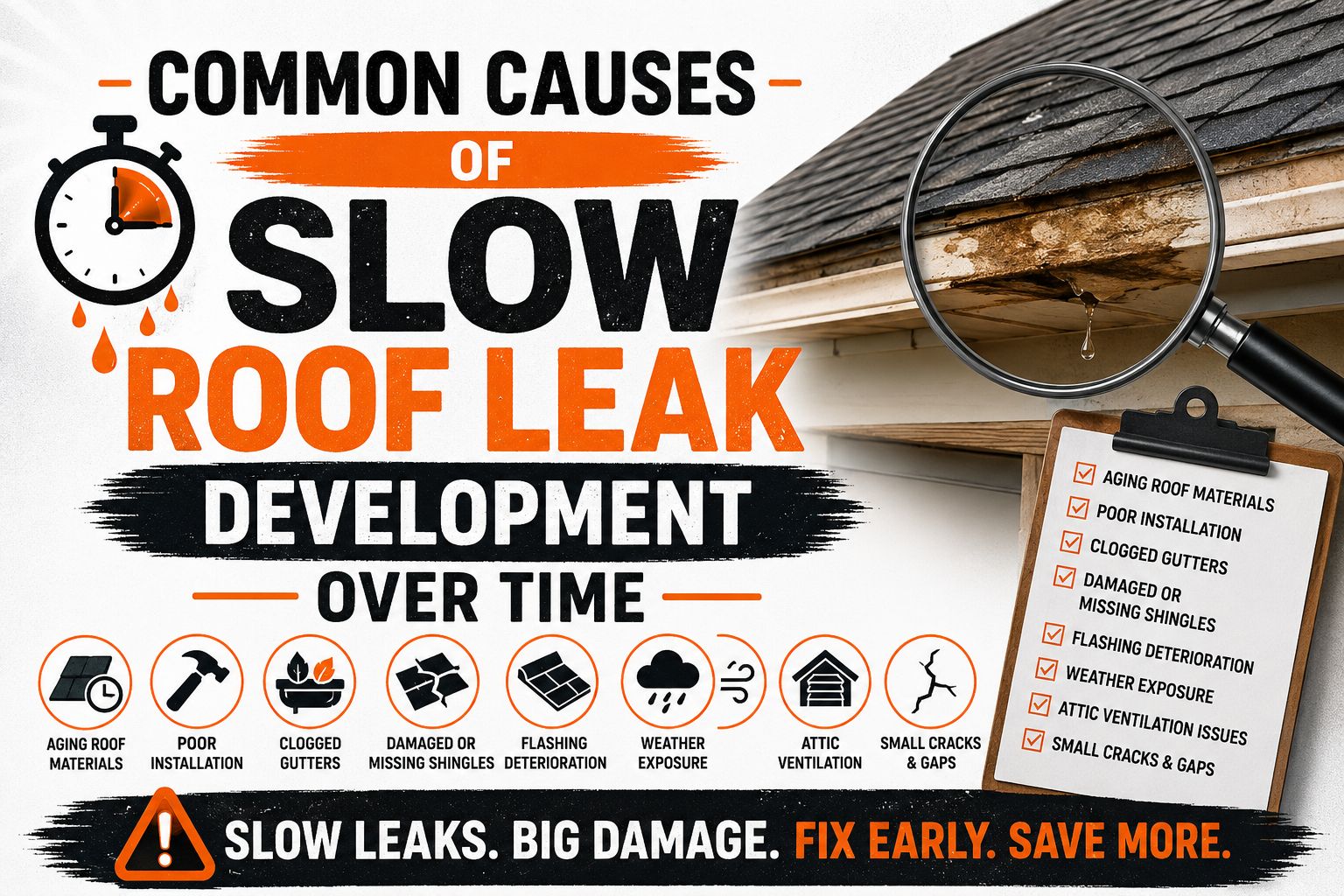
Common Causes of Slow Roof Leak Development Over Time
Introduction
Not every roof leak begins with a dramatic drip during a heavy storm. In many homes, roof leaks develop so gradually that homeowners don’t realize there’s a problem until visible damage appears inside. A small amount of moisture entering through the roof over several months can quietly weaken structural materials, damage insulation, and create the perfect environment for mold growth before any obvious warning signs become noticeable.
One of the reasons slow roof leaks are so dangerous is that they often remain hidden. Water may seep beneath shingles, travel along roof decking, or move through wooden framing before eventually reaching the ceiling or walls. By the time an interior water stain appears, the leak may have already caused significant damage inside areas that cannot be seen during everyday activities.
Unlike sudden leaks caused by severe storm damage, slow roof leaks usually develop because of gradual wear and tear. Aging roofing materials, deteriorating flashing, cracked sealants, clogged drainage systems, and repeated exposure to changing weather conditions all contribute to moisture entering the roofing system over time. Since these problems progress slowly, they are easy to overlook without regular roof inspections.
Understanding what causes slow roof leaks allows homeowners to recognize potential issues before expensive repairs become necessary. Identifying early warning signs and scheduling maintenance at the right time can significantly extend the life of a roof while protecting the home’s interior from unnecessary water damage.
In this guide, we’ll explore the most common causes of slow roof leak development, explain why these leaks often go unnoticed, and discuss the early indicators that suggest your roof may already be allowing moisture inside.
Why Slow Roof Leaks Are More Dangerous Than They Appear
Many homeowners assume a small leak is not an urgent problem because only a few drops of water appear after heavy rain. Unfortunately, the amount of visible water inside rarely reflects the extent of the hidden damage occurring within the roof structure. Even a slow leak introduces moisture into places that are designed to remain completely dry.
As water enters the roofing system, it gradually soaks insulation, roof decking, rafters, and other structural materials. These components absorb moisture long before stains become visible on ceilings or walls. Since the leak progresses slowly, homeowners often remain unaware while the damage continues spreading.
Persistent moisture also creates ideal conditions for mold and mildew. Once mold begins growing inside the attic or wall cavities, it can spread throughout the surrounding materials and negatively affect indoor air quality. Addressing mold is often far more expensive than repairing the original roof leak.
Another concern is wood deterioration. Continuous moisture exposure weakens roof decking and framing over time, reducing the structural integrity of the roof. Left untreated, what started as a small leak can eventually require extensive repairs that involve much more than replacing roofing materials.
Because slow roof leaks rarely create immediate emergencies, they are frequently postponed until obvious damage appears. Unfortunately, delaying repairs almost always increases both the complexity and the cost of restoring the roof.
The Natural Aging of Roofing Materials
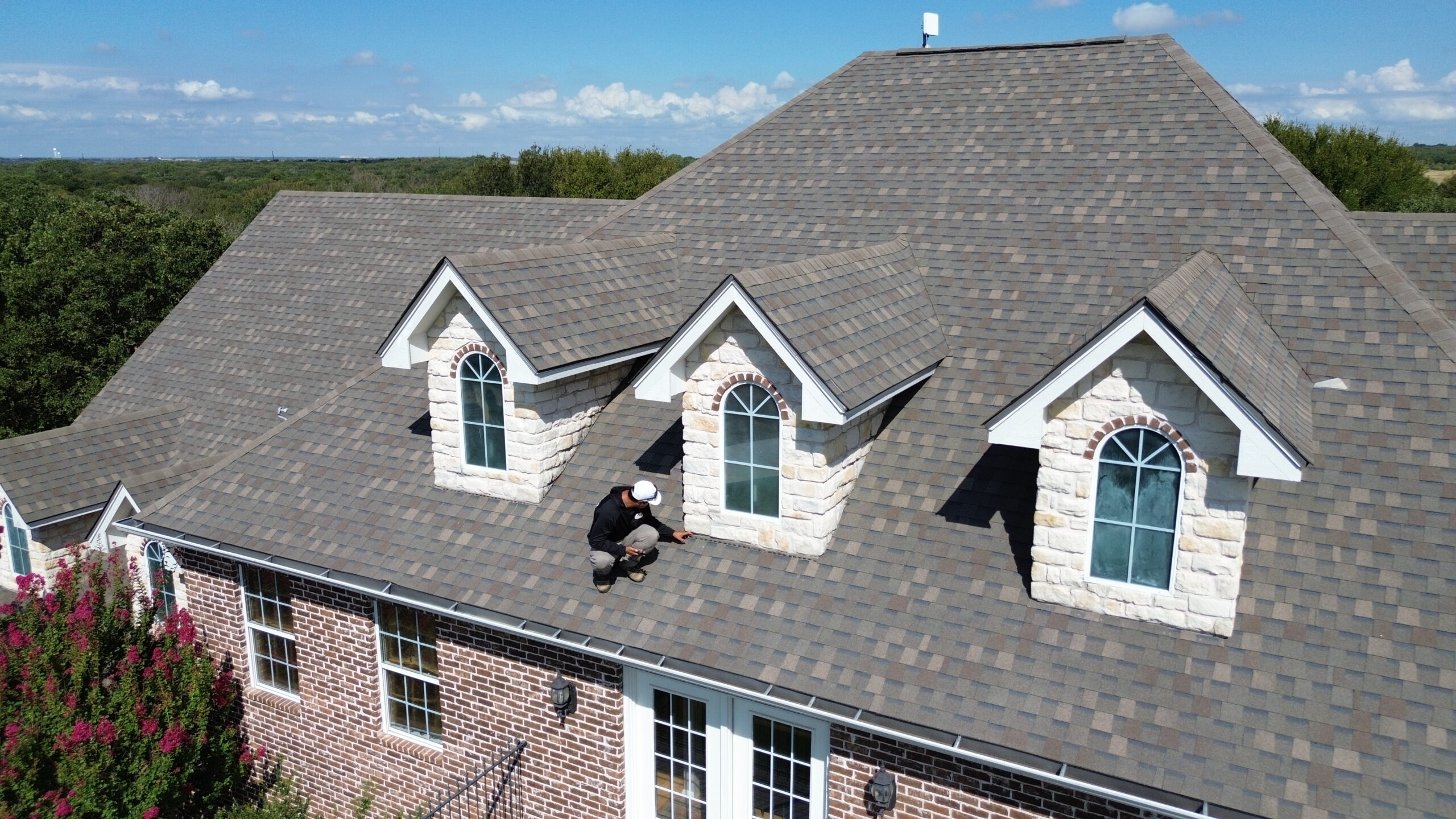
Every roofing system has a limited lifespan, regardless of the materials used during installation. Years of exposure to sunlight, rain, wind, humidity, and changing temperatures gradually reduce the effectiveness of shingles, flashing, sealants, and underlayment. As these materials age, they become more vulnerable to water intrusion.
Asphalt shingles slowly lose the protective granules that shield them from ultraviolet rays. Once enough granules wear away, the shingles become more brittle and susceptible to cracking. Small cracks may not cause immediate leaks, but they create opportunities for water to penetrate beneath the roofing surface.
Roofing sealants also deteriorate with age. Areas around chimneys, skylights, plumbing vents, and flashing depend on flexible sealants to maintain a watertight barrier. Over time, these sealants dry out, shrink, and crack, allowing moisture to enter through tiny openings.
Even metal flashing experiences natural wear. Continuous expansion and contraction caused by seasonal temperature changes gradually loosens fasteners and weakens joints. Although flashing may still appear intact from the ground, small gaps can develop that allow water into the roof during heavy rainfall.
Natural aging cannot be prevented, but regular inspections allow roofing professionals to identify worn materials before they begin leaking. Replacing aging components at the right time often prevents much larger repair projects later.
Damaged or Missing Shingles
Shingles serve as the roof’s first line of defense against rain, snow, and other weather conditions. When they become damaged, water gains easier access to the roofing system beneath. While missing shingles sometimes create immediate leaks, cracked or loose shingles often allow water inside much more gradually.
Strong winds may lift the edges of shingles without removing them completely. Although the damage appears minor, these lifted areas provide openings where rainwater can work beneath the roofing surface during storms. Repeated moisture exposure eventually affects the underlayment and roof decking below.
Hail damage creates similar problems. Small impact marks may not seem serious at first, but they weaken the protective surface of the shingles. Over time, these damaged areas become more vulnerable to cracking, allowing slow leaks to develop after repeated rainfall.
Poorly secured shingles installed during previous repairs may also contribute to gradual leaks. If nails loosen or shingles shift slightly over time, moisture can begin entering beneath them without creating immediately noticeable symptoms.
Regular roof inspections following severe weather help identify damaged shingles before they lead to long-term water intrusion. Replacing a few affected shingles early is far less expensive than repairing widespread interior water damage.
Flashing Deterioration Around Roof Penetrations
Roof flashing protects some of the most vulnerable areas of the roofing system, including chimneys, skylights, plumbing vents, roof valleys, and roof-to-wall intersections. Since these locations interrupt the continuous surface of the roof, they rely on flashing to direct water safely away from joints and openings.
Over time, flashing may loosen, rust, separate from surrounding materials, or develop small gaps where sealants have failed. These openings often allow only limited amounts of water inside during each storm, making the resulting leak slow and difficult to detect.
Chimney flashing is particularly susceptible because the joint between brick masonry and roofing materials experiences constant movement caused by seasonal temperature changes. As mortar cracks or flashing shifts, water gradually finds its way into the roof structure.
Skylights and plumbing vents also depend heavily on properly functioning flashing. If the flashing surrounding these roof penetrations becomes damaged, rainwater may enter around the edges while remaining hidden beneath nearby roofing materials.
Because flashing leaks often develop gradually, homeowners may notice only small ceiling stains that appear after heavy rain before disappearing again during dry weather. These recurring symptoms should never be ignored because they usually indicate that flashing repairs are needed.
Clogged Gutters and Poor Roof Drainage
Many homeowners don’t realize that clogged gutters can contribute to slow roof leaks. Gutters are designed to carry rainwater away from the roof and foundation. When leaves, twigs, and debris block this drainage system, water begins backing up along the roof edge instead of flowing safely away.
Standing water creates prolonged moisture exposure around shingles, flashing, and roof decking. Eventually, water may work beneath the roofing materials and begin soaking the wooden structure underneath. Since this process usually occurs slowly, homeowners often notice interior water stains long after the gutters first became clogged.
Poor roof drainage can also affect roof valleys where large amounts of water naturally collect. Debris trapped in these channels prevents proper runoff, increasing the amount of standing water that remains on the roof after storms.
Regular gutter cleaning is one of the simplest and most effective ways to reduce the risk of slow roof leaks. Keeping gutters and downspouts clear allows rainwater to move away from the roof quickly, reducing unnecessary stress on roofing materials.
Cracked or Worn Roof Sealants
Roof sealants play an important role in protecting areas where shingles alone cannot create a complete waterproof barrier. They are commonly applied around flashing, vent pipes, skylights, chimneys, and fasteners to keep moisture from entering small gaps. Although these sealants are designed to withstand outdoor conditions, they gradually lose their flexibility after years of exposure to sunlight and changing temperatures.
As sealants begin to dry out, they shrink and develop small cracks that may not be visible from the ground. During heavy rain, these tiny openings allow moisture to enter the roofing system little by little. Because the amount of water is usually small, homeowners often do not notice any immediate interior damage.
Over time, repeated rainfall allows more moisture to penetrate beneath the roofing materials. What started as a hairline crack in the sealant can eventually lead to damp insulation, stained roof decking, and visible ceiling stains. By the time the leak becomes obvious, the sealant may have been deteriorating for several years.
Routine roof inspections help identify aging sealants before they completely fail. Reapplying high-quality roofing sealant at the right time is a relatively inexpensive maintenance task that can prevent much larger repair projects in the future.
Poor Roof Installation Practices
Even the highest-quality roofing materials cannot perform as intended if they were installed incorrectly. Unfortunately, some slow roof leaks begin on the day the roof is installed because important details were overlooked during construction.
Improperly aligned shingles, incorrectly installed flashing, exposed fasteners, or inadequate sealing around roof penetrations all create opportunities for moisture to enter. These mistakes may not produce immediate leaks, but they often become noticeable after the roof has experienced several seasons of weather.
Incorrect nail placement is another common installation problem. Nails driven too high, too low, or at the wrong angle can reduce the ability of shingles to resist wind and water. As the roof ages, these small installation errors gradually become larger problems.
Some contractors also attempt to rely too heavily on roofing sealant instead of proper installation techniques. While sealants are important, they should complement correctly installed roofing materials rather than replace them. Once the sealant begins deteriorating, leaks often develop in areas where flashing or shingles were not installed properly.
Choosing an experienced roofing contractor significantly reduces the risk of premature roof leaks. Proper installation ensures that every roofing component works together to keep moisture outside the home.
Storm Damage That Goes Unnoticed
Not all storm damage is dramatic enough to remove shingles or create immediate leaks. In many cases, severe weather causes relatively minor damage that weakens the roof without producing obvious symptoms. These hidden issues often become the starting point for slow roof leak development.
Strong winds can lift shingles just enough to break their seal without tearing them away from the roof. After the storm passes, the shingles may appear normal from the ground while allowing rainwater to enter beneath them during future storms.
Hail can also create damage that is difficult to recognize without a close inspection. Small dents, cracked shingle surfaces, or damaged flashing may seem insignificant at first, but they reduce the roof’s ability to repel water over time.
Falling tree branches can scrape shingles, loosen flashing, or damage roof edges without creating large holes. Although the impact may appear minor, these weakened areas often allow moisture to enter gradually with each rainfall.
Scheduling a professional roof inspection after major storms helps identify hidden damage before it develops into expensive water intrusion. Early repairs are usually much less costly than restoring water-damaged ceilings, insulation, and structural framing.
Roof Ventilation Problems That Contribute to Moisture Damage
While poor ventilation does not always cause roof leaks directly, it creates conditions that accelerate roofing deterioration. A properly ventilated attic allows excess heat and moisture to escape throughout the year, helping preserve both roofing materials and structural components.
When attic ventilation is inadequate, moisture from everyday household activities becomes trapped beneath the roof. Cooking, showering, and laundry all release water vapor that naturally rises into the attic. Without proper airflow, this moisture condenses on roof decking and wooden framing.
Repeated condensation keeps roofing materials damp for extended periods, increasing the likelihood of mold growth and wood deterioration. Over time, these conditions weaken the roofing system and make it more susceptible to leaks caused by other issues such as damaged shingles or flashing.
Excess attic heat during the summer also accelerates the aging of shingles and roofing sealants. Materials exposed to higher temperatures often deteriorate faster than expected, shortening the overall lifespan of the roof.
Maintaining balanced attic ventilation helps reduce moisture buildup while improving the long-term performance of the entire roofing system.
Early Warning Signs of a Slow Roof Leak
One of the biggest challenges with slow roof leaks is recognizing them before they cause significant damage. Since these leaks often remain hidden for months, homeowners should pay close attention to subtle warning signs that suggest moisture is entering the home.
A faint ceiling stain that becomes slightly darker after each rainfall is one of the earliest indicators. Although the discoloration may appear harmless at first, it usually means water has already reached the drywall or ceiling materials.
Peeling paint near the ceiling is another common symptom. Moisture trapped behind painted surfaces gradually weakens the bond between the paint and the drywall, causing bubbles, cracks, or peeling finishes.
A persistent musty odor in the attic or upper floors may also indicate hidden moisture. Even if visible water stains have not yet appeared, mold and mildew often begin growing in damp areas long before the leak becomes obvious.
Other warning signs include damp insulation, warped wood trim, unexplained increases in indoor humidity, and recurring stains that appear after heavy rain before drying again during periods of dry weather.
When to Call a Roofing Professional
Because slow roof leaks rarely repair themselves, professional evaluation is recommended whenever warning signs appear. Waiting until water begins actively dripping into the home often allows much more damage to occur inside hidden structural areas.
If you notice recurring ceiling stains, peeling paint, damp attic insulation, missing shingles, damaged flashing, or musty odors after rainfall, scheduling a roof inspection is a smart decision. Early diagnosis allows repairs to be completed before structural deterioration becomes extensive.
Professional roofing contractors have the experience and equipment needed to trace moisture back to its original entry point. Since water often travels through the roofing system before becoming visible indoors, the location of the stain is not always where the leak began.
Addressing roofing problems while they are still small protects your home’s structure, extends the lifespan of the roof, and helps avoid the much higher costs associated with widespread water damage restoration.
Now that we’ve explored the most common causes of slow roof leak development, the next part of this guide will examine how these leaks affect different areas of the home, the warning signs homeowners should never ignore, and the repair solutions that help restore long-term roof performance.
How Slow Roof Leaks Affect Different Parts of Your Home
A slow roof leak rarely stays confined to one area of the house. Once water enters the roofing system, it begins traveling through different building materials until it finds the easiest path downward. This movement often spreads the damage far beyond the original entry point, making early detection much more important.
The attic is usually the first area affected because it sits directly beneath the roof. Moisture entering through damaged shingles, flashing, or roof penetrations is often absorbed by insulation before reaching any finished living spaces. Wet insulation loses much of its ability to regulate indoor temperatures, causing heating and cooling systems to work harder throughout the year.
As the leak continues, water begins soaking the roof decking and wooden framing. Prolonged moisture exposure weakens these structural components and creates favorable conditions for wood rot. If repairs are delayed, damaged framing may eventually require replacement instead of simple restoration.
Once water reaches the ceiling, homeowners usually notice yellow or brown stains that become more visible after rainfall. Although the stain appears to be the primary problem, it is often only the final stage of moisture traveling through multiple layers of the roofing system.
Wall cavities can also be affected when water follows framing members downward. This may result in peeling paint, bubbling drywall, swollen trim, or mold growth that extends well below the original roof leak.
Why Slow Roof Leaks Often Go Undetected for Months
Unlike major storm damage that causes immediate dripping, slow roof leaks develop gradually. Because only small amounts of water enter during each rainstorm, homeowners often mistake the early warning signs for minor cosmetic issues rather than indicators of roofing damage.
One reason these leaks remain hidden is that insulation absorbs moisture before it becomes visible inside the home. Instead of dripping directly through the ceiling, water is temporarily trapped within the attic, allowing damage to continue unnoticed.
Another challenge is that leaks are often weather dependent. During dry periods, affected materials may partially dry out, creating the impression that the problem has resolved itself. Once the next storm arrives, however, additional moisture enters through the same opening and the damage continues expanding.
Some leaks only occur during wind-driven rain because strong winds push water beneath loose shingles or flashing. This intermittent pattern makes diagnosis more difficult since homeowners may not notice problems after every rainfall.
Because slow roof leaks can remain hidden for extended periods, routine roof inspections play an important role in identifying problems before they become obvious inside the home.
Signs That Your Roof Leak Is Becoming More Serious
A small leak rarely stays small forever. As roofing materials continue deteriorating, the amount of water entering the home gradually increases. Recognizing these changes allows homeowners to schedule repairs before structural damage becomes extensive.
One of the clearest signs is a ceiling stain that continues growing larger after each rainstorm. If the stain becomes darker or spreads into new areas, additional moisture is entering the roofing system.
Soft or sagging drywall indicates that water has been present long enough to weaken the ceiling materials. This should never be ignored because severely saturated drywall may eventually collapse under its own weight.
Persistent musty odors are another warning sign that the leak has progressed. Mold and mildew thrive in damp environments, particularly inside attics and wall cavities where airflow is limited.
Homeowners should also pay attention to visible mold growth, peeling paint, warped trim, or flooring damage beneath affected areas. These symptoms usually indicate that moisture has spread well beyond the roof itself.
The Hidden Costs of Ignoring a Slow Roof Leak
Many homeowners postpone roof repairs because the leak appears minor or only occurs occasionally. Unfortunately, delaying repairs often leads to much higher costs than addressing the problem when it first develops.
One of the biggest expenses is structural damage. Roof decking, rafters, ceiling joists, and wall framing are all vulnerable to prolonged moisture exposure. Replacing these components requires significantly more labor than repairing a small section of roofing material.
Mold remediation can also become expensive. Once mold spreads throughout insulation, drywall, or wood framing, specialized removal procedures may be necessary to restore healthy indoor conditions.
Interior repairs add additional costs. Water-damaged ceilings, walls, flooring, paint, and trim often require replacement after the roof has been repaired. In many cases, the interior restoration costs exceed the original roofing repair itself.
Ignoring a slow leak may also reduce the lifespan of the entire roofing system. Moisture trapped beneath shingles accelerates material deterioration, increasing the likelihood that additional sections of the roof will require repair or replacement.
How Professional Roof Inspections Identify Hidden Leaks
Locating the source of a slow roof leak requires much more than simply looking at the ceiling stain. Professional roofing contractors understand how water moves through roofing systems and use a systematic inspection process to identify the actual point of entry.
The inspection usually begins inside the attic where moisture stains, wet insulation, mold growth, and water trails provide important clues. Roofers examine these patterns carefully because they often reveal the direction water has traveled after entering the roof.
Outside the home, attention focuses on shingles, flashing, roof valleys, plumbing vents, skylights, chimneys, and gutters. Roofing professionals also inspect sealants, fasteners, and roof penetrations for signs of deterioration that may not be obvious from the ground.
When necessary, controlled water testing may be performed to confirm the exact source of the leak. By introducing water to one roof section at a time, contractors can determine precisely where moisture is entering without replacing unnecessary roofing materials.
A comprehensive inspection also identifies nearby components that are beginning to wear out. Addressing these issues during the same repair often helps prevent future leaks from developing.
Temporary Fixes Versus Permanent Roof Repairs
After discovering a slow roof leak, some homeowners attempt temporary repairs using roofing cement, caulk, or waterproof tape. While these products may reduce water intrusion for a short period, they rarely solve the underlying problem.
For example, applying sealant over damaged flashing does not correct flashing that has shifted or corroded. Similarly, covering cracked shingles with roofing cement may hide the visible damage while allowing moisture to continue entering beneath the roofing materials.
Temporary repairs are most useful when immediate weather protection is needed before professional service can be scheduled. They should not be viewed as permanent solutions because they generally fail once exposed to additional weather.
Permanent repairs address the actual cause of the leak rather than simply covering the symptoms. This may involve replacing damaged shingles, installing new flashing, repairing roof valleys, resealing penetrations, or correcting installation issues that allowed water to enter.
Choosing the appropriate repair early often prevents repeated service calls while extending the life of the roof.
Warning Signs You Should Never Ignore
Some roof leak symptoms require immediate professional attention because they indicate that significant water damage may already be occurring inside the home. Ignoring these warning signs increases the risk of structural deterioration and costly interior repairs.
- Ceiling stains that rapidly increase in size after rainfall.
- Active water dripping inside the home.
- Sagging or bulging ceiling drywall.
- Persistent mold or mildew odors in the attic.
- Visible mold growth near ceilings or upper walls.
- Loose flashing or missing shingles following a storm.
- Wet attic insulation or standing water inside the attic.
If you notice any of these warning signs, scheduling a professional roof inspection as soon as possible is the best course of action. Early intervention helps prevent additional water intrusion while reducing the likelihood of extensive structural repairs.
In the final part of this guide, we’ll discuss the repair options available for slow roof leaks, explain how homeowners can prevent similar problems in the future, answer frequently asked questions, and conclude with practical advice for protecting your roof over the long term.
Repair Options for Slow Roof Leaks
Once the source of a slow roof leak has been identified, the next step is selecting the most effective repair. The right solution depends on the cause of the leak, the age of the roof, and the condition of the surrounding roofing materials. Addressing the actual source instead of simply covering the symptoms helps ensure the repair lasts for years rather than only until the next storm.
If damaged or missing shingles are responsible, replacing the affected shingles is often enough to restore the roof’s protective barrier. Roofing professionals carefully match the new shingles with the existing roof while ensuring they overlap correctly to prevent future water intrusion.
Leaks caused by deteriorated flashing usually require more than applying fresh sealant. Depending on the condition of the metal, the flashing may need to be repositioned, resealed, or completely replaced. Proper flashing installation is essential because it protects some of the most leak-prone areas of the roof.
Roof valleys may require debris removal, flashing replacement, or repairs to the surrounding shingles if water has been backing up beneath the roofing materials. Likewise, cracked vent boots, damaged sealants, and loose fasteners should be replaced before they allow additional moisture into the roof structure.
Every repair should include a complete inspection of the surrounding roofing system. Water often affects nearby materials even if the visible leak appears to originate from a single location. Addressing these related issues during the same repair helps reduce the risk of future leaks.
When a Roof Repair Is Enough and When Replacement Makes More Sense
Not every roof leak means the entire roof needs to be replaced. Many slow leaks can be repaired successfully when the damage is limited and the roof is still in otherwise good condition. Understanding when repair is appropriate versus when replacement is the better investment helps homeowners make informed decisions.
Repairs are generally suitable when the leak is isolated to one area, the roofing materials still have useful life remaining, and the structural components beneath the roof have not suffered significant deterioration. Replacing damaged shingles or flashing in these situations often restores the roof’s performance.
Replacement becomes more practical when the roof has reached the end of its expected lifespan, multiple leaks are developing across different areas, or repeated repairs have failed to solve recurring problems. Installing a new roofing system eliminates aging materials and provides a fresh waterproof barrier throughout the entire roof.
Extensive wood rot, widespread shingle deterioration, and repeated storm damage may also make replacement the more cost-effective long-term solution. Although the initial investment is greater, replacing an aging roof often reduces maintenance costs while improving the home’s overall protection.
A professional roofing contractor can evaluate the condition of the entire roof and recommend whether repair or replacement offers the best long-term value based on its current condition.
How Preventive Maintenance Reduces the Risk of Future Roof Leaks
The most effective way to deal with slow roof leaks is to prevent them from developing in the first place. Routine maintenance helps identify small issues before they allow moisture to enter the roofing system, reducing both repair costs and the likelihood of interior water damage.
Scheduling a professional roof inspection at least once each year allows contractors to identify loose shingles, aging flashing, deteriorated sealants, and other early warning signs. Homes located in areas that experience frequent storms should also be inspected after severe weather events.
Cleaning gutters regularly is another important maintenance task. Blocked gutters allow water to back up beneath roof edges and increase the amount of standing moisture around flashing and shingles. Keeping gutters clear helps water flow away from the roof as intended.
Removing leaves, branches, and debris from roof valleys also improves drainage. Organic debris traps moisture against roofing materials, accelerating deterioration and increasing the likelihood of leaks over time.
Homeowners should also perform occasional visual inspections from the ground. Looking for missing shingles, bent flashing, sagging gutters, or fallen tree branches provides an opportunity to schedule repairs before serious damage occurs.
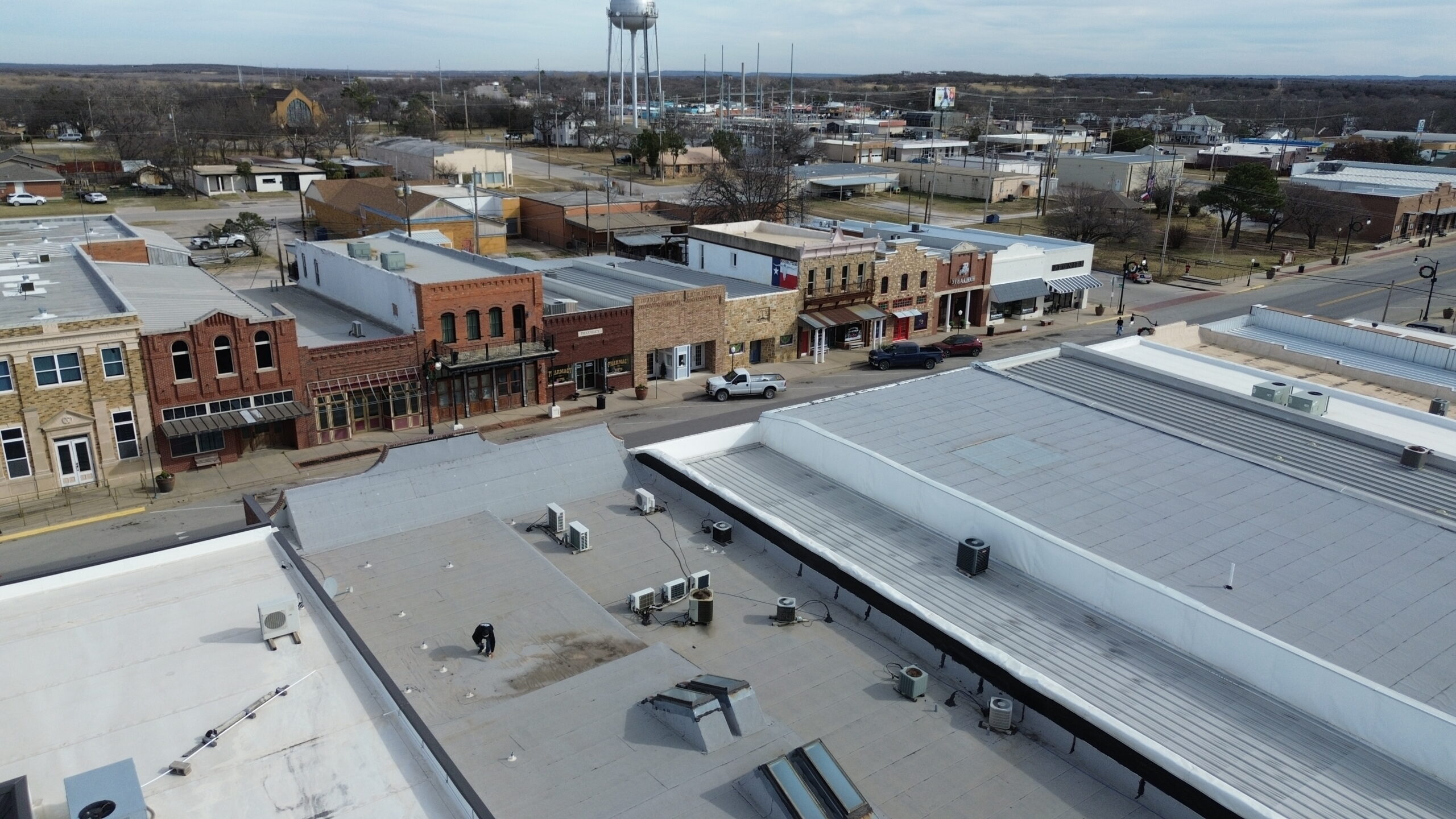
Simple Habits That Help Extend the Life of Your Roof
Although every roof eventually requires maintenance, adopting a few simple habits can significantly extend its lifespan. Preventive care protects roofing materials from unnecessary wear while reducing the chance of slow leaks developing over time.
- Schedule a professional roof inspection every year.
- Inspect the roof after major storms for visible signs of damage.
- Keep gutters and downspouts free of leaves and debris.
- Trim overhanging tree branches that could damage the roof.
- Repair damaged shingles, flashing, or sealants as soon as problems are discovered.
- Check the attic periodically for damp insulation or water stains after heavy rain.
- Avoid delaying small repairs because they often become much larger problems over time.
These simple maintenance practices help homeowners identify potential issues before they become serious. Investing a small amount of time in routine roof care can prevent costly repairs while protecting the overall value of the property.
Frequently Asked Questions About Slow Roof Leaks
Can a slow roof leak stop on its own?
No. While a leak may appear to disappear during dry weather, the opening that allows water into the roof usually remains. Once rain returns, moisture will continue entering unless the damaged roofing component has been properly repaired.
How long can a slow roof leak go unnoticed?
Some slow roof leaks remain hidden for several months or even years. The exact timeline depends on the size of the opening, local weather conditions, and how quickly moisture reaches visible interior surfaces.
Can a small leak really cause structural damage?
Yes. Even small amounts of water entering the roof repeatedly can weaken wood framing, damage roof decking, reduce insulation performance, and encourage mold growth. The gradual nature of these leaks often allows significant damage to develop before homeowners become aware of the problem.
Will homeowners insurance cover slow roof leaks?
Insurance coverage depends on the cause of the damage and the specific policy. Sudden storm-related damage may be covered, while leaks resulting from poor maintenance or normal wear and tear are often excluded. Reviewing your policy and speaking with your insurance provider can help clarify what is covered.
How often should I have my roof inspected?
Most roofing professionals recommend scheduling a roof inspection at least once a year. Additional inspections are also advisable after severe storms, high winds, or hail events that may have caused hidden damage.
Conclusion
Slow roof leaks are among the most deceptive roofing problems because they often develop quietly over months or even years. Unlike sudden storm damage that demands immediate attention, these leaks gradually allow moisture to enter the roofing system, causing hidden damage long before obvious warning signs appear inside the home. By the time a ceiling stain or musty odor becomes noticeable, water may have already affected insulation, roof decking, and structural framing.
Understanding the common causes of slow roof leak development makes it easier to recognize potential problems before they become costly repairs. Aging roofing materials, damaged shingles, deteriorated flashing, cracked sealants, clogged gutters, poor ventilation, and unnoticed storm damage all contribute to moisture entering the roof over time. Identifying these issues early is one of the most effective ways to protect your home from extensive water damage.
Routine inspections and preventive maintenance remain the best defense against slow roof leaks. Regularly checking your roof, cleaning gutters, addressing small repairs promptly, and scheduling professional inspections help extend the lifespan of your roofing system while reducing the likelihood of unexpected interior damage. Preventive care is almost always more affordable than repairing widespread structural deterioration caused by prolonged water intrusion.
If you notice ceiling stains, peeling paint, musty odors, damp attic insulation, or any other signs of a developing roof leak, don’t wait for the problem to become worse. A professional roof inspection can identify the source of the leak, recommend the appropriate repair, and restore your roof’s ability to protect your home. Taking action early not only preserves your roof but also helps safeguard your home’s structure, comfort, and long-term value.