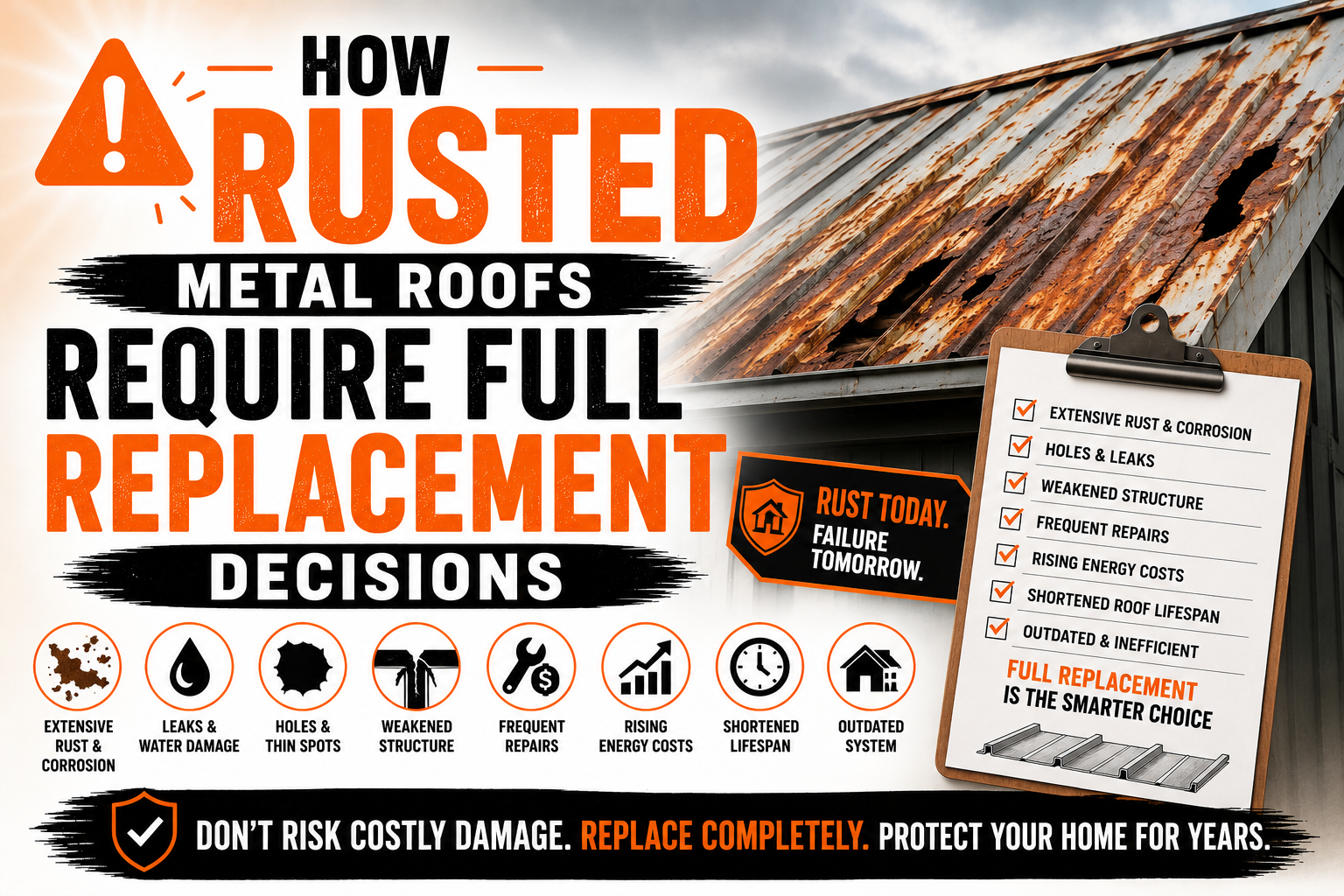
How Rusted Metal Roofs Require Full Replacement Decisions
Introduction
Metal roofs are known for their durability, energy efficiency, and long service life, making them one of the most reliable roofing options for residential, commercial, and agricultural buildings. However, even the strongest metal roofing systems are not immune to aging. Over time, exposure to moisture, changing temperatures, pollutants, and harsh weather can gradually lead to rust and corrosion that weaken the roof’s ability to protect the structure beneath it.
Many property owners assume that every rust spot can be cleaned, repaired, or painted over. While this may be true during the earliest stages of corrosion, widespread rust often indicates much deeper problems affecting the roofing system. By the time severe corrosion becomes visible, moisture may have already damaged fasteners, flashing, roof decking, insulation, and structural components hidden beneath the metal panels.
Understanding when rust has progressed beyond repair is essential for making informed roofing decisions. Replacing the roof too early may result in unnecessary expenses, while delaying replacement after significant corrosion develops can lead to structural deterioration, interior water damage, mold growth, and much higher repair costs.
This guide explains how rust develops on metal roofing systems, the warning signs homeowners should recognize, and the factors that determine whether repairs remain practical or a complete roof replacement becomes the safest and most economical solution.
Why Rust Is One of the Biggest Threats to Metal Roofs
Rust is more than a cosmetic problem. It is a chemical process that gradually weakens the metal itself, reducing the roof’s structural integrity and its ability to resist weather over time. Once corrosion begins spreading beneath protective coatings, it becomes increasingly difficult to stop without addressing the underlying cause.
Metal roofing panels rely on protective finishes to prevent direct exposure to oxygen and moisture. These coatings act as a barrier, shielding the metal from environmental conditions that would otherwise trigger corrosion. When the protective layer becomes damaged through aging, impact, scratches, or poor maintenance, the exposed metal becomes vulnerable to oxidation.
Unlike minor surface stains, active rust continues expanding if left untreated. Moisture repeatedly enters the affected area, causing corrosion to spread outward and deeper into the metal. As the metal becomes thinner, its ability to withstand wind, rain, hail, and structural movement gradually decreases.
Rust also affects more than the visible roofing panels. Flashing, screws, clips, ridge caps, gutters, trim pieces, and other metal accessories often experience corrosion as well. Since every component works together as part of the complete roofing system, deterioration in one area frequently influences the performance of surrounding components.
Property owners sometimes underestimate the seriousness of rust because it develops slowly. However, corrosion that has been progressing for years may already have compromised structural elements long before obvious leaks or panel failure become visible.
Understanding rust as a progressive structural issue rather than a simple appearance problem helps homeowners recognize why early evaluation is so important.
How Rust Develops on Metal Roofing Systems
Rust forms through a natural chemical reaction involving iron, oxygen, and moisture. Although protective coatings delay this process significantly, no roofing material remains completely immune to environmental exposure forever.
The process usually begins when the protective paint, galvanized coating, or factory finish becomes damaged. Small scratches caused by falling branches, hail, foot traffic, or improper installation expose the underlying metal to moisture. Even tiny areas of exposed steel can eventually become corrosion starting points.
Rainwater, morning dew, condensation, and humid air provide the moisture necessary for oxidation. Once the exposed metal reacts with oxygen, iron oxide begins forming on the surface. This initial corrosion often appears as small reddish-brown spots that gradually increase in size over time.
Temperature changes also contribute to corrosion. Metal roofing expands during warm weather and contracts as temperatures fall. This repeated movement places stress on coatings, seams, and fasteners, occasionally creating tiny openings where moisture can enter beneath protective finishes.
Salt carried by coastal air accelerates the corrosion process dramatically. Properties located near oceans, bays, or saltwater environments frequently experience faster coating deterioration than inland buildings. Industrial pollutants and airborne chemicals can produce similar effects in manufacturing or urban areas.
Poor drainage further increases corrosion risk. Water standing on low-slope roof sections, clogged gutters, blocked valleys, or debris trapped against roofing panels keeps moisture in constant contact with the metal surface. The longer moisture remains, the greater the opportunity for rust to spread.
Although modern coatings significantly improve corrosion resistance, every roofing system benefits from regular inspection and maintenance designed to identify coating damage before widespread rust develops.
Early Signs of Rust That Homeowners Should Never Ignore
Rust rarely appears suddenly across an entire roof. Most roofing systems develop subtle warning signs long before widespread corrosion becomes obvious. Recognizing these early indicators allows property owners to arrange professional inspections while repairs may still be practical.
Small rust spots often represent the first visible symptom. These isolated discolorations typically appear around scratches, fasteners, roof edges, flashing connections, or areas where protective coatings have become damaged. Although they may seem minor, prompt treatment helps prevent corrosion from spreading beneath surrounding finishes.
Discoloration around exposed screws also deserves attention. Fasteners frequently experience corrosion before larger roofing panels because protective washers gradually deteriorate after years of sunlight and weather exposure. Rust around multiple fasteners may indicate aging throughout the attachment system.
Peeling paint or blistered protective coatings often reveal moisture trapped beneath the finish. As corrosion develops underneath, expanding rust gradually lifts the coating away from the metal surface, exposing additional areas to further deterioration.
Water stains inside the building may also signal early corrosion problems. Small leaks caused by rusted fasteners or deteriorated flashing sometimes appear before extensive exterior damage becomes visible. Ceiling stains, damp insulation, or attic moisture should always receive prompt professional evaluation.
Metal surfaces that remain damp longer than surrounding areas may also indicate drainage problems encouraging corrosion. Valleys, roof penetrations, gutters, and low points should be inspected regularly because moisture naturally accumulates in these locations.
Responding to these warning signs early often extends roof life significantly while reducing future repair costs.
Surface Rust Versus Structural Corrosion
Not every rusted roof requires immediate replacement. Distinguishing between superficial corrosion and structural deterioration helps homeowners understand when repairs remain practical and when complete replacement deserves serious consideration.
Surface rust generally affects only the outer protective finish. The metal beneath remains structurally sound, allowing contractors to clean the affected area, apply rust treatment, and restore protective coatings before significant damage develops. These repairs are most successful when corrosion is identified during its earliest stages.
Structural corrosion presents a much different situation. Once rust penetrates deeply into the metal, the roofing panels gradually lose thickness and strength. Weakened panels become increasingly vulnerable to leaks, wind damage, and further corrosion even if protective coatings are applied afterward.
Contractors evaluate several factors when determining the severity of corrosion. They examine metal thickness, panel stability, coating condition, seam integrity, fastener performance, and the overall distribution of rust across the roofing system. Isolated corrosion may remain repairable, while widespread deterioration often indicates that the roof has reached the end of its practical service life.
Corrosion hidden beneath overlapping seams also creates challenges. Rust progressing inside concealed joints may weaken critical connections without producing obvious surface symptoms. Professional inspections often identify these hidden conditions before complete panel failure occurs.
Homeowners should therefore avoid assuming that fresh paint alone solves corrosion problems. Cosmetic improvements may temporarily improve appearance while leaving serious structural deterioration untouched beneath the surface.
Understanding the difference between appearance and structural integrity allows property owners to make better long-term roofing decisions.
Factors That Accelerate Metal Roof Rust
Although all metal roofs experience natural aging, several environmental and maintenance factors can significantly increase the speed at which corrosion develops. Recognizing these influences helps homeowners reduce future deterioration while understanding why some roofs require replacement sooner than expected.
Climate remains one of the most important factors. Coastal regions expose roofing systems to airborne salt particles that increase corrosion rates dramatically. Homes located near industrial facilities may also encounter airborne chemicals capable of gradually damaging protective coatings.
Poor maintenance contributes heavily to accelerated rust development. Leaves, branches, dirt, and organic debris trap moisture against roofing panels, preventing surfaces from drying quickly after rainfall. Continuous moisture exposure creates ideal conditions for corrosion.
Blocked gutters and roof valleys produce similar effects. Water unable to drain efficiently remains in prolonged contact with roofing materials, increasing the likelihood of coating deterioration and rust formation.
Improper repairs sometimes accelerate corrosion as well. Mixing incompatible metals, using incorrect fasteners, or applying unsuitable coatings may create chemical reactions that encourage galvanic corrosion between different materials.
Mechanical damage should not be overlooked. Walking carelessly on the roof, dragging equipment across panels, or allowing tree branches to scrape protective finishes gradually exposes bare metal to environmental conditions. Even small scratches become potential corrosion starting points if left untreated.
Ventilation also influences roof longevity. Poor attic airflow encourages condensation beneath roofing panels, increasing moisture exposure from inside the roofing system. Balanced ventilation helps maintain drier conditions that slow corrosion over time.
Understanding these contributing factors allows homeowners to address preventable issues before widespread rust affects the roofing system.
Can a Rusted Metal Roof Be Repaired Instead of Replaced?
One of the most common questions property owners ask involves whether rusted metal roofing can still be repaired. The answer depends largely on the extent of corrosion, the age of the roof, and whether structural components remain sound.
Minor surface rust usually responds well to professional treatment. Contractors clean the affected area, remove loose corrosion, apply rust inhibitors, repair damaged coatings, and restore protective finishes. When completed promptly, these repairs may significantly extend the roof’s service life.
Localized panel damage may also be repairable. If corrosion affects only one or two panels while the remainder of the roofing system remains in excellent condition, replacing those individual panels often provides an effective solution.
However, repeated repairs become less practical as corrosion spreads. Rust affecting numerous panels, fasteners, flashing components, seams, and concealed structural connections often indicates system-wide deterioration rather than isolated defects.
Repair decisions should also consider roof age. Investing heavily in repairs for a roof already approaching the end of its expected lifespan may provide only temporary improvement while delaying replacement that will soon become unavoidable.
Professional inspections remain the most reliable method for determining whether repairs remain worthwhile. Experienced roofing contractors evaluate structural condition alongside visible corrosion before recommending the most economical long-term solution.
Comparing Repairable and Non-Repairable Rust Damage
| Roof Condition | Usually Repairable | Usually Requires Full Replacement |
|---|---|---|
| Small isolated surface rust | Yes | No |
| Minor coating damage | Yes | No |
| Rust limited to one or two panels | Often | Rarely |
| Localized flashing corrosion | Yes | Sometimes |
| Widespread rust across multiple panels | Rarely | Yes |
| Deep corrosion weakening metal thickness | No | Yes |
| Recurring leaks caused by corrosion | Rarely | Yes |
| Structural damage beneath roofing panels | No | Yes |
Understanding the difference between repairable corrosion and widespread structural deterioration is essential for making informed roofing decisions. Early intervention often preserves the roofing system for many additional years, while delaying action after corrosion becomes extensive frequently leads to more expensive structural repairs.
In the next part of this guide, we will examine the situations where rust damage clearly requires complete roof replacement, including severe structural corrosion, hidden damage beneath roofing panels, recurring repair failures, and the warning signs homeowners should never ignore when evaluating an aging metal roof.
When Rust Damage Requires Complete Roof Replacement
Not every rusted roof needs to be replaced immediately, but there comes a point where corrosion spreads so extensively that repairs no longer provide a dependable solution. Understanding this transition helps homeowners avoid spending money on temporary fixes that fail to address the underlying problem.
Complete replacement becomes necessary when corrosion affects the overall strength of the roofing system rather than isolated areas. At this stage, the metal panels, fastening system, flashing, and other roofing components often begin deteriorating together. Repairing one section simply shifts attention away from the remaining areas that continue to weaken.
A roof experiencing widespread rust also becomes more difficult to maintain. Even after repairing one damaged panel, nearby panels may already contain hidden corrosion that develops into future leaks. This cycle of recurring repairs increases maintenance costs while reducing confidence in the roof’s ability to protect the building.
Professional inspections often reveal that visible rust represents only part of the problem. Moisture entering through corroded areas may have already affected the roof deck, insulation, framing, or interior finishes. In these situations, replacing the roofing system provides access to hidden damage that cannot be addressed through surface repairs alone.
Safety is another important consideration. Severely corroded panels may lose their ability to withstand strong winds, heavy rainfall, or snow loads. Replacing the roof before structural performance declines significantly helps reduce the risk of unexpected failures during severe weather.
When corrosion affects multiple roofing components simultaneously, complete replacement usually provides the most reliable and economical long-term solution.
How Corrosion Weakens the Entire Roofing System
Rust rarely remains confined to one location. As corrosion progresses, it gradually affects multiple parts of the roofing system, reducing overall performance even if only a few areas appear visibly damaged.
The most obvious effect involves the roofing panels themselves. Rust slowly consumes the metal, reducing its thickness and structural strength. As the panels weaken, they become more susceptible to dents, punctures, wind uplift, and water penetration.
Fasteners also experience significant deterioration. Screws, clips, washers, and concealed attachment systems may corrode alongside the panels, reducing their ability to hold the roofing system securely in place. Loose or weakened fasteners allow greater panel movement, placing additional stress on seams and flashing.
Flashing often becomes another vulnerable area. Chimneys, skylights, roof valleys, plumbing vents, and wall intersections rely on flashing to direct water safely away from roof penetrations. Corroded flashing loses its ability to maintain watertight seals, increasing the likelihood of leaks during heavy rainfall.
Protective coatings deteriorate as corrosion spreads beneath them. Paint may blister, peel, or separate from the metal surface, exposing even larger areas to moisture. This creates a cycle in which rust accelerates its own growth by continuously exposing fresh metal.
Drainage performance may also decline. Corrosion can create rough surfaces, holes, or distorted panel profiles that interrupt normal water flow. Standing water remains on the roof longer, increasing moisture exposure and encouraging additional rust formation.
Eventually, corrosion transforms what was once an isolated maintenance issue into a system-wide structural concern requiring much more extensive corrective action.
Hidden Damage Beneath Rusted Metal Panels
One of the greatest challenges with rusted metal roofs is that much of the most serious damage remains hidden beneath the visible roofing panels. What appears to be a surface problem from outside may actually involve extensive deterioration below.
Water entering through corroded panels often reaches the roof deck first. Plywood or oriented strand board gradually absorbs moisture, reducing structural strength while creating favorable conditions for mold growth and wood decay.
Insulation beneath the roof may also become saturated. Wet insulation loses much of its thermal performance, increasing heating and cooling costs while creating additional moisture problems inside the building. Because insulation is hidden from view, homeowners often remain unaware of the damage until replacement begins.
Structural framing deserves equal attention. Rafters, trusses, and supporting members exposed to long-term moisture may weaken gradually without obvious exterior warning signs. If corrosion has allowed water to enter for several years, these structural components should be evaluated carefully during roof replacement.
Condensation sometimes contributes to hidden deterioration as well. Poor attic ventilation allows warm, moisture-laden air to collect beneath metal roofing panels. Over time, condensation forms on cooler metal surfaces and gradually affects both the roof deck and supporting structure.
Electrical systems located within attic spaces may also be affected by prolonged moisture exposure. Wiring, junction boxes, lighting fixtures, and ventilation equipment should be inspected whenever widespread roof leaks have occurred.
Replacing the roofing system provides contractors with full access to these hidden areas, allowing necessary repairs before the new roof is installed. Addressing concealed damage at the same time helps restore the entire roofing assembly rather than simply replacing the visible metal panels.
Why Repeated Repairs Often Become Ineffective
Repairing a rusted roof makes sense when corrosion remains isolated and the majority of the roofing system is still in good condition. However, repeated repairs become increasingly ineffective once corrosion spreads across multiple roof sections.
Many homeowners notice a pattern developing over time. One leak is repaired successfully, only for another leak to appear elsewhere several months later. Individual rusted panels are replaced, but nearby panels continue deteriorating because they have experienced the same environmental conditions for many years.
Protective coatings also become less effective as the roof ages. Applying new coatings over severely corroded metal may improve appearance temporarily, but coatings cannot restore metal thickness that has already been lost to corrosion. Structural weakness remains even if the roof looks better from the ground.
Patchwork repairs frequently create inconsistent roofing performance. Different sealants, fasteners, coatings, and replacement panels installed over many years may expand and contract differently, creating additional stress throughout the roofing system.
Repair costs also accumulate gradually. Although each individual repair may seem affordable, the combined expense of repeated service calls, materials, interior water damage, and temporary leak control often approaches the cost of installing an entirely new roof.
Another limitation involves material availability. Older roofing systems sometimes use panel profiles or colors that manufacturers no longer produce. Matching replacement panels becomes increasingly difficult, making repairs both more expensive and less visually consistent.
When repair frequency continues increasing despite ongoing maintenance, replacement often becomes the more practical financial decision.
Structural Risks of Delaying Roof Replacement
Delaying roof replacement after widespread corrosion has developed exposes the building to risks extending far beyond the roofing materials themselves. Every additional season allows moisture to affect more components while increasing future repair costs.
Water intrusion remains the greatest concern. Small leaks rarely remain small for long because moisture follows structural pathways beneath the roofing system. By the time water becomes visible inside the building, significant hidden damage may already exist.
Roof decking weakened by prolonged moisture exposure loses its ability to support roofing materials effectively. Soft or deteriorated decking may eventually require extensive replacement during the roofing project, increasing both labor and material costs.
Interior damage often follows. Water stains on ceilings, damaged drywall, warped flooring, peeling paint, and mold growth all become more likely as leaks continue. These repairs frequently cost thousands of dollars beyond the roof replacement itself.
Structural framing may also deteriorate over time. Wooden rafters and trusses repeatedly exposed to moisture become more vulnerable to rot, reducing the overall strength of the roof structure. Correcting structural framing damage adds considerable complexity to replacement projects.
Energy efficiency declines as moisture affects insulation. Wet insulation loses much of its insulating ability, increasing heating and cooling costs while contributing to indoor comfort problems throughout the year.
Property value may also decrease when buyers recognize signs of advanced roof deterioration. A severely rusted roof often creates concerns about hidden structural damage, making the property less attractive in competitive real estate markets.
Replacing the roof before these secondary problems become extensive often saves considerably more money than delaying action until structural repairs become unavoidable.
Questions Homeowners Should Ask Before Replacing a Rusted Roof
Making the decision to replace a rusted metal roof requires careful evaluation. Asking the right questions helps homeowners understand the roof’s true condition and compare available replacement options more effectively.
- Has corrosion affected only the panels, or has it spread to structural components?
- Are roof leaks isolated or occurring in multiple locations?
- Is the roof decking still structurally sound beneath the metal panels?
- Have previous repairs solved the problems permanently or only temporarily?
- Will continued repairs cost more than replacement over the next several years?
- Which replacement materials offer the best corrosion resistance for the local climate?
- Does the existing ventilation system need improvement during replacement?
- What warranty coverage will the new roofing system include?
- Are there any building code updates that should be addressed during replacement?
- How long can the current roof safely remain in service if replacement is postponed?
These questions encourage meaningful discussions with qualified roofing professionals while helping homeowners make informed long-term decisions.
Warning Signs That Indicate Immediate Replacement
Certain conditions suggest that delaying replacement is no longer advisable. These warning signs often indicate widespread deterioration affecting the reliability of the entire roofing system.
- Extensive rust covering multiple roof panels.
- Deep corrosion creating holes or severely thinning the metal.
- Recurring leaks appearing in different roof areas.
- Loose panels caused by deteriorated fasteners or clips.
- Rusted flashing around chimneys, skylights, and roof penetrations.
- Soft or water-damaged roof decking discovered during inspections.
- Sagging roof sections indicating structural weakening.
- Interior mold, damp insulation, or persistent ceiling water stains.
When several of these warning signs appear together, professional evaluation should be arranged as soon as possible. Acting promptly helps prevent additional structural damage while allowing replacement to be planned under controlled conditions rather than during an emergency.
Understanding how corrosion progresses, why repeated repairs lose effectiveness, and how hidden structural damage develops provides a much clearer picture of when replacement becomes the most responsible decision. In the final part of this guide, we will explore modern replacement materials, advanced protective coatings, the benefits of installing a new metal roof, what to expect during the replacement process, maintenance strategies that help prevent future rust, frequently asked questions, and the conclusion that brings the entire guide together.
Choosing the Right Replacement Materials for Rust-Prone Areas
Once a rusted metal roof has reached the point where replacement is necessary, selecting the right roofing material becomes one of the most important decisions of the entire project. Modern roofing products offer significantly better corrosion resistance than many older systems, allowing homeowners to reduce future maintenance while extending the roof’s service life.
Galvanized steel remains one of the most common replacement materials because it combines strength, affordability, and reliable performance. A protective zinc coating shields the underlying steel from moisture, slowing the corrosion process and helping the roof withstand years of environmental exposure.
Galvalume steel has become increasingly popular due to its advanced protective coating made from aluminum, zinc, and silicon. This combination provides improved corrosion resistance compared with traditional galvanized steel, making it an excellent choice for many residential applications.
Aluminum roofing performs exceptionally well in coastal regions where salt-laden air accelerates corrosion. Because aluminum naturally resists rust, it remains one of the preferred materials for homes located near oceans, bays, or other marine environments.
Copper roofing offers remarkable longevity while developing a distinctive natural patina over time. Although it represents a premium investment, copper can protect buildings for many decades with relatively little maintenance when installed correctly.
Zinc roofing provides another premium option known for its self-healing protective surface. Small scratches gradually recover through natural weathering, reducing the likelihood of corrosion developing from minor surface damage.
The local climate should always influence material selection. Areas with frequent rainfall, heavy snowfall, industrial pollution, high humidity, or coastal salt exposure place greater demands on roofing materials. Choosing a replacement system specifically suited to these conditions helps maximize long-term performance.
Homeowners should also consider the compatibility of every roofing component. Panels, flashing, fasteners, clips, gutters, and trim should work together as a complete system to reduce the possibility of galvanic corrosion caused by incompatible metals.
Modern Protective Coatings That Improve Roof Longevity
Protective coatings represent one of the most significant improvements in modern metal roofing technology. These advanced finishes help prevent corrosion while preserving the roof’s appearance and reducing maintenance requirements throughout its lifespan.
Factory-applied paint systems provide the first layer of protection by sealing the metal from direct exposure to moisture and oxygen. Unlike older coating technologies, modern finishes resist fading, chalking, peeling, and cracking much more effectively under prolonged sunlight and changing weather conditions.
High-performance coatings also improve resistance to ultraviolet radiation. Continuous sunlight gradually weakens many traditional finishes, but advanced formulations maintain color stability while protecting the metal beneath from environmental deterioration.
Reflective coatings contribute additional benefits beyond corrosion protection. By reflecting a greater percentage of solar energy, these finishes help reduce roof surface temperatures during warmer months. Lower roof temperatures may improve indoor comfort while decreasing cooling demands throughout the summer.
Some manufacturers also produce specialized coatings designed specifically for aggressive environments. Coastal regions, industrial areas, and locations experiencing high humidity often benefit from enhanced protective systems engineered to resist accelerated corrosion.
Proper application during manufacturing provides more consistent protection than coatings applied after installation. Factory-controlled processes ensure uniform thickness and complete coverage across every roofing panel before it arrives at the job site.
Although protective coatings significantly extend roof life, they are not a substitute for routine maintenance. Regular inspections remain important because scratches, impact damage, or mechanical wear can still expose the underlying metal if left unattended.
Combining high-quality materials with advanced protective coatings creates a roofing system capable of providing reliable performance for several decades under normal conditions.
Benefits of Replacing a Severely Rusted Metal Roof
Replacing a severely corroded roof provides advantages that extend well beyond eliminating visible rust. A complete replacement restores the building’s weather protection while improving efficiency, structural reliability, and long-term value.
The most immediate benefit involves eliminating ongoing leak concerns. New roofing panels, flashing, underlayment, and fastening systems work together to create a complete moisture barrier that protects the building from rain, snow, and wind-driven water.
Structural reliability improves significantly because replacement provides access to hidden components beneath the old roof. Damaged decking, weakened framing, deteriorated insulation, and compromised flashing can all be repaired before the new roofing system is installed.
Energy efficiency often improves as well. Modern roofing materials paired with updated insulation and balanced attic ventilation help regulate indoor temperatures throughout the year. Reflective roof finishes further reduce heat absorption during warmer months, lowering cooling demands in many climates.
Maintenance requirements become much more predictable after replacement. Instead of scheduling frequent repairs for recurring corrosion or leaks, homeowners typically focus on routine inspections and preventive maintenance designed to preserve the new roof.
Appearance represents another valuable benefit. Severe rust often affects curb appeal and creates the impression of neglected maintenance. Installing a new metal roof dramatically improves the building’s exterior while increasing confidence among visitors, neighbors, or prospective buyers.
Property value may also increase because buyers appreciate knowing that one of the home’s most important structural systems has recently been replaced. A transferable manufacturer warranty may further strengthen buyer confidence during future property transactions.
Perhaps the greatest benefit is long-term peace of mind. Homeowners no longer need to worry about whether the next rainstorm will reveal another leak or whether hidden corrosion continues spreading beneath aging roofing panels.
What to Expect During the Replacement Process
Understanding the replacement process helps homeowners prepare for the project while reducing uncertainty once work begins. Although every roof presents unique challenges, most replacement projects follow a similar sequence.
The first step involves preparing the property. Contractors protect landscaping, outdoor furniture, driveways, and surrounding areas using tarps and temporary barriers before roofing materials are removed. Safety equipment is installed to protect both workers and occupants throughout construction.
The existing metal roof is then removed carefully. Roofing panels, flashing, fasteners, underlayment, and other accessories are detached systematically to expose the roof deck beneath. Many metal roofing materials can be recycled, reducing environmental impact while minimizing landfill waste.
With the roof deck exposed, contractors perform a comprehensive structural inspection. Any damaged decking, weakened framing, or deteriorated insulation is repaired before new waterproofing materials are installed. Addressing these hidden issues creates a solid foundation for the replacement roof.
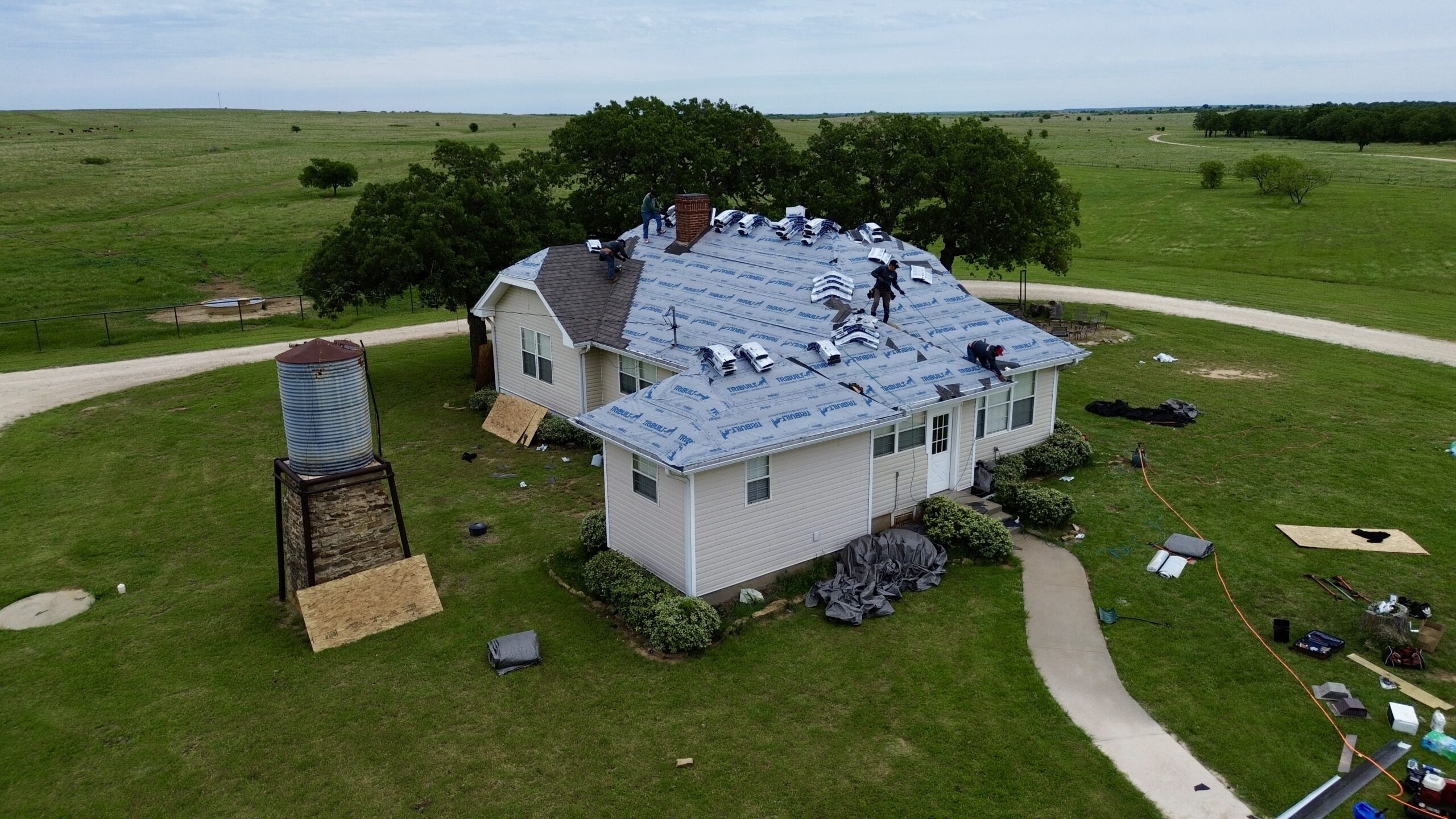
Synthetic underlayment, ice and water barriers where required, flashing, and drip edge are installed next. These protective layers create secondary moisture protection beneath the visible roofing panels while supporting long-term weather resistance.
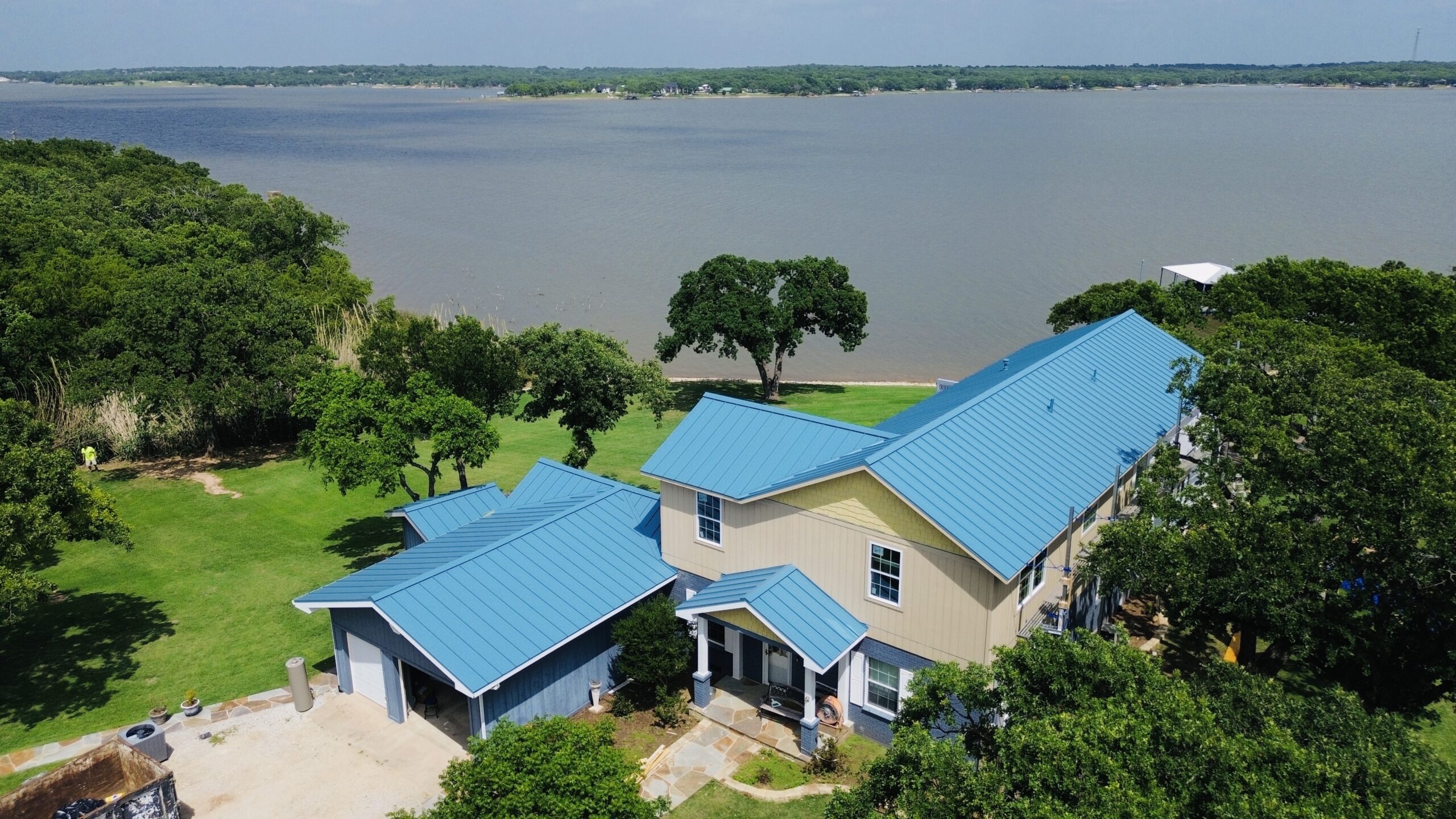
The new metal roofing panels are then installed according to manufacturer specifications. Fastening systems, panel alignment, flashing integration, and ventilation components receive careful attention because these details significantly influence long-term roof performance.
After installation is complete, contractors perform a final inspection before cleaning the property thoroughly. Roofing debris, loose fasteners, packaging materials, and construction waste are removed, leaving the property ready for normal use.
Homeowners typically receive warranty documentation, maintenance recommendations, and project records during the final walkthrough. These materials should be stored safely for future reference.
Preventing Rust on Your New Metal Roof
Although modern metal roofs are designed for excellent corrosion resistance, regular maintenance remains essential for maximizing their service life. Preventive care helps preserve protective coatings while identifying minor concerns before they develop into major repairs.
Routine roof inspections should be scheduled at least twice each year and after significant storms. Visual examinations allow homeowners to identify scratches, coating damage, loose flashing, clogged drainage systems, or other conditions that may encourage future corrosion.
Gutters and valleys should remain clean throughout the year. Leaves, branches, and accumulated debris trap moisture against roofing materials while preventing proper drainage. Keeping these areas clear allows the roof to dry quickly after rainfall.
Tree branches extending across the roof should be trimmed periodically. Constant contact between branches and metal panels may scratch protective coatings or create impact damage during windy weather. Preventive trimming helps eliminate these unnecessary risks.
Roof penetrations also deserve regular attention. Flashing around chimneys, skylights, plumbing vents, and exhaust systems should remain secure while showing no signs of separation or corrosion. Small flashing repairs performed early often prevent much larger roofing problems later.
Walking on the roof should be minimized whenever possible. Although metal roofing is durable, unnecessary foot traffic increases the possibility of scratches or dents that expose the protective finish. If roof access becomes necessary, experienced roofing professionals should perform the work.
Keeping the roof clean also contributes to long-term performance. Dirt, organic growth, industrial pollutants, and salt deposits may gradually affect protective coatings if allowed to remain for extended periods. Gentle cleaning using manufacturer-approved methods helps preserve the roof’s appearance and protective finish.
Maintaining detailed inspection and maintenance records further supports warranty protection while creating a valuable history of responsible roof care.
Frequently Asked Questions About Rusted Metal Roof Replacement
Many property owners have similar questions when corrosion begins affecting their metal roof. Understanding these common concerns helps homeowners approach replacement decisions with greater confidence.
Can every rusted metal roof be repaired?
No. Minor surface rust can often be repaired successfully, but widespread corrosion affecting multiple panels, structural components, or fasteners usually requires complete replacement.
How can I tell whether rust is only cosmetic?
A professional roofing inspection is the most reliable way to determine corrosion severity. Surface discoloration may appear minor while hidden structural damage exists beneath the roofing panels.
Will painting over rust solve the problem?
Painting alone rarely solves active corrosion. If rust has already weakened the metal, cosmetic coatings improve appearance temporarily but do not restore structural strength or eliminate hidden deterioration.
How long does replacing a rusted metal roof usually take?
Most residential replacement projects are completed within several days depending on roof size, weather conditions, structural repairs, and the complexity of the roofing design.
Can a new metal roof rust again?
Modern roofing systems include advanced coatings that greatly improve corrosion resistance. While no metal roof is completely immune to aging, proper maintenance significantly reduces the likelihood of serious rust developing for many decades.
Does replacing a rusted roof improve home value?
Yes. A professionally installed metal roof often increases buyer confidence because it provides long-term durability, improved appearance, and reduced maintenance concerns compared with an aging corroded roofing system.
Conclusion
Rust is one of the clearest indicators that a metal roofing system is aging, but its presence does not automatically mean replacement is necessary. Understanding the difference between minor surface corrosion and widespread structural deterioration allows homeowners to make informed decisions based on the actual condition of the roof rather than appearance alone.
As corrosion progresses, it affects much more than the visible roofing panels. Fasteners, flashing, protective coatings, roof decking, insulation, and structural framing may all experience gradual deterioration as moisture penetrates deeper into the roofing system. Recognizing these hidden risks helps homeowners avoid delaying replacement until extensive structural damage has already occurred.
Replacing a severely rusted metal roof provides numerous long-term benefits, including improved weather protection, enhanced energy efficiency, reduced maintenance, stronger structural reliability, and increased property value. Modern roofing materials and advanced protective coatings offer significantly greater corrosion resistance than many older systems, allowing homeowners to invest with confidence.
Routine maintenance remains the key to protecting that investment. Regular inspections, proper drainage, prompt repairs, clean roof surfaces, and careful attention to flashing and protective coatings help maximize the lifespan of the new roofing system while reducing future corrosion risks.
Ultimately, replacing a severely rusted roof is not simply about improving appearance. It is a proactive investment in the safety, durability, efficiency, and long-term value of the entire property. By working with experienced roofing professionals and choosing high-quality replacement materials, homeowners can enjoy decades of dependable protection while minimizing the likelihood of future corrosion-related problems.