
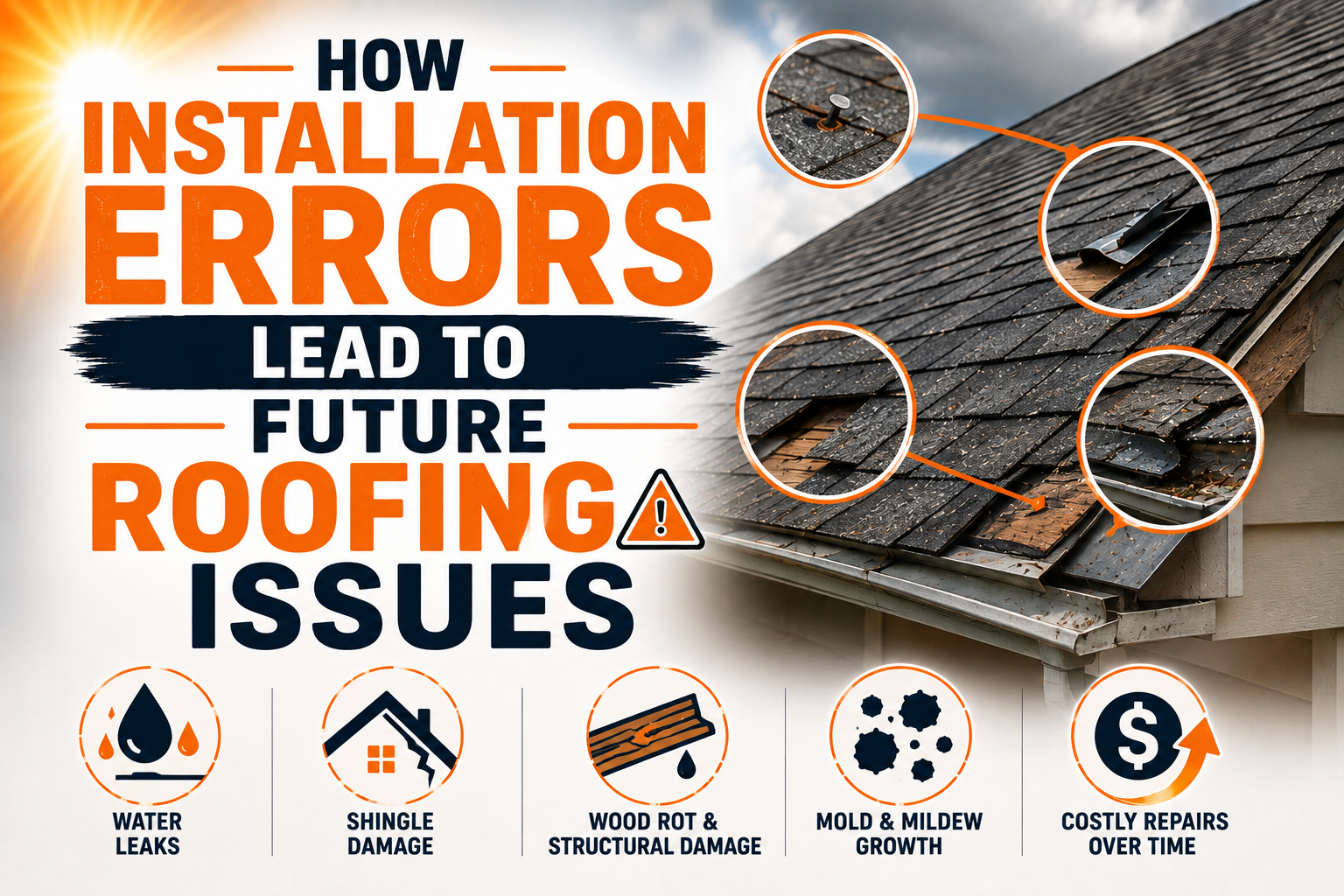
How Installation Errors Lead to Future Roofing Issues
Introduction
A new roof is expected to protect a property for many years, but its long-term performance depends heavily on how it is installed. Roofing materials can be high quality and designed for demanding weather conditions, yet improper installation can create weaknesses that eventually lead to leaks, premature deterioration, structural damage, and repeated repairs. Many roofing problems that appear months or years after installation can be connected to mistakes made during the original project.
Installation errors are not always obvious when the crew leaves the property. Some mistakes remain hidden beneath roofing materials and only become noticeable after repeated exposure to rain, wind, heat, or moisture. A small gap around flashing, an incorrectly placed fastener, or an improperly installed underlayment may initially appear insignificant, but these weaknesses can become serious when the roof is exposed to changing conditions.
The consequences can extend beyond the roof itself. Water that enters through an installation defect may eventually affect insulation, decking, ceilings, walls, electrical components, and other parts of the building. Repairs can therefore become considerably more expensive when a roofing problem is allowed to continue without proper diagnosis.
Understanding common installation errors can help homeowners recognize why contractor selection and workmanship are so important. A professional roofing crew should follow appropriate installation procedures, use compatible materials, inspect its work throughout the project, and address problems before they become concealed beneath later layers.
Poor Roof Deck Preparation
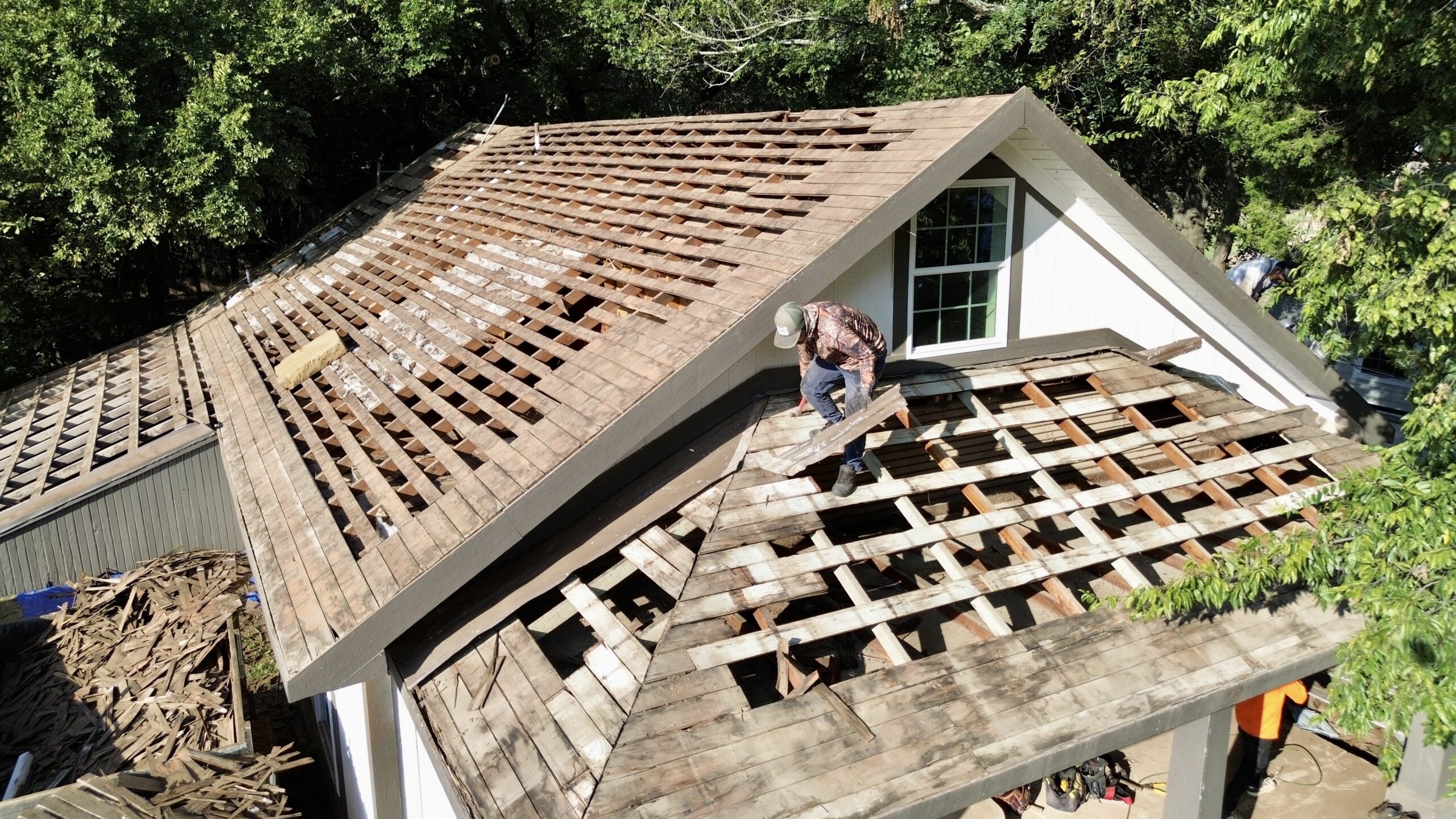
The roof deck provides the foundation for many components of the roofing system, so its condition should be carefully evaluated before new materials are installed. One of the most serious installation errors is covering damaged or deteriorated decking without properly addressing the underlying problem. New shingles, panels, or tiles cannot compensate for a weak surface beneath them.
Roof decking can become damaged by long-term moisture exposure, previous leaks, age, structural movement, or inadequate ventilation. Some deterioration may not be visible until the existing roofing materials have been removed. A professional contractor should inspect the exposed surface and determine whether damaged sections need to be repaired or replaced.
Installing a new roof over deteriorated decking can create several problems. Fasteners may not hold securely when driven into weakened material, which can affect the stability of the roofing system. Uneven decking can also prevent roofing materials from sitting correctly, potentially creating irregular surfaces or vulnerable areas.
Moisture damage is particularly important because it may indicate an existing leak or ventilation issue. If a contractor replaces the visible roof without identifying why moisture entered the structure, the underlying cause may continue after installation. This can lead to repeated moisture problems even though the exterior roofing material is new.
Another preparation error occurs when debris and unsuitable materials are left on the roof deck. Loose fragments, old fasteners, or uneven sections can interfere with underlayment and roofing materials. A clean and stable surface allows subsequent components to be installed more consistently.
Contractors should also pay attention to areas around valleys, roof edges, chimneys, skylights, and other locations where previous water intrusion may have occurred. These areas can require additional inspection because water does not always enter directly beneath the visible location of a roof defect.
Homeowners should understand that hidden deck damage may affect the final project cost. It is difficult to determine the complete condition of concealed decking before the old roof is removed. A professional contractor should explain this possibility in advance and have a clear process for documenting and approving necessary repairs.
Proper deck preparation may not be visible after the project is complete, but it provides an important foundation for the entire roofing system. Skipping this step can cause problems that appear much later and may require sections of the new roof to be removed before the underlying issue can be corrected.
Incorrect Underlayment Installation
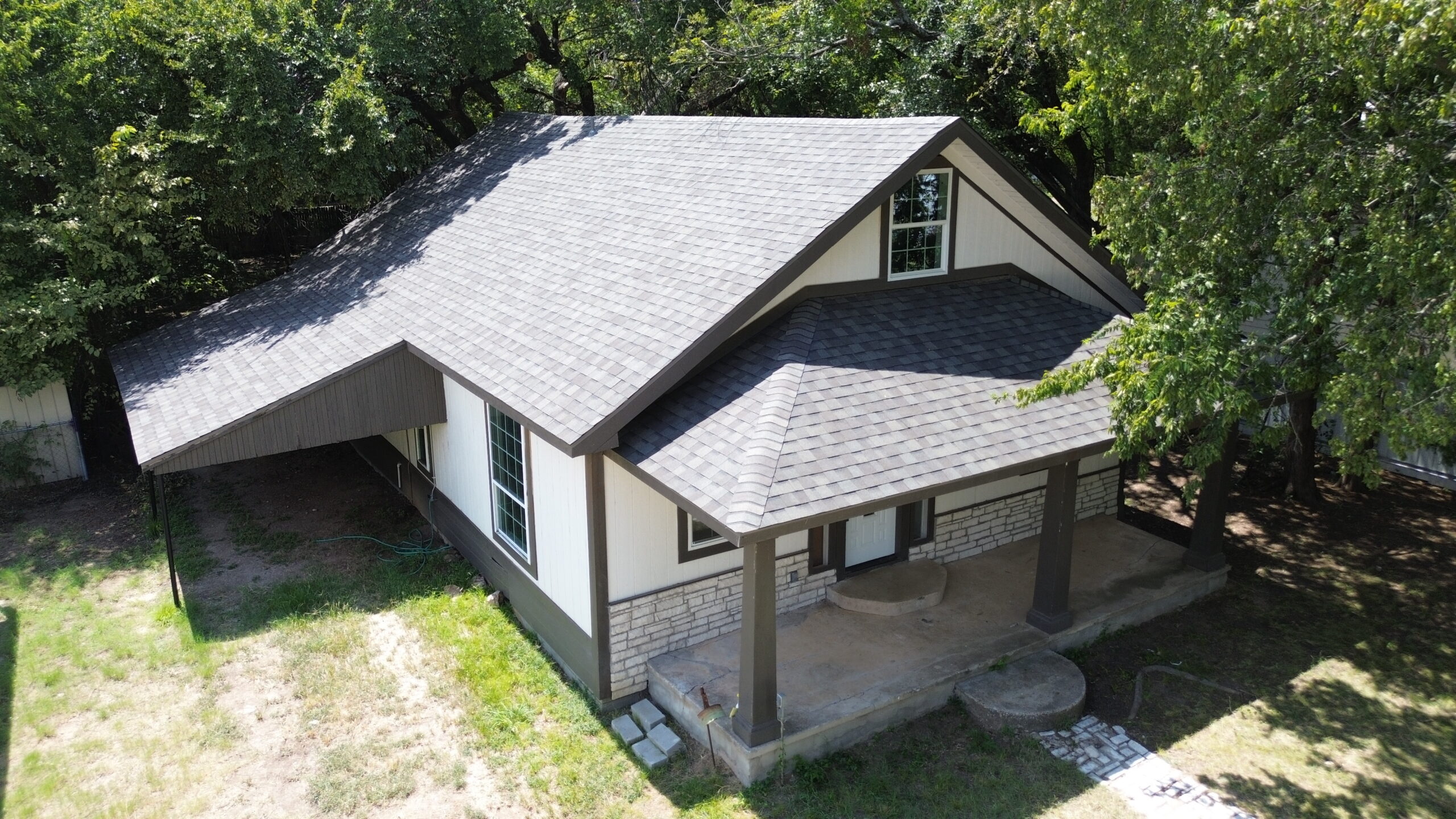
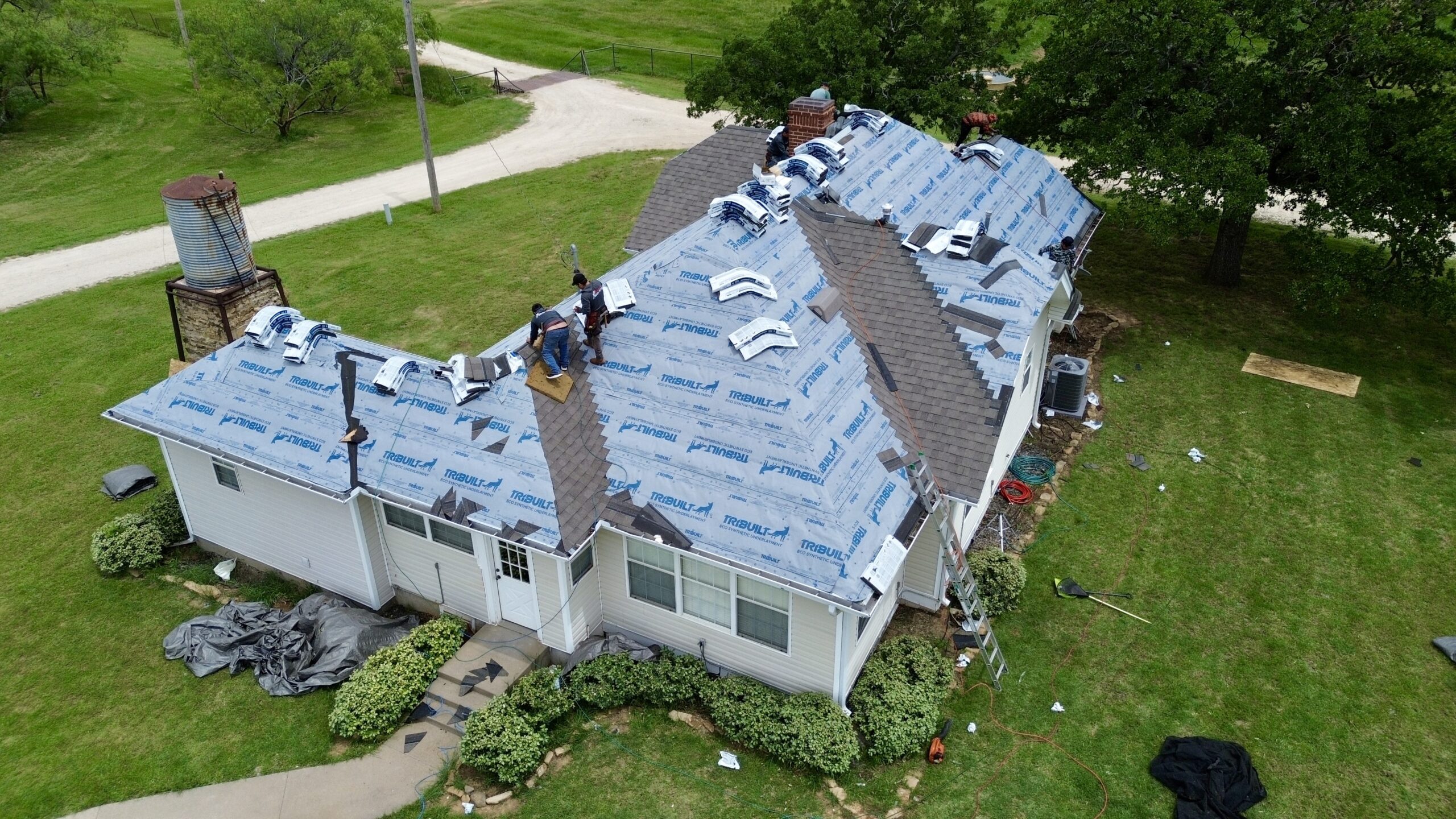
Underlayment is an important protective layer installed beneath many types of roofing materials. It provides additional protection against moisture and helps support the overall water-shedding design of the roof. When underlayment is installed incorrectly, problems can develop even when the visible roofing material appears properly installed.
One common error involves incorrect overlaps. Underlayment sections need to be positioned so that water moves in the intended direction rather than finding pathways beneath the protective layer. Poorly arranged overlaps can allow moisture to reach the roof deck.
Fastening is another important consideration. The underlayment should be secured according to the product’s requirements and the roofing system being installed. Incorrect fastening can leave sections loose, damaged, or improperly positioned before the primary roofing material is installed.
Underlayment can also be damaged during installation. Workers move tools, materials, and equipment across the roof, and careless handling can create tears or punctures. If damaged sections are not identified and repaired before they are covered, the defect may remain hidden.
Improper installation around roof penetrations can create additional problems. Areas around chimneys, skylights, vents, and pipes often require careful integration between underlayment, flashing, and the primary roofing material. Gaps or poorly detailed transitions can create potential paths for water.
The wrong type of underlayment can also create compatibility concerns. Roofing systems have different requirements, and contractors should select products that are appropriate for the specific material and roof design. Using an unsuitable product simply because it is inexpensive or readily available may affect performance.
Another problem can occur when underlayment is installed without considering the roof’s overall drainage pattern. Water needs to move toward appropriate drainage areas, and the protective layers should support that movement. Installation that ignores water flow can leave vulnerable areas exposed to prolonged moisture.
Because underlayment becomes hidden after the roofing material is installed, homeowners may never know whether it was installed correctly. This makes the contractor’s experience and quality control especially important. Photographic documentation of concealed stages can also provide useful evidence of the work performed.
If an underlayment problem develops, water may gradually reach the decking beneath the roofing material. The resulting damage may not be immediately visible inside the building, allowing moisture to affect structural materials before the homeowner recognizes the problem.
Proper underlayment installation is therefore an essential part of preventing future roofing issues. It should be treated as a critical component of the roofing system rather than an optional layer that can be installed quickly without careful attention.
Flashing Installation Mistakes
Flashing is designed to protect vulnerable transitions where roofing materials meet walls, chimneys, skylights, vents, valleys, and other structures. These locations are among the most common areas for water intrusion, making proper flashing installation essential for long-term roof performance.
One common flashing error is failing to replace damaged or unsuitable existing components. During a roof replacement, contractors may be tempted to reuse old flashing to save time or reduce costs. If the existing material is deteriorated, improperly designed, or incompatible with the new roofing system, reusing it can create future problems.
Chimney flashing requires particularly careful installation. The roof needs to transition around the chimney while directing water away from the structure. Poorly positioned flashing, inadequate overlaps, or improper sealing can allow water to enter around the chimney and eventually affect the surrounding roof deck.
Skylights create similar challenges because they combine a roof penetration with a separate structure that needs to remain weather-resistant. Improper flashing around a skylight can result in leaks that may be difficult to locate because water can travel beneath surrounding roofing materials before appearing inside.
Vent pipes and other penetrations also require appropriate flashing details. A small gap or improperly fitted flashing component can become a pathway for water during heavy rainfall. Repeated exposure can gradually damage the materials beneath the opening.
Roof valleys are another critical area. Valleys collect water from multiple roof slopes, so they must be installed with appropriate materials and careful detailing. Incorrect valley installation can allow water to move beneath roofing materials rather than toward the intended drainage path.
Flashing around walls and roof edges can also be affected by installation errors. The roofing system needs to integrate properly with exterior surfaces so that water cannot enter behind the flashing or beneath adjacent materials.
Sealants are sometimes used as part of flashing systems, but relying heavily on sealant to compensate for poor flashing design is not a reliable installation method. Sealants can deteriorate from sunlight, temperature changes, and weather exposure, so they should be used appropriately as part of a properly designed system.
Flashing problems may not produce immediate leaks. Water can enter slowly and travel through hidden areas before becoming visible inside the property. By the time a ceiling stain appears, the underlying decking, insulation, or other materials may already have been affected.
Professional flashing installation is therefore one of the most important ways to reduce future leak-related repairs. Contractors should carefully inspect vulnerable transitions, use suitable flashing components, and integrate them properly with the rest of the roofing system.
Improper Roofing Material Installation
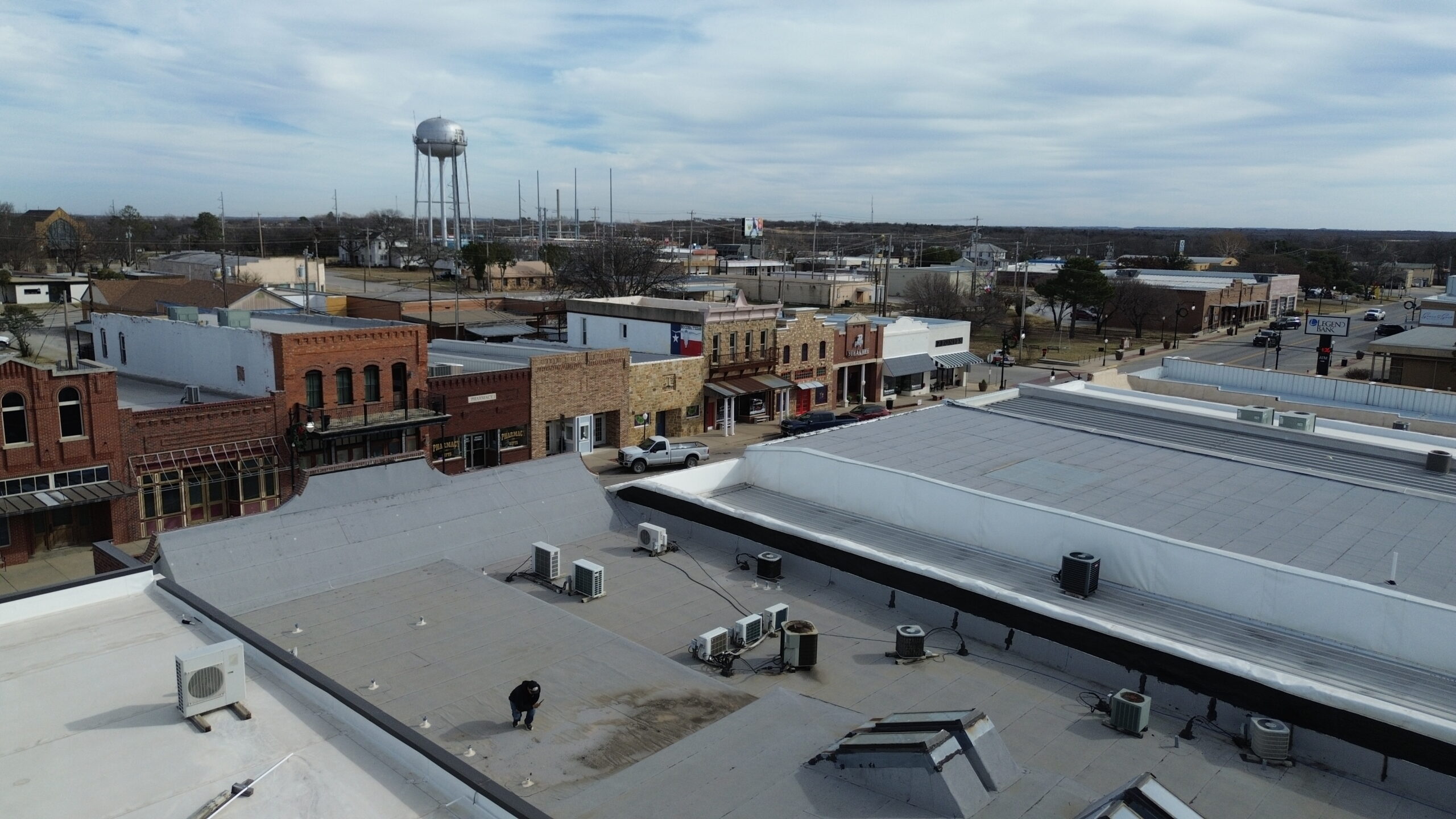
Even when a contractor uses high-quality roofing materials, incorrect installation can reduce their expected performance. Roofing products are designed with specific installation requirements, and failing to follow those requirements can create weaknesses that become more noticeable over time.
Incorrect fastening is one of the most common installation problems. Roofing materials need an appropriate number of fasteners positioned in the correct locations. If fasteners are missing, misplaced, or installed incorrectly, materials may become loose or vulnerable to wind.
Overdriving or underdriving fasteners can also create problems depending on the roofing system. A fastener installed too deeply may damage the material, while one that is not secured properly may fail to hold the component as intended. Professional installers should understand the appropriate fastening method for the specific product.
Alignment is another important factor. Shingles, panels, tiles, and other materials need to be installed according to the appropriate spacing and positioning requirements. Uneven alignment may affect appearance, but it can also interfere with overlaps and water management.
Improper cutting can create additional vulnerabilities. Roofing materials often need to be cut around vents, valleys, walls, and other features. Cuts should be made accurately so that the surrounding protective components can perform correctly.
Manufacturers provide installation instructions for a reason. These specifications may include requirements for fastening, exposure, overlap, temperature conditions, accessories, ventilation, and other factors. Ignoring them can increase the likelihood of premature failure and may also affect applicable warranty coverage.
Using incompatible accessories can create similar issues. Roofing systems are designed to operate as a combination of materials, and components should be selected to work together. Substituting unsuitable products can reduce the effectiveness of the complete system.
Material handling also matters before installation. Roofing products that are dropped, bent, cracked, or stored incorrectly may be damaged before they are installed. Workers should inspect materials and avoid incorporating visibly defective products into the finished roof.
Installation errors may be difficult for homeowners to identify because many technical details are not visible from the ground. This is why selecting an experienced contractor and asking about quality control procedures can be more valuable than simply choosing a contractor based on a low estimate.
Correct installation allows the roofing material to perform according to its intended design. Poor installation, by contrast, can shorten the effective service life of the roof and create problems that require repeated maintenance or premature replacement.
Inadequate Roof Ventilation
Roof ventilation is another area where installation errors can contribute to future problems. A roofing system needs appropriate management of heat and moisture in the attic, and ventilation components should be planned as part of the complete roofing project rather than treated as an afterthought.
A properly designed ventilation system generally depends on suitable intake and exhaust pathways. If vents are blocked, incorrectly positioned, or poorly balanced, airflow may not function as intended. This can contribute to excessive attic heat or moisture.
Moisture buildup can create several long-term concerns. Persistent condensation may affect insulation, decking, fasteners, and other materials within the roof structure. In some situations, moisture problems may be mistaken for roofing leaks when the actual issue involves inadequate attic ventilation.
Improper ventilation can also affect roofing materials. Excessive heat and moisture may contribute to premature deterioration depending on the roofing system and building conditions. Installing a new roof without addressing an existing ventilation problem can therefore leave the property vulnerable to continued issues.
Contractors should inspect existing ventilation before installation and determine whether the current system is appropriate. If improvements are necessary, they should be planned alongside the new roofing system.
Adding vents without considering the complete airflow design can also be an error. More vents do not automatically mean better ventilation, particularly if intake and exhaust pathways are not balanced. Changes should be based on the structure and ventilation requirements rather than assumptions.
Ventilation openings must also remain clear during installation. Roofing materials, insulation, debris, or other components should not block intended airflow paths.
When ventilation is properly planned and installed, it can help manage attic conditions and support the long-term performance of the roofing system. When it is ignored or installed incorrectly, homeowners may face moisture, heat, deterioration, and repair concerns that could have been reduced through better planning.
Installation errors can therefore create problems long before a roof reaches the end of its expected service life. Poor deck preparation, incorrect underlayment, flashing mistakes, improper material installation, and inadequate ventilation can all introduce weaknesses that become more serious with exposure to weather.
Drainage and Water Management Errors
Proper water drainage is one of the most important responsibilities of a roofing system. Rainwater should move across the roof surface and toward designated drainage points without becoming trapped beneath roofing materials or accumulating in vulnerable areas. Installation errors involving slopes, valleys, roof edges, gutters, or downspouts can interfere with this process and create problems that may eventually require costly repairs.
Roof valleys deserve particular attention because they collect water from two or more roof sections. If valley materials are incorrectly positioned, improperly overlapped, or poorly integrated with the surrounding roofing system, water can move beneath the protective layers. This can lead to moisture damage that may remain hidden until it affects the interior of the property.
Roof edges can also create drainage problems when they are not properly detailed. Water naturally moves toward the perimeter of many roofs, so edge components need to guide that water toward the intended drainage system. Poorly installed edge materials can allow water to reach fascia, soffits, walls, or other areas that are not designed for continuous exposure.
Gutter integration is another important consideration. The roof should direct water into the gutters rather than allowing it to run behind or around them. Incorrect positioning, inadequate slope, or poorly coordinated roof-edge details can cause repeated overflow during heavy rainfall.
Standing water can be another warning sign of installation or drainage problems. Although the seriousness of ponding depends on the roof design and material, persistent water accumulation should be evaluated by a professional. Installing new roofing material over an existing drainage problem may allow the same issue to continue.
Improper drainage can also contribute to accelerated material deterioration. Roofing components that remain wet for extended periods may experience more stress than those that dry normally between weather events. Water can also reach underlying materials if protective layers are damaged or improperly installed.
Contractors should consider drainage during the planning stage rather than waiting until the roof is complete. Roof slope, valleys, flashing, edges, gutters, and downspouts all need to work together as part of a complete water management system.
When these elements are installed correctly, water has a predictable path away from the building. When installation errors interrupt that path, even a relatively new roof can begin developing moisture-related issues.
Incorrect Fastening and Attachment
Fastening mistakes can significantly affect the stability and weather resistance of a roofing system. Roofing materials need to remain securely attached during normal conditions and periods of strong wind, so fasteners must be installed in the correct quantity, position, depth, and pattern.
Using too few fasteners is one obvious problem. If a roofing component does not receive the required number of fasteners, its resistance to movement may be reduced. Strong winds can then lift or displace materials that might otherwise have remained secure.
Fasteners placed in the wrong locations can create similar concerns. Roofing products often have designated fastening areas designed to provide proper attachment while avoiding vulnerable portions of the material. Installing fasteners outside those areas can reduce holding strength or create unnecessary openings.
Overdriven fasteners can also cause problems with certain roofing systems. When a fastener is driven too deeply, it may damage the surrounding roofing material or reduce the effectiveness of the attachment. Underdriven fasteners may fail to secure materials adequately or may interfere with proper placement of subsequent components.
The type of fastener matters as well. Roofing materials should be installed using fasteners appropriate for the product, substrate, and environmental conditions. Using unsuitable fasteners can contribute to corrosion, weak attachment, or premature failure.
Fastening errors may be particularly difficult to identify after installation because many fasteners become concealed beneath overlapping materials. This is why trained workers and proper supervision are important during the installation process.
Manufacturer instructions often specify the required fastening pattern and conditions. Contractors should follow these requirements rather than using a generalized approach for every roofing material.
Wind-related damage can sometimes reveal fastening problems. If shingles, panels, or other components become displaced during relatively normal wind conditions, the installation should be inspected to determine whether attachment contributed to the failure.
Proper fastening does not guarantee that a roof will never experience storm damage. Extreme weather can exceed the design limits of roofing materials. However, following the correct attachment requirements reduces the likelihood of failures caused by preventable installation mistakes.
Improper Installation Around Roof Penetrations
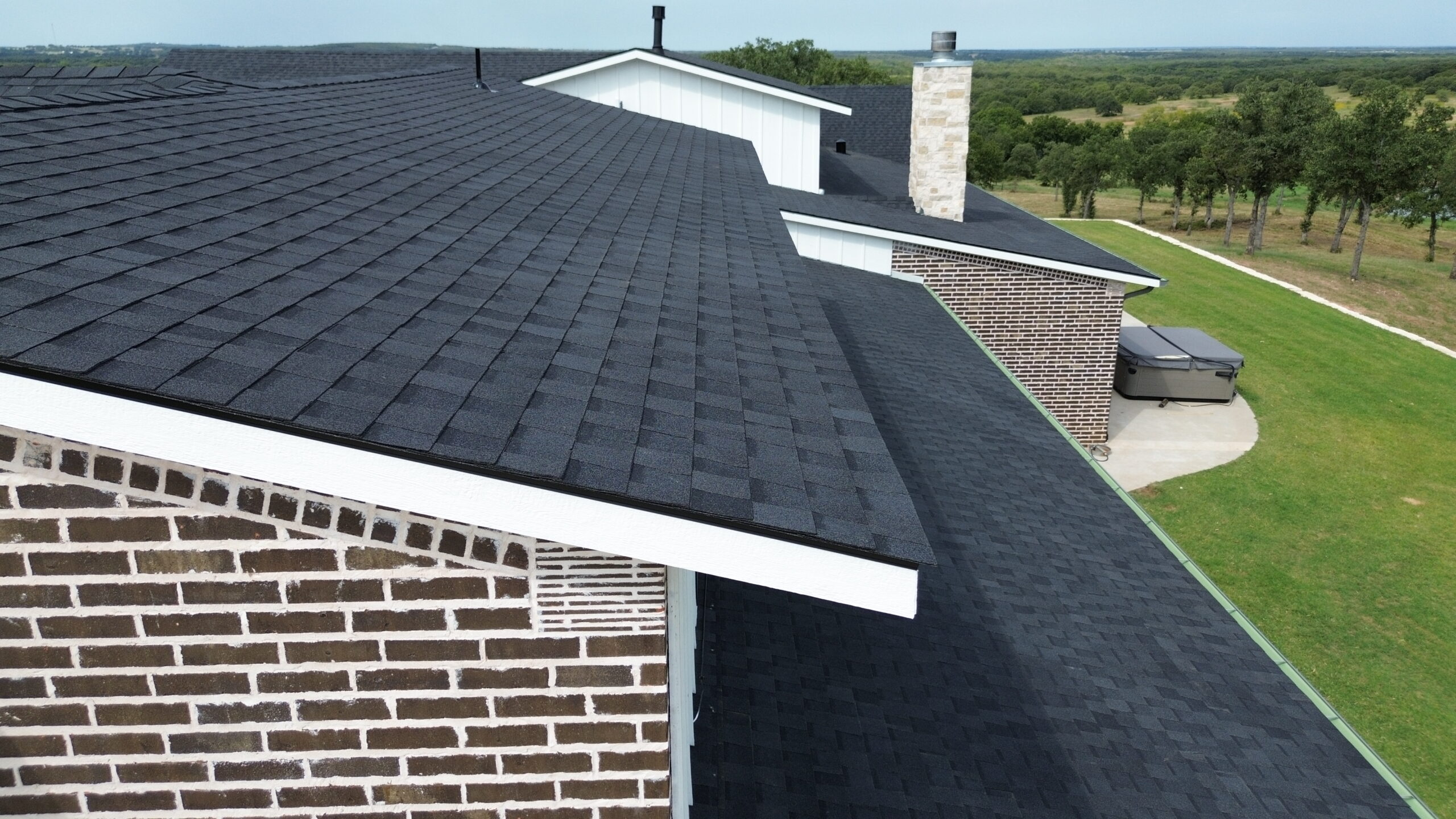
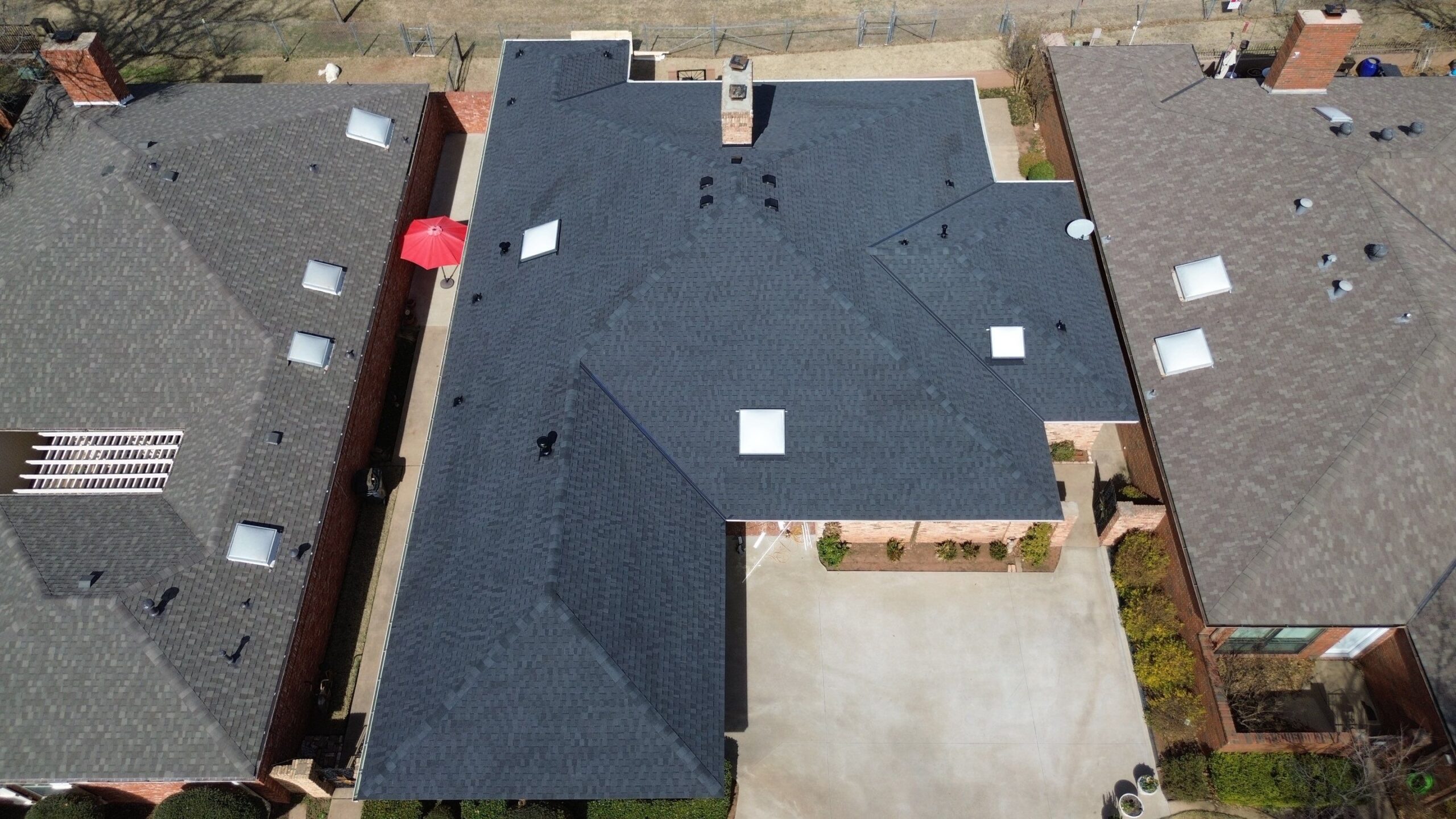
Roof penetrations are necessary for many building features, but every penetration creates a potential location where water could enter if the surrounding roofing system is not installed correctly. Pipes, vents, chimneys, skylights, antennas, and other equipment all require appropriate flashing and waterproofing details.
Plumbing vent pipes are common roof penetrations that require specialized flashing components. If the flashing does not fit properly, is damaged during installation, or is incorrectly integrated with the surrounding roofing material, water may enter around the pipe.
Chimneys require even more detailed attention because they create a large transition between the roof and a vertical masonry or other structure. Proper flashing needs to direct water around the chimney and back toward the roof’s drainage system.
Skylights can also become vulnerable when flashing is improperly installed. Water may enter around the frame and travel through surrounding roofing layers before appearing inside the property. Because the visible leak may occur some distance from the actual entry point, diagnosing the problem can become difficult.
Roof-mounted antennas, satellite equipment, and other installations can create additional risks. New penetrations should be planned carefully, and existing roofing materials should not be damaged unnecessarily when equipment is installed or maintained.
One common mistake is relying too heavily on sealant to protect penetrations. Sealants can be useful components of some roofing details, but they should not be used to compensate for improperly designed or installed flashing. Sealants can deteriorate with exposure to sunlight, temperature changes, and moisture.
Another concern is the use of incorrect flashing materials. Components need to be compatible with the roofing system and surrounding building materials. Inappropriate combinations can contribute to corrosion or deterioration over time.
Proper sequencing is also important. Flashing, underlayment, and roofing materials need to overlap and integrate in the correct order so water is directed away from vulnerable areas. Installing components in the wrong sequence can create hidden pathways for moisture.
Because roof penetrations are common sources of leaks, contractors should inspect these areas carefully during installation and again during the final quality review. Attention to these details can prevent problems that might otherwise appear long after the crew has left.
Failure to Follow Manufacturer Requirements
Roofing manufacturers provide installation requirements based on how their products are designed to perform. Ignoring these requirements can create problems even when the contractor has general roofing experience. Different materials may require different fastening methods, overlaps, underlayment, ventilation, spacing, and accessory components.
One common mistake is assuming that all roofing products can be installed using the same techniques. A contractor experienced with one type of material may still need specific training or instructions when installing another system.
Fastening requirements are often product-specific. Manufacturers may specify the number and placement of fasteners needed for particular conditions. Failing to follow these instructions can affect material stability and may increase the risk of wind-related problems.
Underlayment and flashing requirements can also vary. Some products may require specific protective layers or installation methods to maintain their intended performance. Substituting unsuitable components may create compatibility problems or affect applicable warranty protection.
Ventilation requirements can also be part of the manufacturer’s specifications. Roofing systems may have recommendations regarding attic ventilation, ridge components, intake areas, or other features. These details should be considered during project planning rather than ignored because they are not visible after completion.
Installation conditions can matter as well. Temperature, moisture, wind, and other environmental factors may affect how certain roofing materials should be handled or installed. Professional contractors should understand these requirements and adjust their workflow when conditions are unsuitable.
Failure to follow manufacturer requirements can also complicate warranty claims. Depending on the product and warranty terms, improper installation may limit or exclude certain protections. Homeowners should therefore ask contractors whether the proposed installation follows the manufacturer’s specifications.
Using compatible accessories is another important consideration. Roofing products are generally designed to work with specific supporting components. Choosing materials simply because they are cheaper or easier to obtain may compromise the complete system.
A professional contractor should be able to explain the basic installation requirements for the selected product. Homeowners do not need to memorize technical specifications, but they should expect the contractor to demonstrate familiarity with them.
Following manufacturer requirements does not eliminate every future roofing problem, but it helps ensure that the material is installed according to the conditions under which it was designed to perform.
Poor Worksite Practices and Property Damage
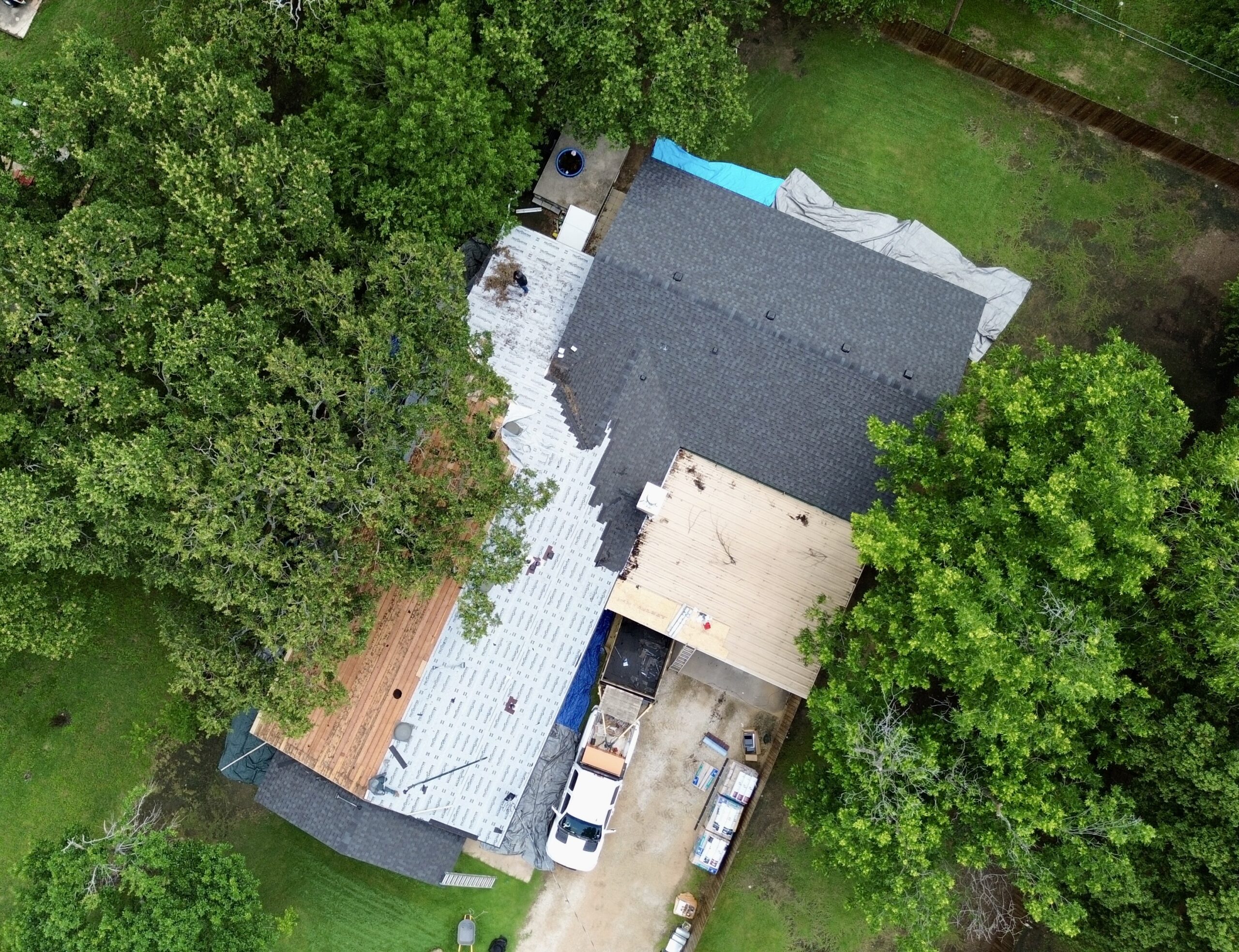
Installation errors are not limited to the roofing surface itself. Poor worksite practices can damage roofing materials, exterior components, landscaping, and other parts of the property. These problems may occur while workers are removing old roofing, moving materials, or completing installation.
Material handling is particularly important. Roofing products can be damaged if they are dropped, dragged across unsuitable surfaces, stacked incorrectly, or exposed to inappropriate conditions. Damaged materials should be identified before installation rather than incorporated into the completed roof.
Workers also need to protect installed sections while continuing work elsewhere. Tools, equipment, and materials can damage finished roofing surfaces when they are handled carelessly. Professional crews should organize their workflow to minimize unnecessary contact with completed areas.
Debris management is another important consideration. Old shingles, nails, broken materials, and packaging can accumulate quickly during roof replacement. If debris is not controlled, it can damage landscaping, block drainage, or create safety hazards around the property.
Landscaping and exterior surfaces may also be affected during installation. Professional crews can use suitable coverings and protection around vulnerable areas to reduce the risk of damage from falling materials and construction activity.
Weather can make worksite management even more important. Wind can move loose materials and debris, potentially damaging the property or creating hazards. Contractors should secure materials appropriately when leaving the site or when conditions change unexpectedly.
Improper storage of roofing materials can also create problems. Materials should be stored according to their requirements and positioned in a way that does not damage the building or interfere with safe movement around the property.
A poorly organized worksite can indirectly contribute to roofing errors as well. Workers who cannot easily access tools or materials may rush, make unnecessary movements, or lose track of installation stages. Good organization supports both safety and workmanship.
Property protection therefore forms part of professional roofing installation. A contractor that manages materials carefully, protects installed components, controls debris, and maintains an organized worksite is more likely to deliver a reliable overall project.
Lack of Quality Control During Installation
Even experienced roofing workers can make mistakes, which is why quality control is essential throughout installation. Without regular inspections, small errors can remain hidden beneath subsequent layers and eventually become difficult or expensive to correct.
Quality control should begin with the roof deck. Before the underlayment is installed, the contractor should verify that damaged areas have been addressed and that the surface is ready. This is an important checkpoint because problems become harder to correct once the deck is covered.
The next stages should also be inspected. Underlayment, flashing, ventilation components, and other protective details should be checked before they become concealed. A supervisor can confirm that these components have been installed according to the project requirements.
During installation of the primary roofing material, workers should monitor alignment, fastening, spacing, cuts, and overlaps. Supervisors can review completed sections and correct problems before the crew moves to another area.
Lack of supervision can make these problems more likely. If workers are left without appropriate oversight, inconsistent installation practices may occur across different parts of the roof. A designated foreman or project manager can help maintain consistency.
Final inspection alone is not enough. While a final review is important, some errors may be difficult to identify after multiple layers have been installed. Stage-by-stage quality control provides more opportunities to catch problems when they are still accessible.
Documentation can support this process. Photographs of concealed components, repaired decking, flashing, and other important stages can create a record of the work. These records may also help with future maintenance or warranty questions.
A professional contractor should be prepared to correct identified mistakes rather than hiding or ignoring them. Quality control is about maintaining standards throughout the project and ensuring that the completed roof meets the agreed requirements.
When quality control is missing, installation errors can remain unnoticed until the roof experiences significant weather exposure. By then, the homeowner may face leaks, loose materials, structural moisture damage, or other problems that could have been prevented during installation.
Understanding these errors shows why roofing problems are not always simply a result of age or severe weather. Drainage mistakes, incorrect fastening, poor penetration detailing, ignored manufacturer requirements, careless worksite practices, and inadequate quality control can all create weaknesses that appear later. Recognizing these causes also makes it easier for homeowners to identify warning signs and choose contractors who prioritize long-term workmanship.
Common Future Problems Caused by Installation Errors
Installation errors can remain hidden for months or even years before they produce noticeable roofing problems. A newly installed roof may look complete from the ground while weaknesses beneath the surface gradually become affected by rain, wind, temperature changes, and moisture. Understanding the common problems caused by poor installation can help homeowners respond to warning signs before the damage becomes extensive.
Roof leaks are one of the most common consequences of installation mistakes. Improper flashing, damaged underlayment, incorrectly installed valleys, poorly sealed penetrations, and gaps between roofing components can allow water to enter the system. Once moisture gets beneath the visible roofing material, it may travel through the roof structure before becoming visible inside the property.
Wind damage can also be connected to installation quality. Roofing materials depend on correct fastening and positioning to remain secure during normal wind exposure. If fasteners are missing, incorrectly positioned, or improperly installed, shingles, panels, or other components may become displaced more easily during storms.
Premature deterioration is another potential consequence. Roofing materials installed over damaged decking, exposed to persistent moisture, or combined with incompatible components may not perform for their expected service life. Instead of gradually aging under normal conditions, the system may begin showing signs of failure earlier than anticipated.
Interior water damage can become particularly expensive when a roofing installation problem is not identified quickly. Water entering through a small defect may eventually affect insulation, ceilings, walls, electrical components, or structural materials. By the time visible damage appears, the original roofing problem may have already affected several areas of the property.
Repeated repairs can also indicate that the underlying installation problem has not been corrected. Replacing individual shingles or applying temporary sealants may provide short-term relief, but recurring leaks or movement suggest that the actual cause needs professional investigation.
These problems demonstrate why installation quality matters beyond the first few weeks after a roofing project. A roof should not only look finished when the contractor leaves; its components need to work together properly so that the system can continue protecting the property under normal environmental conditions.
How Early Warning Signs Reveal Installation Problems
Recognizing early warning signs can help homeowners identify potential installation problems before they develop into major repairs. Some warning signs are visible from the ground, while others appear inside the property or become noticeable after severe weather.
Missing, lifted, or displaced roofing materials can indicate fastening or installation concerns. A single damaged component may result from weather or impact, but repeated movement in a relatively new roof should be evaluated to determine whether installation contributed to the problem.
Water stains on ceilings or walls are another important warning sign. A stain does not always indicate that the roof itself is defective because plumbing, condensation, and other building issues can also cause moisture. However, a professional inspection can help determine whether water is entering through the roofing system.
Attic moisture can provide another clue. Damp insulation, condensation, staining, unusual odors, or visible moisture around roof decking may indicate a ventilation problem or water intrusion. Because several conditions can produce similar symptoms, homeowners should avoid assuming the cause without professional evaluation.
Uneven roofing materials may also deserve attention. Visible irregularities can sometimes result from the roof’s design or material characteristics, but unusual buckling, sagging, or inconsistent installation may indicate problems beneath or within the roofing system.
Flashing deterioration or movement around chimneys, skylights, vents, and walls can also signal potential installation concerns. These areas are particularly important because water can enter through small openings and travel beneath surrounding materials.
Homeowners should also pay attention to problems that appear shortly after installation. A new roof should not be expected to remain completely maintenance-free, but recurring leaks, displaced materials, or significant defects soon after installation warrant communication with the contractor.
Storms can reveal weaknesses that were not previously visible. If roofing materials move during relatively ordinary weather, a professional should evaluate whether the problem is related to storm intensity, material condition, installation, or another factor.
The key is to respond early rather than waiting for visible interior damage. Early evaluation can sometimes limit the repair to a small section instead of allowing moisture to affect larger areas.
Importance of Professional Inspection and Repair
When a homeowner suspects an installation problem, professional inspection is usually the best way to determine what is actually happening. Roofing issues can be difficult to diagnose from the ground, and visible symptoms do not always identify the original source of the problem.
A qualified roofing professional can examine the roofing surface, flashing, penetrations, drainage areas, ventilation components, and other relevant parts of the system. Depending on the situation, the contractor may also inspect accessible attic areas to look for signs of moisture or structural concerns.
Finding the root cause is especially important when a problem has already been repaired more than once. If a contractor repeatedly replaces visible materials without identifying why they are failing, the same issue may continue to return.
For example, a recurring leak near a chimney may not be solved simply by replacing a few shingles. The actual problem could involve flashing, underlayment, water movement, or the chimney-to-roof transition. A complete inspection helps identify the source before a repair is recommended.
Professional repair may also be necessary when installation errors are concealed beneath roofing materials. Correcting the problem may require removing a section of the finished roof so the underlying components can be accessed. Although this can be more disruptive than a surface repair, addressing the actual defect can prevent repeated damage.
Homeowners should keep documentation of inspections and repairs. Photographs, contractor reports, invoices, and descriptions of the work can help establish a history of the problem and may be useful when discussing workmanship warranty coverage.
If the roof is still relatively new, homeowners should also contact the original contractor when appropriate. The contractor may need an opportunity to inspect the issue and determine whether it is related to workmanship, materials, weather, or another cause.
Professional inspection does not mean that every roofing concern requires major work. Sometimes the problem may be minor or unrelated to installation. The benefit of a professional assessment is that it provides a more reliable basis for deciding what action, if any, is necessary.
Choosing a Contractor to Avoid Installation Errors
The best way to reduce installation-related roofing problems is to choose a qualified contractor before the project begins. Homeowners should evaluate potential contractors based on experience, credentials, references, installation methods, communication, and quality control rather than focusing only on the lowest estimate.
Relevant experience is particularly important. Contractors should have experience installing the specific roofing material being proposed and handling similar roof designs. A company that regularly works with one type of roofing system may not automatically have the same level of expertise with another.
Credentials should also be verified. Homeowners should ask about applicable licensing, insurance, certifications, and manufacturer qualifications. These documents do not guarantee perfect workmanship, but they can help establish whether the contractor meets basic professional requirements.
References and previous projects can provide additional insight. Homeowners can ask previous customers about installation quality, communication, cleanup, schedule management, and how the contractor handled unexpected problems.
The written estimate should explain the proposed installation in reasonable detail. Important components such as roof deck preparation, underlayment, flashing, ventilation, roofing materials, disposal, and cleanup should be clearly addressed.
Homeowners should also ask how quality control is handled. Questions about supervision, stage-by-stage inspections, manufacturer requirements, and final review can reveal whether the contractor has a structured process for preventing errors.
Communication is another important factor. A reliable contractor should explain unexpected conditions and obtain appropriate approval when changes affect the project. Clear communication can prevent misunderstandings and give homeowners greater confidence that problems will be handled responsibly.
A very low estimate should be reviewed carefully. If the price is significantly lower than other proposals, homeowners should determine whether materials, preparation, labor, flashing, ventilation, cleanup, or other important services have been excluded.
The contractor’s approach to installation is ultimately more important than a polished sales presentation. A company that demonstrates careful planning, proper documentation, skilled workmanship, and consistent quality control is better positioned to prevent installation errors.
Protecting a New Roof Through Proper Maintenance
Even a properly installed roof requires ongoing care. Maintenance cannot correct an installation error that already exists, but it can help homeowners identify problems early and prevent unrelated damage from shortening the roof’s service life.
Routine inspections can reveal missing or damaged materials, flashing concerns, debris accumulation, and other changes. Homeowners should perform safe ground-level observations and arrange professional inspections when the roof is difficult to access or when potential problems are identified.
Gutters and downspouts should remain clear so that water can move away from the roof efficiently. Blocked drainage can place unnecessary stress on roof edges and increase the risk of water reaching areas where it does not belong.
Nearby vegetation should also be managed. Overhanging branches can scrape roofing materials or fall during storms, while leaves and other debris can accumulate in valleys and gutters. Regular trimming can reduce these risks.
Homeowners should avoid unnecessary foot traffic on the roof. Walking across roofing materials can cause damage, disturb flashing, or create safety risks. Roof access should generally be limited to necessary work performed by people who understand how to protect the system.
Storm inspections can also help identify damage early. Strong winds, hail, heavy rain, and falling branches can affect even a well-installed roof. If unusual conditions appear after a storm, professional evaluation can determine whether repairs are necessary.
Minor concerns should not be ignored simply because the roof is new. If a homeowner notices repeated moisture, displaced materials, damaged flashing, or unusual attic conditions, the issue should be investigated promptly.
Maintenance records can also be useful. Keeping installation documents, warranties, inspection reports, and repair information together creates a useful history of the roofing system and can make future professional evaluations easier.
Conclusion
Installation errors can have long-lasting consequences for a roofing system. Problems involving roof deck preparation, underlayment, flashing, fastening, ventilation, drainage, penetrations, material handling, and quality control may not be visible immediately, but they can gradually create leaks, deterioration, wind damage, and expensive repairs.
The most effective way to prevent these issues is to focus on quality before the roof is completed. A thorough inspection, suitable materials, proper preparation, manufacturer-compliant installation methods, careful flashing, correct fastening, and effective ventilation all contribute to a stronger roofing system.
Quality control is equally important because even skilled workers can make mistakes. Stage-by-stage inspections allow contractors to identify and correct problems before they become hidden beneath additional roofing layers. A detailed final inspection provides another opportunity to confirm that the completed system meets the project requirements.
Homeowners also have an important role after installation. Routine inspections, clear drainage, vegetation management, careful roof use, and prompt attention to warning signs can help protect the investment and identify potential problems early.
When an issue does appear, homeowners should focus on finding the root cause rather than relying on repeated temporary repairs. Professional inspection can determine whether a problem is related to installation, materials, weather, maintenance, or another part of the building.
Choosing the right contractor from the beginning remains one of the strongest forms of prevention. Experience, credentials, references, clear estimates, proper installation methods, quality control, and communication all provide valuable evidence of a contractor’s ability to complete the work responsibly.
A roofing system is only as reliable as the combination of its materials, installation, and ongoing care. By recognizing how installation errors lead to future roofing issues and choosing professionals who prioritize proper workmanship, homeowners can reduce preventable problems and give their new roof a stronger foundation for long-term protection.