
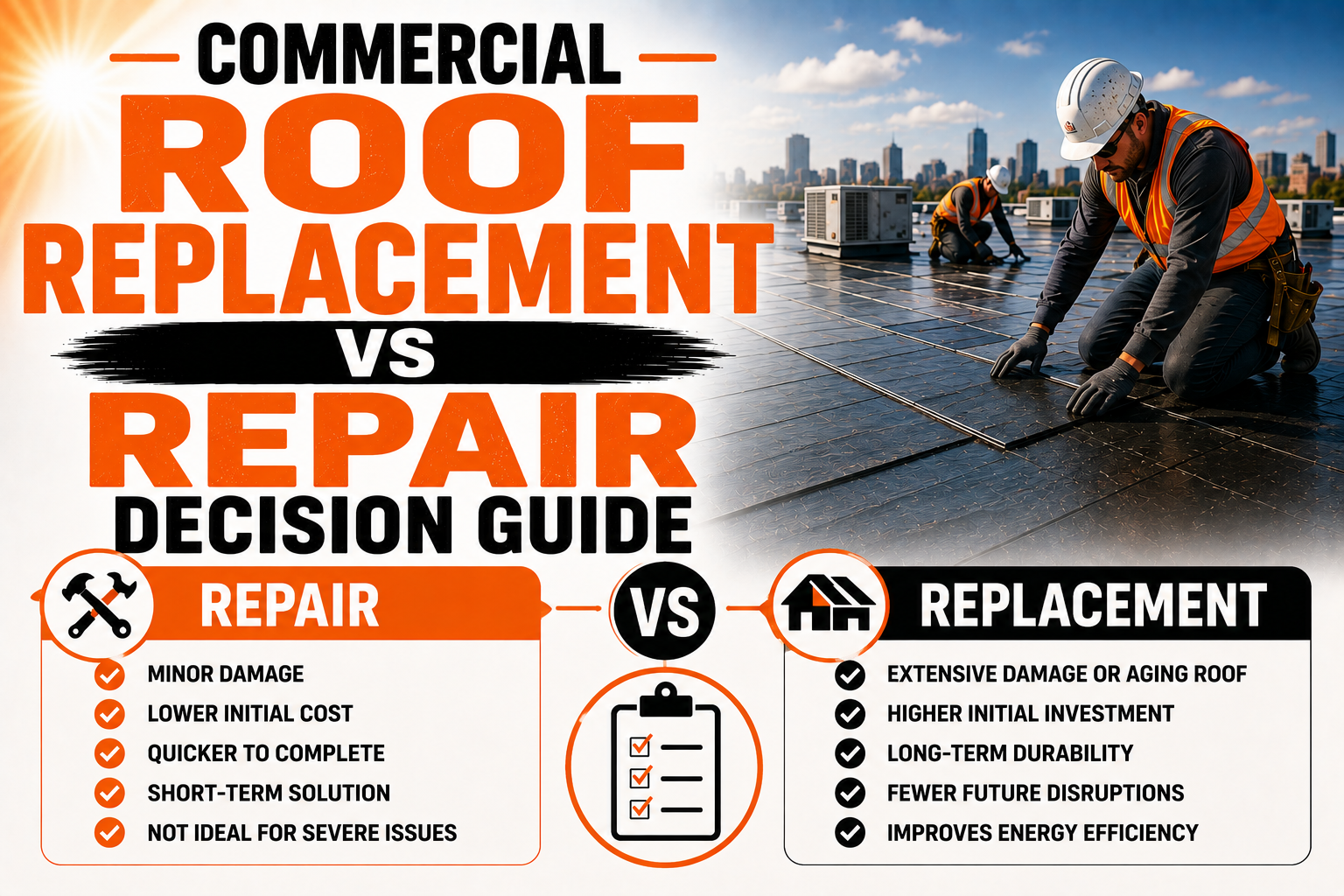
Commercial Roof Replacement vs Repair Decision Guide
Introduction
Commercial roofing problems can create difficult decisions for business owners and property managers. When leaks, damaged materials, ponding water, or other issues appear, the immediate question is often whether the existing roof should be repaired or replaced completely. Choosing the right option requires looking beyond the visible problem and considering the roof’s age, overall condition, repair history, expected service life, and long-term costs.
A repair may be the most practical solution when damage is limited and the rest of the roofing system remains in good condition. A targeted repair can address a localized leak or damaged component without requiring the business to invest in a completely new roof. However, repeated repairs may eventually become expensive if the underlying roofing system is approaching the end of its useful life.
Replacement becomes more appropriate when deterioration is widespread or when the existing roof can no longer provide dependable protection. Extensive moisture damage, recurring leaks, deteriorated insulation, damaged decking, severe membrane deterioration, and repeated repair needs can all indicate that continued repairs may no longer provide good value.
The decision should also consider how the roof affects business operations. A commercial roof protects inventory, equipment, employees, tenants, and interior spaces, so an unreliable system can create costs beyond the roofing work itself. Water intrusion may damage ceilings, electrical systems, machinery, stored products, furnishings, and other property.
There is no universal rule that says an old roof must automatically be replaced or that every leak requires a new system. The right decision depends on the condition and expected performance of the complete roofing assembly. A professional inspection can provide the information needed to make a more informed choice.
Understanding the Current Condition of the Commercial Roof
The first step in deciding between repair and replacement is understanding the roof’s current condition. A commercial roofing system is made up of several components, and visible surface damage does not always reveal what is happening underneath.
Depending on the building, the roof may include a membrane or surface material, insulation, vapor control components, fasteners, flashing, edge metal, drainage components, and a structural deck. Problems in one layer can eventually affect other parts of the assembly.
A roof inspection should examine the condition of these components as thoroughly as practical. The inspection may identify damaged seams, cracks, punctures, loose materials, deteriorated flashing, blocked drains, ponding water, moisture intrusion, or other conditions that influence the repair-versus-replacement decision.
The roof’s repair history is also important. A property that has experienced one isolated leak in an otherwise healthy roofing system may have a very different situation from a property that requires frequent repairs throughout the year.
Businesses should collect available roofing records before making a major decision. Previous inspection reports, repair invoices, warranty documents, installation records, and maintenance information can help reveal how the system has performed over time.
The location of problems matters as well. Damage concentrated in one small area may be repairable, while widespread deterioration across multiple roof sections suggests a larger issue.
A professional assessment should also consider moisture. Water can travel beneath roofing materials, meaning the location where water appears inside the building may not be directly below the original point of entry.
The goal of the inspection is not simply to find leaks. It is to determine whether the roofing system still has enough useful life and structural integrity to justify continued investment.
When Commercial Roof Repair Makes More Sense
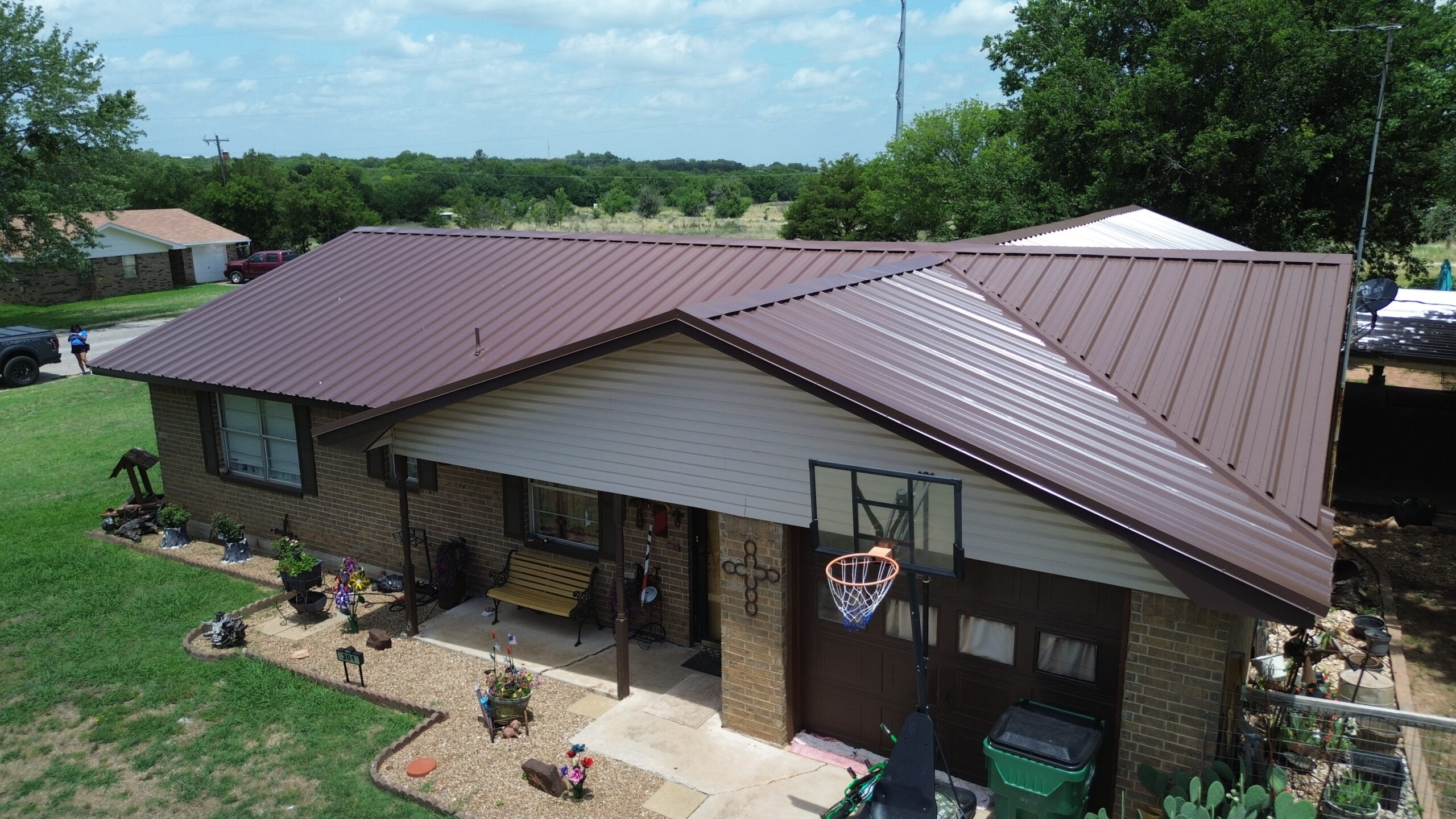
Repair can be an effective solution when damage is localized and the overall roofing system remains in reasonable condition. A targeted repair can restore a damaged area without the cost and disruption associated with complete replacement.
Localized punctures are one example. If a membrane has been damaged by maintenance activity or another isolated event, the affected section may be repaired while the surrounding system remains intact.
Flashing problems can also sometimes be addressed through targeted repairs. Deteriorated sealants, damaged transition areas, or isolated flashing failures may not require replacement of the entire roof.
Drainage problems may also have repair solutions. Blocked drains, damaged components, or localized gutter issues can sometimes be corrected without replacing the complete roofing system.
Repair is generally more attractive when the roof is relatively young and has been maintained properly. If the majority of the system remains sound, spending money on a targeted repair can extend its useful service life.
The scope of damage is an important consideration. A business should be cautious about treating every problem as an isolated repair if similar defects are appearing across many sections of the roof.
A repair can also make sense when the roof has remaining warranty coverage. Before authorizing work, the property owner should determine whether the issue may be covered by an existing manufacturer or contractor warranty.
Businesses should also consider whether the repair can provide a meaningful period of additional service. Spending money on a repair that only delays an inevitable replacement for a short time may not provide the best long-term value.
A useful repair decision should therefore consider three basic questions:
- Is the damage localized rather than widespread?
- Is the underlying roofing system still in reasonably good condition?
- Can the repair provide meaningful additional service life?
If the answers are generally positive, repair may be a practical approach.
When Commercial Roof Replacement Becomes the Better Option
Replacement becomes more compelling when the roofing system has widespread deterioration or is approaching the end of its expected service life. At this stage, continuing to patch individual problems may become increasingly difficult and expensive.
Frequent leaks are a common warning sign. One isolated leak may be manageable, but repeated leaks in different areas can indicate that the roofing system is deteriorating more broadly.
Widespread membrane damage is another concern. Cracking, splitting, blistering, severe weathering, shrinking, or other significant deterioration can reduce the roof’s ability to resist water intrusion.
Extensive moisture within the insulation can also change the decision. If large areas of insulation are wet or damaged, replacing individual surface defects may not address the underlying problem.
Replacement may also be appropriate when the roof has already undergone numerous repairs. A long history of patching can indicate that the system is becoming increasingly difficult to maintain.
The cost of repairs should be evaluated against the remaining life of the roof. If a business is spending substantial amounts on repairs every year, replacement may provide better long-term predictability.
Building use can also influence the decision. A property containing expensive equipment, sensitive inventory, or important operations may have a lower tolerance for ongoing roofing failures.
A replacement can also provide an opportunity to improve the overall roofing assembly. Businesses may be able to address insulation, drainage, flashing, energy performance, and other issues as part of a comprehensive project.
However, replacement should not be recommended solely because a roof has reached a certain age. Age is important, but actual condition remains a critical factor.
The strongest replacement decisions are based on evidence showing that the existing system is no longer providing reliable performance or that continued repairs no longer make economic sense.
Roof Age and Remaining Service Life
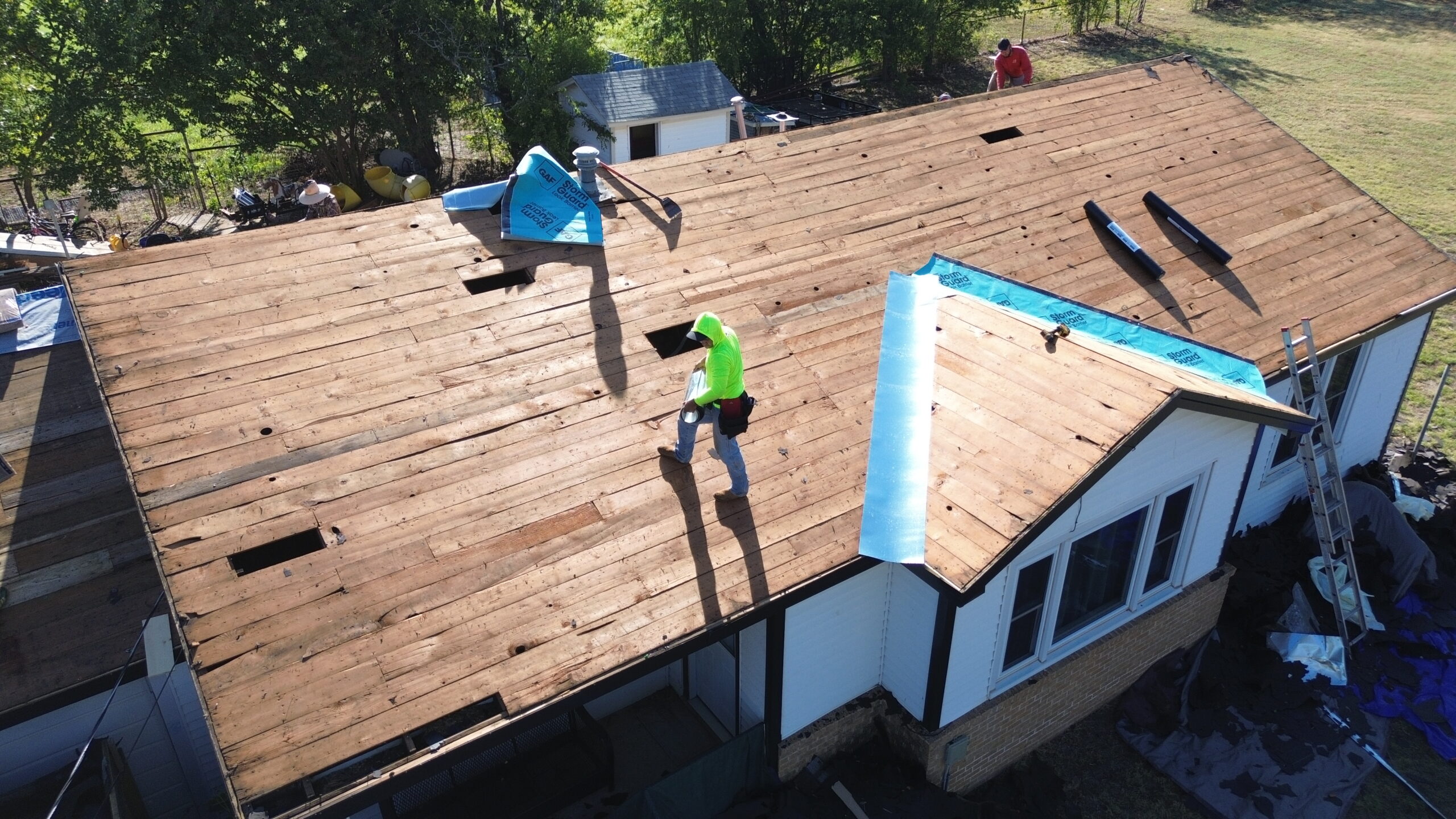
Roof age is one of the most useful factors when comparing repair and replacement options. Every roofing system has an expected service life, but actual performance depends on material quality, installation, maintenance, weather exposure, drainage, building conditions, and other factors.
An older roof is not automatically a failed roof. A well-maintained system may continue performing effectively beyond the period initially expected, while a poorly maintained roof may deteriorate much sooner.
Age becomes more important when combined with other warning signs. An older roof experiencing frequent leaks, widespread deterioration, moisture problems, or increasing maintenance costs deserves closer consideration for replacement.
Businesses should determine when the current roofing system was installed whenever possible. Existing project records, warranties, invoices, maintenance documents, or previous property records may provide this information.
The remaining service life is more useful than age alone. A roof that is several years old but has extensive damage may have less practical service life remaining than an older roof that has been well maintained.
The building’s future plans should also be considered. If the business expects to own or occupy the property for many years, replacement may make more sense than continuing to invest in an aging system.
Conversely, if a property is expected to undergo major redevelopment or a change in use, the appropriate roofing strategy may be different. Financial and operational plans can influence the best timing for major capital improvements.
Property owners should avoid using a single age threshold as the deciding factor. Instead, roof age should be evaluated alongside condition, repair history, expected performance, and the property’s long-term plans.
Extent and Frequency of Roofing Problems
The frequency of roofing problems can provide valuable insight into whether repairs remain practical. A commercial roof that requires occasional maintenance is very different from one that produces new leaks after every major rainfall.
Businesses should keep records of roofing incidents over time. Tracking where leaks occur, how often repairs are needed, and how much each repair costs can reveal patterns that may not be obvious from a single inspection.
The location of repeated problems is also significant. If the same area repeatedly requires attention, the underlying cause may not have been fully resolved.
Problems appearing in multiple unrelated areas can be an indication of broader deterioration. In such cases, repairing each individual defect may provide only temporary relief.
Repair frequency should also be considered alongside business disruption. Even relatively inexpensive repairs can become costly when employees must repeatedly respond to leaks or when areas of the building need to be closed.
A useful way to evaluate the situation is to consider the overall trend. If repair needs are decreasing after professional maintenance, continued repair may be reasonable. If repairs are becoming more frequent and expensive, replacement deserves stronger consideration.
Businesses should also distinguish between routine maintenance and emergency repairs. Regular preventive work is normal for commercial roofs, while repeated emergency responses may indicate that the system is becoming unreliable.
The decision should be based on the total pattern rather than one isolated incident. A roof that repeatedly demonstrates the same problems may require a more comprehensive solution.
Evaluating Leaks, Moisture, and Water Damage
Leaks are among the most common reasons businesses begin considering commercial roof repair or replacement. However, the presence of a leak does not automatically mean the entire roof needs to be replaced.
The first step is determining the source and extent of the water intrusion. Water can travel beneath membranes, insulation, and other components before appearing inside the building, so the visible stain may not identify the actual entry point.
A professional inspection can help determine whether the leak is isolated or connected to a broader problem. Flashing failures, membrane punctures, open seams, damaged penetrations, and drainage problems can all allow water to enter.
Moisture inside the roof assembly is particularly important. Persistent water intrusion can affect insulation and potentially contribute to deterioration of the roof deck.
If moisture is limited to a small area, targeted repair and replacement of affected components may be practical. If moisture is widespread, the project may require a much larger scope of work.
Interior damage should also be considered. Water intrusion can affect ceiling materials, electrical components, insulation, stored inventory, equipment, and other building contents.
Businesses should not wait for interior damage to become severe before investigating a roof problem. Early detection can provide more options and may allow a repair to be completed before a larger replacement becomes necessary.
Ultimately, the key question is not simply whether the roof leaks. The more important question is why it leaks, how widespread the underlying problem is, and whether the existing system can reasonably continue protecting the building.
Repair and replacement decisions should be based on the complete condition of the roofing system rather than one visible symptom. Roof age, damage patterns, repair history, moisture conditions, and remaining service life all help determine whether continued repairs are practical.
Roof Membrane and Surface Deterioration
The condition of the roof membrane or primary roofing surface is one of the most important factors when deciding whether a commercial roof should be repaired or replaced. The membrane is responsible for creating the main weather-resistant barrier, so widespread deterioration can indicate that the roofing system is losing its ability to provide dependable protection.
Minor surface damage does not automatically require replacement. Small punctures, limited seam problems, isolated cracks, or localized damage caused by maintenance activity may often be repaired effectively when the surrounding membrane remains sound.
Widespread deterioration presents a different situation. Extensive cracking, splitting, blistering, shrinkage, exposed reinforcement, severe weathering, or multiple failing seams can indicate that the membrane is approaching the end of its practical service life.
The pattern of damage is particularly important. If problems are concentrated in one area, a contractor may be able to remove and repair that section. If similar defects appear across large portions of the roof, repairing individual areas may become less effective.
Previous repairs should also be examined. A roof covered with numerous patches may still be serviceable, but extensive patching can make future repairs more difficult and can indicate that the original membrane is significantly deteriorated.
Businesses should also consider how the membrane responds to normal building activities. Commercial roofs often experience foot traffic from maintenance personnel and contractors, which can create punctures or surface damage if the system is already fragile.
The decision should therefore consider both the visible condition and the expected remaining service life. A membrane with isolated defects may justify repair, while a membrane with widespread deterioration may make replacement a more practical long-term solution.
Insulation and Roof Deck Conditions
The condition beneath the visible roofing surface can significantly change the repair-versus-replacement decision. A roof may appear acceptable from above while insulation or the structural deck underneath has experienced moisture damage.
Insulation plays an important role in the roofing assembly. If it becomes wet, compressed, or deteriorated, it may no longer provide the intended thermal performance. Extensive wet insulation may also make continued surface repairs less useful.
Small areas of damaged insulation can sometimes be removed and replaced as part of a repair. However, widespread moisture can require a much larger project because multiple sections of the roofing assembly may need to be opened.
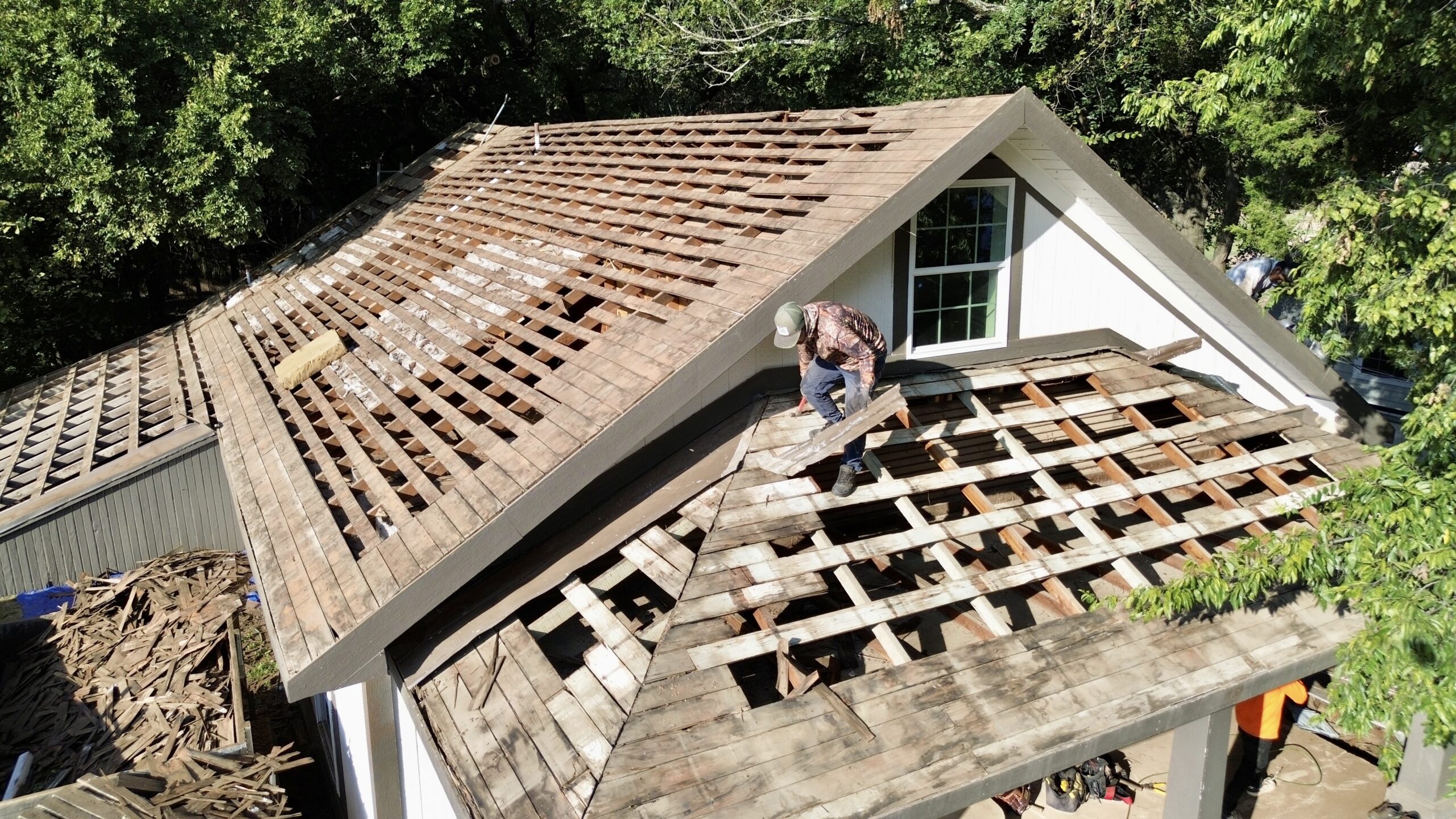
The roof deck should receive similar attention. Steel decks can experience corrosion, wood decks can deteriorate from prolonged moisture exposure, and other deck materials can develop defects that require correction.
If the deck is sound and the problem is limited to the roofing surface, repair may remain practical. If substantial portions of the deck are compromised, replacement may provide a better opportunity to address the entire assembly.
A complete roof replacement can also make it easier to improve insulation and drainage. Businesses may be able to install new insulation, correct slope deficiencies, and address other problems that cannot be effectively resolved through small surface repairs.
Unexpected deck damage can affect both cost and scheduling. Property owners should understand how a contractor will handle concealed conditions before approving a major project.
A professional evaluation can help determine whether the problem is primarily superficial or extends into the underlying assembly. This distinction is critical because repairing a surface while leaving serious underlying damage unresolved may only postpone a larger failure.
Cost Comparison Between Ongoing Repairs and Replacement
Cost is one of the biggest considerations in any repair-versus-replacement decision, but the lowest immediate expense is not always the most economical choice. Businesses should compare the cost of continuing repairs with the investment required for a new roofing system.
A single repair may be relatively inexpensive compared with full replacement. However, repeated repairs can accumulate over several years, particularly when new problems appear in different areas.
Repair costs should therefore be tracked over time. Businesses can review invoices, emergency service calls, maintenance expenses, and other roofing-related costs to identify whether the annual financial burden is increasing.
Replacement may have a much larger upfront cost, but it can provide a new service-life period and greater predictability. It may also reduce the frequency of emergency repairs during the early years of the new system.
The cost of business disruption should be included in the comparison. Recurring leaks can interfere with operations, damage inventory, interrupt tenant activities, and require employees to spend time dealing with roofing problems.
A repair may also make sense when the existing roof has substantial remaining life. Spending a smaller amount to correct a localized defect can be financially sensible if the rest of the system is performing well.
Businesses should be cautious about repeated temporary repairs. A series of short-term fixes may appear inexpensive individually but can become inefficient when the roof continues to deteriorate.
A useful comparison includes both immediate and long-term expenses. Property owners can ask how much they are likely to spend maintaining the existing roof over the next several years and compare that with the projected cost of replacement.
The decision should also account for future maintenance, warranty protection, energy performance, and expected service life. Looking at total ownership cost provides a more useful perspective than comparing two invoices.
Energy Efficiency and Building Performance Considerations
Roof condition can influence more than water protection. The roofing assembly can also affect the building’s thermal performance, energy use, and indoor comfort.
Older commercial roofs may contain insulation that no longer meets current project goals. During replacement, businesses may have an opportunity to improve insulation levels and address areas where thermal performance has declined.
A repair project may not provide the same opportunity. If the problem is limited to a small membrane defect, replacing that area may solve the immediate issue without changing the overall insulation assembly.
Energy considerations should not automatically justify replacement. The business should evaluate whether the expected benefits are meaningful for the particular property.
Building use is important in this analysis. Facilities with large conditioned spaces, temperature-sensitive operations, or significant heating and cooling demands may benefit more from improvements to the roof assembly.
The condition of existing insulation should also be considered. Wet or deteriorated insulation may already be reducing the building’s thermal performance, making replacement more attractive when combined with other roofing problems.
Roof color, membrane characteristics, insulation, ventilation, and other design elements can influence building performance depending on the roofing system and property conditions.
Businesses should evaluate energy-related improvements as part of the overall replacement plan rather than treating them as isolated upgrades. Combining work can sometimes be more practical than addressing roofing and thermal issues separately.
However, energy savings should be based on realistic expectations. The roofing system is only one part of a building’s total energy performance, and other factors such as HVAC equipment, windows, walls, controls, and occupancy patterns also matter.
Business Disruption and Operational Impact
The effect of roofing work on business operations is another important part of the repair-versus-replacement decision. Commercial properties often need to remain operational while roofing problems are addressed.
Repairs usually affect a smaller portion of the property. A localized repair may be completed with limited disruption, particularly when the contractor can work around normal business activities.
Replacement is a larger construction project and may require extended staging, material deliveries, equipment, noise, worker access, and temporary restrictions. For some businesses, these factors need careful planning.
However, continuing to repair a failing roof can also create ongoing disruption. Frequent leaks may require repeated service calls, temporary closures, interior protection, and movement of inventory or equipment.
Water damage can be especially disruptive in facilities that rely on sensitive equipment or valuable inventory. Even a small roof problem can become a serious operational concern if water reaches critical areas.
Businesses should therefore compare both types of disruption. Replacement may create a concentrated period of construction activity, while repeated repairs may create smaller but recurring interruptions over a longer period.
Phased replacement can sometimes reduce disruption on large properties. Contractors may complete sections sequentially so that portions of the building remain accessible and operational.
Scheduling can also be coordinated around important business activities. Work may be planned around peak operating periods, major deliveries, customer traffic, production schedules, or other important events.
The best decision considers not only how much roofing work is required but how that work affects the business. A comprehensive replacement may be disruptive initially but could provide greater reliability afterward.
Warranty, Maintenance, and Long-Term Planning
Warranty coverage should be reviewed before deciding whether to repair or replace a commercial roof. Existing warranties may affect repair options, contractor requirements, and potential coverage for certain problems.
A repair performed under an existing warranty may be more financially attractive than paying for the same work independently. Businesses should review the warranty terms before authorizing major repairs.
Replacement provides an opportunity to establish new warranty protection. Depending on the selected system and installation requirements, the project may include manufacturer coverage and contractor workmanship protection.
Warranty terms can vary considerably. Businesses should understand what is covered, what is excluded, how long coverage lasts, and what maintenance responsibilities the property owner must fulfill.
Maintenance planning is also important after either option. A repaired roof still requires inspections and upkeep, while a new roof should also be maintained to protect its expected service life.
Businesses should consider how long they expect to own or operate the property. If the building will remain part of the company’s portfolio for many years, replacement may provide greater long-term value when the existing system is near the end of its useful life.
Future building plans should also be considered. Planned renovations, expansions, rooftop equipment installations, or changes in building use can influence the best roofing strategy.
Long-term planning helps prevent decisions based solely on immediate problems. The right solution should support the property’s expected needs rather than simply address today’s leak.
How Professional Roof Inspections Support the Decision
A professional roof inspection can provide valuable information when the repair-versus-replacement choice is unclear. The purpose is to understand the condition of the entire roofing system and identify the factors that should influence the decision.
The inspection should examine visible roofing materials, seams, flashing, drainage, penetrations, edges, insulation conditions where accessible, and other important components. The inspector may also review areas with a history of leaks or repairs.
Roof records can complement the physical inspection. Installation dates, previous repairs, maintenance records, warranties, and photographs can help establish how the system has performed over time.
Moisture assessment may be appropriate when water intrusion is suspected. Identifying wet insulation or other moisture-related conditions can help determine whether a localized repair is sufficient.
The inspector should distinguish between isolated defects and widespread deterioration. This distinction is central to determining whether repair can reasonably extend the roof’s service life.
A useful inspection report should explain observed conditions in clear language. Businesses should understand which problems require immediate attention, which can be monitored, and which may indicate that replacement should be planned.
Property owners may also benefit from obtaining an independent assessment when recommendations differ significantly between contractors. A second professional opinion can help clarify whether a major replacement is necessary.
Inspection findings should be connected to the business’s long-term goals. A technically sound repair may not be the best financial decision if the roof is already near the end of its service life and the business expects to keep the property for many years.
The inspection process should ultimately provide evidence for the decision rather than simply producing a recommendation. Businesses can then compare repair and replacement options based on actual roof conditions.
Choosing between commercial roof repair and replacement requires more than looking at the latest leak. Membrane deterioration, insulation and deck conditions, repair costs, energy performance, business disruption, warranty coverage, and future property plans all influence the decision.
Questions to Ask Before Choosing Repair or Replacement
Before deciding whether to repair or replace a commercial roof, property owners should gather enough information to understand the condition and future needs of the roofing system. A quick recommendation based only on a visible leak may not provide enough information for a major financial decision.
One of the first questions should be whether the problem is isolated or widespread. If damage is limited to one section and the rest of the roof remains in good condition, repair may provide a practical solution. If similar problems are appearing throughout the roof, replacement may deserve stronger consideration.
Businesses should also ask how much useful life remains in the existing system. Age alone should not determine the decision, but an aging roof with extensive deterioration may not justify continued investment.
The history of repairs is another important question. Property owners should determine how often repairs have been required, what those repairs have cost, and whether the same areas continue to experience problems.
The condition beneath the surface should also be discussed. Businesses should ask whether moisture has reached the insulation or deck and whether concealed damage is likely to affect the project.
Questions about future maintenance are equally important. A contractor should explain what maintenance the existing roof would require if repaired and how that compares with maintenance requirements for a replacement system.
The business should also consider how long it plans to keep the property. A company expecting to occupy a building for many years may place greater value on a new roofing system than a business with short-term plans for the property.
A decision should be based on clear evidence rather than pressure to choose the most expensive option. Property owners should feel comfortable asking contractors to explain the reasons behind their recommendations.
How Emergency Conditions Affect the Decision
Roofing emergencies can make the repair-versus-replacement decision more complicated. Severe storms, sudden structural damage, major leaks, or other unexpected events may require immediate action to protect the building.
The first priority during an emergency is usually controlling active water intrusion and protecting people and property. Temporary measures may be necessary before a permanent repair or replacement can be planned.
An emergency does not automatically mean the entire roof must be replaced. A storm may damage one section of an otherwise serviceable roof, making targeted repair a reasonable solution.
However, an emergency can reveal weaknesses that already existed. If a storm exposes widespread membrane deterioration, damaged flashing, or drainage problems, the business may need to reconsider whether continuing with isolated repairs is practical.
Temporary protection can provide valuable time for evaluation. Once the immediate threat is controlled, the property owner can arrange a more detailed inspection and compare permanent options.
Businesses should document damage when practical. Photographs, inspection reports, repair records, and other documentation can help with insurance discussions and future planning.
Emergency conditions can also create pressure to make quick decisions. Property owners should be cautious about approving major work without understanding the scope, unless immediate safety or building protection requirements leave no reasonable alternative.
If temporary measures can safely stabilize the property, they may provide time to obtain professional opinions and develop a more complete solution.
The best long-term decision should still consider roof age, overall condition, repair history, moisture, structural conditions, and expected service life rather than focusing only on the emergency event.
Comparing Contractor Recommendations and Proposals
Different roofing contractors may provide different recommendations for the same property. One contractor may recommend targeted repairs, while another may believe replacement is more appropriate.
Differences do not necessarily mean that one contractor is wrong. Contractors may have different interpretations of the roof’s condition, different assumptions about future performance, or different approaches to addressing existing problems.
Businesses should ask each contractor to explain the evidence supporting the recommendation. Photographs, inspection findings, moisture information, repair history, and descriptions of damaged areas can make the recommendation easier to evaluate.
Proposals should also be compared based on equivalent scope. A repair proposal may address only visible defects, while a replacement proposal may include insulation, flashing, drainage improvements, tear-off, and other work.
The price should therefore not be the first or only comparison point. Businesses should review materials, labor, warranties, exclusions, allowances, expected service life, and maintenance requirements.
A contractor recommending replacement should explain why repair is no longer considered a reasonable long-term option. Likewise, a contractor recommending repair should explain how the proposed work is expected to extend the roof’s useful life.
Property owners should also ask about potential concealed conditions. Understanding how unexpected deck or insulation damage will be handled can prevent disputes later.
References and experience with similar commercial buildings can provide additional context. A contractor who regularly works on comparable roof systems may be better positioned to understand their specific challenges.
When proposals differ substantially, obtaining an additional professional opinion can help. An independent inspection may be particularly useful when the decision involves a significant capital investment.
The final choice should be based on evidence, scope, long-term value, and the property’s needs rather than simply accepting the cheapest proposal.
Common Mistakes Businesses Make When Choosing Between Repair and Replacement
One common mistake is waiting until a roof has experienced severe failure before evaluating replacement. Emergency conditions can reduce the time available for contractor selection, budgeting, and planning.
Another mistake is focusing only on the visible leak. Water can travel through roofing assemblies, and the visible interior stain may not represent the full extent of the problem.
Businesses can also make poor decisions by treating every repair as an isolated event. If the roof has developed numerous problems over several years, the overall repair history should be considered.
Choosing the cheapest repair without considering remaining service life can create another problem. A low-cost repair may be reasonable for a healthy roof, but repeated inexpensive repairs can become costly when the system is nearing failure.
The opposite mistake is replacing a roof unnecessarily. A localized defect on a relatively healthy system may not justify the expense and disruption of full replacement.
Ignoring insulation and deck conditions can also lead to problems. Surface repairs may not resolve deeper moisture or structural issues.
Another mistake is failing to review warranties. Existing coverage may affect how repairs should be performed, while new replacement systems may provide warranty options that require specific installation procedures.
Businesses sometimes overlook operational costs as well. Frequent leaks can disrupt employees, tenants, inventory, equipment, and customers, creating expenses that do not appear on roofing invoices.
Finally, property owners may rely on a single contractor’s recommendation without seeking enough information. For major commercial investments, comparing detailed proposals and understanding the reasoning behind each recommendation can lead to a more confident decision.
Planning Commercial Roof Replacement After Repeated Repairs
Repeated repairs can be a strong signal that it is time to evaluate replacement. This does not mean every repaired roof must immediately be replaced, but increasing repair frequency deserves careful attention.
Businesses should track repair costs over time. A record of service calls, materials, labor, emergency responses, and recurring leak locations can reveal whether the roof is becoming increasingly expensive to maintain.
The pattern of repairs matters as much as the total cost. If problems continue appearing in new areas despite previous repairs, the underlying roofing system may be deteriorating beyond the point where isolated repairs provide reliable protection.
Planning replacement before complete failure can provide significant advantages. Businesses can obtain proposals, evaluate roofing systems, arrange financing or capital budgets, schedule work, and coordinate construction around operations.
A planned project also allows time to investigate improvements. The business may consider better insulation, drainage corrections, upgraded flashing, improved access routes, or other changes that can support long-term roof performance.
Replacement planning should begin before the roof becomes an emergency whenever possible. A property owner does not need to wait until water is actively entering the building to start evaluating options.
The planning process can also help reduce disruption. Construction can potentially be scheduled during periods when the business has lower activity or when particular roof sections are easier to access.
Businesses should establish a realistic replacement budget based on professional estimates rather than relying on a general price assumption. Roof size, material selection, tear-off requirements, deck conditions, insulation, access, and other factors can significantly affect the final investment.
Early planning turns replacement from an emergency response into a controlled capital project.
A Practical Repair vs Replacement Decision Checklist
A structured checklist can help businesses organize information before making the final decision. The goal is not to replace professional inspection, but to ensure that important considerations are not overlooked.
Consider repair when:
- Damage is limited to specific areas.
- The underlying roofing assembly remains generally sound.
- The roof has meaningful service life remaining.
- Repairs have been relatively infrequent.
- Moisture damage is localized and manageable.
- The expected repair cost provides reasonable value.
Consider replacement when:
- Problems are widespread across the roof.
- Leaks occur frequently or in multiple locations.
- The membrane shows extensive deterioration.
- Insulation contains widespread moisture or damage.
- The roof deck has significant deterioration.
- Repair costs continue increasing.
- The roof is approaching the end of its practical service life.
- The building requires greater reliability than the existing system can provide.
The checklist should be used alongside professional findings. A roof may meet some repair indicators and some replacement indicators at the same time, which is why the overall condition and future plans matter.
Businesses should also compare short-term and long-term consequences. Repair may require less money today, while replacement may provide greater predictability over the coming years.
The final decision should reflect the property’s financial objectives, operational requirements, expected ownership period, and tolerance for future roofing problems.
Conclusion
Choosing between commercial roof repair and replacement requires a careful evaluation of current conditions, future needs, costs, and business priorities. Neither option is automatically better for every property, and the right solution depends on the condition of the complete roofing system.
Repair is often appropriate when damage is localized, the roof remains generally sound, and meaningful service life remains. Targeted repairs can address leaks, punctures, flashing problems, and other isolated defects without the cost and disruption of a complete replacement.
Replacement becomes more attractive when deterioration is widespread, leaks are recurring, repairs are becoming expensive, or the underlying insulation and deck have significant problems. A new system can also provide an opportunity to improve drainage, insulation, flashing, and other components that may be difficult to address through isolated repairs.
Cost should be evaluated over the expected life of the roof rather than based solely on the next repair invoice. Repeated repairs, emergency service, interior damage, operational disruption, and maintenance requirements can all contribute to the true cost of keeping an aging roof.
Professional inspections are especially valuable when the decision is unclear. A thorough assessment can help identify membrane deterioration, moisture, deck conditions, drainage problems, and other factors that may not be obvious from the ground or from a single leak.
Businesses should also compare contractor recommendations carefully. Detailed proposals should explain the proposed scope, materials, warranties, exclusions, expected service life, and approach to unexpected conditions.
Planning is generally easier when replacement is considered before complete failure. Businesses have more time to establish budgets, compare contractors, order materials, coordinate operations, and schedule construction.
At the same time, property owners should avoid replacing a serviceable roof simply because it has reached a certain age. Condition, repair history, remaining service life, and building requirements should all be considered together.
The most reliable decision is one that balances immediate needs with long-term property goals. By understanding the difference between localized problems and widespread deterioration, tracking repair history, evaluating total costs, and obtaining professional advice, businesses can make a more informed choice between commercial roof repair and replacement.
A well-planned decision can protect the building, reduce unexpected disruption, and provide better control over future roofing expenses. Whether the appropriate solution is a targeted repair or a complete replacement, the objective should always be dependable roof performance and responsible long-term property management.