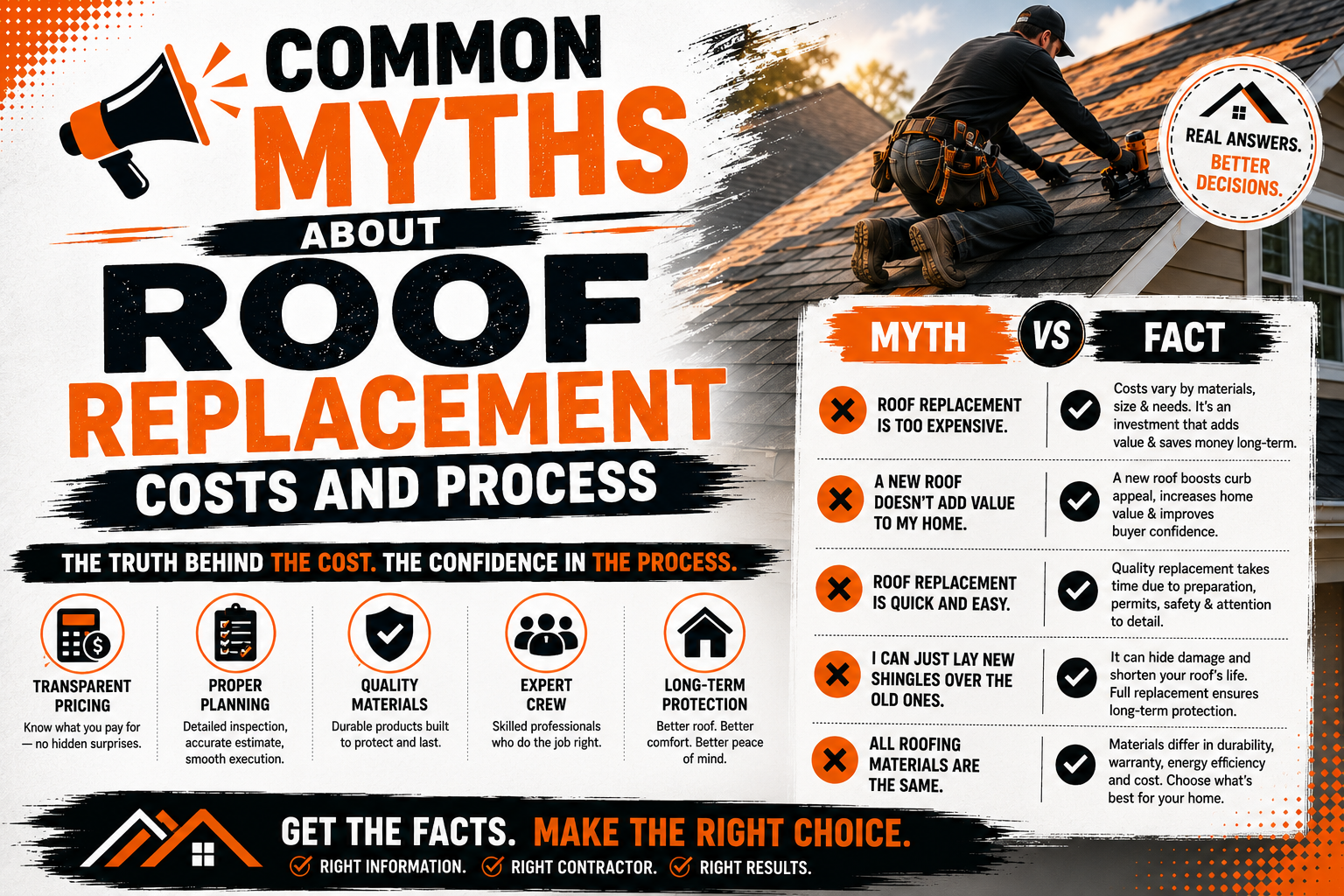
Common Myths About Roof Replacement Costs and Process
Introduction
Roof replacement is one of the most significant home improvement projects that many property owners will face. Because it involves a substantial investment and affects the safety of the entire building, homeowners often rely on advice from friends, neighbors, online discussions, or outdated information when making decisions. Unfortunately, much of this information is based on misconceptions rather than current roofing practices, leading many people to delay necessary work or make choices that increase long-term costs.
The roofing industry has changed considerably over the years. Modern roofing materials are more durable, installation techniques have improved, and professional inspection methods now provide more accurate evaluations of roof condition. Despite these advancements, many common myths continue to influence homeowner decisions. Some people believe every roof must be replaced after reaching a certain age, while others assume that every roof leak automatically requires complete replacement. There are also misconceptions about project costs, construction timelines, insurance coverage, and the overall replacement process.
Believing these myths can have serious financial consequences. Delaying roof replacement because of inaccurate assumptions may allow structural damage to develop, increasing repair expenses far beyond the original roofing problem. On the other hand, replacing a roof prematurely based on incorrect information may result in unnecessary spending when repairs would have been sufficient.
Understanding the facts behind roof replacement allows homeowners to make informed decisions based on the actual condition of their roof rather than generalized assumptions. Professional inspections, realistic budgeting, and accurate knowledge of modern roofing systems provide a much stronger foundation for planning future roofing projects.
This guide examines some of the most common myths surrounding roof replacement costs and the replacement process. By separating fact from fiction, property owners can better understand when replacement is truly necessary, what influences project costs, and how modern roofing practices help create reliable, long-lasting roofing systems.
Why Roof Replacement Myths Persist
Roof replacement myths continue circulating because most homeowners replace a roof only once or twice during their lifetime. Unlike routine home maintenance tasks, roof replacement is not something most people experience regularly. As a result, many rely on secondhand information that may no longer reflect current roofing practices or technologies.
One reason myths persist is the complexity of roofing systems. A roof consists of much more than visible shingles or tiles. Flashing, underlayment, ventilation, insulation, decking, drainage systems, and structural framing all contribute to overall roof performance. Because these components remain largely hidden, homeowners often base opinions solely on visible roof appearance.
Older advice also contributes to misconceptions. Roofing materials manufactured decades ago often performed differently than today’s products. Modern shingles, metal roofing systems, synthetic underlayments, and improved installation methods have significantly increased durability, making many older assumptions less accurate.
Online information can further complicate decision-making. Homeowners frequently encounter conflicting opinions from forums, videos, or social media discussions where individual experiences are presented as universal rules. Roofing conditions vary considerably depending on climate, maintenance history, installation quality, and material type, making generalized advice unreliable.
Personal experiences also influence myths. Someone who experienced an unusually expensive replacement after severe storm damage may assume every roof replacement involves similar costs. Others who replaced a roof because of one major leak may incorrectly believe every leak requires complete replacement. Individual situations often become generalized despite significant differences between properties.
Another reason myths continue is that roofing problems usually develop gradually. Small changes over many years make it difficult for homeowners to recognize how roofs naturally age. Without regular professional inspections, assumptions often replace accurate evaluations.
Professional roof inspections remain the most reliable source of information because contractors assess the actual condition of the roofing system rather than relying on generalized beliefs. Understanding how myths develop helps homeowners recognize the importance of making decisions based on current professional evaluations rather than outdated assumptions.
Myth That Roof Replacement Is Always Too Expensive
One of the most widespread misconceptions is that roof replacement is always too expensive to justify. Because replacing a roof represents a major investment, many homeowners assume delaying the project indefinitely will always save money. In reality, postponing necessary replacement often increases total ownership costs rather than reducing them.
The initial cost of roof replacement should be viewed alongside the long-term expenses associated with maintaining an aging roof. Repeated repairs, emergency service calls, water damage restoration, insulation replacement, mold remediation, and structural repairs gradually accumulate over time. When these ongoing expenses are considered together, continuing repairs may ultimately cost more than installing a new roofing system.
Modern roofing materials also provide greater long-term value than many homeowners realize. Improved durability, stronger weather resistance, lower maintenance requirements, and better energy efficiency often reduce operating costs throughout the roof’s lifespan. These long-term savings help offset the initial replacement investment.
Budget planning further reduces financial pressure. Homeowners who begin saving before replacement becomes urgent have greater flexibility when selecting materials and contractors. Planning replacement proactively generally provides better financial outcomes than responding to emergency roof failure.
Financing options have also expanded in many areas, allowing homeowners to spread project costs over time rather than paying the full amount immediately. While financing decisions should always be considered carefully, available options often make roof replacement more manageable than many people expect.
Another misconception involves comparing replacement costs without considering property protection. A dependable roof protects structural framing, ceilings, walls, flooring, electrical systems, insulation, and personal belongings. Preserving these components prevents additional repair expenses that may otherwise develop beneath an aging roof.
Instead of asking whether roof replacement is expensive, homeowners should ask whether continuing repairs provide better long-term financial value. In many situations, replacing the roof at the appropriate time becomes the more economical decision over the life of the property.
Myth That Small Roof Leaks Never Require Replacement
Many homeowners believe that every roof leak can simply be repaired, regardless of the roof’s age or overall condition. While many leaks can indeed be corrected through localized repairs, assuming every leak is minor may delay replacement when the roofing system has already experienced widespread deterioration.
A single isolated leak on an otherwise healthy roof often responds well to professional repair. Damaged flashing, missing shingles, or localized storm damage may be corrected without replacing the entire roofing system. Prompt repairs prevent further water intrusion while extending roof lifespan.
However, repeated leaks occurring in multiple locations usually indicate broader roofing problems. As roofing materials age, deterioration often affects large portions of the roof simultaneously. Repairing one leak may simply postpone the next because surrounding materials continue weakening.
Hidden moisture also complicates leak assessment. Water entering through one small opening frequently travels along roof decking or structural framing before becoming visible inside the home. The location of an interior water stain may therefore differ significantly from the original leak source. Professional inspections help identify the full extent of moisture intrusion before recommending repairs or replacement.
Roof age should always be considered alongside leak severity. A relatively new roof with isolated damage often remains a strong candidate for repair. By contrast, an older roof experiencing repeated leaks may provide better long-term value through complete replacement rather than ongoing patchwork repairs.
Interior damage further influences replacement decisions. Moisture affecting insulation, framing, drywall, ceilings, or electrical systems often indicates that roofing problems have continued longer than initially believed. Correcting only the visible leak may not fully address underlying structural concerns.
Rather than assuming every leak requires either repair or replacement, homeowners should rely on comprehensive roof evaluations. Professional inspections distinguish isolated repairable issues from widespread deterioration requiring more permanent solutions.
Myth That Every Roof Must Be Replaced After a Certain Number of Years
Another common misconception is that every roof automatically requires replacement once it reaches a specific age. While roofing materials have expected service life ranges, age alone does not determine whether replacement is necessary.
Different roofing materials naturally perform for different lengths of time. Asphalt shingles, metal roofing, clay tiles, slate, and composite materials each have unique durability characteristics influenced by manufacturing quality, maintenance, installation methods, and environmental conditions. Applying a single replacement timeline to every roof ignores these important differences.
Climate also has a major influence on roof longevity. Roofs exposed to frequent hurricanes, hailstorms, heavy snowfall, intense sunlight, or coastal humidity often age differently than identical materials installed under milder environmental conditions. Local weather significantly affects how quickly roofing materials deteriorate.
Maintenance history represents another critical factor. Roofs receiving regular inspections, prompt repairs, gutter cleaning, and preventive maintenance frequently remain in service longer than neglected roofs of the same age. Responsible maintenance often extends useful roof life considerably.
Installation quality should also be considered. Proper flashing, ventilation, fastening methods, and moisture protection all influence long-term roof performance. Well-installed roofing systems generally perform better throughout their lifespan than roofs installed with construction deficiencies.
Professional inspections provide the most reliable method for evaluating replacement timing. Contractors assess roofing materials, flashing, ventilation, drainage systems, underlayment, structural components, and overall roof performance rather than relying solely on chronological age.
Replacing a roof simply because it has reached a certain birthday may result in unnecessary expense if the roofing system remains structurally sound. Likewise, ignoring significant deterioration because the roof appears relatively young may allow costly damage to continue developing.
Roof age should therefore be viewed as one important factor among many rather than the sole basis for replacement decisions.
Understanding What Actually Determines Roof Replacement Costs
Many homeowners assume roof replacement costs are determined only by roof size. While square footage certainly influences material and labor requirements, numerous additional factors contribute to the overall project cost.
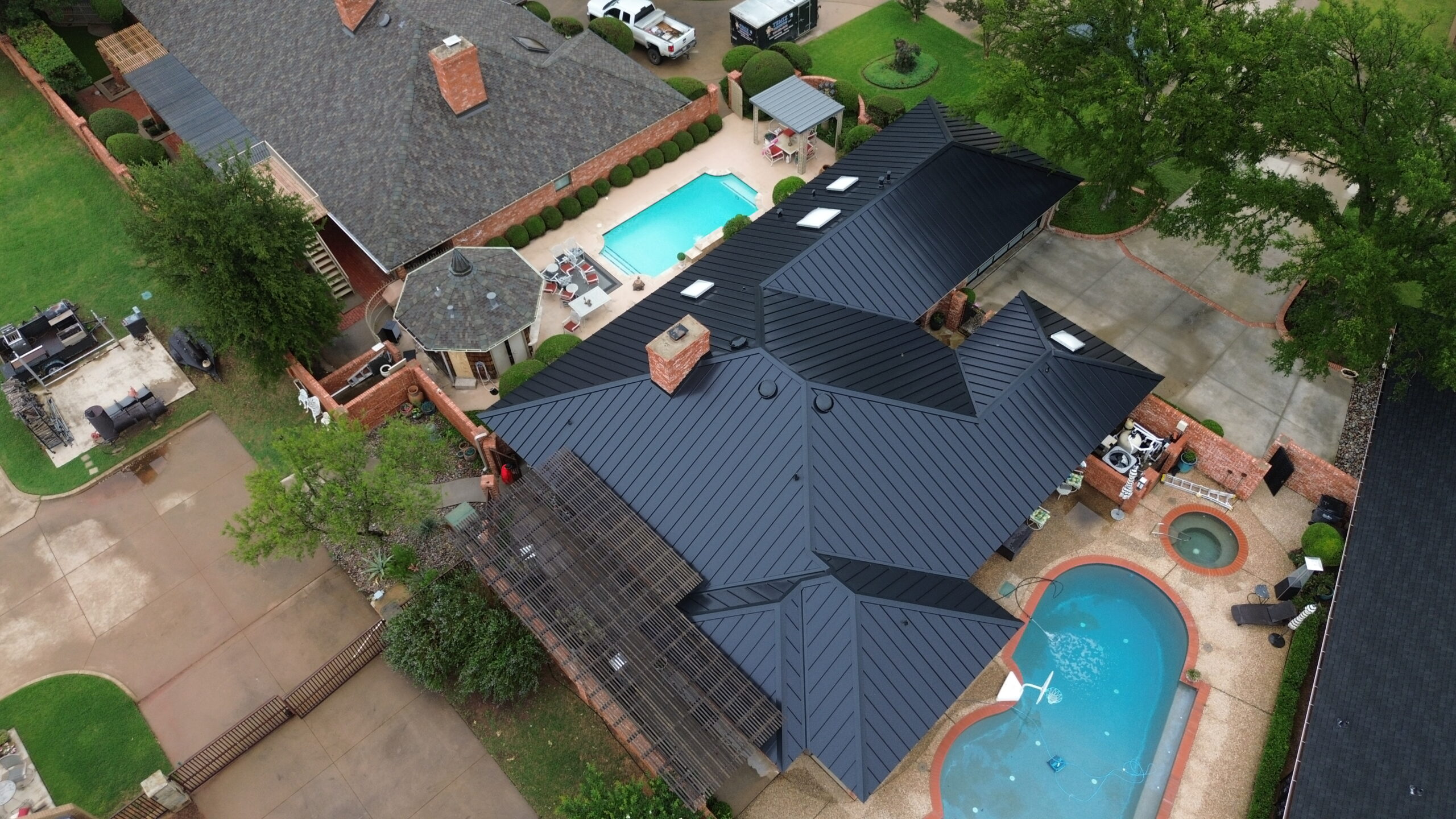
Roof complexity is one major consideration. Simple roof designs generally require less labor than roofs containing multiple valleys, dormers, skylights, chimneys, steep slopes, or intersecting roof planes. More complex designs increase installation time while requiring specialized workmanship.
Material selection also significantly affects project pricing. Asphalt shingles, metal roofing, tile, slate, and composite products each involve different material costs, installation techniques, maintenance expectations, and expected service lives. Comparing materials solely by purchase price overlooks their long-term value.
Structural condition influences costs as well. During replacement, contractors occasionally discover damaged decking, deteriorated framing, ventilation deficiencies, or moisture-related issues requiring correction before new roofing materials are installed. Addressing these problems strengthens the completed roofing system while protecting long-term performance.
Labor quality should also be considered. Experienced roofing professionals often charge higher rates because they provide skilled workmanship, better project management, stronger warranties, and reliable installation practices. Choosing contractors based solely on price may reduce initial costs but increase future maintenance expenses.
Local building codes and permit requirements also influence project budgets. Certain areas require inspections, upgraded installation methods, or specific material standards that affect overall replacement costs.
Waste disposal, recycling practices, project accessibility, and seasonal scheduling may further contribute to pricing differences. Every roofing project presents unique conditions that influence labor efficiency and material requirements.
Understanding these variables helps homeowners recognize that roof replacement pricing reflects much more than roof size alone. Professional estimates provide detailed cost breakdowns based on the specific characteristics of each property.
Making Decisions Based on Professional Roof Inspections
Perhaps the most important way to avoid roofing myths is relying on professional roof inspections rather than assumptions. Comprehensive inspections provide objective information about the actual condition of the roofing system, allowing homeowners to make informed decisions based on evidence rather than speculation.
Professional inspectors evaluate every major roofing component, including shingles or tiles, flashing, underlayment, roof decking, ventilation systems, gutters, drainage pathways, structural framing, and attic conditions. This complete assessment reveals both visible damage and hidden issues that homeowners may not recognize from ground level.
Inspection reports also distinguish between maintenance, repair, and replacement needs. Rather than recommending replacement automatically, experienced contractors explain which components remain serviceable, which require repair, and whether the overall roofing system continues providing dependable protection.
Photographs, written documentation, and maintenance recommendations further improve homeowner understanding. Clear evidence helps property owners compare contractor recommendations while planning future maintenance or replacement according to actual roof condition.
Routine inspections also reduce uncertainty. Instead of wondering whether the roof requires immediate replacement after every storm or leak, homeowners receive professional evaluations that support confident decision-making. This knowledge often prevents both unnecessary replacement and costly delays.
Most importantly, professional inspections replace myths with facts. Rather than relying on generalized advice regarding roof age, leak severity, replacement costs, or expected lifespan, homeowners gain accurate information specific to their own property.
Making decisions based on professional inspections ultimately protects both the roof and the homeowner’s financial investment. Accurate evaluations provide the strongest foundation for planning maintenance, budgeting for future replacement, and ensuring that roofing decisions are guided by evidence rather than common misconceptions.
Myth That Roof Replacement Always Takes Weeks to Complete
Many homeowners postpone roof replacement because they believe the project will leave their home under construction for several weeks. While every roofing project is different, the assumption that all roof replacements require extended construction periods is one of the most common misconceptions about the roofing process.
The actual timeline depends on several factors, including roof size, design complexity, weather conditions, material selection, and the condition of the existing roofing system. A straightforward residential roof replacement often takes only a few days when weather conditions are favorable and the project has been carefully planned. Larger or more complex properties naturally require additional time, but they still may not involve the lengthy construction period many homeowners expect.
Preparation before construction plays an important role in reducing project duration. Experienced roofing contractors organize materials, equipment, labor schedules, and waste removal before work begins. Careful planning allows installation crews to complete each stage efficiently while minimizing unnecessary delays.
Weather is one of the few factors that can extend a roofing schedule. Heavy rain, strong winds, or severe storms may temporarily pause installation because roofing materials should not be installed under unsafe conditions. Professional contractors monitor weather forecasts closely to reduce interruptions whenever possible.
Unexpected structural repairs may also influence project length. After removing the existing roof, contractors occasionally discover damaged roof decking or moisture-related deterioration that must be repaired before installing new materials. Although these repairs may add time, correcting them protects the long-term performance of the new roofing system.
Material availability is another consideration. Specialty roofing products or custom-ordered materials may require longer delivery times before installation begins. However, this waiting period is usually separate from the actual construction timeline on the property.
Understanding the factors influencing project schedules helps homeowners develop realistic expectations. Rather than assuming every replacement requires weeks of disruption, property owners should discuss estimated timelines with their roofing contractor based on the specific characteristics of their project.
Myth That All Roofing Materials Cost and Perform the Same
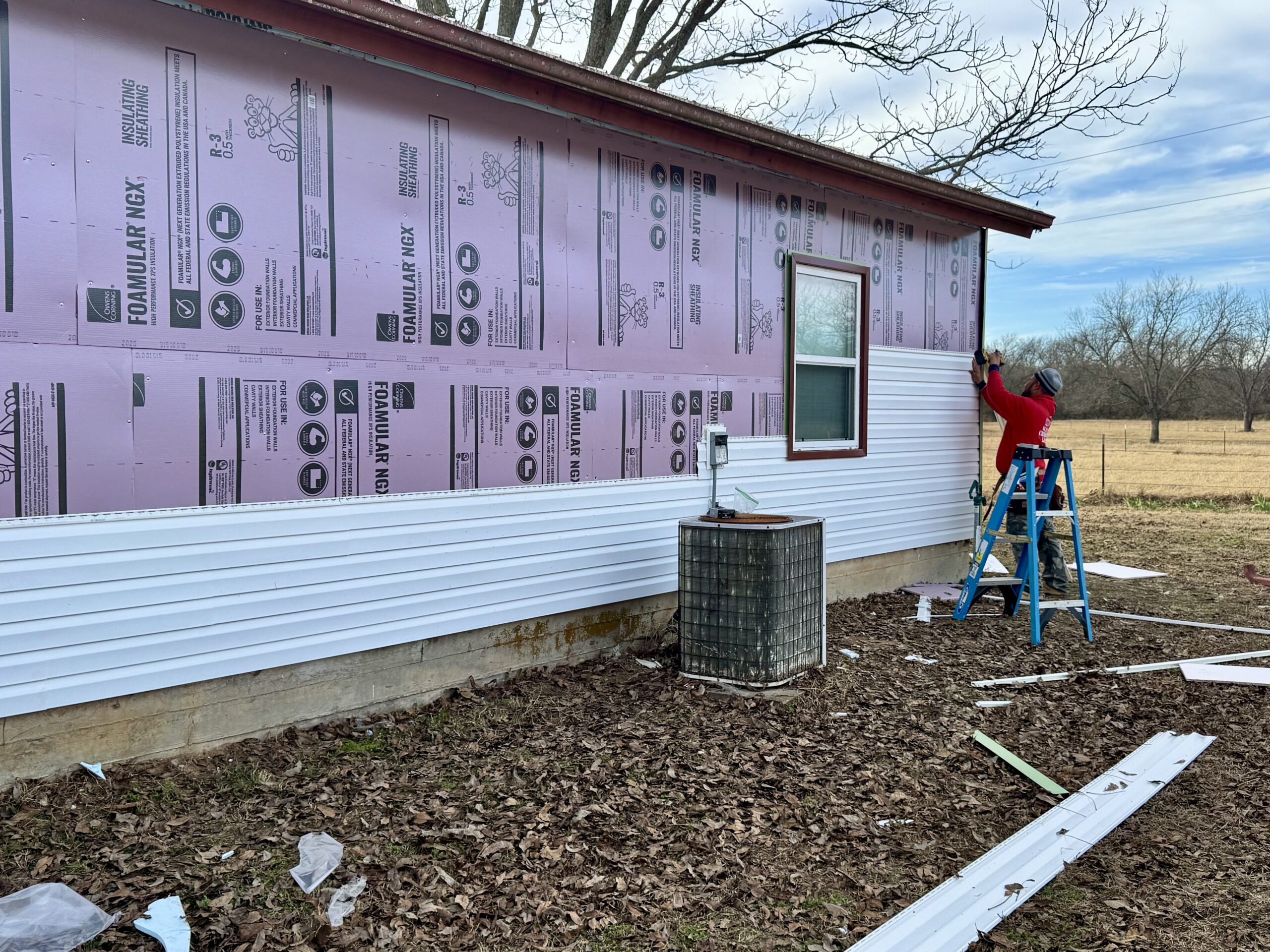
Another widespread misconception is that all roofing materials provide similar performance and differ only in appearance. In reality, roofing products vary considerably in durability, maintenance requirements, energy efficiency, installation methods, weather resistance, and long-term value.
Asphalt shingles remain one of the most widely used residential roofing materials because they provide reliable performance at a moderate initial cost. However, different grades of asphalt shingles offer varying levels of durability, wind resistance, and manufacturer warranty coverage. Assuming every asphalt shingle performs identically overlooks these important distinctions.
Metal roofing offers a different combination of advantages. Many metal roofs provide exceptional longevity, resistance to severe weather, and lower maintenance requirements compared with traditional roofing materials. Although the initial investment may be higher, reduced maintenance and longer service life often improve long-term value.
Clay and concrete tiles are known for their durability and weather resistance. Properly maintained tile roofs often remain in service for several decades while providing distinctive architectural appearance. Their weight and specialized installation requirements, however, differ significantly from lighter roofing systems.
Composite roofing products continue expanding in popularity because they combine attractive appearance with improved durability and moisture resistance. Many products are engineered to replicate traditional roofing materials while requiring less maintenance over time.
Energy performance also varies among roofing materials. Reflective roofing products reduce heat absorption during warm weather, while certain materials naturally provide better thermal performance than others. These differences influence heating and cooling costs throughout the roof’s lifespan.
Maintenance expectations differ as well. Some roofing systems require relatively little routine attention, while others benefit from more frequent inspections or specialized care. Property owners should evaluate expected maintenance alongside initial purchase price when comparing materials.
Selecting roofing materials based solely on upfront cost may overlook important long-term financial considerations. Comparing durability, maintenance requirements, expected lifespan, energy performance, and warranty protection provides a more complete understanding of each roofing system’s overall value.
Myth That Roof Replacement Creates Unavoidable Property Damage
Some homeowners delay roof replacement because they believe the construction process will inevitably damage landscaping, siding, windows, driveways, or other parts of the property. Although roof replacement is a major construction project, professional roofing contractors use established procedures to protect surrounding areas throughout installation.
Preparation begins before any roofing materials are removed. Contractors typically protect landscaping, outdoor furniture, air conditioning equipment, and other vulnerable areas using coverings or temporary barriers. These precautions reduce the likelihood of damage while creating safer working conditions around the property.
Material removal is also carefully managed. Rather than allowing debris to fall randomly around the home, experienced crews use designated disposal areas, debris chutes, or collection equipment to control waste throughout the demolition process. Organized cleanup reduces the risk of damage while improving job site safety.
Magnetic tools are commonly used during final cleanup to collect nails and metal fasteners from lawns, driveways, and walkways. Thorough cleanup helps protect vehicles, lawn equipment, pets, and family members after construction has been completed.
Professional contractors also take steps to protect gutters, siding, windows, and exterior finishes while removing existing roofing materials. Although occasional accidental damage may occur on any construction project, experienced roofing companies work to minimize these risks through careful planning and skilled workmanship.
Communication further reduces potential problems. Before construction begins, homeowners and contractors typically discuss access routes, vehicle parking, landscaping concerns, and areas requiring additional protection. Identifying these considerations early allows the project to proceed more smoothly.
Property owners also play an important role by moving vehicles, outdoor furniture, decorations, and fragile items away from work areas before construction starts. These simple preparations support contractor efforts while reducing unnecessary risks.
Roof replacement therefore does not automatically result in property damage. With proper planning, experienced installation crews, and effective communication, most projects are completed while preserving the condition of surrounding property.
Myth That Insurance Always Pays for Roof Replacement
Insurance is one of the most misunderstood aspects of roof replacement. Many homeowners assume their insurance policy automatically covers the cost of replacing any aging roof. In reality, coverage depends on the cause of the damage, policy terms, and the condition of the roofing system before the loss occurred.
Insurance generally focuses on sudden and unexpected events rather than gradual deterioration. Damage resulting from severe storms, hail, wind, falling trees, or certain other covered events may qualify for insurance benefits depending on the policy. However, normal aging, routine wear, deferred maintenance, and gradual material deterioration are typically considered homeowner responsibilities.
Professional inspections become especially important after major weather events. Contractors document roof damage, identify affected components, and help homeowners understand whether the observed conditions appear consistent with covered causes or routine aging. Accurate documentation supports informed insurance discussions while avoiding unrealistic expectations.
Policy language also varies considerably. Deductibles, exclusions, depreciation methods, coverage limits, and claim procedures differ among insurance providers and policy types. Homeowners should review their policy carefully rather than assuming all roof replacement situations receive identical coverage.
Maintenance history may influence insurance considerations as well. Insurance providers generally expect homeowners to perform reasonable roof maintenance throughout the roof’s lifespan. Neglecting obvious roofing problems may complicate claims if preventable damage continues over an extended period.
Even when insurance contributes toward roof replacement, homeowners often remain responsible for deductibles or improvements beyond the covered scope of work. Understanding these financial responsibilities helps avoid surprises during the claims process.
Rather than assuming insurance will automatically fund every roof replacement, homeowners should view insurance as protection against covered events while recognizing that routine roof maintenance and eventual replacement remain important aspects of long-term property ownership.
Comparing Common Roofing Myths With Reality
Many roofing myths continue because they are repeated frequently, even though they do not accurately reflect modern roofing practices. Comparing these misconceptions with current industry knowledge helps homeowners make more informed decisions.
| Common Myth | Reality |
|---|---|
| Every roof replacement takes several weeks. | Many residential projects are completed within a few days, depending on weather and project complexity. |
| All roofing materials perform the same. | Materials differ significantly in durability, maintenance, energy efficiency, and lifespan. |
| Roof replacement always damages the property. | Professional contractors use protective measures to minimize risks throughout construction. |
| Insurance always covers roof replacement. | Coverage usually depends on the cause of damage and specific policy terms. |
| The least expensive roofing option always saves money. | Long-term durability and maintenance often provide greater value than the lowest initial price. |
| Every leak requires complete roof replacement. | Some leaks are repairable, while others indicate widespread deterioration requiring replacement. |
This comparison demonstrates why professional inspections and accurate information are so valuable. Roofing decisions should always reflect the actual condition of the property rather than generalized assumptions or outdated advice.
Replacing myths with factual information allows homeowners to evaluate roofing projects more confidently while avoiding unnecessary expenses or delayed maintenance.
How Accurate Information Helps Homeowners Save Money
Accurate roofing information is one of the most valuable tools available to homeowners planning future maintenance or replacement. Understanding how modern roofing systems actually perform helps property owners avoid costly decisions based on misinformation.
One important financial benefit is avoiding unnecessary replacement. Some homeowners replace roofs solely because they have reached a certain age, even though professional inspections indicate the roofing system remains structurally sound. Accurate evaluations help extend roof lifespan through appropriate maintenance rather than premature replacement.
Reliable information also prevents expensive delays. Homeowners who incorrectly assume that every repair will permanently solve roofing problems may postpone replacement long after widespread deterioration has developed. Early recognition of declining roof condition helps prevent structural damage, interior repairs, and escalating maintenance expenses.
Material selection improves as well when decisions are based on facts rather than assumptions. Understanding the differences among roofing products allows homeowners to choose systems that match their climate, maintenance expectations, budget, and long-term ownership plans. Better material choices often reduce maintenance costs while increasing roof lifespan.
Professional guidance also simplifies budgeting. Knowing the realistic cost factors influencing roof replacement allows homeowners to prepare financially before emergencies occur. Planned replacement generally provides greater flexibility in selecting contractors, materials, and installation schedules than emergency construction.
Accurate information strengthens communication with contractors too. Homeowners who understand roofing terminology, project timelines, warranty coverage, and maintenance expectations can ask better questions while evaluating contractor recommendations more effectively. This leads to greater confidence throughout the replacement process.
Most importantly, factual knowledge reduces uncertainty. Roof replacement is a significant investment, and making decisions based on evidence rather than myths helps homeowners protect both their property and their financial resources. Understanding what truly influences roof condition, replacement timing, project costs, and long-term performance creates a stronger foundation for responsible homeownership.
Roof Replacement Facts Every Property Owner Should Know
Understanding the facts about roof replacement helps homeowners make confident decisions while avoiding unnecessary expenses. Although every property is different, several important principles apply to nearly every roofing project. Knowing these facts provides a solid foundation for evaluating roof condition, planning replacement, and working effectively with roofing professionals.
Every property owner should remember the following:
- Roof replacement decisions should be based on the roof’s actual condition rather than age alone.
- Professional roof inspections provide more reliable information than assumptions or online opinions.
- Modern roofing materials vary significantly in durability, maintenance requirements, and energy performance.
- Small roof leaks may sometimes be repaired, but repeated leaks often indicate broader roofing deterioration.
- Roof replacement costs depend on multiple factors, including roof design, materials, labor, and structural condition.
- Insurance coverage depends on policy terms and the cause of roof damage rather than automatic replacement eligibility.
- Proper installation has a major influence on roof lifespan and future maintenance costs.
- Routine inspections and preventive maintenance help delay unnecessary repairs while extending roof life.
- Planning roof replacement before emergency failure usually reduces long-term expenses.
- A quality roof protects far more than the roofing materials by preserving the entire building structure.
These facts help replace uncertainty with practical knowledge. Instead of relying on common misconceptions, homeowners gain a better understanding of how roofing systems actually perform and how replacement decisions should be made.
Reviewing these principles before beginning a roofing project also improves communication with contractors. Property owners who understand the basics of roof replacement are better prepared to ask informed questions and evaluate professional recommendations with confidence.
Step-by-Step Approach to Separating Roofing Facts From Myths
Making informed roofing decisions requires a methodical approach rather than relying on opinions or assumptions. Following a structured process helps homeowners distinguish reliable information from common misconceptions while reducing the likelihood of expensive mistakes.
The following steps provide a practical decision-making framework:
- Arrange a professional roof inspection before making repair or replacement decisions.
- Review the inspection report carefully and ask questions about any recommended work.
- Compare multiple contractor estimates rather than accepting the first opinion received.
- Research roofing materials using manufacturer information and professional guidance instead of relying solely on online discussions.
- Review insurance policy details to understand actual coverage before assuming replacement costs will be covered.
- Evaluate long-term maintenance costs alongside the initial replacement investment.
- Confirm project timelines, warranties, and installation procedures with the selected contractor before work begins.
- Base final decisions on documented roof condition and professional recommendations rather than common myths or outdated advice.
Following these steps helps homeowners make objective decisions supported by evidence. Every stage of the process reduces uncertainty while improving the likelihood of selecting the most appropriate solution for the property’s specific needs.
This approach also encourages long-term planning. Rather than reacting to roofing problems after they become emergencies, homeowners gain the opportunity to manage maintenance and replacement according to accurate information and realistic financial planning.
Common Mistakes Caused by Believing Roofing Myths
Roofing myths often lead homeowners to make decisions that increase long-term costs or reduce the effectiveness of their roofing investment. Recognizing these common mistakes helps property owners avoid unnecessary financial and structural problems.
One of the most frequent mistakes is delaying roof replacement because of the belief that repairs are always less expensive. While repairs remain appropriate for isolated damage, repeatedly repairing a roof experiencing widespread deterioration often costs more over time than replacing it. Delaying replacement may also allow water damage to spread throughout the home.
Another common mistake involves replacing a roof solely because it has reached a certain age. Although age is an important consideration, many roofs continue performing well beyond average lifespan estimates when properly maintained. Professional inspections provide much more accurate guidance than relying on age alone.
Some homeowners also assume every contractor will recommend replacement regardless of roof condition. This belief sometimes discourages homeowners from requesting professional inspections when problems first appear. In reality, experienced roofing professionals typically evaluate whether repairs, maintenance, or replacement provide the most appropriate solution based on the roof’s actual condition.
Selecting roofing materials based only on initial cost is another mistake. Less expensive materials may require more frequent maintenance or earlier replacement than higher-quality alternatives. Considering expected lifespan, warranty coverage, durability, and maintenance requirements provides a more complete picture of long-term value.
Another misconception leads some homeowners to ignore routine roof maintenance after replacement. Believing that a new roof requires no attention often results in neglected gutters, unnoticed flashing damage, blocked ventilation, or small issues that gradually become more expensive repairs. Regular maintenance remains essential throughout the roof’s service life.
Insurance misunderstandings also create problems. Assuming that every roof replacement will be paid for by insurance may lead homeowners to postpone financial planning until claims are denied or partially covered. Understanding policy details before roofing problems develop supports better budgeting and more realistic expectations.
Avoiding these mistakes allows homeowners to make roofing decisions based on facts, protecting both the property and their long-term financial investment.
Building Confidence Before Starting a Roof Replacement Project
Many homeowners feel uncertain before beginning a roof replacement because the project involves significant financial investment and major construction work. Replacing uncertainty with accurate information allows property owners to approach the project with greater confidence while reducing unnecessary stress.
Confidence begins with understanding the current condition of the roof. A comprehensive inspection provides objective information regarding material condition, structural integrity, ventilation, flashing, drainage systems, and remaining service life. This evaluation eliminates much of the guesswork surrounding replacement decisions.
Choosing the right contractor also contributes significantly to homeowner confidence. Experienced roofing professionals explain the replacement process clearly, answer questions honestly, provide written estimates, discuss warranty coverage, and outline realistic project timelines. Open communication helps homeowners understand exactly what to expect before construction begins.
Learning about available roofing materials further strengthens decision-making. Comparing durability, maintenance requirements, energy efficiency, weather resistance, and long-term value allows homeowners to choose products that align with their goals rather than relying on assumptions or marketing claims.
Budget preparation also reduces anxiety. Planning replacement before emergency failure allows homeowners to compare estimates, evaluate financing options if necessary, and schedule construction according to their preferences. Financial preparation often results in better decisions than responding to urgent roof damage.
Understanding the construction process also improves confidence. Knowing how contractors protect landscaping, manage debris, install roofing materials, and perform final inspections helps homeowners feel more comfortable throughout the project. Clear expectations reduce unnecessary concerns while improving communication.
Maintaining organized documentation provides additional reassurance. Inspection reports, contracts, warranty information, material specifications, and maintenance recommendations create valuable records that support future maintenance while protecting the homeowner’s investment.
Confidence comes from preparation rather than assumptions. Property owners who understand the replacement process and work closely with qualified professionals generally experience smoother projects with fewer unexpected challenges.
Long-Term Benefits of Understanding the Roof Replacement Process
Learning how roof replacement actually works provides advantages extending far beyond a single construction project. Accurate knowledge helps homeowners make better maintenance decisions, protect their investment, and reduce overall ownership costs throughout the life of the property.
One important benefit is improved maintenance planning. Homeowners who understand how roofing systems function recognize the value of routine inspections, gutter cleaning, ventilation maintenance, and prompt repairs. These preventive practices extend roof lifespan while reducing future repair expenses.
Financial planning also becomes easier. Instead of viewing roof replacement as an unexpected emergency, informed homeowners prepare gradually by monitoring roof condition and budgeting before replacement becomes necessary. Planned replacement generally provides greater flexibility regarding contractor selection and material choices.
Accurate knowledge also improves communication with roofing professionals. Understanding basic roofing terminology and project stages allows homeowners to ask meaningful questions while evaluating contractor recommendations more effectively. Better communication contributes to stronger working relationships throughout the project.
Property protection represents another lasting advantage. Homeowners who recognize early warning signs such as recurring leaks, damaged flashing, blocked drainage, or deteriorating shingles are more likely to address problems before structural damage develops. Early intervention protects the entire building while reducing long-term repair costs.
Understanding the replacement process also encourages realistic expectations. Knowing that project timelines, costs, and material performance vary according to individual property conditions prevents disappointment caused by comparing one project with another that may have involved entirely different circumstances.
Perhaps most importantly, informed homeowners avoid making expensive decisions based on myths. Replacing assumptions with professional evaluations allows roofing investments to reflect the actual needs of the property rather than generalized beliefs or outdated advice.
Knowledge therefore becomes one of the most valuable tools available to homeowners. The better property owners understand roof replacement, the more effectively they protect their homes, manage expenses, and preserve long-term property value.
Conclusion
Roof replacement is surrounded by many persistent myths that often create unnecessary confusion and lead homeowners to make costly decisions. Misconceptions about project costs, replacement timing, insurance coverage, roofing materials, construction schedules, and maintenance frequently cause people either to postpone necessary replacement or invest in work that may not yet be required.
The reality is that every roofing system is unique. Factors such as roof condition, material type, installation quality, maintenance history, climate, and structural integrity all influence when replacement becomes appropriate and what the project will involve. General assumptions cannot replace a thorough professional inspection when evaluating the health of a roof.
Understanding the facts allows homeowners to approach roof replacement with greater confidence. Professional evaluations, realistic budgeting, careful material selection, experienced contractors, and routine maintenance all contribute to a roofing system that performs reliably while reducing long-term ownership costs. Accurate information also helps property owners distinguish isolated repair needs from widespread deterioration requiring complete replacement.
Replacing myths with evidence-based decision making benefits homeowners in many ways. It reduces unnecessary repairs, prevents avoidable structural damage, improves communication with roofing professionals, and supports more effective financial planning. Rather than reacting to misinformation or outdated advice, homeowners gain the ability to manage roofing projects according to the actual condition of their property.
Ultimately, roof replacement should never be guided by common myths or assumptions. By relying on professional inspections, understanding modern roofing systems, and evaluating long-term value instead of short-term misconceptions, property owners can protect their homes, preserve their investment, and make confident roofing decisions that provide dependable performance for many years to come.