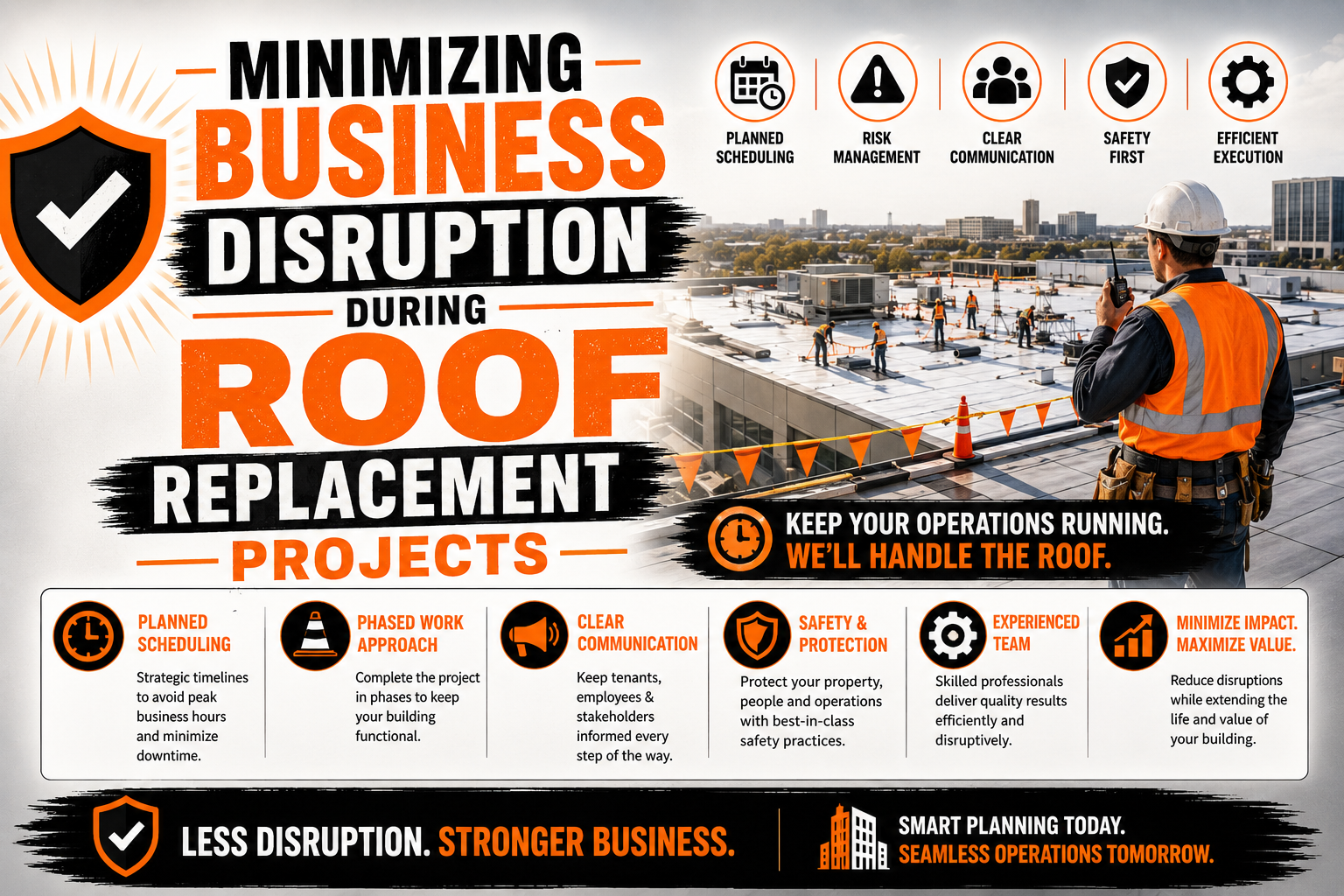
Minimizing Business Disruption During Roof Replacement Projects
Introduction
Commercial roof replacement is one of the largest maintenance projects many businesses will undertake during the life of a building. While installing a new roof is essential for protecting the property, the project also has the potential to interrupt daily operations if it is not carefully planned. Construction noise, restricted access, equipment movement, temporary utility interruptions, and safety precautions can all affect employees, customers, tenants, and business activities.
Unlike residential roof replacement, commercial projects are often completed while the building remains occupied. Offices continue serving clients, retail stores remain open, warehouses continue shipping products, healthcare facilities care for patients, and manufacturing plants maintain production schedules. This makes business continuity a key objective throughout every stage of the roofing project.
The success of a commercial roof replacement should not be measured only by the quality of the finished roof. A successful project also minimizes disruption, protects building occupants, maintains workplace safety, and allows business operations to continue as smoothly as possible. Careful planning before construction begins helps achieve these goals while reducing unnecessary delays and unexpected costs.
Minimizing disruption requires cooperation between property owners, facility managers, roofing contractors, employees, tenants, suppliers, and service providers. Every participant has a role in ensuring that roofing work is completed efficiently while protecting the normal activities taking place inside the building.
This guide explains how businesses can prepare for commercial roof replacement while maintaining productivity and reducing operational interruptions. Understanding these planning strategies allows organizations to protect both their property investment and their day to day business operations.
Why Business Continuity Matters During Commercial Roof Replacement
For most organizations, even a short interruption in business operations can result in financial losses, reduced customer satisfaction, and decreased employee productivity. Because commercial roof replacement often lasts several weeks or even months, maintaining business continuity becomes just as important as installing the new roofing system itself.
Many businesses rely on uninterrupted access to their facilities. Office buildings support employees working throughout the day, retail stores welcome customers during business hours, distribution centers manage incoming and outgoing shipments, and healthcare facilities provide essential medical services around the clock. Any disruption to these activities can have immediate operational and financial consequences.
Business continuity planning helps reduce these risks by identifying potential disruptions before construction begins. Rather than reacting to problems after they occur, organizations develop strategies that allow critical operations to continue while roofing work progresses safely above.
Customer experience also deserves careful consideration. Visitors should continue accessing the building safely and conveniently throughout the project whenever possible. Clearly marked entrances, temporary walkways, and effective communication help maintain a positive experience despite ongoing construction.
Employee productivity may also be affected if construction activities create excessive noise, restricted access, or unexpected schedule changes. Planning ahead allows contractors to coordinate disruptive work during less sensitive periods while helping employees maintain normal work routines.
Business continuity also protects organizational reputation. Companies that continue serving customers effectively throughout major construction projects demonstrate professionalism, reliability, and strong operational planning. This positive experience strengthens customer confidence while reducing the likelihood of complaints.
Insurance considerations further emphasize the importance of continuity planning. Some organizations review business interruption coverage before major construction projects to understand available protection should unexpected events temporarily affect operations. While proper planning aims to avoid interruptions altogether, understanding available insurance coverage provides additional financial security.
Ultimately, maintaining business continuity benefits everyone involved. Employees remain productive, customers continue receiving services, contractors work more efficiently, and building owners protect both their property investment and their ongoing business operations.
Common Causes of Business Disruption During Roofing Projects
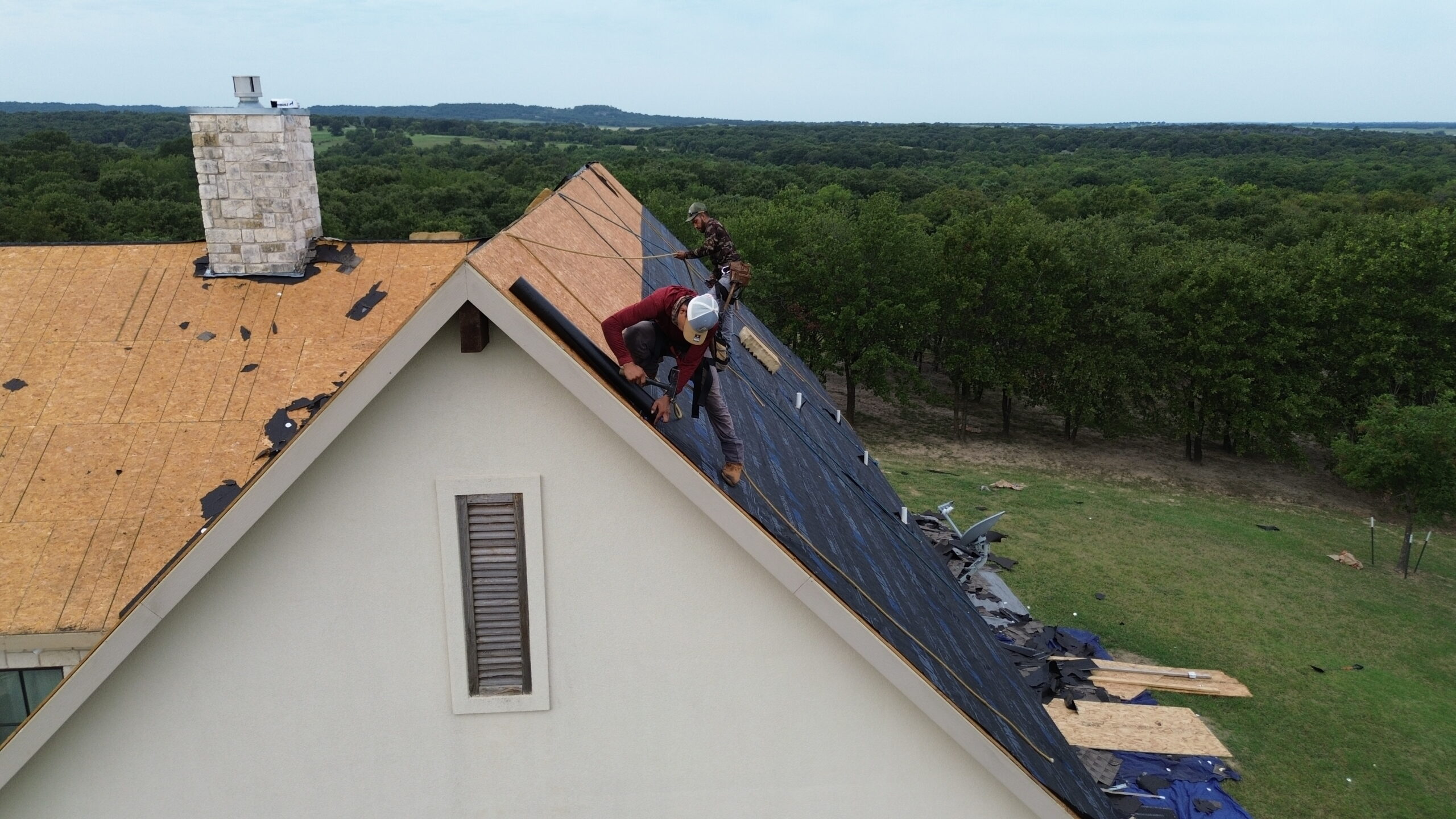
Understanding what causes disruption is the first step toward preventing it. Commercial roof replacement projects involve many activities that may affect normal business operations if they are not managed carefully. Identifying these potential challenges early allows organizations to develop practical solutions before construction begins.
Construction noise is one of the most noticeable sources of disruption. Removing existing roofing materials, fastening new roofing systems, operating heavy equipment, and transporting materials across the roof can generate significant sound. Meetings, customer interactions, manufacturing processes, and office work may all be affected if noisy activities are not scheduled appropriately.
Restricted access is another common concern. Construction vehicles, cranes, dumpsters, material storage areas, and safety barriers may temporarily block entrances, loading docks, parking areas, or pedestrian walkways. Careful planning helps maintain safe and convenient access for employees, customers, and delivery personnel.
Dust and debris may also affect building operations. Although professional contractors use protective measures to control dust, some construction particles may still be generated during roof removal or material cutting. Businesses with sensitive equipment, clean manufacturing processes, or healthcare environments often require additional dust control procedures.
Temporary utility interruptions can occur during certain phases of roof replacement. Rooftop mechanical equipment, electrical systems, ventilation units, or communication infrastructure may require temporary shutdowns while roofing work is performed nearby. Coordinating these interruptions carefully helps minimize operational impact.
Weather related delays also contribute to disruption. Heavy rain, strong winds, or severe storms may temporarily suspend roofing activities while requiring additional protective measures for unfinished roof sections. Flexible scheduling helps reduce the effect of these unavoidable delays.
Material deliveries create another potential challenge. Large quantities of roofing materials arrive throughout commercial projects, requiring organized unloading, storage, and transportation to the roof. Poorly coordinated deliveries may interfere with normal traffic flow or business activities around the building.
Safety restrictions may temporarily limit access to specific building areas during construction. Rooftop work, overhead lifting operations, or active demolition zones require controlled access to protect occupants from potential hazards. Clearly communicating these restrictions helps prevent confusion while maintaining workplace safety.
Some common sources of disruption include:
- Construction noise during roof removal and installation
- Temporary entrance or parking restrictions
- Dust generated during demolition activities
- Material deliveries and equipment movement
- Temporary utility or HVAC interruptions
- Weather related schedule adjustments
- Restricted rooftop access for maintenance personnel
Recognizing these potential challenges before construction begins allows project teams to develop effective mitigation strategies that support continued business operations.
Evaluating Building Operations Before Roof Replacement
Every commercial building functions differently, making operational evaluation an essential part of project planning. Before roofing work begins, contractors and facility managers should develop a detailed understanding of how the building operates throughout the day. This evaluation helps identify activities that require special protection during construction.
The first step involves identifying the building’s primary functions. Office buildings, retail stores, schools, hospitals, hotels, warehouses, and manufacturing facilities all have different operational priorities. Understanding these activities allows contractors to organize work schedules that minimize disruption.
Business hours should also be reviewed carefully. Some organizations operate only during normal daytime hours, while others maintain evening shifts or continuous twenty four hour operations. Roofing schedules should be adjusted whenever possible to reduce interference with critical business activities.
Facility managers should identify areas containing sensitive equipment or specialized operations. Data centers, medical facilities, research laboratories, production equipment, and customer service areas may require additional protection from noise, dust, or temporary utility interruptions.
Employee movement throughout the building should also be evaluated. Contractors need to understand how people enter and exit the facility, where deliveries occur, and which pathways remain essential during construction. Maintaining safe access routes supports both productivity and workplace safety.
Emergency procedures require careful review as well. Fire exits, emergency vehicle access, evacuation routes, and safety systems must remain functional throughout the roofing project. Temporary modifications should always comply with applicable safety regulations while ensuring rapid emergency response if needed.
Building maintenance schedules also influence roofing activities. Routine servicing of HVAC equipment, electrical systems, elevators, or communication infrastructure should be coordinated with roofing work to avoid unnecessary conflicts between maintenance personnel and construction crews.
Organizations should also identify events that cannot be disrupted. Important client meetings, product launches, public events, examinations, manufacturing deadlines, or seasonal business peaks may require temporary adjustments to roofing schedules. Considering these events during planning helps reduce operational conflicts later.
A thorough operational evaluation provides the information needed to create a realistic construction schedule that supports both roofing activities and ongoing business requirements.
Developing a Business Continuity Plan
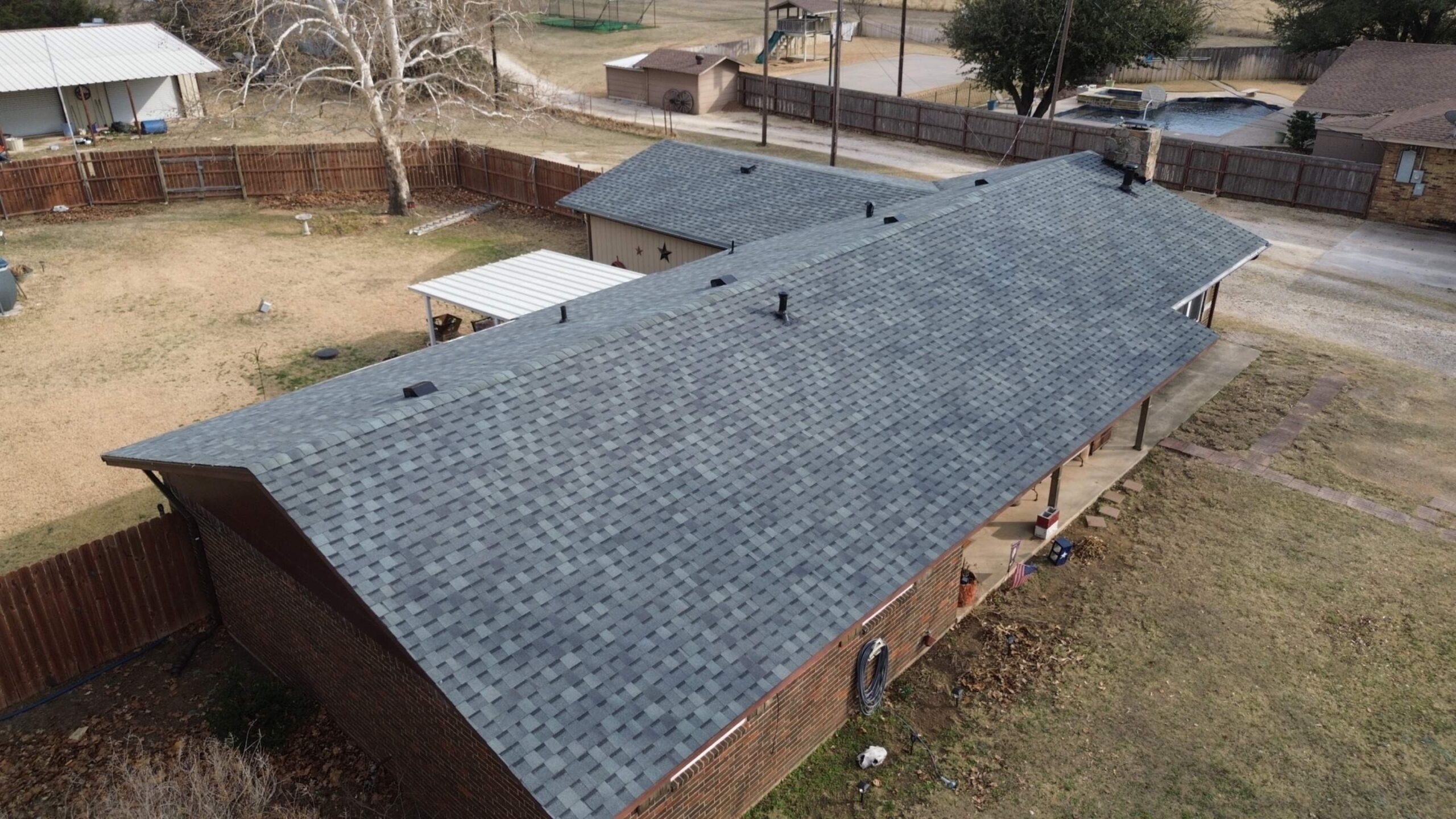
After evaluating building operations, the next step is creating a formal business continuity plan for the roofing project. This plan outlines how the organization will continue operating safely and efficiently throughout construction while addressing potential disruptions before they occur.
The continuity plan should identify critical business functions that must remain operational during roof replacement. These may include customer service, manufacturing, healthcare delivery, shipping operations, data management, financial transactions, or other activities essential to the organization’s success.
Responsibilities should be clearly assigned within the organization. Facility managers, department supervisors, maintenance personnel, information technology teams, security staff, and contractors should each understand their specific roles during the project. Clearly defined responsibilities improve coordination while reducing confusion.
The plan should also include procedures for responding to unexpected situations. Severe weather, temporary utility interruptions, equipment failures, or unforeseen construction challenges may require rapid decision making. Preparing response procedures in advance helps minimize operational impact if these situations occur.
Communication protocols are another important element of continuity planning. Employees should know how project updates will be shared, who to contact with questions, and how schedule changes will be communicated throughout the project.
Temporary workspace arrangements may also be considered if certain building areas become temporarily inaccessible. Relocating meetings, adjusting work schedules, or allowing temporary remote work may help maintain productivity during particularly disruptive construction phases.
Business continuity planning should also include regular review meetings throughout the roofing project. These meetings allow project teams to evaluate progress, discuss upcoming activities, address emerging concerns, and adjust plans as necessary to support continued operations.
Organizations that invest time developing comprehensive continuity plans are generally better prepared to manage commercial roof replacement while maintaining productivity and customer service throughout the construction period.
Coordinating With Building Occupants, Employees, and Tenants
Effective communication is one of the most important tools for minimizing business disruption during roof replacement. Keeping building occupants informed allows everyone to prepare for temporary inconveniences while supporting safe and efficient project execution.
Communication should begin well before construction starts. Employees, tenants, customers, and regular visitors should receive advance notice explaining the project schedule, expected duration, work hours, and any temporary changes affecting building access or daily operations.
Regular project updates help maintain confidence throughout construction. Weekly emails, posted notices, internal newsletters, or digital communication platforms can provide information about completed work, upcoming activities, schedule adjustments, and temporary restrictions.
Tenants in multi occupant commercial buildings require particularly careful coordination. Different businesses may have unique operating hours, customer needs, or equipment requirements. Maintaining open communication helps contractors accommodate these varying operational priorities whenever practical.
Building occupants should also understand safety expectations during construction. Temporary barriers, restricted access areas, designated walkways, and emergency procedures should be explained clearly to reduce confusion while protecting everyone on the property.
Encouraging feedback is equally important. Employees and tenants who report concerns early allow project teams to address issues before they become larger operational problems. Establishing clear communication channels supports quick problem solving throughout the project.
Contractors should designate a primary point of contact responsible for answering questions and coordinating communication with facility management. Having a single knowledgeable representative simplifies communication while ensuring that information remains accurate and consistent.
Successful commercial roof replacement depends not only on skilled installation but also on strong communication with everyone affected by the project. When occupants understand what to expect and receive timely updates throughout construction, businesses are better positioned to continue operating efficiently despite the temporary challenges associated with roof replacement. In the next part, we will examine practical strategies for scheduling roofing work, managing construction activities, protecting occupants, coordinating utilities, and maintaining clear communication while business operations continue.
Scheduling Roofing Work Around Business Hours
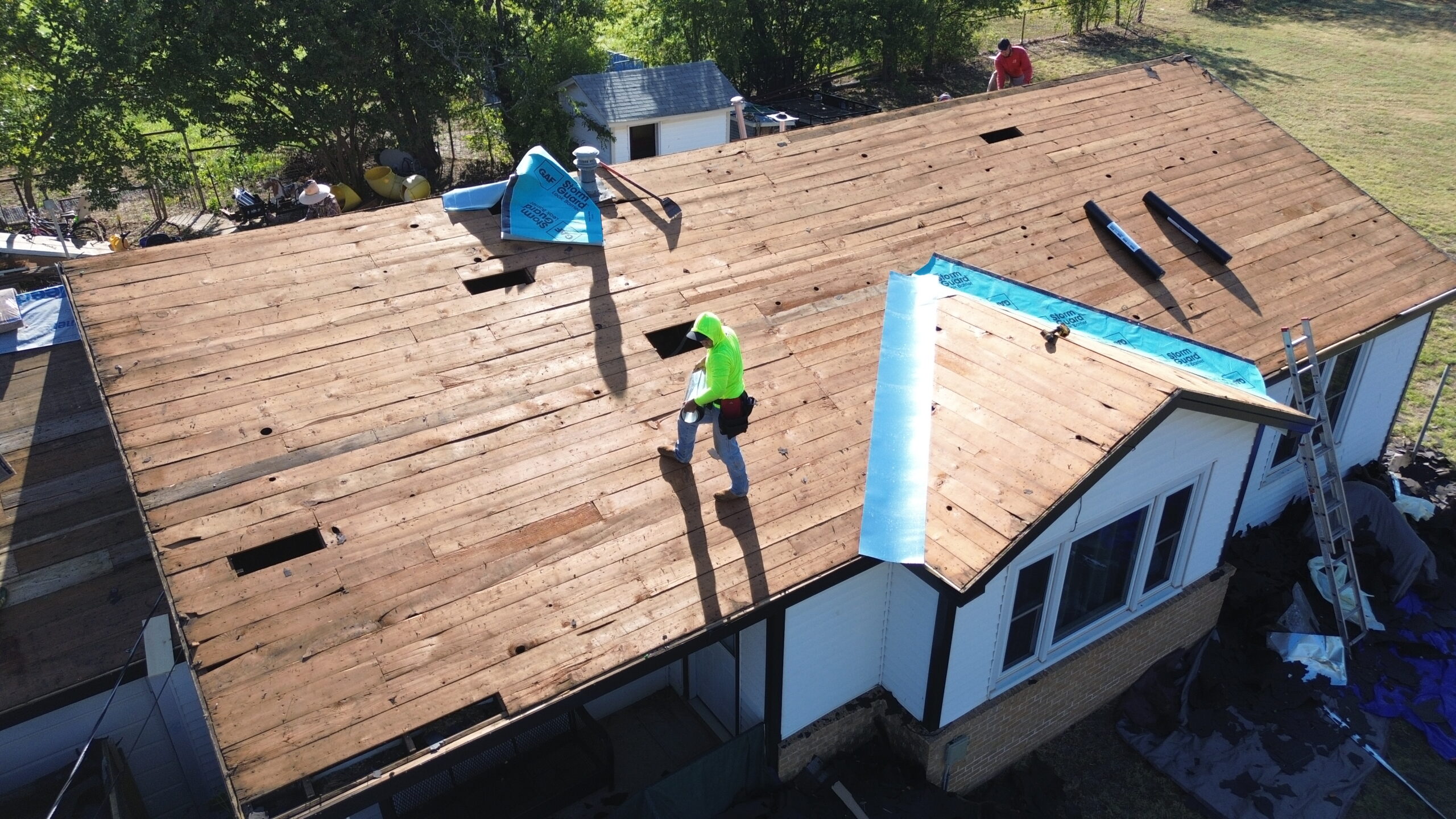
One of the most effective ways to reduce business disruption during a commercial roof replacement is to carefully schedule construction activities around normal business operations. Every organization has unique working hours, customer traffic patterns, and operational priorities, making flexible scheduling an essential part of project planning.
Before establishing the construction schedule, contractors should meet with building owners and facility managers to understand daily business activities. Some businesses experience peak customer traffic during certain hours, while others operate around the clock. Identifying these patterns allows roofing work to be organized in a way that minimizes interference with essential operations.
For office buildings, noisy activities may be scheduled early in the morning, late in the afternoon, or during weekends when fewer employees are present. Retail stores often prefer roofing work before opening hours or after closing to reduce disruption for customers. Manufacturing facilities may coordinate construction around production shifts or scheduled maintenance periods.
Projects involving schools, hospitals, or hotels require even greater flexibility. Roofing contractors may divide work into smaller sections and coordinate activities around examinations, patient care, or guest occupancy to maintain normal operations as much as possible.
Weather conditions should also be considered when developing the schedule. While flexibility is important, contractors must also ensure roofing materials are installed under suitable weather conditions to maintain quality and long term performance.
The project schedule should remain realistic rather than overly aggressive. Rushing construction to meet unrealistic deadlines often increases mistakes, safety risks, and operational disruptions. Allowing sufficient time for each installation phase supports both construction quality and business continuity.
Regular schedule reviews throughout the project help accommodate changing business needs and unexpected weather conditions. Open communication allows adjustments to be made without significantly affecting either construction progress or daily operations.
Phased Roof Replacement Strategies
Large commercial buildings rarely require the entire roof to be removed at once. Instead, contractors commonly use phased replacement strategies that divide the roof into smaller work zones. This approach protects the building while allowing business activities to continue with minimal interruption.
Each phase is carefully planned before work begins. Contractors complete one section of the roof before moving to the next, ensuring that large portions of the building remain fully protected throughout the project. This reduces the risk of water intrusion while improving overall construction management.
Phased construction also helps maintain normal building operations. If one section of the building contains critical offices, production equipment, or customer service areas, contractors can schedule roofing work over those locations during periods of lower activity or after completing less sensitive sections first.
Material deliveries become easier to manage during phased projects as well. Instead of transporting all roofing materials to the site simultaneously, contractors deliver materials according to the current phase of construction. This reduces storage requirements and minimizes congestion around the building.
Quality control also benefits from phased installation. Supervisors can inspect completed sections before construction continues, allowing any necessary corrections to be made immediately rather than after the entire roof has been completed.
Another advantage of phased replacement is improved weather protection. If unexpected rain develops, contractors need to secure only the active work area rather than protecting the entire roof. This reduces project risk while allowing work to resume more quickly once weather conditions improve.
For particularly large facilities, phased construction may be coordinated with business departments. Office wings, warehouse sections, production areas, or tenant spaces can each receive roofing work according to their operational priorities, creating a more organized and efficient replacement process.
Protecting Employees, Customers, and Visitors
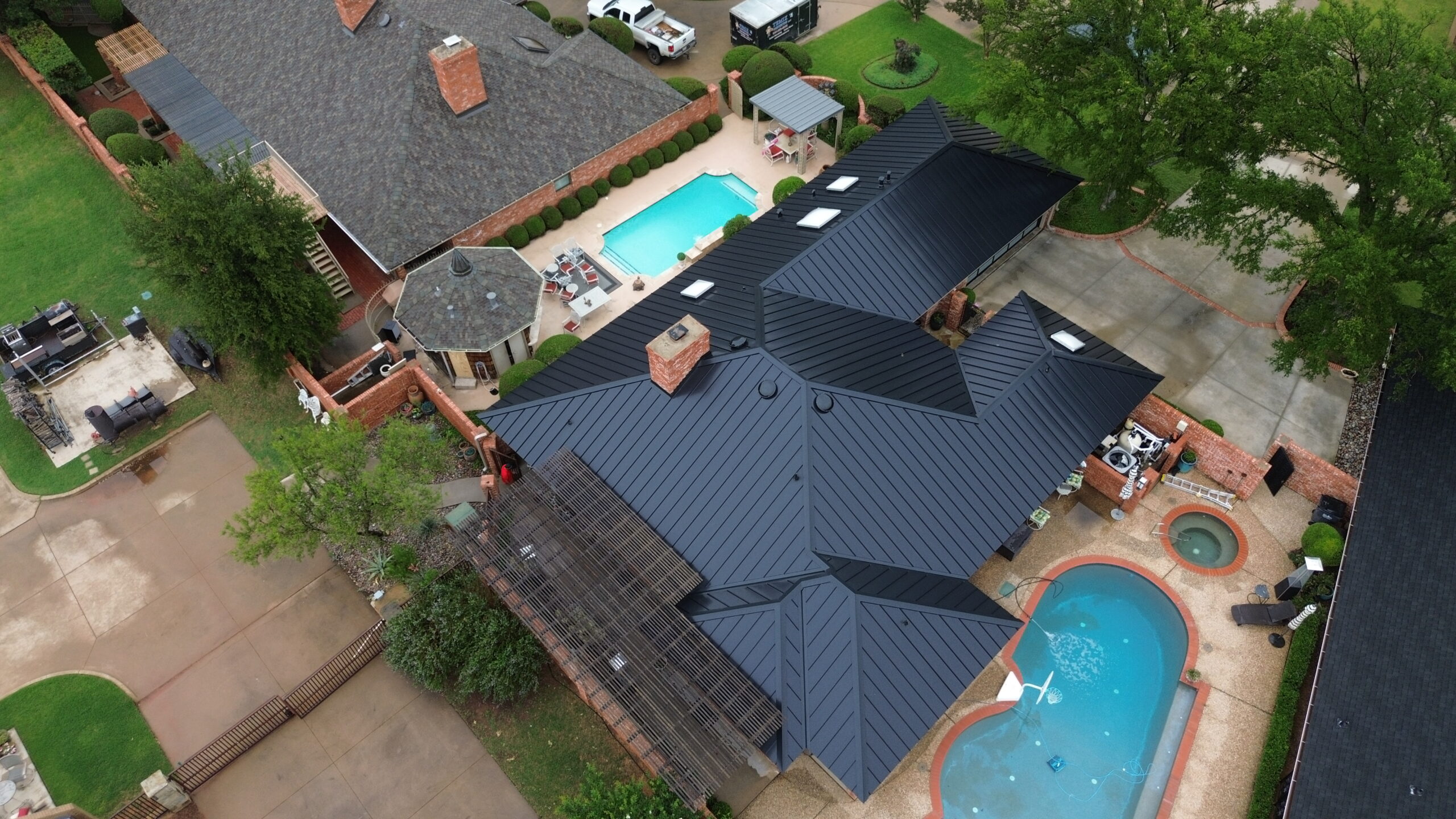
Protecting everyone who uses the building is one of the highest priorities during commercial roof replacement. Employees, customers, tenants, suppliers, and visitors should be able to enter, exit, and move throughout the property safely while construction activities continue overhead.
Temporary safety barriers are commonly installed around active work zones. These barriers help separate construction activities from pedestrian areas while preventing unauthorized access to locations where roofing crews are working.
Clearly marked walkways direct people safely around construction areas. Contractors should maintain convenient access to building entrances whenever possible while ensuring that temporary routes remain well lit, clearly identified, and free from hazards.
Parking areas may also require temporary adjustments during roof replacement. Material deliveries, cranes, dumpsters, and construction equipment often occupy portions of parking lots or loading zones. Providing advance notice of parking changes helps employees and visitors plan accordingly.
Loading docks and delivery entrances deserve special attention because they often remain active throughout commercial projects. Coordinating deliveries with construction schedules reduces congestion while maintaining efficient building operations.
Building security personnel may also participate in project coordination. Security teams help direct visitors, answer questions, monitor restricted areas, and support emergency procedures throughout the replacement process.
Emergency access must never be compromised during construction. Fire exits, emergency vehicle routes, and evacuation pathways should remain fully accessible at all times unless approved temporary alternatives have been established according to local safety regulations.
Daily safety inspections help ensure that walkways, entrances, temporary barriers, and work zones remain safe throughout construction. Addressing hazards promptly protects both building occupants and construction personnel.
Managing Noise, Dust, and Access Restrictions
Construction activities naturally generate noise and dust, but careful planning can significantly reduce their impact on daily business operations. Managing these factors effectively improves employee comfort while maintaining a more productive work environment throughout the roofing project.
Roof removal generally produces the highest noise levels because workers remove existing roofing materials using hand tools and mechanical equipment. Contractors often schedule these activities during less sensitive business hours whenever practical to reduce disruption.
Material fastening, equipment movement, and crane operations may also generate temporary noise. Communicating these activities in advance allows building occupants to prepare for short periods of increased sound.
Dust control begins before demolition starts. Contractors often use protective coverings, debris containment systems, and controlled material removal techniques to reduce the spread of construction dust. These measures become especially important in healthcare facilities, laboratories, food processing plants, and manufacturing environments.
Air intake systems should also be evaluated before roofing work begins. In some situations, HVAC systems may require temporary adjustments to prevent dust from entering occupied areas during demolition activities.
Access restrictions require careful coordination as construction progresses. Certain entrances, stairways, rooftop access points, or service corridors may become temporarily unavailable while roofing crews work nearby. Clearly communicating these restrictions helps reduce confusion among building occupants.
Directional signs placed throughout the property help employees and visitors locate temporary entrances or alternative pathways. Simple and consistent signage improves navigation while reducing unnecessary interruptions during construction.
Regular housekeeping also contributes to a cleaner work environment. Contractors should remove debris frequently, maintain organized storage areas, and keep walkways clear throughout the project. A clean construction site supports both safety and business continuity.
Coordinating HVAC, Utilities, and Rooftop Equipment
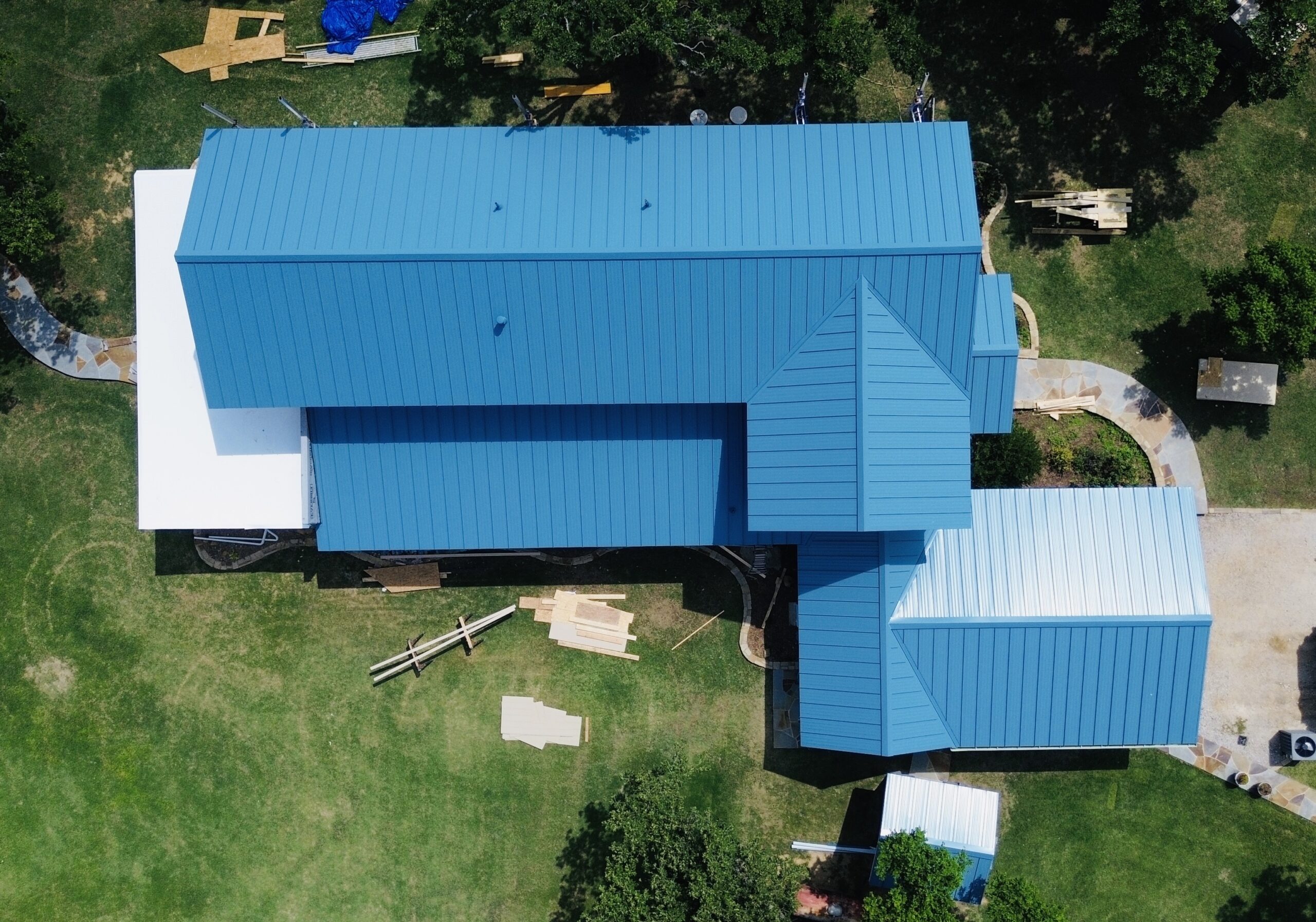
Commercial roofs frequently support essential building systems that require careful coordination during roof replacement. Heating, ventilation, air conditioning, electrical equipment, communication infrastructure, exhaust systems, and rooftop machinery often remain operational throughout construction, making careful planning essential.
HVAC systems receive particular attention because they directly affect indoor comfort and air quality. Contractors work closely with facility managers to determine whether equipment can remain operational or whether temporary shutdowns are required while roofing work is performed nearby.
If temporary shutdowns become necessary, they should be scheduled during periods of minimal business activity whenever possible. Advance notice allows departments to prepare while reducing operational inconvenience.
Electrical systems serving rooftop equipment must also be protected throughout construction. Contractors coordinate with qualified electricians whenever equipment requires temporary disconnection or relocation during roofing activities.
Communication infrastructure, including antennas, satellite equipment, wireless systems, and network hardware, should be evaluated before construction begins. Maintaining uninterrupted communication services remains especially important for businesses that depend on continuous digital operations.
Rooftop exhaust systems serving kitchens, laboratories, manufacturing processes, or healthcare facilities require additional planning because interrupting these systems may affect indoor air quality or regulatory compliance.
Equipment protection extends beyond utility coordination. Contractors should install temporary barriers or protective coverings around rooftop equipment to prevent damage from falling debris, construction tools, or roofing materials during installation.
Facility maintenance personnel play an important role throughout this process because they understand the operation of building systems and can assist contractors in coordinating maintenance schedules with roofing activities. Their knowledge helps prevent unnecessary interruptions while ensuring that critical systems continue functioning safely.
Communication Strategies Throughout the Project
Consistent communication is one of the most effective tools for minimizing business disruption during commercial roof replacement. Even well planned projects encounter schedule changes, weather delays, or unexpected conditions, making regular updates essential throughout construction.
Communication should begin before roofing work starts and continue until the project has been completed successfully. Employees, tenants, customers, suppliers, and contractors all benefit from timely information regarding construction progress and upcoming activities.
Weekly project meetings provide opportunities for contractors and facility managers to review completed work, discuss the next construction phase, identify operational concerns, and adjust schedules when necessary. These meetings help maintain alignment among everyone involved in the project.
Written updates distributed through email, internal newsletters, digital notice boards, or tenant communication systems keep building occupants informed without requiring formal meetings. Information should include work schedules, temporary access changes, anticipated noise, parking adjustments, and safety reminders.
Visual communication is equally valuable. Temporary signs directing visitors to alternate entrances, updated parking instructions, restricted access notices, and safety information help reduce confusion throughout the property.
Contractors should also establish a designated project contact responsible for responding to questions from facility managers, tenants, and employees. Having a single knowledgeable representative improves communication while ensuring that accurate information is shared consistently.
Feedback should be encouraged throughout the project. Employees and tenants often identify operational concerns before they become significant disruptions. Providing simple methods for reporting issues allows contractors to respond quickly while maintaining positive working relationships.
Emergency communication procedures should also be established before construction begins. If unexpected weather, utility interruptions, or safety concerns arise, building occupants should receive immediate instructions explaining the situation and any temporary operational changes.
Strong communication creates confidence throughout the roofing project. When building occupants understand what is happening, why certain activities are necessary, and how long temporary disruptions will last, they are more likely to remain cooperative and productive during construction.
By carefully scheduling roofing work, implementing phased construction strategies, protecting building occupants, controlling noise and dust, coordinating essential building systems, and maintaining clear communication, organizations can significantly reduce operational disruption while commercial roof replacement progresses safely and efficiently. In the final part, we will examine project completion, handling unexpected delays, evaluating project success, long term operational benefits, and conclude the guide on minimizing business disruption during commercial roof replacement.
Final Inspections and Safe Project Closeout
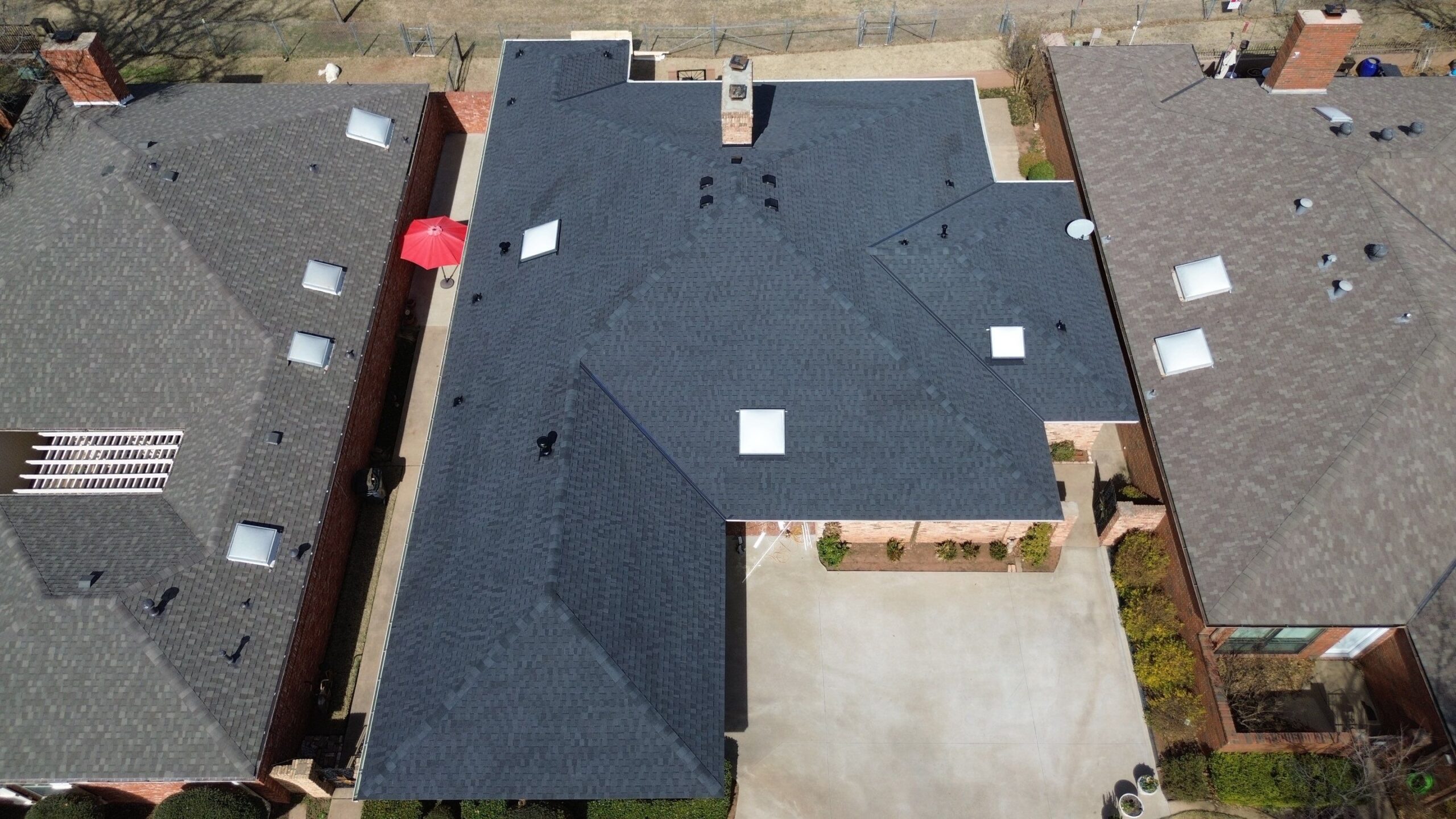
As the commercial roof replacement project approaches completion, the focus shifts from installation to verification and project closeout. While completing the roofing work is a major milestone, the final inspection process is equally important because it confirms that the roof has been installed correctly and that the building is ready to return to normal operations without construction related restrictions.
The roofing contractor begins with a comprehensive inspection of the completed roof. Every section is reviewed to verify that roofing materials, flashing, seams, drainage components, expansion joints, and rooftop penetrations have been installed according to manufacturer specifications and project requirements. Any minor issues identified during this inspection should be corrected before the project is officially completed.
Property owners and facility managers are often invited to participate in a final walkthrough. This inspection provides an opportunity to review the completed work, ask questions, and confirm that all agreed project requirements have been satisfied. Walking the roof together also helps building managers become familiar with important roofing components that may require future maintenance.
Cleanup is another critical part of project closeout. Roofing crews remove unused materials, packaging, construction debris, temporary barriers, and equipment from the property. Parking areas, sidewalks, loading zones, and landscaped areas should be restored to their normal condition so employees, customers, and visitors can safely access the building.
Special attention should be given to collecting loose nails, screws, and metal fragments. Contractors often use magnetic sweepers throughout parking lots and pedestrian areas to reduce the risk of tire damage or injuries after construction has finished.
If local regulations require final inspections by building officials, these should be completed before the project is considered closed. Passing these inspections confirms that the roofing system complies with applicable building codes and approved permit requirements.
Once all inspections are complete, contractors provide project documentation, maintenance recommendations, warranty information, and other important records to the building owner. Organizing these documents immediately after project completion simplifies future maintenance and warranty management.
Maintaining Productivity During Extended Roofing Projects
Some commercial roof replacement projects continue for several weeks or even months because of building size, weather conditions, or phased construction schedules. Maintaining productivity throughout these extended projects requires ongoing attention rather than relying only on the initial planning completed before construction began.
Managers should continue monitoring how roofing activities affect employees, customers, and tenants throughout the project. Gathering regular feedback allows operational concerns to be addressed before they begin affecting business performance.
Flexible work arrangements can be valuable during particularly disruptive construction phases. Some organizations temporarily adjust meeting schedules, relocate departments, stagger employee shifts, or allow remote work for certain staff members when roofing activities create higher than normal noise levels.
Department managers should communicate regularly with facility management regarding upcoming business events that may require temporary construction adjustments. Client meetings, training sessions, product demonstrations, or special events often benefit from additional coordination with the roofing contractor.
Maintaining a clean and organized environment also supports productivity. Construction crews should continue removing debris regularly while keeping entrances, corridors, parking areas, and loading zones as clear as possible throughout the project.
Employee morale should not be overlooked during extended construction. Temporary inconveniences such as construction noise, modified entrances, or parking changes can become frustrating over time. Providing regular updates and explaining project progress helps employees understand that the disruption is temporary and necessary for long term building improvements.
Facility managers should also review project progress against the original schedule on a regular basis. Identifying potential delays early allows corrective action before significant operational impacts develop.
Successful long term productivity depends on continuous coordination rather than assuming that the original project plan will remain unchanged throughout construction.
Handling Unexpected Delays and Emergency Situations
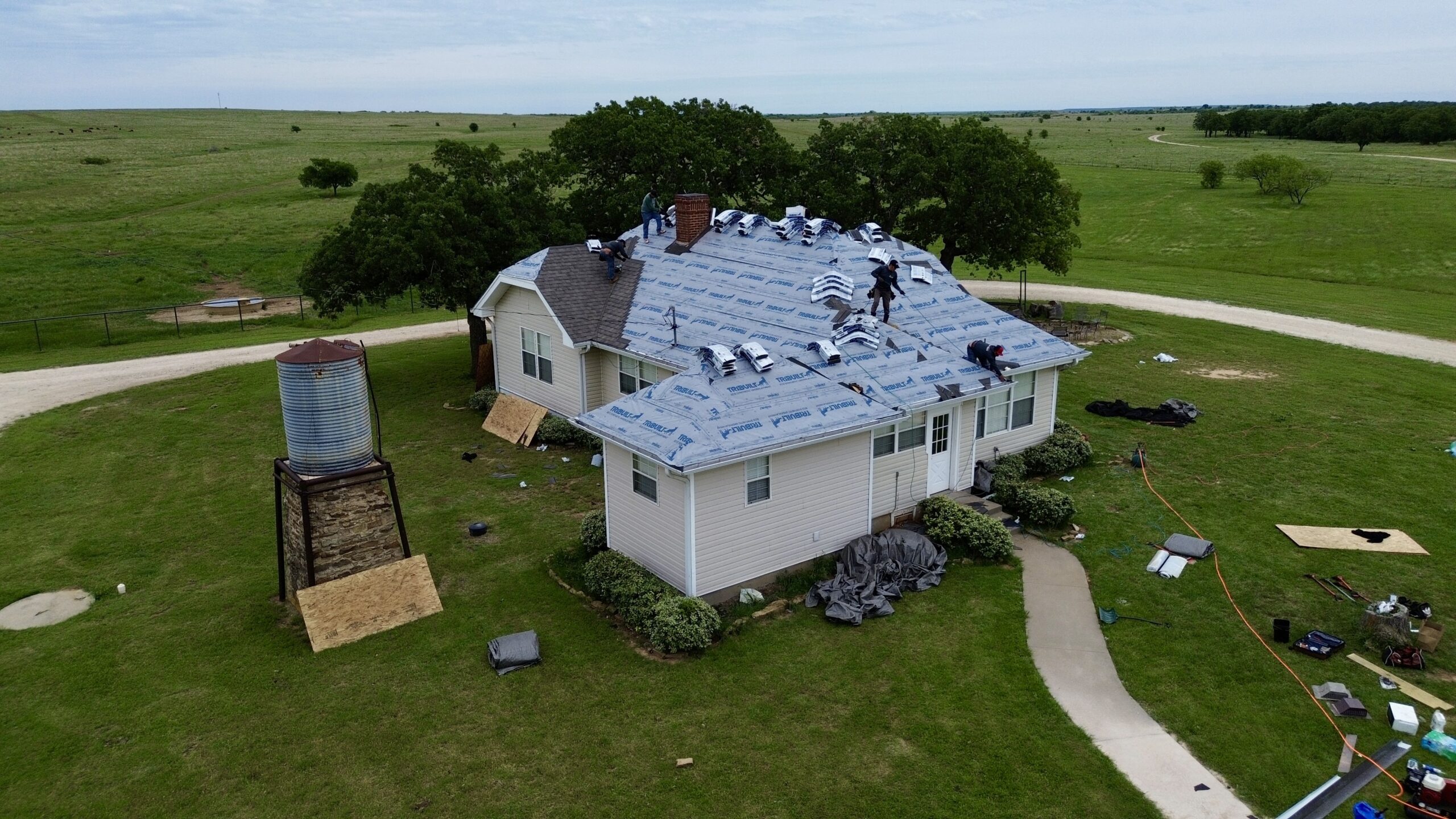
Even the most carefully planned commercial roof replacement projects may encounter unexpected challenges. Weather conditions, hidden structural damage, supply chain delays, equipment failures, or emergency building situations can affect construction schedules despite thorough preparation.
Having contingency plans in place before work begins allows organizations to respond more effectively when unexpected events occur. Rather than making decisions under pressure, project teams can follow established procedures that reduce confusion while protecting business operations.
Weather remains one of the most common causes of construction delays. Heavy rain, strong winds, lightning, or extreme temperatures may temporarily suspend roofing activities to protect workers and unfinished roof sections. Contractors should maintain temporary waterproof coverings that protect exposed portions of the roof whenever weather conditions change unexpectedly.
Hidden structural problems occasionally become visible after existing roofing materials are removed. Damaged roof decking, wet insulation, deteriorated structural members, or drainage issues may require additional repairs before installation continues. Although these discoveries can affect schedules, correcting them immediately helps avoid much larger problems after the project has been completed.
Material delivery delays may also require schedule adjustments. Contractors who maintain close communication with suppliers can often identify potential shortages early and develop alternative solutions before construction is interrupted significantly.
Emergency situations involving the building itself require immediate coordination. Fire alarms, medical emergencies, utility failures, or security incidents may temporarily interrupt roofing work while emergency responders access the property. Contractors should understand emergency procedures and cooperate fully with building management during these situations.
Communication becomes especially important whenever unexpected delays occur. Employees, tenants, customers, and suppliers should receive timely updates explaining schedule changes, revised work plans, and expected completion dates. Transparent communication helps maintain confidence while reducing unnecessary concern.
Organizations that prepare for unexpected situations before construction begins are generally able to recover more quickly from temporary setbacks while maintaining better control over business operations.
Post Project Evaluation and Lessons Learned
Completing the roof replacement provides an excellent opportunity to evaluate the entire project and identify lessons that can improve future facility management activities. Reviewing both successes and challenges helps organizations strengthen planning for future maintenance or renovation projects.
Facility managers should begin by comparing the completed project with the original objectives. Reviewing budget performance, schedule accuracy, business continuity, safety results, and construction quality provides a clear understanding of overall project success.
Feedback from employees, tenants, contractors, and department managers also provides valuable insight. Individuals working in different parts of the building often experience construction differently, making their observations useful for identifying opportunities for improvement.
Questions worth evaluating include:
- Were business operations maintained successfully throughout the project?
- Did communication remain clear and consistent?
- Were temporary disruptions managed effectively?
- Did the contractor respond quickly to unexpected challenges?
- Were safety procedures followed throughout construction?
- Was the final project completed according to expectations?
Project documentation should also be reviewed and organized before closing the project. Inspection reports, warranties, maintenance recommendations, photographs, repair records, permits, and contractor contact information should be stored together for future reference.
Organizations may also update their facility management procedures based on lessons learned during the project. Improvements in communication methods, emergency planning, scheduling strategies, or contractor coordination can benefit future building maintenance projects.
Conducting a formal project review demonstrates a commitment to continuous improvement while ensuring that valuable experience gained during roof replacement is not lost once construction has ended.
Long Term Benefits of Well Planned Roof Replacement
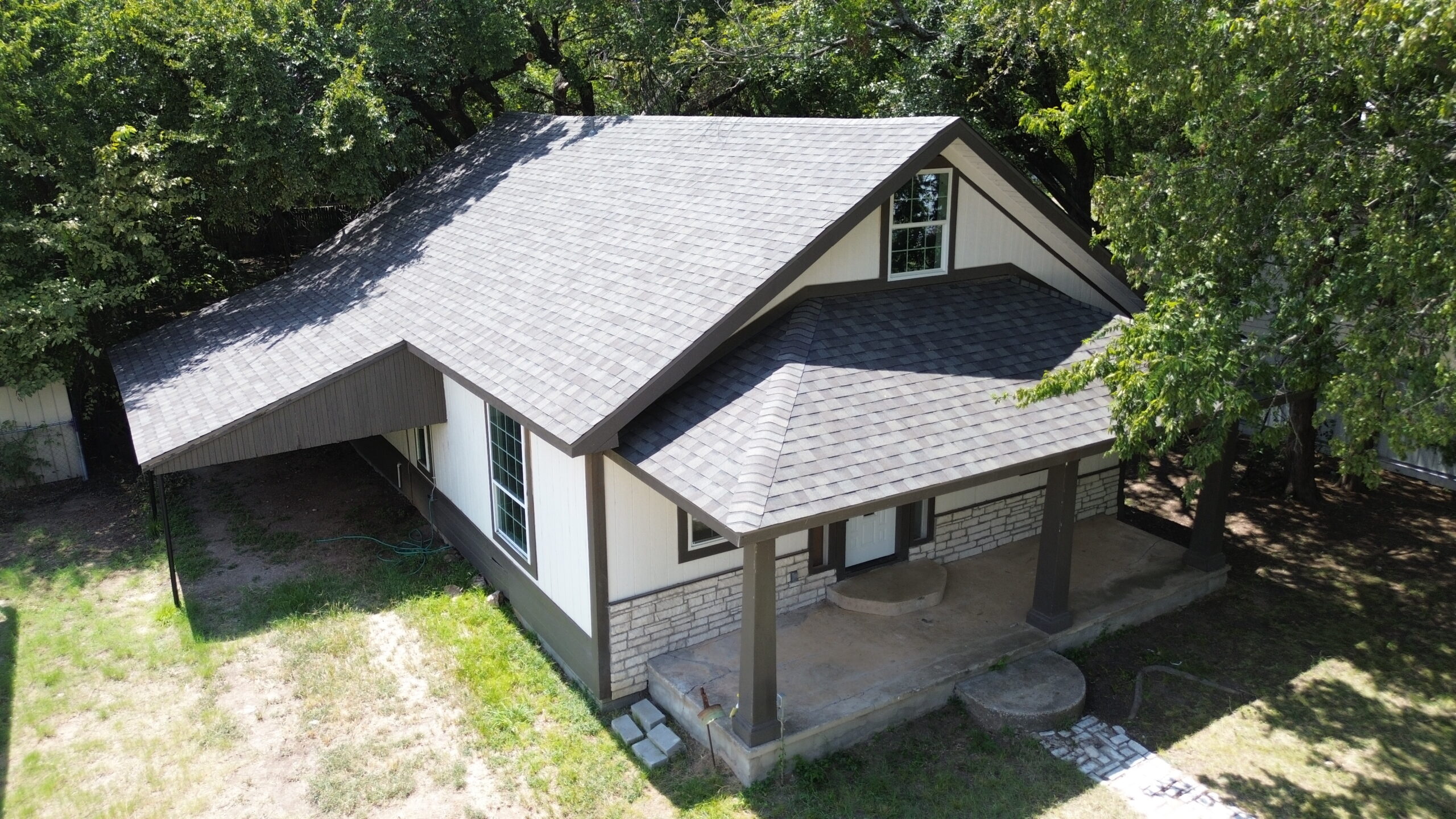
Although commercial roof replacement requires considerable planning and temporary adjustments, the long term benefits often far outweigh the short term inconvenience. Organizations that carefully manage roofing projects frequently experience operational improvements for many years after construction has been completed.
A professionally installed roofing system provides reliable protection against rain, wind, sunlight, and changing weather conditions. Reducing the likelihood of leaks helps protect employees, equipment, inventory, documents, and interior finishes from costly water damage.
Energy efficiency improvements represent another significant benefit. Modern commercial roofing systems often include improved insulation and reflective materials that reduce heating and cooling demands throughout the year. Lower utility expenses contribute to long term operating cost savings while supporting sustainability objectives.
Maintenance requirements may also decrease substantially after replacement. Instead of responding to recurring leaks and emergency repairs, facility managers can focus on preventive maintenance that extends roof lifespan while reducing annual repair expenses.
Building appearance also improves following roof replacement. Although much of the roof may not be visible from ground level, improved drainage, properly maintained rooftop equipment, and overall building condition contribute to a more professional image for customers, tenants, investors, and employees.
Property value may increase as well. Prospective buyers and tenants often view a recently replaced commercial roof as an indication that the building has been maintained responsibly. A modern roofing system supported by documented warranties and maintenance records can strengthen the property’s overall marketability.
Perhaps the greatest long term benefit is improved operational confidence. Facility managers can focus on business growth and daily operations without the constant concern of recurring roof leaks, emergency repairs, or unexpected building closures caused by roofing failures.
Conclusion
Commercial roof replacement is much more than a construction project. It is a carefully managed process that must balance building improvements with the ongoing needs of employees, customers, tenants, and business operations. Successfully minimizing disruption requires thoughtful planning, proactive communication, flexible scheduling, and close coordination between property owners, facility managers, and roofing contractors.
Throughout this guide, we explored the complete process of maintaining business continuity during commercial roof replacement. We examined how organizations can evaluate building operations, identify potential sources of disruption, develop continuity plans, coordinate with building occupants, schedule construction strategically, manage phased installation, and maintain clear communication throughout every stage of the project.
We also discussed practical strategies for protecting employees and visitors, controlling noise and dust, coordinating HVAC systems and rooftop equipment, handling unexpected delays, and maintaining productivity during longer construction schedules. These measures help businesses continue operating efficiently while roofing work progresses safely overhead.
The final stages of the project are equally important. Comprehensive inspections, organized documentation, preventive maintenance planning, and post project evaluations ensure that the benefits of the new roofing system continue long after construction crews have left the site. Learning from each completed project also strengthens future facility management planning and improves organizational preparedness.
Ultimately, the most successful commercial roof replacement projects are those that achieve two equally important goals. They deliver a high quality roofing system that protects the building for decades while allowing the organization to continue serving employees, customers, and tenants with minimal interruption throughout construction. With experienced contractors, detailed planning, consistent communication, and a commitment to business continuity, organizations can complete even large commercial roof replacement projects efficiently while protecting both their physical assets and their daily operations.