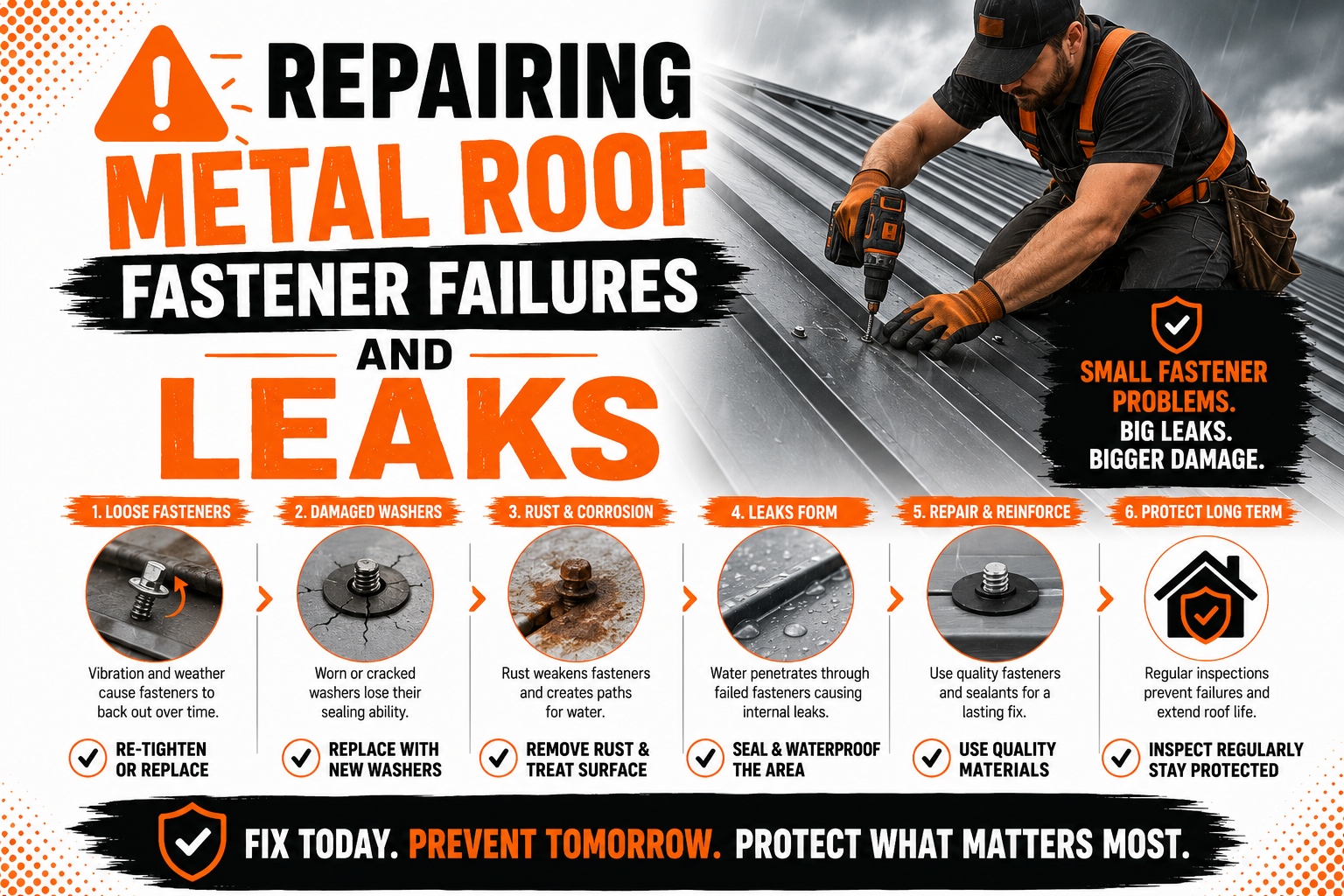
Repairing Metal Roof Fastener Failures and Leaks
Introduction
Metal roofing systems have earned a strong reputation for their durability, longevity, and ability to withstand harsh weather conditions. Whether installed on residential homes, commercial buildings, agricultural facilities, or industrial structures, a properly maintained metal roof can provide reliable protection for several decades. However, even the highest quality roofing system depends on one small but critical component that is often overlooked, the fastener. When fasteners begin to fail, they can quickly become the source of roof leaks, structural movement, and costly repairs.
Fasteners perform the essential task of securing metal panels to the roof deck or structural framing. Every screw, clip, and attachment point helps distribute wind loads, supports thermal movement, and keeps the roofing system firmly in place. Although these components are designed to withstand years of environmental exposure, they are constantly subjected to sunlight, temperature fluctuations, rain, snow, wind pressure, and moisture. Over time, these conditions gradually reduce their effectiveness.
A leaking metal roof is frequently traced back to fastener problems rather than damaged panels. Loose screws, deteriorated rubber washers, stripped attachment holes, corrosion, and improper installation can all create openings that allow water to enter the roofing system. Even a small leak around a single fastener can eventually spread moisture beneath the panels, damaging insulation, roof decking, structural framing, and interior finishes if left unaddressed.
One of the challenges with fastener failures is that they often develop slowly. Unlike storm damage that produces immediate and visible destruction, fastener related problems may progress over months or even years before becoming noticeable. Small amounts of movement caused by daily thermal expansion and contraction gradually loosen screws, compress sealing washers, and enlarge attachment holes. By the time water stains appear inside the building, significant deterioration may already exist beneath the roof surface.
Repairing metal roof fastener failures requires more than simply tightening loose screws. Successful repairs involve identifying the root cause of the failure, selecting compatible replacement materials, restoring watertight seals, and ensuring the roof maintains its designed wind resistance. Treating only the visible symptoms often leads to recurring leaks that become increasingly expensive to repair.
This guide explains why metal roof fasteners fail, how these failures lead to roof leaks, and the proper methods for inspecting roofing systems before repairs begin. It also discusses common warning signs, safety considerations, and the factors that influence long term fastener performance. Later sections will explore detailed repair techniques, preventive maintenance strategies, and professional recommendations for extending the life of a metal roofing system.
Understanding Metal Roof Fastener Systems
Although metal roofing panels receive most of the attention, the fastener system is what keeps the entire roof functioning as a unified structure. Every panel relies on carefully positioned attachment points to resist wind uplift, accommodate thermal expansion, and transfer structural loads safely into the building framework.
Metal roofing systems generally use one of two primary attachment methods. The first is the exposed fastener system, where screws pass directly through the metal panel into the roof structure. The second is the concealed fastener system, commonly found on standing seam roofs, where hidden clips secure the panels while allowing controlled movement during temperature changes.
Exposed fastener systems remain popular because they are relatively simple to install, inspect, and repair. Since every screw is visible from the roof surface, maintenance personnel can quickly identify loose or damaged fasteners. However, constant exposure to sunlight, rain, and changing weather conditions means these fasteners require regular inspection throughout the roof’s lifespan.
Standing seam roofs offer greater protection by concealing the fasteners beneath raised panel seams. This design shields attachment points from direct weather exposure while creating a cleaner architectural appearance. Although concealed fasteners generally experience less environmental deterioration, they still require periodic inspection because hidden clips and connections can loosen or deform over time.
A typical roofing fastener consists of several components working together. The threaded screw anchors into the roof deck or structural framing, while the metal head secures the panel against the supporting surface. Between the screw head and the roofing panel sits a sealing washer, usually made from neoprene or another weather resistant material, which creates a watertight seal around the penetration.
Each component plays a specific role in protecting the roofing system. If any part of the fastener assembly deteriorates, the entire connection may become vulnerable to movement and water infiltration. A screw with intact threads but a damaged washer may still hold the panel securely while allowing rainwater to enter around the fastener head. Similarly, a perfectly good washer cannot compensate for stripped threads that fail to maintain proper compression.
Fasteners are manufactured using various materials and protective coatings to resist corrosion in different environments. Galvanized steel, stainless steel, and coated carbon steel are among the most common choices. Selecting compatible materials helps prevent galvanic corrosion, which occurs when dissimilar metals react in the presence of moisture.
Fastener placement is equally important. Roofing manufacturers specify precise spacing patterns based on panel design, expected wind loads, and local building codes. Proper spacing distributes forces evenly across the roof, reducing stress on individual attachment points and improving overall structural performance.
Understanding how these systems function provides valuable insight into why fastener failures occur and why proper repairs require more than replacing a few loose screws.
Why Fasteners Fail Over Time
Metal roof fasteners are engineered for long term durability, but no roofing component remains unaffected by years of environmental exposure. Several natural processes gradually weaken fasteners until they no longer provide the secure attachment required for reliable roof performance.
Thermal expansion and contraction represent one of the most significant causes of fastener deterioration. Metal roofing panels expand as temperatures rise and contract when temperatures fall. This daily movement places repeated stress on attachment points, gradually loosening screws and compressing sealing washers over thousands of heating and cooling cycles.
Wind loading creates another continuous source of stress. Every strong wind event applies uplift forces that attempt to lift roofing panels away from the structure. Even when the roof remains intact, these repeated forces slowly work fasteners loose, especially around roof edges and corners where wind pressures are highest.
Ultraviolet radiation contributes to washer deterioration over time. Rubber sealing washers remain flexible when new, allowing them to maintain a watertight seal despite panel movement. Prolonged exposure to sunlight gradually hardens the material, causing cracks, shrinkage, and reduced sealing performance.
Moisture also accelerates fastener failure in several ways. Water that remains trapped around attachment points may encourage corrosion, particularly if protective coatings become damaged. Freeze and thaw cycles can further enlarge small openings by repeatedly expanding trapped moisture.
Improper installation significantly shortens fastener life. Screws driven at incorrect angles, overtightened washers, insufficient penetration into the roof structure, or incorrect torque settings all create weaknesses that become more pronounced as the roof ages.
Structural movement within the building may also affect fastener performance. Slight shifts in framing members, settlement, or vibration from heavy equipment can place additional loads on roofing attachments that were not anticipated during installation.
Corrosion deserves special attention because it weakens both the fastener and the surrounding metal. Coastal environments, industrial facilities, and areas with frequent moisture exposure present particularly challenging conditions where corrosion may develop more rapidly.
Material incompatibility can create additional problems. Using fasteners made from metals that react with the roofing panels may initiate galvanic corrosion, reducing the lifespan of both components. Selecting compatible materials during repairs helps prevent this issue.
Age itself eventually affects every roofing system. Even high quality fasteners experience gradual wear after decades of service. Routine maintenance becomes increasingly important as roofs mature because replacing aging fasteners before failure often prevents more extensive repairs later.
Understanding these natural deterioration processes allows property owners to recognize why preventive maintenance is essential rather than optional for long term roof performance.
Common Causes of Metal Roof Leaks Around Fasteners
Many metal roof leaks originate at fastener locations rather than through the panels themselves. Since every exposed fastener creates a penetration through the roofing material, maintaining a reliable seal around these openings is essential for keeping water outside the building.
One of the most common causes of leakage is fastener back out. Over time, screws may gradually loosen because of thermal movement, vibration, or repeated wind uplift. As the screw rises slightly above the panel surface, the sealing washer loses compression and creates a pathway for moisture.
Deteriorated washers represent another frequent source of leaks. Neoprene washers remain flexible for many years, but continuous exposure to sunlight and weather eventually causes them to crack, flatten, or shrink. Once elasticity is lost, water can enter around the fastener despite the screw remaining tight.
Stripped fastener holes also contribute to leakage. If repeated movement enlarges the attachment hole, the screw may no longer grip the supporting material securely. Loose fasteners allow additional movement that further enlarges the opening and increases water penetration.
Improper fastener installation may create immediate or delayed leaks. Overtightening crushes the sealing washer, reducing its ability to accommodate thermal movement. Undertightening leaves insufficient compression to create a reliable seal against rainwater.
Fasteners installed at an angle rather than perpendicular to the panel surface often create uneven washer compression. One side of the washer seals correctly while the opposite side remains partially open, allowing moisture to enter during heavy rainfall.
Corrosion around the fastener head may also compromise sealing performance. Rust weakens the attachment while creating rough surfaces that prevent washers from maintaining consistent contact with the roofing panel.
Panel movement around loose fasteners accelerates every one of these problems. Continuous vibration enlarges attachment holes, damages protective coatings, and gradually widens even the smallest leak pathways.
Water entering through failed fasteners rarely remains directly beneath the leak. Moisture often travels along panel ribs, underlayment, or structural members before becoming visible inside the building. This makes leak detection more complicated because interior stains may appear several feet away from the actual source.
Addressing fastener related leaks promptly prevents water from spreading throughout the roofing assembly and reduces the likelihood of extensive structural repairs.
Signs That Fastener Failure Is Causing Roof Problems
Fastener failures often produce subtle warning signs long before major leaks develop. Recognizing these indicators allows repairs to begin while damage remains limited and relatively inexpensive to correct.
One of the earliest signs is the appearance of backed out screws. Instead of sitting flush against the roofing panel, these fasteners project slightly above the metal surface. Even small amounts of movement indicate that the attachment may no longer provide adequate holding strength.
Missing screws are another obvious warning sign. Strong winds, vibration, or progressive loosening may eventually remove fasteners entirely, leaving open holes that allow unrestricted water entry.
Interior water stains frequently indicate developing fastener problems. Brown ceiling discoloration, peeling paint, damp insulation, or mold growth often result from moisture entering through failed attachment points. Because water travels before becoming visible, professional inspections are often necessary to identify the true leak source.
Rattling or vibrating roofing panels during windy conditions may also suggest fastener failure. Panels that move excessively place additional stress on surrounding attachment points, increasing the likelihood of further loosening.
Rust stains around fastener heads deserve immediate attention. Corrosion often indicates prolonged moisture exposure that may already have weakened the screw or surrounding roofing material.
Loose flashing near roof penetrations can also be associated with fastener deterioration. Flashing depends on secure attachments to maintain watertight seals around vents, skylights, and mechanical equipment.
Property owners should also watch for uneven panel alignment. Panels that appear slightly raised, shifted, or misaligned may indicate that fasteners have loosened beneath the surface.
Some warning signs become noticeable only during or immediately after rainfall. Dripping water, damp attic insulation, unusual odors, or increased indoor humidity may all point toward developing roof leaks.
The following symptoms should never be ignored because they often indicate fastener related roofing issues:
- Backed out or missing screws
- Cracked or deteriorated rubber washers
- Water stains on ceilings or walls
- Rust around fastener heads
- Rattling panels during windy weather
- Visible panel movement or misalignment
- Damp insulation beneath the roof
Prompt investigation after observing these warning signs usually prevents small repairs from becoming major restoration projects.
Inspecting a Metal Roof for Loose or Damaged Fasteners
A systematic inspection helps identify both obvious and hidden fastener failures before repairs begin. Rather than focusing only on areas where leaks are already visible, inspectors should evaluate the entire roofing system because fastener deterioration often occurs in multiple locations simultaneously.
The inspection should begin from ground level whenever possible. Binoculars or high resolution cameras often reveal missing fasteners, displaced panels, or damaged flashing without requiring immediate roof access. This initial assessment also helps identify areas requiring closer examination.
Once rooftop access is considered safe, inspectors should examine each section methodically. Working in a consistent pattern reduces the chance of overlooking damaged fasteners while making documentation more organized.
Every visible fastener should be checked for proper seating. Screws should sit flush against the roofing panel with washers compressed evenly beneath the head. Raised screws, tilted fasteners, or damaged washers all require closer evaluation.
Inspectors should also examine panel surfaces around each attachment point. Elongated holes, cracked coatings, corrosion, or metal distortion often indicate repeated movement that may not be corrected by simply replacing the fastener.
Roof edges, ridges, valleys, and corners deserve particular attention because these areas experience greater wind pressures than central roof sections. Fastener failures frequently begin in these high stress locations before spreading elsewhere.
Flashing around roof penetrations should also be inspected carefully. Loose flashing fasteners may allow water intrusion even when surrounding roofing panels remain secure.
Interior inspections complement rooftop observations by identifying moisture pathways beneath the roofing system. Wet insulation, water stained decking, or mold growth often reveal hidden leaks that have not yet produced visible ceiling damage.
Photographing every damaged area creates a valuable repair record. Organized documentation assists with insurance claims, maintenance planning, and future inspections by providing a clear comparison of roof conditions over time.
Safety Precautions Before Beginning Repairs
Safety should always remain the highest priority when working on a metal roof. Roofing surfaces become particularly hazardous after rainfall, during high winds, or when loose debris remains on the panels following storms. Careful preparation significantly reduces the risk of accidents while improving repair quality.
Repairs should never begin during active storms or when weather conditions remain unstable. Wet metal surfaces are extremely slippery, and strong winds increase the likelihood of falls or dropped tools.
Proper fall protection equipment should be used whenever working on elevated roofing systems. Secure ladders, approved harnesses, and stable anchor points help protect workers while allowing safe movement across the roof.
Foot placement also plays an important role in preventing both injuries and additional roof damage. Walking on supported panel areas minimizes unnecessary stress while reducing the chance of denting or deforming the metal.
Electrical hazards require careful consideration before beginning repairs. Damaged rooftop equipment, exposed wiring, or nearby power lines should always be addressed before maintenance activities continue.
The following safety practices should be followed before any repair work begins:
- Inspect weather conditions before accessing the roof.
- Use proper fall protection equipment.
- Secure ladders on stable surfaces.
- Keep the work area free of loose debris.
- Watch for electrical hazards near rooftop equipment.
- Stop work immediately if unsafe conditions develop.
Proper preparation creates a safer working environment while helping ensure that repairs are completed efficiently and correctly.
In the next part of this guide, we will examine how to choose the correct replacement fasteners and washers, repair loose and stripped fasteners, seal roof leaks effectively, compare repair methods for different metal roofing systems, and avoid the most common mistakes that shorten the lifespan of metal roof repairs.
Choosing the Right Replacement Fasteners and Washers
Selecting the correct replacement fasteners is one of the most important decisions during a metal roof repair. Even a perfectly installed screw cannot perform properly if it is the wrong size, material, or design for the roofing system. Using incompatible components may solve the immediate problem but create new issues that reduce the roof’s long term performance.
Replacement fasteners should always match the manufacturer’s specifications whenever possible. Diameter, thread design, length, head style, and protective coating all influence how securely the fastener grips the roof structure and how well it resists environmental exposure. Substituting generic hardware often leads to reduced holding strength or premature corrosion.
The fastener material should also be compatible with the roofing panels. Stainless steel, galvanized steel, and coated carbon steel are commonly used depending on the roof type and environmental conditions. Mixing incompatible metals increases the risk of galvanic corrosion, especially in areas exposed to frequent moisture.
Washer selection is equally important. High quality neoprene washers remain flexible for many years while maintaining a watertight seal around the fastener head. Inferior materials may harden quickly under ultraviolet exposure, causing cracks that eventually allow water to penetrate the roofing system.
Fastener length deserves careful consideration during replacement. A screw that is too short may not engage the supporting structure securely, while one that is excessively long can damage materials beneath the roof or fail to tighten correctly. Proper engagement provides reliable holding strength without introducing unnecessary stress.
Repair screws designed specifically for oversized holes are often used when standard fasteners no longer grip adequately. These specialized screws have larger diameters or modified thread patterns that restore attachment strength without requiring major structural modifications.
Protective coatings on replacement fasteners should match the environmental demands of the building location. Coastal regions, industrial facilities, and areas with high humidity benefit from corrosion resistant materials that provide additional protection against harsh conditions.
Choosing high quality replacement components may increase the initial repair cost slightly, but it significantly improves long term durability and reduces the likelihood of recurring leaks.
Repairing Loose and Backed Out Fasteners
Loose or backed out screws are among the most common causes of metal roof leaks. Fortunately, when addressed early, these problems can often be repaired before significant water damage develops beneath the roofing system.
The repair process begins by identifying every fastener showing signs of movement rather than replacing only those associated with active leaks. Fasteners exposed to similar environmental conditions often deteriorate at comparable rates, making a comprehensive repair approach more effective than isolated fixes.
Each loose screw should be removed carefully to inspect both the fastener and the supporting material beneath the panel. Simply driving the screw deeper without removing it may hide underlying problems such as stripped threads, enlarged holes, or deteriorated roof decking.
If the fastener remains in good condition and the attachment hole is undamaged, reinstalling a properly torqued replacement screw may restore the connection. However, many older fasteners show thread wear, corrosion, or washer deterioration that justifies complete replacement.
Oversized repair screws provide an effective solution when the original hole has enlarged slightly. These fasteners create a stronger mechanical grip while maintaining compatibility with the roofing system. Care should be taken to avoid selecting excessively large screws that distort the surrounding metal.
Correct torque application is essential during installation. Overtightening compresses the washer excessively, reducing its flexibility and shortening its service life. Undertightening leaves insufficient pressure to create a watertight seal around the penetration.
Repairs should proceed systematically across the damaged area. Replacing only a few visible loose screws may leave neighboring fasteners close to failure, increasing the chance of future leaks shortly after repairs are completed.
Technicians should also examine nearby panels for signs of movement after fastener replacement. Restoring secure attachments throughout the repair area distributes wind and thermal loads more evenly, reducing stress on individual fasteners.
Fixing Stripped Fastener Holes
A stripped fastener hole presents a more complex challenge than a simple loose screw. When repeated movement enlarges the attachment opening, the fastener loses its ability to grip the supporting structure securely. Tightening the original screw usually provides only a temporary improvement because the damaged hole can no longer hold the threads effectively.
The first step is determining the extent of the damage. Slightly enlarged holes often accept specialized repair fasteners designed with larger diameters or more aggressive thread patterns. These screws restore holding strength while minimizing changes to the roofing system.
Severely damaged attachment points may require relocating the fastener into sound structural material. This approach should follow manufacturer recommendations because improper placement can affect panel performance or reduce wind resistance.
Repair technicians should inspect the supporting substrate carefully before selecting a repair method. Water damaged wood, corroded steel framing, or weakened decking may require structural repairs before new fasteners can provide reliable performance.
Unused attachment holes left after relocating fasteners should be sealed using approved roofing materials. Leaving abandoned penetrations open creates additional opportunities for water infiltration and corrosion.
Panel alignment should be verified before installing replacement fasteners. Correct positioning prevents unnecessary stress from developing around newly repaired attachment points.
When multiple stripped holes occur within a single roof section, broader repairs may be more appropriate than treating each fastener individually. Repeated failures often indicate widespread movement that affects the surrounding roofing system.
Properly repairing stripped fastener holes restores structural stability while reducing the likelihood of recurring leaks during future weather events.
Replacing Damaged Rubber Washers
Although rubber washers are among the smallest components of a metal roof, they perform one of its most important functions. Their primary role is creating a flexible, watertight seal around every exposed fastener while accommodating normal thermal movement of the roofing panels.
Over time, environmental exposure gradually reduces washer performance. Ultraviolet radiation hardens rubber materials, while repeated heating and cooling cycles reduce elasticity. Eventually the washer loses its ability to maintain continuous contact with the panel surface.
Visual inspection often reveals deteriorated washers through cracking, flattening, shrinkage, or splitting around the fastener shaft. Any of these conditions indicate that replacement should occur before water enters the roofing system.
Replacing washers usually involves removing the existing fastener completely rather than attempting to install a new washer beneath an old screw. This approach allows both components to be inspected while ensuring the replacement washer seats correctly.
New washers should be compatible with the fastener design and roofing material. Manufacturer approved assemblies provide the most reliable sealing performance because the screw and washer are designed to function together.
During installation, washer compression should be monitored carefully. A properly tightened washer forms a uniform seal without bulging excessively beyond the fastener head. Uneven compression often indicates incorrect torque or improper screw alignment.
Replacing aging washers throughout high exposure areas may provide greater long term value than replacing only visibly damaged components. Since washers often deteriorate at similar rates, preventive replacement helps reduce future maintenance requirements.
Maintaining healthy sealing washers significantly improves leak resistance while protecting the structural integrity of the entire roofing system.
Sealing Fastener Related Roof Leaks
Stopping active roof leaks requires more than replacing damaged fasteners. Successful leak repairs address every pathway through which moisture enters the roofing assembly while preserving the roof’s ability to expand, contract, and drain properly.
The repair area should be cleaned thoroughly before applying any sealant. Dirt, oxidation, loose coatings, and moisture reduce adhesion, limiting the effectiveness of even high quality roofing sealants.
Sealants selected for metal roofing applications should remain flexible after curing. Since roofing panels move continuously with changing temperatures, rigid materials often crack over time and allow leaks to return.
Sealant should be applied only where recommended by the roofing manufacturer. Excessive use does not necessarily improve leak protection and may interfere with drainage channels or restrict thermal movement within the roofing system.
Repairs around fastener heads should create a complete seal without covering unnecessary portions of the panel surface. Neat application improves both performance and future inspection visibility.
Flashing near repaired fasteners should also be inspected carefully. Water entering around damaged flashing may appear to originate from fastener failures even though the actual leak source lies nearby.
Once repairs are complete, the area should be inspected carefully to confirm that every repaired penetration has been sealed properly. Missing even one compromised fastener may allow continued water intrusion despite otherwise successful repairs.
Long term leak prevention depends on correcting the underlying cause rather than relying solely on sealants. Proper fastener replacement, correct torque, sound structural support, and compatible materials provide the foundation for durable repairs.
Repairing Fastener Failures on Standing Seam vs Exposed Fastener Roofs
Although both roofing systems use fasteners, their repair methods differ significantly because of their attachment designs. Understanding these differences helps ensure repairs maintain the roof’s original performance characteristics.
Exposed fastener roofs allow direct access to every attachment point, making inspections relatively straightforward. Loose screws, damaged washers, and corrosion are usually visible without removing roofing panels. Repairs typically involve replacing defective fasteners while inspecting surrounding attachment points.
Standing seam systems hide their fasteners beneath raised seams or concealed clips. This design protects attachment hardware from direct weather exposure but makes inspection more complex. Panel movement often provides the first indication that hidden clips or fasteners have begun to fail.
Repairing concealed systems frequently requires partial panel removal to access damaged clips. Care must be taken to preserve seam integrity during disassembly because improper handling may distort panel profiles or weaken weather resistance.
Thermal expansion also influences repair procedures differently. Standing seam roofs rely on concealed clips that allow controlled panel movement. Repairs should preserve this movement rather than locking panels rigidly in place.
Exposed fastener systems depend more heavily on flexible sealing washers to accommodate expansion. Correct washer compression and fastener torque become especially important for maintaining long term performance.
Regardless of the roofing style, repairs should always follow manufacturer recommendations to maintain structural performance and weather resistance.
Comparison of Common Fastener Problems and Repair Methods
Different fastener failures require different repair approaches. Selecting the correct solution improves both repair quality and long term roof performance.
| Fastener Problem | Common Cause | Recommended Repair | Repair Priority |
|---|---|---|---|
| Loose screw | Thermal movement or vibration | Replace and tighten to correct torque | High |
| Backed out fastener | Wind uplift or expansion cycles | Remove and install new compatible fastener | High |
| Stripped attachment hole | Repeated movement | Install oversized repair fastener or relocate attachment | High |
| Cracked neoprene washer | Age and ultraviolet exposure | Replace screw and washer assembly | High |
| Corroded fastener | Moisture or incompatible materials | Replace with corrosion resistant compatible fastener | Medium |
| Minor seal failure | Aging sealant | Clean surface and apply approved roofing sealant | Medium |
This comparison demonstrates that successful repairs depend on identifying the specific failure rather than applying the same solution to every roofing problem.
Mistakes to Avoid During Fastener Repairs
Even well intentioned repairs can reduce roof performance when common mistakes are overlooked. Understanding these errors helps ensure repairs remain durable for many years.
One frequent mistake is tightening every loose screw without investigating the reason it became loose. If the substrate has deteriorated or the hole has enlarged, tightening alone rarely provides a lasting solution.
Another common error involves mixing different fastener materials during repairs. Incompatible metals increase the risk of galvanic corrosion, particularly in humid or coastal environments.
Overtightening fasteners remains one of the most widespread installation mistakes. Excessive pressure crushes sealing washers, reducing their flexibility and shortening their useful life.
Ignoring surrounding fasteners is another problem. If several screws have begun loosening, replacing only the leaking fastener often leaves nearby attachment points vulnerable to failure within a short period.
Applying excessive sealant can also create maintenance problems. Thick layers of sealant may trap moisture, block drainage, or conceal future deterioration during inspections.
Finally, postponing repairs after discovering fastener failures allows moisture to spread beneath the roofing system. Prompt action generally limits damage to localized repairs rather than major structural restoration.
The next section of this guide will explain how to verify repair quality, establish an effective maintenance schedule, prevent future fastener failures, determine when complete roof restoration is necessary, answer frequently asked questions, and conclude with best practices for maximizing the lifespan of a metal roofing system.
Testing the Roof After Repairs
Completing the repair process does not necessarily mean the roofing system is fully restored. Every repaired area should be tested carefully to confirm that the new fasteners, washers, and sealants are performing as intended. A thorough post repair inspection helps identify overlooked issues before they develop into future leaks.
The first step is a detailed visual inspection of every repaired section. Fasteners should sit flush against the roofing panel with washers compressed evenly beneath the screw heads. Panels should appear straight, securely attached, and free from visible movement or gaps.
Inspectors should also verify that panel alignment has not changed during the repair process. Misaligned panels may place unnecessary stress on surrounding fasteners and increase the likelihood of future attachment failures. Uniform spacing between panels contributes to both structural stability and proper drainage.
Gentle manual testing can help confirm that repaired panels remain firmly attached. Slight pressure applied near repaired fasteners should not produce excessive movement, lifting, or unusual flexibility. If movement is detected, the supporting attachment should be inspected again before considering the repair complete.
Water testing may be appropriate when previous leaks were severe or difficult to locate. Controlled water application allows inspectors to evaluate repaired fasteners, flashing, and seams under realistic conditions. Testing should be performed carefully to avoid introducing unnecessary moisture into unaffected roof areas.
Roof penetrations deserve special attention during final inspections. Flashing around vents, skylights, HVAC units, and exhaust pipes should remain securely sealed because leaks around these components can easily be mistaken for fastener failures.
Interior inspections complete the verification process. Ceilings, insulation, attic spaces, and structural framing should be examined for any signs of continuing moisture infiltration. Dry interior conditions indicate that the repaired roofing system has successfully restored its weather resistance.
Photographs and written documentation should be prepared after the inspection. Keeping accurate maintenance records simplifies future inspections and provides valuable information if insurance claims or warranty questions arise.
Preventing Future Fastener Failures
Preventive maintenance is one of the most effective ways to extend the service life of a metal roof. While fasteners naturally experience wear over time, regular inspections and timely repairs greatly reduce the likelihood of major failures or widespread water damage.
Routine inspections should be scheduled throughout the year rather than waiting for visible leaks to appear. Small problems such as loose screws, aging washers, or minor corrosion can often be corrected quickly before they affect surrounding roofing components.
Property owners should pay particular attention after severe weather events. High winds, hail, heavy rainfall, and snow accumulation place additional stress on roofing systems and may loosen fasteners even when no immediate damage is visible.
Keeping the roof clean also supports long term performance. Leaves, dirt, branches, and other debris retain moisture around fasteners, increasing the risk of corrosion and washer deterioration. Clean roofing surfaces dry more efficiently after rainfall and improve overall drainage.
Nearby trees should be trimmed regularly to reduce the risk of falling branches striking the roof. Even relatively small impacts may loosen fasteners or damage protective coatings, allowing moisture to penetrate over time.
Drainage systems should remain free of blockages throughout the year. Overflowing gutters and standing water expose fasteners to prolonged moisture, accelerating corrosion and increasing leak potential.
Replacing aging fasteners before they fail is often more economical than waiting until leaks develop. Preventive replacement programs help maintain consistent roof performance while reducing emergency repair costs.
The following maintenance practices help reduce future fastener failures:
- Inspect fasteners at least once or twice each year.
- Check the roof after severe storms or high wind events.
- Remove debris from roofing panels and gutters.
- Replace deteriorated washers before leaks develop.
- Repair minor corrosion as soon as it is discovered.
- Maintain flashing around roof penetrations.
Consistent preventive maintenance helps preserve both the roofing system and the structure it protects while extending the overall lifespan of the roof.
Maintenance Schedule for Long Lasting Metal Roof Performance
A structured maintenance schedule allows property owners to address small issues before they develop into major repairs. Rather than reacting to leaks, scheduled inspections create opportunities to monitor roof conditions throughout the year.
Spring inspections are valuable because they identify damage caused by winter weather. Snow loads, freeze and thaw cycles, and seasonal storms may loosen fasteners or damage sealing washers during colder months.
Summer maintenance focuses primarily on thermal expansion effects. High temperatures increase panel movement, making it an ideal time to inspect fasteners, washers, and sealants for signs of stress or deterioration.
Autumn inspections prepare the roof for approaching winter conditions. Removing leaves and cleaning drainage systems reduces moisture retention while ensuring rainwater flows freely from the roof.
Additional inspections should follow significant weather events regardless of the regular maintenance schedule. Early detection after storms often prevents hidden damage from worsening over the following months.
Property managers should also maintain detailed inspection records. Recording repair dates, replacement materials, inspection findings, and weather related observations helps identify recurring issues while supporting long term maintenance planning.
Establishing a consistent maintenance routine provides measurable benefits throughout the life of the roofing system. Regular care minimizes emergency repairs, reduces long term ownership costs, and improves overall building protection.
When Fastener Repairs Are No Longer Enough
Although many roofing problems can be corrected by replacing fasteners and sealing leaks, there comes a point when more extensive repairs or roof replacement become the better long term solution. Recognizing these situations helps property owners avoid investing repeatedly in temporary fixes.
One indication is widespread fastener failure across large roof sections. If hundreds of fasteners have reached the end of their service life simultaneously, replacing individual screws may become less practical than performing a comprehensive restoration.
Severe corrosion also changes the repair strategy. Surface rust around isolated fasteners can often be corrected, but extensive corrosion affecting panels, structural supports, or attachment systems usually requires larger scale repairs.
Repeated leaks in the same location suggest that underlying structural problems may exist beneath the roofing panels. Water damaged decking, weakened framing, or chronic panel movement cannot be corrected by replacing fasteners alone.
Roof age should also influence repair decisions. If the roofing system has already reached most of its expected service life, investing heavily in repeated fastener repairs may provide limited long term value compared with replacement.
Extensive panel deformation caused by wind, impact damage, or structural movement may prevent fasteners from maintaining proper compression. Even new attachment hardware cannot compensate for permanently distorted roofing panels.
Professional inspections help determine whether repairs remain practical or whether replacement provides greater long term reliability. Evaluating the entire roofing system rather than focusing only on leaking areas leads to better maintenance decisions.
Several factors should be considered before deciding between repair and replacement:
- Overall age of the roofing system.
- Extent of fastener deterioration.
- Structural condition beneath the panels.
- Amount of corrosion present.
- Frequency of recurring leaks.
- Long term maintenance costs compared with replacement.
Making decisions based on the complete condition of the roof rather than isolated leaks helps maximize both safety and long term value.

Benefits of Professional Metal Roof Repair Services
While some property owners may perform basic maintenance themselves, repairing fastener failures often requires specialized knowledge and equipment. Professional roofing contractors understand the differences between roofing systems and use repair methods that maintain structural integrity while preserving manufacturer specifications.
Experienced contractors begin with comprehensive inspections that identify both visible and hidden damage. They understand how water travels beneath roofing panels and can locate leak sources that may not be obvious during routine visual inspections.
Professional repairs also ensure that compatible materials are used throughout the project. Matching fasteners, washers, sealants, and coatings helps prevent corrosion while maintaining the roof’s original performance characteristics.
Safety represents another significant advantage. Working on metal roofing involves fall hazards, slippery surfaces, electrical risks, and weather related challenges. Qualified roofing professionals use appropriate safety procedures and equipment to minimize these risks.
Many contractors also provide detailed inspection reports that include photographs, repair recommendations, and maintenance guidance. These documents support insurance claims, future inspections, and long term property management planning.
Access to specialized tools further improves repair quality. Standing seam roofing systems, concealed fastener assemblies, and manufacturer specific attachment methods often require equipment that is not commonly available to general maintenance personnel.
Professional repairs frequently extend the service life of the roofing system by addressing the underlying causes of fastener failure rather than simply correcting visible symptoms.
Frequently Asked Questions
Why do metal roof screws loosen over time?
Metal roofing expands and contracts as temperatures change throughout the year. Combined with wind vibration and normal building movement, this repeated motion gradually reduces fastener holding strength, allowing screws to back out over time.
Can I simply tighten leaking screws?
Not always. If the washer has deteriorated, the fastener has corroded, or the attachment hole has become stripped, tightening alone usually provides only a temporary solution. Replacing the entire fastener assembly often produces more reliable results.
How long do metal roof fasteners usually last?
Fastener lifespan depends on material quality, environmental conditions, roof design, and maintenance practices. High quality fasteners often perform well for many years, but regular inspections remain essential because washers typically deteriorate before the screws themselves.
Are roof leaks always caused by failed fasteners?
No. Metal roof leaks may also result from damaged flashing, separated seams, panel corrosion, impact damage, or installation errors. However, fastener failures remain one of the most common causes of water intrusion.
Should every loose screw be replaced?
In most situations, yes. Replacing loose screws with compatible new fasteners and washers generally provides greater long term reliability than simply retightening aging hardware.
How often should fasteners be inspected?
Most roofing professionals recommend inspecting metal roofs at least once or twice each year, along with additional inspections after severe storms or unusually strong wind events.
Conclusion
Fasteners may be among the smallest components of a metal roofing system, but they play one of the largest roles in maintaining structural stability and weather protection. When screws loosen, washers deteriorate, or attachment points become damaged, even minor problems can quickly develop into persistent leaks and costly structural repairs. Recognizing the early warning signs of fastener failure allows property owners to address issues before extensive damage occurs.
Successful repairs involve much more than tightening loose screws. Proper inspection, compatible replacement materials, correct installation techniques, and careful leak sealing all contribute to restoring the roof’s original performance. Addressing underlying causes such as thermal movement, corrosion, stripped attachment holes, or structural deterioration provides longer lasting results than temporary surface repairs.
Routine maintenance remains the most effective strategy for preventing recurring fastener failures. Regular inspections, timely washer replacement, debris removal, and prompt attention after severe weather help preserve the roofing system while reducing long term maintenance costs. Property owners who invest in preventive care often enjoy decades of reliable performance from their metal roofs, avoiding unexpected leaks and maximizing the value of their roofing investment.