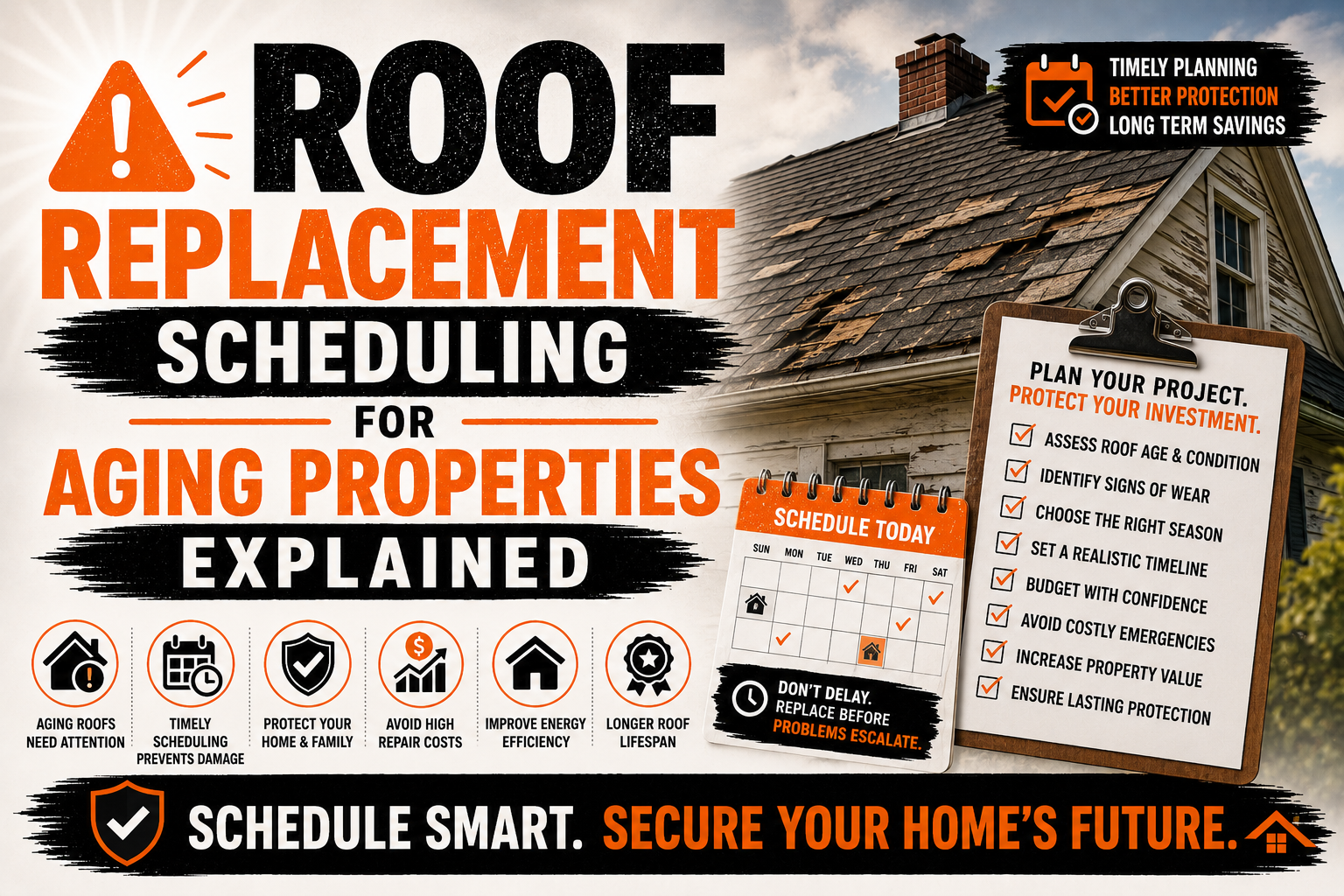
Roof Replacement Scheduling for Aging Properties Explained
Introduction
Owning an aging property comes with a unique set of responsibilities, and one of the most significant is maintaining the roof. While many parts of a home can be repaired or upgraded gradually, the roof serves as the primary barrier against rain, wind, sunlight, snow, and changing temperatures. As a property grows older, its roofing system naturally experiences wear that eventually reaches a point where replacement becomes the most practical solution. Understanding when to schedule that replacement is essential for protecting both the structure and the investment.
Many homeowners focus on fixing visible roof problems as they appear, believing that repairs alone can keep an aging roof functional indefinitely. Although timely repairs are valuable, every roofing system has a limited service life. Delaying replacement beyond that point often results in more than just roof damage. Moisture can enter the home, insulation may lose effectiveness, wooden framing can begin to rot, and interior finishes may require costly restoration.
Scheduling roof replacement is different from responding to an emergency. A planned replacement allows homeowners to evaluate the roof’s condition carefully, compare roofing materials, choose experienced contractors, and prepare financially before work begins. This approach reduces stress while providing better control over project costs and timelines.
Older properties deserve particular attention because their roofing systems often interact with aging structural components. Roof decking, rafters, ventilation systems, flashing, and insulation may all require evaluation before a new roof is installed. Addressing these issues during a planned replacement helps ensure the new roofing system performs reliably for many years.
Another reason scheduling is so important is that weather does not wait for convenient timing. An older roof that performs adequately during mild conditions may fail during heavy rain, strong winds, or winter storms. Planning replacement before severe weather arrives significantly reduces the risk of emergency repairs and interior water damage.
Roof replacement also provides an opportunity to improve energy efficiency, ventilation, and overall home performance. Modern roofing materials and installation methods often offer advantages that were unavailable when many older homes were originally built. Scheduling replacement at the right time allows homeowners to benefit from these improvements while preserving the property’s structural integrity.
This guide explains how roofs age, what influences replacement schedules, and the warning signs that indicate replacement should no longer be postponed. Understanding these factors helps homeowners make informed decisions that protect aging properties while avoiding unnecessary repair expenses.
Understanding Roof Aging in Older Properties
Every roof changes over time, regardless of the material used or the quality of its installation. Exposure to sunlight, moisture, temperature fluctuations, and seasonal weather gradually reduces the effectiveness of roofing materials. While this aging process is unavoidable, the rate at which it occurs depends on several environmental and structural factors.
For aging properties, roof deterioration is often influenced not only by the roof itself but also by the condition of the supporting structure beneath it. Older homes may contain roofing systems that have undergone several repairs over the years, making it important to evaluate the entire system instead of focusing only on visible surface materials.
Understanding how roofs age helps homeowners recognize why replacement scheduling should be based on overall condition rather than age alone.
Natural Deterioration Over Time
Roofing materials are designed to withstand years of environmental exposure, but no material remains unchanged forever. Asphalt shingles gradually lose protective granules that shield them from ultraviolet radiation. Metal roofs may experience coating wear or localized corrosion if maintenance has been neglected. Wood shakes naturally weather and may become more vulnerable to moisture as they age.
These changes occur slowly, making them difficult to notice from one year to the next. Homeowners often become accustomed to gradual deterioration until a significant issue suddenly appears.
Natural aging also affects components hidden beneath the roofing material. Underlayment, sealants, and flashing eventually lose flexibility and weather resistance, increasing the possibility of water intrusion during severe weather.
Recognizing that roof aging is a gradual process encourages homeowners to schedule inspections regularly instead of waiting for obvious failures.
The Impact of Daily Weather Exposure
A roof experiences environmental stress every day, even when weather conditions appear mild. Continuous exposure to sunlight slowly breaks down roofing materials through ultraviolet radiation, reducing their flexibility and durability.
Temperature changes create repeated expansion and contraction cycles that place stress on fasteners, flashing, and sealants. Although these movements are small, thousands of daily cycles over many years gradually weaken the roofing system.
Rain introduces another long-term challenge. Properly functioning roofs shed water efficiently, but even minor weaknesses may allow moisture to penetrate beneath roofing materials. Slow leaks often remain hidden until significant damage develops inside the home.
Wind also contributes to aging by lifting shingles slightly during storms, loosening fasteners, and placing additional stress on roofing components. Even when storms do not cause immediate damage, repeated exposure gradually reduces the roof’s overall resilience.
How Older Homes Differ From Newer Properties
Older homes often present roofing challenges that newer buildings do not. Construction methods, building materials, and ventilation standards have evolved significantly over the years, meaning older roofing systems may not perform as efficiently as modern designs.
Some aging homes have experienced multiple roof repairs over several decades. While these repairs may have extended the roof’s lifespan, they can also create inconsistencies where newer materials meet much older components.
Ventilation systems in older homes may also require improvement. Inadequate attic airflow allows heat and moisture to accumulate, accelerating roof deterioration from below while reducing insulation performance.
Structural settling is another consideration. Over time, houses naturally shift slightly, and this movement may influence roof alignment, flashing performance, and drainage patterns. Evaluating these factors during replacement planning helps prevent future problems.
Cosmetic Wear Versus Structural Deterioration
Not every sign of roof aging indicates that immediate replacement is necessary. Distinguishing between cosmetic wear and structural deterioration helps homeowners make informed decisions rather than replacing a roof prematurely.
Cosmetic changes often include discoloration, minor staining, algae growth, or slight fading caused by years of weather exposure. While these issues may affect appearance, they do not necessarily reduce the roof’s ability to protect the home.
Structural deterioration involves changes that compromise roof performance. Curling shingles, cracked flashing, sagging roof sections, deteriorated decking, persistent leaks, and widespread moisture damage all indicate deeper problems that require professional evaluation.
Understanding this distinction prevents unnecessary replacement while ensuring serious structural concerns receive prompt attention.
Factors That Influence Replacement Scheduling
Scheduling roof replacement involves evaluating multiple factors instead of relying on a single guideline. Two roofs installed in the same year may require replacement at very different times depending on climate, maintenance history, material quality, and structural condition.
A comprehensive assessment helps homeowners determine whether continued repairs remain practical or whether replacement offers the better long-term investment.
Roof Age Compared With Actual Condition
Age provides an important reference point, but it should never be the only factor influencing replacement decisions. Manufacturer lifespan estimates assume proper installation, routine maintenance, and average environmental conditions.
Some roofs continue performing well beyond their expected lifespan because they have been carefully maintained and experience relatively mild weather. Others require replacement much sooner due to storm damage, poor ventilation, or installation deficiencies.
Professional inspections provide a more accurate picture of roof condition than age alone. Evaluating structural components, moisture levels, flashing, and roofing materials together produces a clearer understanding of remaining service life.
Scheduling replacement based on actual condition rather than calendar age helps homeowners avoid both premature replacement and costly delays.
Roofing Material Lifespan
Different roofing materials naturally age at different rates, making material selection an important consideration when planning replacement.
Standard asphalt shingles generally require replacement sooner than architectural shingles, while metal roofing often remains serviceable for several decades longer. Clay tiles, concrete tiles, and slate offer exceptional longevity but require adequate structural support because of their greater weight.
When evaluating an aging property, homeowners should also consider whether replacing the roof with the same material remains the best option. Modern alternatives may provide improved durability, energy efficiency, or reduced maintenance requirements.
Material lifespan should always be considered alongside environmental conditions and installation quality rather than viewed as an absolute replacement schedule.
Local Climate and Weather Conditions
Climate significantly influences how quickly roofing systems age. Homes exposed to intense sunlight throughout the year often experience faster deterioration of asphalt-based materials because ultraviolet radiation gradually weakens protective surfaces.
Regions with frequent heavy rainfall require roofing systems capable of managing continuous moisture exposure. Poor drainage or damaged flashing becomes particularly problematic under these conditions.
Cold climates introduce repeated freeze and thaw cycles that gradually enlarge small cracks and weaken roofing components. Snow accumulation and ice dams may also place additional stress on aging roofs.
Coastal properties face challenges from salt-laden air that can accelerate corrosion of certain metal components. High winds common in coastal or open areas further increase wear on shingles and flashing.
Understanding local environmental conditions allows homeowners to schedule replacement before predictable weather patterns create more extensive damage.
Previous Repairs and Maintenance History
Maintenance records provide valuable insight into the overall health of an aging roof. Occasional repairs throughout the roof’s lifespan are normal, but frequent repairs involving multiple areas often indicate widespread deterioration.
Repeated leak repairs may suggest that moisture is finding new pathways beneath aging roofing materials. Similarly, replacing isolated shingles every few years eventually becomes less practical if surrounding materials continue deteriorating.
Documenting repair history also helps contractors identify recurring issues that may point to underlying structural concerns. Instead of treating each repair independently, they can evaluate whether replacement would provide a more durable long-term solution.
Consistent maintenance often extends roof lifespan significantly, but there comes a stage where repairs no longer provide lasting value.
Structural Integrity of the Roofing System
An aging roof should always be evaluated as a complete system rather than focusing solely on its outer surface. Roof decking, rafters, trusses, flashing, ventilation, insulation, and drainage all contribute to long-term performance.
Moisture entering through small leaks may weaken wooden roof decking long before visible symptoms appear inside the home. Similarly, deteriorating flashing around chimneys or skylights may create hidden water damage that eventually affects structural framing.
Poor attic ventilation accelerates roof aging by trapping excessive heat during summer and moisture during winter. Correcting these issues during replacement helps maximize the lifespan of the new roof.
Structural assessments become particularly important for older homes because decades of weather exposure, settling, and previous repairs may have affected components hidden beneath the roofing material.
Early Warning Signs That Replacement Should Be Scheduled
Recognizing the warning signs of an aging roof allows homeowners to schedule replacement before serious structural damage develops. Many roofs continue functioning despite showing gradual signs of deterioration, but ignoring these indicators often leads to more expensive repairs later.
Understanding these warning signs provides valuable time to plan replacement rather than reacting to an unexpected roofing emergency.
Exterior Warning Signs
Visible changes on the roof surface often provide the first indication that replacement should be considered. Missing shingles, widespread curling, cracked tiles, rusted metal panels, or excessive granule loss suggest that roofing materials are approaching the end of their useful life.
Sagging roof sections deserve immediate attention because they may indicate structural deterioration beneath the roofing material. Moss growth, damaged flashing, and recurring debris accumulation should also be evaluated during inspections.
Although some exterior issues can be repaired individually, multiple problems appearing simultaneously often signal broader roof aging.
Interior Warning Signs
Roof problems frequently become noticeable inside the home before homeowners inspect the roof itself. Water stains on ceilings, peeling paint near roof lines, damp attic insulation, mold growth, or musty odors often indicate moisture intrusion.
Sunlight visible through attic boards also suggests openings that require immediate evaluation. Even small gaps may allow water, insects, or outdoor air to enter the roofing system.
Interior symptoms should never be dismissed because they often reflect damage that has already progressed beyond the roof surface.
Moisture and Ventilation Problems
Attic moisture is a common issue in older properties. Poor ventilation allows warm, humid air to accumulate beneath the roof, creating condensation that damages insulation, wood framing, and roof decking over time.
Homeowners may notice mildew, mold, damp insulation, or persistent condensation on attic surfaces. These conditions accelerate roof deterioration while reducing energy efficiency throughout the home.
Addressing ventilation issues during roof replacement helps protect both the new roofing system and the underlying structure.
Increasing Repair Frequency
One isolated repair rarely justifies complete roof replacement. However, when repairs become more frequent and involve different areas of the roof, the overall roofing system may no longer provide dependable protection.
Repeated leaks, recurring flashing failures, or continual shingle replacement often indicate that the roof has reached the point where replacement offers greater long-term value than continued repairs.
Keeping records of maintenance history helps homeowners recognize these patterns before repair costs become excessive.
Declining Energy Efficiency
Older roofs sometimes contribute to rising heating and cooling expenses. Damaged insulation, moisture intrusion, and inadequate ventilation reduce the home’s ability to maintain comfortable indoor temperatures efficiently.
If energy bills continue increasing despite normal heating and cooling system performance, the roofing system may be contributing to reduced efficiency. A professional roof inspection can determine whether replacement would improve both weather protection and energy performance.
Planning the Roof Replacement Timeline
Scheduling roof replacement for an aging property requires more than selecting a convenient date on the calendar. A successful project depends on careful planning, realistic budgeting, timely inspections, and coordination with experienced roofing professionals. When homeowners create a structured replacement timeline, they reduce the likelihood of unexpected delays while ensuring the new roofing system is installed under favorable conditions.
Planning ahead also provides flexibility. Instead of rushing through important decisions after a leak develops, homeowners have time to evaluate roofing materials, compare contractor proposals, and prepare the property for construction. This proactive approach helps improve project quality while reducing stress throughout the replacement process.
An organized timeline becomes even more valuable for older properties because additional structural repairs or building code updates may be required before installation begins. Addressing these issues in advance helps avoid interruptions once construction is underway.
Determining the Ideal Replacement Window
One of the first steps in scheduling roof replacement is identifying the most appropriate time to complete the project. While every region has different weather patterns, moderate conditions generally allow roofing work to proceed more efficiently than periods of extreme heat, heavy rainfall, or freezing temperatures.
Homeowners should begin evaluating replacement options well before the roof reaches the end of its expected lifespan. Waiting until widespread leaks appear often limits scheduling flexibility and increases the likelihood of emergency repairs during unfavorable weather.
Planning several months ahead also provides access to a wider range of contractor availability. Roofing companies often become busiest immediately after major storms, making early scheduling an advantage for homeowners who want greater choice and more predictable project timelines.
Seasonal maintenance inspections can help identify the ideal replacement window. If inspectors observe increasing deterioration, scheduling replacement before the next severe weather season often prevents additional structural damage.
Building a Practical Timeline
A roof replacement project involves several stages that should be planned carefully. Although every property is different, allowing adequate time for each phase reduces unnecessary pressure and improves overall project organization.
The planning process should include time for inspections, contractor consultations, material selection, budgeting, permit approvals if required, and scheduling installation. Rushing any of these stages may result in overlooked details that become costly later.
Homeowners should also remember that weather delays are always possible. Including flexibility within the schedule helps prevent disappointment if construction must pause temporarily due to rain or strong winds.
Beginning the planning process early provides sufficient time to make informed decisions instead of reacting to unexpected roofing problems.
Budget Planning for Aging Properties
Financial preparation plays an important role in roof replacement scheduling. Older homes sometimes require more than simply replacing roofing materials because hidden structural issues may become visible once the existing roof is removed.
Creating a realistic budget should include anticipated installation costs along with funds reserved for unexpected repairs. Roof decking replacement, ventilation improvements, flashing upgrades, and insulation corrections are common discoveries in aging properties.
Homeowners should request detailed written estimates from multiple contractors rather than relying solely on verbal discussions. Comparing estimates helps clarify pricing differences while highlighting variations in material quality, warranty coverage, and project scope.
Setting aside a contingency fund provides additional financial security if hidden structural deterioration is discovered during construction. Planning for these possibilities reduces stress while helping the project continue without unnecessary delays.
Scheduling Inspections Well in Advance
Roof inspections form the foundation of an effective replacement schedule. A comprehensive inspection provides valuable information about both visible roofing materials and hidden structural components that influence installation planning.
Professional inspectors evaluate shingles or other roofing materials, flashing, gutters, ventilation systems, roof decking, attic conditions, and moisture levels. Their findings help homeowners understand whether replacement should occur immediately or whether short-term repairs remain appropriate.
Scheduling inspections well in advance also allows time to address secondary concerns before installation begins. For example, damaged attic ventilation or deteriorating fascia boards can often be repaired before roofing work starts, simplifying the replacement process.
Inspection reports also assist contractors when preparing accurate project estimates because they provide a clearer understanding of the roof’s existing condition.
Coordinating With Roofing Contractors
Selecting a contractor should never become a last-minute decision. Experienced roofing professionals often schedule projects several weeks or months ahead, particularly during busy seasons.
Early communication allows homeowners to discuss project expectations, estimated timelines, installation methods, warranty options, and weather-related scheduling considerations. Contractors can also recommend the most suitable roofing materials based on the property’s age and local climate.
Before signing a contract, homeowners should verify licensing, insurance coverage, certifications, and references. Reviewing previous projects provides additional confidence in the contractor’s workmanship and reliability.
Clear communication throughout the planning stage establishes realistic expectations for both parties while reducing misunderstandings during construction.
Preparing an Older Property for Roof Replacement
Older properties often require additional preparation before roofing work begins. Unlike newer homes, aging buildings may contain structural components that have experienced decades of weather exposure, previous repairs, or gradual settling.
Preparing the property thoroughly helps contractors work more efficiently while protecting valuable architectural features throughout the replacement process.
Conducting Structural Assessments
A structural assessment is particularly important when replacing the roof on an older home. Although the existing roof may appear stable from the outside, hidden deterioration sometimes affects roof decking, rafters, trusses, or supporting walls.
Professional evaluations determine whether these components remain capable of supporting the new roofing system. If reinforcement or repairs are necessary, completing them before installation improves both safety and long-term roof performance.
Structural assessments become especially valuable when homeowners plan to upgrade to heavier roofing materials such as clay tiles, concrete tiles, or slate. These products often require stronger structural support than lightweight asphalt shingles.
Identifying structural concerns early prevents unexpected delays after construction begins.
Protecting Architectural Features
Many aging homes contain architectural details that deserve careful protection during roof replacement. Decorative trim, chimneys, dormers, skylights, historic woodwork, and ornamental features may require additional attention throughout the project.
Contractors should discuss protection strategies before installation begins. Covering delicate landscaping, securing fragile exterior elements, and planning material removal carefully helps preserve the home’s appearance while minimizing accidental damage.
Historic homes may also require specialized installation techniques to maintain their architectural character. Selecting contractors experienced with older properties ensures these unique features receive appropriate care.
Protecting architectural details contributes to both the visual appeal and long-term value of the property.
Preparing the Attic and Interior
Roof replacement creates vibrations throughout the structure as old roofing materials are removed and new components are installed. Preparing interior spaces helps prevent unnecessary damage during construction.
Items stored in the attic should be covered or temporarily relocated because dust and small debris occasionally enter during roofing work. Fragile decorations, mirrors, and wall-mounted artwork inside the home should also be secured before installation begins.
Homeowners working remotely may wish to adjust their schedules because roofing projects generate considerable noise during active construction. Planning ahead reduces inconvenience while allowing contractors to complete the work efficiently.
Pets should also be considered during preparation. Construction activity may cause stress for animals, making temporary accommodations beneficial during the busiest stages of the project.
Understanding Building Codes and Permit Requirements
Roof replacement projects must often comply with current building regulations, particularly when structural changes or major renovations are involved. Although contractors frequently manage permit applications, homeowners should understand how these requirements affect project scheduling.
Permit approval may require additional time before construction can begin. Planning for this administrative process prevents unnecessary delays once materials have been ordered and installation dates have been confirmed.
Building code updates may also require improvements to ventilation, flashing, underlayment, or structural support. Completing these upgrades during replacement enhances the long-term performance of the new roofing system.
Discussing permit responsibilities early ensures everyone involved understands the project’s regulatory requirements.
Organizing Material Delivery
Scheduling material delivery carefully helps maintain project efficiency. Roofing materials should arrive close to the installation date so they remain protected from unnecessary weather exposure or accidental damage while stored on site.
Contractors typically coordinate deliveries based on project timelines, but homeowners should confirm where materials will be stored and how delivery vehicles will access the property.
Proper planning minimizes disruption while ensuring construction begins promptly once installation is scheduled.
Comparing Scheduling Options
Homeowners with aging roofs generally face two choices. They can schedule replacement proactively before major failures occur or wait until emergency conditions make immediate replacement unavoidable. Comparing these approaches highlights the long-term benefits of planning ahead.
| Replacement Approach | Advantages | Challenges | Typical Outcome |
|---|---|---|---|
| Planned Replacement | Greater contractor availability, better budgeting, flexible scheduling, careful material selection | Requires advance planning and financial preparation | Lower stress, improved project quality, reduced emergency costs |
| Emergency Replacement | Immediate response to serious roof failure | Higher costs, limited contractor availability, weather-related challenges, rushed decisions | Greater risk of interior damage and unexpected expenses |
This comparison demonstrates why proactive scheduling remains the preferred strategy for aging properties. Planned replacement provides homeowners with more control over both project quality and financial planning while reducing unnecessary risks.
Steps to Create an Effective Replacement Schedule
Developing a structured replacement schedule helps homeowners organize every stage of the project. Following a logical sequence reduces delays while ensuring important decisions receive adequate attention.
- Schedule a comprehensive professional roof inspection.
- Review the inspection report and determine the remaining roof lifespan.
- Establish a realistic replacement budget, including contingency funds.
- Research and compare qualified roofing contractors.
- Select roofing materials appropriate for the home’s structure and local climate.
- Confirm permit requirements and building code obligations.
- Schedule replacement during favorable seasonal weather whenever possible.
- Prepare the property by protecting landscaping, attic contents, and interior spaces.
- Coordinate material delivery and construction timelines with the contractor.
- Arrange a final inspection after installation to verify workmanship and warranty documentation.
Following these steps provides a clear roadmap from the initial inspection through project completion. Each stage builds upon the previous one, helping homeowners manage roof replacement in an organized and efficient manner.
Avoiding Common Scheduling Delays
Even carefully planned projects may experience occasional delays, but many common problems can be minimized through preparation. Waiting too long to contact contractors often limits scheduling options, particularly during peak roofing seasons.
Permit approvals can also affect project timelines if homeowners fail to account for administrative processing. Discussing permit responsibilities early prevents unexpected interruptions before construction begins.
Material availability deserves attention as well. Certain specialty roofing products require additional ordering time, making early selection important for maintaining the planned schedule.
Weather remains the one factor beyond anyone’s control. However, choosing an appropriate season and maintaining flexibility within the project timeline significantly reduces weather-related disruptions.
Keeping Communication Consistent
Strong communication helps every stage of the replacement process proceed smoothly. Homeowners should remain in regular contact with their contractor before and during installation to discuss scheduling updates, weather forecasts, material deliveries, and any unexpected discoveries.
Written documentation provides additional clarity. Contracts, inspection reports, warranty information, and project schedules should all be organized and readily available throughout construction.
Consistent communication also allows homeowners to make informed decisions quickly if structural repairs become necessary after the existing roof has been removed. Prompt responses help prevent unnecessary downtime while keeping the project on schedule.
Planning, preparation, and communication work together to create an efficient roof replacement experience. Aging properties often require additional attention, but thoughtful scheduling allows homeowners to address these challenges confidently while protecting the long-term value of their investment.
Choosing Roofing Materials for Aging Homes
Selecting the right roofing material is one of the most important decisions homeowners make during a roof replacement project. For aging properties, the choice involves much more than appearance or initial cost. The new roofing system must complement the home’s structural capacity, withstand local weather conditions, and provide dependable performance for decades to come.
Older homes often have unique construction characteristics that influence material selection. Roof framing, load-bearing walls, ventilation systems, and architectural style should all be considered before deciding on a replacement material. Choosing wisely helps maximize durability while preserving the property’s character and structural integrity.
A thoughtful material selection process also supports long-term maintenance planning. Some roofing systems require more routine care than others, making it important to balance expected lifespan with future maintenance responsibilities.
Matching Materials to Structural Capacity
Every roofing material has a different weight, and that weight directly affects the structure beneath it. Older homes that were originally designed for lightweight asphalt shingles may require structural reinforcement before heavier materials such as slate or clay tiles can be installed.
A professional structural assessment helps determine whether the existing roof framing can safely support the desired roofing system. If reinforcement is necessary, completing those improvements during the replacement project provides a stable foundation for the new roof.
Ignoring structural limitations can create long-term problems. Excessive weight may contribute to roof sagging, wall stress, or gradual structural movement that shortens the lifespan of both the roof and the home itself.
Choosing a material that matches the property’s structural capabilities ensures safe, reliable performance while avoiding unnecessary modifications.
Balancing Durability and Maintenance
Homeowners should evaluate roofing materials based on their long-term performance rather than focusing only on installation costs. Although premium materials often require a larger initial investment, they may provide lower maintenance requirements and longer service lives that offset those costs over time.
Asphalt shingles remain popular because they offer a balance of affordability, dependable performance, and relatively simple repairs. Architectural shingles improve upon traditional asphalt products by providing greater durability and enhanced resistance to wind and weather.
Metal roofing has become increasingly attractive for aging properties due to its longevity and low maintenance requirements. Properly installed metal roofs resist moisture, withstand severe weather, and often last several decades longer than standard asphalt shingles.
Clay and concrete tiles offer exceptional durability in appropriate climates, while slate remains one of the longest-lasting roofing materials available. However, these heavier materials require careful evaluation of structural capacity before installation.
Selecting the right balance between durability, maintenance, and cost allows homeowners to make an investment that aligns with both their budget and long-term ownership plans.
Improving Energy Efficiency
Roof replacement provides an opportunity to improve the overall energy performance of an aging property. Many modern roofing materials reflect more solar heat than older products, helping reduce attic temperatures during warm weather.
Improved ventilation systems installed during replacement also contribute to energy efficiency by allowing excess heat and moisture to escape. Better airflow reduces strain on heating and cooling systems while helping roofing materials last longer.
Upgraded insulation often accompanies roof replacement projects, particularly when moisture damage or inadequate ventilation has reduced the effectiveness of existing insulation. Combining these improvements creates a more comfortable indoor environment while lowering energy consumption.
Energy-efficient roofing solutions provide long-term financial benefits through reduced utility costs while supporting year-round indoor comfort.
Preserving the Character of Older Homes
Many aging homes possess architectural styles that contribute significantly to their appearance and value. Roof replacement should enhance these qualities rather than diminish them.
Selecting materials that complement the home’s original design helps preserve its visual appeal. Modern roofing products often replicate the appearance of traditional materials while offering improved durability and weather resistance.
Historic homes may also require specialized installation techniques to maintain their authenticity. Working with contractors experienced in older properties helps ensure that architectural details remain protected throughout the replacement process.
Preserving the home’s character while incorporating modern performance improvements creates a roofing system that respects the past while meeting present-day expectations.
Common Scheduling Mistakes Homeowners Make
Even well-intentioned homeowners sometimes make decisions that complicate roof replacement projects. Understanding these common mistakes allows property owners to plan more effectively while avoiding unnecessary expenses and delays.
Waiting Too Long to Schedule Replacement
The most common mistake is postponing replacement until severe problems develop. Small leaks, damaged shingles, or aging flashing may appear manageable individually, but together they often indicate widespread roof deterioration.
Waiting until emergency conditions arise limits contractor availability, increases repair costs, and may expose the home’s interior to significant moisture damage. Emergency replacements also provide less time for comparing materials and evaluating contractor proposals.
Scheduling replacement before major failures occur remains the most practical and cost-effective approach.
Ignoring Professional Inspection Reports
Some homeowners continue postponing replacement even after professional inspections identify serious concerns. While minor repairs may temporarily address visible issues, inspection reports often reveal hidden structural deterioration that cannot be corrected through surface repairs alone.
Ignoring recommendations may allow moisture damage to spread into roof decking, insulation, and structural framing. Delayed action frequently transforms manageable roofing projects into much larger renovation efforts.
Professional inspection findings should be viewed as valuable planning tools rather than optional suggestions.
Selecting Contractors Too Late
Waiting until a roof begins leaking before contacting contractors often results in limited scheduling options. During busy seasons, reputable roofing companies may already have full project calendars, forcing homeowners to wait longer or hire less experienced contractors.
Beginning the selection process early provides time to verify credentials, review previous work, compare warranties, and evaluate customer feedback.
Establishing relationships with qualified contractors before emergencies arise contributes to better project outcomes and greater peace of mind.
Focusing Only on Initial Cost
Budget considerations are important, but selecting the lowest estimate without evaluating workmanship or material quality often leads to disappointing results. Lower prices sometimes reflect reduced warranty coverage, lower-grade materials, or shortcuts during installation.
A properly installed roof using quality materials generally delivers better long-term value through improved durability and reduced maintenance requirements.
Homeowners should compare the complete scope of work rather than viewing price as the only decision-making factor.
Neglecting Maintenance After Replacement
Some homeowners assume a new roof requires no attention for many years. While replacement significantly improves protection, routine maintenance remains essential for maximizing roof lifespan.
Annual inspections, gutter cleaning, debris removal, and prompt storm assessments help identify developing issues before they become expensive repairs.
Consistent maintenance preserves both the roofing system and any applicable warranty coverage while extending the life of the investment.
Long-Term Benefits of Timely Roof Replacement
Replacing the roof at the appropriate time provides benefits that extend far beyond solving immediate roofing concerns. A planned replacement strengthens the entire property while improving comfort, efficiency, and financial value for years to come.
One of the greatest advantages is improved structural protection. A new roofing system prevents water intrusion that could otherwise damage framing, insulation, ceilings, flooring, and electrical components. Protecting these underlying structures helps preserve the home’s overall condition.
Another significant benefit is greater reliability during severe weather. Homeowners gain confidence knowing their roof has been installed according to current standards using materials designed to withstand changing environmental conditions.
Enhanced Property Value
A recently replaced roof is an attractive feature for prospective buyers because it reduces concerns about future maintenance expenses. Buyers often view a new roof as evidence that the property has been well maintained.
The improved appearance of a new roof also enhances curb appeal. Since the roof occupies a significant portion of the home’s exterior, replacing weathered materials creates a noticeable visual improvement.
Although roof replacement should not be viewed solely as a resale investment, it frequently contributes positively to overall property value.
Lower Long-Term Maintenance Costs
An aging roof often requires increasingly frequent repairs as deterioration progresses. Replacing the entire roofing system eliminates many recurring maintenance issues while reducing the likelihood of emergency service calls.
Instead of repeatedly replacing damaged shingles or repairing persistent leaks, homeowners can focus on routine preventive maintenance that keeps the new roof in excellent condition.
Lower maintenance costs also make household budgeting more predictable because major repair expenses become less frequent.
Better Indoor Comfort
Modern roofing systems contribute to a more stable indoor environment through improved insulation compatibility and ventilation. Reduced heat transfer during summer and better moisture management during winter create more consistent indoor temperatures.
Homeowners may notice fewer drafts, lower humidity levels in the attic, and improved overall comfort throughout the year. These improvements often accompany reduced heating and cooling expenses as well.
Comfort benefits become especially valuable in older homes where previous roofing systems may have contributed to uneven indoor temperatures.
Greater Peace of Mind
Perhaps the most valuable benefit of timely roof replacement is confidence. Homeowners no longer need to worry about every heavy rainstorm or strong wind event causing unexpected leaks.
Knowing that the roof has been professionally installed using quality materials allows families to focus on enjoying their homes rather than constantly anticipating repairs.
This peace of mind represents one of the most meaningful long-term rewards of proactive replacement planning.
Building a Long-Term Roof Management Strategy
Roof replacement should not mark the end of roof care. Instead, it begins a new maintenance cycle focused on preserving the investment for as long as possible.
Creating a long-term management strategy helps homeowners maintain roof performance while reducing future repair costs. Consistency is more valuable than complexity, and simple maintenance habits often produce significant long-term benefits.
Homeowners can maximize roof lifespan by following these practical practices:
- Schedule professional roof inspections at least once each year.
- Inspect the roof after severe storms for visible damage.
- Clean gutters regularly to maintain proper drainage.
- Remove leaves, branches, and debris that trap moisture.
- Trim overhanging tree limbs before storm seasons.
- Monitor attic ventilation and insulation performance.
- Repair damaged flashing or shingles promptly before moisture spreads.
Keeping maintenance records is equally important. Inspection reports, repair invoices, warranty documents, and photographs provide valuable information that helps monitor roof condition over time.
These records also assist future contractors by documenting previous maintenance activities and identifying recurring issues if they develop.
A proactive maintenance strategy ensures that the new roofing system reaches its expected lifespan while protecting the property’s structural integrity for decades.
Conclusion
Scheduling roof replacement for an aging property is about much more than replacing worn roofing materials. It is a strategic decision that protects the home’s structure, improves long-term performance, and reduces the financial and emotional burden of emergency repairs. By evaluating roof condition carefully and planning replacement before major failures occur, homeowners gain greater control over the entire process.
Throughout this guide, we have explored how roofs naturally age, the factors that influence replacement scheduling, and the importance of evaluating structural integrity instead of relying solely on roof age. We have also examined how thoughtful planning, professional inspections, careful budgeting, and timely preparation contribute to smoother replacement projects with fewer unexpected challenges.
Selecting suitable roofing materials, working with experienced contractors, and preparing older properties properly all play important roles in maximizing the lifespan of the new roof. Equally important is avoiding common scheduling mistakes such as delaying replacement, overlooking inspection findings, or choosing contractors based only on price. These decisions have lasting effects on both roof performance and overall property protection.
A roof is one of the most valuable investments in any aging home because it safeguards every other part of the structure. When replacement is scheduled proactively rather than in response to an emergency, homeowners benefit from improved energy efficiency, stronger weather protection, lower maintenance costs, enhanced property value, and greater peace of mind.
With consistent inspections, routine maintenance, and careful long-term planning, a new roofing system can continue protecting an aging property through changing seasons for many decades. Thoughtful scheduling ensures that roof replacement becomes a well-managed investment in the future of the home rather than an unexpected response to preventable damage.