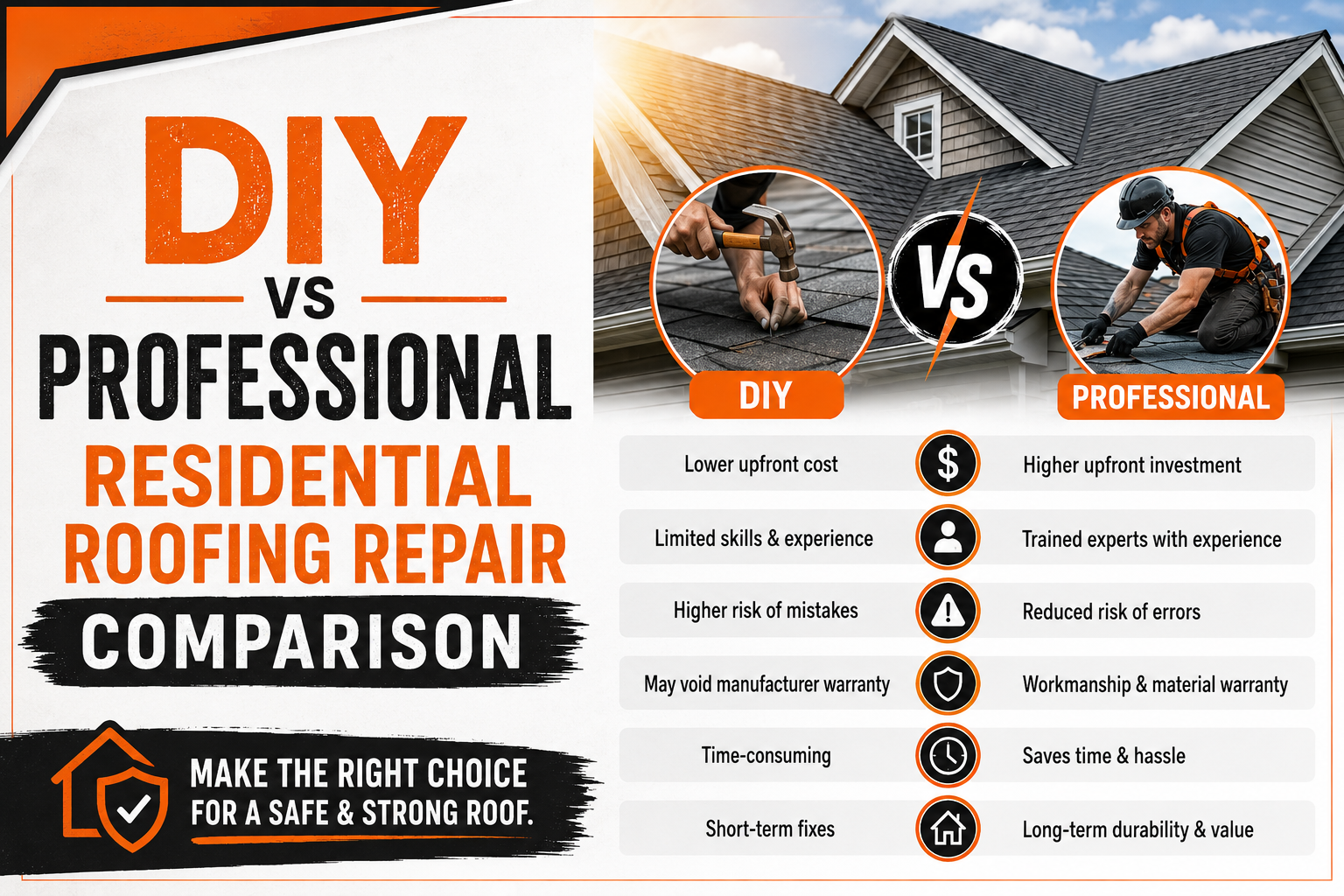
DIY vs Professional Residential Roofing Repair Comparison
Introduction
Residential roof repairs can range from simple maintenance tasks to complicated projects involving damaged shingles, flashing, underlayment, decking, or structural components. When a problem appears, homeowners often wonder whether they can handle the repair themselves or whether they should hire a professional roofing contractor. The right choice depends on the type of damage, roof design, safety conditions, available skills, and the potential consequences of an unsuccessful repair.
DIY roofing work can sometimes reduce immediate labor expenses and may be reasonable for limited tasks that do not require roof access. However, roofing involves working at height and protecting the home from water intrusion, so even seemingly small repairs can create significant risks. A mistake that looks minor from the outside may allow moisture to enter beneath the roofing materials and cause hidden damage.
Professional roofing repair generally costs more upfront because homeowners are paying for labor, experience, equipment, insurance, and specialized knowledge. In return, a qualified contractor can inspect the roofing system, identify the likely source of a problem, select appropriate materials, and complete the repair using suitable installation practices.
The comparison between DIY and professional repair should therefore go beyond the initial price. Homeowners should consider safety, durability, time, tools, access, hidden damage, warranties, and the possibility of needing professional correction if a DIY attempt fails.
Understanding these differences can help homeowners make a practical decision. A small, clearly understood task may be manageable for someone with appropriate experience, while complex or dangerous roofing work is generally better handled by a qualified professional.
Understanding DIY Residential Roof Repair
DIY residential roof repair means the homeowner performs some or all of the repair work without hiring a roofing contractor. The level of difficulty can vary considerably depending on the roofing material and the location of the problem. What may appear to be a simple repair can require more knowledge once the damaged area is opened.
Some homeowners choose DIY work because they want to reduce labor costs. Roofing materials and basic tools may be relatively accessible, especially for minor repairs. However, the homeowner is responsible for understanding how the existing roofing system works and determining whether the repair has actually corrected the problem.
Simple maintenance tasks are generally different from structural repairs. Homeowners may be able to perform safe ground-level inspections, remove accessible debris, or document visible damage without climbing onto the roof. These activities can help identify problems without exposing the homeowner to unnecessary fall risks.
Replacing a few shingles can appear straightforward, but even this task requires attention to surrounding materials and fastening methods. The replacement material should be compatible with the existing roofing system, and the repair should not create openings where water can enter.
Roofing materials also have different installation requirements. Asphalt shingles, metal panels, tile, slate, and membrane systems cannot all be repaired using the same methods. A technique that works for one material may damage another or fail to provide adequate weather protection.
Homeowners should also recognize that the visible location of a leak may not be its actual source. Water can travel underneath roofing materials and along decking before appearing inside the home. Simply sealing the area above an interior stain may therefore fail to stop the leak.
DIY repairs become more complicated when the homeowner cannot confidently identify the cause of the problem. Applying multiple patches without determining the source can make future diagnosis more difficult. It can also allow moisture to continue damaging hidden components.
Before considering DIY work, homeowners should honestly assess their experience and the physical conditions involved. If the repair requires climbing onto a steep roof, handling heavy materials, accessing difficult areas, or disturbing structural components, professional assistance is generally the safer option.
When DIY Roof Repairs May Be Reasonable
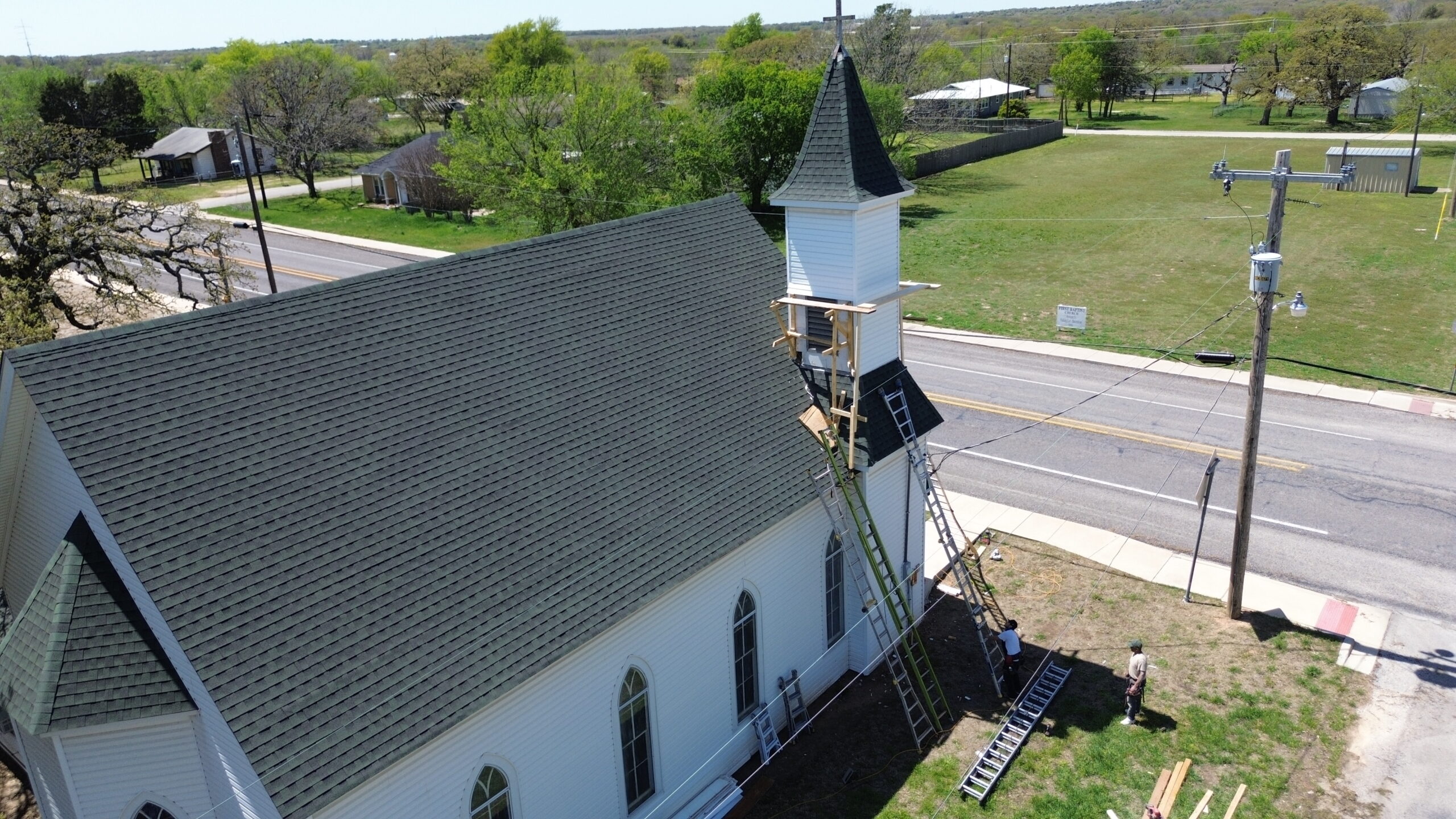
Not every roofing-related task requires a professional contractor. Some homeowners can safely handle basic maintenance or preparation work when they can complete it without exposing themselves to significant hazards. The key is recognizing the difference between simple maintenance and actual roofing construction.
Ground-level inspection is one example of a useful homeowner task. From a safe position, homeowners can look for missing shingles, visible debris, damaged gutters, fallen branches, or other obvious signs of deterioration. They can then provide photographs and observations to a professional if further assessment is required.
Keeping gutters and accessible drainage areas clear can also support roof maintenance. However, homeowners should only perform this work when they can do so safely without climbing onto unstable surfaces. Difficult or high gutter systems may require professional equipment.
Documenting storm damage is another task homeowners can perform themselves. Photographs of visible damage from the ground can help establish what happened and provide useful information to contractors. Interior photographs of ceiling stains or water damage can also help explain the situation.
Very minor repairs may sometimes be appropriate for experienced homeowners who understand the roofing material and have safe access. Even then, the homeowner should consider whether the work could affect the roofing warranty or create a larger problem.
A homeowner who has previous roofing experience may be more comfortable with certain tasks than someone who has never worked on a roof. However, experience should not lead to overconfidence. Weather conditions, roof height, slope, and material condition can change the safety of a project.
DIY work should generally stop when the cause of the problem becomes uncertain. If removing one material reveals wet decking, damaged flashing, mold-like growth, structural deterioration, or extensive moisture damage, the situation may be beyond a simple repair.
Homeowners should also avoid attempting repairs during rain, strong winds, or other unsafe conditions. A roof that seems manageable when dry can become extremely slippery when wet. Delaying the work until safe conditions or hiring a professional is preferable to risking an injury.
The goal of DIY maintenance should be to handle appropriate tasks safely, not to avoid professional help at all costs. Knowing when to stop is an important part of responsible home maintenance.
Common Risks of DIY Roofing Work
The most serious risk associated with DIY roofing is falling. Roof surfaces can be steep, slippery, uneven, or damaged, and losing balance can result in severe injury. Ladders create additional risks when they are improperly positioned or used without suitable precautions.
Roofing work also involves tools and materials that can create hazards. Hammers, cutting tools, fasteners, roofing components, and debris can cause injuries when handled incorrectly. Working above ground also creates a risk that materials or tools could fall onto people, vehicles, landscaping, or other property.
Weather can make these hazards worse. Wind can affect balance and make materials difficult to control, while rain can make roofing surfaces extremely slippery. Extreme temperatures can also make physical work more difficult and increase the risk of fatigue.
Another major risk is causing additional roof damage. Incorrectly placed fasteners can create holes, while improper flashing installation can redirect water toward vulnerable areas. Using incompatible sealants or materials can also reduce the effectiveness of the roofing system.
A failed repair may not become obvious immediately. Water can enter slowly and remain hidden beneath the surface until it eventually causes stains, damaged insulation, or deteriorated decking. By the time the problem becomes visible, the repair may be more expensive than the original issue.
DIY work can also create problems when roofing materials are removed unnecessarily. Disturbing surrounding shingles, tiles, flashing, or membranes can damage components that were previously functioning properly. A homeowner may then need to repair a larger area than originally planned.
There can also be concerns related to warranties and insurance. Certain roofing products have installation requirements that must be followed for warranty protection. Homeowners should review applicable warranty terms before performing work themselves.
The financial risk is therefore more complicated than simply comparing the price of materials with a contractor’s labor charge. If a failed DIY repair results in water damage or requires professional correction, the total cost may become significantly higher.
Homeowners should consider these risks carefully before accessing the roof. If the work involves uncertainty, significant height, structural concerns, or complicated roofing components, professional assistance can provide a safer and more reliable solution.
What Professional Roofing Repair Involves
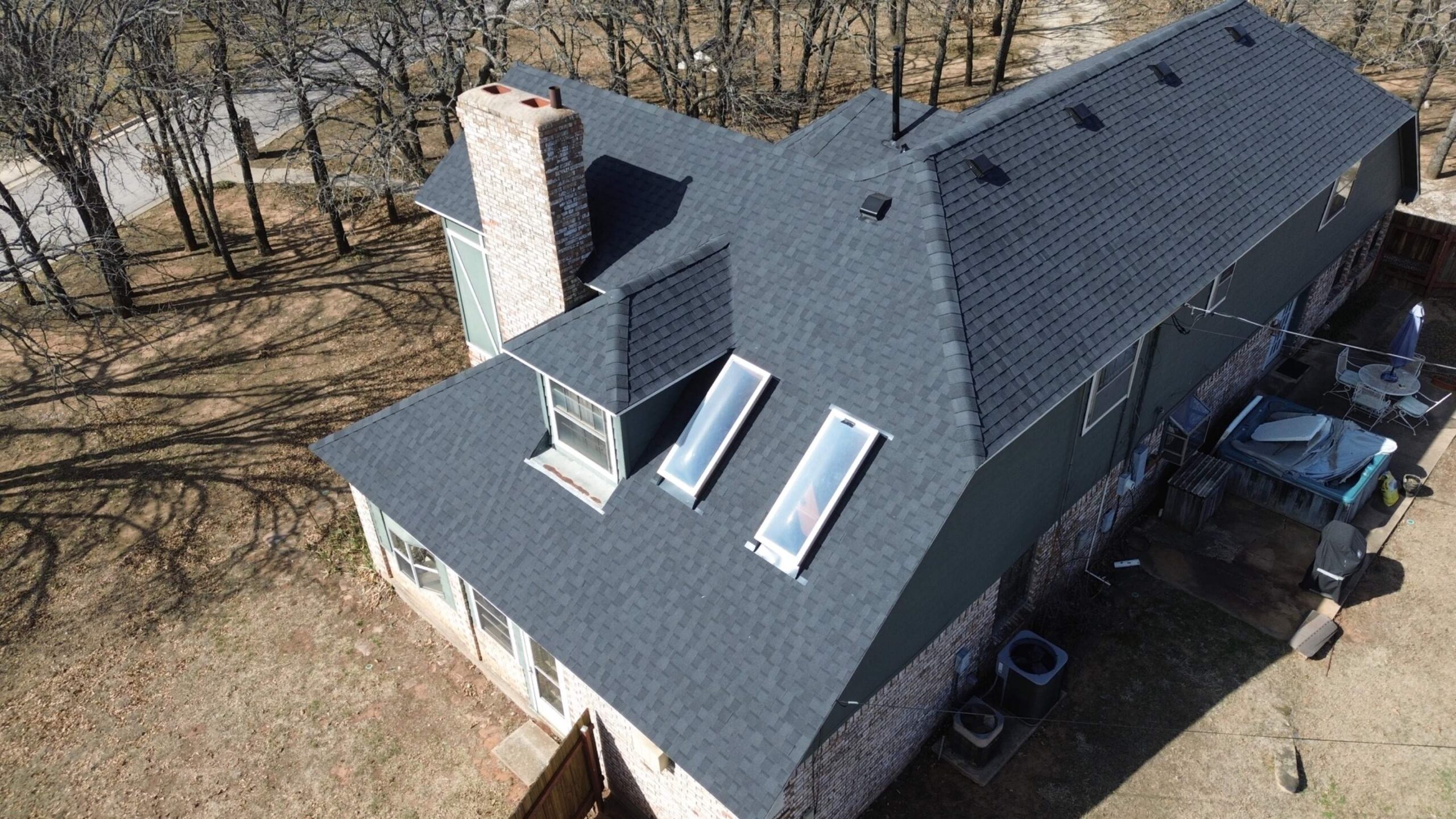
Professional roofing repair involves more than replacing visibly damaged material. A qualified contractor typically begins by examining the roofing system and determining the likely source and extent of the problem. This assessment helps ensure that the proposed repair addresses the underlying cause rather than only the visible symptom.
A professional can evaluate areas such as shingles, panels, tiles, flashing, valleys, roof penetrations, underlayment, gutters, and roof edges. When necessary, the contractor may also inspect accessible attic areas for evidence of water intrusion or hidden damage.
Experience is particularly valuable when diagnosing leaks. Water can travel along the underside of roofing materials or structural components, meaning the location where water appears inside the home may be different from where it entered the roof. Contractors use knowledge of roofing construction to investigate these pathways.
Professional roofers also have access to appropriate equipment for difficult repairs. Depending on the property, this may include ladders, scaffolding, fall-protection equipment, lifts, specialized tools, and material-handling equipment. Proper equipment can improve both safety and efficiency.
Material knowledge is another advantage. Contractors familiar with different roofing systems can select compatible replacement materials and use appropriate installation methods. This is especially important when repairing older roofs or specialized systems.
A professional repair should also consider surrounding conditions. If a damaged shingle is located near deteriorated flashing or a problematic valley, repairing only the shingle may not provide a lasting solution. The contractor can determine whether related components require attention.
Professional work may cost more upfront than DIY labor, but the price reflects more than physical installation. Homeowners are also paying for experience, diagnosis, equipment, safety procedures, and responsibility for completing the repair properly.
The scope of professional work can vary significantly. A minor localized repair may take relatively little time, while extensive water damage or structural deterioration can require a larger project. Homeowners should request a written estimate that clearly explains the proposed work.
A professional repair is most valuable when the homeowner cannot confidently identify or safely access the damaged area. In these situations, paying for qualified expertise can reduce the chance of recurring leaks and additional damage.
Comparing DIY and Professional Repair Costs
Cost is often the first consideration when homeowners compare DIY and professional roofing repair. DIY work can reduce or eliminate labor charges, but homeowners must still purchase materials, tools, safety equipment, and potentially transportation or disposal services. The actual savings may therefore be smaller than expected.
Professional repair estimates typically include labor and materials, along with other project expenses depending on the contractor. These may include inspection, equipment, removal of damaged materials, disposal, cleanup, and workmanship warranty coverage.
The complexity of the repair has a major effect on the cost difference. A simple task may involve relatively inexpensive materials, while a complicated repair around a chimney, skylight, valley, or roof transition may require specialized labor.
The homeowner’s available tools also matter. Someone who already owns appropriate equipment may spend less on a DIY project than someone starting from scratch. However, purchasing safety equipment solely for one repair may reduce the expected savings.
Time should also be considered. A professional contractor may complete a repair efficiently because of experience and specialized equipment. A homeowner unfamiliar with roofing may spend considerably longer learning the process, obtaining materials, and completing the work.
The potential cost of mistakes is perhaps the most important factor. If a DIY repair fails and allows water to enter the home, the resulting damage can involve insulation, drywall, decking, framing, or other materials. Professional correction may then cost considerably more than hiring a contractor initially.
A useful comparison is therefore based on total value rather than the cheapest immediate option. If the repair is simple, safely accessible, and well understood, DIY may be reasonable for an experienced homeowner. If the work is complex or carries significant safety and water-damage risks, professional repair is usually the more practical choice.
Differences in Roofing Knowledge and Experience
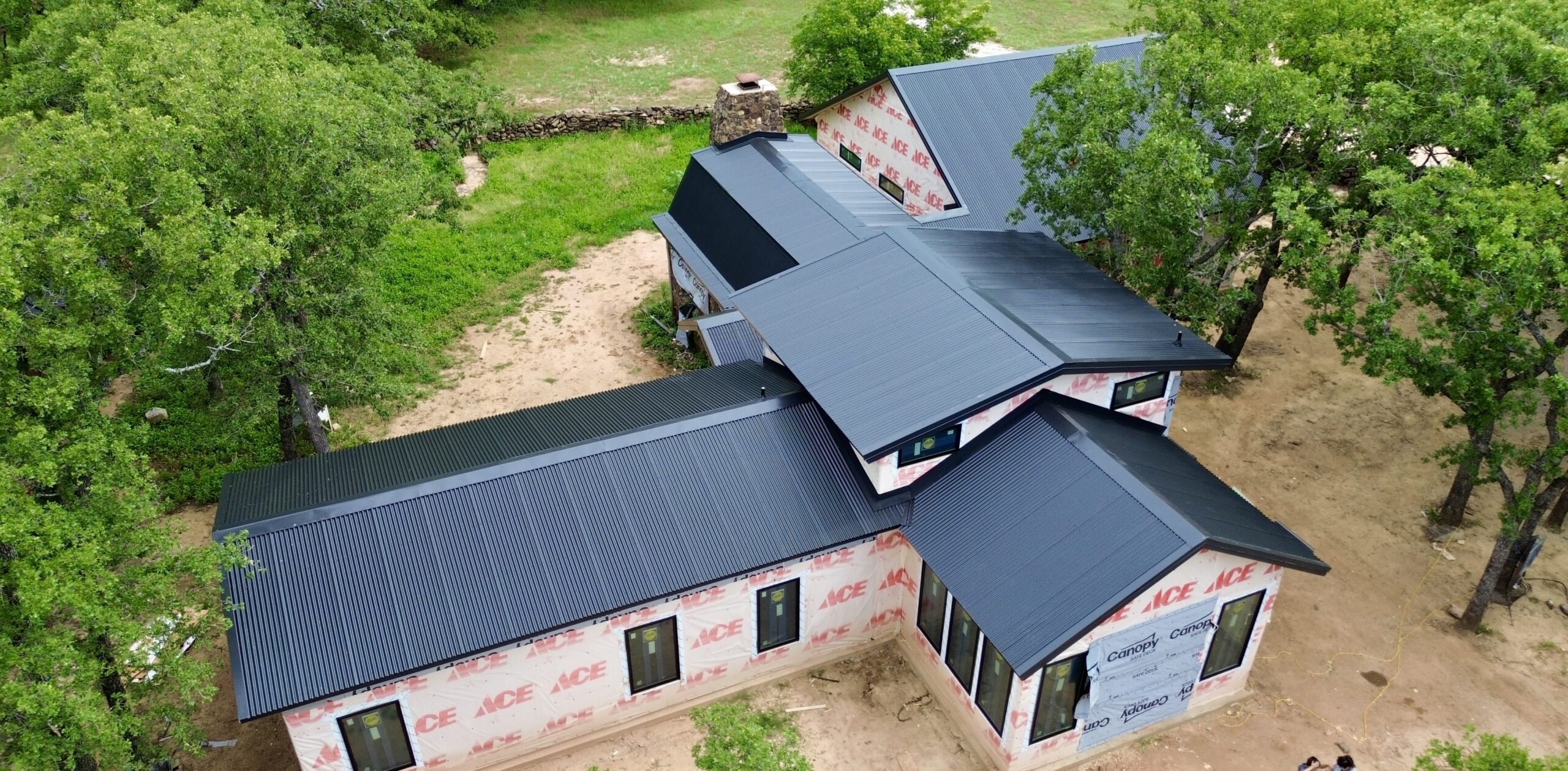
One of the biggest differences between DIY and professional residential roofing repair is the level of knowledge required to correctly diagnose and solve roofing problems. A roof is a complete system made up of several layers and components, so repairing one visible problem does not always mean the underlying issue has been corrected. Professional roofers develop experience with different roofing materials, installation methods, common failure points, and water intrusion patterns.
Homeowners may recognize obvious problems such as missing shingles, cracked tiles, or visible holes, but identifying why the damage occurred can be more difficult. For example, a ceiling stain may appear directly below one part of the roof while the actual entry point is several feet away. Water can travel along decking, underlayment, rafters, or other surfaces before reaching the interior.
Professional contractors are trained to investigate these possibilities rather than automatically repairing the most visible area. They can examine flashing around chimneys, skylights, vents, valleys, walls, and other transitions where leaks commonly develop. This diagnostic ability can prevent homeowners from repeatedly repairing the wrong location.
Roofing experience also helps professionals recognize signs of deterioration that may not be obvious to an inexperienced homeowner. Curling shingles, exposed fasteners, deteriorated flashing, damaged underlayment, soft decking, and poor ventilation can indicate broader problems. Addressing these conditions during a repair can help prevent the same issue from returning.
Different roofing materials also require different techniques. Asphalt shingles, metal panels, clay tiles, concrete tiles, slate, and membrane roofing systems are not repaired in exactly the same way. A method that works on one system can damage another or fail to create a weather-resistant connection.
Professional experience becomes particularly valuable with older roofs. Replacement materials may not match perfectly, and some original products may no longer be readily available. A knowledgeable contractor can evaluate compatibility and determine how to integrate new materials with the existing roofing system.
DIY repair can still be appropriate for homeowners who already have substantial roofing experience. However, confidence alone should not replace knowledge of the specific roofing system. When the cause of the damage is uncertain or the repair involves multiple roofing layers, professional evaluation can provide greater assurance.
Ultimately, experience can reduce both repair errors and unnecessary work. A professional who correctly identifies the source of a problem may complete one effective repair instead of leaving the homeowner to attempt several temporary fixes.
Tools, Equipment, and Access Requirements
The tools required for roofing repair can vary considerably depending on the type and location of the damage. Basic hand tools may be sufficient for some limited tasks, but many repairs require specialized equipment that homeowners may not normally have available. This difference can affect both the cost and safety of DIY work.
Roof access is one of the most important considerations. A single-story home with a low-slope roof may be easier to reach than a multi-story property with a steep roof. Even when the damaged area appears accessible, homeowners must still consider ladder placement, roof condition, weather, and safe movement.
Professional roofing contractors generally have equipment designed for working at height. Depending on the project, they may use extension ladders, scaffolding, fall-protection equipment, lifts, roof brackets, and other safety tools. Having the appropriate equipment can make difficult repairs more manageable.
A homeowner who purchases equipment for one repair may find that the total DIY cost increases significantly. Some equipment may also require proper setup and knowledge to use safely. Simply owning a ladder or harness does not guarantee safe roofing work.
Material handling is another concern. Roofing materials can be heavy, awkward, or difficult to transport to elevated areas. Moving bundles of shingles, sheets of metal, tiles, or decking can create additional physical risks. Professionals generally have established methods for moving materials while minimizing hazards.
Access around the property can also affect a repair. Landscaping, fences, nearby structures, power lines, narrow driveways, and limited work areas may make equipment placement difficult. Professional contractors can evaluate these conditions when planning the job.
Cleanup requires equipment and time as well. Roofing repairs can produce broken materials, nails, packaging, dust, and other debris. Professionals typically plan for collecting and disposing of these materials as part of the project.
Homeowners should also remember that tools cannot compensate for a lack of experience. A specialized tool may make a task possible, but using it incorrectly can damage the roof or cause injury. When the equipment requirements become extensive, hiring a professional may be more practical than purchasing tools for a single project.
Before choosing DIY repair, homeowners should consider the complete equipment requirement rather than focusing only on the visible repair. If safe access requires specialized equipment, the professional option may offer better overall value.
Identifying Hidden Roof Damage
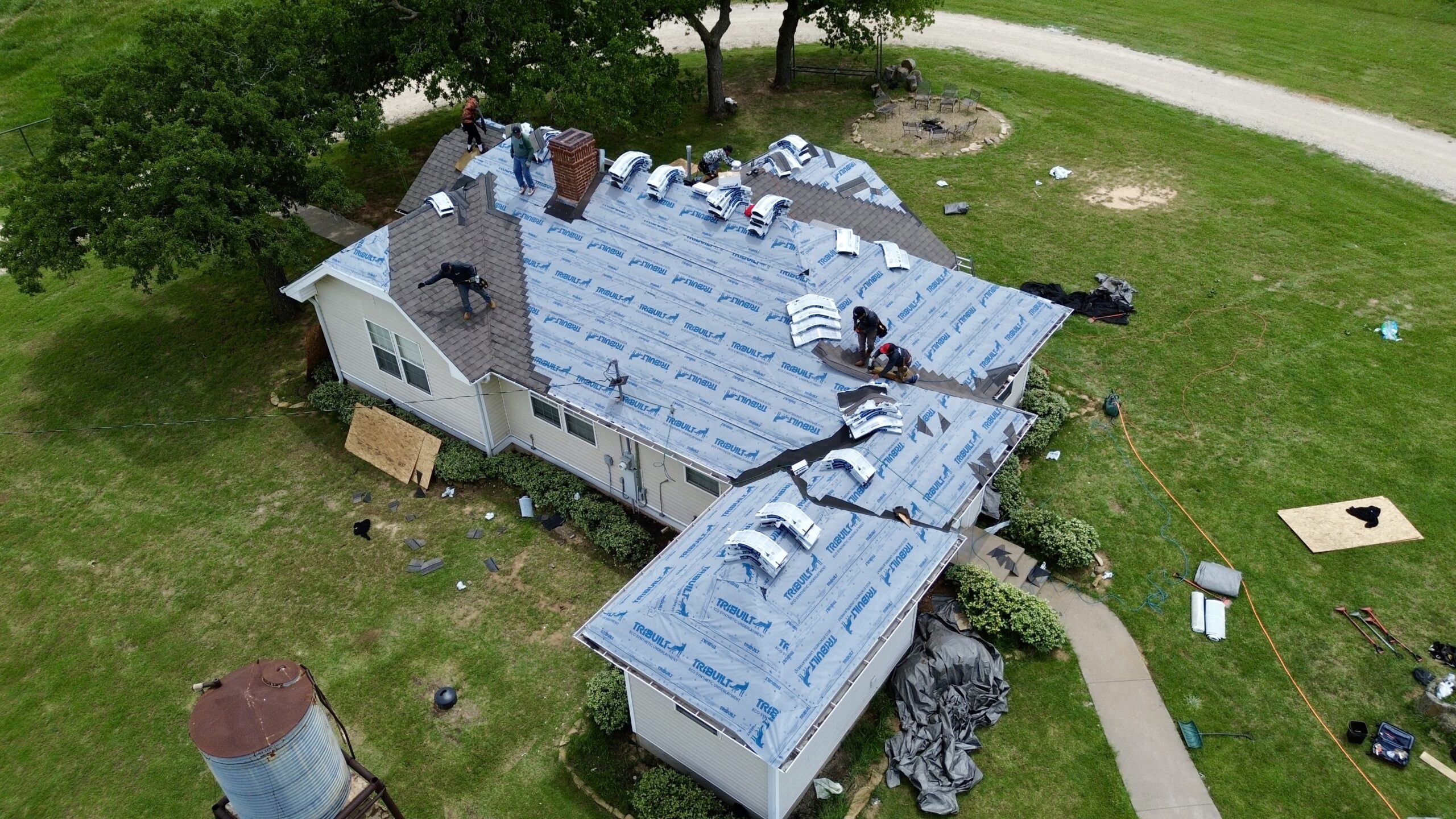
One of the greatest challenges of residential roof repair is identifying damage that cannot be seen from the ground. Roofing problems can extend beneath the visible surface, and water can move through several parts of the roof assembly before appearing inside the house. This makes accurate diagnosis particularly important.
A small leak can sometimes indicate a larger moisture problem. Continued water entry may affect underlayment, decking, insulation, framing, or interior finishes. If a homeowner repairs only the visible exterior opening without investigating further, moisture may continue entering the home.
Professional roofers can inspect the surrounding roofing system to determine whether the problem is isolated or widespread. They may examine nearby shingles, flashing, valleys, vents, roof penetrations, and other vulnerable areas. Attic inspection may also provide evidence of water movement that is not visible from outside.
The roof deck deserves particular attention. If wood decking becomes soft, swollen, warped, or deteriorated, replacing the exterior roofing material alone may not provide a proper repair. Damaged sections may need to be removed and replaced before new roofing materials are installed.
Underlayment can also deteriorate after prolonged moisture exposure. Because it sits beneath the primary roofing material, it may not be visible until surrounding materials are removed. This is one reason repair estimates can change after work begins.
Hidden damage can also develop around flashing. A leak near a chimney or skylight may appear to be caused by one loose component, but deterioration can extend beneath surrounding roofing materials. A professional can determine whether the flashing should be repaired, rebuilt, or replaced.
DIY homeowners may unintentionally make hidden problems worse by removing materials without understanding how they are connected. Pulling up one section can damage adjacent materials or create additional openings.
A professional inspection does not necessarily mean that the entire roof needs to be replaced. In many cases, the purpose is simply to understand the true scope of the repair. Once the cause and extent of the problem are known, homeowners can make a more informed decision.
The ability to identify hidden damage is therefore one of the strongest arguments for professional assistance when a roofing problem involves persistent leaks, structural concerns, or unexplained moisture.
Quality, Materials, and Long-Term Durability
The quality of a roof repair depends heavily on the materials used and how they are installed. Homeowners may find replacement products at local stores, but selecting a suitable material is not always as simple as matching its color or appearance. Compatibility with the existing roofing system is important for both performance and appearance.
Professional contractors generally understand the differences between roofing products and installation requirements. They can select materials appropriate for the existing roof and use fasteners, sealants, flashing, and other components correctly.
Material matching can be especially difficult on older roofs. Roofing products naturally weather over time, and a new shingle may look different from surrounding materials even if it is technically the same type. Some older products may also have been discontinued.
Improper installation can create problems even when high-quality materials are used. Fasteners placed incorrectly can allow water penetration, while poorly installed flashing can create pathways for moisture. Insufficient sealing around certain components can also result in recurring leaks.
DIY repairs may appear successful immediately after completion. However, roofing performance must be judged over time and through different weather conditions. A repair that survives a few dry weeks may still fail during heavy rainfall, strong winds, or seasonal temperature changes.
Professional installation can provide greater consistency because experienced roofers understand how materials should overlap, fasten, seal, and connect. They also understand how different roofing components work together as one system.
Long-term durability should therefore be included when comparing costs. Spending less on a DIY repair may not provide good value if the repair needs to be redone soon. Conversely, a properly completed repair may cost more initially but provide dependable service for considerably longer.
Homeowners should also consider whether a repair could affect the existing roof warranty. Some manufacturers specify installation requirements or conditions that must be followed. Before performing DIY work, homeowners should review applicable warranty documentation.
The goal should be to restore the roof’s weather resistance rather than simply make the damaged area look better. A durable repair addresses the cause, uses compatible materials, and integrates properly with the surrounding roofing system.
Warranty, Insurance, and Liability Considerations
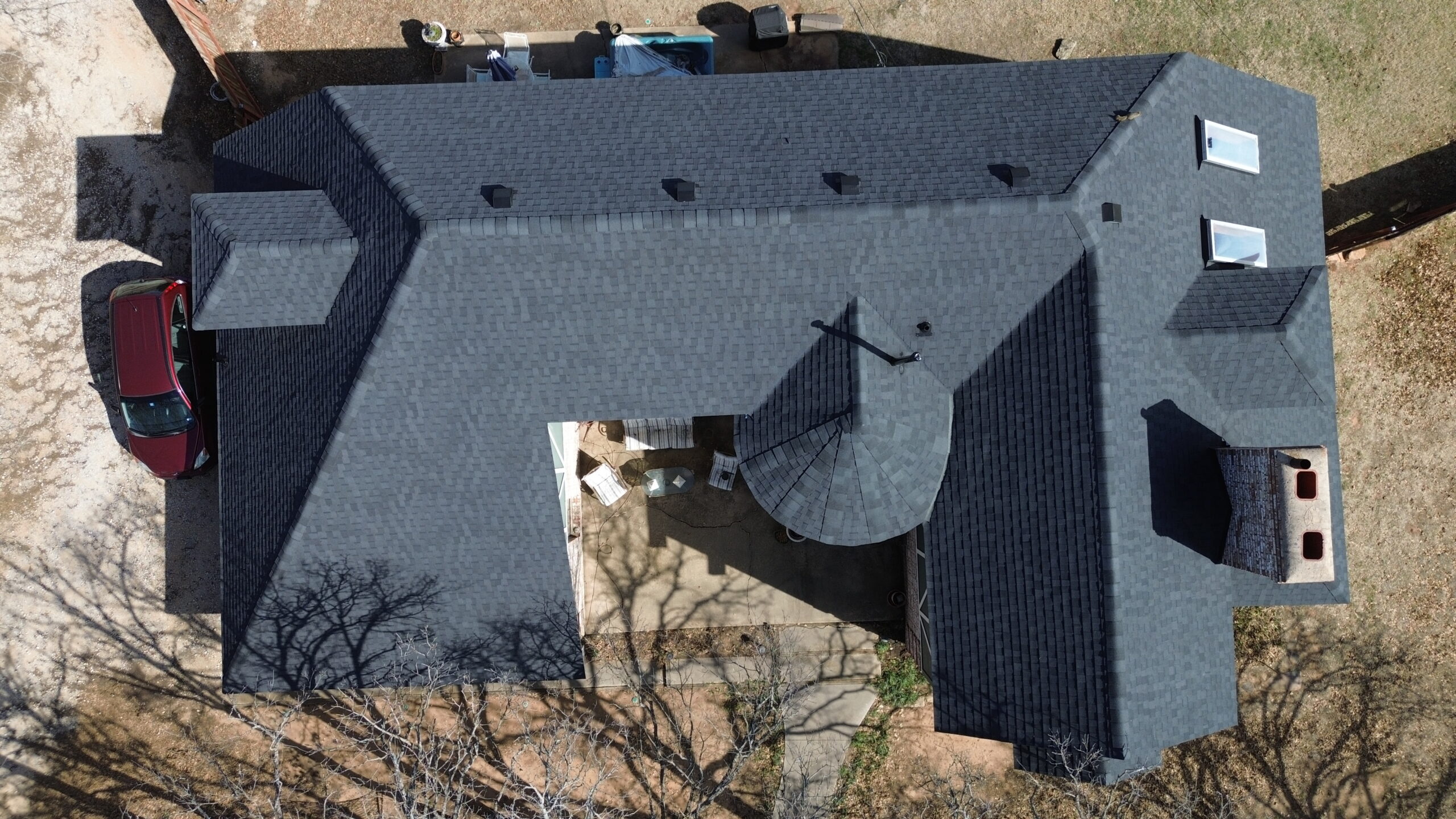
Warranty, insurance, and liability issues can make professional roofing repair more attractive than DIY work in certain situations. Homeowners should understand what protection is available before deciding who will perform the repair.
Roofing materials may come with manufacturer warranties, but these warranties can have specific conditions. Some products require installation according to defined instructions or by qualified professionals. Homeowners should review the applicable terms before modifying the roofing system themselves.
Professional contractors may also provide workmanship warranties. These warranties can cover certain installation-related problems for a specified period. The exact terms vary between contractors, so homeowners should request written information rather than assuming all roofing warranties provide the same protection.
Insurance is another consideration, particularly after storm damage. Homeowners should follow their policy requirements when documenting and reporting damage. A contractor can inspect the roof and provide repair information, but homeowners should not assume that every repair or DIY mistake will be covered by their policy.
Liability also matters when someone is working at height. A professional roofing company generally carries business insurance appropriate to its operations, although homeowners should verify relevant coverage before hiring a contractor. If a homeowner performs the work personally, the responsibility for safety and potential property damage remains with the homeowner.
DIY work can also create problems if a contractor later needs to correct it. Improperly installed materials may have to be removed before the professional can perform a proper repair. This can increase both labor and material costs.
Written documentation can help homeowners understand their protection. Estimates, invoices, warranties, photographs, inspection reports, and records of previous repairs should be retained. These documents can be useful if a problem develops later.
Homeowners should not choose professional repair solely because of warranty considerations. The more important issue is whether the roofing work can be completed safely and correctly. However, warranties and liability provide additional reasons to consider professional assistance when the repair is significant.
When Professional Repair Is the Better Choice
There are many situations where hiring a professional roofing contractor is clearly more practical than attempting a DIY repair. The most important indicators are safety, complexity, uncertainty about the cause, and the potential for hidden damage.
Professional assistance is generally appropriate when the roof is steep, high, difficult to access, or visibly unstable. Homeowners should also avoid climbing onto roofs that are wet, icy, damaged, or affected by severe weather. A repair is not worth risking a serious fall or injury.
Complex roofing components also favor professional work. Repairs involving chimneys, skylights, valleys, extensive flashing, roof penetrations, or multiple roofing layers require careful integration. Incorrect work in these areas can allow water to enter even when the exterior repair looks complete.
Persistent leaks are another warning sign. If a homeowner has already attempted a repair and water continues entering the home, another DIY patch may not solve the issue. Professional inspection can help identify the actual entry point and determine whether hidden damage is involved.
Structural concerns should never be treated as routine DIY repairs. Sagging decking, damaged framing, extensive rot, or significant water deterioration may indicate problems that require specialized assessment.
Storm damage may also require professional evaluation when multiple areas of the roof have been affected. Wind and hail can damage materials in ways that are difficult to recognize from the ground.
A professional should also be considered when the homeowner does not have the necessary tools, materials, time, or experience. Saving labor costs has limited value if the repair takes several days or produces an unreliable result.
The decision does not have to be based entirely on cost. Homeowners should compare the total DIY investment, including materials, tools, time, safety equipment, and the potential cost of mistakes, with the contractor’s complete estimate.
In many cases, professional repair offers greater peace of mind because the homeowner can rely on trained expertise for diagnosis, installation, and safety. When the roof’s condition is uncertain or the repair could affect the home’s protection, professional help is often the more responsible choice.
Evaluating the Complexity of the Roof Repair
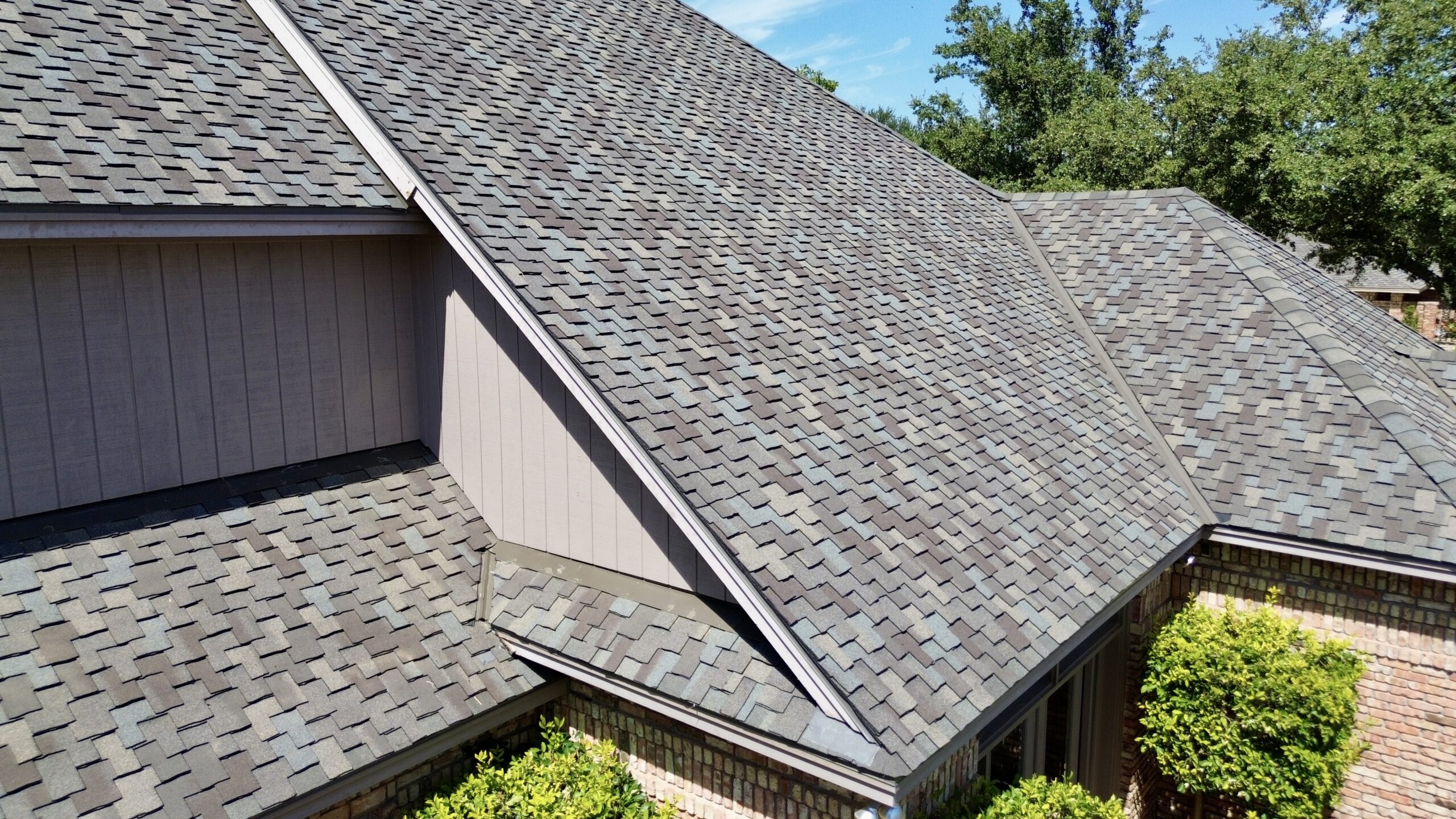
The complexity of a residential roofing repair should be one of the first factors homeowners consider before choosing between DIY work and professional assistance. A repair that looks simple from the ground may involve several roofing components once the damaged area is examined. Understanding the actual scope of the problem can prevent homeowners from taking on work that exceeds their skills or available equipment.
Minor, clearly visible issues may sometimes be manageable for an experienced homeowner. However, repairs involving steep slopes, multiple roof levels, valleys, chimneys, skylights, flashing, or damaged decking require greater knowledge and preparation. The more complicated the roofing system, the greater the chance that an incorrect repair could create additional damage.
The condition of the roof also matters. A newer roof with one isolated problem may be easier to repair than an older roof with brittle materials and several areas of deterioration. Removing old roofing materials can cause additional damage when they have already become fragile.
Homeowners should consider whether they can confidently answer three questions before beginning any DIY repair: What caused the damage, what materials need to be replaced, and how will the repair prevent the problem from returning? If any answer is uncertain, professional inspection may be the safer choice.
The location of the damage is equally important. A ground-level gutter issue may be relatively straightforward, while a leak around a chimney requires careful attention to flashing and water movement. Roofing repairs should become more conservative as the risk and complexity increase.
A professional contractor can also identify whether a repair is actually appropriate. Sometimes a localized repair provides a practical solution, while extensive deterioration may indicate that replacement is becoming more economical. This evaluation can prevent homeowners from spending repeatedly on temporary fixes.
Ultimately, DIY roofing should be limited to tasks that homeowners can complete safely and correctly. When the repair involves significant height, complicated construction, structural concerns, or uncertain damage, professional assistance provides a more reliable path.
Emergency Repairs and Storm Damage
Emergency roofing problems require quick attention because exposed areas can allow water to enter the home. Storms can damage shingles, tiles, metal panels, flashing, gutters, and roof decking within a short period. When severe weather has affected the roof, homeowners should focus first on safety and preventing additional damage.
A homeowner can often document visible storm damage from the ground without climbing onto the roof. Photographs of missing materials, fallen branches, damaged gutters, or visible openings can provide useful information for a contractor. Interior photographs of ceiling stains or water damage can also help explain the situation.
Temporary protection may sometimes be necessary while waiting for permanent repairs. However, homeowners should avoid climbing onto a damaged roof to install coverings if doing so creates a fall risk. Professional contractors have equipment and experience for working around unstable or exposed roofing areas.
Storm damage may also be more extensive than it appears. Wind can loosen materials without completely removing them, while hail can weaken roofing surfaces without creating obvious holes. A professional inspection can determine whether the damage is localized or spread across multiple sections.
Emergency repairs can cost more than planned maintenance because contractors may need to respond quickly and provide temporary protection. However, delaying action can create additional interior and structural damage. The potential cost of allowing water to enter should be considered when deciding how quickly to arrange professional help.
Insurance may also be relevant after significant weather events. Homeowners should review their policy and follow the appropriate claim procedures. A contractor can provide an inspection and repair estimate, but coverage decisions depend on the individual policy and circumstances.
DIY work may be reasonable for safe ground-level cleanup after a storm, such as moving fallen branches away from accessible areas. Roofing repairs themselves should generally be left to professionals when the roof is unstable, wet, damaged, or difficult to access.
The priority after severe weather should always be preventing injuries and limiting further property damage. A professional assessment can provide a safer way to determine what needs to be repaired and how extensive the work should be.
How to Decide Between DIY and Professional Help
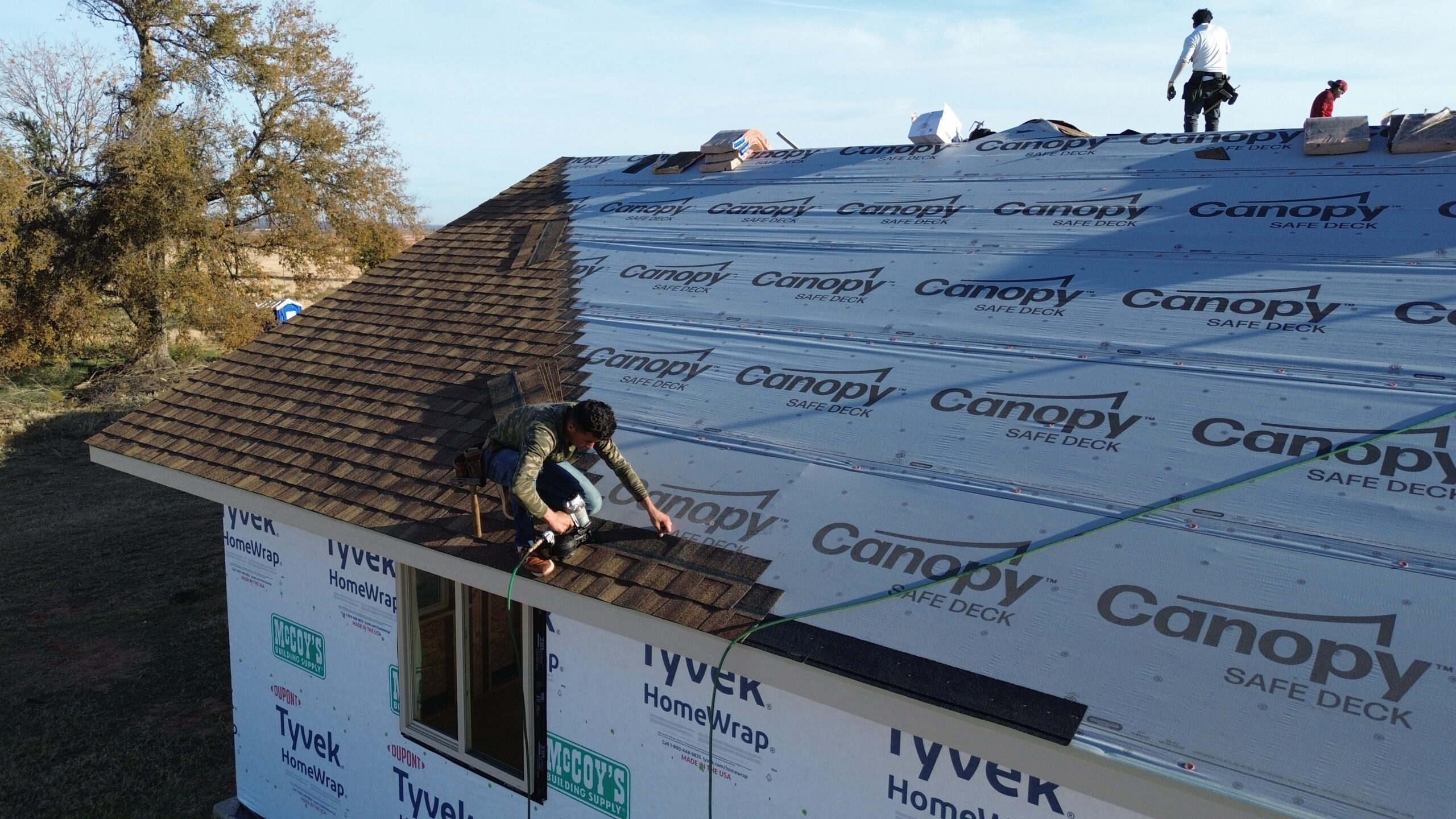
Choosing between DIY and professional residential roofing repair requires homeowners to consider more than the initial cost. The decision should account for the type of damage, roof accessibility, personal experience, equipment requirements, time available, safety risks, and possible consequences of an unsuccessful repair.
A simple comparison can help homeowners organize the decision:
| Factor | DIY Repair | Professional Repair |
|---|---|---|
| Labor cost | Usually lower | Higher upfront |
| Experience | Depends on homeowner | Specialized roofing knowledge |
| Equipment | Homeowner must provide it | Contractor generally supplies it |
| Safety | Homeowner assumes the risk | Professional safety procedures |
| Diagnosis | May be limited | Professional inspection available |
| Hidden damage | Easier to overlook | More likely to be identified |
| Warranty | May be affected | Workmanship coverage may be available |
| Complex repairs | Often challenging | Better suited to trained contractors |
Homeowners with suitable experience may feel comfortable handling limited tasks when the roof is safely accessible. Even then, the repair should be approached carefully, and the homeowner should stop if unexpected damage appears.
Professional repair is generally the stronger option when the source of a leak is uncertain, the roof is steep or high, or the work involves structural components. It is also preferable when the homeowner lacks the necessary tools or cannot safely complete the work.
Cost should be calculated realistically. DIY work may appear cheaper because there is no contractor labor charge, but materials, equipment, transportation, time, and potential mistakes all have financial value. A failed repair can result in professional correction and additional interior damage.
The best choice is the one that provides reliable protection without creating unnecessary safety or financial risks. In many cases, a professional inspection can help homeowners make the decision even if they ultimately handle a small maintenance task themselves.
Preparing for a Professional Roofing Repair
When professional repair is the appropriate choice, homeowners can still play an important role in making the project efficient. Good preparation can help the contractor understand the problem and reduce unnecessary delays.
Homeowners should document visible damage before work begins. Photographs of exterior problems, interior stains, damaged ceilings, or affected attic areas can provide useful information. If the problem appeared after a storm, noting when the damage occurred can also help organize the repair history.
The contractor should receive information about previous repairs whenever possible. Old invoices, inspection reports, material details, and warranty documents can help explain the history of the roof. This information may be especially valuable when the same area has experienced repeated problems.
Before approving the repair, homeowners should review the written estimate carefully. The document should explain the repair scope, materials, labor, disposal, cleanup, and warranty information. It should also describe how unexpected damage will be handled if conditions change after materials are removed.
The property should be prepared for construction. Vehicles, outdoor furniture, fragile items, and other belongings near the work area may need to be moved. Children and pets should remain away from the construction zone throughout the project.
Homeowners should also discuss communication arrangements with the contractor. Knowing who will provide updates and how additional work will be approved can prevent misunderstandings.
Preparing properly allows the contractor to focus on the repair while helping the homeowner maintain a clear understanding of the project.
Maintaining the Roof After Repairs
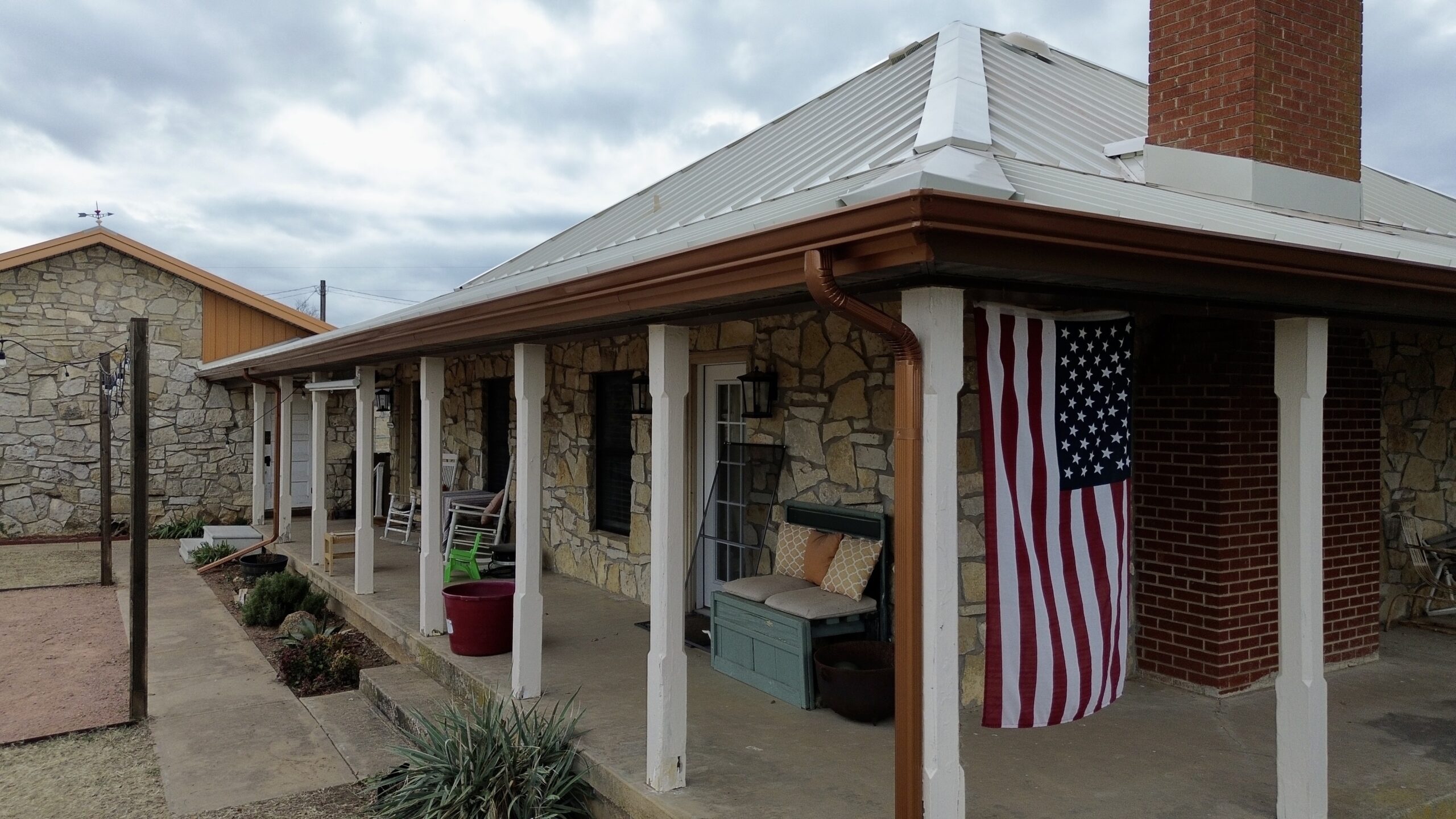
A successful repair should be followed by regular maintenance to reduce the chance of future problems. Even a professionally repaired roof can develop new damage from severe weather, aging materials, blocked drainage, or surrounding trees.
Homeowners should arrange periodic inspections appropriate for the age and type of their roofing system. Professional inspections can identify deteriorating flashing, damaged materials, drainage problems, and other conditions before they develop into major repairs.
Gutters and downspouts should remain clear so water can move away from the roof efficiently. Blocked drainage can cause water to accumulate around roof edges and contribute to deterioration.
Trees around the home should also be maintained. Overhanging branches can scrape roofing materials and may fall during storms. Keeping vulnerable branches properly trimmed can reduce the likelihood of physical roof damage.
After severe weather, homeowners should perform a safe visual check from the ground. Missing shingles, fallen branches, damaged gutters, or visible openings should be evaluated promptly. Homeowners should not climb onto a roof simply to investigate suspected storm damage.
Records should be kept after every repair. Invoices, photographs, inspection reports, warranties, and material information create a useful maintenance history. These records can help future contractors understand what has already been repaired.
Maintenance is especially valuable after a DIY repair. If the homeowner notices recurring leaks or additional deterioration, professional evaluation should be arranged rather than repeatedly applying temporary patches.
Conclusion
The choice between DIY and professional residential roofing repair depends on the complexity of the problem, the condition of the roof, safety requirements, available experience, equipment, and the potential consequences of mistakes. DIY work can be appropriate for certain limited and safely accessible tasks, particularly when the homeowner understands the roofing system and can complete the work correctly.
However, roofing repairs become significantly more challenging when they involve steep surfaces, difficult access, hidden leaks, structural damage, complicated flashing, or extensive storm damage. In these situations, professional knowledge and equipment can make a major difference in both safety and long-term results.
Cost should not be the only consideration. A DIY repair may eliminate labor expenses, but homeowners must account for materials, tools, time, safety equipment, and the possibility of having to pay for professional correction if the repair fails.
Professional contractors can provide valuable diagnostic expertise, appropriate equipment, material knowledge, and workmanship support. A detailed inspection can also determine whether a localized repair is sufficient or whether the roof has broader problems that require more extensive work.
Homeowners can make the process easier by documenting damage, reviewing estimates, checking warranties, preparing the property, and maintaining clear communication with the contractor. After repairs are completed, regular inspections and basic maintenance can help protect the roofing system.
The safest approach is to recognize personal limitations and avoid taking unnecessary risks. When a roofing problem is complex, difficult to diagnose, or unsafe to access, hiring a qualified professional is usually the more responsible decision. A properly completed repair can protect the home, reduce recurring problems, and provide better long-term value than an inexpensive repair that only temporarily hides the underlying issue.