
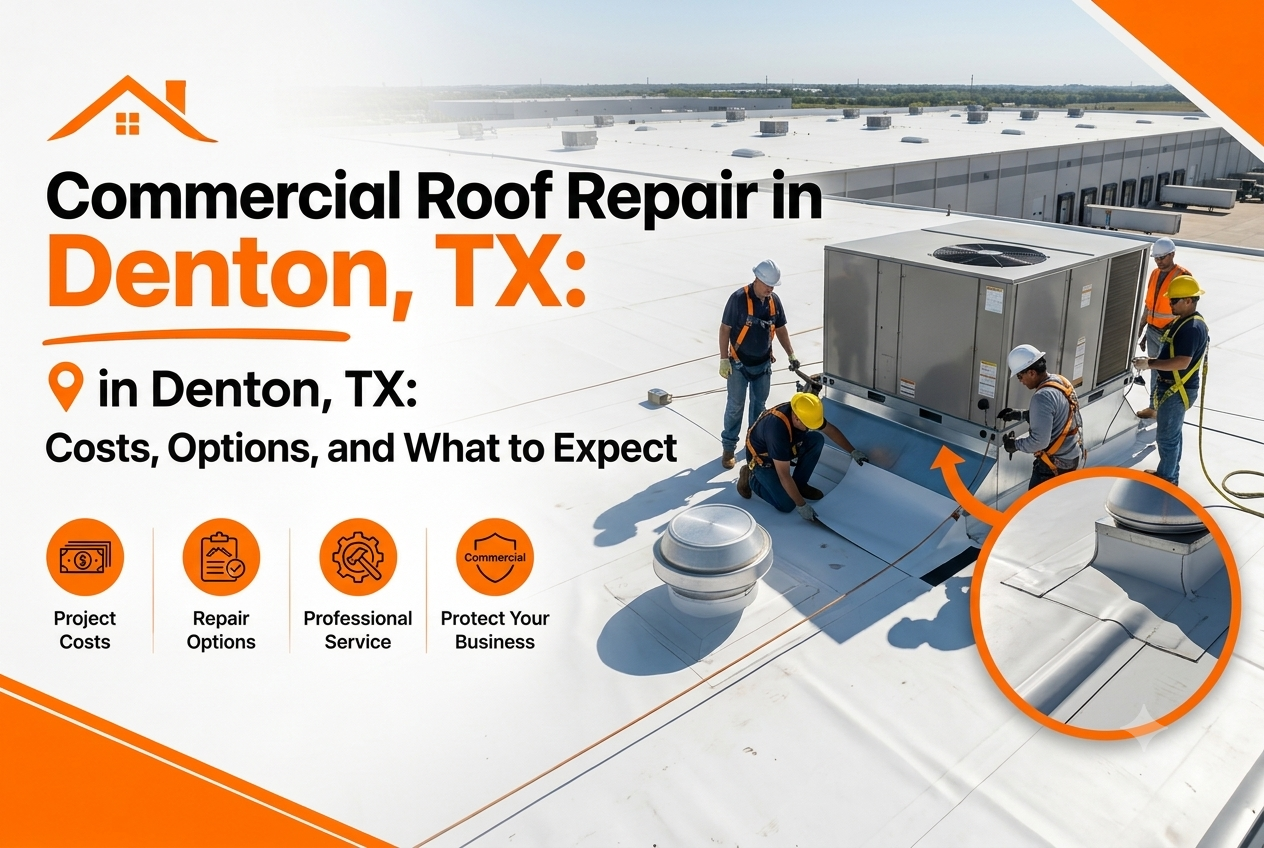
Commercial Roof Repair in Denton, TX: Costs, Options, and What to Expect
🏢 Introduction
A commercial roof protects more than a building. It helps safeguard inventory, equipment, employees, tenants, and everyday business operations from rain, wind, heat, and other weather conditions. When a roof develops leaks or visible damage, delaying repairs can allow a manageable problem to spread into insulation, ceiling materials, electrical areas, and other parts of the property.
For business owners and property managers in Denton, TX, commercial roof repair is especially important because North Texas weather can place significant stress on roofing systems throughout the year. Hail, strong winds, heavy rain, and prolonged summer heat can weaken roofing materials and expose vulnerable seams, flashing, drains, and fasteners. Recognizing problems early gives property owners more opportunities to control repair expenses and limit disruptions to daily operations.
Commercial roof repair may involve sealing a leaking seam, replacing damaged membrane sections, correcting drainage issues, repairing metal panels, or restoring flashing around rooftop equipment. The right solution depends on the roofing material, the location and extent of the damage, and the overall condition of the existing system. A professional assessment can help determine whether a targeted repair is sufficient or whether a larger restoration or replacement project deserves consideration.
This guide explains estimated commercial roof repair costs in Denton, common roofing systems, frequent roof problems, and the effects of local weather. It also covers the repair process so you can make informed decisions about protecting your commercial property and planning your roofing budget.
💰 Average Commercial Roof Repair Costs in Denton, TX
Commercial roof repair costs in Denton vary according to the size of the damaged area, the roofing system, the difficulty of accessing the roof, and the amount of underlying damage. A small repair involving an accessible seam may cost considerably less than a project requiring membrane removal, insulation replacement, or extensive flashing work. Emergency service, specialized materials, and complicated rooftop layouts can also increase the final estimate.
For budgeting purposes, smaller commercial repairs may cost a few hundred dollars, while more involved projects can reach several thousand dollars or more. Large buildings, widespread storm damage, and repairs involving several roof sections may require substantially higher investment. The figures below are broad planning estimates rather than guaranteed local prices, and a contractor should inspect the property before providing a project-specific quote.
| Commercial Roof Repair Type | Illustrative Cost Range | Typical Work Involved |
|---|---|---|
| Minor leak or localized sealing | $250 to $750 | Addressing a small, accessible leak or failed seal |
| Membrane patch or seam repair | $500 to $2,000 | Repairing a puncture, split, or separated membrane seam |
| Flashing or rooftop penetration repair | $750 to $3,000 | Correcting vulnerable areas around vents, pipes, or HVAC equipment |
| Drainage or ponding-water correction | $500 to $2,500+ | Repairing drain details or addressing localized drainage defects |
| Metal panel or fastener repair | $400 to $1,800 | Replacing damaged fasteners, sealing joints, or repairing a limited panel area |
| Larger storm-damage repair | $1,500 to $5,000+ | Restoring multiple damaged areas or replacing affected roof components |
These ranges are intended to help with early planning, not to establish the price of every commercial roofing project. The actual cost may fall outside them depending on the roof’s size, height, materials, access requirements, and concealed conditions. Some repairs that initially appear minor become more extensive once a contractor opens the affected section and discovers wet insulation, deteriorated decking, or damaged attachment components.
Factors That Influence the Final Repair Bill
Roof size is an important consideration, but the size of the damaged area alone does not determine the price. A small leak around a complicated rooftop unit may require more diagnostic work than a larger, easily accessible section of damaged membrane. The contractor must identify the source of water intrusion and determine how to restore the affected roofing assembly properly.
Material compatibility also affects cost. TPO, EPDM, PVC, modified bitumen, and metal roofs require different repair products and installation techniques, so a generic sealant may not provide a reliable solution for every system. Matching existing materials and following the roofing manufacturer’s repair recommendations can help prevent premature failure.
Labor and access can influence the estimate as well. A tall building, restricted work area, rooftop equipment, limited staging space, or additional fall-protection requirements may make the project more complicated. If the repair must happen outside normal business hours or immediately after a storm, emergency scheduling and site conditions can add to the expense.
Why Prompt Repairs Can Save Money
A roof leak does not always remain confined to the point where water first appears. Moisture can travel along roof components before becoming visible inside the building, which means an interior stain may be some distance from the actual entry point. Repairing only the visible symptom without identifying the underlying failure can allow the problem to return.
Early attention can help protect insulation, interior finishes, stored products, and business equipment. It also gives property managers time to compare repair options before damage becomes urgent. If the roof is leaking, document the affected area, protect vulnerable contents where possible, and arrange a professional inspection rather than assuming that a temporary patch has resolved the problem.
🏢 Common Types of Commercial Roofing Systems
Commercial buildings use several roofing systems, and each has its own strengths, maintenance needs, and repair requirements. Knowing which material covers your building can help you understand the possible causes of damage and the type of work a contractor may recommend. The roof’s age, installation quality, previous repairs, and exposure to weather all influence its current condition.
TPO Roofing
Thermoplastic polyolefin, commonly called TPO, is a single-ply membrane used on many low-slope commercial roofs. Its reflective surface can help reduce solar heat absorption, depending on the roof design, insulation, and overall building performance. TPO repairs may involve patching punctures, restoring separated seams, or correcting flashing around drains and rooftop equipment.
Seam condition is particularly important because membrane sections are joined together during installation. Poorly bonded seams, physical damage, or deterioration around penetrations can create entry points for water. A suitable repair should use compatible materials and restore the affected area according to the system’s requirements.
EPDM Roofing
EPDM is a synthetic rubber membrane commonly used on low-slope roofs. It is valued for its flexibility and weather resistance, but it can still develop punctures, seam problems, shrinkage-related stress, and failures around roof penetrations as the system ages. Repairs may require specialized patches, approved adhesives, seam treatments, or replacement of damaged sections.
The surface should be evaluated before repair materials are applied because dirt, moisture, and incompatible products can interfere with adhesion. A contractor should also inspect nearby seams and flashing to determine whether the visible damage is isolated or part of a wider problem.
PVC Roofing
Polyvinyl chloride, or PVC, is another single-ply membrane used on commercial buildings. It can offer resistance to certain chemicals and is often considered for properties where rooftop exhaust or grease exposure is a concern. However, damaged seams, punctures, aging, and failures around rooftop penetrations can still cause leaks.
PVC repairs generally require materials and methods compatible with the existing membrane. Using products intended for another roofing system may compromise the repair, so identifying the membrane correctly is an important first step.
Modified Bitumen and Built-Up Roofing
Modified bitumen roofs use reinforced bitumen-based sheets, while built-up roofing, often called BUR, consists of multiple layers designed to provide weather protection. These systems may be found on offices, retail buildings, warehouses, and other commercial properties. Potential problems include cracked or blistered surfaces, deteriorated flashing, damaged seams, and water intrusion around drains.
Repair techniques depend on the specific assembly and the condition of the layers underneath. If moisture has reached the insulation or decking, simply sealing the outer surface may not address the full extent of the damage.
Metal Roofing
Metal roofs are commonly used on industrial buildings, warehouses, workshops, and other commercial facilities. They can provide long service when properly installed and maintained, but loose fasteners, failed sealants, damaged panels, corrosion, and movement at joints can create vulnerabilities. Expansion and contraction caused by temperature changes can also place stress on connections and flashing details.
Effective repairs may involve replacing fasteners, restoring panel joints, repairing flashing, or replacing damaged sections of metal. Coatings can be useful in suitable conditions, but they should not be treated as a universal fix for loose panels, structural problems, or widespread deterioration.
Spray Polyurethane Foam Roofing
Spray polyurethane foam, or SPF, forms a continuous insulated layer that can be protected with a specialized coating. Its performance depends on the condition of the foam, the integrity of the protective surface, and the quality of the installation. Damage to the coating can expose the underlying foam to moisture and sunlight, making prompt maintenance important.
Repair work may include restoring damaged coating, addressing localized moisture intrusion, and applying compatible materials to affected areas. Before choosing a repair, the contractor should determine whether the foam remains sound and whether moisture has spread beneath the protective layer.
🔍 Common Commercial Roof Problems in Denton
Commercial roofs can develop problems for many reasons, including weather exposure, aging materials, poor drainage, installation defects, and insufficient maintenance. Some warning signs are visible from the ground or inside the building, while others require a closer professional inspection. Understanding common failure points helps property owners recognize when an evaluation is necessary.
Roof Leaks and Water Intrusion
Leaks are among the most noticeable commercial roofing problems, but their causes are not always obvious. Water may enter through a damaged seam, failed flashing, punctured membrane, loose fastener, or deteriorated area around a roof penetration. Once inside, it can travel along structural components before appearing as a ceiling stain or dripping water.
A reliable repair should identify the entry point rather than focusing only on the interior symptom. The contractor may need to examine several roof sections, check drainage paths, and assess insulation or decking for moisture damage. Prompt investigation can reduce the likelihood of repeated leaks and more extensive interior repairs.
Ponding Water and Poor Drainage
Low-slope commercial roofs are designed to drain water toward designated outlets, although some surfaces may retain small amounts of moisture temporarily. Persistent ponding can indicate blocked drains, poorly positioned outlets, inadequate slope, or a depressed section of the roof. Standing water can place additional demands on the roofing system and expose vulnerable seams and details for longer periods.
Property managers should arrange an inspection when water remains on the roof well after rainfall or repeatedly collects in the same locations. Clearing suitable drainage pathways may resolve some problems, while recurring ponding caused by the roof’s design or settled materials may require a more comprehensive solution. Drainage corrections should be based on the roof’s construction and load requirements.
Damaged Seams, Flashing, and Penetrations
Seams connect sections of membrane roofing, while flashing helps protect transitions around walls, drains, vents, skylights, and HVAC equipment. These details experience weather exposure and movement, making them common locations for failures. When a seam separates or flashing pulls away, water may find a path beneath the roof covering.
Repairs should restore the function of the affected detail and maintain compatibility with the surrounding materials. Applying sealant over a deteriorated connection may provide temporary relief, but it may not correct the underlying defect. An inspection should determine whether nearby components are also loose, cracked, or deteriorated.
Punctures, Blisters, and Surface Deterioration
Foot traffic from maintenance crews, dropped tools, equipment installation, and windblown debris can damage commercial roofing surfaces. Punctures may be small but still permit water to reach insulation or other layers beneath the membrane. Blisters, cracks, exposed reinforcement, or widespread surface wear can also indicate that a roof needs professional attention.
Not every surface irregularity means the entire roof has failed. The important step is to assess its location, size, cause, and effect on the roofing assembly. Where damage is localized and the surrounding system remains sound, a targeted repair may be practical; more widespread deterioration may require a broader assessment.
🌩️ How North Texas Weather Affects Commercial Roofs
Commercial roofs in Denton, TX, must withstand changing weather conditions throughout the year. Summer heat, sudden thunderstorms, hail, strong winds, and periods of heavy rainfall can gradually weaken roofing materials and expose installation defects. Understanding these local weather risks helps property owners schedule inspections, respond to damage quickly, and make informed decisions about maintenance.
Hail and Wind Damage
Hailstorms can affect commercial roofing systems in different ways depending on the roofing material, hail size, impact force, and roof condition. Impacts may damage membrane surfaces, loosen protective coatings, dent metal panels, or weaken vulnerable flashing details. Some damage is visible immediately, while other problems may require a professional inspection to identify.
Strong winds can lift membrane edges, loosen metal panels, damage perimeter flashing, and dislodge rooftop components. Windblown branches and debris can also puncture roofing materials or block drainage outlets. After a severe storm, property managers should check for visible damage from a safe location and arrange an inspection if they suspect the roof has been affected.
Heavy Rainfall and Drainage Problems
Heavy rain can expose drainage weaknesses that may not be obvious during dry weather. Water can accumulate around clogged drains, low areas, and rooftop equipment if the drainage system cannot move it away efficiently. When water reaches damaged seams or flashing, even a relatively small defect can develop into a significant leak.
Commercial property owners should keep appropriate drainage outlets clear and investigate recurring ponding. If water enters the building, protect equipment and inventory where possible, document the damage, and arrange professional assistance. Temporary measures may help control immediate problems, but permanent repairs should address the cause of the intrusion.
Extreme Heat and Temperature Changes
Denton summers can expose commercial roofs to prolonged sunlight and high surface temperatures. Repeated heating and cooling can cause roofing materials to expand and contract, placing stress on seams, fasteners, flashing, and joints. Over time, these movements may contribute to cracks, separation, or deterioration in vulnerable areas.
Reflective roofing surfaces and suitable insulation may help manage heat transfer, depending on the building’s design. However, energy performance does not eliminate the need for regular inspections and repairs. Property owners should evaluate both the roof’s weather resistance and its contribution to the building’s overall energy efficiency.
Seasonal Inspection Planning
Weather-related roof inspections are most useful when they are part of an ongoing maintenance plan rather than a response to visible leaks alone. A professional review before periods of severe weather can help identify loose flashing, damaged seams, drainage obstructions, and other weaknesses. An additional inspection after a significant storm can help establish whether new damage needs attention.
Keeping records of inspection findings, photographs, completed repairs, and storm dates can also support future maintenance decisions. These records may be useful when discussing the property’s condition with roofing contractors, insurers, or building managers. A consistent inspection routine makes it easier to identify recurring problems and determine whether repair costs are becoming excessive.
🛠️ Commercial Roof Repair Options
The most suitable commercial roof repair depends on the roofing material, the source of the damage, and the condition of the surrounding system. A small defect may need only a localized repair, while widespread deterioration can require more extensive work. The goal is to restore reliable weather protection without recommending unnecessary work or overlooking underlying damage.
Localized Patching and Membrane Repairs
Localized patching is often appropriate when a puncture, split, or damaged section is limited to a small area. The contractor identifies the affected section, prepares the surface, and installs a compatible patch or replacement material using the appropriate method. This option can be cost-effective when the surrounding membrane and underlying components remain in good condition.
A patch should not be applied without investigating why the damage occurred. Repeated foot traffic, movement around equipment, or a recurring seam failure may require additional corrective measures. Addressing the underlying cause helps reduce the chance that the same problem will return.
Seam and Flashing Restoration
Seam and flashing repairs focus on vulnerable connections where different roofing components meet. These areas may include roof edges, parapet walls, drains, skylights, vents, and mechanical equipment. Depending on the system, repairs may involve resealing, welding compatible membrane materials, replacing deteriorated flashing, or securing loose components.
Because these details are common water entry points, careful workmanship is important. The contractor should inspect the surrounding area to determine whether moisture has spread beneath the roof covering. Restoring the entire affected detail is generally more reliable than covering a failed connection with an incompatible sealant.
Drainage Improvements
When recurring leaks are linked to ponding water, drainage improvements may be necessary. Work can include clearing blocked outlets, repairing damaged drains, correcting localized depressions, or modifying certain drainage components where the roof design permits. The appropriate solution depends on the roof’s slope, structural capacity, drainage layout, and existing construction.
Simply removing standing water does not resolve a persistent drainage defect. If water repeatedly accumulates in the same location, a contractor should investigate the cause before recommending a permanent correction. Any substantial change to drainage or roof construction should be evaluated carefully to ensure it suits the building.
Metal Roof Repairs
Metal roofing problems often involve loose fasteners, failed washers, damaged seams, corrosion, or deteriorated flashing. Repairs may require replacing worn fasteners, tightening suitable connections, sealing compatible joints, treating limited corrosion, or replacing damaged panels. The repair method should account for the metal type, panel profile, existing coating, and amount of deterioration.
Coatings may help protect suitable metal roofing systems, but they cannot reliably correct every mechanical or structural problem. If panels are extensively corroded, connections have failed across a large area, or water has damaged underlying components, more substantial work may be necessary. A professional assessment helps distinguish routine maintenance from repairs that require component replacement.
Roof Coatings and Restoration
A commercial roof coating may be an option when the existing roof remains structurally sound but needs additional surface protection. Depending on the system, a coating can help protect against weather exposure and may improve reflectivity. The roof generally needs proper preparation, and any existing leaks or damaged areas must be addressed before the coating is applied.
Coatings are not suitable for every roof. Widespread trapped moisture, deteriorated insulation, severe structural damage, or incompatible existing materials can make coating an unsuitable choice. A contractor should evaluate the roof’s condition and explain the expected performance, preparation requirements, maintenance needs, and limitations before recommending restoration.
Emergency Repairs and Temporary Protection
Emergency roof repairs may be needed when a storm causes active leaks, wind removes roofing material, or water threatens electrical systems, inventory, or business equipment. Immediate work may involve temporary covering, water diversion, or securing a damaged section until permanent repairs can be completed. The safest approach depends on weather conditions, access, and the nature of the damage.
Temporary protection should not be mistaken for a completed repair. Once conditions allow, the damaged area should be inspected and restored using appropriate materials and methods. Business owners should also keep records of the damage and repair work, especially if they plan to contact their insurance provider.
📋 What to Expect During a Commercial Roof Inspection
A professional commercial roof inspection helps establish the condition of the roofing system and identify the source of reported problems. It also gives property owners a clearer understanding of which repairs are urgent, which can be scheduled, and whether broader deterioration requires further investigation. The inspection process may vary depending on roof size, access, material, and the complexity of the building.
Initial Discussion and Property Review
The process generally begins with a discussion about the building, the roof’s history, and any concerns reported by occupants or maintenance staff. The contractor may ask when a leak first appeared, whether it occurs during particular weather conditions, and whether previous repairs have failed. Details about the roof’s age, material, and maintenance history can help guide the inspection.
Property managers should identify affected rooms, equipment areas, and locations where water has appeared. Photographs of interior stains, dripping water, or damaged inventory can help explain the issue. Sharing information about recent storms or rooftop work may also help the contractor narrow down possible causes.
Roof Surface and Component Assessment
The contractor examines accessible roof areas for visible damage, deteriorated seams, punctures, loose fasteners, flashing failures, and other potential entry points. Drainage outlets and areas where water collects may receive particular attention. Rooftop equipment, penetrations, roof edges, and transitions between materials should also be reviewed because they can be vulnerable to leaks.
The inspection may include appropriate checks of the underlying roof assembly when visible signs suggest concealed moisture or deterioration. The extent of testing depends on the roof design and the suspected problem. Not every inspection includes destructive testing, so property owners should ask whether additional investigation is necessary to confirm the condition of hidden components.
Findings, Photographs, and Recommendations
After the assessment, the contractor should explain the findings in practical terms. Photographs, notes, and a written report can help property managers understand the damaged areas and compare recommended repair options. A useful report distinguishes urgent concerns from routine maintenance items and explains any limitations in the inspection.
The contractor should also discuss the likely repair scope, materials, estimated costs, and expected schedule. If multiple solutions are possible, ask about the benefits and limitations of each option. Clear documentation makes it easier to approve necessary work, plan budgets, and maintain a reliable record of the building’s roofing condition.
📏 Factors That Influence Commercial Roof Repair Costs
Commercial roof repair estimates reflect more than the cost of materials. Labor, accessibility, the condition of the roof assembly, and the amount of preparation required can all affect the total. Understanding these factors helps property owners evaluate proposals and avoid comparing estimates that include different scopes of work.
Roof Size, Height, and Accessibility
The area requiring repair is a major consideration because larger damaged sections generally need more material and labor. However, the location of the damage can be just as important as its size. A small defect on a steep, high, or difficult-to-access section may require additional safety measures and setup time.
Buildings with restricted access, crowded rooftop equipment, or limited space for materials can also increase project complexity. The contractor may need to coordinate access with tenants or schedule work around business operations. Providing accurate property details during the estimate process helps the contractor plan the job more effectively.
Roofing Material and Repair Method
Different roofing materials require different tools, products, and installation techniques. A membrane patch, metal panel replacement, and built-up roof repair are not interchangeable tasks, even when the affected areas are similar in size. Specialized labor or material matching can influence the overall cost.
The repair method should suit the existing roof rather than simply use the least expensive available product. A lower initial price may not provide good value if the proposed materials are incompatible or the repair does not address the actual cause of the damage. Property owners should ask the contractor to explain why the recommended method is appropriate.
Hidden Damage and Insulation Condition
Water may travel beneath a roof membrane and affect insulation, decking, or other building components before becoming visible indoors. If an inspection reveals concealed damage, the contractor may need to remove affected materials and restore the underlying layers before closing the roof. This can increase labor, material requirements, and project duration.
An estimate based only on visible surface damage may need to be revised if additional problems are discovered during the work. Ask how unexpected conditions will be documented, priced, and approved before extra work begins. A clear change-order process helps prevent misunderstandings and gives property managers better control over project spending.
Labor, Timing, and Project Complexity
Repair costs can vary according to labor requirements, weather conditions, scheduling, and the urgency of the work. Emergency repairs may require rapid mobilization or work outside regular business hours. Complex projects involving several roof sections or specialized equipment can also take longer to complete.
Whenever practical, planned maintenance and nonurgent repairs should be scheduled before a small defect becomes an emergency. However, active leaks and safety-related concerns should not be postponed simply to obtain a more convenient appointment. A qualified contractor can help prioritize work according to risk and explain which repairs require immediate attention.
⚠️ Warning Signs Your Commercial Roof Needs Repair
Recognizing early warning signs can help Denton business owners address roofing problems before they lead to costly interior damage or operational interruptions. Some signs are easy to spot, while others develop gradually and require a professional inspection. Regularly checking accessible interior areas and arranging routine roof assessments can help identify concerns before they become urgent.
Water Stains, Drips, and Musty Odors
Brown ceiling stains, dripping water, damp walls, and musty odors can indicate moisture entering the building. These symptoms may appear after heavy rain or become more noticeable when an existing leak worsens. Even if the area dries between storms, the underlying roofing defect may remain unresolved.
Document the affected locations and protect nearby equipment, inventory, and furnishings. Avoid touching wet electrical equipment or entering areas where water may create a safety hazard. A roofing professional can investigate the source and determine whether insulation or other concealed components need attention.
Visible Roof Damage
Cracked sealant, loose flashing, separated membrane seams, punctures, and damaged metal panels can all indicate that repairs may be necessary. Debris accumulation and displaced roofing materials after a storm also deserve attention. Some defects may appear minor but can allow water to reach the underlying roof assembly.
Do not walk onto a commercial roof unless you are trained and authorized to do so. Roof surfaces may be slippery, unstable, or unsafe near edges and rooftop equipment. Arrange a professional assessment to determine the severity of the damage and the appropriate repair method.
Rising Energy Costs and Indoor Comfort Problems
Unexpected changes in heating or cooling costs can sometimes indicate roofing or insulation problems. Wet insulation may lose effectiveness, while deteriorated roof components can contribute to unwanted heat transfer. However, higher utility bills can also result from HVAC issues, changing energy rates, or building usage.
If energy costs increase without an obvious explanation, consider evaluating the roof alongside the building’s heating and cooling systems. An inspection may identify damaged insulation, moisture intrusion, or other concerns that affect performance. Correcting the underlying issue can help protect the building and support more consistent indoor conditions.
⚖️ Commercial Roof Repair vs. Roof Replacement
Choosing between repairing an existing commercial roof and replacing it depends on the system’s age, overall condition, repair history, and long-term maintenance costs. A targeted repair may be the sensible choice when the damage is limited and the surrounding roof remains in good condition. Replacement may deserve consideration when failures are widespread or the roofing system is nearing the end of its useful service life.
| Consideration | Commercial Roof Repair | Commercial Roof Replacement |
|---|---|---|
| Initial investment | Usually lower for localized damage | Generally higher because more materials and labor are required |
| Project duration | Often shorter for limited repairs | Usually longer due to the broader scope of work |
| Existing roof condition | Best suited to systems with substantial remaining service life | Often considered when deterioration is widespread |
| Business disruption | May be limited to a small work area | May require more extensive coordination |
| Long-term value | Effective when the underlying system remains sound | Can provide a new roofing assembly and updated performance features |
| Appropriate situation | Isolated leaks, damaged seams, or localized storm damage | Extensive deterioration, recurring failures, or unsuitable underlying components |
When Repair Is the Better Option
Repair is often appropriate when the roof has isolated defects and the remaining materials are still performing well. Correcting a leaking seam, replacing damaged flashing, or patching a puncture may restore protection without requiring a large capital investment. A professional inspection should confirm that the damage has not spread into insulation, decking, or other critical components.
The repair history matters as well. If previous repairs have performed reliably and the roof remains in good condition, another targeted repair may be reasonable. However, repeated leaks in different areas can suggest a broader issue that deserves a more comprehensive evaluation.
When Replacement May Be Worth Considering
Replacement may be the better long-term option when large portions of the roof have deteriorated, moisture damage is widespread, or repair costs continue to accumulate. Structural concerns and extensively damaged insulation may also affect the decision. In these situations, repeatedly patching isolated areas may not deliver dependable protection or good long-term value.
Before committing to replacement, ask the contractor to explain the condition of the existing system and provide evidence supporting the recommendation. If practical, compare the cost of continued repairs with the projected cost and benefits of replacement. The decision should consider the building’s expected ownership period, operating needs, budget, and applicable roofing requirements.
🧾 What Is Included in a Commercial Roof Repair Estimate?
A clear commercial roofing estimate helps property owners understand what work is proposed, what it will cost, and how the project will be managed. Estimates should describe the problem, the recommended repair method, and the materials required to complete the work. Comparing written proposals is more useful when each contractor has evaluated the same areas and provided a similar scope.
Detailed Scope of Work
The estimate should identify the damaged locations and explain the work needed to correct them. Depending on the project, this may include removing deteriorated materials, repairing seams, replacing flashing, restoring drainage components, or installing compatible membrane patches. Any proposed replacement of insulation or decking should be clearly identified when the need is known.
Ask whether the quoted price covers preparation, cleanup, disposal, and any necessary protection for the building. Clarify whether the contractor expects to complete the entire repair in one visit or whether multiple stages are involved. A detailed scope makes it easier to understand what is included and what might generate an additional charge.
Materials, Labor, and Additional Costs
A professional estimate should explain the principal materials and labor included in the price. Depending on the roof and project, other costs may involve equipment access, safety provisions, debris removal, or testing. If specialized materials are needed to match the existing roofing system, the proposal should identify them where practical.
Ask how concealed damage will be handled if it becomes visible after work begins. The contractor should explain how additional work will be documented and approved before costs are added. This process helps protect both the property owner and the contractor from disagreements over unexpected conditions.
Schedule, Payment Terms, and Warranty
The proposal should include an estimated start date, expected duration, payment arrangements, and any conditions that may affect scheduling. Weather, material availability, and unexpected damage can change the project timeline, so ask how delays will be communicated. For occupied commercial properties, confirm how the contractor plans to coordinate access and limit disruption.
Review the warranty terms carefully before approving the work. Ask whether coverage applies to workmanship, materials, or both, and whether maintenance or other conditions affect its validity. Keep a copy of the final proposal, invoices, inspection findings, and warranty documentation with the building’s maintenance records.
🏬 Minimizing Business Disruption During Roof Repairs
Commercial roof repairs can affect employees, customers, tenants, deliveries, and daily operations if the work is not coordinated properly. Planning ahead helps reduce avoidable interruptions and gives everyone a clearer understanding of what to expect. The amount of disruption depends on the repair scope, building layout, roof access, weather, and the type of business operating inside.
Coordinate the Work Schedule
Discuss the business’s operating hours with the roofing contractor before work begins. Some repairs may be completed during regular hours, while noisy tasks or work near sensitive areas may be easier to schedule during quieter periods. Retail locations, medical facilities, offices, and warehouses may each require different arrangements.
Agree on access points, material staging areas, parking restrictions, and delivery arrangements in advance. If the building has multiple tenants, provide advance notice about expected noise or temporary access changes. Clear communication helps reduce confusion and supports safer movement around the property.
Protect Equipment, Inventory, and Interior Areas
Before repairs begin, identify vulnerable equipment, merchandise, documents, and other valuable contents located beneath the affected roof section. The contractor may recommend protective coverings or temporary relocation for certain items. Areas affected by an active leak may need additional precautions until the roofing system has been restored.
Businesses should also keep employees away from restricted work zones and follow the contractor’s safety instructions. If water intrusion creates an electrical or structural hazard, appropriate professionals should assess the situation before the area is used again. Protecting people and property should take priority over maintaining normal operations at all costs.
Maintain Communication Throughout the Project
Choose a property manager or designated contact to coordinate questions, approvals, and schedule updates. This person can communicate changes to the contractor and relay important information to employees or tenants. Having a clear contact process can prevent small misunderstandings from delaying the work.
At completion, ask the contractor to review the repaired areas and explain any recommended follow-up maintenance. Confirm that debris has been removed and that agreed-upon work has been completed. Retaining photographs and completion documents can help with future inspections and maintenance planning.
💡 How to Reduce Commercial Roofing Expenses
Managing commercial roofing expenses starts with understanding the condition of the existing system and responding to defects at the right time. While no maintenance plan can eliminate every repair, a proactive approach may reduce avoidable damage and help property owners budget more effectively. The goal is to make decisions based on the roof’s actual condition rather than waiting until every problem becomes urgent.
Schedule Regular Maintenance
Routine inspections can identify loose flashing, blocked drains, damaged seams, and other issues before they cause extensive water intrusion. Inspection frequency should reflect the roof’s age, material, exposure, and previous repair history. Older systems or roofs affected by severe weather may need more frequent attention than newer, well-maintained installations.
Keep records of inspection dates, identified defects, completed repairs, and any recurring concerns. These records help contractors recognize patterns and make more informed recommendations. They also give property managers a clearer picture of how roofing expenses change over time.
Address Minor Defects Early
A small defect may be less expensive to correct before moisture spreads into insulation or interior materials. Prompt repairs can also reduce the risk of damage to merchandise, equipment, ceilings, and electrical systems. When a leak appears, investigate its cause instead of relying on repeated temporary fixes.
Prioritize repairs according to their severity and the risks they pose to the building. Active leaks, loose roofing components, and hazards following a storm may require immediate attention. Less urgent maintenance items can often be scheduled as part of a planned roofing budget.
Compare Estimates Carefully
Obtaining more than one written estimate can help property owners understand the available options and the expected investment. However, the lowest quote is not always the best value if it excludes necessary work or uses unsuitable materials. Compare the scope, materials, preparation, cleanup, warranty terms, and process for handling unexpected damage.
Ask contractors to explain any substantial differences in price or recommended repairs. A detailed proposal should make it possible to understand what each company intends to do and why. Choosing based on scope and workmanship rather than price alone can help avoid repeated repairs.
🛡️ Commercial Roof Repair and Insurance Claims
Commercial property insurance may cover certain types of sudden, accidental roof damage, depending on the policy, exclusions, deductible, and circumstances of the loss. Coverage is not automatic, and damage associated with wear, aging, poor maintenance, or excluded causes may not be covered. Property owners should review their policy and discuss specific questions with their insurer or insurance representative.
Document the Damage Promptly
After a storm or unexpected roofing incident, document visible damage from a safe location. Photographs, videos, dates, weather information, and records of interior water intrusion may help establish what happened. Keep copies of invoices for emergency measures and any temporary protection arranged to prevent further damage.
Do not put yourself or employees at risk by climbing onto a damaged roof. A qualified roofing professional can assess the condition and document the affected areas where it is safe to do so. Follow the insurer’s instructions regarding inspections, estimates, and supporting documentation.
Understand the Claims Process
Contact your insurance provider promptly when you believe the damage may be covered. Ask about reporting deadlines, deductible requirements, approved documentation, and whether an adjuster needs to inspect the property before permanent repairs begin. Follow the policy’s requirements while taking reasonable steps to prevent additional damage.
A roofing contractor can provide an estimate and explain the visible damage, but the insurer determines coverage under the policy. Do not assume that every recommended repair will be reimbursed. Keep communications, inspection reports, estimates, and claim decisions organized throughout the process.
Keep Temporary and Permanent Repairs Separate
Temporary protection may be necessary to limit ongoing water intrusion while the claim is being reviewed. Record what was done, why it was needed, and the associated expenses. Ask the insurer how temporary measures and permanent repairs should be documented before proceeding whenever circumstances allow.
If an urgent safety issue or active leak requires immediate action, prioritize protecting people and preventing further damage. Notify the insurer as soon as practical and retain records of the emergency work. Once the claim requirements are understood, arrange the appropriate permanent repair based on the roof’s condition.
🔧 Preventive Commercial Roof Maintenance
Preventive maintenance helps commercial property owners monitor roof condition and address developing problems before they lead to extensive damage. A useful plan combines scheduled inspections, routine housekeeping, prompt repairs, and accurate recordkeeping. It should be adapted to the building’s roofing material, use, age, and exposure to North Texas weather.
Keep Drains and Roof Surfaces Clear
Leaves, branches, litter, and other debris can interfere with drainage and contribute to water accumulation. Where appropriate, property maintenance staff should monitor visible drainage areas and arrange safe removal of obstructions. Roof access and cleaning should be handled by trained personnel following suitable safety procedures.
Avoid using sharp tools or aggressive cleaning methods that could damage the roofing surface. If drains repeatedly become blocked or water consistently pools in the same area, request a professional evaluation. Persistent drainage problems may require more than routine cleaning.
Inspect After Significant Weather Events
Severe thunderstorms, hail, and strong winds can create damage that is not immediately apparent from inside the building. After significant weather events, look for signs such as new leaks, displaced materials, or debris accumulation from a safe location. Arrange a professional inspection when damage is suspected or the roof has experienced a substantial storm.
Keep a record of the inspection findings and any work completed. Comparing current photographs with earlier records may help reveal changes that would otherwise be easy to miss. Prompt documentation also supports better maintenance planning and can be useful when discussing potential insurance claims.
Maintain a Long-Term Roofing Plan
A long-term plan should track roof age, material type, repair history, inspection results, warranty conditions, and anticipated maintenance costs. This information helps property managers prepare for future spending rather than relying entirely on emergency budgets. It can also help identify when recurring repairs warrant a broader evaluation of the roofing system.
Review the plan periodically as the building’s needs change. New rooftop equipment, renovations, changes in occupancy, or repeated weather damage may affect maintenance priorities. Working with a qualified commercial roofing contractor can help keep the plan practical and aligned with the roof’s condition.
⚖️ How to Choose a Commercial Roofing Contractor in Denton
Selecting the right commercial roofing contractor is important because the quality of the assessment and repair can affect the building’s protection for years. Business owners should look for a contractor who understands commercial roofing systems, communicates clearly, and provides a written scope of work. Taking time to evaluate qualifications and project details can help reduce the risk of unsuitable repairs.
Verify Experience and Relevant Credentials
Ask whether the contractor has experience with the specific roofing system installed on your building. Commercial membrane roofs, metal roofs, and built-up systems have different repair requirements, so relevant experience matters. Verify applicable licensing, registration, insurance, and safety requirements for the work and location.
Request examples of comparable projects when available. References from other commercial property owners may provide insight into communication, scheduling, workmanship, and follow-up service. The contractor should be willing to explain the proposed approach without making unsupported promises.
Request a Written Estimate
A written estimate should identify the damaged areas, recommended repairs, materials, expected schedule, and project costs. It should also explain how concealed damage and additional work will be handled. Clear documentation makes it easier to compare proposals and understand the contractor’s responsibilities.
Ask questions if the estimate uses vague descriptions or does not explain important parts of the work. Clarify payment terms, cleanup arrangements, warranty coverage, and how completion will be confirmed. Before approving the project, make sure you understand the scope and any exclusions.
Prioritize Communication and Safety
A dependable contractor should explain findings in straightforward language and respond to reasonable questions. The company should also describe how it will manage rooftop access, protect occupants, and coordinate work around business operations. Safety planning is particularly important when repairs involve elevated surfaces, rooftop equipment, or active commercial spaces.
Be cautious of pressure to approve unnecessary work immediately or claims that every repair will be covered by insurance. A professional recommendation should be supported by observable conditions and a clear explanation of the proposed solution. Choose a contractor whose approach gives you confidence in both the work and the communication process.
🚀 Why Choose Small Town Roofing & Construction for Commercial Roof Repair in Denton, TX?
Commercial property owners need roofing support that takes their building’s condition, operational requirements, and budget into account. Small Town Roofing & Construction can be considered when looking for assistance with commercial roofing concerns in Denton, TX. Before choosing any contractor, discuss your roof’s specific needs and confirm the services, qualifications, insurance, and project terms relevant to your property.
Focus on Identifying the Cause of the Problem
Effective roof repair begins with understanding why the damage occurred. A visible leak may result from a punctured membrane, deteriorated flashing, a failed seam, or a drainage issue that requires a different solution. Ask Small Town Roofing & Construction to explain the findings and clarify which work is needed to address the underlying concern.
A clear assessment helps property owners understand whether a localized repair is suitable or whether more extensive work should be evaluated. Photographs and a written scope can make the recommended approach easier to review. This information also supports more informed budgeting and maintenance decisions.
Solutions for Commercial Roofing Needs
Commercial roofs vary considerably in material, layout, age, and condition. Before authorizing work, discuss the type of roofing system installed on your building and ask which repair methods are appropriate for it. Confirm that the proposed materials are compatible with the existing roof and that any special requirements will be addressed.
For properties experiencing recurring leaks or widespread deterioration, ask whether the contractor recommends additional investigation before repairs proceed. Understanding the available options can help you compare short-term costs with longer-term maintenance needs. The final recommendation should reflect the actual condition of the building rather than a one-size-fits-all approach.
Clear Estimates and Practical Project Planning
A well-defined estimate helps business owners plan for labor, materials, scheduling, and possible disruption. Ask for written details covering the repair scope, estimated timeline, payment terms, cleanup, and applicable warranties. If unexpected damage is discovered, clarify how additional work will be documented and approved.
Planning is particularly important for occupied commercial properties where downtime can affect customers, employees, and revenue. Discuss access requirements, safety precautions, and opportunities to coordinate work around business hours. Confirm the company’s current availability and service capabilities before arranging a project.
Protect Your Property With Timely Attention
Delaying a roof repair can allow moisture to spread and increase the likelihood of damage to interior finishes, insulation, and business assets. If your Denton commercial property has developed a leak, visible storm damage, or recurring drainage problems, arrange an assessment before the condition worsens. Small Town Roofing & Construction is one option to contact when seeking commercial roofing assistance, and you should compare the written proposal with your property’s needs and budget.
❓ Frequently Asked Questions About Commercial Roof Repair in Denton, TX
How much does commercial roof repair cost in Denton, TX?
Commercial roof repair costs depend on the roofing material, damaged area, accessibility, and extent of underlying problems. Minor repairs may cost a few hundred dollars, while more complex projects can reach several thousand dollars or more. The best way to understand your property’s costs is to obtain a written estimate after a professional inspection.
What are the most common commercial roofing problems?
Common commercial roofing problems include leaks, damaged seams, failed flashing, punctures, ponding water, and deteriorated fasteners. Hail, strong winds, prolonged heat, and blocked drainage can contribute to these issues in Denton. Regular inspections can help identify defects before they cause more extensive damage.
How do I know if my commercial roof needs repair?
Water stains, active leaks, loose roofing materials, damaged flashing, and recurring ponding can indicate that a roof needs attention. Rising energy costs may also justify an inspection, although other building systems can cause similar changes. Contact a qualified roofing professional if you notice these warning signs or suspect storm damage.
Can a leaking commercial roof be repaired without replacement?
Yes, many commercial roof leaks can be repaired without replacing the entire roofing system. A localized patch, seam restoration, or flashing repair may be sufficient when the surrounding roof remains in good condition. If damage is widespread or the underlying materials have deteriorated extensively, replacement may be worth considering.
How long does commercial roof repair usually take?
Small commercial roof repairs may be completed in a few hours or within one working day, depending on access and weather conditions. Larger repairs can take several days or longer when multiple roof sections, specialized materials, or hidden damage are involved. Your contractor should provide an estimated schedule and explain factors that could cause delays.
Which roofing materials are best for commercial buildings?
Suitable commercial roofing materials depend on the building’s design, budget, climate exposure, and operational requirements. Common options include TPO, EPDM, PVC, modified bitumen, built-up roofing, metal, and spray polyurethane foam. A qualified contractor can help evaluate the advantages, maintenance needs, and repair requirements of the available systems.
Does commercial property insurance cover roof repairs?
Commercial property insurance may cover eligible roof damage caused by a covered event, depending on the policy terms and exclusions. Damage associated with aging, wear, or poor maintenance may not qualify for coverage. Contact your insurer promptly, document the damage, and follow the required claims procedures.
How often should a commercial roof be inspected?
Many commercial roofs benefit from professional inspections at least twice a year, often in spring and fall. Additional inspections may be appropriate after significant storms or when the roof has a history of recurring problems. The recommended schedule depends on the roofing material, age, condition, and exposure to severe weather.
Can commercial roof repairs be completed without closing the business?
Many commercial roof repairs can be scheduled while a business remains open, although some projects require restricted access or temporary changes to operations. Contractors can often coordinate work hours, safety barriers, and material staging to limit disruption. The appropriate plan depends on the repair scope, building layout, and safety requirements.
How do I choose a commercial roofing contractor in Denton, TX?
Look for a contractor with relevant commercial roofing experience, appropriate insurance, verifiable credentials, and a clear written estimate. Compare the proposed materials, repair methods, scheduling, warranty terms, and procedures for handling unexpected damage. Choose a professional who explains the findings clearly and recommends work that matches the roof’s actual condition.
🏁 Conclusion
Commercial roof repair in Denton, TX, is an important part of protecting your building, controlling maintenance expenses, and keeping business operations running smoothly. Understanding common roofing systems, recognizing warning signs, and arranging timely inspections can help you address problems before they become more extensive. The right repair may involve a localized patch, seam restoration, drainage correction, or a more comprehensive solution, depending on the condition of the existing roof.
Before approving a project, compare written estimates, review the recommended materials, clarify warranty terms, and understand how the contractor will manage safety and business disruption. Regular maintenance and prompt attention to storm damage can also help you plan future roofing expenses with greater confidence. If your commercial property has a leak or visible roof damage, consider contacting Small Town Roofing & Construction to discuss your needs and determine whether its services are suitable for your project.
Leave A Comment