
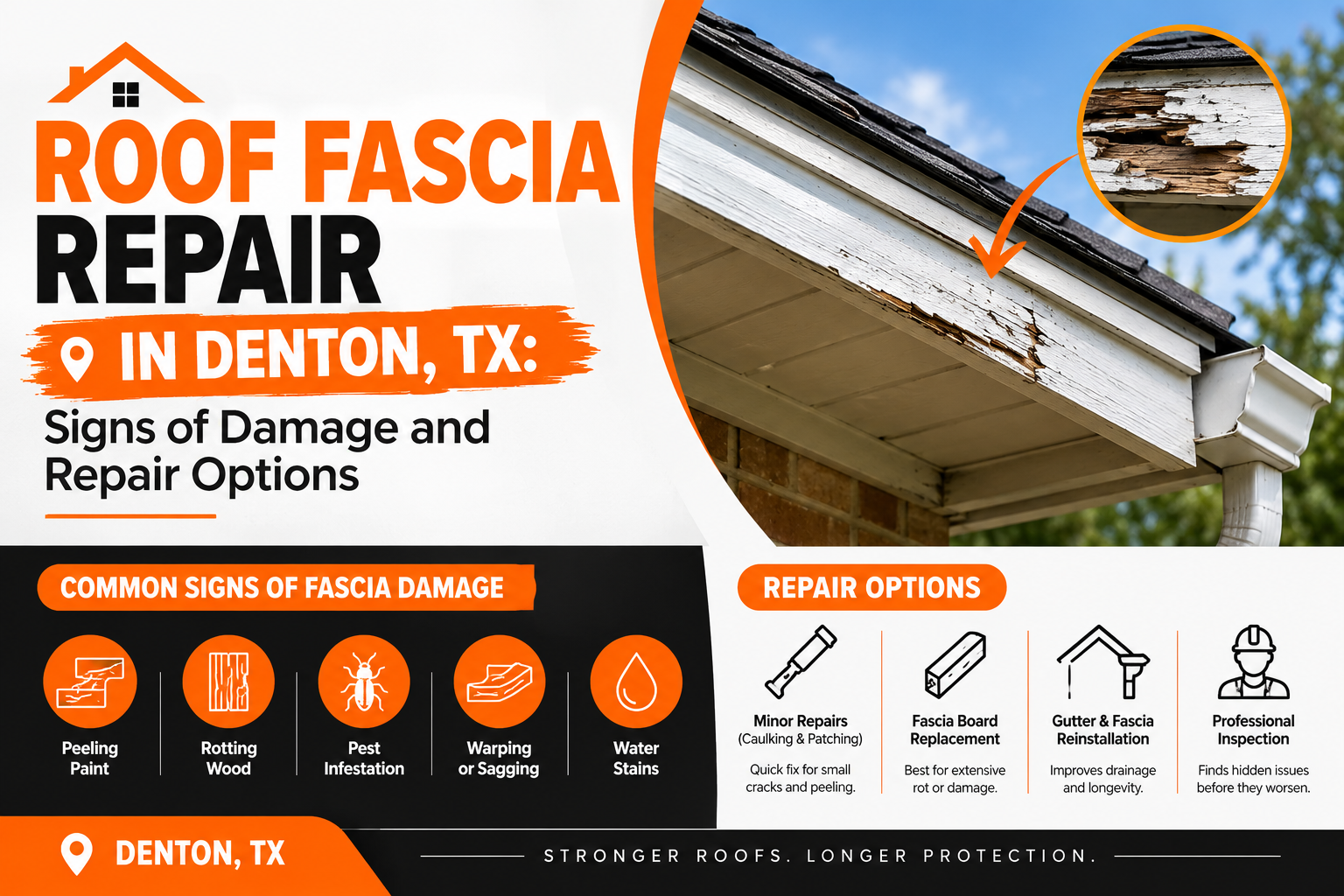
Roof Fascia Repair in Denton, TX: Signs of Damage and Repair Options
Introduction
Your roof does more than protect your home from rain and extreme temperatures. Every component plays an important role in keeping the roofing system secure, including the fascia boards that run along the lower edge of the roof. When these boards become damaged, they can affect gutter stability, expose roof edges to moisture, and create opportunities for pests to enter your home.
For homeowners in Denton, TX, roof fascia damage can develop because of heavy rainfall, strong winds, seasonal storms, intense summer heat, and prolonged exposure to moisture. What begins as a small crack, peeling paint, or loose gutter bracket may eventually lead to wood rot or damage to nearby roofing materials if the underlying issue is ignored.
Understanding the warning signs of fascia damage can help you arrange repairs before the problem becomes more expensive. Whether your home has traditional wood fascia, aluminum coverings, or composite boards, recognizing the condition of these materials is an important part of maintaining your roof.
In this guide, we will explain what roof fascia does, how to identify common damage, what causes fascia problems in Denton, and which materials may need repair or replacement. You will also learn about repair options, estimated costs, maintenance practices, and when contacting a professional roofing contractor makes sense.
🏠 What Is Roof Fascia and Why Is It Important?
Roof fascia is the long, straight board attached to the ends of the roof rafters along the roofline. It creates a finished edge beneath the shingles and commonly provides a mounting surface for gutters. Although fascia boards may look like simple trim, they help protect several important parts of the roofing system from weather exposure and moisture intrusion.
Fascia can be made from wood, aluminum, vinyl-covered wood, or composite materials. The best option for a particular home depends on its roof design, existing materials, maintenance requirements, and budget. Regardless of the material, fascia should remain securely attached, properly sealed where appropriate, and free from significant deterioration.
🏡 Supporting the Gutter System
One of the main functions of fascia is to provide support for gutter brackets and fasteners. Gutters collect rainwater from the roof and direct it toward downspouts, helping prevent water from accumulating near the home’s foundation. When fascia becomes soft, cracked, or rotten, gutter fasteners may loosen and the gutter system can begin to sag.
Loose gutters can create additional problems during heavy rainfall. Water may spill over the sides, collect near exterior walls, or drain too close to the foundation. Repairing damaged fascia can help restore a stable mounting surface and reduce the risk of related drainage issues.
🌧️ Protecting Roof Edges From Moisture
Fascia helps cover the exposed ends of roof rafters and contributes to a protective barrier along the roofline. When the boards are properly installed and maintained, they help limit direct exposure of vulnerable roof-edge components to weather. Damaged or missing sections can leave surrounding materials more exposed to rain and moisture.
However, fascia is only one part of the roof’s moisture protection system. Proper flashing, shingles, drip edges, gutters, and roof ventilation also matter. If fascia damage is connected to a roof leak or drainage problem, the source of the moisture should be corrected rather than simply covering the damaged board.
🎨 Improving Your Home’s Exterior Appearance
Fascia boards create a clean, finished line around the roof and can influence the overall appearance of your property. Peeling paint, uneven boards, rust stains, or sagging gutters may make a well-maintained home look neglected. Damaged fascia can be particularly noticeable along front-facing rooflines and porch edges.
Replacing deteriorated boards and refinishing suitable surfaces can improve curb appeal while protecting the roof’s edges. If you plan to sell your Denton home, keeping fascia and gutters in good condition can also help create a better first impression during property showings.
🐿️ Helping Limit Pest Access
Gaps around damaged fascia may provide access points for insects, birds, squirrels, and other small animals. Once pests reach exposed roof edges, they may enter nearby soffit areas or other openings if the surrounding construction is compromised. Nesting activity and moisture trapped around these openings can contribute to further deterioration.
Repairing the fascia and sealing appropriate gaps can help reduce access, but the complete roof edge should be inspected for other openings. Any existing nests or signs of wildlife activity should be handled carefully and in accordance with applicable local requirements.
🔍 Common Signs of Roof Fascia Damage
Fascia problems are not always obvious from the ground, particularly when gutters cover the boards or the damage occurs beneath the roof edge. Still, several warning signs may indicate that your fascia needs attention. Identifying these issues early can help prevent more extensive repairs to gutters, soffits, roof decking, or nearby framing.
🪵 Rotting, Soft, or Crumbling Boards
Wood fascia may deteriorate when moisture repeatedly reaches the surface or penetrates unprotected edges. The paint may begin to bubble, the wood may feel soft, or sections may become crumbly and lose their original shape. Dark discoloration and a musty smell can also indicate persistent moisture, although these signs do not always confirm rot on their own.
Rot often develops near leaking gutters, poorly sealed joints, roof valleys, or areas where water runs behind the gutter system. If the deterioration extends into the wood beneath the visible surface, applying fresh paint will not provide a lasting solution. The damaged material may need to be removed and replaced after the moisture source has been corrected.
💧 Water Stains and Peeling Paint
Water stains on fascia boards may appear as brown streaks, dark patches, or uneven discoloration. Paint may peel or blister when moisture becomes trapped beneath the coating or when the surface preparation was inadequate. These changes deserve attention, especially after periods of heavy rain.
Before repainting, determine whether water is coming from overflowing gutters, a roof-edge leak, damaged flashing, or another source. Painting over a damp surface can hide the warning signs temporarily while deterioration continues underneath. Proper repairs should address both the damaged finish and the conditions that caused it.
📉 Sagging or Loose Gutters
Gutters that pull away from the roofline may indicate loose fasteners, damaged fascia, excessive debris, or a combination of these problems. You might notice a visible gap between the gutter and the board, uneven gutter sections, or water escaping from joints during rainfall. In some cases, the gutter’s weight can worsen existing damage.
Do not assume that tightening the brackets alone will solve the issue. If the fascia no longer provides a solid fastening surface, the brackets may loosen again. A roofing professional can inspect the board behind the gutter and determine whether localized repairs or more extensive replacement are necessary.
🐜 Insect Activity or Small Openings
Termites, carpenter ants, and other insects may be attracted to damp or deteriorating wood, depending on the conditions around the property. Small holes, insect debris, hollow-sounding sections, or visible pest activity can indicate that the fascia needs closer inspection. Birds and squirrels may also take advantage of gaps near damaged roof edges.
Pest activity does not automatically mean the fascia is structurally compromised, but it should not be ignored. The affected area may require both fascia repairs and appropriate pest treatment. Sealing an opening without identifying the cause of the damage may allow the problem to return.
🪚 Cracks, Splitting, or Warped Boards
Fascia boards can crack, split, or warp as materials age and respond to changes in temperature and moisture. Wood may expand when wet and shrink as it dries, placing stress on joints, fasteners, and painted surfaces. Aluminum and other manufactured materials can also bend or become loose after impacts or improper installation.
Small surface cracks may be repairable when the surrounding material remains sound. Deep splits, extensive warping, or loose sections may require replacement to restore a straight, secure roofline. A close inspection helps distinguish cosmetic issues from damage that affects the board’s ability to support gutters and protect the roof edge.
🏚️ Visible Gaps Between Fascia and Roof Components
Gaps between fascia boards, soffits, or adjoining roof-edge materials can develop when fasteners loosen or components deteriorate. These openings may allow wind-driven rain to reach vulnerable areas and may provide entry points for pests. You might also notice exposed nail heads, missing trim, or sections that no longer align properly.
The cause of the gap should be identified before the area is sealed. Seasonal movement, deteriorated wood, damaged fasteners, and roof-edge problems can all contribute to separation. Proper repair should restore the connection between components without blocking ventilation openings that are designed to remain open.
⚠️ When Fascia Damage Requires Prompt Attention
Some fascia problems are primarily cosmetic, while others can affect the stability of gutters and the condition of nearby roofing materials. Extensive rot, boards pulling away from the roof, gutters hanging dangerously, or visible damage after a severe storm should be evaluated promptly. If sections appear unstable, avoid standing underneath them or attempting repairs from an unsecured ladder.
The following table summarizes common warning signs and the actions homeowners can consider.
| Warning Sign | Possible Cause | Recommended Action |
|---|---|---|
| Soft or crumbling wood | Prolonged moisture exposure or rot | Inspect the affected board and correct the water source |
| Peeling or blistered paint | Moisture, aging paint, or poor surface preparation | Check the wood condition before refinishing |
| Sagging gutters | Loose fasteners, debris, or weakened fascia | Inspect gutter attachments and the supporting board |
| Dark stains or streaks | Water runoff or a possible roof-edge leak | Trace the moisture source before making repairs |
| Cracks or warped boards | Age, moisture changes, impact, or installation problems | Assess whether the damage is localized or extensive |
| Gaps near soffits or roof edges | Loose connections or deteriorated materials | Check adjoining components and restore proper sealing |
🌧️ What Causes Fascia Damage in Denton, TX?
Denton homeowners experience changing weather conditions throughout the year, and these fluctuations can affect roof-edge materials. Rain, wind, temperature changes, and debris can gradually weaken fascia when the roof drainage system or protective finishes are not performing properly. Understanding the likely cause of damage is essential because replacing a board without correcting the underlying problem may lead to repeat repairs.
⛈️ Heavy Rain and Poor Water Drainage
Repeated exposure to rain is a common reason wood fascia begins to deteriorate. When gutters become clogged, incorrectly pitched, or disconnected, water may overflow or run behind the gutter and soak the fascia. Damaged gutter seams and missing drip-edge protection can also contribute to unwanted moisture around the roofline.
After heavy rainfall, check the ground around your home for unusual runoff and look for visible gutter overflow from a safe location. If water repeatedly spills over the same section, the problem may involve debris, drainage capacity, or the condition of the gutter system. Addressing these issues helps protect repaired fascia from future moisture exposure.
🌬️ Strong Winds and Severe Storms
Storms can loosen gutter brackets, dislodge trim, and force rain into vulnerable roof-edge areas. Flying branches and other debris may strike fascia boards directly, leaving dents, cracks, or broken sections. Wind-driven rain can also enter gaps that normally receive little direct moisture.
After a severe storm, inspect the exterior from the ground for loose boards, bent gutters, missing trim, and debris damage. Avoid climbing onto the roof to examine storm damage yourself, particularly when surfaces are wet or unstable. A professional assessment can help determine whether the fascia problem is isolated or connected to broader roof damage.
☀️ Intense Summer Heat and Temperature Changes
North Texas summers can expose exterior materials to prolonged heat and sunlight. Wood finishes may dry out, fade, or crack over time, while repeated temperature changes can place stress on joints and fasteners. Certain manufactured materials may also expand and contract, especially when installed without suitable allowances for movement.
Heat alone does not necessarily cause fascia to fail, but it can accelerate wear when protective coatings are already deteriorating. Regular inspections and timely maintenance help identify small cracks or loose connections before they become larger problems. Selecting materials suitable for local weather conditions can also improve long-term performance.
🍂 Leaves, Branches, and Gutter Debris
Leaves, twigs, roof granules, and other debris can collect inside gutters and interfere with drainage. When water cannot flow freely toward the downspouts, it may overflow onto the fascia or remain around gutter attachments for extended periods. Wet debris can add weight to the system and place extra strain on fasteners and supporting boards.
Cleaning gutters regularly is an important part of fascia maintenance, particularly during seasons when trees shed leaves or after storms. The appropriate cleaning schedule depends on the number of nearby trees, roof design, and how quickly debris accumulates. If gutters continue to overflow after cleaning, have the system checked for blockages, poor slope, or other drainage problems.
🏡 Aging Materials and Deferred Maintenance
Fascia boards can deteriorate as they age, especially when paint, sealants, and protective coverings are no longer effective. Small defects around joints and fastener holes may allow moisture to enter, gradually weakening the material. When routine inspections are skipped, early warning signs can go unnoticed until the damage becomes more extensive.
Preventive maintenance does not eliminate every roofing problem, but it can help identify issues before they affect neighboring components. Homeowners should pay particular attention to gutter connections, exposed wood, peeling finishes, and areas where water tends to collect. Promptly repairing minor defects is often simpler than replacing long sections of deteriorated fascia later.
🪵 Types of Fascia Materials and Their Repair Needs
The right repair approach depends partly on the material installed along your roofline. Some fascia materials can be patched or refinished when the damage is minor, while others require replacement when their shape, strength, or protective surface has been compromised. Matching the existing material and correcting the cause of damage are both important for achieving a durable result.
🌲 Wood Fascia
Wood fascia is commonly used on traditional homes because it can be cut, fitted, painted, and repaired with standard carpentry methods. It offers flexibility in appearance, but exposed wood needs suitable protection against moisture and weathering. If water reaches unprotected edges or remains trapped around joints, the board may eventually rot or split.
Minor surface damage may be addressed through sanding, filling, priming, and repainting when the underlying wood remains solid. Sections with deep rot, crumbling fibers, or extensive structural deterioration generally need to be replaced. Before installing new boards, the contractor should identify and correct any gutter or roof drainage issues that contributed to the damage.
🪙 Aluminum Fascia
Aluminum fascia can provide a low-maintenance exterior finish and is often used as a protective covering over suitable wood backing. It does not rot like untreated wood, but it can dent, bend, loosen, or develop problems around seams and fasteners. If moisture reaches the material behind the aluminum covering, the underlying wood may still deteriorate.
Small cosmetic imperfections may sometimes be corrected, depending on the material’s condition and finish. Severely bent or detached sections may need replacement to restore proper alignment and protection. A professional should check the backing before covering damaged areas, since a new exterior layer will not solve hidden rot.
🧱 Vinyl and Composite Fascia
Vinyl and composite fascia products are available in different colors and profiles, making them useful for homeowners who want a consistent exterior appearance with less frequent painting. Their performance depends on the product, installation method, exposure conditions, and the quality of the supporting structure. Vinyl can crack or loosen, while composite materials may still experience damage if moisture enters vulnerable joints or edges.
Repairing these materials may involve replacing a damaged section, securing loose connections, or correcting the supporting surface. Product compatibility matters because not every board, fastener, or finishing method works with every fascia system. Before choosing a replacement, compare the material’s durability, maintenance needs, appearance, and cost with the existing roofline.
🏠 Choosing the Right Material for Your Home
There is no single fascia material that is ideal for every Denton property. Wood may suit homeowners who prefer a traditional appearance and are comfortable with periodic maintenance, while aluminum coverings may reduce routine painting requirements. Vinyl and composite options can also be suitable when selected and installed according to the manufacturer’s specifications.
Consider the home’s existing exterior, exposure to sunlight and rain, gutter design, and the condition of the underlying roof edge. If the original fascia has extensive deterioration, simply changing the visible material may not be enough. A complete assessment helps determine whether the supporting wood, gutter attachments, soffit connections, or roof-edge details also need attention.
The most reliable fascia repair is one that restores the board’s function and addresses the conditions that caused the damage. By understanding the materials involved and recognizing early warning signs, Denton homeowners can make better decisions about maintenance, localized repairs, and replacement.
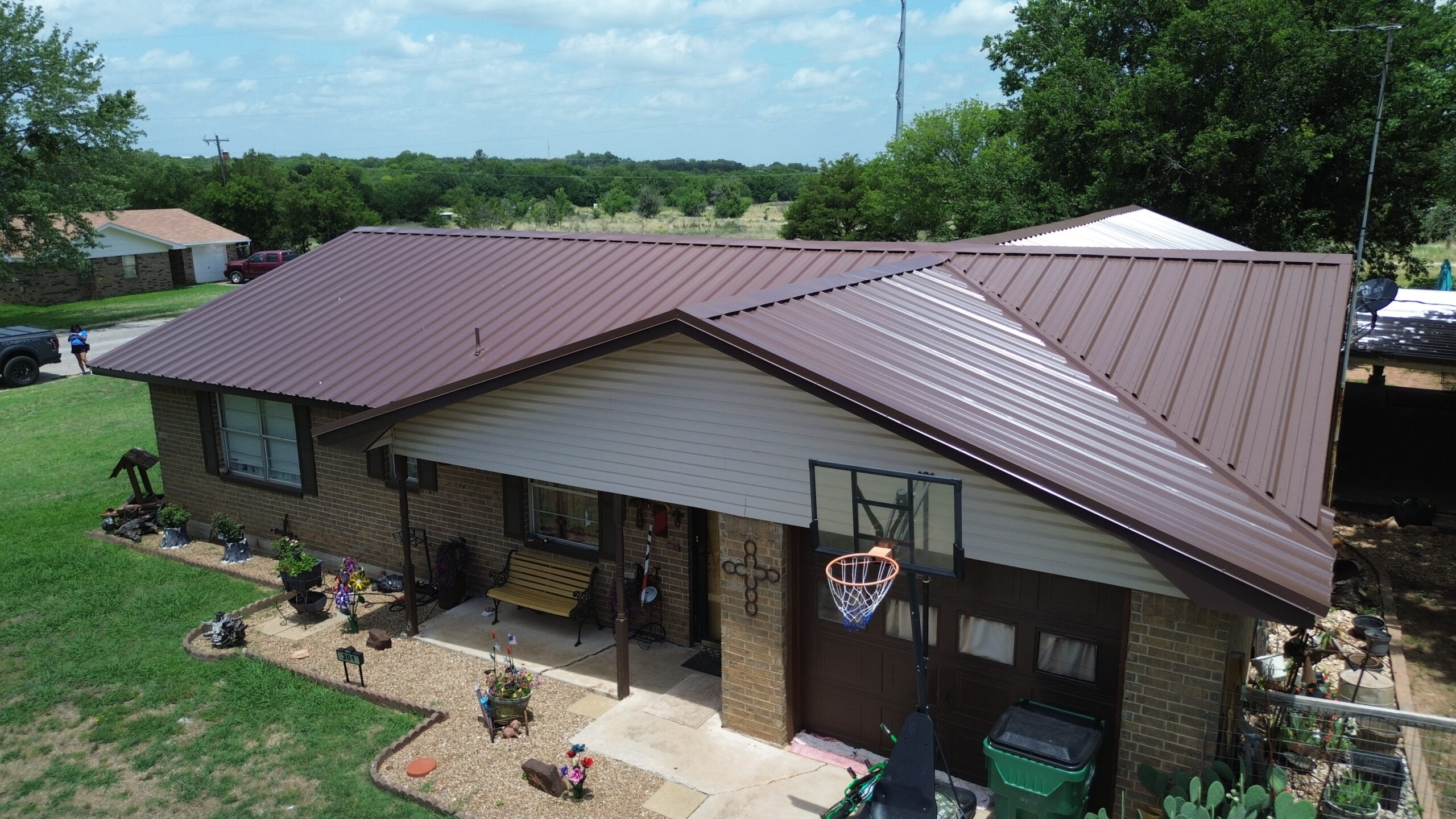
🛠️ Roof Fascia Repair Options for Denton Homeowners
Choosing the right roof fascia repair method depends on the extent of the damage, the material involved, and the condition of nearby roofing components. A small crack or loose fastener may require only a localized repair, while widespread rot or severely damaged boards may need complete replacement. Homeowners in Denton should also consider whether the problem is connected to gutters, flashing, or recurring water exposure.
🔧 Repairing Small Cracks and Surface Damage
Minor cracks, small holes, and limited surface deterioration may be repairable when the fascia board remains structurally sound. Depending on the material, a contractor may clean the affected area, apply a compatible exterior-grade filler, secure loose sections, and refinish the surface. Wood fascia may also require sanding, priming, and repainting to restore its protective coating.
Surface repairs are generally unsuitable when the board has extensive rot, deep splitting, or weakened fastener locations. Applying filler over deteriorated wood can conceal the problem without restoring the board’s strength. A proper inspection helps determine whether a localized repair will provide a reliable result or whether replacement is more appropriate.
🪵 Replacing Damaged Fascia Sections
When only part of a fascia board has deteriorated, replacing the affected section may be more practical than removing the entire length. The damaged material is carefully removed, and the surrounding roof edge is checked for moisture intrusion, loose connections, and deterioration. A compatible replacement section can then be fitted, secured, and finished to match the existing installation.
This approach may reduce material waste and limit disruption when the remaining fascia is in good condition. However, the repair should not leave weakened wood or unstable joints behind the new section. If several connected areas show damage, replacing a longer section may provide a more consistent and durable solution.
🧰 Strengthening Loose Fascia Boards
Fascia boards can become loose when fasteners fail, wood deteriorates around attachment points, or wind places repeated stress on the roof edge. If the board remains sound, a contractor may be able to secure it using suitable fasteners and correct installation methods. The gutter brackets and nearby connections should also be checked to ensure they are not placing excessive strain on the fascia.
Simply driving additional nails into weakened wood is rarely a dependable long-term fix. Fasteners need a solid material to grip, and damaged attachment points may require board replacement. The contractor should also identify why the fascia became loose so the same problem does not continue after repairs.
🪙 Repairing or Replacing Aluminum Fascia Covering
Aluminum fascia coverings may become dented, bent, detached, or damaged around their seams. Minor issues may be corrected by carefully adjusting suitable sections or securing loose connections, depending on the product and the extent of the damage. When the covering is badly deformed or cannot be refitted properly, replacing the affected piece may be necessary.
It is important to examine the material underneath before installing a new aluminum cover. If the underlying wood has become soft or rotten, the damaged backing should be addressed first. Installing fresh aluminum over deteriorated wood can hide the problem while leaving the fascia and gutter system without reliable support.
🌧️ Correcting Gutter and Water Management Problems
Fascia repair should include an assessment of the gutter system whenever water exposure appears to be the cause of deterioration. A contractor may need to remove debris, correct gutter alignment, replace damaged brackets, repair leaking joints, or address an incorrectly installed drip edge. These corrections help direct water away from vulnerable roof-edge materials.
The solution depends on the source of the moisture rather than the visible damage alone. For example, replacing a rotten board will not prevent future deterioration if the gutter continues to overflow onto the same location. Combining fascia repairs with appropriate drainage corrections can help protect the investment and reduce the likelihood of recurring problems.
💰 How Much Does Roof Fascia Repair Cost in Denton, TX?
The cost of roof fascia repair in Denton depends on the length of damaged material, the type of fascia, labor requirements, access to the roofline, and whether gutters must be removed and reinstalled. Minor repairs generally cost less than replacing long sections or addressing hidden rot around the roof edge. The figures below are general planning estimates, not verified local contractor quotes, and actual prices can vary.
📊 Estimated Roof Fascia Repair Costs
| Type of Work | Estimated Cost Range |
|---|---|
| Minor patching or localized surface repair | $100 to $300 |
| Small fascia section replacement | $200 to $600 |
| Longer wood fascia replacement | $400 to $1,200 |
| Aluminum fascia repair or partial replacement | $200 to $800 |
| Extensive fascia replacement around several roof sections | $800 to $2,000 or more |
| Additional gutter removal and reinstallation | $100 to $400 or more |
| Repairs involving hidden wood rot or related components | Depends on the damage discovered |
These estimates can overlap because contractors may price work differently based on project size, minimum service charges, material selection, and labor. A small repair may have a relatively high cost per linear foot because setup and access take time regardless of the amount of material involved. Larger projects may have higher total costs but a lower unit cost when several damaged sections can be repaired during the same visit.
📏 How the Length of Damage Affects Pricing
The amount of fascia that needs attention is one of the main factors influencing the total price. Replacing a short section above a porch may require less material and labor than repairing an entire side of a two-story house. Contractors typically assess the length of the damaged area, the difficulty of removing the old material, and whether nearby components must be disturbed.
Visible damage does not always show the full extent of the problem. A board that appears damaged in one location may have additional deterioration behind the gutter or near a joint. The final estimate may change if removing the damaged section reveals weakened backing or other issues that could not be confirmed during the initial inspection.
🪵 How Material Choice Influences Cost
Wood fascia can be economical to repair, particularly when the damage is limited and the replacement material is easy to match. However, wood may need priming, painting, and periodic maintenance to help protect it against moisture. The long-term cost therefore depends not only on the initial repair but also on the care required after installation.
Aluminum, vinyl, and composite options have different purchase prices, installation requirements, and maintenance needs. Some materials may reduce the need for repainting, but specialized profiles or difficult matching requirements can increase the upfront cost. Before making a decision, compare the installed price, expected upkeep, appearance, and compatibility with the existing roofline.
🪜 How Roof Height and Accessibility Affect Cost
Fascia repair on a single-story home may be easier to access than work along a steep roofline or a tall two-story structure. Difficult access can require additional equipment, safety precautions, setup time, and labor. Roof pitch, landscaping, nearby structures, and the location of the damaged section can also influence the contractor’s estimate.
Gutters may need to be removed before damaged fascia can be accessed and replaced properly. This adds work but may be necessary to inspect the board and restore secure gutter attachments. Ask the contractor whether access equipment, gutter handling, cleanup, and disposal are included in the quoted price.
💡 How to Get an Accurate Repair Estimate
A useful estimate should explain which sections need repair, what materials will be installed, and whether related gutter or roof-edge work is required. It should also identify any anticipated additional costs, such as replacing deteriorated backing or repainting new wood fascia. Comparing written estimates can help you understand differences in scope rather than choosing a contractor based on price alone.
Be cautious of unusually low quotes that do not include removal of damaged materials or inspection of the underlying wood. An inexpensive surface patch may not solve a problem caused by extensive moisture exposure. A detailed inspection and clearly defined scope of work provide a stronger basis for comparing repair options.
🔧 The Roof Fascia Repair Process
Understanding the repair process helps homeowners know what to expect before work begins. While the exact steps vary depending on the material and extent of damage, a professional repair should address the underlying cause and restore the fascia’s intended function. The goal is to protect the roof edge, provide suitable gutter support, and leave the repaired area properly finished.
🔍 Initial Inspection and Damage Assessment
The process usually begins with an inspection of the visible fascia, gutters, soffits, and surrounding roof-edge components. The contractor looks for rot, cracks, loose fasteners, peeling paint, water stains, and gaps between adjoining materials. Where appropriate, the inspection may include checking the condition of accessible backing behind the fascia covering.
The purpose is to determine whether the damage is limited to one section or extends into other parts of the roofing system. The contractor should also look for likely sources of moisture, such as overflowing gutters, leaking joints, or damaged roof-edge details. These findings help establish a suitable repair plan and a more accurate estimate.
📝 Preparing the Repair Plan
After assessing the damage, the contractor identifies which materials need to be repaired or replaced. The plan may include removing a damaged board, installing a matching section, securing loose connections, or correcting a drainage issue. If several components are affected, the estimate should explain how the related work fits into the overall project.
Homeowners should review the proposed materials, labor, expected timeline, and total cost before approving the work. Ask whether painting, disposal, gutter removal, and any additional repairs are included. Clear communication at this stage can help prevent misunderstandings if concealed damage is discovered during removal.
🪚 Removing Damaged Fascia
When replacement is necessary, the contractor carefully removes the affected board or covering. Gutters may need to be detached to provide access, and nearby materials should be protected during the process. Careful removal helps limit unnecessary damage to surrounding soffits, roof edges, and exterior finishes.
Once the damaged fascia is removed, the exposed area can be inspected more thoroughly. The contractor checks for softened wood, deteriorated attachment points, and signs of moisture reaching the underlying structure. Any additional work should be discussed with the homeowner if it changes the agreed scope or cost.
🧱 Installing New Materials
The replacement fascia should be compatible with the existing roof design and suitable for the property’s weather exposure. The contractor measures and cuts the material to fit, secures it using appropriate fasteners, and addresses joints and exposed edges according to the material’s installation requirements. Proper alignment is important for both appearance and reliable gutter attachment.
For wood fascia, suitable surface preparation and protective finishing may be necessary. Manufactured coverings should be installed according to the relevant product specifications, including requirements for fastening and movement. The installation should not trap moisture or block ventilation openings that need to remain functional.
🌧️ Restoring Gutters and Checking Drainage
If the gutters were removed, they should be reinstalled securely after the fascia repair is complete. The contractor should verify that the brackets attach to sound material and that the gutter system maintains an appropriate slope toward the downspouts. Leaking joints, damaged sections, and obvious drainage problems should be addressed when they fall within the approved scope.
Effective drainage is essential for protecting the new fascia from repeat exposure. If water previously overflowed or ran behind the gutter, simply reinstalling the same system without correcting the problem may allow damage to return. The final assessment should consider how water will move away from the roof edge during rainfall.
✅ Final Inspection and Cleanup
Before the project is considered complete, the repaired fascia should be checked for secure attachment, consistent alignment, and appropriate finishing. The contractor should look for gaps, loose fasteners, exposed unfinished wood, and signs that nearby components have been disturbed. Work areas should also be cleared of debris and discarded materials.
Homeowners should ask for an explanation of the completed repairs and any remaining maintenance recommendations. If the project includes a workmanship warranty, review its coverage and any conditions that apply. Keeping the estimate, invoice, and relevant warranty information can also help with future maintenance.
🏚️ Fascia Repair vs. Fascia Replacement: Which Is Better?
Deciding between repair and replacement depends on how much of the board is damaged and whether the remaining material is strong enough to perform its job. A small crack in otherwise sound fascia may not justify removing the entire board. Extensive rot, repeated failures, or widespread deterioration may make replacement the more practical option.
🛠️ When Repair May Be Enough
Localized repairs can be appropriate when the damage is limited to a small area and the surrounding fascia remains solid. Examples include minor surface defects, loose fasteners in sound material, or limited damage to a replaceable covering. Repairing the affected area may preserve the existing materials and reduce the amount of work required.
However, the moisture source must be addressed before the repair is considered complete. If water continues to reach the same section, the repaired area may deteriorate again. A contractor should explain why the proposed repair is suitable and what conditions could make future replacement necessary.
🪵 When Replacement Is the Better Choice
Replacement is often preferable when fascia has extensive rot, deep splitting, significant warping, or multiple weak attachment points. Severely deteriorated wood may not hold fasteners securely, making it difficult to support gutters reliably. Replacing the damaged material allows the contractor to inspect the exposed area and correct related problems before installing new fascia.
Replacement may also be sensible when repairs have repeatedly failed or when several adjoining sections show similar deterioration. Although the initial cost can be higher, replacing extensively damaged boards may reduce the need for repeated patching. The decision should be based on the condition of the material rather than the assumption that replacement is always necessary.
⚖️ Comparing the Two Options
| Factor | Fascia Repair | Fascia Replacement |
|---|---|---|
| Best suited for | Limited, localized damage | Extensive or widespread deterioration |
| Initial expense | Often lower | Usually higher |
| Material removal | Minimal in many cases | Damaged sections are removed |
| Hidden damage inspection | May be limited | More access to the exposed roof edge |
| Appearance | Depends on matching and finishing | Can provide a more consistent finish |
| Long-term result | Good when the remaining board is sound | Often preferable when existing material has failed |
| Main consideration | Confirm that damage is truly localized | Correct the cause before installing new material |
The right choice comes from a careful assessment of the existing fascia and the conditions around it. A trustworthy contractor should explain the benefits and limitations of each option instead of recommending the most expensive solution automatically. For Denton homeowners, the priority is to restore a stable roof edge and prevent the same damage from recurring.
🌩️ How Denton Weather Affects Roof Fascia
Local weather can place repeated stress on roof-edge materials throughout the year. Denton homes may experience heavy rain, strong winds, intense sunlight, and sudden seasonal temperature changes, all of which can affect fascia and gutter performance. While homeowners cannot control the weather, they can reduce the impact by maintaining drainage systems and repairing deteriorated materials promptly.
⛈️ Rainfall and Moisture Exposure
Repeated wetting can gradually weaken wood fascia, particularly where protective paint has failed or water collects around gutter attachments. If gutters overflow during heavy rain, the fascia may remain damp long enough for deterioration to develop. Moisture can also enter through gaps around joints or damaged roof-edge components.
Inspecting gutters and fascia after periods of heavy rainfall can help identify problems early. Look for persistent stains, peeling finishes, loose brackets, and visible water escaping from the gutter system. If moisture damage keeps returning, investigate the source rather than repeatedly patching the affected board.
🌬️ Wind and Storm Debris
Strong winds can loosen gutter fasteners, damage fascia coverings, and move branches or other debris against the roofline. Severe storms may also expose weaknesses in older boards or existing repairs. Even when the damage appears minor, loose materials can become more vulnerable during subsequent storms.
After severe weather, inspect the exterior from a safe location and arrange professional help if you notice hanging gutters, detached fascia, or exposed roof-edge materials. Avoid attempting repairs while the roof or surrounding surfaces are wet. Prompt attention can help prevent a small defect from becoming a more extensive problem.
☀️ Sunlight and Seasonal Temperature Changes
Long periods of direct sunlight can fade painted finishes and contribute to the deterioration of some exterior coatings. Changes in temperature can also cause building materials to expand and contract, placing stress on joints and fasteners over time. These effects may become more noticeable on rooflines with older materials or insufficient maintenance.
Periodic inspections can identify cracked paint, loose trim, and early signs of material movement. Repainting suitable wood fascia and replacing damaged manufactured sections can help maintain the roof edge. Materials should be selected and installed according to their specifications and the home’s exposure conditions.
🧰 Can You Repair Roof Fascia Yourself?
Some minor fascia maintenance tasks may be manageable for experienced homeowners, but repairs near roof edges involve important safety considerations. Working at height, handling gutters, and removing deteriorated boards can expose you to falls, sharp materials, and unstable surfaces. The appropriate approach depends on the location of the damage, the tools available, and your ability to complete the work safely.
🏡 Tasks Homeowners May Be Able to Handle
From the ground, homeowners can often check for visible gutter overflow, peeling paint, loose-looking sections, and accumulated debris. Routine ground-level observations can help identify problems that need further inspection. Cleaning accessible gutters may also be manageable when it can be completed safely using suitable equipment and precautions.
Minor cosmetic maintenance on an easily accessible surface may be possible for someone with the right skills. However, any work that requires climbing onto a roof, leaning over an edge, or working beneath unstable gutters should be approached with caution. Never rely on a quick visual check to confirm that hidden fascia damage is absent.
⚠️ When Professional Repair Is Recommended
Professional assistance is advisable when fascia is rotten, gutters are pulling away, the roofline is difficult to access, or damage extends behind the visible board. Replacing fascia may require temporarily removing gutters, working near roof-edge components, and checking supporting materials. Incorrect repairs can leave weak attachment points or allow moisture to continue entering the structure.
A qualified contractor can assess the damage, recommend compatible materials, and identify related drainage issues. If a repair involves multiple roof sections or possible structural deterioration, professional evaluation becomes especially important. Choosing the right repair method at the beginning can help avoid repeated work and additional expenses.
🛡️ How to Prevent Future Fascia Damage
Preventive maintenance helps keep fascia boards, gutters, and nearby roof components in better condition. Although no maintenance routine can prevent every weather-related problem, regular inspections can reveal early signs of deterioration before the damage spreads. A practical schedule should reflect your home’s age, roofing materials, nearby trees, and exposure to storms.
🧹 Keep Gutters Clean and Functional
Clogged gutters are a frequent source of overflowing water around the roof edge. Remove accumulated leaves and debris as needed, and check that downspouts direct water away from the home’s foundation. If gutters repeatedly overflow after cleaning, investigate whether the system has poor alignment, damaged joints, or insufficient drainage capacity.
Homeowners with many nearby trees may need to check their gutters more frequently than those with limited tree coverage. Cleaning should always be completed safely, using appropriate equipment or a professional service when necessary. Maintaining clear drainage pathways can reduce unnecessary moisture exposure around fascia boards.
🎨 Maintain Protective Finishes
Wood fascia benefits from suitable exterior primer and paint that help protect it from moisture and weathering. Inspect painted surfaces for peeling, cracking, or exposed wood, especially around joints and cut edges. Repairing deteriorated finishes before moisture reaches the underlying material may help extend the board’s service life.
Before applying new paint, confirm that the surface is dry and that the wood is sound. Painting over rot will not restore structural strength, and trapped moisture may cause the new coating to fail prematurely. Where deterioration is extensive, replace the damaged section before completing the finishing work.
🔍 Schedule Routine Roofline Inspections
Check fascia, gutters, soffits, and visible roof edges periodically, particularly after severe storms or extended periods of heavy rain. Look for discoloration, gaps, loose brackets, damaged coverings, and areas where water appears to collect. If the same section repeatedly shows signs of moisture exposure, arrange a closer inspection to identify the cause.
A professional roof inspection may be useful when your roof is older, access is difficult, or previous repairs have not lasted. Keeping notes and photographs of visible changes can help you track recurring problems over time. Early detection often gives homeowners more options for addressing damage before it spreads.
🌳 Manage Nearby Trees and Debris
Branches that hang close to the roof can scrape exterior materials or fall against fascia during storms. Leaves and twigs may also accumulate in gutters, restricting drainage and allowing water to overflow. Appropriate tree maintenance can help reduce these risks.
Tree trimming should be performed carefully, particularly near power lines or large branches. Hire a qualified professional when the work involves significant heights or hazardous conditions. Keeping roof drainage areas reasonably clear helps reduce the debris-related stress placed on fascia and gutters.
⚖️ How to Choose a Roof Fascia Repair Contractor in Denton
Selecting the right contractor is important because fascia damage can involve more than the visible board. The repair may require gutter work, carpentry, finishing, and corrections to roof-edge drainage. A reliable professional should be able to explain the problem clearly and provide a repair plan suited to the home’s condition.
🏆 Check Experience and Relevant Qualifications
Look for a contractor with experience repairing fascia, gutters, and related roofing components. Ask whether they have worked with the material installed on your home and whether they can identify moisture problems that may have contributed to the damage. Verify applicable licensing, registration, insurance, and local requirements rather than assuming every contractor has the same credentials.
You can also request examples of similar projects and information about the company’s approach to repairs. Reviews may provide useful insight into communication, workmanship, and how concerns are handled. Consider the overall evidence rather than relying on one review or a single promotional claim.
📝 Request a Written Estimate
A written estimate should describe the damaged sections, proposed repair method, materials, labor, and expected cost. It should clarify whether gutter removal, painting, cleanup, and disposal are included. If hidden deterioration is discovered after the work begins, the contractor should explain how additional work will be priced and approved.
Compare estimates based on the scope of work rather than choosing the lowest figure automatically. One quote may include replacement of deteriorated backing, while another may cover only a surface repair. Understanding these differences makes it easier to compare value and avoid unexpected expenses.
🛡️ Ask About Workmanship and Communication
Before approving a project, ask what workmanship coverage is available and whether the materials carry separate manufacturer warranties. Review the terms carefully because coverage can differ depending on the material, installation, and type of damage. A clear explanation of warranty limitations is more useful than a broad promise that is not supported in writing.
Communication matters throughout the repair process. The contractor should explain the expected timeline, safety arrangements, payment terms, and steps involved in completing the work. You should also know whom to contact if a concern appears after the project is finished.
🚀 Avoid Pressure and Unclear Promises
Be cautious if a contractor insists on immediate payment, refuses to explain the repair scope, or recommends extensive replacement without showing why it is necessary. Storm damage can make homeowners feel rushed, but it is reasonable to request written documentation and ask questions before making a decision. If possible, compare more than one qualified estimate for substantial repairs.
A dependable contractor should help you understand your options rather than pressure you into an unnecessary project. The final recommendation should reflect the actual condition of the fascia, the cause of the damage, and the best way to restore reliable protection. Taking time to evaluate these factors can help you make a more informed decision.
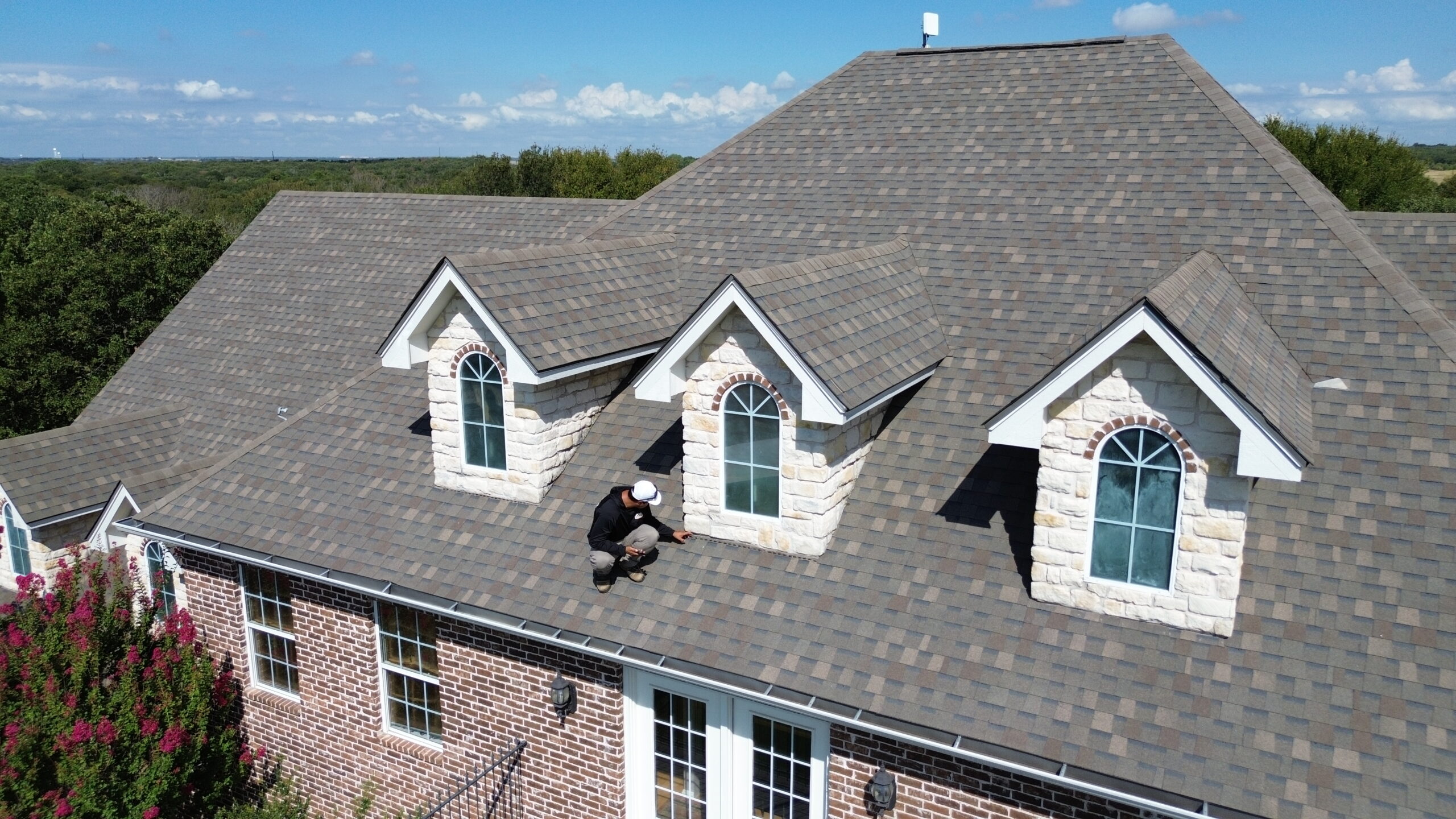
📊 Roof Fascia Repair Cost and Material Comparison
Choosing the right fascia material and repair method can make a difference in your home’s long-term maintenance costs. Denton homeowners should consider the upfront installation price, resistance to moisture, appearance, maintenance requirements, and compatibility with the existing roofline. The most affordable option initially may not always provide the best value if it requires frequent repairs or refinishing.
🪵 Comparing Common Fascia Materials
Different fascia materials offer different advantages depending on the home’s design and exposure to weather. Wood provides a traditional appearance, while aluminum, vinyl, and composite products may reduce certain maintenance requirements. Before choosing a replacement, evaluate the condition of the underlying structure and the installation requirements for the material.
| Fascia Material | Main Advantages | Potential Drawbacks | Maintenance Requirements |
|---|---|---|---|
| Wood | Traditional appearance, easy to cut and customize | Can rot, split, or deteriorate when exposed to moisture | Periodic inspection, painting, and sealing where appropriate |
| Aluminum | Lightweight, does not rot like wood, available in multiple finishes | Can dent, bend, or loosen; backing may still deteriorate | Check fasteners, seams, and underlying materials |
| Vinyl | Available in different colors and generally requires little painting | Can crack, loosen, or become damaged by impacts | Inspect connections and replace damaged sections |
| Composite | Available in various styles and can offer reduced routine maintenance | Cost and performance vary by product | Follow manufacturer guidance and inspect joints |
No material eliminates the need for proper installation and water management. Even fascia products designed for reduced maintenance can fail when fasteners loosen, drainage problems persist, or moisture reaches vulnerable supporting materials. A contractor can help identify which option suits your home’s design, existing gutters, and maintenance preferences.
💰 Comparing Repair and Replacement Costs
The overall price of fascia work depends on the amount of material involved, accessibility, labor, and the condition of nearby components. Localized repairs may be relatively affordable, while extensive replacement can require additional carpentry and gutter work. The following ranges are general budgeting estimates rather than confirmed Denton market quotes.
| Repair Project | General Estimated Cost |
|---|---|
| Minor surface repair | $100 to $300 |
| Small section replacement | $200 to $600 |
| Partial fascia replacement | $400 to $1,200 |
| Aluminum fascia repair or replacement | $200 to $800 |
| Extensive fascia replacement | $800 to $2,000 or more |
| Additional gutter handling | $100 to $400 or more |
Actual contractor estimates may fall outside these ranges, especially when access is difficult or concealed deterioration is extensive. Some contractors charge by the linear foot, while others use a minimum service charge or price the entire project. Request a written estimate that identifies materials, labor, gutter work, finishing, disposal, and any anticipated additional repairs.
⚖️ How to Choose the Best Repair Option
If the fascia is structurally sound and the damage is limited, a localized repair may be the most practical solution. When wood has rotted extensively or fasteners can no longer hold securely, replacing the affected board is generally more reliable than repeatedly patching it. The contractor should also correct the moisture source so the new or repaired material is not exposed to the same damaging conditions.
Think about long-term value as well as the initial expense. A properly completed repair that includes drainage corrections may help reduce repeat maintenance, while an inexpensive surface fix may fail if the underlying problem remains. The best choice is the one that restores the fascia’s function, fits your budget, and provides a suitable level of durability for your property.
🚀 Why Choose Small Town Roofing & Construction for Roof Fascia Repair in Denton, TX?
When roof fascia becomes damaged, choosing a contractor who understands the relationship between fascia, gutters, and roof-edge components can help you make a more informed decision. Small Town Roofing & Construction is a roofing and exterior service provider homeowners can consider when seeking help with roof-related repairs in Denton, TX. Before hiring any contractor, confirm that its current services, qualifications, insurance, and project terms meet your needs.
🏠 Attention to the Entire Roof Edge
Fascia damage can sometimes indicate a wider problem involving gutter attachments, water drainage, soffits, or exposed roof-edge materials. Looking at the surrounding components helps determine whether the repair can remain localized or whether additional work may be needed. Addressing the underlying issue is important for reducing the likelihood of repeated deterioration.
When discussing your project with Small Town Roofing & Construction, explain the warning signs you have noticed, such as peeling paint, soft wood, sagging gutters, or water stains. Ask for an assessment of the affected area and clarification about any related problems. A clear explanation can help you understand the recommended repair before authorizing work.
🔧 Repair Recommendations Based on the Damage
Not every fascia problem requires complete replacement. Minor defects may be repairable when the surrounding material remains solid, while extensive rot or structural deterioration may require new boards. The repair recommendation should reflect the actual condition of the fascia and the cause of the damage.
Ask Small Town Roofing & Construction to explain the available options for your particular property and provide a written estimate. The proposal should identify which sections will be repaired or replaced, what materials will be used, and whether gutter removal or finishing is included. This information makes it easier to evaluate the scope and cost of the project.
🌧️ Addressing Moisture and Drainage Concerns
Recurring moisture is one of the main concerns when maintaining wood fascia and the materials behind protective coverings. If gutters overflow or water enters through roof-edge gaps, repairing the visible board alone may not prevent future damage. Checking drainage and nearby components can help identify conditions that need attention.
During your consultation, ask whether the proposed work includes checking the gutter connections and identifying visible sources of moisture. If additional roof or drainage repairs are recommended, request an explanation of why they are needed. Understanding the full scope helps you decide which work should be completed first.
📝 Clear Estimates and Project Expectations
Before approving fascia work, homeowners should know what the project includes and how unexpected issues will be handled. A written estimate should outline the materials, labor, expected schedule, cleanup, and applicable warranty terms. Any additional work discovered after damaged boards are removed should be explained and approved before proceeding.
Small Town Roofing & Construction can be considered alongside other qualified local contractors when comparing repair proposals. Review the company’s current credentials, insurance documentation, references, and written terms before making a hiring decision. A careful comparison helps you focus on workmanship, communication, and the suitability of the proposed repair rather than price alone.
🛡️ Protecting Your Home Through Timely Repairs
Leaving damaged fascia untreated can allow moisture exposure and loose gutter connections to create further problems. Arranging an inspection when you notice deterioration gives you an opportunity to understand the issue and compare appropriate solutions. Timely repairs can also help preserve the appearance and functionality of your home’s exterior.
Whether you need a small fascia repair or replacement of several damaged sections, choose a contractor who explains the work clearly and identifies the cause of the problem. Ask questions, review the estimate, and confirm the terms before scheduling the project. These steps help you approach roof fascia maintenance with greater confidence.
❓ Frequently Asked Questions About Roof Fascia Repair in Denton, TX
1. What Is the Average Cost of Roof Fascia Repair in Denton?
Roof fascia repair costs depend on the material, amount of damage, roof height, and labor involved. Minor repairs may cost around $100 to $300, while partial replacement can range from several hundred dollars to more than $1,000. Extensive deterioration, difficult access, or additional gutter work may increase the total. Request a written estimate from a qualified contractor for pricing specific to your home.
2. How Can I Tell if My Fascia Boards Are Rotting?
Common warning signs include soft or crumbling wood, peeling paint, dark stains, and sections that appear swollen or distorted. You may also notice gutters pulling away because the fascia can no longer hold their fasteners securely. These symptoms can indicate moisture damage, although an inspection may be needed to confirm the cause. Arrange a professional assessment if deterioration appears extensive or the affected area is difficult to reach safely.
3. Can Damaged Fascia Boards Be Repaired Without Replacement?
Yes, some fascia boards can be repaired when the damage is minor and the remaining material is structurally sound. Small surface defects, loose connections, and limited cosmetic damage may be addressed without replacing the entire board. However, extensive rot, deep splitting, or weakened fastening points generally require replacement of the affected section. The underlying source of moisture should also be corrected to prevent the problem from returning.
4. How Long Does Roof Fascia Repair Usually Take?
A small fascia repair may take a few hours, depending on accessibility and the amount of preparation required. Replacing several sections can take a full day or longer, particularly when gutters must be removed or concealed damage is discovered. Weather conditions, material availability, and the complexity of the roofline can also affect the schedule. Ask your contractor for an estimated timeline after the damage has been inspected.
5. What Is the Best Material for Fascia Boards in Denton?
The best fascia material depends on your budget, exterior design, maintenance preferences, and exposure to local weather conditions. Wood offers a traditional appearance but requires appropriate finishing and periodic maintenance to help protect it from moisture. Aluminum, vinyl, and composite options may reduce some upkeep requirements, although each has specific installation and durability considerations. A roofing professional can help you compare compatible materials for your home’s roofline and gutter system.
6. Does Fascia Damage Cause Roof Leaks?
Damaged fascia does not always cause a roof leak, but it can indicate a moisture problem near the roof edge. Gaps, deteriorated joints, overflowing gutters, or damaged flashing may allow water to reach surrounding roof components. If water is entering the home, the source should be identified rather than assuming the fascia is the only problem. Prompt inspection can help determine whether fascia repairs and additional roofing work are necessary.
7. Should Gutters Be Removed to Repair Fascia Boards?
Gutters often need to be removed when the damaged fascia is located directly behind their mounting points. Taking them down can provide access to the board, reveal concealed deterioration, and allow the replacement material to be secured properly. Some localized repairs may be possible without complete gutter removal, depending on the installation and location of the damage. Your contractor should explain whether removal is necessary and whether reinstalling or adjusting the gutters is included in the estimate.
8. Does Homeowners Insurance Cover Fascia Damage?
Homeowners insurance may cover fascia damage when it results from a covered event, depending on the policy’s terms, exclusions, and deductible. Damage caused by gradual deterioration, neglected maintenance, or long-term moisture exposure may not be covered. Documentation, photographs, and a professional assessment can help establish what happened and support a claim when appropriate. Review your policy and contact your insurer before assuming the repair will be reimbursed.
9. How Often Should Roof Fascia Be Inspected?
Inspect visible fascia and gutters at least twice a year and after severe storms when conditions allow. Homes surrounded by trees or exposed to frequent debris may benefit from more frequent checks of the gutter system. Look for peeling paint, stains, cracks, gaps, and loose gutter brackets that may signal developing problems. If you notice recurring moisture or deteriorating materials, arrange a professional inspection rather than waiting for the next routine check.
10. When Should I Call a Professional for Fascia Repair?
Contact a roofing professional when fascia boards show extensive rot, gutters are pulling away, or sections appear loose or unstable. Professional assistance is also advisable when the damage is high above the ground or may involve hidden roof-edge deterioration. Attempting repairs without appropriate equipment and experience can create a risk of falls or further damage. An inspection can help establish whether a localized repair, partial replacement, or more extensive work is appropriate.
🏁 Conclusion
Roof fascia plays an important role in protecting your home’s roof edge, supporting gutters, and creating a finished exterior appearance. In Denton, TX, repeated rainfall, severe storms, temperature changes, and aging materials can contribute to fascia deterioration over time. Recognizing early warning signs, including peeling paint, soft wood, cracked boards, water stains, and sagging gutters, can help you address problems before they become more extensive.
The right repair depends on the condition of the existing fascia, the material involved, and the cause of the damage. Minor defects may be repairable, while widespread rot or weakened attachment points often require replacement. It is equally important to correct gutter and drainage problems so the repaired area is not exposed to the same conditions again.
Regular inspections, clean gutters, suitable protective finishes, and prompt attention to storm damage can help reduce the likelihood of future repairs. When professional assistance is needed, compare written estimates, review contractor qualifications, and make sure the proposed work addresses the underlying problem. Small Town Roofing & Construction is one option to evaluate when exploring fascia repair services in Denton, TX.
Taking care of damaged fascia early can help maintain your home’s exterior, protect vulnerable roof-edge materials, and keep your gutter system securely attached. If you notice signs of deterioration, arrange an inspection and discuss the repair options available for your property before the damage spreads.
Leave A Comment