

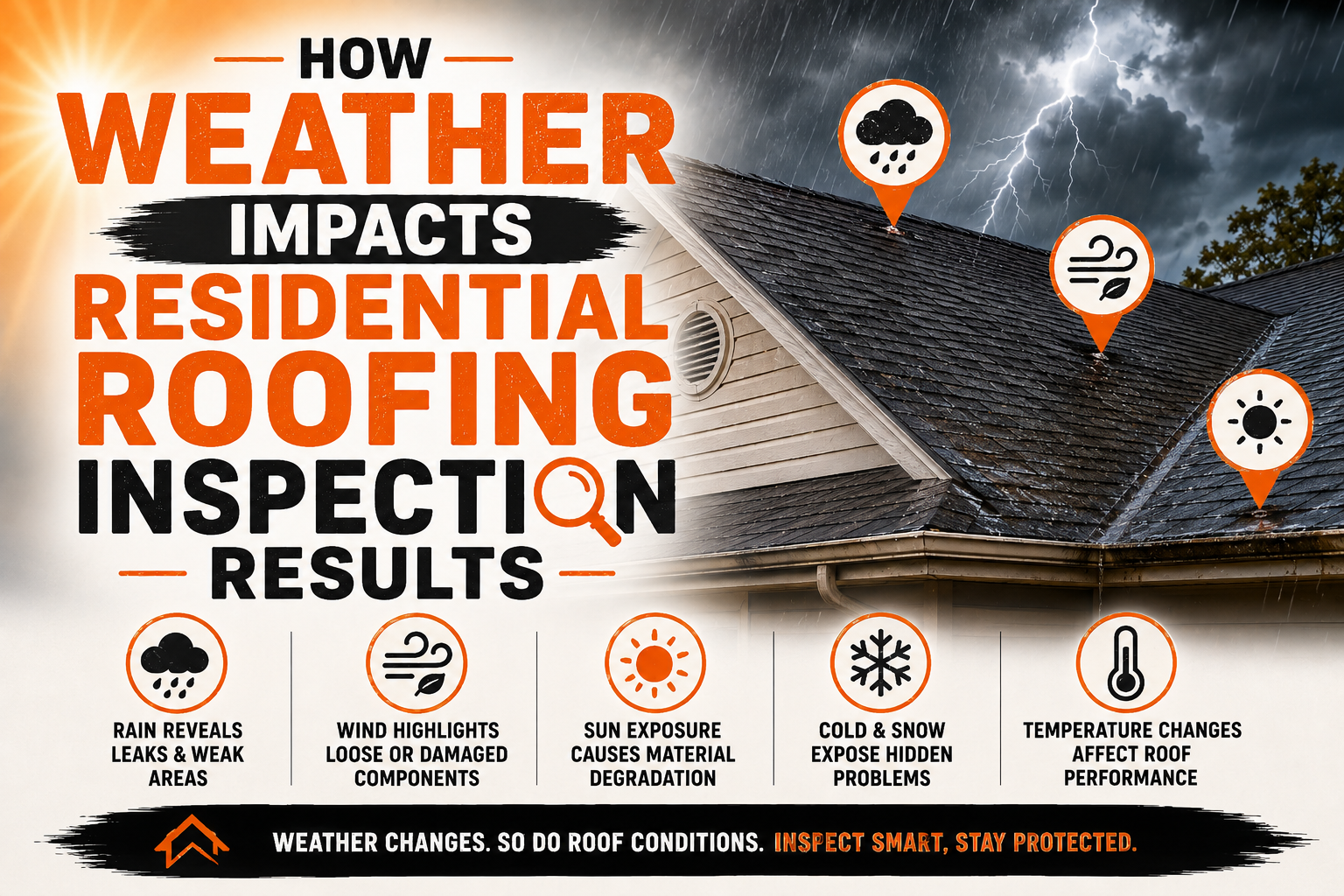
How Weather Impacts Residential Roofing Inspection Results
Introduction
Weather has a major influence on the condition of a residential roof and can also affect what inspectors are able to observe during a professional roofing inspection. Rain, wind, hail, heat, cold, humidity, and seasonal changes can alter roofing materials and create conditions that make certain problems more or less visible. Understanding these effects helps homeowners interpret inspection results more accurately.
A roof is continuously exposed to outdoor conditions throughout its service life. Sunlight can gradually affect roofing materials, while rain repeatedly tests drainage systems, flashing, valleys, and roof penetrations. Strong winds and hail can cause sudden damage, while temperature changes can contribute to expansion, contraction, and material deterioration over time.
Weather can influence both the actual condition of a roof and the circumstances under which it is inspected. Wet surfaces may make roof access unsafe, while strong winds can prevent an inspector from safely examining exposed areas. Some moisture-related problems may also be easier to identify shortly after rainfall, while other conditions may require a dry inspection to evaluate accurately.
Professional inspectors therefore consider weather conditions as part of the inspection process rather than treating the roof as if it exists independently of its environment. They evaluate visible damage, moisture evidence, material condition, drainage performance, and other factors while considering recent and long-term weather exposure. This approach provides homeowners with a more useful understanding of the roof’s condition.
Why Weather Matters During Residential Roofing Inspections
Weather matters during a roofing inspection for two main reasons. First, weather can cause or contribute to physical damage, and second, current weather conditions can affect how safely and accurately the roof can be evaluated.
Strong storms can produce sudden changes in roofing conditions. A roof that appeared intact before a severe weather event may have missing shingles, damaged flashing, clogged drainage paths, or impact marks afterward. These changes can sometimes be identified from the ground, but closer inspection may be necessary to understand the extent of the damage.
Long-term weather exposure can also cause gradual deterioration. Repeated sunlight, rain, temperature changes, and wind can weaken roofing materials over many years. Inspectors consider these cumulative effects when evaluating whether a roof appears to be aging normally or showing signs of accelerated deterioration.
Current weather can affect visibility as well. Rain may cover surface details, while bright sunlight can create shadows that make certain conditions harder to interpret from particular angles. Wet roofing materials may also change appearance compared with their dry condition.
Safety is another major consideration. Inspectors should not take unnecessary risks by accessing a roof during dangerous weather. Wet surfaces, strong winds, lightning, ice, or other hazardous conditions can make direct access inappropriate. In such cases, the inspector may use observations from safer locations or recommend returning when conditions permit.
Recent weather history can also provide valuable context. If a homeowner reports that a leak appeared after heavy rainfall or that roofing materials shifted during strong winds, the inspector can consider that information when examining relevant areas. Weather history does not automatically prove the cause of a problem, but it can help focus the inspection.
How Rain Affects Roof Inspection Results
Rain is one of the most important weather conditions to consider during a roofing inspection because water interacts directly with the roof’s primary function. A roof must shed rainfall effectively while preventing water from entering the building. Heavy or prolonged rain can reveal weaknesses in materials, flashing, drainage, and other components.
During or immediately after rainfall, inspectors may be able to identify certain drainage problems more easily. Water may reveal areas where gutters overflow, valleys drain poorly, or water collects on portions of the roof. These observations can provide useful information about how the system handles active rainfall.
Rain can also make certain roofing defects more noticeable. A damaged flashing area or compromised roof penetration may produce interior moisture evidence following rainfall. Ceiling stains, damp insulation, or attic moisture may provide clues that a roofing system has experienced water intrusion.
However, rain can also limit the inspection itself. Wet roofing surfaces can become slippery and unsafe to walk on, particularly when the roof has a steep slope or fragile materials. An inspector may therefore postpone direct roof access until the surface is sufficiently dry.
Wet conditions can also make some roofing materials appear different. Darkened shingles, wet wood, surface reflections, and accumulated water can make visual interpretation more difficult. Inspectors need to distinguish temporary effects caused by wet conditions from actual deterioration.
Heavy rain can also create temporary drainage conditions that do not necessarily represent permanent defects. For example, a sudden downpour may overwhelm a drainage system for a short period even when the system is otherwise functioning appropriately. Inspectors consider the broader condition rather than making conclusions from one observation alone.
Rain can also help identify recurring problems when homeowners provide useful information. If a homeowner reports that water enters only during heavy rain or when wind-driven rain approaches from a particular direction, this history may help the inspector investigate specific roof sections.
The timing of an inspection after rainfall can therefore affect what is visible. Some conditions may be easier to identify while moisture evidence is fresh, while other assessments may be more accurate once surfaces are dry. A professional can determine whether current conditions are suitable for the intended inspection scope.
How Wind Changes What Inspectors Look For
Wind can affect residential roofing systems both suddenly and gradually. Strong gusts can lift, loosen, or remove roofing materials, while repeated wind exposure can contribute to deterioration of exposed components. During an inspection, professionals pay particular attention to areas that are more vulnerable to wind pressure.
Roof edges and corners often receive close attention because they can experience greater wind exposure. Inspectors may look for lifted shingles, loose edge components, damaged flashing, displaced materials, or other signs that wind has affected the roof.
Wind damage is not always limited to completely missing shingles. A roofing material may remain in place while becoming loose or partially lifted. Inspectors therefore examine the condition and attachment of materials rather than relying only on obvious missing sections.
Strong winds can also move debris onto the roof. Branches, leaves, and other objects may strike roofing materials or block drainage paths. Inspectors can examine areas where debris has accumulated and determine whether it appears to have caused visible damage.
The surrounding property can provide additional clues about wind exposure. Broken branches, damaged outdoor structures, or roofing debris found in the yard may indicate that strong winds affected the area. These observations can support the inspection but do not automatically establish the exact cause of a roof defect.
Wind can also affect flashing, vents, ridge components, and gutters. A professional inspection therefore considers the entire exterior system rather than focusing only on the main roofing surface. Damage to these supporting components may create water entry risks even when the shingles or panels appear relatively intact.
Current wind conditions can also affect inspection safety. Strong gusts can make roof access hazardous, particularly on elevated or steep surfaces. An inspector may limit access or postpone certain parts of the inspection until conditions become safer.
Weather history is important when evaluating possible wind damage. If a homeowner knows that the property recently experienced unusually strong winds, that information can help the inspector focus attention on vulnerable areas. Comparing current conditions with previous inspection records can also help identify whether a defect appears recent.
How Hail Affects Roofing Damage Assessment
Hail can create a different type of roofing concern because impact damage may not always be immediately obvious. Hailstones can strike roofing materials, gutters, vents, flashing, and other exposed components. The severity of the effect can vary depending on hail size, wind conditions, roofing material, roof age, and the location of the property.
Inspectors may look for localized marks, fractures, displaced surface material, or other visible signs of impact. On asphalt shingles, they may pay particular attention to changes in the protective surface layer. On metal components, dents or impact marks may provide additional evidence of a weather event.
The pattern of suspected impact damage can be important. Hail may affect multiple exposed surfaces across the property, so inspectors may consider the roof together with gutters, downspouts, siding, screens, and other outdoor components. Similar impact evidence across several surfaces can provide useful context.
Roofing materials can respond differently to hail. Some materials may show obvious physical marks, while others may be more resistant or may require closer examination to identify potential damage. Inspectors therefore consider the specific roofing material rather than applying the same visual criteria to every roof.
Age also matters when interpreting potential hail damage. Older roofing materials may already have deterioration that resembles impact-related damage. Inspectors consider the overall condition, pattern, and appearance of the roof before deciding whether a particular condition appears weather-related.
Hail can also occur alongside strong wind and heavy rain. When several weather factors occur during the same event, the resulting roof condition may involve more than one type of damage. A professional inspection can help document the different observable conditions and identify areas that may need additional assessment.
How Extreme Heat and Cold Affect Inspection Findings
Temperature extremes can influence roofing materials and the conditions observed during an inspection. Prolonged heat and intense sunlight can accelerate aging in some materials, while freezing temperatures can affect moisture and create additional stresses in certain roofing components.
Hot weather can make roof surfaces significantly warmer than the surrounding air. This can influence the flexibility or appearance of some roofing materials during inspection. Inspectors consider these conditions when evaluating surface characteristics and avoid confusing temporary temperature-related behavior with permanent material failure.
Long-term exposure to sunlight can also contribute to fading, surface deterioration, brittleness, and other forms of aging. Inspectors look at these conditions in relation to roof age and material type. A roof with extensive sun exposure may show different aging patterns from one that remains shaded for much of the day.
Cold temperatures can affect the flexibility of some materials. Certain roofing products may become less flexible during colder conditions, which can influence how they respond to handling or movement. Inspectors take the material and weather conditions into account when performing close visual evaluations.
Freezing and thawing can also affect areas where moisture is present. Repeated temperature changes may contribute to deterioration in some roofing components, particularly where water can collect or enter small openings. Inspectors may pay closer attention to these areas in climates where freeze-thaw cycles are common.
Extreme temperatures can also affect inspection safety. Very hot surfaces can create difficult working conditions, while icy or frozen surfaces may make roof access unsafe. Professional inspectors may adjust their approach based on the current environment.
How Seasonal Weather Conditions Influence Roof Inspections
Seasonal weather patterns can influence both roof condition and inspection timing. Different seasons expose roofing systems to different combinations of rain, wind, sunlight, temperature changes, and debris.
Before a season known for severe weather, an inspection can help identify visible vulnerabilities. Loose roofing materials, damaged flashing, blocked gutters, and other conditions may be worth addressing before heavy weather places additional stress on the roof.
After a severe weather season, another inspection can help identify changes that occurred during the previous months. The inspection may reveal new deterioration, storm-related damage, drainage concerns, or other conditions that were not previously documented.
Seasonal changes can also affect the visibility of certain problems. Heavy rain may reveal drainage issues, while dry conditions may make certain surface defects easier to evaluate. Winter conditions may limit roof access, while moderate dry weather may provide better opportunities for detailed exterior inspection.
The most effective inspection schedule therefore considers both the calendar and actual weather conditions. Homeowners should not delay a needed inspection simply because the next routine appointment is months away, particularly when a major storm or visible roofing problem has occurred.
Weather influences roofing inspections throughout the entire process, from determining whether roof access is safe to interpreting damage patterns and moisture evidence. By considering both current conditions and recent weather history, inspectors can provide a more informed assessment of residential roofing performance. Part 2 will examine how storms, heavy rain, snow, humidity, sunlight, and other conditions affect inspection timing and the limitations professionals may encounter during weather-related roof evaluations.
How Storms Affect Roof Inspection Timing
Severe storms can change the condition of a residential roofing system within a short period. High winds, hail, heavy rainfall, lightning, and flying debris may damage roofing materials or create weaknesses that are not immediately obvious. For this reason, the timing of a professional inspection after a major storm can affect the information available to the homeowner.
An inspection performed soon after a storm may identify fresh damage before temporary weather conditions disappear. Missing shingles, displaced flashing, damaged gutters, fallen branches, and visible impact marks may be easier to document while the event is still recent. However, the inspection should only take place when conditions are safe enough for the professional to work.
Strong winds can continue after the main storm has passed, and wet roofing surfaces may remain slippery for hours or longer. Inspectors may therefore perform an initial assessment from the ground and return for closer examination when conditions improve. This approach allows important observations to be documented without creating unnecessary safety risks.
Storm timing can also influence moisture-related findings. A roof that has recently experienced heavy rain may show fresh staining or moisture evidence in the attic. If an inspection occurs several days later during dry weather, some of those signs may become less obvious, although permanent staining or deterioration may remain.
Homeowners should report the type of weather event and approximate timing when arranging an inspection. Information about strong winds, hail, heavy rain, or fallen trees can help the inspector understand what conditions may have affected the property. Previous inspection reports can also provide a useful comparison.
A storm-related inspection should not automatically be treated as proof that all damage was caused by the storm. Roofing systems naturally age, and some defects may have existed before the weather event. Inspectors compare the observed condition with the roof’s age, material, maintenance history, and available documentation before interpreting the findings.
Inspecting Roofs After Heavy Rain and Flooding
Heavy rain can reveal weaknesses in a roofing system that may remain unnoticed during dry weather. Water tests the roof’s ability to shed moisture through shingles or panels, valleys, flashing, penetrations, gutters, and downspouts. When these components do not perform properly, water may enter the roofing assembly or surrounding areas.
After heavy rainfall, inspectors may look for evidence of water intrusion inside the home. Ceiling stains, damp insulation, attic discoloration, and moisture around roof penetrations can provide useful clues. These findings should be compared with exterior conditions because the location where water becomes visible indoors may not be the same as the location where it entered.
Flooding creates additional concerns because water may affect parts of the property beyond the roofing surface. Standing water around the structure can complicate drainage and may contribute to moisture problems. An inspection may therefore consider gutters, downspouts, drainage routes, and areas where water collects near the building.
Heavy rain can also expose problems with roof valleys. Valleys receive water from multiple roof sections, making effective drainage particularly important. Debris, damaged flashing, or deteriorated materials in these areas can interfere with water flow and increase the possibility of intrusion.
Gutters and downspouts can provide additional evidence about rainfall performance. Overflow marks, accumulated debris, loose sections, or damaged connections may indicate that the drainage system needs attention. These conditions do not always mean that the roof itself has failed, but they can contribute to roofing problems if left unresolved.
Inspectors also consider whether moisture evidence appears active or historical. A ceiling stain may remain after a previous leak has been repaired, while fresh dampness can suggest a current issue. Determining the difference may require additional observation or testing, particularly when the weather has recently been wet.
Flooding and heavy rain can make exterior roof access unsafe, so inspectors may need to modify their approach. Rather than walking on a wet surface, they may document accessible areas from safer positions and inspect the attic or interior when appropriate. A follow-up inspection can be arranged when conditions become suitable for closer examination.
How Snow, Ice, and Freezing Conditions Affect Inspections
Snow and ice can significantly change the way a residential roof looks and behaves. A layer of snow may conceal roofing materials, flashing, valleys, vents, and other components that an inspector would normally examine. Ice can also make roof surfaces dangerous to access.
When snow covers the roof, an inspector may be unable to determine the condition of the underlying roofing materials through visual observation alone. In such cases, the report should clearly explain which areas were concealed and therefore could not be fully assessed. A later inspection may be necessary once the roof becomes accessible.
Ice can create additional safety concerns around roof edges and gutters. Icicles, frozen drainage components, and accumulated ice can make access hazardous. Inspectors may limit the inspection to areas that can be evaluated safely rather than attempting to remove dangerous ice manually.
Freezing temperatures can also affect the behavior of roofing materials. Some materials become less flexible in cold conditions, and moisture trapped in small openings can freeze and expand. Repeated freezing and thawing may contribute to deterioration in vulnerable areas over time.
Snow accumulation can place additional weight on a roof, although the structural effect depends on factors such as snow depth, density, roof design, and existing conditions. If visible sagging or other structural concerns are present, further evaluation may be recommended by an appropriately qualified professional.
Winter weather can also make moisture-related problems more complicated. Melting snow may enter through weaknesses that are not obvious during dry conditions, particularly around flashing, penetrations, and areas where ice affects drainage. Interior moisture evidence can therefore be an important part of a winter inspection.
Homeowners should not attempt to remove snow from a roof themselves simply to make an inspection easier. Improper removal can damage roofing materials and create a serious safety hazard. A professional can determine the safest way to proceed based on the roof and weather conditions.
How Humidity and Moisture Affect Roofing Inspection Results
Humidity can influence both the roof itself and the conditions found inside the attic. Moisture in the air may contribute to condensation when warm, humid air contacts cooler surfaces. This can create moisture evidence that may initially resemble a roof leak.
Inspectors consider ventilation when evaluating attic moisture. If humid air is not properly managed, condensation may develop on roofing components or other surfaces. This does not necessarily mean that water is entering through the exterior roof, so the source of moisture needs to be considered carefully.
Humidity can also affect the drying process after rainfall. Roofing materials, insulation, decking, and other components may remain damp for longer periods in humid conditions. An inspection performed shortly after rain may therefore reveal moisture that would not be present during a prolonged dry period.
The inspector may look for staining, condensation, damp insulation, discoloration, or deterioration in the attic. These observations can provide information about moisture conditions, but they must be interpreted alongside ventilation, weather history, and exterior roof findings.
Persistent moisture can contribute to deterioration over time. Wood components may be affected by prolonged dampness, while certain roofing materials may deteriorate more quickly when repeatedly exposed to moisture. Inspectors consider whether visible conditions appear isolated or part of a continuing pattern.
Humidity can also influence the performance of sealants and other materials. Repeated exposure to moisture and temperature changes may cause certain components to age. However, inspectors should evaluate the actual condition rather than assuming that humid weather has caused a specific defect.
Weather history is particularly useful when evaluating moisture. A homeowner who can explain whether moisture appears only after storms, during humid periods, or throughout the year can provide helpful context. This information may help the inspector distinguish between potential roof leaks and other sources of indoor moisture.
How Sunlight and Temperature Affect Roofing Materials
Sunlight is one of the most consistent environmental influences on a residential roof. Roofing materials are exposed to ultraviolet radiation and heat throughout their service life, and prolonged exposure can contribute to gradual aging. Inspectors consider these effects when evaluating the surface condition of a roof.
Areas with strong and consistent sunlight may show fading, surface deterioration, brittleness, or other age-related changes. The appearance of these conditions can vary depending on the roofing material and its environment. Inspectors compare the observed condition with the roof’s age and expected characteristics rather than automatically classifying surface changes as damage.
Temperature can also cause roofing materials to expand and contract. Repeated changes between hot and cool conditions may place stress on certain components, particularly where different materials meet. Flashing, sealants, joints, and other transitions may deserve closer attention because they can respond differently to temperature changes.
Very hot conditions can affect inspection safety as well. Roof surfaces may become extremely warm during periods of intense sunlight, especially on low-slope or dark-colored roofing materials. Inspectors may adjust the timing or method of the inspection to reduce unnecessary exposure to extreme heat.
Cold conditions create different challenges. Some materials may become less flexible, while sealants and other components may behave differently at low temperatures. Inspectors consider these conditions when evaluating apparent cracks, gaps, or changes in material behavior.
Sunlight can also affect the visibility of certain defects. Bright light and shadows may make some surface conditions appear more pronounced from one angle than another. Inspectors may change viewing positions or use photographs to document observations more clearly.
Long-term temperature exposure should also be distinguished from sudden weather damage. A roof may show age-related deterioration without having experienced a particular damaging event. Understanding this distinction is important when determining whether a condition requires repair, monitoring, or further investigation.
Weather-Related Limitations During Professional Roof Inspections
Weather can sometimes prevent an inspector from completing every part of a planned evaluation. Professional inspectors must consider safety before accessing a roof, particularly during rain, high winds, lightning, snow, ice, or extreme temperatures. A limited inspection is preferable to creating an unsafe situation.
Wet surfaces can make roof access hazardous, especially on steep slopes. Even roofing materials that appear walkable when dry may become slippery after rainfall. Inspectors may therefore evaluate the roof from accessible areas and schedule another visit once the surface is safe.
High winds can create similar limitations. Working on an elevated roof during strong gusts increases the risk of losing balance or having equipment affected by wind. In these circumstances, an inspector may restrict access to lower-risk areas or postpone the inspection.
Lightning presents a particularly serious concern because a roof is an exposed elevated location. When thunderstorms are nearby, exterior roof work may need to stop until the danger has passed. Homeowners should understand that postponing part of an inspection for safety does not mean the inspection was inadequate.
Snow and ice can conceal important components. An inspector may be unable to evaluate the condition of shingles, tiles, flashing, or roof penetrations when they are covered. The report should identify these limitations so the homeowner knows what was and was not observed.
Extreme heat can also affect inspection timing. Very hot roof surfaces may make prolonged exterior evaluation uncomfortable or unsafe, particularly during peak daytime temperatures. Inspectors may choose a more suitable time of day when practical.
Weather-related limitations should be clearly documented in the inspection report. Homeowners should look for information explaining whether any roof areas were inaccessible, concealed, or not evaluated because of conditions. Understanding these limitations helps prevent the report from being interpreted as a complete assessment of areas that were not actually visible.
A weather-limited inspection may still provide useful information. Ground-level observations, attic findings, interior evidence, drainage conditions, and accessible exterior areas can all contribute to an initial assessment. However, a follow-up inspection may be necessary when weather conditions improve.
Weather therefore affects residential roofing inspections in several connected ways. It can create damage, reveal hidden problems, conceal important components, influence material behavior, and determine whether direct roof access is safe. Understanding these factors helps homeowners interpret inspection findings realistically and prepares them for the final stage of the assessment, where inspectors distinguish weather-related damage from normal aging and determine how weather conditions may influence repair recommendations.
How Inspectors Interpret Weather-Related Roof Damage
Weather-related roof damage must be evaluated carefully because a roof can show several conditions at the same time. A professional inspector does not simply see a damaged shingle and assume that the latest storm caused it. Instead, the inspector considers the roof’s age, material, maintenance history, previous inspection records, recent weather, and the pattern of visible damage.
The location of a defect can provide useful information about its possible cause. Wind-related problems may be concentrated around exposed edges, corners, and ridges, while water-related concerns may appear around valleys, penetrations, flashing, and drainage areas. Hail damage may appear across exposed surfaces and may also affect gutters, vents, or other exterior components.
Inspectors also look for consistency between weather conditions and observed damage. If a homeowner reports a major hailstorm and the roof contains several areas with possible impact marks, the weather event provides useful context. However, the inspector still needs to distinguish those marks from normal aging, manufacturing characteristics, or previously existing deterioration.
Moisture evidence is interpreted in a similar way. A ceiling stain following heavy rainfall may indicate roof-related water intrusion, but moisture can also originate from condensation, plumbing, or other sources. Comparing interior evidence with exterior roofing conditions helps create a more reliable assessment.
Weather history can therefore be an important part of the inspection record. Homeowners should provide information about recent storms, unusual rainfall, high winds, hail, snow, or other events. When available, previous inspection photographs can also help establish whether a condition appears new or has existed for some time.
Distinguishing Weather Damage From Normal Roof Aging
One of the biggest challenges during a residential roofing inspection is distinguishing sudden weather damage from gradual deterioration. Roofing materials naturally change as they become older, and some signs of aging can look similar to damage caused by a storm. Inspectors consider the entire roof rather than focusing on isolated visual changes.
For example, curled or brittle shingles may result from age and long-term environmental exposure. If similar conditions appear across most of the roof, the pattern may suggest general deterioration rather than one recent weather event. A professional can compare the condition with the roof’s approximate age and maintenance history.
Weather damage may have a different appearance or distribution. A strong wind event could leave particular materials displaced or missing, while hail may create localized impact patterns. The inspector evaluates these patterns alongside information about the weather event.
Previous repairs are also important. A repaired section may look different from surrounding materials even when it is functioning properly. Without reviewing the roof’s history, a homeowner might assume that every difference represents new damage.
Sun exposure can create additional variations across a roof. Sections exposed to direct sunlight for longer periods may age differently from shaded sections. Inspectors consider these environmental differences when determining whether changes are consistent with expected aging.
The distinction between damage and aging is important because it can influence the recommended response. A localized weather-related problem may be suitable for repair, while widespread age-related deterioration may require broader maintenance planning. Accurate identification helps homeowners avoid making decisions based on assumptions.
How Weather Conditions Affect Repair Recommendations
Weather conditions can influence not only inspection results but also recommendations for addressing roofing problems. A repair that is appropriate under normal conditions may need to be delayed or modified when rain, high winds, extreme heat, snow, or freezing temperatures are present.
If a roof has active damage during a period of wet weather, temporary protection may become a priority. The goal is to reduce additional exposure until permanent repairs can be safely completed. The specific protection required depends on the location and severity of the damage.
Weather can also affect the materials used for repairs. Some roofing products, adhesives, sealants, and coatings have installation requirements related to temperature or moisture. A professional contractor can determine when conditions are suitable for the recommended repair.
After a major storm, homeowners may need to prioritize several different issues. A damaged roof penetration that allows water inside may require more immediate attention than a cosmetic surface condition. Inspection findings can help organize repairs according to their potential impact.
Repair recommendations should also consider whether weather-related damage is isolated or widespread. A few damaged components may be addressed through targeted repairs, while extensive damage across multiple roof sections may require a broader assessment. Roof age and existing deterioration can influence this decision.
A professional inspection does not necessarily determine the final repair method in every situation. Some conditions may require a contractor, structural professional, or other specialist to investigate further. The inspection report can identify the concern and explain why additional evaluation may be appropriate.
What Homeowners Should Do Before and After a Weather-Related Inspection
Homeowners can help make a weather-related roofing inspection more useful by providing accurate information about the property. Before the inspection, they should note when the problem first appeared and what type of weather occurred around that time. Details about leaks, missing materials, unusual sounds, or visible changes can give the inspector helpful context.
Homeowners should also avoid attempting unsafe roof inspections themselves. After a storm, roofing surfaces may be wet, unstable, or covered with debris. Walking across damaged materials can create additional damage and may expose the homeowner to a serious fall hazard.
From the ground, homeowners can safely observe obvious changes when conditions permit. Missing roofing materials, fallen branches, damaged gutters, or debris around the property can be documented without climbing onto the roof. Photographs from safe locations may also help establish what the property looked like after a weather event.
After the professional inspection, homeowners should review the findings and identify which conditions require attention. If the report indicates active moisture intrusion or significant damage, repairs should not be unnecessarily delayed. Conditions that are suitable for monitoring can be documented for comparison during future inspections.
It is also useful to retain inspection reports and photographs. A record of the roof’s condition before and after major weather events can make future assessments more informative. It may also help homeowners understand whether a condition is stable, improving, or becoming more extensive.
When repairs are recommended, homeowners should ask clear questions about the affected areas and expected next steps. Understanding whether a problem is weather-related, age-related, maintenance-related, or uncertain can help homeowners make more informed decisions.
Creating a Weather-Aware Residential Roof Inspection Schedule
A weather-aware inspection schedule combines regular inspections with additional evaluations when significant weather events occur. A routine inspection can establish a baseline for the roof’s condition, while event-based inspections can identify changes caused by storms or other unusual conditions.
Many homeowners find it useful to schedule a professional inspection at a consistent point each year. This creates a regular record of roof condition and can make gradual changes easier to identify. The exact timing can be adjusted based on local climate, roof age, material, and maintenance history.
Additional inspection may be appropriate after severe weather. High winds, hail, heavy rainfall, fallen trees, and other significant events can justify an evaluation even if the next routine inspection is not due soon. Visible damage or new interior moisture should also prompt attention.
Seasonal preparation can be useful as well. Before a period of severe weather, homeowners can have the roof checked for obvious vulnerabilities and drainage concerns. After the weather season, another inspection can help identify any changes that occurred during that period.
The schedule should remain flexible because weather does not follow a perfect calendar. A roof that develops a leak during an unusually heavy rainfall event should not wait until the next annual inspection. Similarly, visible wind or hail damage deserves attention when it occurs.
A simple weather-aware approach includes routine professional inspections, post-storm evaluations when appropriate, prompt assessments for warning signs, and closer monitoring as the roof ages. This approach allows inspection frequency to reflect actual conditions rather than relying solely on a fixed date.
Conclusion
Weather has a significant influence on both residential roofing conditions and professional inspection results. Rain, wind, hail, snow, humidity, sunlight, heat, and freezing temperatures can damage roofing materials, reveal hidden problems, affect material behavior, or limit the ability of an inspector to safely access certain areas.
Professional inspectors consider these factors when interpreting what they find. They compare visible conditions with the roof’s age, material, maintenance history, previous repairs, and recent weather events. This helps distinguish sudden weather-related damage from normal aging and other roofing concerns.
Weather can also influence the timing of an inspection. Wet, icy, windy, or stormy conditions may make direct roof access unsafe or conceal important components. In these situations, an inspector may document accessible areas and recommend a follow-up inspection when conditions become more suitable.
Homeowners can improve the inspection process by reporting recent weather events, describing when problems first appeared, preserving previous inspection records, and avoiding unsafe attempts to examine damaged roofing themselves. Information from the homeowner combined with professional observations can provide a clearer picture of what happened.
Repair decisions should also account for weather conditions. Some problems may require immediate temporary protection, while permanent repairs may need to wait for suitable installation conditions. The appropriate response depends on the type, location, severity, and extent of the damage.
A weather-aware inspection schedule provides a practical way to protect residential roofing systems. Routine inspections establish a baseline, while additional inspections after significant storms or when warning signs appear help identify changes before they become more extensive.
Ultimately, weather should be viewed as an important part of the roofing inspection process rather than simply an outside influence. By considering both current conditions and long-term weather exposure, professional inspectors can provide more meaningful assessments. Homeowners who combine regular inspections, preventive maintenance, timely storm evaluations, and proper documentation can make better-informed decisions about protecting their roofs and the homes beneath them.
Leave A Comment