
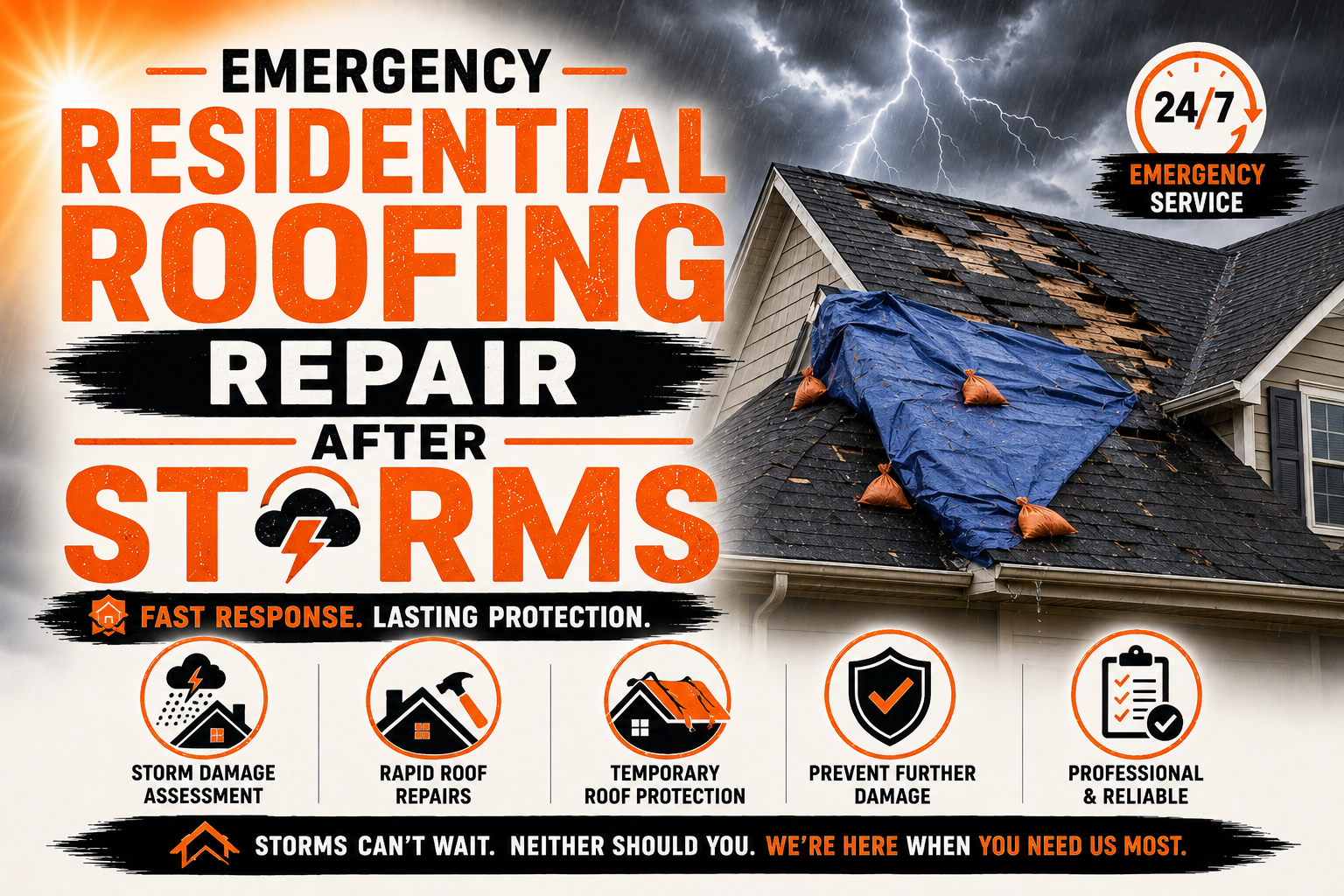
Emergency Residential Roofing Repair After Storms
Introduction
Severe storms can change the condition of a residential roof within a short period. Strong winds, hail, heavy rain, falling branches, and flying debris can damage shingles, tiles, metal panels, flashing, gutters, vents, and other roofing components. In some cases, the damage is immediately visible, while other problems only become apparent when water begins entering the home.
Emergency residential roofing repair focuses on protecting the property from additional damage until permanent repairs can be completed. The first priority is not always restoring the roof completely on the same day. Instead, professionals assess immediate hazards, identify openings or vulnerable areas, and take appropriate temporary measures to reduce exposure to weather.
Homeowners should avoid climbing onto a storm-damaged roof themselves. Wet surfaces, loose materials, broken branches, exposed fasteners, and unstable sections can create serious safety risks. A professional roofer can evaluate the situation using appropriate equipment and determine what emergency action is necessary.
A storm response also works best when homeowners understand the difference between emergency protection and permanent repair. Covering an opening temporarily may prevent additional rain from entering, but it does not necessarily resolve damaged decking, flashing, insulation, or other underlying components. A complete inspection is often needed before permanent work begins.
Why Emergency Roof Repairs Are Important After Storms
A damaged roof can become more vulnerable with every additional weather event. Even a relatively small opening may allow rainwater to enter the roofing assembly, particularly when strong winds push water beneath damaged materials. Prompt attention can help reduce the possibility of additional moisture-related damage.
Storm damage can also affect components that are not immediately visible. A branch may strike the roof and damage the surface while also affecting the underlying decking. Similarly, wind may loosen several roofing materials without completely removing them, creating conditions that become worse during subsequent rainfall.
Emergency repairs are therefore intended to stabilize the situation. They may involve temporary covering, removal of dangerous debris, securing loose materials, controlling active water entry, or protecting exposed areas until permanent work can be safely performed.
The need for emergency action depends on the condition of the roof. A few cosmetic marks may not require immediate protection, while a large opening above a living area may need prompt attention. Professionals consider the location, size, severity, and potential consequences of the damage.
Storm timing can also affect the urgency of repairs. If additional rain is expected soon, exposed roofing areas may require temporary protection before permanent repairs are available. Homeowners should communicate upcoming weather conditions when contacting a roofing professional.
Common Types of Storm Damage Requiring Emergency Attention
Storms can produce different types of roofing damage, and each condition may require a different response. Some damage is obvious, while other problems may only be identified through a closer inspection.
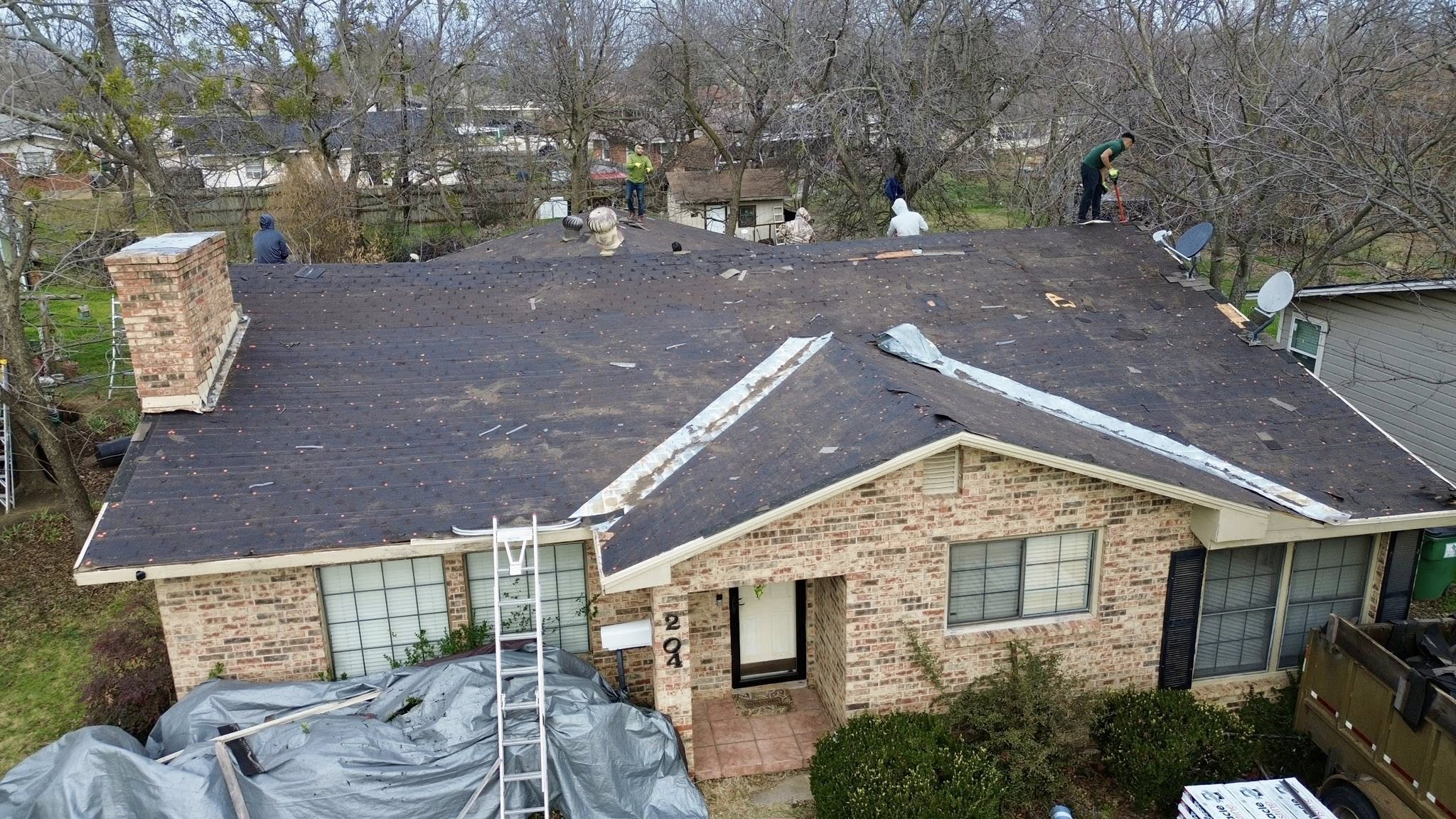
Missing or displaced shingles are among the most common storm-related concerns on asphalt shingle roofs. Strong winds can lift or remove shingles, leaving sections of the roof exposed. If the underlying layers are vulnerable to rain, temporary protection may be necessary.
Broken roof tiles can also create openings. Tile systems may experience cracked, displaced, or shattered pieces after high winds, hail, or falling branches. Because the damaged area may expose the materials beneath, prompt evaluation can help determine whether temporary protection is needed.
Metal roofing can suffer from dents, lifted panels, damaged seams, or loose fasteners. Severe wind can place stress on panel connections, while falling debris can create impact damage. Professionals inspect the affected areas to determine whether the system remains weather-resistant.
Flashing damage is another important concern. Flashing around chimneys, skylights, vents, walls, and valleys can become displaced during storms. Because these areas are designed to control water movement, damage may increase the risk of leaks.
Storms can also damage gutters and downspouts. Although these components are not the main roof surface, their condition affects drainage. A detached gutter or blocked downspout can contribute to water accumulation around the home.
Fallen trees and large branches require particular caution. A heavy object resting on a roof can create structural concerns in addition to surface damage. Homeowners should not attempt to remove large debris without professional assistance.
The First Steps After Storm Damage
After a severe storm, homeowners should first make sure the property is safe. Downed power lines, broken trees, flooding, structural instability, and other hazards may exist around the home. Roofing concerns should be addressed only after immediate personal safety has been considered.
Once it is safe to do so, homeowners can observe the roof from the ground. They may notice missing shingles, visible holes, displaced materials, damaged gutters, or debris. These observations can provide useful information for a roofing professional without requiring the homeowner to climb onto the roof.
Interior areas should also be checked for signs of water intrusion. New ceiling stains, dripping water, damp insulation, or moisture around skylights and vents can indicate that the roof has been compromised. Homeowners should document these conditions when it is safe to do so.
Photographs can be useful for documenting visible damage. Images should be taken from safe locations and should show the general area as well as the specific condition when possible. Homeowners should avoid putting themselves at risk just to obtain a closer photograph.
If water is entering the home, appropriate immediate measures may be necessary to protect interior belongings. Containers can be used to collect dripping water where safe, and valuable items can be moved away from affected areas. Electrical hazards should be treated seriously, especially when water is near outlets, fixtures, or electrical equipment.
The next step is contacting a qualified roofing professional for an emergency assessment. The homeowner should explain the type of storm, visible damage, active leaks, and any other immediate concerns. This information can help the professional understand the situation before arriving.
How Professional Roofers Assess Storm Damage
A professional storm damage assessment generally begins with a review of visible conditions and the homeowner’s description of what occurred. The roofer may ask when the storm happened, what type of weather occurred, and whether the property experienced previous roofing problems.
The exterior inspection focuses on the roofing surface and supporting components. Professionals may look for missing or lifted shingles, cracked tiles, damaged metal panels, displaced flashing, damaged vents, gutter problems, and evidence of falling debris.
The roof’s perimeter often receives close attention after strong winds. Edges, corners, ridges, and other exposed areas may experience greater wind pressure. Damage in these locations can sometimes indicate that additional sections need closer evaluation.
Roof penetrations are also important. Chimneys, skylights, plumbing vents, and other openings depend on properly functioning flashing. Storm damage in these areas may create pathways for water even when the main roofing surface appears relatively intact.
Professionals may also examine the attic when conditions allow. Moisture staining, damaged decking, damp insulation, daylight visible through unexpected openings, or other evidence can help connect exterior damage with interior problems.
A thorough assessment considers both immediate and secondary concerns. For example, a fallen branch may have damaged shingles while also affecting the roof deck beneath them. Identifying only the visible surface damage could result in an incomplete repair plan.
Temporary Protection Before Permanent Repairs
Temporary protection is often an important part of emergency roofing work. Its purpose is to reduce exposure to weather until permanent repairs can be safely completed. The method used depends on the type and location of the damage.
A professional may use appropriate temporary covering materials over exposed sections. These materials must be installed securely enough to withstand expected conditions without creating additional damage. Improperly installed coverings can become loose during subsequent wind and may increase the problem.
Temporary protection may also involve securing loose materials or addressing an immediate opening. The goal is to stabilize the affected area rather than make the roof appear permanently repaired.
When a large tree or branch has damaged the roof, emergency work may require coordination with other professionals. Tree removal and structural evaluation may be necessary before roofing repairs can proceed safely.
Homeowners should understand that temporary protection is not a substitute for permanent repair. A covered opening may prevent immediate water entry, but damaged roofing materials, flashing, decking, insulation, or structural components may still require attention.
The timing of permanent repairs depends on weather, material availability, the extent of damage, and safety conditions. If another storm is approaching, temporary protection may need to remain in place until suitable repair conditions become available.
Prioritizing Emergency Roofing Problems
Not every storm-related roofing problem has the same urgency. Professionals typically focus first on conditions that can create immediate safety concerns or allow continued water intrusion. This helps ensure that the most important problems are addressed first.
Active leaks are generally a major concern because continued moisture can damage interior and structural materials. Exposed roof sections can also require prompt protection when additional rainfall is expected.
Large fallen branches and structural concerns may require immediate attention because they can create hazards beyond ordinary roof damage. Homeowners should not approach unstable debris or damaged structural areas without professional guidance.
Damaged electrical components near wet areas can also create serious safety concerns. If storm damage has affected electrical equipment or wiring, homeowners may need appropriate electrical assistance rather than attempting to manage the problem themselves.
A simple priority assessment can focus on:
- Immediate safety hazards around the property
- Active water entry or exposed roof openings
- Large debris or possible structural damage
- Loose roofing materials that may worsen
- Secondary maintenance concerns that do not require immediate protection
This approach helps homeowners focus on urgent conditions while planning less critical repairs afterward. A professional can determine the appropriate response based on the actual condition of the roof.
Emergency residential roofing repair is therefore about more than quickly covering a damaged section. It involves identifying hazards, controlling immediate exposure, documenting the condition, and preparing for permanent repairs. Understanding these first steps helps homeowners respond more effectively after a storm and reduces the risk of turning a manageable roofing problem into a much larger property issue.
How Emergency Roof Repairs Protect the Home
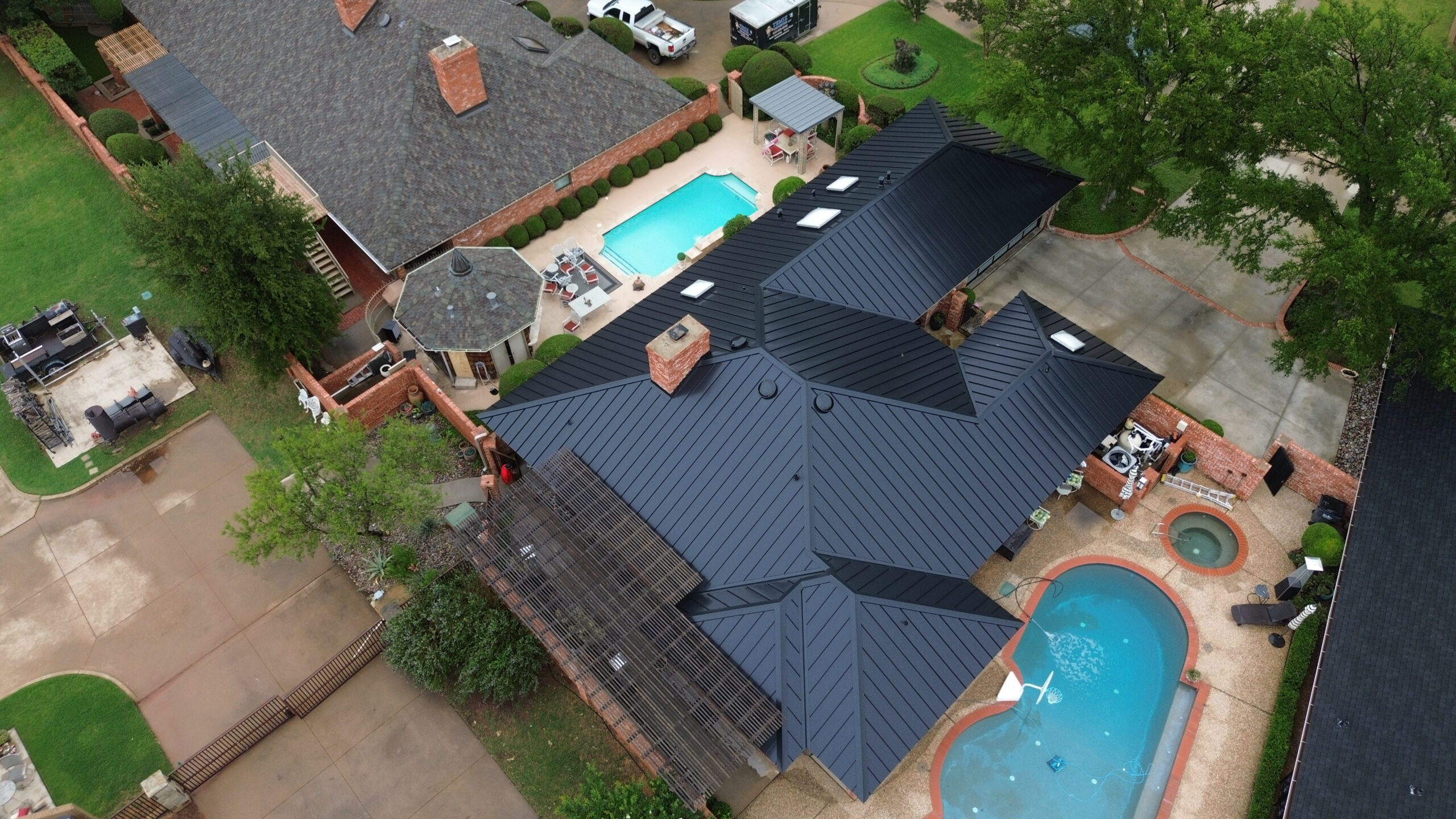
Emergency roofing repairs are designed to reduce additional damage after a storm has compromised the roof. The main objective is to protect exposed areas from continued weather while a permanent repair plan is developed. This can be especially important when additional rain or strong winds are expected soon after the original storm.
A damaged roof can allow water to enter through surprisingly small openings. Missing shingles, cracked tiles, lifted metal panels, damaged flashing, and broken roof penetrations can all create pathways for moisture. Once water reaches the roof deck or interior spaces, the problem can extend beyond the original storm damage.
Temporary protection can help limit this exposure. Depending on the condition, professionals may use suitable temporary coverings, secure loose components, or address exposed openings. The exact method depends on the roof material, location of the damage, weather conditions, and safety requirements.
Emergency protection should always be considered temporary. It is intended to stabilize the situation until permanent work can be completed under appropriate conditions. A temporary covering should not be mistaken for a complete roof repair.
The timing of emergency work can also be affected by weather. If rain is continuing or high winds remain present, a professional may need to wait until conditions become safe. In the meantime, interior protection and other appropriate measures can help reduce secondary damage.
Emergency Repairs for Missing and Damaged Shingles
Asphalt shingles can be displaced or removed during strong winds. When this occurs, the exposed area may become vulnerable to rainfall and continued wind. Emergency attention can help prevent a small damaged section from becoming a larger problem.
A professional first evaluates the surrounding shingles and underlying layers. It is important to determine whether the damage is limited to one or two shingles or whether nearby materials have also been loosened. Wind can affect adjacent shingles without completely removing them.
Temporary protection may be necessary when an opening exposes the roof assembly. The appropriate covering should be secured properly and should not damage surrounding materials. A professional can determine how best to protect the affected section until permanent replacement is possible.
Permanent shingle repair involves more than simply placing a new shingle over an opening. The surrounding materials and attachment points should be evaluated to ensure the repair addresses the actual condition. If several sections are damaged, a broader inspection may be necessary.
The age of the existing roof can also influence the repair approach. If the roof is relatively new and otherwise in good condition, localized replacement may be practical. If widespread aging exists, the homeowner may need to consider whether repeated repairs remain an effective long-term solution.
Emergency Repairs for Tile and Metal Roofing
Tile roofing can suffer cracked or displaced pieces after high winds, hail, or falling debris. A damaged tile may expose the area beneath it to moisture, making prompt attention important. Professionals should evaluate the surrounding tiles because impact or movement can affect more than one piece.
Temporary protection may be installed over exposed areas when permanent tile replacement cannot happen immediately. The method should be appropriate for the roof system and should not create additional stress or damage. Loose tiles should also be handled carefully because unstable pieces can create hazards.
Metal roofing requires a different emergency repair approach. Strong winds may loosen fasteners, lift panels, damage seams, or affect flashing. Falling branches can also dent or puncture panels.
A professional may inspect panel connections and visible fasteners to determine whether the roofing system remains secure. If a panel has shifted, simply pushing it back into position may not resolve the underlying attachment problem. The surrounding system needs to be evaluated before permanent work is completed.
Metal roofs can also develop damage around penetrations and transitions. Flashing around vents, chimneys, skylights, and wall intersections may be affected by storm forces. These areas should be checked even when the main metal panels appear intact.
Addressing Storm-Damaged Flashing
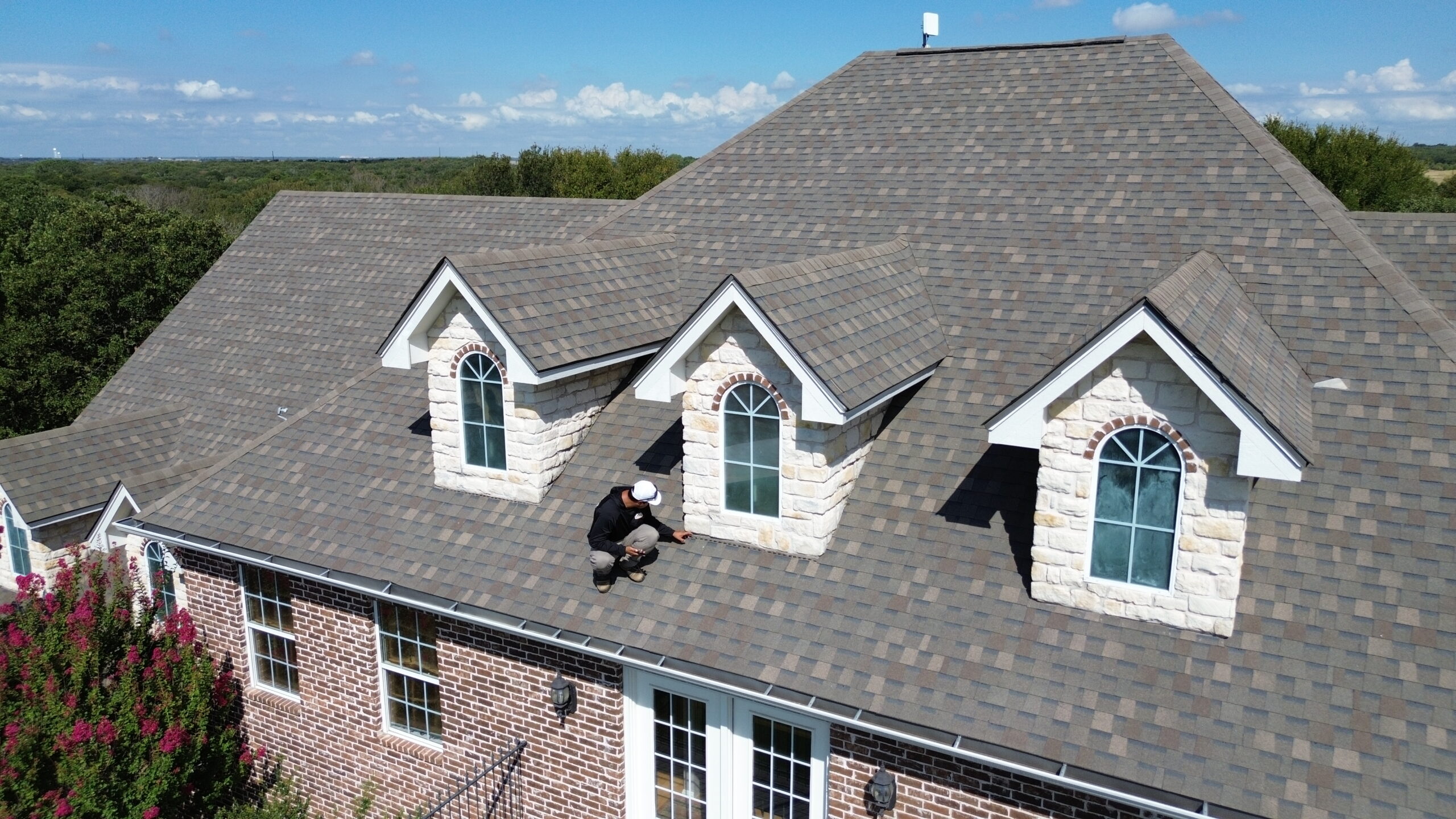
Flashing plays an important role in directing water away from vulnerable roofing transitions. Storms can bend, loosen, or displace flashing, creating potential openings for water. Because flashing is often installed around complex areas, damage may be difficult to recognize from the ground.
Emergency flashing repairs may focus on preventing immediate water entry. A professional may secure or temporarily protect an affected area while determining what permanent repair is needed. The surrounding roofing material should also be checked because movement of the flashing may have affected nearby components.
Chimneys are particularly important because their flashing systems can include several sections. Wind and rain may expose weaknesses around the chimney base, sides, or upper transitions. Interior staining near a chimney can provide additional evidence that the area needs closer evaluation.
Skylights can also develop storm-related problems. Damaged flashing, cracked components, or displaced surrounding roofing materials may allow moisture to enter. A professional can determine whether the skylight itself is damaged or whether the problem is associated with surrounding roofing components.
Roof vents and plumbing penetrations require similar attention. These areas interrupt the roof surface and depend on properly functioning flashing and seals. Emergency protection may be needed if storm damage creates an exposed opening.
Managing Fallen Trees and Large Debris
Fallen trees and large branches can cause some of the most serious roofing emergencies. The weight and impact of a large object can damage shingles, decking, rafters, trusses, or other structural components. The roof may also become unstable after a major impact.
Homeowners should avoid attempting to remove large branches from a damaged roof. A branch may be under tension or resting on weakened materials. Moving it without appropriate equipment can cause additional roof damage or serious injury.
Professional storm response may involve more than one type of contractor. Tree removal may need to happen before a roofing professional can safely access the damaged area. Structural evaluation may also be required when there are signs that supporting components have been affected.
Once large debris has been safely removed, the roofing system can be examined more closely. Professionals may look for punctures, broken roofing materials, damaged decking, displaced framing, and moisture entry.
Temporary protection can then be used to cover exposed areas. The objective is to prevent additional weather from entering while permanent repairs are planned.
Handling Water Intrusion After a Storm
Water intrusion is one of the most urgent concerns following storm-related roof damage. A roof opening can allow water to move into insulation, decking, ceilings, walls, and other areas. The longer moisture remains uncontrolled, the greater the potential for secondary damage.
Homeowners should identify active leaks without placing themselves in unsafe areas. Containers can collect dripping water when appropriate, and furniture or other belongings can be moved away from affected locations. However, water near electrical equipment should be treated as a potential hazard.
Professionals investigate the possible source of water rather than assuming that the visible interior stain is directly below the roof defect. Water can travel along roof decking, framing, insulation, or other surfaces before reaching the interior.
Attic inspection can provide useful information when it is safe to access. Moisture staining, damp insulation, damaged decking, or visible openings can help connect an interior leak with an exterior condition.
Emergency roofing protection should focus on stopping or reducing continued water entry. Once the immediate threat has been controlled, permanent repairs can address the underlying roofing damage.
Drying and restoration may also be necessary if substantial water entered the building. Roofing repair alone may not address wet insulation, damaged drywall, or other affected interior materials.
Documenting Storm Damage Before Repairs
Documentation is an important part of emergency roofing repair. Photographs and written records can help homeowners understand what happened and provide useful information to roofing professionals. Documentation should be completed from safe locations and should never require climbing onto a damaged roof.
Exterior photographs can show missing roofing materials, damaged gutters, fallen branches, visible holes, and debris. Interior photographs can document ceiling stains, water entry, and other visible effects. Taking several photographs from different angles can provide better context than a single close-up image.
Homeowners should also record the approximate date and type of storm. Information about strong winds, hail, heavy rain, or falling trees can help establish the circumstances surrounding the damage.
Previous inspection reports and repair records can also be useful. They may help distinguish recent storm damage from conditions that existed before the event. This is particularly important for older roofs with existing deterioration.
Documentation should not delay emergency protection. If rain is entering the home, preventing additional damage should take priority over taking extensive photographs. Only safe and practical documentation should be performed before professional assistance arrives.
Working With Roofing Professionals After a Storm
Choosing a qualified roofing professional is an important part of the emergency repair process. Homeowners should communicate the nature of the damage clearly and provide available photographs or previous inspection information.
A professional should explain what was observed and identify which problems require immediate attention. Homeowners can ask whether the recommended work is temporary or permanent and whether additional inspection is needed.
It is also useful to understand the expected repair sequence. A storm-damaged roof may require debris removal, temporary protection, inspection of underlying materials, material replacement, and final weatherproofing. The order can vary depending on the severity and type of damage.
Homeowners should be cautious about making rushed decisions based solely on a contractor’s first visual impression. Emergency conditions can make it difficult to determine the complete extent of damage immediately. A detailed inspection may reveal additional conditions once debris or temporary coverings are removed.
Clear communication helps avoid misunderstandings. Homeowners should understand which areas are being protected immediately, which repairs are permanent, and whether any conditions remain subject to further evaluation.
Emergency roofing repair is ultimately about controlling risk while preparing for a lasting solution. By addressing exposed areas, managing water intrusion, documenting damage, and working with qualified professionals, homeowners can reduce the possibility of additional storm-related problems. Once the immediate emergency has been stabilized, the focus can shift toward permanent repairs, long-term roof protection, and preventing similar problems during future storms.
Planning Permanent Roof Repairs After an Emergency
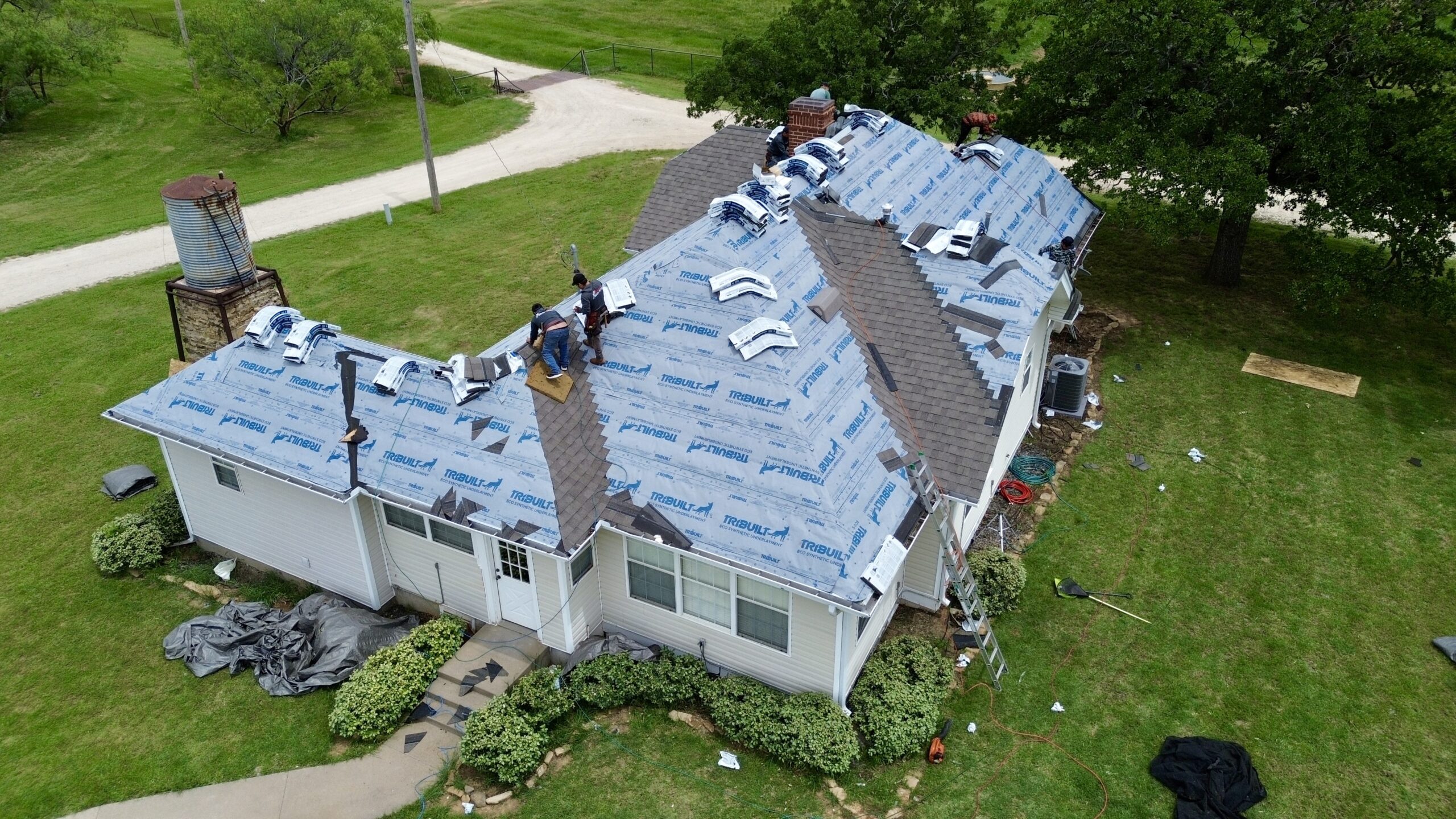
Emergency protection is only the first stage of storm-related roofing work. Once immediate hazards have been controlled and exposed areas have been protected, the next step is determining what permanent repairs are necessary. This requires a more detailed evaluation of the roof and any components affected by the storm.
Permanent repairs should address the actual cause and extent of the damage rather than simply covering visible problems. A damaged shingle, for example, may be replaced, but the surrounding materials should also be checked for movement or deterioration. Similarly, damaged flashing may require proper replacement or repositioning rather than a temporary application of sealant.
The condition of the roof before the storm also matters. A roof with significant existing deterioration may require a different repair strategy from a relatively new roof with isolated storm damage. Professionals consider age, material condition, previous repairs, and the overall extent of damage when developing recommendations.
Homeowners should also understand that permanent repairs may not be possible immediately after a major storm. Roofing contractors can experience high demand following widespread weather events, and certain materials may require additional time to obtain. Temporary protection helps keep the home safer while permanent work is being arranged.
A clear repair plan should identify affected areas and explain the work required. Homeowners can ask whether the recommendation involves localized repair, replacement of several sections, restoration of specific components, or a broader roofing project. Understanding the scope makes it easier to plan the work and compare appropriate repair options.
Repairing Damaged Roof Decking
Storm damage can sometimes extend beneath the visible roofing surface. A fallen branch, severe impact, or prolonged water intrusion may affect the roof decking that supports the roofing materials. When this occurs, replacing only the exterior material may not fully resolve the problem.
Roof decking can become weakened after repeated moisture exposure. Water entering through a damaged roof may reach the wood or other decking material and cause staining, deterioration, or loss of structural integrity. The condition may not be visible until damaged roofing materials are removed.
Professionals can inspect accessible decking and identify areas that appear compromised. When permanent repairs begin, additional deterioration may become visible after the damaged surface is opened. The final repair scope may therefore differ slightly from the initial emergency assessment.
Any work involving potentially damaged structural components should be approached carefully. If there are concerns about rafters, trusses, or other load-bearing elements, an appropriately qualified professional may need to evaluate the structure.
Replacing damaged decking can help restore a solid base for the new roofing materials. However, the source of moisture or impact should also be addressed. Otherwise, the replacement material could be exposed to the same problem again.
Addressing Damaged Gutters and Drainage Systems
Storms can damage gutters, downspouts, and other drainage components while also affecting the roof itself. Strong winds may loosen gutter sections, while falling branches can bend or break them. Heavy rainfall can then place additional pressure on damaged drainage systems.
Permanent gutter repairs should restore proper water collection and discharge. A gutter that remains detached or improperly aligned may allow water to overflow near the roof edge. This can contribute to moisture problems even after the main roofing damage has been repaired.
Downspouts should also be checked for proper connections and discharge. If storm debris has blocked a downspout, clearing the obstruction may be enough to restore normal drainage. More significant physical damage may require replacement.
Roof valleys and drainage pathways should be evaluated as part of the process. Debris that accumulated during the storm may prevent water from moving efficiently. Cleaning these areas can be a simple but important part of restoring roof performance.
A repaired roof still needs effective drainage. If gutters and downspouts remain damaged, future rainfall can create problems even when the roofing surface has been restored. This is why drainage should be treated as part of the overall repair rather than as an unrelated maintenance task.
Dealing With Interior and Secondary Damage
A storm-related roof leak can affect areas beyond the roof itself. Water may reach attic insulation, ceilings, walls, flooring, electrical components, or personal belongings. The extent of secondary damage depends on how much water entered the home and how long it remained uncontrolled.
Interior damage should be evaluated after the source of water has been addressed. Repairing a ceiling without resolving the roof opening could allow the problem to return. The roofing system should therefore be stabilized and repaired before cosmetic interior restoration is considered complete.
Wet insulation may need special attention because moisture can remain trapped inside it. Damaged drywall or ceiling materials may also need replacement depending on their condition. Homeowners should work with appropriate restoration professionals when significant interior water damage has occurred.
Electrical concerns require additional caution. Water near electrical outlets, fixtures, wiring, or equipment can create a serious hazard. Homeowners should not attempt electrical repairs themselves and should seek qualified assistance when storm damage involves electrical systems.
Furniture and personal belongings affected by water should be moved to safe, dry locations when possible. However, homeowners should not enter areas that appear structurally unsafe simply to recover items. Personal safety should remain the first priority throughout the emergency process.
Understanding Insurance and Storm Damage Documentation
Storm-related roof repairs may involve insurance considerations, depending on the homeowner’s policy and the circumstances of the damage. Documentation can be especially useful when communicating with an insurance provider or other parties involved in the repair process.
Photographs taken from safe locations can show the condition of the property after the storm. Homeowners should preserve images of visible roofing damage, fallen branches, damaged gutters, interior water stains, and other relevant conditions.
Inspection reports can provide additional documentation. A professional report may describe the affected areas and explain what was observed during the assessment. Previous roof records can also help establish the condition of the property before the storm.
Homeowners should avoid making unsupported assumptions about the cause of damage. An inspector can document visible conditions, while insurance decisions depend on the applicable policy and its requirements. Keeping accurate records is more useful than trying to determine coverage independently.
Emergency invoices, repair records, photographs, and receipts should be organized and retained. These documents can create a clearer record of the steps taken to protect the property and complete the repairs.
Insurance-related questions should be directed to the homeowner’s insurance provider or an appropriate professional. Roofing contractors can explain repair conditions and provide estimates, but they do not determine the terms of an insurance policy.
Avoiding Common Emergency Roofing Repair Mistakes
Storm damage can create pressure to act quickly, but rushed decisions can sometimes create additional problems. Homeowners should prioritize safety and accurate assessment rather than attempting to solve every issue immediately.
One common mistake is climbing onto the roof after a storm. Wet surfaces, loose materials, damaged decking, and debris can make roof access extremely dangerous. A professional should perform close roof inspection when conditions require specialized equipment or experience.
Another mistake is treating a temporary covering as a permanent repair. Temporary protection can reduce immediate exposure, but it does not restore damaged roofing materials or underlying components. Permanent work should follow once the roof can be properly evaluated.
Homeowners should also avoid applying random sealants or materials to suspected leaks. A sealant may temporarily cover an opening without correcting the underlying problem. In some situations, an improper repair can make later professional work more difficult.
Ignoring minor-looking damage is another potential problem. A small opening may allow water to enter during the next storm, especially when strong wind pushes rain beneath roofing materials. Prompt professional assessment can determine whether the condition requires repair.
Choosing a contractor based only on the fastest availability can also be risky. Homeowners should consider qualifications, experience, communication, and the clarity of the proposed work. Emergency conditions should not eliminate the need for reasonable judgment.
Preparing the Roof for Future Storms
Once permanent repairs are complete, homeowners can take steps to reduce future vulnerabilities. No roof can be guaranteed to remain undamaged during severe weather, but proper maintenance can improve long-term performance.
Regular inspections can help identify deteriorating materials before they become major problems. Professionals can examine roofing surfaces, flashing, penetrations, drainage components, and other areas that may become vulnerable during strong weather.
Nearby trees should also be monitored. Dead branches and unstable limbs can become airborne or fall onto the roof during high winds. Proper tree maintenance can reduce some risks associated with falling debris.
Gutters and downspouts should remain clear and properly connected. Effective drainage helps the roof handle heavy rainfall after a storm and reduces unnecessary water exposure around the structure.
Homeowners should also keep records of repairs and inspections. A roofing history can help identify recurring problems and provide useful information during future assessments.
Roofing materials should be maintained according to their specific requirements. Different roofing systems have different inspection and maintenance needs, so homeowners should follow appropriate professional recommendations rather than applying a single maintenance routine to every roof.
When to Call a Roofing Professional Immediately
Some conditions require prompt professional attention after a storm. Active water intrusion is one of the clearest warning signs, especially when water is entering living areas or the attic.
Large sections of missing roofing material can also create immediate exposure. If the roof deck or underlying layers are visible, temporary protection may be necessary before the next rainfall.
Large fallen trees or branches require professional evaluation because they may have affected structural components. Homeowners should not attempt to walk beneath or remove unstable debris without appropriate assistance.
Significant sagging or unusual movement of the roof should also be treated seriously. These conditions may indicate structural concerns that extend beyond ordinary roofing repairs.
A simple emergency response sequence can help homeowners act without unnecessary delay:
- Check the property for immediate hazards and avoid unsafe roof access.
- Document visible damage from safe locations and note when the storm occurred.
- Contact a qualified roofing professional when there are openings, leaks, displaced materials, or other significant concerns.
- Arrange temporary protection and permanent repairs based on the professional assessment.
These steps help separate urgent safety concerns from later maintenance tasks. The exact response should always reflect the condition of the property and the severity of the storm.
Conclusion
Emergency residential roofing repair after a storm is primarily about protecting the home from additional damage while creating a path toward permanent restoration. Strong winds, hail, heavy rain, falling trees, and flying debris can affect many parts of a roofing system, including shingles, tiles, metal panels, flashing, gutters, vents, decking, and structural components.
The first priority should always be safety. Homeowners should avoid climbing onto damaged roofs and should stay away from unstable debris, downed electrical lines, and areas that may have structural problems. A professional roofing assessment can identify visible damage and determine whether emergency protection is necessary.
Temporary repairs can play an important role when the roof has exposed areas or active water intrusion. Proper temporary protection can reduce additional exposure while permanent repairs are being arranged. However, temporary measures should not be mistaken for a complete solution because hidden damage may remain beneath the roofing surface.
A detailed inspection is especially important after major storms. Professionals can examine the roof surface, flashing, penetrations, drainage components, attic areas, and other accessible parts of the system. This broader assessment helps identify both immediate damage and secondary problems caused by water or impact.
Permanent repairs should address the actual condition of the roof rather than simply replacing the most obvious damaged material. Decking, gutters, flashing, insulation, and other components may require attention depending on the severity of the storm. A complete repair plan can help prevent unresolved weaknesses from causing additional problems during future weather events.
Documentation is another important part of the process. Photographs, inspection reports, repair records, and information about the storm can help homeowners maintain an accurate record of what happened. These records can also support communication with contractors, insurance providers, and other professionals when necessary.
Preventive maintenance can reduce some future risks. Regular roof inspections, properly maintained gutters, managed trees, secure roofing components, and prompt attention to small defects can help keep the system in better condition before the next severe weather event.
Most importantly, homeowners should respond to storm damage without unnecessary delay while avoiding unsafe do-it-yourself roof work. A professional can determine whether the problem requires temporary protection, localized repair, broader restoration, or additional structural evaluation. Taking a careful and organized approach after a storm can protect the home, reduce secondary damage, and help restore the roofing system to reliable long-term service.
Leave A Comment