
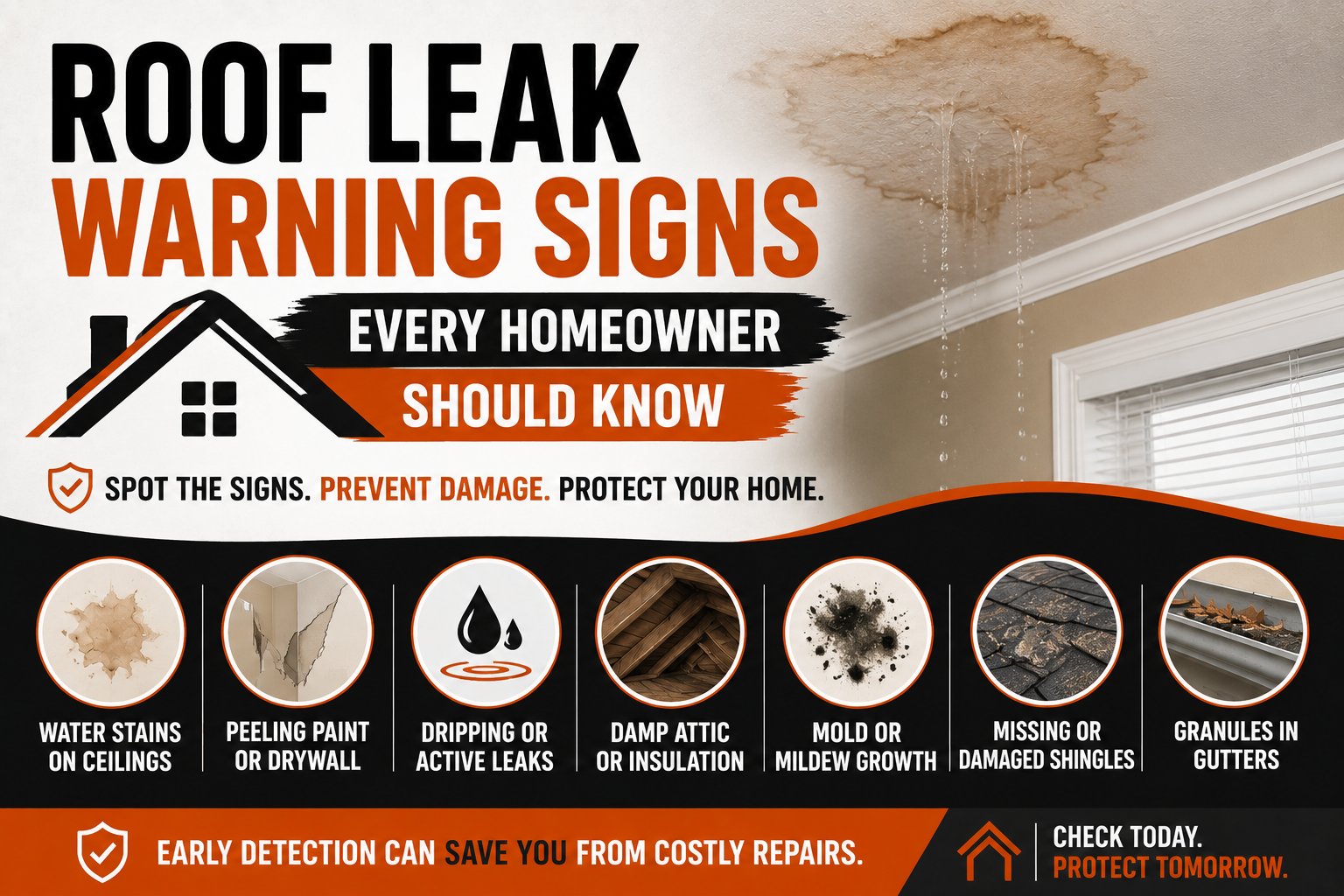
Roof Leak Warning Signs Every Homeowner Should Know
Your roof is one of the most important parts of your home. It protects your family, belongings, insulation, walls, and structural foundation from rain, wind, heat, and moisture. But even a small roof leak can slowly create expensive damage if it goes unnoticed. Many homeowners do not realize there is a roofing issue until stains appear on the ceiling or water starts dripping during a storm. By that point, the damage may already extend into the attic, drywall, insulation, and even electrical systems.
Understanding the early warning signs of a roof leak can help you take action before the problem becomes severe. Small leaks are often easier and more affordable to repair than widespread water damage or a complete roof replacement. Whether your home has asphalt shingles, metal roofing, tile roofing, or another material, the signs of a leak are often similar.
This guide explains the most common roof leak warning signs every homeowner should know, what causes roof leaks, how to inspect your home for hidden moisture problems, and when to contact a professional roofing contractor.
Why Roof Leaks Should Never Be Ignored
A roof leak may seem minor at first. A tiny stain on the ceiling or a damp spot in the attic might not appear urgent. However, water intrusion can spread quickly through hidden areas of your home. Moisture trapped inside walls and ceilings can weaken wooden framing, damage insulation, create mold growth, and compromise indoor air quality.
Water damage also becomes more expensive the longer it is ignored. What starts as a small flashing issue or cracked shingle could eventually lead to rotted decking, structural repairs, or interior renovations. In many cases, homeowners discover that the visible leak is only a small part of a much larger issue hidden beneath the roofing system.
Catching leaks early helps preserve your home’s value and prevents avoidable repair costs.
Water Stains on Ceilings and Walls
One of the most recognizable signs of a roof leak is water staining on ceilings or walls. These stains usually appear as yellow, brown, or copper-colored patches that gradually expand over time.
Ceiling stains often develop after heavy rainstorms, but they can also appear weeks after water first enters the roof system. Water travels along rafters, insulation, and drywall before becoming visible, which means the actual leak source may not be directly above the stain.
You may notice:
- Circular or irregular discoloration
- Peeling paint around stained areas
- Bubbling drywall texture
- Soft spots in ceilings
- Damp walls near the upper floor
Even small stains deserve attention because they often indicate ongoing moisture exposure.
Dripping Water Inside the Home
Active dripping is one of the clearest indicators of a roof leak. If water drips from the ceiling during rainstorms, your roof has already sustained enough damage to allow moisture inside the home.
Some homeowners place buckets under leaks and delay repairs, especially if the dripping stops after the storm passes. Unfortunately, temporary fixes do not solve the underlying roofing issue. Water may continue soaking insulation and wood long after visible dripping ends.
Common areas where homeowners notice dripping include:
- Attics
- Around chimneys
- Near skylights
- Ceiling corners
- Around vents
- Upper floor hallways
Even occasional dripping should be professionally inspected as soon as possible.
Missing, Cracked, or Curling Shingles
Roof shingles act as your home’s first line of defense against water intrusion. When shingles become damaged, rainwater can penetrate beneath the roofing surface.
Common warning signs include:
- Missing shingles after storms
- Curling edges
- Cracked or split shingles
- Bald spots where granules have worn away
- Loose shingles flapping in the wind
Aging asphalt shingles often become brittle due to sun exposure and temperature fluctuations. Strong winds can easily lift weakened shingles and expose the underlayment beneath.
If you notice visible shingle damage from the ground, it is wise to schedule a roof inspection before leaks develop inside the home.
Granules in Gutters
Asphalt shingles contain protective granules that shield the roof from UV rays and weather damage. Over time, shingles naturally lose some granules, especially as they age. However, excessive granule buildup inside gutters may signal advanced roof wear.
Granules often resemble coarse black sand. If your gutters contain large amounts of granules after storms, your roof may be deteriorating faster than expected.
Excessive granule loss reduces the roof’s ability to repel moisture and resist heat damage. This often leads to cracking, leaks, and shortened roof lifespan.
Sagging Roof Areas
A sagging roof is a serious structural warning sign that should never be ignored. Roof sagging may indicate prolonged moisture damage beneath the roofing surface.
Water trapped inside the roof decking can weaken wood and cause sections of the roof to dip or bow. In severe cases, structural framing may become compromised.
Signs of roof sagging include:
- Uneven roof lines
- Dips in the roof surface
- Visible depressions
- Interior ceiling sagging
- Soft or spongy roof decking
If you notice sagging areas, contact a roofing professional immediately. Structural roof problems can worsen quickly and may eventually create safety hazards.
Mold and Mildew Growth
Roof leaks create the perfect environment for mold and mildew growth. Moisture trapped in attics, insulation, or drywall allows mold spores to spread rapidly.
Common signs include:
- Musty odors
- Dark spots on ceilings or walls
- Mold growth in attic corners
- Increased allergy symptoms indoors
- Damp insulation
Mold exposure can affect indoor air quality and may trigger respiratory problems, especially for children, elderly individuals, and people with asthma.
The longer a roof leak remains unresolved, the greater the chance of widespread mold contamination.
Damp or Wet Attic Insulation
Your attic often reveals early signs of roof leaks before visible interior damage appears. Insulation should remain dry and fluffy. Wet or compressed insulation usually indicates moisture intrusion.
Inspect your attic for:
- Damp insulation
- Dark water stains on rafters
- Moist wood surfaces
- Mold growth
- Rusted nails protruding through the roof deck
Water entering through the roof may soak insulation and reduce its effectiveness. This can increase energy costs because wet insulation cannot regulate indoor temperatures efficiently.
Routine attic inspections can help homeowners identify hidden roofing problems early.
Sunlight Coming Through the Roof Boards
If sunlight is visible through your attic ceiling, water can likely enter through those same openings.
Tiny gaps may develop around:
- Roofing nails
- Flashing
- Chimneys
- Vents
- Damaged decking
Inspect your attic during daylight hours and look for small beams of sunlight coming through the roof boards. Even minor openings can allow water intrusion during storms.
These gaps should be repaired promptly to prevent worsening damage.
Peeling Paint and Wallpaper
Moisture from roof leaks often affects interior finishes. Paint and wallpaper may begin peeling, bubbling, or cracking due to excess humidity trapped inside walls and ceilings.
You might notice:
- Bubbling paint
- Soft drywall
- Peeling wallpaper seams
- Water streaks
- Discoloration around corners
These symptoms often appear gradually and are sometimes mistaken for normal aging or humidity issues. However, they may indicate a hidden roof leak above the affected area.
Higher Energy Bills
A leaking roof can contribute to rising heating and cooling costs. When water damages attic insulation, your HVAC system must work harder to maintain indoor comfort.
Roof leaks may also create air gaps that allow conditioned air to escape. During summer, hot air enters the attic more easily. During winter, warm indoor air escapes through compromised roofing areas.
If your energy bills suddenly increase without another obvious explanation, a roof inspection may help identify hidden moisture damage.
Damaged Flashing Around Roof Features
Flashing is the thin metal material installed around roof penetrations and transitions to direct water away from vulnerable areas.
Flashing is commonly found around:
- Chimneys
- Skylights
- Roof valleys
- Vents
- Dormers
Damaged or loose flashing is one of the most common causes of roof leaks.
Warning signs include:
- Rusted flashing
- Cracked sealant
- Loose metal sections
- Water stains near roof features
Because flashing protects high-risk leak areas, even small failures can allow water to enter the home quickly.
Overflowing or Clogged Gutters
Your gutter system helps move rainwater away from the roof and foundation. When gutters become clogged with leaves, debris, or granules, water may back up beneath shingles.
Overflowing gutters can lead to:
- Roof edge leaks
- Fascia damage
- Wood rot
- Foundation problems
- Siding stains
Regular gutter cleaning helps prevent water buildup and reduces the risk of roof leaks during heavy rainfall.
Ice Dams in Cold Climates
In colder regions, ice dams can cause serious roofing issues during winter. Ice dams form when snow melts on warmer roof sections and refreezes near the roof edge.
This trapped ice prevents proper drainage, forcing water beneath shingles.
Signs of ice dam problems include:
- Large icicles along gutters
- Water stains after snowstorms
- Peeling paint near roof edges
- Interior leaks during freezing weather
Proper attic ventilation and insulation help reduce the risk of ice dams.
Chimney Leaks
Chimneys are common leak locations because they interrupt the roof surface and require specialized flashing.
Roof leaks around chimneys may result from:
- Cracked chimney flashing
- Deteriorated mortar
- Missing chimney caps
- Brick damage
Signs include water stains near fireplaces, damp attic areas around the chimney, or visible deterioration on exterior brickwork.
Routine chimney inspections can help prevent water intrusion.
Skylight Leaks
Skylights add natural light to homes, but they can also become leak sources if improperly installed or aging.
Common skylight leak warning signs include:
- Condensation around skylights
- Water stains nearby
- Dripping during rainstorms
- Cracked skylight seals
Leaks around skylights may result from damaged flashing, failed seals, or improper installation techniques.
Roof Valleys Collecting Water
Roof valleys are areas where two roof slopes meet. These sections channel large amounts of rainwater and are especially vulnerable to leaks.
Signs of valley problems include:
- Missing shingles in valleys
- Debris accumulation
- Rusted metal valley flashing
- Water stains beneath valleys
Because valleys experience heavy water flow, damaged materials can quickly lead to leaks inside the home.
Roof Leaks After Storms
Storm damage is one of the leading causes of sudden roof leaks. High winds, hail, falling branches, and heavy rain can damage roofing materials unexpectedly.
After severe weather, inspect your property for:
- Missing shingles
- Fallen tree limbs
- Dented flashing
- Granules around downspouts
- Visible roof debris
Even if interior leaks are not immediately visible, storm damage may weaken the roof and create future leak risks.
Professional storm inspections help identify hidden damage before it worsens.
Musty Smells Indoors
Persistent musty odors may signal hidden moisture inside walls, ceilings, or attic spaces.
Roof leaks often create damp environments where mold and mildew thrive. The smell may become stronger after rainfall or during humid weather.
If your home develops unexplained musty odors, especially on upper floors, it is important to investigate potential roof leaks promptly.
Rotting Fascia and Soffits
Fascia boards and soffits are located along the roof edge and play an important role in ventilation and moisture protection.
Roof leaks or overflowing gutters can cause these components to rot over time.
Signs include:
- Peeling paint
- Soft wood
- Visible decay
- Pest activity
- Water stains along roof edges
Damaged fascia and soffits can allow additional moisture and pests into the attic area.
Pest Infestations in the Attic
Roof leaks sometimes attract pests seeking water and shelter. Moist attic spaces create favorable conditions for rodents, insects, and other unwanted animals.
Signs may include:
- Scratching sounds
- Droppings
- Nesting materials
- Chewed insulation
- Increased insect activity
Roof openings caused by leaks or storm damage can also provide direct entry points for pests.
Condensation Problems in the Attic
Not all attic moisture comes directly from roof leaks. Poor ventilation can create condensation that mimics leak symptoms.
Warm indoor air rises into the attic and condenses on cooler surfaces. Over time, this moisture may damage wood and insulation similarly to a leak.
Signs of attic condensation include:
- Frost on roof nails during winter
- Damp rafters
- Mold growth
- Persistent humidity
Proper attic ventilation helps prevent condensation buildup and protects the roofing system.
How Roof Age Affects Leak Risk
Older roofs naturally become more vulnerable to leaks over time. Roofing materials deteriorate due to sun exposure, temperature changes, moisture, and weather events.
Typical asphalt shingle roofs last around 20 to 30 years depending on material quality and maintenance.
Warning signs of an aging roof include:
- Frequent repairs
- Widespread granule loss
- Curling shingles
- Repeated leaks
- Fading roof color
If your roof is approaching the end of its lifespan, preventative replacement may help avoid major water damage.
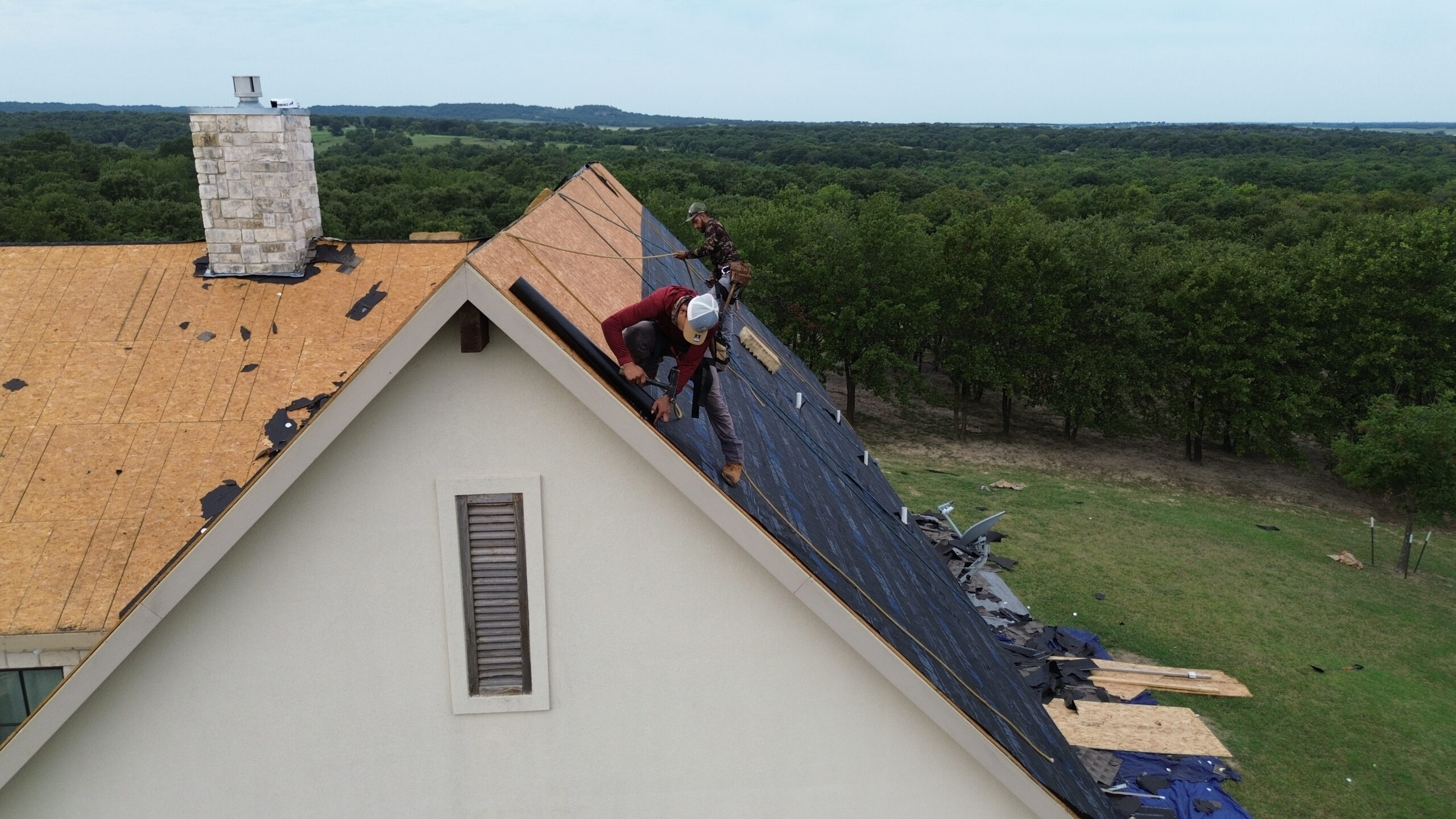
Common Causes of Roof Leaks
Understanding what causes roof leaks can help homeowners prevent future problems.
Common causes include:
Poor Installation
Improper roofing installation may leave gaps, exposed nails, or incorrectly installed flashing that eventually allows water intrusion.
Storm Damage
High winds, hail, and falling debris can loosen shingles and damage roofing materials.
Lack of Maintenance
Neglected roofs are more likely to develop leaks due to clogged gutters, debris buildup, and unnoticed damage.
Aging Materials
Roofing materials naturally wear out over time and become less effective at repelling water.
Damaged Flashing
Flashing failures around roof penetrations are a leading source of leaks.
Clogged Gutters
Blocked gutters trap water on the roof and increase moisture exposure.
Cracked Vent Boots
Rubber vent boots surrounding plumbing vents may crack due to UV exposure and age.
How to Inspect Your Roof for Leak Warning Signs
Homeowners can perform basic visual inspections safely from the ground and inside the attic.
Look for:
- Missing shingles
- Sagging areas
- Overflowing gutters
- Water stains
- Mold growth
- Rusted flashing
- Damp insulation
Use binoculars for safer exterior inspections rather than climbing onto the roof.
If you suspect damage, contact a licensed roofing professional for a comprehensive evaluation.
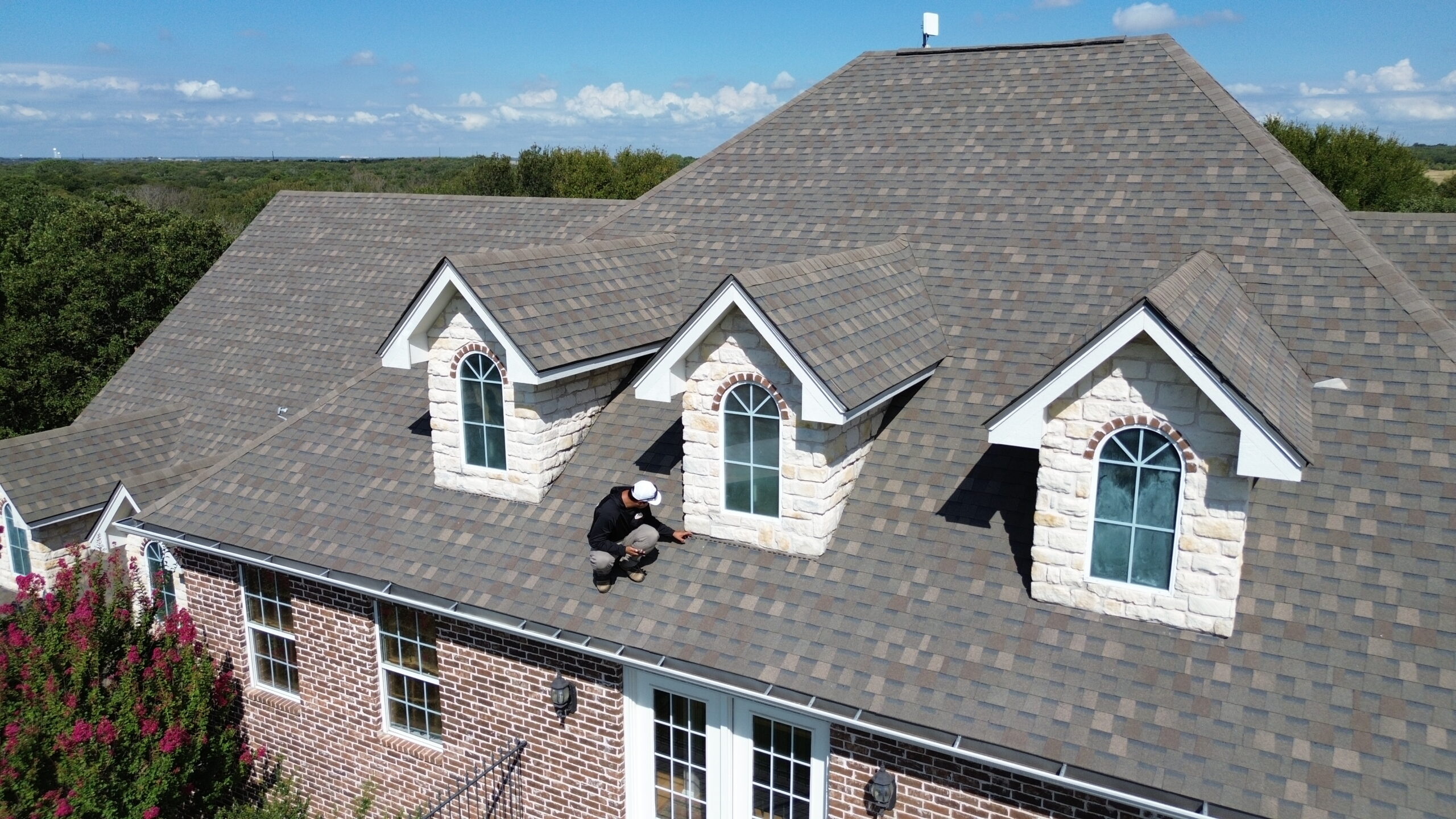
When to Call a Roofing Professional
Some homeowners delay inspections because leaks seem small or intermittent. However, roof leaks rarely improve on their own.
You should contact a roofing contractor if you notice:
- Ceiling stains
- Active dripping
- Missing shingles
- Sagging roof sections
- Mold growth
- Storm damage
- Wet attic insulation
Professional roofers can identify the source of leaks, assess hidden damage, and recommend appropriate repairs before problems worsen.
Preventing Roof Leaks Before They Start
Preventative maintenance is one of the best ways to avoid costly roof repairs.
Helpful maintenance tips include:
Schedule Annual Roof Inspections
Professional inspections help identify small issues before they turn into major leaks.
Clean Gutters Regularly
Remove leaves and debris to ensure proper drainage.
Trim Overhanging Tree Branches
Branches can scrape shingles and fall during storms.
Check the Attic Frequently
Monitor insulation, rafters, and ventilation for moisture issues.
Replace Damaged Shingles Quickly
Small repairs can prevent widespread water intrusion.
Ensure Proper Ventilation
Balanced attic ventilation reduces moisture buildup and extends roof lifespan.
Temporary Roof Leak Fixes
If water enters your home before professional repairs are available, temporary measures may help reduce interior damage.
These may include:
- Placing buckets beneath leaks
- Using tarps over damaged roof sections
- Moving valuables away from affected areas
- Drying wet surfaces quickly
Temporary fixes should never replace permanent roofing repairs. Water intrusion can continue spreading beneath the surface even when visible leaks stop.
Signs You May Need a Roof Replacement Instead of Repairs
Sometimes repeated leaks indicate that repairs are no longer cost effective.
Signs you may need a new roof include:
- Multiple recurring leaks
- Extensive shingle damage
- Widespread sagging
- Severe granule loss
- Roof age exceeding expected lifespan
- Large areas of water damage
A roofing professional can help determine whether repairs or full replacement is the better long-term solution.
The Cost of Ignoring Roof Leak Warning Signs
Delaying roof repairs often leads to significantly higher costs later.
Potential consequences include:
- Structural wood rot
- Mold remediation expenses
- Insulation replacement
- Electrical hazards
- Ceiling collapse
- Foundation moisture problems
- Interior renovation costs
Early leak detection is one of the most effective ways to protect your home and budget.
Questions Homeowners Should Ask Roofing Contractors
When hiring a roofer to inspect leaks, consider asking:
- Are you licensed and insured?
- Do you provide written estimates?
- What caused the leak?
- Is the damage localized or widespread?
- Do you recommend repairs or replacement?
- What warranty options are available?
- Can you inspect the attic and ventilation system?
Choosing an experienced roofing contractor helps ensure proper diagnosis and lasting repairs.
Roof Leak Myths Homeowners Should Avoid
“A Small Leak Is Not Serious”
Even tiny leaks can cause major hidden damage over time.
“Leaks Only Happen During Rain”
Some leaks become visible long after storms due to trapped moisture.
“New Roofs Never Leak”
Improper installation or storm damage can affect roofs of any age.
“Leaks Are Always Directly Above Stains”
Water often travels through hidden pathways before becoming visible indoors.
“DIY Repairs Solve Everything”
Temporary patches may hide symptoms without fixing underlying damage.
Seasonal Roof Leak Risks
Different seasons create different roofing challenges.
Spring
Heavy rain and wind can expose winter damage.
Summer
Heat and UV rays accelerate shingle deterioration.
Fall
Leaves clog gutters and trap moisture.
Winter
Snow, ice dams, and freeze-thaw cycles increase leak risks.
Year-round maintenance helps reduce seasonal roofing problems.
Protecting Your Home With Early Leak Detection
Roof leaks rarely appear suddenly without warning. In most cases, homeowners notice subtle signs before serious damage occurs. Paying attention to ceiling stains, missing shingles, attic moisture, mold growth, and other early symptoms can help you act quickly and avoid expensive repairs.
Routine roof inspections and preventative maintenance play a major role in protecting your home from water damage. Even if your roof appears fine from the ground, hidden issues may already be developing beneath the surface.
The sooner leaks are identified and repaired, the easier it is to preserve your roof’s integrity, maintain indoor comfort, and avoid unnecessary structural damage.
A healthy roofing system protects your home, improves energy efficiency, and provides peace of mind during every season. By understanding the warning signs of roof leaks, homeowners can make informed decisions and keep their property safe for years to come.