
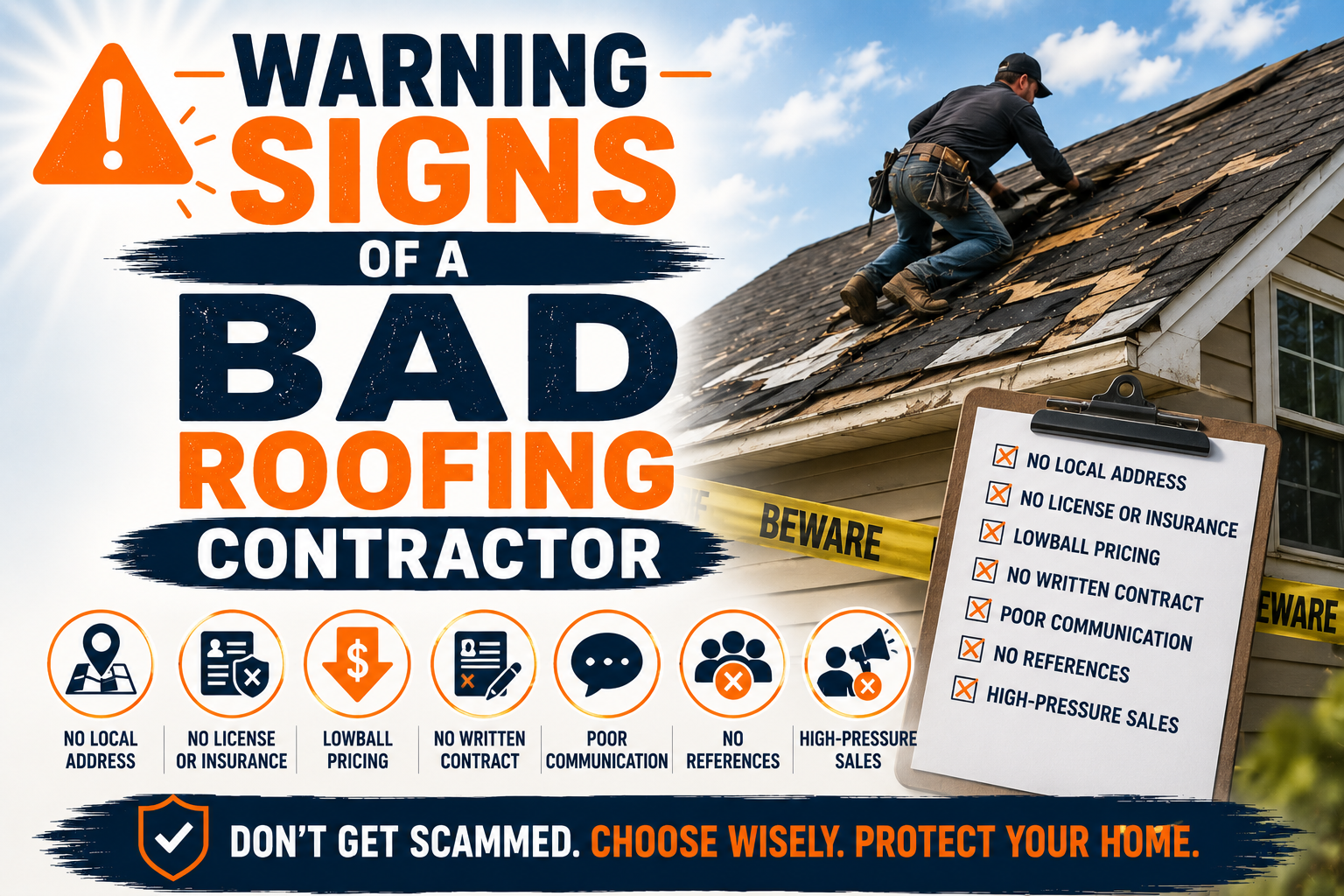
Warning Signs of a Bad Roofing Contractor
Introduction
Your roof is one of the most important parts of your home because it protects your family, belongings, and the structure itself from the elements. Whether you need a simple repair or a complete roof replacement, choosing the right contractor can make the difference between a long lasting investment and an expensive mistake.
Unfortunately, not every roofing contractor operates with honesty, professionalism, or the necessary skills. While many roofing companies provide excellent service, there are also contractors who cut corners, overcharge customers, use poor quality materials, or disappear before the job is completed. Hiring the wrong contractor can lead to leaks, structural damage, safety hazards, and unexpected repair costs that could have been avoided.
Many homeowners focus only on the price of a roofing estimate without paying enough attention to the contractor’s qualifications and business practices. A low quote may seem attractive at first, but it often comes with hidden compromises that become apparent after the work begins or even months later.
Recognizing the warning signs before signing a contract can save you significant stress, money, and frustration. Learning how to identify unreliable roofing contractors allows you to make informed decisions and protect one of the biggest investments you will ever own.
This guide explores the most common warning signs of a bad roofing contractor. Understanding these red flags will help you confidently choose a company that values quality workmanship, clear communication, and customer satisfaction.

Why Choosing the Right Roofing Contractor Matters
Roofing projects are major investments that affect both the value and safety of your property. A properly installed roof can last for decades, while poor workmanship may begin causing problems within just a few months.
Roofing systems are more complex than many homeowners realize. Proper installation requires knowledge of ventilation, waterproofing, flashing, structural support, insulation, and local building codes. Even small installation mistakes can create serious issues over time.
Choosing a qualified contractor ensures that the roof is installed according to manufacturer specifications. This not only improves durability but also protects any warranties associated with the roofing materials.
A reliable contractor also provides accurate estimates, realistic timelines, quality materials, and dependable customer service. These factors create a smoother experience from the initial inspection to the final cleanup.
On the other hand, hiring an inexperienced or dishonest contractor can result in water damage, mold growth, higher energy bills, repeated repairs, and costly legal disputes. Spending extra time researching contractors before making a decision often prevents much larger problems later.
Understanding the Risks of Hiring the Wrong Roofer
Many homeowners underestimate the long term consequences of poor roofing work. While the roof may initially appear acceptable, hidden problems often develop slowly until they become expensive emergencies.
Improper installation can allow moisture to enter beneath roofing materials. Over time, trapped water damages wood decking, insulation, drywall, and interior ceilings. Mold growth may also occur in areas that remain damp for extended periods.
Poor roofing work can also reduce your home’s energy efficiency. Gaps in insulation or ventilation force heating and cooling systems to work harder, increasing monthly utility costs throughout the year.
Incorrect installation may even void the manufacturer’s warranty on roofing materials. If defects appear later, homeowners may discover they are responsible for paying the entire replacement cost because installation guidelines were not followed.
In severe cases, structural weaknesses caused by poor workmanship may compromise the roof’s ability to withstand heavy rain, snow, or strong winds. What started as an attempt to save money can eventually require a complete roof replacement much sooner than expected.
Understanding these risks highlights why selecting the right contractor should never be based solely on the lowest bid.
Lack of Proper Licensing and Insurance
One of the biggest warning signs of a bad roofing contractor is the absence of proper licensing and insurance. Professional contractors understand that these requirements protect both their business and their customers.
Licensing requirements vary depending on the state or local jurisdiction. A valid license generally indicates that the contractor meets minimum industry standards and complies with applicable regulations.
Insurance is equally important because roofing work involves significant risks. Workers regularly climb ladders, walk on steep roofs, handle heavy materials, and use specialized equipment that can lead to accidents if something goes wrong.
Every reputable roofing contractor should carry both liability insurance and workers’ compensation coverage. Liability insurance protects your property if accidental damage occurs during the project, while workers’ compensation covers employee injuries without making the homeowner financially responsible.
If a contractor cannot provide proof of current insurance, you could face unexpected legal and financial consequences. A worker injured on your property may attempt to recover medical expenses directly from the homeowner if proper insurance is not in place.
Always ask for documentation rather than simply accepting verbal assurances. Reliable contractors are usually prepared to provide copies of their licenses and insurance certificates without hesitation.
Taking a few minutes to verify these documents can prevent thousands of dollars in potential liability later.
No Physical Business Address or Local Presence
A trustworthy roofing contractor usually maintains an established business location and serves a defined geographic area. Contractors who operate without a physical address may be much harder to contact if problems develop after the project is completed.
Some unreliable roofers use temporary mailing addresses, rented office spaces, or only provide a mobile phone number. While some small businesses legitimately operate from home offices, they should still have a verifiable business presence and history within the community.
Local contractors depend heavily on their reputation because they continue serving customers in the same area for many years. Their long term success relies on positive reviews, referrals, and repeat business.
Companies with no local presence often have little incentive to stand behind their work. Once they complete the project and receive payment, they may become difficult or impossible to reach.
This problem becomes especially common after severe storms. Some contractors travel from region to region following natural disasters, complete as many jobs as possible, and leave before homeowners discover installation problems.
Working with a contractor that has an established local reputation often provides greater peace of mind because they remain available for warranty service and future maintenance.
Poor Communication from the Beginning
Communication often reflects the overall professionalism of a roofing contractor. The way a company handles your initial inquiries can provide valuable insight into how they will manage the entire project.
Contractors who fail to return phone calls, ignore emails, arrive late without explanation, or provide inconsistent information may continue displaying the same behavior after work begins.
Clear communication is essential because roofing projects involve scheduling, material selection, inspections, weather delays, payment schedules, and unexpected discoveries during construction. Homeowners should never feel uncertain about what is happening.
A professional contractor takes time to answer questions thoroughly without becoming impatient or defensive. They explain the scope of work, discuss available options, and provide realistic expectations regarding project timelines.
Poor communication frequently leads to misunderstandings that create frustration for both parties. Homeowners may assume certain services are included, while contractors may claim they were never part of the agreement.
Choosing a contractor who communicates openly from the beginning greatly reduces the likelihood of costly disputes later.
Extremely Low Estimates That Seem Too Good to Be True
Price is an important factor when comparing roofing contractors, but it should never be the only consideration. An estimate that is dramatically lower than every other bid deserves careful examination.
Professional roofing companies calculate estimates based on labor costs, material quality, equipment, permits, insurance, disposal fees, and overhead expenses. When one contractor submits an unusually low price, something is often missing from the calculation.
Some contractors intentionally provide unrealistically low estimates to secure the project. After work begins, they introduce additional charges that significantly increase the final cost.
Others reduce prices by using lower quality materials, hiring inexperienced workers, skipping necessary installation steps, or failing to obtain required permits.
These shortcuts may not be visible immediately, but they often shorten the lifespan of the roof and increase future maintenance costs.
Instead of automatically choosing the lowest estimate, compare the details of each proposal carefully. Understanding exactly what each contractor includes helps you evaluate overall value rather than focusing only on price.
A fair and transparent estimate usually provides better long term value than an unusually cheap offer that comes with hidden compromises.
Demanding Full Payment Before Work Begins
Payment schedules can reveal a great deal about a contractor’s credibility. While deposits are common in the roofing industry, demanding the full payment before any work starts is a major warning sign.
Most reputable contractors request a reasonable deposit to cover initial material costs and scheduling. The remaining balance is typically divided into agreed payment stages or paid after substantial completion of the project.
Contractors who insist on receiving the entire payment upfront may lack financial stability or may have no intention of completing the work properly.
Once full payment has been received, homeowners lose much of their negotiating power. If delays occur or workmanship is poor, recovering money can become difficult and sometimes impossible.
Reliable contractors understand that payment schedules should protect both parties. They are usually willing to explain how payments will be handled throughout the project and include these terms in the written agreement.
Never feel pressured to transfer large amounts of money before work begins simply because a contractor claims it is standard practice. Legitimate professionals rarely require full payment in advance.
No Written Contract or Unclear Agreements
A written contract protects both the homeowner and the contractor by clearly documenting expectations before work starts. Contractors who avoid written agreements or rely only on verbal promises should be approached with caution.
The contract should describe the scope of work, materials being used, estimated completion timeline, payment schedule, warranty information, cleanup responsibilities, and procedures for handling unexpected changes.
Without a written agreement, disagreements become much more difficult to resolve because each party may remember conversations differently.
Some dishonest contractors intentionally keep contracts vague so they can later deny responsibilities or charge additional fees that were never discussed.
Take time to read every section before signing. Ask questions about anything that seems confusing or incomplete, and request revisions if necessary.
Professional contractors welcome transparency because detailed contracts reduce misunderstandings and help establish trust throughout the project.
A clear agreement benefits everyone involved and provides valuable documentation if disputes arise in the future.
High Pressure Sales Tactics
A trustworthy roofing contractor allows homeowners enough time to evaluate estimates, compare companies, and make informed decisions. Contractors who use aggressive sales tactics often prioritize closing the sale rather than providing quality service.
Some contractors create false urgency by claiming that prices will increase dramatically if you do not sign immediately. Others insist that special discounts are available only for customers who commit on the same day.
These tactics are designed to discourage careful research and thoughtful decision making. Homeowners may feel pressured into signing contracts before fully understanding the project details.
Professional contractors recognize that roofing is a major investment. They respect your need to review proposals, discuss options with family members, and ask additional questions before making a commitment.
A contractor who becomes impatient or argumentative when you request more time may not be the right choice for such an important project.
Taking a few extra days to compare contractors is far better than rushing into an agreement that leads to years of expensive repairs and unnecessary stress.
Poor Online Reputation and Negative Customer Reviews
Customer reviews offer valuable insight into how a roofing contractor treats clients before, during, and after a project. While no company can satisfy every customer, a consistent pattern of complaints should never be ignored.
Pay close attention to reviews that mention poor workmanship, unfinished projects, hidden charges, or communication problems. When the same concerns appear repeatedly across multiple platforms, they often indicate recurring issues rather than isolated incidents.
It is also important to notice how the contractor responds to negative feedback. Professional companies acknowledge concerns respectfully and try to resolve disputes, while unreliable contractors often ignore complaints or respond aggressively.
Do not rely only on testimonials displayed on the contractor’s own website. Looking at multiple review platforms provides a more balanced understanding of the company’s reputation and customer satisfaction history.
A roofing contractor with years of positive reviews and consistent feedback has usually earned that reputation through reliable service. Spending time reading customer experiences can prevent expensive mistakes later.
Lack of References or Previous Project Portfolio
Experienced roofing contractors are usually proud to showcase their previous work. They often maintain a portfolio of completed projects and can provide references from satisfied customers who are willing to discuss their experience.
If a contractor refuses to share references or claims that customer information is unavailable, you should proceed carefully. While privacy concerns are understandable, reputable companies typically have clients who agree to act as references.
Looking at previous projects allows you to evaluate the quality of workmanship and the variety of roofing systems the contractor has installed. It also helps determine whether the company has experience with projects similar to yours.
When speaking with references, consider asking about more than just the final result. Questions about communication, scheduling, cleanliness, professionalism, and warranty support often reveal valuable information.
Helpful questions include:
- Was the project completed on time?
- Did the final cost match the original estimate?
- Were problems handled professionally?
- Would you hire the contractor again?
Positive references from real homeowners provide confidence that the contractor consistently delivers quality work instead of relying only on marketing claims.
Unwillingness to Answer Questions
A roofing project involves significant financial investment, so homeowners should feel comfortable asking as many questions as necessary. Contractors who become irritated or avoid providing clear answers often have something to hide.
Professional roofers understand that informed customers make better decisions. They explain roofing materials, installation methods, warranties, timelines, and pricing without making homeowners feel uncomfortable.
Some dishonest contractors intentionally use complicated technical language to confuse customers. Others provide vague responses because they lack the knowledge needed to explain the work properly.
Good communication builds trust throughout the project. If a contractor refuses to explain basic details before signing the contract, communication is unlikely to improve after construction begins.
Never feel embarrassed about asking questions. A trustworthy contractor values transparency and welcomes opportunities to educate customers about their roofing investment.
Use of Low Quality Roofing Materials
The quality of roofing materials has a direct impact on the lifespan and performance of your roof. Even the best installation cannot compensate for materials that fail prematurely.
Some dishonest contractors lower their project costs by purchasing inexpensive materials that do not meet industry standards. Homeowners often assume they are receiving premium products because they cannot easily distinguish between different material grades.
Lower quality shingles, flashing, underlayment, and sealants may deteriorate much faster than higher quality alternatives. As these materials age, leaks, curling shingles, cracking, and moisture damage become increasingly likely.
Professional contractors clearly identify the brands and products they intend to use. They explain why certain materials are recommended and discuss the advantages of different options without pressuring customers toward unnecessary upgrades.
It is also wise to verify that the materials being delivered match those listed in the contract. Taking a few minutes to confirm product labels can help ensure you receive exactly what you paid for.
Untrained or Inexperienced Workers
Roof installation requires specialized skills that are developed through training and practical experience. Contractors who rely heavily on inexperienced labor may produce work that fails to meet professional standards.
Some companies hire temporary workers during busy seasons without providing adequate supervision or safety training. These workers may not fully understand proper installation techniques or manufacturer requirements.
Mistakes made during installation are not always immediately visible. Problems such as improper flashing placement, poor ventilation, incorrect nail placement, or inadequate sealing may take months before causing noticeable damage.
Experienced roofing crews work efficiently because they understand each stage of the installation process. They coordinate tasks carefully and maintain consistent quality throughout the project.
Do not hesitate to ask about the experience of the crew assigned to your home. Reliable contractors are usually willing to explain their team’s qualifications and ongoing training.
No Warranty on Workmanship
A quality roof should provide dependable performance for many years, which is why workmanship warranties are so important. These warranties demonstrate that the contractor stands behind the quality of the installation.
Material warranties and workmanship warranties are not the same. Manufacturers generally cover defects in roofing products, while contractors are responsible for installation quality.
If a contractor refuses to offer any workmanship warranty, homeowners assume all risk if installation problems appear later. Even high quality materials cannot prevent issues caused by poor workmanship.
Reliable roofing companies explain exactly what their warranty covers, how long it lasts, and what circumstances may affect coverage. They also provide warranty details in writing rather than relying on verbal promises.
Before signing a contract, make sure you understand:
- The duration of the workmanship warranty.
- What repairs are covered.
- The process for requesting warranty service.
- Whether the warranty can be transferred to a future homeowner.
Understanding warranty terms helps avoid misunderstandings if repairs become necessary after the project is completed.
Frequent Changes in Project Costs
An accurate estimate requires careful planning and inspection before work begins. While unexpected structural damage may occasionally require additional repairs, constant increases in project costs should raise concerns.
Some dishonest contractors intentionally submit low estimates to win the job. After construction starts, they repeatedly introduce extra charges that were never discussed during the bidding process.
Legitimate contractors explain any necessary changes before performing additional work. They document revised costs in writing and obtain homeowner approval before proceeding.
Unexpected expenses should always be supported by a reasonable explanation. Contractors should be able to show photographs, inspection findings, or damaged materials that justify the additional work.
Maintaining open communication throughout the project helps prevent billing disputes and allows homeowners to make informed financial decisions.
Delayed Project Timelines Without Explanation
Weather conditions, material shortages, and unexpected structural problems can occasionally delay roofing projects. However, contractors should communicate these issues clearly instead of leaving homeowners uncertain about the project’s status.
Repeated delays without explanation often indicate poor scheduling, inadequate staffing, or financial difficulties within the company. In some cases, contractors accept more projects than they can realistically complete.
Professional roofing companies provide realistic timelines before work begins and update customers whenever schedules change. They remain available to answer questions and explain revised completion dates.
Long periods with no visible progress can expose your home to unnecessary weather risks, especially if roofing materials have already been removed.
Reliable contractors value customer trust and make every effort to complete projects efficiently while maintaining high workmanship standards.
Poor Safety Practices on the Job Site
Roofing is one of the most physically demanding and potentially dangerous construction trades. Contractors who ignore safety procedures put both their workers and your property at unnecessary risk.
Professional crews use appropriate safety equipment such as harnesses, ladders, protective gear, and fall protection systems. They also keep the work area organized to reduce accidents and property damage.
Unsafe job sites often contain scattered tools, exposed nails, unsecured materials, and careless equipment placement. These conditions increase the likelihood of injuries and damage to landscaping, vehicles, or other parts of your property.
Poor safety practices may also indicate a lack of professionalism in other aspects of the business. Companies that ignore basic safety standards are often more likely to overlook proper installation procedures as well.
Observing the work site during the first day of construction can reveal a great deal about the contractor’s commitment to quality and professionalism. A clean, organized, and safety conscious crew usually reflects a company that takes pride in every aspect of its work.
Signs of Poor Workmanship During the Roofing Project
Even after hiring a contractor, homeowners should remain observant throughout the roofing project. Identifying problems early provides an opportunity to address concerns before they become costly repairs.
One of the first warning signs is inconsistent installation. Shingles should appear straight, evenly aligned, and securely fastened. Uneven rows, visible gaps, or mismatched materials may indicate rushed or careless work.
Flashing installation is another area that deserves close attention. Flashing protects vulnerable areas around chimneys, skylights, vents, and roof valleys from water intrusion. Poorly installed flashing often becomes the source of future leaks.
Roofers should also protect your landscaping, windows, siding, and outdoor equipment while working. Careless handling of roofing materials can damage your property and create unnecessary repair expenses.
Professional crews inspect their work throughout the installation process rather than waiting until the end. This attention to detail helps identify small issues before they develop into larger problems.
If you notice anything that seems unusual, discuss it with the project manager immediately. Addressing concerns early is much easier than correcting completed work after the crew has left.
Hidden Fees and Unexpected Charges
One of the most frustrating experiences for homeowners is receiving a final invoice that is much higher than expected. While legitimate changes sometimes occur during construction, unexplained charges should never appear without discussion.
Hidden fees often result from vague contracts that fail to define the full scope of work. Some contractors intentionally leave important services out of the original estimate so they can charge additional fees later.
Common examples include disposal costs, permit fees, replacement of flashing, ventilation upgrades, and cleanup services. These expenses should normally be discussed before the project begins rather than appearing unexpectedly at the end.
A transparent contractor provides detailed estimates that clearly identify labor, materials, equipment, and any potential additional costs. If unforeseen problems are discovered, they explain the situation before performing extra work.
Always review every invoice carefully and compare it with the original contract. Asking for clarification about unfamiliar charges helps ensure you pay only for services that were properly authorized.
No Cleanup After Completing the Job
Roof replacement creates a considerable amount of debris, including old shingles, nails, packaging materials, underlayment, and scrap metal. A professional contractor includes thorough cleanup as part of the overall service.
Leaving construction debris around your property is more than just an inconvenience. Nails left in driveways or lawns can damage vehicle tires, injure family members, or create hazards for pets.
Reliable roofing companies use magnetic tools to collect loose nails and carefully inspect the property before considering the project complete. They also remove leftover materials and dispose of waste according to local regulations.
Homeowners should not have to spend hours cleaning up after a roofing crew. A clean work site reflects professionalism and respect for the customer’s property.
Before making the final payment, take a walk around your home to ensure the cleanup has been completed properly. This simple inspection helps confirm that nothing has been overlooked.
Storm Chasers and Temporary Roofing Companies
Severe storms often create urgent demand for roofing repairs, attracting contractors from outside the affected area. While some traveling contractors are legitimate, others are known as storm chasers because they move from one disaster area to another seeking quick profits.
These companies frequently use aggressive sales tactics and promise immediate service before local contractors become available. They may encourage homeowners to sign contracts quickly without allowing enough time for research.
Once the project is completed, some storm chasers leave the area permanently. If installation problems develop later, homeowners may struggle to obtain warranty service or even contact the contractor again.
A temporary business presence also makes it difficult to verify the company’s history and reputation. Without local references or an established office, customers have limited ways to evaluate the contractor’s reliability.
After severe weather, it is usually worth taking extra time to research companies carefully rather than rushing into an agreement. Choosing an established local contractor often provides better long term support and accountability.
How to Verify a Roofing Contractor Before Hiring
Careful research before signing a contract greatly reduces the chances of hiring the wrong contractor. Verification takes some time, but it can prevent costly problems and provide greater confidence throughout the project.
Start by confirming the contractor’s licensing, insurance, and business registration. Ask for documentation and verify that the information is current rather than accepting verbal assurances.
Review customer feedback from multiple sources and pay attention to recurring themes. Consistent praise for communication, workmanship, and professionalism is usually a positive indicator.
Request references from recent projects and, if possible, view completed roofing work in person. Seeing the contractor’s craftsmanship provides valuable insight into the quality you can expect.
It is also beneficial to compare several written estimates. Looking beyond the total price allows you to evaluate materials, warranties, timelines, and the overall value offered by each contractor.
Spending additional time on research before hiring often saves significant money, stress, and inconvenience in the future.
Questions Every Homeowner Should Ask Before Signing a Contract
Asking the right questions helps homeowners evaluate whether a contractor is prepared to handle the project professionally. Clear answers also establish expectations before construction begins.
Important questions include:
- Are you properly licensed and insured?
- How many years have you been installing this type of roofing system?
- What materials will be used on my roof?
- What warranties are included with the project?
- How long will the work take under normal conditions?
- Who will supervise the roofing crew each day?
- How will unexpected repairs or additional costs be handled?
- What cleanup procedures are included after the project is complete?
Professional contractors answer these questions confidently and provide supporting documentation whenever appropriate. Their willingness to communicate openly often reflects the quality of service you can expect throughout the project.
Do not hesitate to ask additional questions if something remains unclear. A roofing project is a significant investment, and every homeowner deserves complete confidence before making a final decision.
Steps to Take If You Hire the Wrong Roofing Contractor
Despite careful research, some homeowners still encounter dishonest or unqualified contractors. Taking prompt action can reduce financial losses and improve the chances of resolving the situation.
Begin by documenting every concern with photographs, written notes, invoices, emails, and text messages. Detailed records become valuable if disputes escalate or legal action becomes necessary.
Communicate your concerns directly with the contractor and provide a reasonable opportunity to correct the issues. Many misunderstandings can be resolved through professional discussion before involving outside organizations.
If the contractor refuses to cooperate, review the terms of your written contract and warranty. Depending on the situation, you may also need to contact your insurance company, local licensing authority, or consumer protection agency.
In cases involving serious workmanship defects, hiring an independent roofing inspector can provide an unbiased assessment of the installation. Their findings may support negotiations or legal claims if further action becomes necessary.
Acting quickly is important because roofing problems often worsen over time. Addressing issues early can prevent additional damage to your home’s structure and interior.
Final Checklist Before Making Your Decision
Choosing a roofing contractor should never be a rushed decision. A careful evaluation helps ensure that you invest in quality workmanship rather than future repairs.
Before signing any agreement, confirm that you have completed the following:
- Verified licensing and insurance.
- Reviewed customer feedback from multiple sources.
- Compared detailed written estimates.
- Checked references and previous projects.
- Read the entire contract carefully.
- Understood payment terms and warranty coverage.
- Asked questions about materials, timelines, and cleanup procedures.
- Confirmed the contractor has an established local presence.
Completing this checklist reduces uncertainty and helps you identify contractors who demonstrate professionalism, transparency, and accountability. Although it requires additional effort, the time invested before hiring can prevent years of unnecessary expenses and frustration.
Conclusion
Hiring a roofing contractor is one of the most important decisions a homeowner can make because the quality of the installation directly affects the safety, value, and longevity of the property. A well-built roof provides dependable protection for decades, while poor workmanship can result in recurring leaks, structural damage, and costly repairs that far exceed the original project budget.
Many warning signs become visible long before work begins. Missing licenses, inadequate insurance, vague contracts, poor communication, unusually low estimates, aggressive sales tactics, and an unwillingness to answer questions all deserve careful attention. Ignoring these red flags can expose homeowners to unnecessary financial and legal risks.
Throughout the roofing project, continued observation is equally important. Monitoring workmanship, reviewing invoices carefully, and ensuring proper cleanup help confirm that the contractor is meeting professional standards. Homeowners who stay informed are better prepared to identify problems before they become major issues.
The best roofing contractors understand that trust is earned through honesty, quality craftsmanship, clear communication, and reliable customer service. They provide detailed estimates, use quality materials, stand behind their work with meaningful warranties, and remain available long after the project has been completed.
Taking the time to research contractors thoroughly, verify credentials, compare proposals, and ask thoughtful questions is one of the smartest investments you can make. By recognizing the warning signs of a bad roofing contractor and choosing a reputable professional instead, you can protect your home, avoid unnecessary expenses, and enjoy the confidence that comes with a roof built to last.