
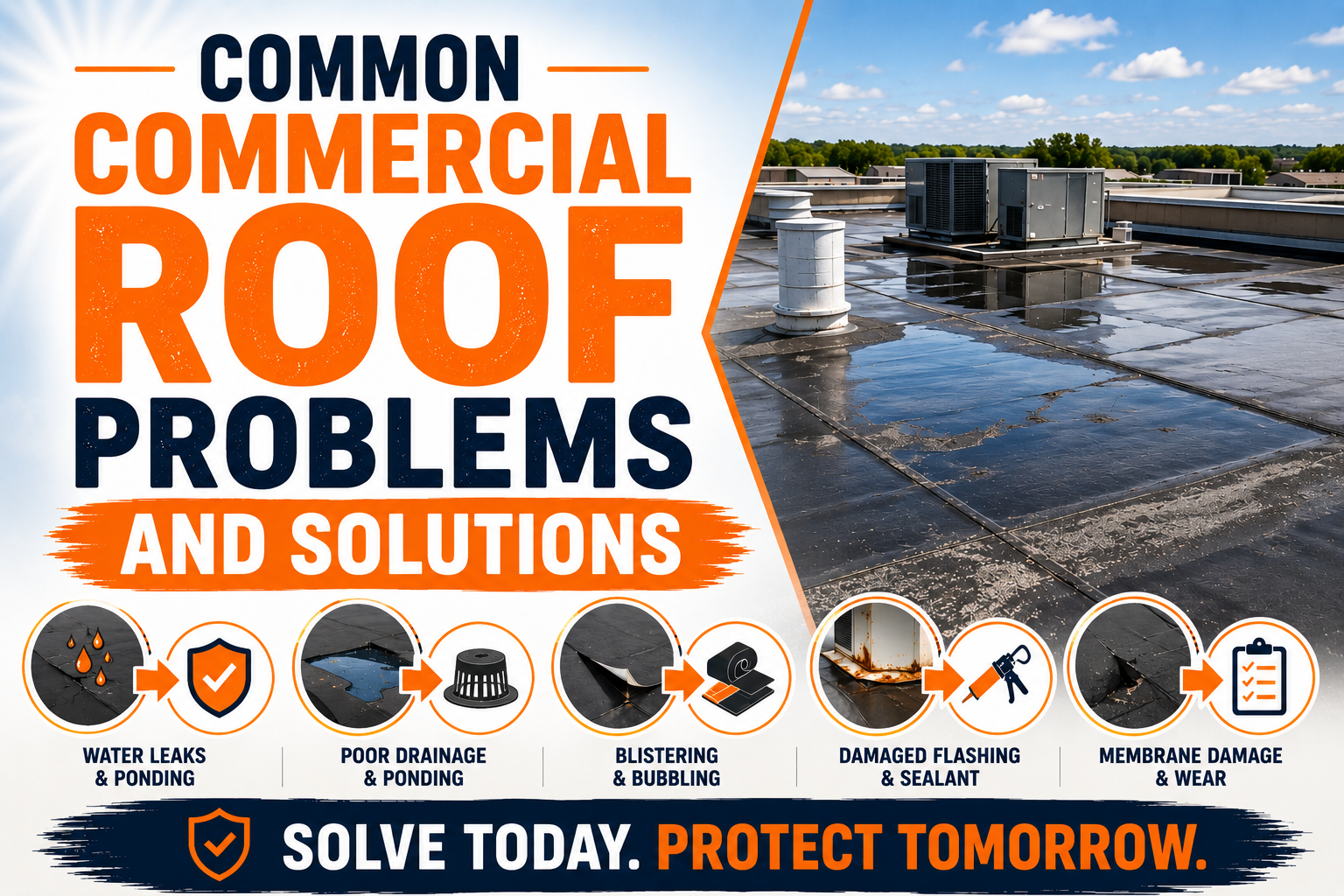
Common Commercial Roof Problems and Solutions
Introduction
A commercial roof is one of the most valuable components of any business property. It protects employees, customers, equipment, inventory, and daily operations from weather and environmental damage. Despite its importance, many building owners only pay attention to the roof when visible problems begin to appear.
Unlike residential roofs, commercial roofing systems often cover large surface areas and are exposed to continuous sunlight, rain, wind, and changing temperatures. Over time, these conditions can cause wear that affects both the roof’s performance and the building beneath it. Even a small issue can develop into a costly repair if it goes unnoticed.
Commercial roof problems are not always obvious during the early stages. Hidden leaks, damaged membranes, blocked drainage systems, and deteriorating flashing can silently weaken the roofing system. By the time water stains or interior damage become visible, the underlying issue may already be significant.
Understanding the most common commercial roof problems allows property owners and facility managers to act before repairs become expensive. Regular inspections, proper maintenance, and timely repairs help extend the lifespan of the roof while reducing unexpected disruptions to business operations.
This guide explores the most common commercial roofing problems, explains why they occur, and provides practical solutions that help protect your investment. Whether you manage an office building, warehouse, retail center, manufacturing facility, or educational institution, knowing what to watch for can save both time and money.
Understanding Commercial Roofing Systems
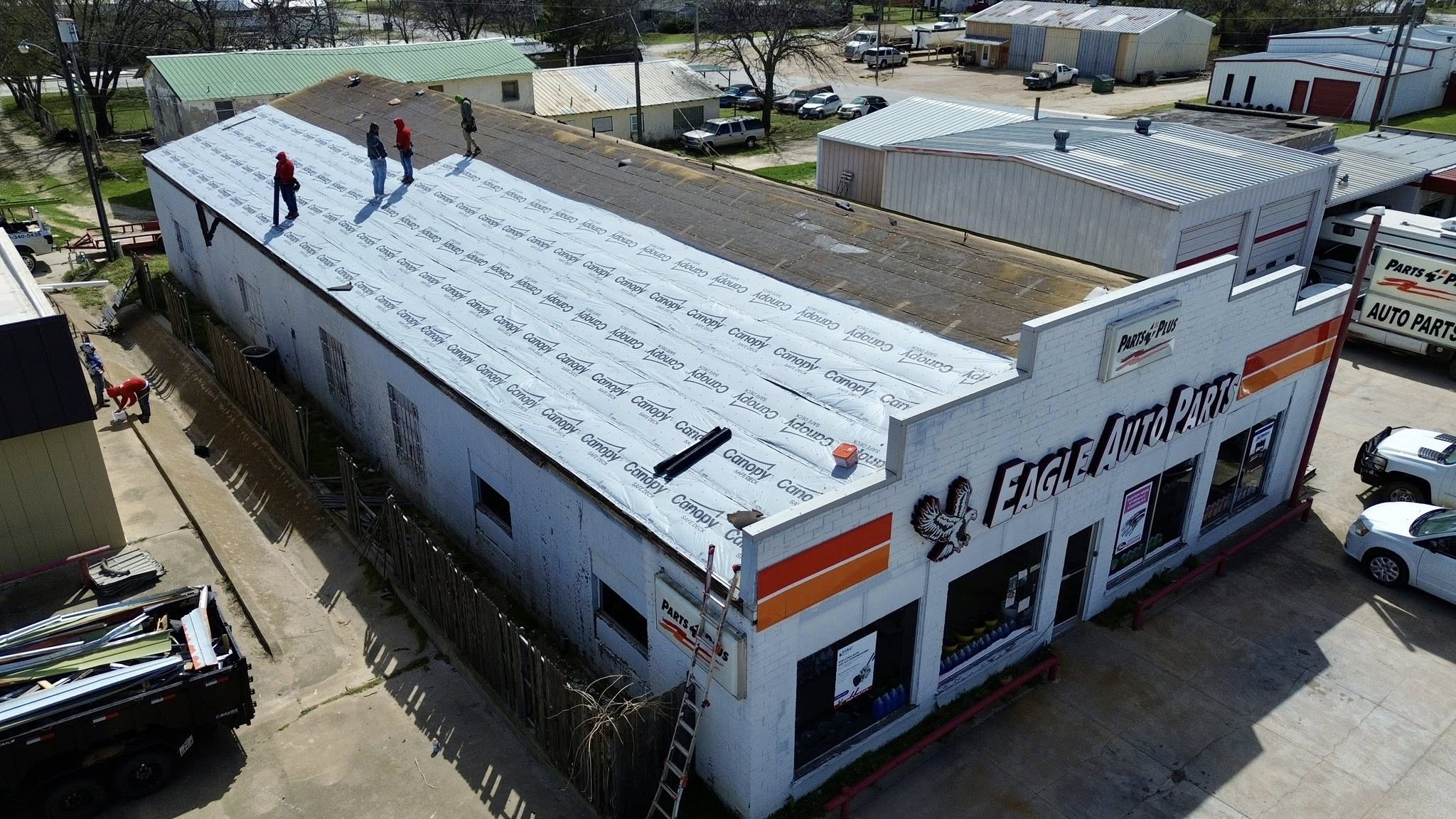
Commercial roofs differ considerably from residential roofing systems in both design and construction. Most commercial buildings feature flat or low slope roofs that require specialized materials and installation techniques. These roofs are designed to support equipment, withstand heavy weather exposure, and efficiently manage water drainage.
Several roofing systems are commonly used in commercial buildings. Each offers unique advantages depending on the building’s purpose, local climate, and maintenance requirements.
Some of the most widely used commercial roofing systems include:
- Built up roofing systems
- Modified bitumen roofing
- EPDM rubber roofing
- TPO roofing membranes
- PVC roofing systems
- Metal roofing systems
- Spray polyurethane foam roofing
Every roofing material has its own strengths and potential weaknesses. While some perform exceptionally well against UV exposure, others provide better resistance to chemicals or punctures. Selecting the right system is only the first step because ongoing maintenance remains essential regardless of the roofing material.
Commercial roofs also support HVAC units, ventilation systems, solar panels, skylights, and communication equipment. Every penetration through the roofing surface creates an area that requires proper sealing and regular inspection. Without adequate maintenance, these areas often become the starting point for leaks.
Why Commercial Roof Problems Develop Over Time
Even the highest quality roofing system will eventually experience wear. Constant exposure to weather causes materials to expand during hot temperatures and contract during colder conditions. This continuous movement gradually weakens roofing components and creates opportunities for damage.
Moisture is one of the biggest threats to commercial roofing systems. Rainwater that cannot drain efficiently may remain on the roof for extended periods. Standing water accelerates material deterioration and increases the likelihood of leaks.
Ultraviolet radiation from the sun also contributes to roof aging. Continuous UV exposure breaks down roofing membranes, reduces flexibility, and causes surface cracking. Buildings located in areas with intense sunlight often experience faster roof deterioration without protective coatings or regular maintenance.
Air pollution, chemical exposure, and debris accumulation further shorten the lifespan of commercial roofs. Leaves, dirt, branches, and airborne contaminants trap moisture against roofing materials, encouraging premature deterioration and biological growth.
Human activity can also damage commercial roofs. Maintenance workers, contractors, and technicians frequently access rooftops to service equipment. Heavy foot traffic, dropped tools, and improperly installed equipment may puncture or weaken the roofing membrane if protective measures are not followed.
Poor installation remains another common reason commercial roofs develop problems earlier than expected. Even premium roofing materials cannot perform properly if seams are poorly sealed or flashing is installed incorrectly. Installation errors often remain hidden until severe weather exposes weaknesses in the roofing system.
Signs Your Commercial Roof Needs Immediate Attention
Many roofing problems begin with subtle warning signs that are easy to overlook. Recognizing these symptoms early allows building owners to schedule repairs before extensive structural damage occurs.
Interior water stains are among the most noticeable indicators of roof leaks. Brown discoloration on ceilings or walls often suggests moisture has entered the building through damaged roofing materials or flashing. Delaying repairs may lead to mold growth and interior damage.
Unusual odors inside the building may also indicate trapped moisture. Damp insulation and hidden water intrusion create ideal conditions for mold and mildew, affecting indoor air quality and occupant comfort.
Exterior inspections often reveal visible warning signs before leaks reach the building interior. Cracked membranes, loose flashing, pooling water, and damaged seams all deserve immediate attention.
Some additional warning signs include:
- Bubbling or blistering roofing materials
- Loose or missing flashing
- Standing water after rainfall
- Visible punctures or tears
- Increased energy bills
- Mold or mildew near ceiling areas
Not every symptom indicates a major roofing failure, but every sign should be investigated promptly. Small repairs are almost always less expensive than large scale roof restoration projects.
Roof Leaks and Water Infiltration
Roof leaks remain the most common commercial roofing problem across nearly every building type. While leaks may appear simple on the surface, locating the exact source often requires professional inspection because water frequently travels beneath roofing materials before becoming visible indoors.
Several factors contribute to commercial roof leaks. Aging membranes lose flexibility, seams separate over time, flashing deteriorates, and roof penetrations become vulnerable to water intrusion. Severe weather may accelerate these issues by lifting roofing materials or creating small openings that expand over time.
Water entering through even a tiny opening can affect insulation, structural decking, electrical systems, and interior finishes. Moisture trapped beneath roofing materials often remains undetected for weeks or months, allowing hidden damage to spread throughout the building.
Ignoring roof leaks may result in significant financial consequences. Damaged insulation loses its thermal efficiency, increasing heating and cooling costs. Prolonged moisture exposure also weakens structural components and encourages mold growth that may require specialized remediation.
Repairing roof leaks begins with identifying the true point of entry rather than simply repairing the area where water appears indoors. Professional roofing contractors often use moisture detection equipment, infrared technology, or controlled water testing to locate hidden leaks accurately.
Preventive inspections remain the best defense against water infiltration. Scheduled maintenance helps identify aging sealants, loose flashing, and membrane damage before rainfall creates larger problems.
Ponding Water on Flat Commercial Roofs
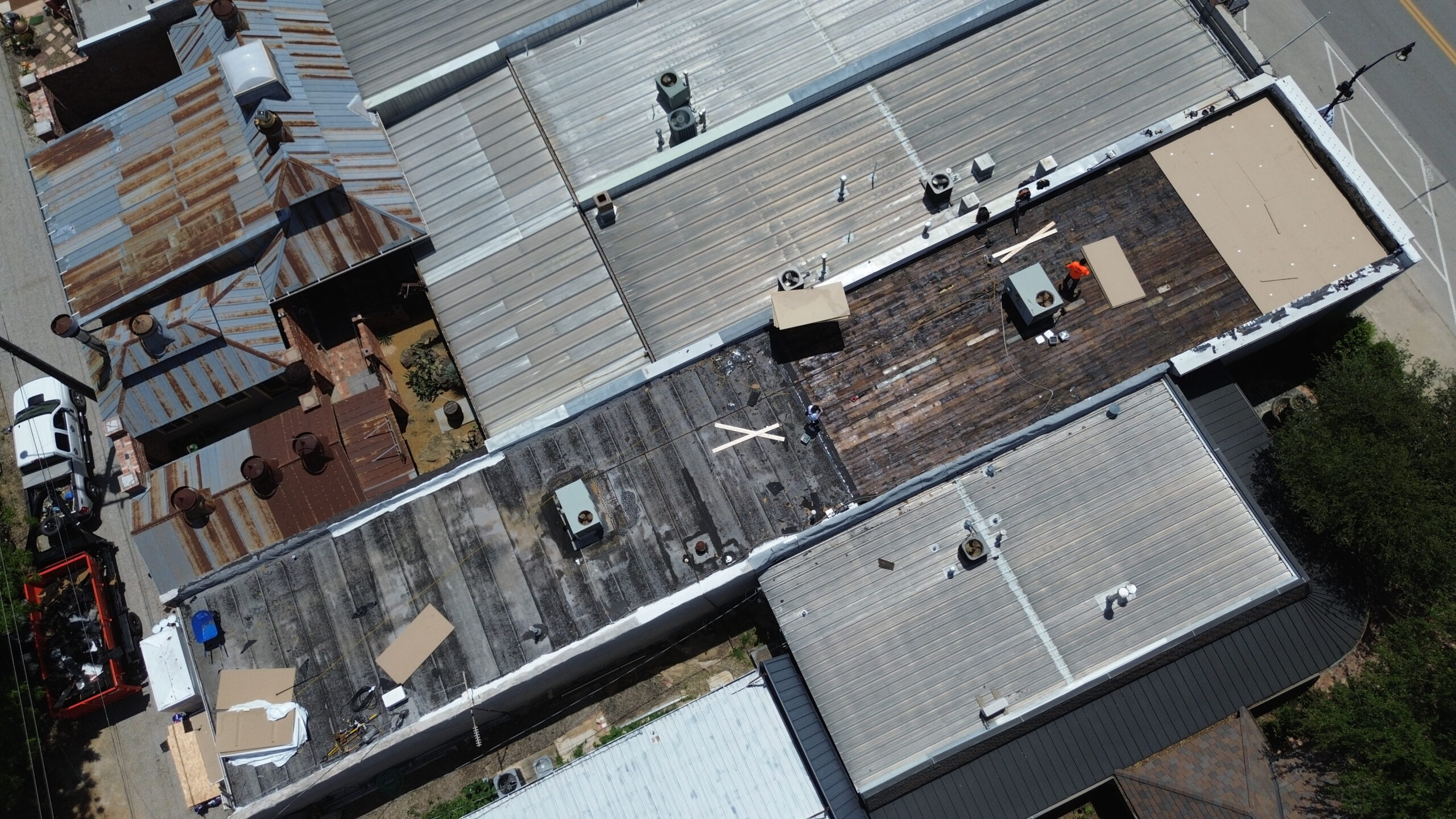
Flat commercial roofs are designed with slight slopes that direct water toward drainage systems. When drainage becomes ineffective, water collects on the roof surface instead of flowing away. This condition, known as ponding water, significantly increases the risk of long term roof damage.
Standing water adds substantial weight to the roofing structure. Although commercial roofs are engineered to support certain loads, continuous water accumulation places unnecessary stress on roofing materials and structural components.
Ponding water also accelerates membrane deterioration. Constant moisture exposure softens roofing materials, weakens adhesives, and encourages biological growth such as algae and mold. Over time, these conditions reduce the roof’s overall lifespan.
Several factors contribute to ponding water problems. Poor roof design, clogged drains, compressed insulation, structural settling, and accumulated debris all interfere with proper drainage. In some cases, multiple issues combine to create persistent water accumulation.
Correcting ponding water requires identifying the underlying cause rather than simply removing the water after each rainfall. Cleaning drains, improving roof slope, replacing damaged insulation, or installing additional drainage systems may all be necessary depending on the building’s condition.
Routine roof cleaning greatly reduces drainage problems. Removing leaves, dirt, and debris helps rainwater flow freely while preventing unnecessary stress on the roofing system.
Membrane Damage and Surface Deterioration
The roofing membrane serves as the primary waterproof barrier for many commercial roofing systems. Once the membrane becomes damaged, water can enter the building much more easily. Because membrane deterioration often develops gradually, regular inspections play an important role in identifying problems early.
Commercial roofing membranes experience continuous exposure to sunlight, rain, temperature fluctuations, pollution, and physical impact. Over time, these environmental conditions reduce flexibility and weaken the material. Small cracks or punctures eventually become larger openings if left unrepaired.
Foot traffic represents another major source of membrane damage. Maintenance personnel frequently walk across commercial roofs while servicing HVAC units or other rooftop equipment. Without designated walk pads, repeated foot traffic can wear away protective surfaces and increase the risk of punctures.
Falling branches, airborne debris, and severe storms may also tear or puncture roofing membranes. Even relatively small openings allow moisture to penetrate beneath the surface, where hidden water damage begins affecting insulation and roof decking.
Surface deterioration sometimes appears as discoloration, cracking, shrinking, or loose seams. These visible changes indicate that the roofing material is aging and may require professional evaluation before more extensive damage develops.
Repair methods depend on the roofing material and the severity of the damage. Small punctures may only require patching or seam repairs, while widespread deterioration may justify partial membrane replacement. Acting quickly after damage is discovered usually keeps repair costs much lower than waiting until leaks become widespread.
Flashing Failures Around Roof Penetrations
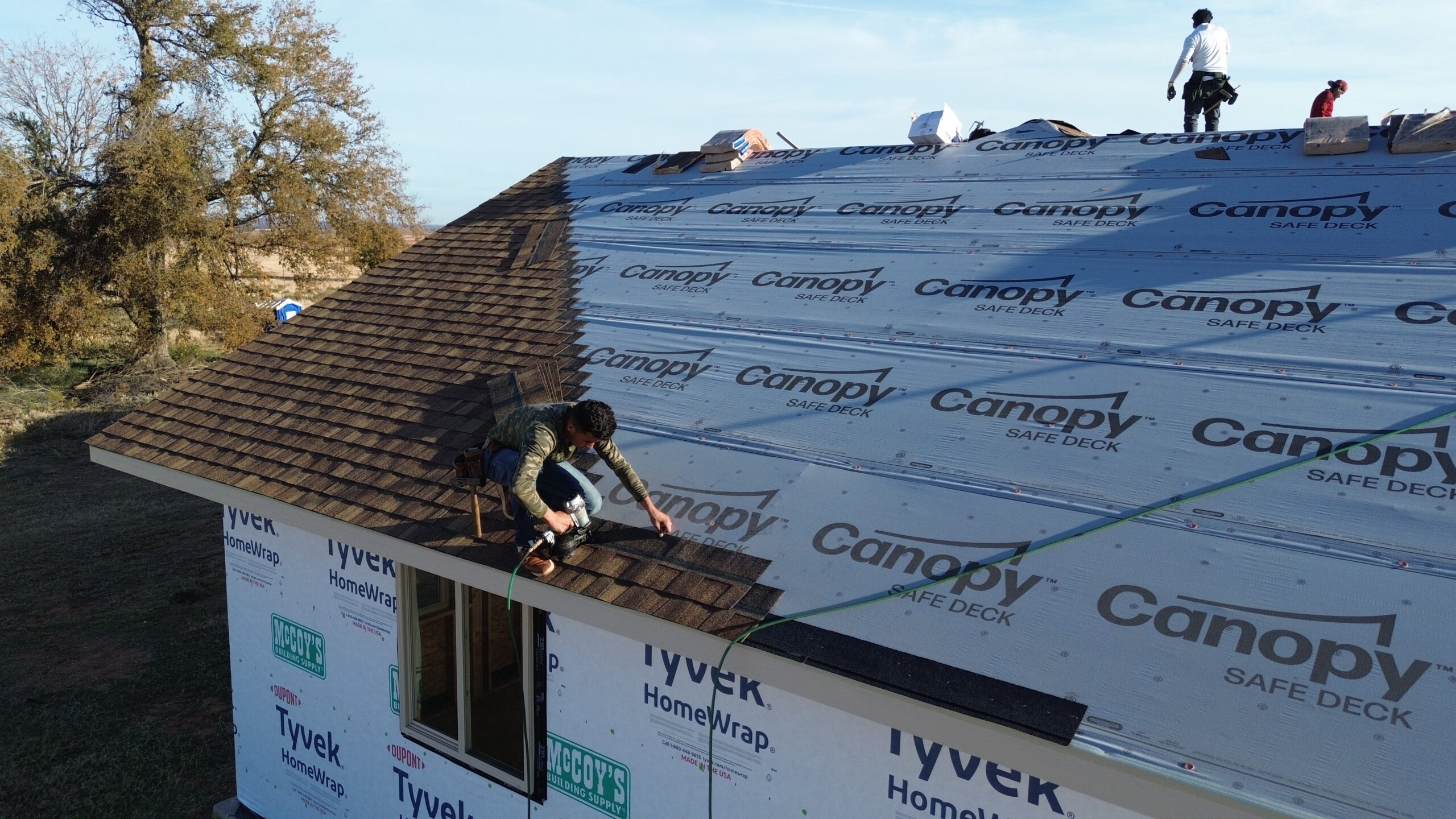
Flashing is one of the most important components of a commercial roofing system because it seals vulnerable areas where the roof meets walls, vents, skylights, HVAC equipment, pipes, and other structures. Although flashing covers relatively small sections of the roof, failure in these areas often leads directly to water intrusion.
Commercial flashing materials are exposed to constant expansion and contraction as temperatures change throughout the year. Over time, sealants may crack, fasteners loosen, and flashing sections begin separating from surrounding roofing materials. Once gaps develop, rainwater can easily enter the building.
Improper installation is another leading cause of flashing problems. Flashing that is not securely attached or correctly sealed may fail long before the rest of the roofing system reaches the end of its expected lifespan. Even high quality roofing materials cannot compensate for poorly installed flashing.
Regular inspections should focus closely on every roof penetration because these locations experience greater movement than large uninterrupted roof sections. Detecting loose flashing, deteriorated sealant, or small gaps early allows repairs to be completed before interior damage occurs.
Professional contractors often replace damaged flashing while simultaneously inspecting nearby roofing materials for hidden moisture damage. Addressing both visible and concealed issues ensures the repair remains effective for years to come.
As commercial roofs continue aging, other forms of damage can also begin affecting their long term performance. Problems such as blistering, storm damage, membrane shrinkage, drainage failures, and insulation deterioration require equally careful attention, which will be explored in the next section.
Roof Blistering and Bubbling
Roof blistering occurs when pockets of air or moisture become trapped beneath the roofing membrane. As temperatures rise, these trapped pockets expand and create raised areas on the roof surface. While small blisters may not immediately cause leaks, they weaken the roofing system and increase the risk of future damage.
Blistering develops for several reasons, including moisture trapped during installation, poor adhesion between roofing layers, and prolonged exposure to high temperatures. In some cases, aging roofing materials naturally become more susceptible to blister formation as they lose flexibility.
Walking on blistered areas can cause the membrane to rupture, allowing water to penetrate beneath the roofing system. Once moisture enters the underlying layers, insulation and structural decking may begin to deteriorate. The longer these conditions remain untreated, the more extensive the repairs become.
Professional roof inspections help determine whether blistering requires immediate repair or continued monitoring. Small, stable blisters may remain intact for years, while larger or damaged blisters often need to be repaired before they develop into leaks.
Preventing blister formation begins with proper installation techniques and high quality roofing materials. Routine inspections also help identify early signs of membrane separation before widespread blistering occurs.
Shrinkage and Membrane Separation
Commercial roofing membranes naturally expand and contract as temperatures fluctuate throughout the year. After many years of exposure, some roofing materials begin to shrink, placing stress on seams, flashing, and roof penetrations. This gradual movement can create gaps that allow water to enter the building.
Shrinkage is particularly common in older roofing systems that have experienced prolonged ultraviolet exposure. As the membrane loses elasticity, it pulls away from edges and corners, increasing stress on surrounding components. Flashing may also detach from walls or rooftop equipment due to this constant tension.
Membrane separation often begins at seams where individual roofing sections are joined together. Adhesives weaken over time, allowing seams to lift during strong winds or heavy rainfall. Once separation occurs, water can easily travel beneath the membrane and spread across a large section of the roof.
Repairing membrane shrinkage may involve resealing seams, replacing damaged sections, or installing new flashing where separation has occurred. If shrinkage affects a large percentage of the roofing system, partial or complete roof replacement may provide a more reliable long term solution.
Routine inspections remain one of the most effective ways to detect shrinkage before it causes widespread water damage. Addressing loose seams early helps preserve the overall integrity of the roofing system.
Storm, Wind, and Hail Damage
Commercial roofs are continuously exposed to severe weather throughout the year. Heavy rain, high winds, hailstorms, and falling debris can all damage roofing materials, sometimes without creating immediately visible signs. Even when the roof appears intact after a storm, hidden damage may already exist beneath the surface.
Strong winds can loosen roofing membranes, lift flashing, and expose seams that normally remain sealed. Once protective layers become displaced, water infiltration becomes much more likely during future rainfall. Wind driven debris may also puncture roofing materials or damage rooftop equipment.
Hail creates a different type of roofing damage. Depending on its size and intensity, hail can crack membranes, dent metal roofing, damage protective coatings, and weaken flashing. Some forms of hail damage remain difficult to identify without a professional inspection, making post storm evaluations especially important.
Repeated storms gradually reduce the lifespan of commercial roofing systems. Minor damage that goes unrepaired after one storm often becomes much worse during the next severe weather event. This cycle eventually leads to larger repairs that could have been prevented with earlier intervention.
After every major storm, building owners should schedule a thorough roof inspection. Early identification of damaged areas allows repairs to be completed before moisture enters the roofing system.
UV Exposure and Thermal Expansion
Sunlight affects commercial roofing systems every day, even when weather conditions appear mild. Ultraviolet radiation gradually breaks down roofing materials, causing them to lose flexibility and protective properties. As the membrane ages, it becomes more vulnerable to cracking, splitting, and surface deterioration.
Temperature changes create additional stress through continuous expansion and contraction. During hot afternoons, roofing materials expand as they absorb heat. At night, they cool and contract, repeating a cycle that occurs thousands of times over the roof’s lifespan.
This constant movement places pressure on seams, adhesives, flashing, and fasteners. Eventually, materials begin separating or cracking, creating opportunities for water infiltration. Roofs located in regions with large daily temperature fluctuations often experience these effects more rapidly.
Reflective roof coatings help reduce heat absorption while protecting membranes from prolonged ultraviolet exposure. These coatings also improve energy efficiency by lowering rooftop temperatures during warmer months.
Regular maintenance allows roofing professionals to identify early signs of UV damage before cracks or separation become severe. Applying protective coatings at appropriate intervals can significantly extend the service life of many commercial roofing systems.
Poor Installation and Workmanship Issues
Even premium roofing materials cannot perform properly if they are installed incorrectly. Poor workmanship remains one of the leading causes of premature commercial roof failure. Installation mistakes may not become obvious until months or even years after construction has been completed.
Improper seam welding, inadequate adhesive application, poorly secured flashing, and incorrect drainage design all contribute to roofing problems. These issues often allow moisture to enter the roofing system long before the expected lifespan of the roof has been reached.
Some contractors may rush installation to meet project deadlines, increasing the likelihood of overlooked details. Others may lack experience with specific roofing systems, resulting in improper installation methods that reduce long term performance.
Warning signs of poor workmanship include loose membranes, uneven surfaces, recurring leaks, poorly aligned flashing, and drainage issues shortly after installation. When these problems appear early in the roof’s life, installation quality should be carefully evaluated.
Hiring experienced commercial roofing professionals greatly reduces the risk of installation related problems. Proper planning, manufacturer approved installation methods, and thorough quality inspections help ensure the roofing system performs as intended for many years.
Lack of Preventive Maintenance
Many commercial roofing problems become expensive simply because routine maintenance was neglected. A roof may appear to be in good condition from the ground while hidden damage slowly develops beneath the surface. Regular maintenance allows small issues to be corrected before they become major repairs.
Preventive maintenance includes cleaning debris, inspecting drainage systems, checking flashing, examining seams, and repairing minor damage. These tasks require relatively little investment compared to the cost of large scale roof restoration or replacement.
Scheduled inspections are especially valuable after severe weather. Wind, heavy rainfall, and falling debris may create damage that remains unnoticed until leaks appear inside the building. Identifying these issues early helps preserve both the roofing system and the building interior.
A well maintained roof also performs more efficiently by protecting insulation and reducing unnecessary energy loss. Better insulation performance contributes to lower heating and cooling expenses throughout the year.
Many roofing manufacturers recommend professional inspections at least twice annually. Following these recommendations often helps maintain warranty coverage while extending the roof’s overall lifespan.
Drainage System Problems
An effective drainage system is essential for every commercial roof. Gutters, drains, scuppers, downspouts, and internal drainage components work together to move rainwater away from the roofing surface. When any part of this system becomes blocked or damaged, water begins accumulating on the roof.
Leaves, dirt, branches, plastic waste, and other debris frequently clog roof drains. During heavy rainfall, blocked drainage systems may become overwhelmed, causing water to remain on the roof much longer than intended. Standing water increases stress on roofing materials and raises the risk of leaks.
Poor drainage also contributes to structural problems over time. Continuous moisture exposure weakens insulation, promotes mold growth, and accelerates deterioration of roofing membranes. During colder climates, trapped water may freeze and expand, creating additional stress on roofing components.
Routine cleaning significantly improves drainage performance. Property managers should ensure drainage systems remain free of debris throughout the year, particularly during seasons when leaves and organic material accumulate rapidly.
Professional inspections may also identify drainage design issues that require modification. Improving roof slope or installing additional drainage points may eliminate recurring ponding water problems that cannot be solved through cleaning alone.
Insulation Damage and Moisture Retention
Roof insulation plays an important role in maintaining indoor comfort and improving energy efficiency. It helps regulate indoor temperatures while reducing heating and cooling costs throughout the year. When insulation becomes wet, however, its effectiveness declines significantly.
Water often enters insulation through roof leaks, damaged seams, or flashing failures. Once moisture becomes trapped beneath the roofing membrane, insulation may remain wet for long periods because evaporation is limited. This hidden moisture gradually reduces thermal performance while increasing the risk of mold growth.
Wet insulation also adds unnecessary weight to the roofing system. Over time, saturated insulation may compress, creating low spots that contribute to ponding water and additional drainage problems. These conditions accelerate deterioration across larger sections of the roof.
In many cases, damaged insulation cannot simply be dried and reused. Replacement is often necessary because prolonged moisture exposure permanently reduces its insulating properties. Roofing professionals use moisture detection equipment to determine how much insulation has been affected before recommending repairs.
Protecting insulation begins with maintaining the waterproof integrity of the roofing membrane. Prompt leak repairs, regular inspections, and proper drainage all help prevent moisture from reaching the insulation layer.
As commercial roofs continue aging, building owners eventually face important decisions about long term maintenance, repair strategies, replacement options, contractor selection, and methods for extending roof life. Understanding these considerations is essential for maximizing the value of any commercial roofing investment, which will be covered in the final part of this guide.
Repair vs Replacement: Choosing the Right Solution
One of the biggest decisions commercial property owners face is whether to repair an existing roof or invest in a complete replacement. The right choice depends on several factors, including the roof’s age, the extent of the damage, maintenance history, and long term business goals. Making the correct decision can prevent unnecessary expenses while ensuring the building remains protected.
Minor problems such as isolated leaks, damaged flashing, or small membrane punctures can often be repaired effectively. When the overall roofing system is still in good condition, targeted repairs restore performance without requiring a major investment. Addressing these issues quickly also prevents them from spreading into larger structural problems.
Repeated leaks across multiple areas usually indicate more extensive deterioration. If repairs become increasingly frequent, the cumulative cost may eventually exceed the value of replacing the roof. Constant patchwork can also create inconsistencies that make future maintenance more complicated.
The age of the roofing system should also be considered. Most commercial roofs have an expected service life depending on the materials used, installation quality, and maintenance practices. When a roof approaches the end of its expected lifespan, replacement often provides greater long term value than continuing repairs.
Energy efficiency is another important factor. Older roofing systems may lack modern insulation or reflective surfaces that help reduce heating and cooling costs. Installing a new roofing system with improved materials can lower operating expenses while providing stronger weather protection.
A professional roof assessment provides valuable information before making a final decision. Experienced roofing contractors evaluate structural integrity, moisture levels, insulation condition, drainage performance, and membrane quality to recommend the most practical solution.
Preventive Maintenance Best Practices
Preventive maintenance is the most effective way to extend the life of a commercial roof. Rather than waiting for problems to become visible, regular maintenance identifies developing issues while they are still relatively inexpensive to repair. This proactive approach reduces emergency repairs and minimizes business interruptions.
A structured maintenance program should include scheduled inspections throughout the year. Spring and autumn are often ideal times because seasonal weather changes can expose roofing weaknesses. Additional inspections following severe storms help identify weather related damage before leaks develop.
Cleaning the roof is an important part of preventive maintenance. Leaves, dirt, branches, and other debris trap moisture while blocking drainage systems. Keeping the roof clean allows water to flow properly and reduces unnecessary stress on roofing materials.
Maintenance should also include careful examination of roof penetrations, flashing, seams, drainage systems, and protective coatings. Small defects identified during routine inspections are much easier and less expensive to repair than widespread water damage.
Building owners should maintain detailed maintenance records for every inspection and repair. Accurate documentation helps track recurring issues, supports warranty claims, and provides useful information when planning future roofing projects.
A comprehensive maintenance plan often includes:
- Scheduled roof inspections twice each year
- Cleaning drains, gutters, and roof surfaces
- Repairing minor damage immediately
- Monitoring rooftop equipment installations
- Keeping maintenance records up to date
Following these simple practices significantly improves roof performance while reducing unexpected repair costs over the long term.
How Regular Roof Inspections Save Money
Many commercial roofing problems begin long before visible leaks appear inside the building. Regular inspections identify hidden issues that can be corrected before they cause expensive structural damage. Investing in inspections is often one of the most cost effective decisions a property owner can make.
Professional roofing inspections involve much more than a visual walk across the roof. Contractors evaluate membrane condition, flashing, seams, drainage systems, insulation performance, and structural components. They also look for early signs of moisture intrusion that may not yet be visible from inside the building.
Early detection prevents small problems from becoming major repairs. A loose seam repaired during an inspection costs far less than replacing water damaged insulation, ceiling materials, electrical systems, and interior finishes after a major leak develops.
Regular inspections also improve budgeting. Instead of facing unexpected emergency expenses, property owners gain a clearer understanding of the roof’s condition and can plan future maintenance or replacement projects well in advance.
Insurance claims may also benefit from documented inspection records. If storm damage occurs, maintenance documentation demonstrates that the roof was properly maintained before the incident. This information may simplify the claims process and reduce disputes regarding pre existing damage.
Selecting the Right Commercial Roofing Contractor
Choosing the right roofing contractor is just as important as selecting quality roofing materials. Even the best products cannot deliver long term performance without proper installation and professional workmanship. Careful contractor selection reduces the likelihood of future roofing problems.
Experience with commercial roofing systems should always be a priority. Commercial roofs differ significantly from residential roofs in terms of design, materials, drainage, and installation methods. Contractors who specialize in commercial projects are generally better equipped to handle these complexities.
Building owners should verify licensing, insurance coverage, certifications, and references before hiring any roofing company. Reviewing previous projects provides insight into the contractor’s experience and overall quality of work.
Clear communication is another important factor. A reliable contractor explains inspection findings, repair options, project timelines, warranty coverage, and estimated costs in language that building owners can easily understand. Transparency helps avoid misunderstandings throughout the project.
Before signing a contract, it is helpful to ask questions such as:
- How much experience do you have with this roofing system?
- What warranty is provided for materials and workmanship?
- Will a detailed inspection report be provided?
- How will weather delays affect the project schedule?
- What maintenance is recommended after completion?
Selecting a reputable contractor provides confidence that repairs or replacements will be completed according to industry standards and manufacturer specifications.
Modern Roofing Materials That Improve Longevity
Advancements in roofing technology have significantly improved the durability and efficiency of commercial roofing systems. Modern materials offer stronger weather resistance, improved energy performance, and longer service lives compared to many older roofing products.
Reflective roofing membranes have become increasingly popular because they reduce heat absorption during warm weather. Lower rooftop temperatures help decrease cooling costs while reducing thermal stress on roofing materials. These systems are particularly valuable in regions with prolonged periods of intense sunlight.
Improved insulation materials also contribute to better building performance. High quality insulation minimizes energy loss while providing greater resistance to moisture. Combined with modern waterproof membranes, these materials create roofing systems that perform more efficiently throughout the year.
Enhanced sealants and adhesives provide stronger protection around seams and flashing. Many newer products maintain flexibility for longer periods, allowing them to withstand repeated expansion and contraction without cracking or separating.
Protective roof coatings offer another valuable option for extending roof life. These coatings improve ultraviolet resistance, reduce surface deterioration, and provide an additional waterproof barrier. In many cases, applying a protective coating delays the need for full roof replacement.
Building owners considering major roofing projects should discuss modern material options with experienced contractors. Selecting appropriate materials based on climate, building use, and maintenance expectations often results in lower lifetime ownership costs.
Cost Considerations for Commercial Roof Repairs
Commercial roof repair costs vary widely depending on the type of roofing system, the extent of the damage, accessibility, labor requirements, and material prices. While every project is different, delaying repairs almost always increases overall expenses.
Small repairs typically involve localized issues such as flashing replacement, seam repairs, or membrane patching. These projects are generally completed quickly and require relatively modest investments. Prompt action prevents moisture from damaging insulation and structural components.
Extensive water damage significantly increases repair costs because multiple roofing layers may require replacement. Wet insulation, deteriorated decking, mold remediation, and interior restoration often become necessary once leaks remain untreated for extended periods.
Emergency repairs frequently cost more than scheduled maintenance. Urgent service outside normal working hours, temporary weather protection, and rapid material sourcing all contribute to higher project expenses. Preventive maintenance reduces the likelihood of these unexpected situations.
Although roof replacement requires a larger initial investment, it may offer lower long term costs when an aging roof experiences repeated failures. Reduced maintenance expenses, improved energy efficiency, and modern warranty protection often offset a portion of the replacement cost over time.
Building owners should evaluate roofing decisions based on total lifecycle value rather than focusing only on immediate repair costs. A well planned investment today often prevents much larger financial losses in the future.
Frequently Asked Questions
How often should a commercial roof be inspected?
Most commercial roofing professionals recommend inspections at least twice each year. Additional inspections should be scheduled after severe storms, major construction work, or any event that may have affected the roofing system.
What is the most common commercial roofing problem?
Roof leaks remain the most frequently reported issue. Leaks often result from damaged membranes, deteriorated flashing, poor drainage, aging materials, or installation defects.
Can small roof leaks be ignored?
Even a minor leak should never be ignored. Small openings allow moisture to enter insulation and structural components, leading to more expensive repairs if left untreated.
How long does a commercial roof typically last?
The lifespan depends on roofing materials, installation quality, local climate, and maintenance practices. Well maintained commercial roofs generally provide decades of reliable service before replacement becomes necessary.
Does preventive maintenance really make a difference?
Yes. Routine inspections and timely repairs help detect small issues before they become major structural problems. Preventive maintenance also extends roof lifespan and reduces overall ownership costs.
What should be done after a major storm?
The roof should be inspected as soon as conditions are safe. Even if no visible leaks are present, hidden damage may exist that could lead to future problems if not repaired promptly.
Conclusion
Commercial roofing systems protect some of the most valuable assets within a business, making their maintenance a critical responsibility rather than an optional expense. Every component of the roof works together to shield the building from weather, moisture, temperature changes, and environmental wear. When even one part begins to fail, the effects can quickly spread throughout the entire structure.
Many roofing problems develop gradually and remain hidden until significant damage has already occurred. Roof leaks, ponding water, membrane deterioration, flashing failures, storm damage, blocked drainage systems, and insulation issues often begin as relatively small defects. Identifying these warning signs early allows repairs to be completed before they evolve into expensive restoration projects.
Preventive maintenance remains the most effective strategy for protecting a commercial roof. Regular inspections, prompt repairs, proper cleaning, and ongoing monitoring help preserve roofing materials while extending the system’s overall lifespan. Property owners who invest in routine maintenance typically experience fewer emergency repairs, lower operating costs, and improved building performance.
Choosing qualified roofing professionals also plays an essential role in long term success. Experienced contractors provide accurate inspections, recommend practical solutions, and complete repairs according to industry standards. Their expertise helps ensure that roofing investments deliver reliable protection for many years.
Whether your commercial roof is relatively new or approaching the end of its service life, taking a proactive approach is always the best decision. Addressing problems early, maintaining the roof consistently, and planning for future improvements will protect your property, reduce long term costs, and support uninterrupted business operations. A well maintained commercial roof is not simply an overhead structure but a long term investment that safeguards the entire building and everything inside it.