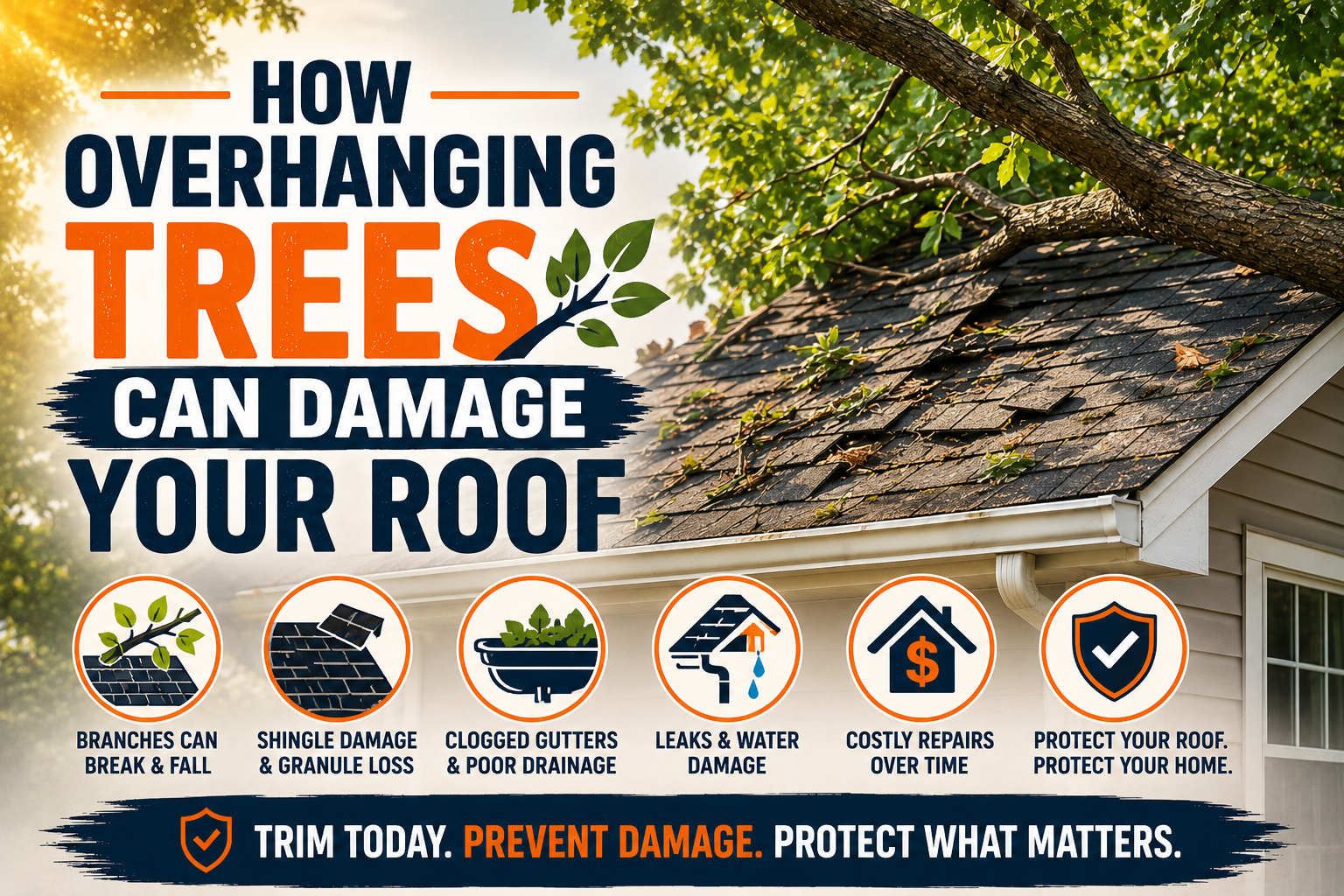
How Overhanging Trees Can Damage Your Roof
Introduction
Overhanging trees may look beautiful and add shade to a home, but they often hide long term risks that many homeowners underestimate. While trees provide natural cooling and improve the aesthetic appeal of a property, their proximity to a roof can slowly create structural, moisture related, and maintenance problems over time. These issues usually develop gradually, which makes them easy to ignore until visible damage appears.
The relationship between trees and roofs is more complex than it seems because even small interactions like falling leaves or light branch movement can contribute to wear and tear. Roofs are designed to withstand weather conditions, but constant exposure to organic debris and moisture retention from nearby trees can reduce their lifespan significantly. Understanding these risks early helps homeowners take preventive action before costly repairs become necessary.
This article explores how overhanging trees affect roof health in detail, focusing on both visible and hidden forms of damage. It also explains why prevention through maintenance and proper landscaping is far more effective than dealing with structural damage later.
Why Overhanging Trees Are a Hidden Roof Threat
Overhanging trees often do not appear dangerous at first glance because their impact is slow and gradual rather than sudden. Unlike storms or physical accidents that cause immediate damage, trees create long term stress on roofing systems through continuous exposure to debris, shade, and moisture. This makes the problem easy to overlook until serious deterioration occurs.
One of the biggest hidden threats is constant organic shedding, which includes leaves, twigs, flowers, and seeds. These materials collect on the roof surface and in gutters, creating a layer that traps moisture and blocks proper drainage. Over time, this trapped moisture begins to weaken roofing materials and encourages biological growth.
Another overlooked factor is how tree branches interact with roofs during wind movement. Even light contact between branches and roofing surfaces can slowly wear down protective coatings. This type of damage is not immediately visible but becomes more serious as the protective layers weaken over time.
How Tree Proximity Affects Roof Health Over Time
The closer a tree is to a roof, the greater the long term impact on its structural health. Proximity increases the amount of debris that falls directly onto the roof and also increases the chances of physical contact between branches and roofing materials. This combination creates both chemical and mechanical stress on the roof surface.
When trees are positioned too close, shade coverage becomes another issue. While shade can reduce heat exposure, excessive shade prevents proper drying after rainfall. This creates a consistently damp environment where moisture remains trapped for longer periods than normal. Roofing materials that stay wet for extended durations tend to degrade faster.
Over time, this combination of debris accumulation and moisture retention leads to weakened roof structure and reduced durability. Even roofs made from durable materials like tile or metal can experience gradual damage when exposed to constant tree proximity without maintenance control.
Falling Leaves and Constant Debris Accumulation on Roofs
One of the most common problems caused by overhanging trees is the continuous fall of leaves and organic debris onto the roof surface. While this may seem harmless, the accumulation of leaves creates a layer that traps water and prevents proper drainage. This is especially problematic during rainy seasons when wet leaves become heavy and sticky.
Blocked drainage caused by leaf buildup can lead to water pooling on the roof, which increases the risk of leaks and structural weakening. In gutters, this buildup can completely block water flow, causing overflow that may damage walls and foundations. Over time, this leads to a cycle of repeated maintenance issues that could have been avoided.
Even dry leaves can create problems because they break down into organic matter that supports algae and moss growth. Once biological growth begins, it becomes harder to clean and may require more aggressive cleaning methods that can further stress roofing materials.
How Branch Rubbing Slowly Damages Roofing Materials
Branch rubbing is one of the most underestimated forms of roof damage caused by overhanging trees. When branches move against roofing surfaces due to wind, they create continuous friction that slowly wears down protective layers. This process is gradual but persistent, making it particularly damaging over long periods.
As protective coatings wear away, roofing materials become more exposed to environmental factors such as sunlight, rain, and pollution. This exposure accelerates aging and reduces the roof’s ability to resist moisture and heat. In some cases, repeated rubbing can also loosen shingles or scratch metal roofing surfaces.
The damage caused by branch contact is often localized at first but spreads over time as more areas of the roof become exposed. This makes early detection important because addressing minor wear is far easier than repairing widespread surface degradation.
Moisture Retention Caused by Tree Shade and Its Impact
Tree shade plays a significant role in how moisture behaves on a roof surface. While shade can reduce direct heat exposure, it also slows down the drying process after rainfall. Roofs that remain shaded for long periods tend to stay damp for longer, which creates ideal conditions for deterioration.
Prolonged moisture exposure weakens roofing materials and reduces their resistance to environmental stress. Even small amounts of retained moisture can seep into tiny cracks or gaps, gradually expanding them over time. This process often leads to hidden damage that becomes visible only when leaks begin to appear indoors.
Moisture retention also contributes to the breakdown of protective coatings on roofing materials. Once these coatings are compromised, the roof becomes more vulnerable to future water damage, making regular maintenance increasingly important.
Growth of Moss, Algae, and Lichen Due to Tree Coverage
Overhanging trees create the perfect environment for moss, algae, and lichen to grow on roofs. The combination of shade, moisture, and organic debris provides the ideal conditions for these organisms to thrive. Once they begin to grow, they spread quickly across damp roof surfaces.
Algae usually appears as dark streaks that spread across shingles, especially in shaded areas. Moss grows thicker and holds moisture like a sponge, which increases the risk of water damage underneath roofing materials. Lichen is more stubborn and attaches firmly to surfaces, making it harder to remove without causing damage.
These biological growths are not just cosmetic issues because they actively contribute to roof deterioration. Moss, in particular, can lift shingles and create gaps that allow water to enter the roof structure. This makes tree related shading one of the indirect but serious causes of roof damage.
How Overhanging Branches Increase Roof Drainage Problems
Proper drainage is essential for maintaining roof health, but overhanging trees can significantly disrupt this system. Falling leaves, twigs, and organic debris often accumulate in gutters and drainage channels, blocking the natural flow of water. When water cannot drain properly, it begins to pool on the roof surface.
Blocked drainage systems also increase pressure on roofing edges and gutter attachments. Over time, this pressure can cause misalignment or even detachment of gutter sections. Once gutters fail, water runoff becomes uncontrolled and can damage exterior walls and foundations.
Even partial blockage can create uneven water distribution, which leads to localized stress points on the roof. These areas are more likely to develop leaks or surface damage over time if not addressed regularly.
Seasonal Risks From Trees During Wind and Monsoon Periods
Seasonal changes significantly increase the risks posed by overhanging trees. During windy conditions, branches move more aggressively and are more likely to come into contact with the roof surface. This increases the chances of physical damage such as broken tiles or scratched surfaces.
Monsoon and heavy rainfall periods introduce additional risks because wet leaves and debris accumulate rapidly. The combination of heavy rainfall and blocked drainage systems can overwhelm the roof’s ability to shed water effectively. This often leads to temporary water pooling and increased leakage risk.
Storm conditions also increase the likelihood of branch breakage, which can cause sudden and severe roof damage. Even small broken branches can cause cracks or punctures if they fall onto vulnerable roof sections.
Early Warning Signs of Tree Related Roof Damage
Recognizing early signs of tree related roof damage can help prevent more serious structural issues. One of the first indicators is frequent accumulation of leaves or debris in specific roof areas, especially near shaded sections. This suggests that tree coverage is already affecting roof cleanliness and drainage.
Another warning sign is the appearance of dark streaks or green patches, which often indicate algae or moss growth. These growths are usually more prominent in areas with limited sunlight exposure due to tree shade.
Homeowners may also notice increased gutter blockages or overflowing water during rain, which is a clear sign that debris from nearby trees is interfering with drainage systems. Identifying these signs early allows for timely maintenance before damage worsens.
Understanding Why Prevention Is Better Than Repair
Preventing roof damage caused by overhanging trees is far more cost effective and less stressful than dealing with repairs after damage occurs. Once roofing materials are compromised, repairs often involve significant labor and material costs. In some cases, damage may even require partial or complete roof replacement.
Preventive measures such as regular tree trimming, roof inspections, and debris removal help maintain roof integrity over the long term. These small maintenance efforts reduce the risk of moisture retention, biological growth, and structural wear.
By managing tree proximity and keeping roof surfaces clear, homeowners can significantly extend the lifespan of their roofing system. Prevention ensures that the roof continues to perform its protective role without unexpected failures or costly interventions.
Structural Roof Damage Caused by Heavy Branch Falls
One of the most serious risks associated with overhanging trees is the sudden impact of heavy branches falling onto the roof. Unlike gradual issues such as moss growth or debris accumulation, branch falls can cause immediate structural damage that affects both the outer roofing layer and the internal support system. This type of damage is especially common during storms, strong winds, or when trees are weakened by disease.
When a heavy branch strikes a roof, it can crack tiles, puncture shingles, or dent metal sheets depending on the roofing material. In more severe cases, the impact can damage the underlying waterproofing layer, allowing water to seep into the structure. Even if the damage appears minor on the surface, hidden fractures can lead to long term leakage problems that worsen over time.
Repeated minor impacts from smaller branches can also weaken the roof gradually. Over time, these small stresses reduce the overall durability of roofing materials, making them more vulnerable to future weather events and increasing the likelihood of expensive repairs.
How Tree Sap and Organic Waste Affect Roof Surfaces
Tree sap and organic residues are another hidden problem caused by overhanging trees. Sap can drip onto the roof during warmer months or when branches are damaged, leaving behind sticky residues that are difficult to remove. This residue attracts dust and debris, creating stubborn stains that affect both appearance and surface quality.
Over time, sap buildup can also damage protective coatings on roofing materials. Once these coatings are compromised, the roof becomes more exposed to moisture and UV radiation, which accelerates wear and aging. In some cases, sap can even contribute to surface corrosion on metal roofs if left untreated for long periods.
Organic waste such as flower petals, fruits, and seed pods can also accumulate on the roof. When these materials decay, they create acidic compounds that slowly degrade roofing surfaces and contribute to discoloration. This makes regular cleaning essential in homes surrounded by dense tree coverage.
Gutter Blockage Problems Caused by Overhanging Trees
Gutters play a critical role in directing rainwater away from the roof and foundation, but overhanging trees can severely disrupt this system. Leaves, twigs, and seed pods frequently fall into gutters, creating blockages that prevent water from flowing freely. When this happens, water begins to overflow and may damage exterior walls or seep into the roof edge.
Blocked gutters also add extra weight to the drainage system, which can cause sagging or detachment if the buildup becomes too heavy. This structural strain often goes unnoticed until visible damage appears, such as leaking water during rainfall or overflowing sections along the roofline.
Regular cleaning becomes more difficult when trees are constantly shedding debris, which means gutters may require more frequent maintenance in tree dense environments. Without proper upkeep, even a well designed drainage system can fail over time due to repeated blockages.
How Tree Roots Indirectly Affect Roof Stability
Although tree roots do not directly touch the roof, they can still indirectly influence roof stability in significant ways. Large trees growing close to a house often have extensive root systems that affect soil moisture levels around the foundation. Changes in soil stability can gradually impact the structural alignment of the entire building, including the roof.
When soil becomes too dry or too saturated due to tree root activity, it can lead to subtle shifts in the foundation. These shifts may cause minor structural misalignments that eventually affect roof alignment and load distribution. Over time, this can lead to uneven stress on roofing materials and supporting structures.
While this process is slow, it highlights how closely interconnected a home’s structure is with surrounding vegetation. Trees that appear harmless above ground may still contribute to long term structural stress below ground level.
Pest Infestation Risks Linked to Tree Contact with Roofs
Overhanging trees can create easy access pathways for pests such as rodents, squirrels, birds, and insects to reach the roof and attic areas. Branches that extend close to or directly touch the roof act as bridges that allow animals to move from trees onto the structure.
Once pests gain access, they can cause a range of problems including insulation damage, nesting in roof cavities, and chewing on electrical wiring. Birds may also contribute to roof damage by nesting in gutters, which further blocks drainage systems and increases moisture buildup.
Insects such as termites or ants may be attracted to damp or decaying organic material on the roof. This combination of moisture and organic waste creates a favorable environment for infestation, which can spread into wooden structural components if not controlled early.
Increased Roof Maintenance Costs Due to Nearby Trees
Homes surrounded by overhanging trees often experience higher roof maintenance costs due to the constant need for cleaning and repairs. Frequent debris removal, gutter cleaning, and moss treatment become regular tasks rather than occasional maintenance activities.
In addition to routine upkeep, the likelihood of damage related repairs also increases. Broken tiles, clogged drainage systems, and biological growth all contribute to ongoing maintenance expenses that accumulate over time. Even minor issues can become recurring problems if the underlying tree related causes are not addressed.
Over the long term, these repeated maintenance needs can significantly increase the total cost of roof ownership. In many cases, proactive tree management proves to be more cost effective than continuous roof repairs.
Safe Tree Trimming Practices to Protect Roofs
Proper tree trimming is one of the most effective ways to reduce roof damage risks caused by overhanging branches. Trimming should focus on maintaining a safe distance between tree canopies and the roof surface while also improving sunlight exposure to reduce moisture retention.
It is important to remove dead or weakened branches first because these are the most likely to fall during storms or windy conditions. Thinning dense areas of the canopy also helps reduce debris accumulation on the roof by limiting the number of leaves and twigs that fall directly onto the surface.
Tree trimming should always be done carefully to avoid damaging the tree itself, as improper cutting can lead to unhealthy regrowth or increased instability. In many cases, controlled pruning performed at regular intervals is more effective than heavy trimming done occasionally.
How to Properly Maintain Distance Between Trees and Roof
Maintaining proper distance between trees and the roof is essential for preventing long term damage. Ideally, branches should not directly touch or hang over the roof surface, as even light contact can lead to wear and debris buildup.
Homeowners should regularly assess tree growth patterns and adjust trimming schedules accordingly. Trees naturally grow outward and upward, which means clearance distances can reduce over time if not maintained. This makes periodic inspection an important part of long term roof protection.
In some cases, it may be necessary to remove certain trees entirely if they are too close to the structure or if their growth pattern poses a continuous risk. While this decision can be difficult, it often prevents far more expensive damage in the future.
Tools and Methods Used for Safe Tree Pruning
Safe tree pruning requires the right tools and techniques to ensure both tree health and roof protection. Common tools include pruning shears, loppers, and extendable saws that allow controlled cutting from a safe distance. Using sharp and well maintained tools is important because clean cuts help trees heal properly.
Pruning should follow a structured approach that prioritizes removing dead or damaged branches first before addressing overhanging sections. This reduces the risk of sudden branch falls and improves overall tree stability. Working in sections rather than removing large portions at once helps maintain balance in the tree structure.
Safety equipment such as gloves, helmets, and stable ladders is also essential during pruning activities. In cases involving large trees or difficult access points, professional arborists are often required to ensure safe and effective trimming.
Common Mistakes Homeowners Make With Tree Maintenance
One common mistake homeowners make is ignoring early signs of overgrowth and allowing branches to grow too close to the roof. This often leads to more severe problems that require aggressive trimming later, which can stress both the tree and the structure.
Another mistake is using incorrect pruning techniques that damage the tree or create uneven growth patterns. Poor cutting practices can lead to weak regrowth, which increases the likelihood of future branch falls.
Some homeowners also underestimate the frequency of maintenance required in tree dense environments. Infrequent trimming allows problems to build up gradually, resulting in higher repair costs and increased roof exposure to damage.
When Professional Arborists Are Required for Tree Control
While minor trimming can often be handled by homeowners, there are situations where professional arborists are necessary. Large trees close to roofs, heavily overgrown branches, or trees showing signs of disease require expert assessment to avoid accidental damage.
Professional arborists are trained to evaluate tree health and determine the safest way to remove or trim branches without compromising structural stability. They also use specialized equipment that allows precise cutting in difficult or high risk areas.
In cases where trees pose an immediate risk to the roof, such as leaning branches or storm damaged limbs, professional intervention is the safest and most reliable option.
Long Term Prevention Strategies for Roof Protection
Preventing roof damage from overhanging trees requires a long term approach rather than occasional maintenance. Homeowners need to think in terms of ongoing protection because trees grow continuously and their impact on roofs increases over time. A combination of regular trimming, roof inspection, and drainage care creates a stable system that reduces risk significantly.
One of the most effective prevention strategies is maintaining a consistent clearance zone between tree branches and the roof surface. This ensures that even during wind movement, branches do not scrape or strike roofing materials. Along with clearance, keeping the roof free from debris helps prevent moisture retention and biological growth.
Preventive care also includes monitoring seasonal changes because trees behave differently throughout the year. Growth is often more aggressive during warmer months, while shedding increases during monsoon or autumn periods, making it important to adjust maintenance routines accordingly.
How Landscaping Design Helps Prevent Roof Damage
Landscaping design plays a major role in controlling how trees affect a roof. Proper planning during tree placement can reduce long term risks and minimize maintenance needs. Trees planted too close to a house often grow into structural hazards over time, even if they appear safe initially.
Strategic placement ensures that trees provide shade without directly overhanging the roof. Choosing slower growing or smaller species near structures can also reduce long term interference. This type of planning helps balance aesthetic appeal with structural safety.
In existing homes where trees are already established, landscaping adjustments such as selective pruning or branch redirection can help manage risk. Creating open space between the roof and tree canopy improves sunlight exposure and reduces moisture buildup on roofing surfaces.
Roof Inspection Schedule for Homes Surrounded by Trees
Regular roof inspections are essential for homes located near trees because damage develops gradually and is often not visible from the ground. A structured inspection schedule helps identify early warning signs before they turn into serious issues.
Most homes benefit from at least two inspections per year, ideally before and after heavy rainfall seasons. These inspections should focus on checking for debris buildup, moss growth, broken tiles, and gutter blockages caused by falling leaves.
In areas with dense tree coverage, more frequent inspections may be necessary. After storms or strong winds, an additional check is recommended to ensure that no branches have caused sudden damage or blocked drainage systems.
Cost Comparison of Tree Maintenance vs Roof Repair
Many homeowners underestimate how cost effective regular tree maintenance can be compared to roof repair expenses. Routine trimming and pruning are relatively low cost activities that help prevent far more expensive structural damage.
Roof repairs caused by tree related issues often involve replacing damaged tiles, fixing leaks, or repairing water damaged interiors. These repairs can quickly become expensive, especially if damage spreads to internal structures. In contrast, regular tree maintenance reduces the likelihood of such issues developing in the first place.
Over time, investing in preventive tree care proves to be significantly more economical. It also reduces emergency repair situations, which are often more costly and disruptive than planned maintenance work.
Professional Tree Management Services Explained
Professional tree management services offer specialized care that goes beyond simple trimming. These services include risk assessment, structural pruning, canopy shaping, and safe removal of hazardous branches. Their goal is to maintain both tree health and property safety.
Professionals use advanced equipment and techniques to ensure that trees are trimmed in a way that minimizes stress on both the tree and surrounding structures. This is particularly important for large trees that are close to roofs or located in difficult to access areas.
In addition to physical trimming, these services often provide long term maintenance plans. These plans help homeowners manage tree growth proactively rather than reacting to damage after it occurs, which improves overall roof protection.
How to Coordinate Roof Cleaning and Tree Maintenance
Roof cleaning and tree maintenance should be coordinated to achieve the best long term results. Cleaning a roof without addressing nearby tree issues often leads to repeated buildup of leaves, moss, and debris. Similarly, trimming trees without cleaning the roof can leave behind accumulated organic material that continues to cause damage.
A coordinated approach begins with tree trimming to reduce debris fall and improve sunlight exposure. Once this is completed, roof cleaning becomes more effective because there is less ongoing contamination. This sequence also reduces the frequency of required maintenance cycles.
Over time, combining both activities creates a balanced system where the roof remains cleaner for longer periods and trees are kept at a safe distance from the structure.
Safety Checklist for Homeowners With Overhanging Trees
Homeowners with trees near their roofs should follow a basic safety checklist to reduce risk and ensure proper maintenance. The first step is regularly checking for branches that extend too close to or directly touch the roof surface. These should be trimmed before they cause damage.
It is also important to inspect gutters for blockages caused by leaves and organic debris. Blocked gutters should be cleaned promptly to prevent water overflow and roof edge damage. After storms or strong winds, additional inspections should be carried out to identify any new risks.
Another important safety consideration is avoiding DIY tree work in high risk situations. Large branches or tall trees close to roofs should be handled by professionals to prevent accidents and unintended structural damage.
Final Recommendations for Protecting Roof Lifespan
Protecting a roof from damage caused by overhanging trees requires consistent attention and a proactive mindset. The most effective approach is combining regular tree maintenance with scheduled roof inspections and timely cleaning. This prevents small issues from developing into major structural problems.
Homeowners should prioritize maintaining proper distance between trees and roofing surfaces while ensuring that drainage systems remain clear at all times. Addressing minor issues early helps avoid expensive repairs and extends the overall lifespan of the roof significantly.
Understanding the relationship between trees and roofs allows homeowners to make informed decisions that protect both natural surroundings and structural integrity. With the right balance, it is possible to enjoy the benefits of trees without compromising roof safety or durability.
Conclusion
Overhanging trees can have a significant impact on roof health when not properly managed, even though the damage often develops slowly and goes unnoticed at first. From falling debris and moisture retention to structural risks caused by branch movement, trees influence nearly every aspect of roof performance.
However, these risks can be effectively controlled through regular maintenance, proper landscaping, and coordinated care between tree management and roof upkeep. Preventive actions are always more cost effective and less disruptive than repairing damage after it occurs.
A well maintained balance between trees and roofing structures ensures long term protection, improved durability, and reduced maintenance costs. By staying proactive, homeowners can enjoy the benefits of greenery while keeping their roofs strong, safe, and long lasting.