
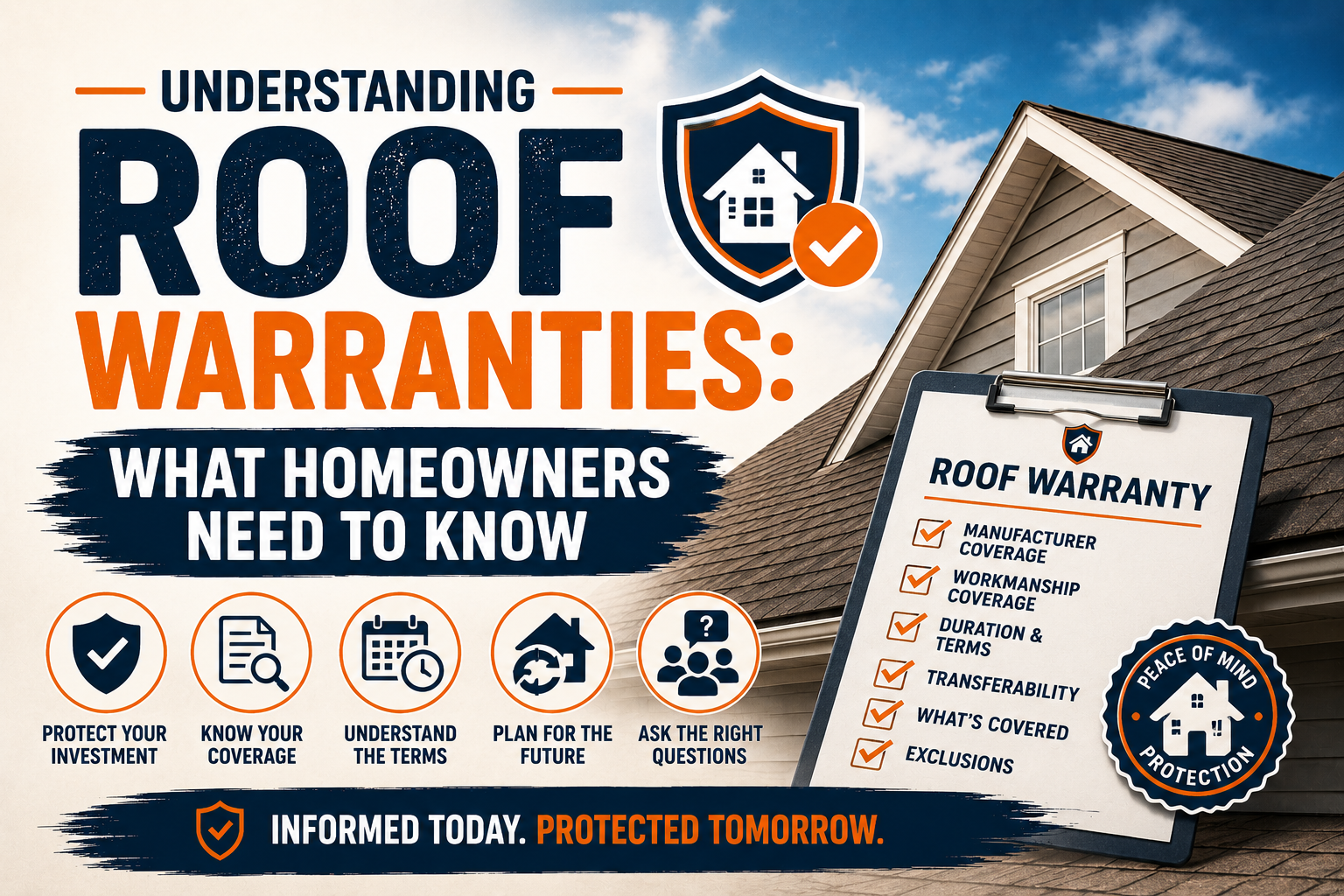
Understanding Roof Warranties: What Homeowners Need to Know
Introduction
A roof is one of the most important protective systems in any home, yet it is also one of the most misunderstood when it comes to long term protection and financial planning. Many homeowners assume that once a new roof is installed, they are automatically covered for any issue that may arise, but roof warranties are far more complex than they first appear. These warranties are legal agreements with specific terms, limitations, and responsibilities that can significantly impact whether a repair or replacement is covered or paid out of pocket.
Understanding roof warranties is not just about reading a document after installation, it is about making informed decisions before choosing materials and contractors. A strong warranty can provide peace of mind for decades, while a weak or misunderstood one can lead to unexpected expenses when problems occur. This makes it essential for homeowners to know how these warranties work and what separates real protection from marketing promises.
Roof issues can develop slowly over time or appear suddenly after severe weather, and in both cases the warranty becomes a key factor in determining responsibility. However, many homeowners only discover gaps in coverage when they try to file a claim, which is often too late to correct misunderstandings. Learning the basics early helps avoid frustration and ensures better long term value from a roofing investment.
What Roof Warranties Actually Mean for Homeowners
A roof warranty is essentially a promise from either the manufacturer or the contractor that certain aspects of the roof will perform as expected for a defined period of time. This promise is not unlimited, and it is usually tied to specific conditions such as proper installation, regular maintenance, and approved usage. When these conditions are not met, coverage can be reduced or denied entirely.
For homeowners, a roof warranty acts as a financial safety net against certain types of failures, but it is not a blanket guarantee against all damage. It is important to understand that warranties are designed to cover defects in materials or workmanship rather than external factors like storms or accidents. This distinction is one of the most common sources of confusion.
Another important aspect is that warranties often vary widely depending on the type of roofing system installed. Asphalt shingles, metal roofing, tile systems, and flat roofs may all come with different warranty structures and coverage expectations. Because of this, homeowners need to evaluate warranties in the context of their specific roof type rather than assuming a universal standard applies.
Why Roof Warranties Matter More Than Most People Realize
Many homeowners only begin to think about warranties when something goes wrong, but by that point their options may already be limited. A strong warranty can significantly reduce repair costs and protect against manufacturing defects that may take years to appear. Without it, even minor issues can become expensive repairs that were otherwise avoidable.
Roofing systems are exposed to constant stress from heat, rain, wind, and temperature fluctuations, which means even high quality materials can fail under certain conditions. A warranty helps bridge the gap between expected performance and real world conditions. It provides a structured way to address problems without immediately shifting the financial burden to the homeowner.
Warranties also play an important role in home value and resale potential. A transferable warranty can make a property more attractive to buyers because it reduces perceived risk. Buyers often see warranty coverage as an added layer of security, especially when the roof is still relatively new.
Main Types of Roof Warranties Explained
Roof warranties are generally divided into a few major categories, each serving a different purpose in protecting the homeowner. Understanding these categories is essential because they often overlap, and homeowners may mistakenly assume they provide the same level of coverage when they do not.
The two most common types are manufacturer warranties and workmanship warranties. Manufacturer warranties focus on the roofing materials themselves, while workmanship warranties focus on the quality of installation. In many cases, both are needed to provide complete protection for a roofing system.
There are also extended warranties and system warranties that combine multiple layers of coverage under specific conditions. These may offer broader protection but often require the use of approved contractors and installation methods. This means that not all roofing projects qualify for enhanced coverage even if the materials themselves are high quality.
Manufacturer Warranties and What They Typically Cover
Manufacturer warranties are issued by the company that produces the roofing materials, such as shingles, tiles, or metal panels. These warranties are designed to protect against defects in the materials themselves, meaning issues that originate during production rather than installation. If the product fails under normal conditions due to a manufacturing flaw, the warranty may cover repair or replacement.
However, manufacturer warranties are often more limited than homeowners expect. They usually do not cover labor costs for removal and reinstallation unless it is a premium or enhanced warranty. This means that even if materials are replaced at no cost, the homeowner may still be responsible for significant labor expenses.
Another key limitation is that these warranties typically require strict compliance with installation guidelines. If the roofing system is not installed according to manufacturer specifications, coverage can be voided. This is why certified contractors and proper documentation play such an important role in maintaining warranty validity.
Manufacturer warranties also often include prorated coverage over time. This means that as the roof ages, the amount reimbursed for a claim may decrease. Early in the roof’s life, coverage may be more generous, but it gradually reduces as the materials age naturally.
Workmanship or Contractor Warranties and Their Role
Workmanship warranties are provided by the roofing contractor rather than the material manufacturer. These warranties cover issues that arise from installation errors, such as improper sealing, incorrect fastening, or poor flashing details. Since installation quality directly affects roof performance, this type of warranty is extremely important.
Unlike manufacturer warranties, workmanship warranties vary significantly depending on the contractor. Some may offer only a few years of coverage, while others may provide extended protection lasting a decade or more. The strength of this warranty often reflects the contractor’s confidence in their own work.
One challenge with workmanship warranties is that they depend on the continued existence and reliability of the contractor. If a company goes out of business, the warranty may become difficult or impossible to enforce. This makes it important for homeowners to choose established and reputable roofing professionals.
Workmanship warranties also typically exclude damage caused by external events such as storms or falling debris. Their primary focus is on installation-related defects rather than environmental or accidental damage, which is usually handled by insurance rather than warranty coverage.
Material Defects and Performance Expectations
Material defects refer to flaws that occur during the manufacturing process and affect the performance or durability of roofing products. These defects may not be immediately visible and can take years to appear, which is why warranties often extend long after installation. Common issues include cracking, premature granule loss, or warping in certain materials.
Performance expectations under a warranty are based on normal environmental conditions rather than extreme or unusual events. This means that while a roof may be designed to last decades, its warranty assumes it is exposed to typical weather patterns and properly maintained. When conditions exceed these expectations, coverage may not apply.
It is also important to understand that not all visible damage is considered a defect. Some changes in appearance or wear are considered normal aging and are not covered under warranty. This distinction often leads to confusion when homeowners try to determine whether an issue qualifies for a claim.
Basic Terms and Conditions Homeowners Should Understand
Roof warranties come with detailed terms and conditions that define how coverage works in real situations. These terms often include requirements for maintenance, inspection, and approved repair methods. Ignoring these conditions can result in reduced coverage or denied claims.
One common condition is proper ventilation and installation compliance. If a roof system is installed incorrectly or modified without approval, warranty protection may be voided. This ensures that manufacturers are only responsible for systems that meet their design standards.
Another important condition is timely reporting of issues. Many warranties require homeowners to report problems within a specific timeframe after discovery. Delayed reporting can be used as a reason to deny coverage, even if the issue itself is valid.
Homeowners should also be aware that unauthorized repairs can affect warranty validity. Using unapproved materials or contractors may interfere with coverage, especially in systems that require certified installation practices.
How Roof Warranty Coverage Usually Starts
Roof warranty coverage typically begins on the date of installation or product purchase, depending on the type of warranty involved. This start date is important because it determines the overall length of coverage and any phased reductions in protection over time. Proper documentation is essential to establish this timeline.
In many cases, homeowners must register their warranty within a certain period after installation. Failure to complete registration can result in reduced coverage or loss of extended benefits. This step is often overlooked, especially when homeowners assume the contractor handles all paperwork.
Some warranties also include a “workmanship inspection period” at the beginning of coverage. During this time, installation issues are more likely to be identified and corrected under warranty terms. After this period ends, claims may become more limited and harder to approve.
Understanding when coverage begins helps homeowners track warranty timelines more effectively. It also ensures that they are aware of key milestones such as expiration dates, prorated phases, and eligibility for transfer if the property is sold later.
Common Inclusions in Roof Warranty Coverage
Roof warranties are designed to protect homeowners from specific, clearly defined problems rather than every possible issue that may affect a roof over time. One of the most common inclusions is coverage for manufacturing defects, which refers to flaws in roofing materials that affect their performance under normal conditions. These defects may include premature cracking, blistering, curling, or abnormal deterioration that is not related to installation or external damage.
In many cases, warranties also include limited coverage for replacement materials if a defect is confirmed. This means the manufacturer may provide new shingles, tiles, or panels to replace the defective section of the roof. However, the scope of this coverage is often restricted to the material itself, and additional costs such as labor or disposal may not always be included.
Some premium warranties extend coverage to system components rather than just individual materials. This can include underlayment, ridge caps, and sometimes even ventilation products when they are part of a certified roofing system. These broader protections are usually tied to specific installation requirements and approved contractor programs.
Another possible inclusion is algae resistance or cosmetic protection in certain roofing products. While not structural issues, discoloration or streaking caused by algae growth may be covered for a limited time depending on the manufacturer’s terms. This type of coverage is more common in higher grade shingles designed for improved appearance retention.
What Roof Warranties Do Not Cover and Why Exclusions Exist
One of the most important aspects of any roof warranty is the list of exclusions, which defines what is not covered under any circumstances. These exclusions exist because manufacturers and contractors cannot reasonably take responsibility for every external factor that may damage a roof. Understanding these gaps is just as important as understanding what is covered.
Most roof warranties do not cover damage caused by severe weather events such as hurricanes, hailstorms, or high winds beyond a specified threshold. These types of risks are typically handled by homeowners insurance rather than warranties. The warranty focuses on product performance under normal environmental conditions rather than extreme or unpredictable forces.
Damage resulting from improper maintenance is also commonly excluded. If a roof is not cleaned, inspected, or maintained according to recommended guidelines, any resulting issues may not qualify for coverage. This encourages homeowners to take an active role in preserving roof condition over time.
Another major exclusion involves structural movement of the building itself. If a home shifts, settles, or develops foundation issues that affect the roof, these problems are generally not considered roofing defects. Instead, they are classified as structural or architectural concerns outside the scope of roofing warranties.
The Role of Proper Installation in Warranty Validity
Proper installation is one of the most critical factors in determining whether a roof warranty remains valid. Even the highest quality materials can fail if they are not installed according to manufacturer specifications. Because of this, most warranties include strict installation requirements that must be followed exactly.
Manufacturers often provide detailed guidelines for nail placement, underlayment use, ventilation spacing, and flashing techniques. If these guidelines are not followed, the warranty may be partially or completely voided. This is why certified or approved contractors are often required for full warranty coverage.
Installation errors can sometimes take years to become visible, which makes warranty validation complex. A leak or material failure may appear to be a product defect, but upon inspection it may be traced back to improper installation. In such cases, responsibility shifts from the manufacturer to the contractor who performed the work.
Documentation plays an important role in proving proper installation. Homeowners are often advised to keep contracts, inspection reports, and warranty registration records in a safe place. These documents may be required when filing a claim or verifying that installation standards were met.
Maintenance Requirements That Affect Warranty Protection
Roof warranties are not designed to function independently of homeowner responsibility. Regular maintenance is often a required condition for keeping coverage valid. This means that homeowners must take reasonable steps to ensure the roof remains in good condition throughout its lifespan.
Basic maintenance may include clearing debris, cleaning gutters, and checking for visible signs of damage after storms. These tasks help prevent small issues from turning into larger structural problems that could fall outside warranty coverage. Neglecting maintenance can be used as a reason to deny claims.
Some warranties may also require periodic professional inspections, especially for high value or extended coverage systems. These inspections help identify early signs of wear or installation issues before they develop into serious failures. Keeping records of these inspections can strengthen a warranty claim if needed.
It is also important to avoid unauthorized modifications during the roof’s lifespan. Adding new structures, installing satellite equipment, or making unapproved repairs can sometimes interfere with warranty terms. Even small changes may affect coverage if they alter the original roofing system.
Registration Requirements and Paperwork Mistakes to Avoid
Many roof warranties require homeowners to complete a formal registration process after installation. This step is often necessary to activate full coverage, especially for extended or enhanced warranty programs. Without registration, coverage may default to a basic or limited version.
One common mistake is assuming the contractor automatically completes warranty registration. While some contractors do handle this step, it is ultimately the homeowner’s responsibility to ensure it is done correctly and within the required timeframe. Missing deadlines can result in reduced benefits or lost coverage.
Errors in paperwork can also cause problems later when filing a claim. Incorrect property details, installation dates, or product information may delay or invalidate the warranty process. Even small mistakes can create complications when verifying eligibility.
Keeping digital and physical copies of all warranty documents is highly recommended. These records should include proof of purchase, installation agreements, and confirmation of registration. Organized documentation makes it easier to resolve disputes if questions arise about coverage.
Transferability of Roof Warranties When Selling a Home
Transferability is an important feature of many roof warranties, especially for homeowners who may sell their property in the future. A transferable warranty allows the remaining coverage to be passed on to the new owner, which can increase the property’s market appeal. Buyers often view this as added protection against future roofing expenses.
However, transferability is not always automatic or unlimited. Many warranties require formal transfer requests within a specific timeframe after the property is sold. Missing this deadline can result in loss of coverage for the new homeowner.
Some warranties also reduce coverage after the first ownership transfer. This means the new owner may receive a limited version of the original warranty, with fewer benefits or shorter remaining coverage. These reductions are usually outlined clearly in the warranty terms.
There may also be administrative fees associated with transferring a warranty. While these fees are typically small compared to the value of coverage, they still require attention during the home sale process. Failure to complete the transfer properly can lead to misunderstandings between buyers and sellers.
How the Claims Process Works in Real Situations
Filing a roof warranty claim typically begins with identifying a suspected defect or issue and contacting the manufacturer or contractor. The initial step often involves submitting documentation, photographs, and a description of the problem. This helps the warranty provider assess whether the issue may qualify for coverage.
After the initial review, an inspection is usually scheduled to determine the cause of the problem. This inspection is critical because it establishes whether the issue is due to a manufacturing defect, installation error, or external damage. The outcome of this inspection often determines whether the claim is approved or denied.
If the claim is approved, the warranty provider may offer material replacement, repair work, or reimbursement depending on the warranty terms. However, the scope of compensation can vary significantly based on the type of warranty and the age of the roof. Some costs may still remain the homeowner’s responsibility.
In cases where claims are denied, the reason is typically documented in writing. Common reasons include improper installation, lack of maintenance, or damage caused by excluded events. Understanding these reasons helps homeowners avoid similar issues in the future and maintain better warranty compliance.
Delays, Denials, and Common Reasons Claims Fail
Not all warranty claims result in approval, and delays or denials are relatively common in roofing cases. One of the most frequent reasons for denial is improper installation, where the root cause of the issue is traced back to contractor error rather than material failure. This shifts responsibility away from the manufacturer.
Another common reason for denial is lack of maintenance. If a roof shows signs of neglect, such as clogged drainage systems or long term debris buildup, the warranty provider may argue that the damage was preventable. This highlights the importance of ongoing care.
Weather related damage is also a frequent cause of confusion. Many homeowners assume all roof damage is covered, but events like hailstorms or wind damage typically fall under insurance rather than warranty coverage. This misunderstanding often leads to unsuccessful claims.
Delays in processing can occur when documentation is incomplete or unclear. Missing registration details, unclear photographs, or lack of proof of maintenance can slow down the review process significantly. In some cases, claims remain pending until additional evidence is provided.
Understanding Proration and Coverage Reduction Over Time
Many roof warranties include a proration system, which reduces coverage value as the roof ages. This means that the older the roof becomes, the less financial compensation the warranty may provide in the event of a claim. This structure reflects the natural wear and tear expected over time.
In early years, warranty coverage is often at its highest level, sometimes offering full replacement value for defective materials. However, as time passes, the coverage may shift to partial reimbursement based on the remaining life of the roof. This gradual reduction is clearly outlined in most warranty agreements.
Proration can significantly affect out of pocket costs for homeowners, especially when dealing with large repairs or replacements. Even if a claim is approved, the remaining coverage may only cover a portion of the total expense. Understanding this helps set realistic expectations about financial protection.
Some premium warranties reduce or eliminate proration altogether, offering non prorated coverage for a longer period. These options are typically more expensive but provide stronger long term protection. Homeowners must weigh upfront costs against potential future savings when selecting warranty types.
Comparing Different Roof Warranty Options Effectively
Choosing between roof warranties is not just about comparing time periods or marketing terms, it requires understanding what level of protection is actually being offered in real situations. Two warranties that appear similar on paper can behave very differently when a claim is filed, especially when labor costs, exclusions, and installation requirements are taken into account. Homeowners should focus on total coverage structure rather than just the headline number of years.
A strong comparison starts with identifying whether the warranty is material-only or part of a full roofing system. System warranties often bundle shingles, underlayment, and accessories under one protection plan, but they usually require certified installation methods. Material-only warranties may look simpler but can leave significant gaps in real-world repair costs.
It is also important to compare whether the warranty is prorated or non-prorated. A non-prorated warranty maintains consistent coverage during its active period, while a prorated one gradually reduces value over time. This difference can significantly affect long-term financial protection, especially for homeowners planning to stay in the same home for many years.
Another key factor is labor coverage, which is often overlooked during initial comparisons. Some warranties only replace defective materials, while others include tear-off and installation labor, which can be a major portion of repair costs. Understanding this distinction helps avoid surprises when a claim is approved but still results in out-of-pocket expenses.
How to Evaluate Warranty Strength Before Hiring a Contractor
Evaluating a roof warranty before selecting a contractor is one of the most effective ways to avoid long-term problems. A contractor may offer multiple warranty options, but not all of them provide equal protection or enforceability. Homeowners should always ask how warranty claims are handled and who is financially responsible in different scenarios.
One important factor is whether the contractor is certified by the manufacturer. Certified contractors often provide access to extended warranty programs that are not available through standard installation. These programs may include longer coverage periods or enhanced protection, but they also require strict adherence to installation guidelines.
Reputation and business stability also play a major role in warranty reliability. A strong workmanship warranty is only valuable if the contractor remains in business and can respond to claims years later. Homeowners should consider how long the company has been operating and whether it has a history of honoring warranty obligations.
It is also helpful to review how clearly warranty terms are explained before signing any agreement. If terms are vague or overly complex, it may indicate future difficulties when filing a claim. A transparent contractor should be able to clearly explain what is covered, what is excluded, and how the process works in real situations.
Questions Homeowners Should Always Ask Before Signing
Before committing to a roofing contract, homeowners should ask targeted questions that reveal the real strength of the warranty. One of the most important questions is whether both materials and labor are covered under the warranty terms. This single detail can significantly impact future repair costs.
Another essential question is how long the workmanship warranty lasts and what specific installation issues are included. Some warranties may only cover major defects, while others include broader installation-related problems. Understanding this scope helps set realistic expectations for future support.
Homeowners should also ask whether the warranty is transferable to a new owner and if any fees or conditions apply. This is especially important for those who may sell their home in the future, as transferability can influence property value and buyer confidence.
It is equally important to ask what actions can void the warranty. These may include unauthorized repairs, lack of maintenance, or modifications to the roofing system. Knowing these risks in advance helps homeowners avoid accidental violations that could invalidate coverage.
Common Mistakes Homeowners Make With Roof Warranties
One of the most common mistakes homeowners make is assuming that all roof warranties provide full protection against any type of damage. In reality, warranties are limited agreements with specific exclusions, and misunderstanding these limits often leads to frustration during claims.
Another frequent mistake is failing to register the warranty after installation. Many homeowners assume registration is automatic, but missing this step can reduce coverage or eliminate extended benefits entirely. This administrative detail is small but extremely important for long-term protection.
Some homeowners also overlook the importance of maintenance requirements. Even a high-quality roof warranty may be voided if routine care is neglected. Ignoring inspections, gutter cleaning, or visible damage can create problems that are classified as preventable rather than covered defects.
Choosing a contractor based only on price is another major mistake. Lower-cost installations may come with weaker workmanship warranties or less reliable long-term support. While budget matters, warranty strength should always be part of the decision-making process.
Tips for Maximizing the Value of Your Warranty Over Time
Maximizing roof warranty value begins with proper documentation from day one. Keeping all installation records, receipts, inspection reports, and warranty certificates in an organized place ensures smoother claim processing in the future. Missing paperwork is one of the most common reasons for delays.
Regular roof inspections are another important step in maintaining warranty validity. Even if not strictly required every year, periodic professional checks can identify small issues before they become major problems. These inspections also serve as proof of responsible maintenance if a claim is needed later.
Homeowners should also respond quickly to visible issues such as leaks, missing shingles, or water stains. Delaying repairs can sometimes worsen damage and create complications when filing a warranty claim. Prompt action helps maintain both roof condition and coverage eligibility.
It is also helpful to use only approved contractors for any repairs or modifications. Unauthorized work can sometimes void warranty coverage, especially in systems that require certified installation standards. Staying within approved guidelines helps preserve long-term protection.
When Roof Warranties Are Not Enough and Insurance Matters More
While roof warranties provide important protection, they do not cover every possible situation, which is why homeowners insurance plays a crucial role in overall roof security. Insurance typically covers sudden and accidental damage caused by storms, fire, or falling objects, which are not included under standard warranty terms.
A warranty is designed to handle product and installation issues, but it does not address unpredictable external events. For example, hail damage or wind damage from severe storms is generally considered an insurance matter rather than a warranty issue. This distinction is essential for understanding financial responsibility.
In many real-world situations, both warranty and insurance may be involved at different stages of roof repair. A defect may be covered by warranty, while storm-related damage in another area is handled through insurance. Coordinating both can be complex but necessary for complete protection.
Homeowners should also understand that insurance claims may require separate inspections and documentation compared to warranty claims. Knowing when to use each system helps avoid delays and ensures that repairs are handled through the correct channel.
Final Thoughts on Making Smarter Roofing Decisions
Roof warranties are more than just paperwork provided after installation, they are long-term agreements that directly affect financial risk and home maintenance planning. Understanding how they work allows homeowners to make better decisions when choosing materials, contractors, and coverage levels.
A well-structured warranty can provide meaningful protection, but only when its terms are fully understood and properly followed. From installation quality to maintenance requirements, every detail plays a role in whether coverage will hold up when it is needed most.
Taking time to compare warranty options, ask the right questions, and maintain proper documentation can significantly reduce future roofing expenses. It also helps ensure that homeowners are not caught off guard by exclusions or limitations they did not expect.
Conclusion
Roof warranties are a vital part of protecting one of the most important investments in any home, but they only work effectively when homeowners understand their structure and limitations. They are not all-encompassing guarantees but carefully defined agreements that depend on proper installation, maintenance, and compliance with specific terms. When used correctly, they provide valuable financial protection and long-term peace of mind.
The key to benefiting from a roof warranty lies in preparation and awareness before and after installation. Choosing the right contractor, understanding coverage differences, and maintaining proper documentation all contribute to stronger protection over time. Without this understanding, even a good warranty can fall short when it is needed most.
By treating roof warranties as active tools rather than passive documents, homeowners can make more informed decisions and reduce unexpected costs throughout the life of their roof. This approach ultimately leads to better performance, stronger protection, and greater confidence in one of the most essential parts of any home.