
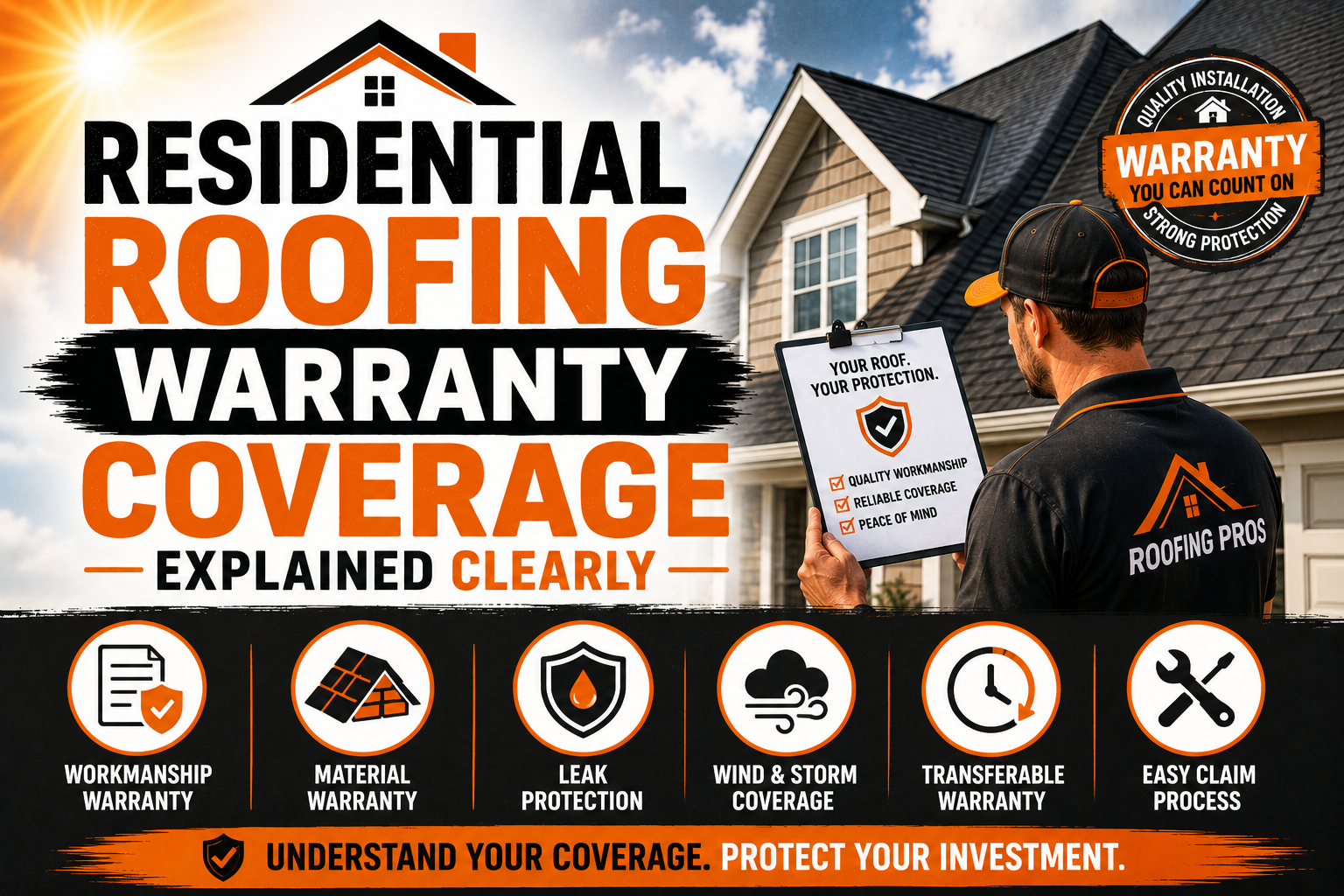
Residential Roofing Warranty Coverage Explained Clearly
Introduction
A residential roofing warranty can provide important protection after a new roof is installed, but many homeowners do not fully understand what a warranty actually covers. Roofing warranties can differ based on the manufacturer, roofing material, contractor, installation methods, and type of problem that occurs. Understanding these differences before signing a roofing contract can help homeowners avoid confusion and unexpected costs later.
A roofing warranty is generally designed to provide protection against certain defects or workmanship problems for a specified period. However, it does not necessarily cover every type of roof damage. Weather events, poor maintenance, unauthorized repairs, improper modifications, and other conditions may be excluded depending on the warranty terms.
There are usually two major forms of roofing warranty protection that homeowners should understand. The first is a manufacturer warranty covering certain defects in the roofing product, while the second is a contractor workmanship warranty covering problems related to installation. These warranties can operate separately, and knowing which party is responsible for a particular problem is important.
Warranty coverage can also vary considerably between roofing products. A basic roofing material may have different terms from a premium product, while enhanced warranty programs may have additional requirements involving approved contractors or complete roofing systems. Homeowners should therefore review the specific warranty rather than relying on general statements about roofing warranties.
The warranty should also be considered before the roofing project begins, not after installation. The homeowner should know what product is being installed, who is providing the warranty, how long coverage lasts, what conditions apply, and how a claim would be handled.
A clear understanding of warranty coverage can make the roofing investment easier to manage. It can also encourage homeowners to maintain proper records, follow maintenance recommendations, and address problems promptly when they appear.
Understanding Manufacturer Roofing Warranties
A manufacturer roofing warranty is provided by the company that produces the roofing material. It generally addresses certain manufacturing defects that may affect the product’s performance during the warranty period. The exact protection depends on the roofing product and the terms established by the manufacturer.
Manufacturer warranties can differ significantly between products. Basic roofing materials may provide limited protection, while premium products may offer longer or more comprehensive coverage under specific conditions. Homeowners should examine the actual warranty documentation for the selected product rather than assuming all roofing materials have identical protection.
The warranty may cover defects that originate during manufacturing. For example, if roofing materials fail because they contain a qualifying manufacturing defect, the manufacturer may provide a remedy according to the warranty terms. The remedy could involve replacement materials, repair assistance, or another form of compensation depending on the applicable conditions.
However, a manufacturer warranty generally does not mean that every roofing problem is automatically covered. Damage caused by severe weather, improper installation, neglect, physical impact, unauthorized alterations, or other excluded conditions may not qualify.
Installation can be particularly important because some manufacturers require their products to be installed according to specific instructions. If the roofing material is installed incorrectly, the resulting problem may not qualify as a manufacturing defect.
The type of roofing system can also affect coverage. Some manufacturers provide warranties for individual products, while others offer enhanced protection when multiple components are installed together as a complete system. These components may include shingles or panels, underlayment, ventilation products, flashing, and other accessories.
Homeowners should ask the contractor which specific manufacturer warranty applies to the proposed roof. They should also request a copy or summary of the warranty terms before installation so they have an opportunity to review the requirements.
Another important point is the warranty start date. Depending on the product and manufacturer, coverage may begin at installation, purchase, registration, or another specified point. Homeowners should confirm this rather than assuming the coverage automatically begins on the date the contract is signed.
Warranty registration may also be required for certain products or enhanced coverage programs. If registration is necessary, the homeowner should understand who is responsible for completing it and whether there is a deadline.
A manufacturer warranty can provide valuable protection, but it should be viewed as one part of the overall roofing agreement. Homeowners still need appropriate installation, maintenance, inspections, and documentation to protect the roof’s long-term performance.
Understanding Contractor Workmanship Warranties
A contractor workmanship warranty is different from a manufacturer product warranty. Instead of covering defects in the roofing material itself, a workmanship warranty generally addresses certain problems caused by the contractor’s installation work.
Installation quality can have a major effect on roof performance. Even high-quality roofing materials can develop problems if flashing is installed incorrectly, fasteners are misplaced, underlayment is poorly installed, or roof penetrations are not properly protected.
A workmanship warranty can provide homeowners with protection when a covered installation problem occurs. The contractor may be responsible for inspecting the issue and completing eligible repairs according to the terms of the agreement.
The length of workmanship coverage can vary widely between contractors. Some companies may offer relatively short coverage periods, while others advertise longer protection. Homeowners should not assume that a longer period automatically represents better coverage.
The actual terms are more important than the number of years. A warranty should explain what workmanship problems are covered, what exclusions apply, how claims are submitted, and what responsibilities the homeowner has.
Homeowners should also ask whether the workmanship warranty is provided directly by the roofing company or through another program. If the contractor stops operating in the future, the availability of workmanship support could become an important consideration.
The warranty should explain how the contractor handles repairs. Homeowners may need to provide photographs, inspection access, maintenance records, or other information before a claim is evaluated.
A contractor may also exclude certain conditions from workmanship coverage. For example, damage caused by severe weather, structural movement, animals, unauthorized modifications, or third-party work may fall outside the contractor’s responsibility.
Homeowners should ask the contractor to explain these limitations in straightforward language. It is better to understand the boundaries of coverage before a problem occurs than to discover them during a dispute.
The workmanship warranty should also be connected to the written roofing contract. Important promises made verbally should be included in the documentation whenever possible. A clear written record helps both the homeowner and contractor understand their responsibilities.
Contractor workmanship protection can be especially valuable during the early years after installation because installation-related defects may become apparent after the roof has experienced rain, wind, temperature changes, and normal exposure.
A good workmanship warranty does not replace professional installation. The best protection comes from selecting a qualified contractor, ensuring the work follows appropriate installation requirements, and maintaining complete project records.
What Roofing Warranties Commonly Cover
The exact coverage of a roofing warranty depends on its terms, but homeowners can generally expect warranty documents to identify specific types of defects or failures that qualify for protection. The coverage may relate to the roofing product, installation workmanship, or both under separate agreements.
Manufacturer coverage may address qualifying defects in the roofing material. If a product fails because of a manufacturing issue covered by the warranty, the manufacturer may provide a remedy according to its terms.
Contractor workmanship coverage may address installation-related problems. For example, if a covered installation defect causes a leak, the contractor may be responsible for correcting the workmanship issue.
Some enhanced roofing warranty programs may provide broader system coverage when approved products are installed according to specific requirements. These programs can have additional conditions, such as using certified contractors or installing specified components together.
Warranty coverage may include certain repair or replacement costs, but homeowners should review the exact terms before assuming what will be paid. Some warranties may provide full coverage for a certain period and then change to a prorated arrangement.
A warranty may also specify how the remedy is calculated. Depending on the terms, the manufacturer or contractor may repair the affected area, replace qualifying materials, or provide another remedy rather than paying every expense associated with the problem.
Homeowners should pay attention to whether labor is covered. A material warranty and a workmanship warranty may handle labor differently. This distinction can become important when defective roofing materials need to be removed and replaced.
The warranty may also contain conditions related to maintenance. Regular inspections, cleaning, ventilation, or other maintenance activities may be recommended or required to preserve certain protections.
A homeowner should never assume that a warranty covers normal aging. Roofing materials naturally experience weather exposure, sunlight, temperature changes, and general deterioration over time. Normal wear may not qualify as a warranty defect.
A useful way to understand potential coverage is to separate it into three categories:
- Product coverage: Protection related to qualifying manufacturing defects in roofing materials.
- Workmanship coverage: Protection related to qualifying installation problems caused by the contractor.
- System coverage: Broader protection that may apply when an approved roofing system is installed under specified conditions.
These categories can overlap in some situations, but they are not interchangeable. Knowing which warranty applies can make the claim process much clearer when a roofing problem develops.
Important Warranty Exclusions Homeowners Should Know
Understanding exclusions is just as important as understanding covered problems. A warranty document may contain several conditions that limit or completely exclude protection for certain types of damage.
Severe weather is a common example. Damage caused by events such as unusually strong winds, hail, falling objects, flooding, or other extreme conditions may be handled through property insurance rather than a standard roofing warranty, depending on the circumstances.
Poor maintenance can also affect coverage. If a homeowner ignores visible damage, allows drainage systems to remain blocked, or fails to address known problems, the resulting damage may not qualify under the warranty terms.
Unauthorized modifications can create another issue. Installing equipment, making structural changes, attaching accessories, or performing repairs without following the appropriate requirements may affect warranty protection.
Improper repairs by another contractor can also complicate a warranty claim. If a third party modifies part of the roofing system and the change contributes to a later problem, the original contractor or manufacturer may not accept responsibility for the resulting damage.
Structural problems may fall outside roofing warranty coverage. If movement, settlement, inadequate framing, or another structural condition causes the roof to fail, the roofing warranty may not cover the underlying issue.
Condensation and ventilation-related problems can also require careful evaluation. A roof warranty does not necessarily cover every moisture problem in an attic or building assembly, especially when the cause involves inadequate ventilation or indoor air leakage.
Homeowners should also understand that warranties do not necessarily cover cosmetic changes. Fading, minor appearance changes, or normal weathering may occur over time without representing a manufacturing defect.
Warranty exclusions are not necessarily signs of an unfair warranty. They define the conditions under which the manufacturer or contractor accepts responsibility. The important point is that homeowners should know these limitations before relying on the warranty for future protection.
Before signing a roofing contract, homeowners can ask the contractor to identify the most important exclusions. They should also read the warranty documents carefully and keep a copy with the rest of the roofing records.
A warranty is most useful when homeowners understand both what it promises and what it does not promise. Clear expectations can prevent misunderstandings and make future maintenance and repair decisions easier.
Warranty Duration and Coverage Periods
The length of a residential roofing warranty can vary considerably depending on the roofing material, manufacturer, contractor, and type of warranty provided. Homeowners should understand that the advertised lifespan of a roofing product is not necessarily the same as the warranty period. A roof may be expected to last for many years while its warranty provides a different level or duration of protection.
Manufacturer warranties often have specific coverage periods established for individual roofing products. Some may provide limited protection for a defined number of years, while premium products or qualifying roofing systems may offer extended coverage under specific conditions. The exact terms should always be reviewed in the official warranty documentation.
Contractor workmanship warranties are separate from manufacturer warranties and may have their own duration. A contractor might provide coverage for installation-related defects for a particular period, but the length alone does not determine the quality of the protection.
Some warranties use different coverage stages. For example, a warranty may provide stronger protection during an initial period and then change to reduced or prorated coverage later. Homeowners should understand how coverage changes over time instead of focusing only on the maximum number of years advertised.
The warranty period may also depend on proper installation and maintenance. If a manufacturer requires specific installation procedures, using an approved contractor or completing registration, failure to meet those requirements may affect the available coverage.
Homeowners should ask when the warranty begins. In many cases, the starting date may relate to installation or another defined event, but the exact rule depends on the warranty terms. Knowing the start date helps homeowners understand when the coverage expires.
Transferability is another factor that can influence long-term value. Some warranties may allow coverage to transfer to a new property owner if the home is sold, while others may restrict transfer or require specific documentation and procedures.
A homeowner should also understand whether the warranty covers the full roof or only certain materials or components. A roofing system can contain several products, and each may have separate warranty conditions.
The following factors are useful when comparing warranty periods:
| Warranty factor | Why it matters |
|---|---|
| Coverage length | Shows how long protection may remain available |
| Coverage stages | Explains whether protection changes over time |
| Start date | Establishes when the warranty period begins |
| Transferability | Determines whether protection can pass to a new owner |
| Registration | Identifies any steps required to activate coverage |
| Maintenance requirements | Shows what the homeowner must do to preserve coverage |
Homeowners should keep the warranty period in perspective. A longer warranty can be valuable, but only when the coverage is meaningful and the responsible party is clearly identified. A shorter warranty with straightforward terms and a dependable contractor may be more useful than a longer warranty with extensive exclusions.
How Roofing Warranty Claims Work
Understanding the claim process before a roofing problem occurs can save homeowners time and frustration. When a possible defect appears, the first step is usually to determine whether the issue may relate to the roofing material, installation, weather, maintenance, or another cause.
Homeowners should avoid making assumptions about responsibility. A leak does not automatically mean that the roofing material is defective, just as a damaged shingle does not automatically mean that the contractor installed the roof incorrectly.
The first person to contact may depend on the warranty terms. Installation-related concerns are often directed to the roofing contractor, while potential product defects may involve the manufacturer. Some roofing systems or enhanced warranty programs may have specific claim procedures.
Documentation can be extremely useful during this process. Homeowners should keep the original contract, invoices, warranty documents, material information, photographs, inspection records, and maintenance records together.
When a problem is discovered, homeowners should document it as soon as reasonably possible. Photographs can show the affected area and help establish what was visible before repairs or additional weather exposure changed the condition.
A homeowner should also avoid making major repairs before the responsible party has had an opportunity to inspect the problem when practical. Immediate action may be necessary to prevent additional damage, especially when water is entering the home, but the contractor or warranty provider should be informed as soon as possible.
The claim process may involve an inspection. The contractor, manufacturer, or authorized representative may examine the roof to determine the likely cause of the problem and whether it falls within the warranty’s terms.
The inspection may consider installation details, material condition, maintenance history, weather exposure, drainage, ventilation, and modifications. The cause of the problem is important because warranty coverage generally depends on whether the issue is a covered defect.
If the claim is approved, the warranty provider will apply the remedy specified in the warranty. This could involve repair, replacement of qualifying materials, labor coverage, or another form of compensation depending on the terms.
If a claim is denied, homeowners should review the explanation carefully. The denial may identify an exclusion, maintenance issue, installation concern, or another condition that prevents coverage.
Keeping communication in writing can also be useful. Emails, inspection reports, photographs, and repair records create a clear history of the issue and the steps taken to address it.
The Difference Between Roofing Warranty and Homeowners Insurance
Homeowners sometimes assume that a roofing warranty and homeowners insurance provide the same type of protection. They serve different purposes, and understanding the distinction can help homeowners contact the appropriate party when roof damage occurs.
A roofing warranty generally relates to specific product defects or workmanship problems covered by its terms. It is connected to the roofing materials or installation and has defined conditions and exclusions.
Homeowners insurance, on the other hand, may provide protection for certain covered losses caused by specific events. The exact coverage depends on the insurance policy, applicable exclusions, deductibles, and circumstances surrounding the damage.
For example, a roof damaged by a qualifying sudden weather event may involve an insurance claim rather than a standard roofing warranty claim. A roofing product that develops a qualifying manufacturing defect may instead fall under a manufacturer warranty.
Some situations can be more complicated. A severe weather event could damage roofing materials that were already affected by an installation problem, requiring careful evaluation to determine the cause and applicable coverage.
Homeowners should not assume that either warranty or insurance will cover every roof-related expense. Both forms of protection have specific terms, limitations, and exclusions.
When significant roof damage occurs, documenting the condition before repairs can be important. Photographs, inspection reports, and contractor assessments can help establish what happened and support communication with the appropriate provider.
Homeowners should also understand their insurance policy separately from the roofing warranty. The insurance policy may include requirements for reporting damage promptly and taking reasonable steps to prevent further loss.
A roofing contractor can sometimes help identify the likely source of a problem, but homeowners should not rely on the contractor to interpret their insurance coverage. Insurance questions should be addressed using the actual policy and, when necessary, the insurer or an appropriate professional.
Keeping warranty and insurance records separately can make future claims easier to manage. Homeowners should know where to find their roofing contract, warranty documents, insurance information, and records of previous repairs.
Understanding the difference between these protections helps homeowners avoid sending a warranty claim to an insurer or expecting a roofing manufacturer to cover damage that falls outside its responsibility.
Maintenance Requirements for Keeping Warranty Protection
A roofing warranty does not eliminate the homeowner’s responsibility to maintain the roof. Many warranty agreements contain conditions related to reasonable maintenance, inspections, drainage, ventilation, or prompt attention to visible problems.
Regular roof inspections can help identify small issues before they become major failures. Inspections may reveal damaged shingles, loose components, deteriorated flashing, blocked drainage, or other conditions that should be addressed.
Gutters and downspouts should also be kept clear. Blocked drainage can cause water to accumulate around roof edges and other areas, potentially contributing to damage that may not qualify for warranty coverage.
Trees near the home should be monitored as well. Overhanging branches can rub against roofing materials or fall during storms. Leaves and organic debris can also accumulate on the roof or inside drainage systems.
Homeowners should address visible damage promptly. A small damaged area may be easier to repair than a larger problem that develops after repeated exposure to rain and wind. Delaying known repairs may also affect warranty protection depending on the terms.
Roof modifications should be handled carefully. Solar panels, satellite equipment, antennas, skylights, vents, and other additions can involve penetration or alteration of the roofing system. Homeowners should confirm the appropriate procedures before allowing modifications.
Ventilation and moisture conditions should also be monitored where relevant. Persistent condensation or unusual attic moisture may indicate a building-envelope problem that requires investigation.
Maintenance records can strengthen documentation. Homeowners can record inspection dates, repairs, contractor visits, photographs, and other relevant information. These records can be useful if a warranty question develops later.
A basic maintenance routine can include:
- Inspecting the roof periodically for visible damage
- Keeping gutters and drainage pathways clear
- Monitoring nearby trees and branches
- Addressing leaks or damaged materials promptly
- Keeping records of professional inspections and repairs
- Checking warranty requirements before making roof modifications
Homeowners should follow the maintenance instructions supplied with their particular roofing system. Requirements can vary, so general advice should not replace the actual warranty terms.
Proper maintenance benefits the roof regardless of warranty coverage. It can help extend the useful life of the system, reduce avoidable repairs, and maintain the roof’s ability to protect the home.
Choosing a Contractor With Strong Warranty Support
The contractor selected for a roofing project can have a major influence on the practical value of the warranty. A strong product warranty may provide limited benefit if the roof is poorly installed or the contractor becomes difficult to reach when a workmanship problem appears.
Homeowners should ask contractors to explain both product and workmanship warranties before signing a contract. The contractor should be able to identify which warranty applies to the proposed roofing materials and what installation-related protection is being provided.
The contractor’s experience with the specific roofing system is also important. A company familiar with the manufacturer’s installation requirements may be better prepared to install the product according to the conditions required for warranty protection.
Homeowners should ask whether the contractor is authorized or approved for any enhanced manufacturer warranty program being offered. If enhanced coverage requires specific contractor qualifications, those requirements should be verified before the project begins.
The company should also provide warranty information in writing. Homeowners should be cautious about relying solely on verbal promises such as “this roof is fully guaranteed” without documentation explaining what the guarantee actually covers.
The contractor’s business history can also matter. A workmanship warranty depends on the contractor’s ability to respond if a covered problem develops. A company with established operations and clear contact information may provide greater practical confidence than an unknown contractor offering unusually broad promises.
References and reviews can provide additional insight. Homeowners can look for evidence of how the company handles problems after installation rather than focusing only on positive comments about the initial project.
A contractor should also explain what happens if another company performs future repairs. Unauthorized modifications may affect certain warranty protections, so homeowners should understand whether future work needs to be approved or completed by specific professionals.
The best contractor is not necessarily the one offering the longest warranty. Strong warranty support combines clear terms, proper installation, reliable communication, appropriate documentation, and a demonstrated willingness to address legitimate problems.
Homeowners should include warranty questions in the contractor comparison process rather than treating the warranty as an afterthought. Doing so can make it easier to identify differences between competing roofing proposals.
Keeping Complete Roofing Records
Maintaining complete records is one of the simplest ways homeowners can protect their interests after a roofing project. Warranty claims can become more difficult when homeowners cannot identify the installed materials, contractor, installation date, or original project terms.
The roofing contract should be kept with the warranty documents. Together, these records can show what work was agreed upon and what materials were installed.
Invoices and payment records are also useful. They can establish the date and cost of the project and may be requested during warranty or insurance discussions.
Homeowners should keep manufacturer product information when available. Product names, model information, color, installation details, and warranty documents can help identify the exact roofing system years after installation.
Photographs are another valuable record. Photos taken before, during, and after installation can document the condition of the roof and important components that become difficult to see after completion.
Inspection and maintenance records should be added over time. If a professional inspects the roof several years after installation, the report can provide useful evidence of its condition and any repairs that were completed.
Repair invoices should also be retained. If another contractor performs work on the roof, documentation can help establish what was changed and when it occurred.
Homeowners should store these records somewhere secure and accessible. Digital copies can provide an additional backup in case physical documents are lost or damaged.
Good records do not guarantee warranty approval, but they can make the evaluation process clearer. They also help future homeowners, contractors, insurers, or warranty providers understand the history of the roofing system.
A roofing warranty is ultimately only one part of long-term roof protection. Proper installation, regular maintenance, prompt repairs, and complete documentation all contribute to preserving the roof’s performance and making the available warranty protection easier to understand and use.
Understanding Warranty Transfers When a Home Is Sold
A residential roofing warranty can become especially important when a property changes ownership. Homeowners who plan to sell their house may want to know whether the existing roof warranty can be transferred to the buyer. The answer depends on the specific manufacturer warranty and contractor workmanship agreement, because transfer rules can vary significantly.
Some roofing warranties permit one transfer from the original homeowner to a subsequent property owner. Others may not allow transfers at all, while certain warranties may require the transfer to occur within a specific period after the property changes ownership. Additional documentation or fees may also apply.
Homeowners should review the transfer section of the warranty before listing the property for sale. Waiting until the transaction is nearly complete can create unnecessary complications if the warranty provider requires advance notice or specific paperwork.
The original roofing contract and installation records can also be valuable during a home sale. A buyer may want evidence showing when the roof was installed, what materials were used, which contractor completed the work, and what warranty protection remains available.
A transferable warranty can sometimes make a property more attractive to potential buyers because it provides additional information about the roof’s history. However, homeowners should avoid describing a warranty as transferable until they have verified the actual terms.
The buyer should receive relevant warranty documentation as part of the property records when appropriate. This can help establish continuity and make future claims easier to manage.
Homeowners should also understand that transferring a warranty does not necessarily extend its original expiration date. The new owner generally receives whatever remaining protection exists under the applicable terms.
A change in ownership may also affect contractor workmanship coverage differently from manufacturer product coverage. If the contractor provides a separate workmanship warranty, homeowners should ask whether that warranty transfers with the property.
Clear documentation is particularly important during a property sale. The following records can be useful:
- Original roofing contract
- Final project invoice
- Manufacturer warranty
- Workmanship warranty
- Product information
- Installation date
- Maintenance and inspection records
- Repair documentation
Homeowners should verify transfer requirements directly from the applicable warranty documents. A buyer should also understand any conditions that must be met to maintain coverage after the transfer.
A transferable roofing warranty can provide useful continuity, but its value depends on the specific terms. Proper record keeping and early verification can make the process much smoother for both the seller and buyer.
What Happens When a Warranty Claim Is Denied
Not every roofing warranty claim will be approved. A manufacturer or contractor may deny a claim if the problem falls outside the warranty’s coverage, results from an excluded cause, or does not meet required conditions.
A denial does not necessarily mean that the roof has no problem. It means that the provider has determined that the particular issue is not covered under the warranty terms. Homeowners should carefully review the reason for the decision.
The first step is to request a clear explanation if the reason is not already documented. The homeowner should identify which warranty provision or exclusion was used to support the decision.
Photographs and inspection reports can help provide additional evidence. If the cause of the problem is disputed, an independent roofing professional may be able to provide another assessment. The homeowner should understand that an independent inspection may involve a separate cost.
Documentation can be especially useful when a claim concerns workmanship. The original contract, photographs taken during installation, inspection records, and previous repair documents can help establish how the roofing system was installed and maintained.
If the homeowner believes the claim was incorrectly denied, the warranty may provide an appeal or review procedure. This process should be followed according to the applicable documentation rather than relying on informal complaints.
Homeowners should remain professional when communicating with the contractor or manufacturer. Clear written descriptions, photographs, dates, and supporting records can make discussions more productive.
Insurance may also become relevant if the problem involves a potentially covered event rather than a product or workmanship defect. The homeowner should review the applicable insurance policy and contact the insurer when appropriate.
The important point is to distinguish between a roofing problem and a warranty-covered roofing problem. A roof can require repair even when the repair is not covered by the warranty.
If a claim is denied because of an exclusion, the homeowner may still need to arrange repairs independently. Delaying necessary work while disputing a warranty decision could allow additional damage to develop.
A careful approach can help homeowners understand why coverage was denied and determine the appropriate next step. The warranty document should remain the primary reference for determining what protection was actually promised.
How Proper Installation Supports Warranty Protection
The quality of installation has a direct relationship with the practical value of many roofing warranties. Manufacturers often establish installation requirements that must be followed for their products to perform correctly and remain eligible for certain warranty protections.
A roofing contractor should understand the installation instructions for the products being used. This includes requirements involving fasteners, underlayment, flashing, ventilation, roof edges, valleys, and other system components where applicable.
Installation errors can create problems that appear to be material failures. For example, water entering around a flashing detail may result from poor installation rather than a defective roofing product. Identifying the actual cause is therefore essential when evaluating a warranty claim.
Homeowners should ask the contractor how installation quality will be checked. A company that has a defined inspection process can identify problems before the project is completed.
Proper preparation is also important. Existing roofing materials may conceal damaged decking, deteriorated flashing, or other conditions that need attention. Covering these problems with new materials may compromise the performance of the entire roofing system.
Ventilation should be considered when it forms part of the roofing design. Inadequate airflow can contribute to moisture and temperature problems that may not be covered under a product warranty.
Roof penetrations require careful attention as well. Vents, skylights, chimneys, and other openings need appropriate flashing and sealing. These areas can become common sources of leaks when installation is rushed.
Homeowners generally do not need to supervise every installation detail themselves. However, they can ask the contractor for an explanation of the major installation steps and retain relevant project documentation.
The contractor should also follow the applicable building requirements and product installation instructions. Proper installation supports both roof performance and the homeowner’s ability to demonstrate that the system was installed appropriately.
A warranty cannot compensate for poor workmanship in every situation. Choosing a qualified contractor from the beginning remains one of the most effective ways to reduce warranty-related problems.
Common Mistakes Homeowners Make With Roofing Warranties
Homeowners can unintentionally weaken their understanding or use of warranty protection by overlooking important details. One common mistake is assuming that a long warranty period means every type of roof damage is covered.
Another mistake is failing to read the exclusions. Homeowners may remember the advertised coverage period but overlook conditions involving maintenance, weather damage, modifications, or improper repairs.
Not keeping the original warranty documents is another common problem. Years after installation, homeowners may struggle to identify the exact roofing product or contractor if the records have been lost.
Some homeowners also fail to register products when registration is required. If a manufacturer specifies a registration process, homeowners should complete it according to the warranty instructions and retain confirmation when available.
Delaying repairs can create additional difficulties. A small leak or visible defect should be investigated promptly because continued exposure can increase damage and potentially affect coverage.
Hiring another contractor to modify the roof without checking warranty requirements can also create complications. Work involving penetrations, equipment installation, or major repairs should be evaluated carefully before proceeding.
Homeowners may also assume that insurance and warranties are interchangeable. This can lead to delays when damage should instead be reported to an insurance provider.
Another mistake is relying entirely on verbal promises. Statements such as “the roof is fully guaranteed” are not enough to establish the exact scope of protection. The written warranty and contract should contain the important terms.
Homeowners should also avoid assuming that the contractor’s workmanship warranty is identical to the manufacturer’s product warranty. These are separate protections and may involve different claim procedures.
A simple checklist can help prevent these mistakes:
- Read the full warranty documents.
- Identify covered problems and exclusions.
- Confirm the warranty start date.
- Complete registration if required.
- Keep contracts and invoices.
- Record maintenance and repairs.
- Ask before modifying the roofing system.
- Contact the appropriate party when a problem appears.
Understanding these basic responsibilities can make warranty protection much easier to manage throughout the roof’s service life.
Comparing Roofing Warranties Before Choosing a Contractor
Warranty comparison should be part of the contractor selection process rather than something homeowners consider after the roof has already been installed. Different contractors may offer different workmanship coverage, while the proposed roofing materials may have different manufacturer warranties.
Homeowners should request warranty information for each roofing system being considered. Comparing documents side by side can reveal differences that are not obvious from sales materials.
The length of coverage is one factor, but homeowners should also compare exclusions, claim procedures, transfer rules, maintenance requirements, and whether labor is included.
The contractor’s reputation for handling warranty issues should also be considered. A warranty is more useful when the company has a clear process for responding to legitimate concerns.
Homeowners should ask whether the proposed contractor is authorized for any enhanced manufacturer warranty program. If additional protection depends on certification or specific installation requirements, those details should be confirmed before the contract is signed.
The total project price should also be evaluated alongside warranty protection. A slightly more expensive roofing system may provide better materials or broader coverage, but homeowners should verify that the additional cost actually provides meaningful benefits.
A useful comparison might include:
| Warranty factor | Questions to consider |
|---|---|
| Manufacturer coverage | What product defects are covered? |
| Workmanship coverage | What installation problems are covered? |
| Duration | How long does each type of protection last? |
| Exclusions | Which common problems are not covered? |
| Labor | Is labor included for qualifying repairs? |
| Transferability | Can coverage pass to a new homeowner? |
| Registration | Is registration required? |
| Claims | Who handles the claim and inspection? |
| Maintenance | What homeowner responsibilities apply? |
This approach helps homeowners compare the actual value of each proposal rather than choosing based on a single warranty number.
Conclusion
Residential roofing warranties can provide valuable protection, but they are most useful when homeowners understand their terms before a problem occurs. A warranty is not simply a promise that a roof will never fail. It is a defined agreement that identifies specific responsibilities, covered conditions, exclusions, time periods, and procedures.
Manufacturer warranties generally focus on qualifying defects in roofing products, while contractor workmanship warranties address certain problems caused by installation. These protections can work alongside each other, but they are not interchangeable.
Homeowners should carefully review coverage periods, exclusions, registration requirements, maintenance responsibilities, transfer rules, and claim procedures. They should also understand that severe weather, poor maintenance, unauthorized modifications, structural problems, and other conditions may fall outside standard warranty protection.
Proper installation remains one of the most important factors in achieving long-term roof performance. A high-quality roofing material cannot compensate for poor workmanship, inadequate preparation, or improper flashing and ventilation. Choosing a qualified contractor and maintaining clear project records can therefore be just as important as selecting a strong warranty.
When a roofing problem occurs, homeowners should document the condition, identify the likely cause, and contact the appropriate warranty provider or contractor. They should avoid assuming that every leak or damaged roofing component qualifies for warranty coverage.
Homeowners should also understand the difference between warranty protection and homeowners insurance. Insurance may address certain covered events, while roofing warranties generally focus on defined product or workmanship issues. Knowing which form of protection applies can prevent unnecessary delays.
Keeping complete records can make the entire warranty process easier. Contracts, invoices, product details, warranty documents, photographs, inspection reports, and maintenance records provide useful evidence of the roof’s history.
Warranty transferability is another consideration for homeowners who may sell their property. If coverage can be transferred, following the required procedures can provide useful documentation for the next owner. However, transfer rules should always be confirmed directly from the applicable warranty.
Ultimately, the best roofing warranty is one that offers clear and meaningful protection from a reliable manufacturer or contractor. Homeowners should look beyond impressive advertising claims and examine the actual written terms.
Before choosing a roofing company, homeowners should compare the proposed materials, workmanship warranty, manufacturer coverage, exclusions, claim process, maintenance requirements, and contractor reputation. This comparison can reveal important differences between seemingly similar roofing proposals.
A well-installed roof combined with appropriate warranty coverage and proper maintenance can provide homeowners with greater confidence in their investment. By understanding what a residential roofing warranty covers, what it excludes, and how claims work, homeowners can make better decisions and manage their roofing system more effectively throughout its service life.
Leave A Comment