
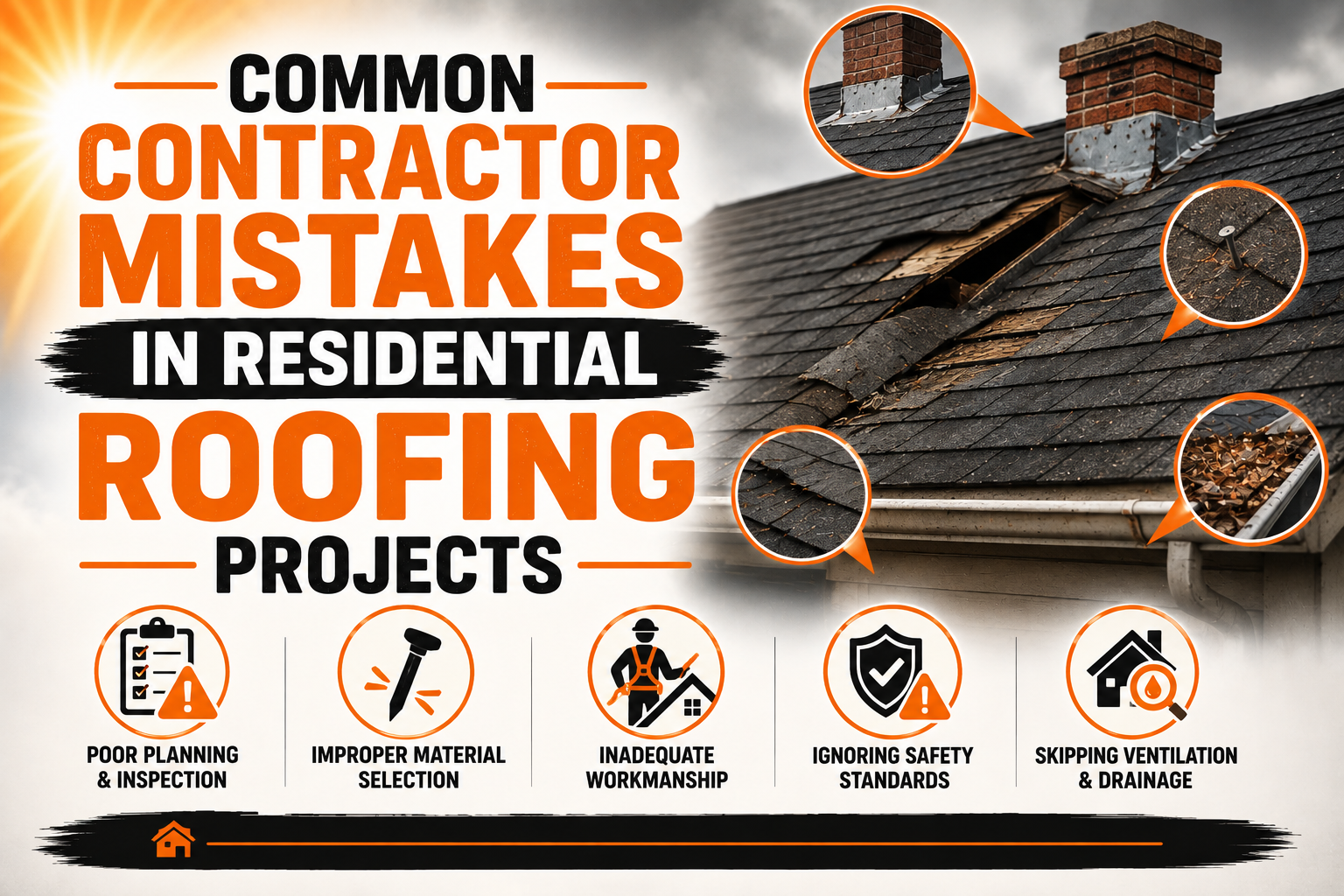
Common Contractor Mistakes in Residential Roofing Projects
Introduction
Residential roofing projects require careful planning, accurate installation, and consistent quality control from the first inspection through final completion. A roof may look straightforward from the ground, but successful installation involves many interconnected components, including the roof deck, underlayment, flashing, ventilation, drainage, fasteners, and exterior roofing materials. Mistakes in any of these areas can reduce the roof’s performance and create problems that may not become visible until months or years later.
Contractors are responsible for evaluating the existing roof, selecting appropriate materials, preparing the surface correctly, and following accepted installation practices. They must also consider the home’s design, local weather conditions, roof slope, drainage requirements, and manufacturer instructions. When these factors are overlooked, homeowners may experience leaks, premature material deterioration, poor ventilation, unnecessary repairs, or higher project costs.
Some roofing mistakes happen because a contractor rushes through the initial assessment. Others result from inaccurate measurements, unsuitable materials, inadequate preparation, or poor workmanship. Even small errors can become significant when they affect areas that are exposed to rain, wind, sunlight, and temperature changes throughout the year.
A successful roofing project should therefore focus on more than completing the installation quickly. Contractors need to establish a clear plan, verify conditions at every stage, and make sure each component works properly with the rest of the roofing system. Homeowners can also benefit from understanding common mistakes because this knowledge helps them recognize warning signs and ask better questions before and during a roofing project.
Poor Initial Roof Inspection and Project Assessment
One of the most important stages of a residential roofing project occurs before any roofing material is removed or installed. The contractor needs to inspect the existing roof carefully and understand its condition, construction, drainage, ventilation, and potential problem areas. A rushed inspection can cause the contractor to underestimate the scope of work and create complications later.
A basic visual inspection from ground level is not always enough. Roofing professionals may need to examine the roof surface, flashing, valleys, penetrations, roof edges, attic conditions, and roof decking where accessible. The condition of gutters and ventilation components should also be considered because they can affect the performance of the new roofing system.
Failing to identify damaged decking is a common assessment problem. If deteriorated or weakened roof sheathing remains beneath new materials, the finished roof may not have a suitable structural foundation. Replacing visible shingles without addressing damaged underlying components can allow existing problems to continue beneath the new roof.
Contractors should also look for signs of previous repairs. Multiple layers of roofing materials, old sealants, patched flashing, and poorly repaired penetrations can indicate that the roof has undergone modifications over time. These conditions may require additional preparation before a new roofing system can be installed properly.
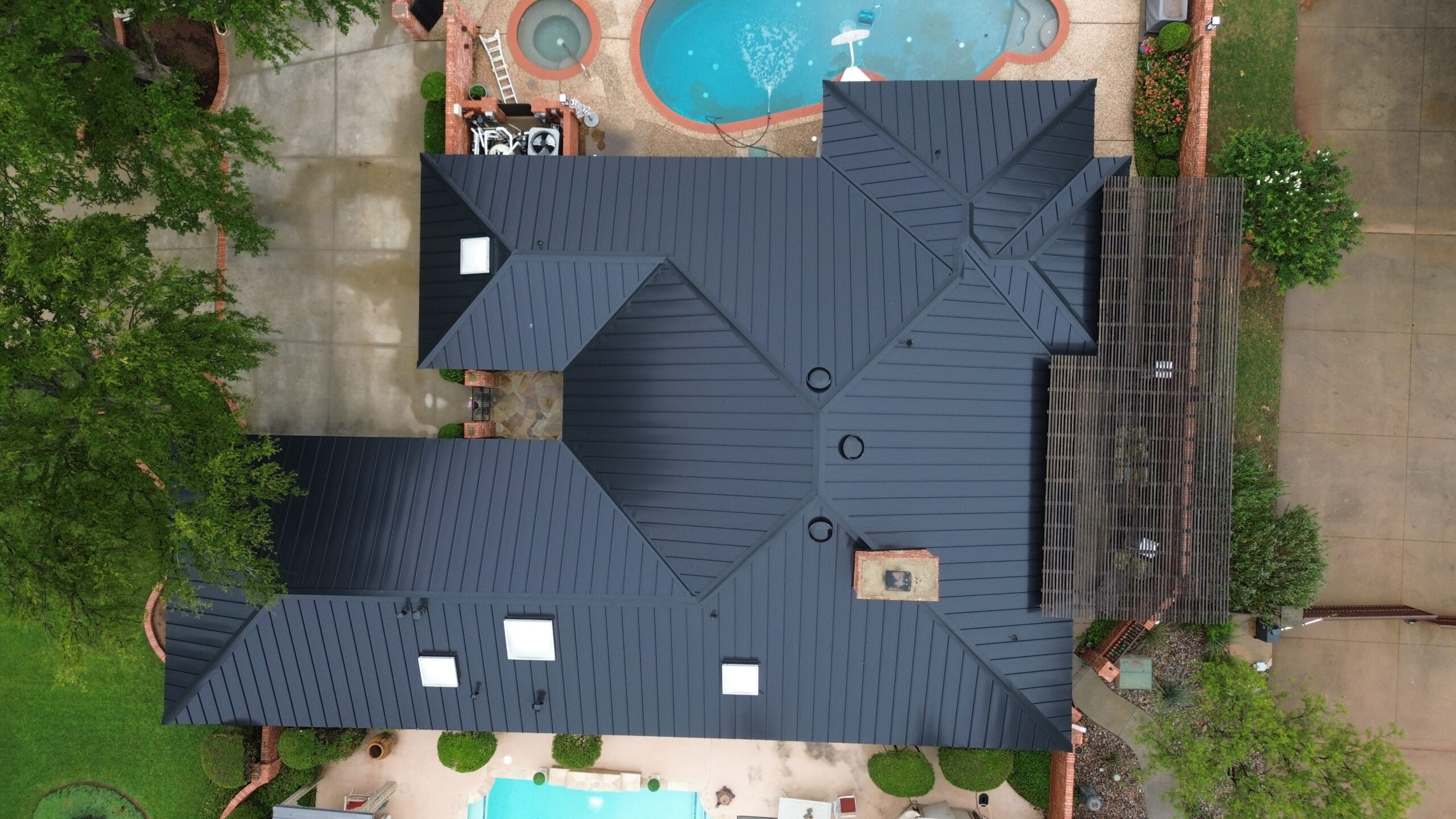
Roof geometry should also be evaluated during the initial assessment. Complex roofs can contain multiple slopes, valleys, dormers, skylights, chimneys, and transitions. Each of these areas can create additional installation requirements and potential water-entry points.
Weather conditions should be part of the assessment as well. A roof in an area exposed to strong winds, heavy rainfall, intense sunlight, or frequent temperature changes may require different material and installation considerations than a roof in a milder environment.
A contractor who fails to assess these conditions accurately may provide an estimate that appears attractive at first but changes significantly once work begins. Unexpected costs can create disputes and delays between the contractor and homeowner.
A thorough inspection should consider:
- Existing roofing material and condition
- Roof deck and structural concerns
- Flashing and roof penetrations
- Valleys and drainage pathways
- Attic insulation and ventilation
- Gutters and downspouts
- Previous repairs or additional roofing layers
- Local weather and exposure conditions
A detailed assessment helps establish realistic expectations before the project begins. It also gives the contractor an opportunity to identify problems that should be addressed before new roofing materials are installed.
Incorrect Measurements and Material Estimation
Accurate measurements are essential for controlling both cost and material availability during a residential roofing project. Contractors need to determine the roof’s actual surface area, account for slopes and sections, and calculate the additional materials required for overlaps, cuts, valleys, ridges, edges, and other installation details.
Incorrect measurements can result in insufficient materials. If roofing materials run out before the project is complete, installation may be delayed while additional products are ordered. This can become especially problematic when the exact material or color is temporarily unavailable.
Ordering too much material can also create unnecessary expenses. Excess roofing materials may need to be stored, returned, or disposed of depending on the supplier’s policies. Accurate estimation helps reduce waste while ensuring enough material is available to complete the work properly.
Complex roofs make measurement more challenging. A contractor may need to divide the roof into multiple sections and calculate each area separately. Dormers, valleys, hips, ridges, and other architectural features can increase the amount of cutting and material required.
Underestimating accessory materials is another common issue. Roofing projects require more than the visible roof covering. Underlayment, flashing, ventilation components, fasteners, ice or water protection where appropriate, ridge materials, sealants, and other accessories may be required.
Material estimation should also account for installation waste. Roofing materials cannot always be used in full sheets, rolls, or pieces because sections need to be cut around roof features. A reasonable allowance can help ensure the contractor has enough material without excessive overordering.
The following comparison illustrates why accurate estimation matters:
| Estimation issue | Potential result |
|---|---|
| Underestimating roof area | Material shortages and project delays |
| Ignoring roof complexity | Unexpected labor and material costs |
| Ordering excessive material | Higher costs and unnecessary waste |
| Missing accessories | Installation interruptions |
| Failing to account for waste | Insufficient materials near project completion |
Contractors should also make sure that the materials ordered match the specifications agreed upon with the homeowner. Differences in product lines, profiles, colors, or grades can affect the appearance and performance of the finished roof.
Accurate estimation is therefore both a technical and project-management responsibility. It helps contractors maintain schedules, control costs, reduce waste, and avoid unnecessary interruptions during installation.
Choosing Unsuitable Roofing Materials
Selecting the wrong roofing material can create long-term problems even when the installation itself appears professional. Roofing materials need to be compatible with the roof slope, structural design, climate, expected weather exposure, and overall building requirements.
Contractors should not automatically recommend the same material for every property. Asphalt shingles, metal roofing, tile, slate, synthetic materials, and other roofing products have different installation requirements and performance characteristics. A suitable material should be selected according to the actual conditions of the home.
Roof slope is particularly important. Some roofing products require a minimum slope to drain water properly. Installing a material outside its appropriate application range can increase the risk of water infiltration or premature deterioration.
Climate also influences material selection. Areas with intense sunlight may require materials with suitable resistance to ultraviolet exposure and heat. Regions exposed to strong winds or heavy rainfall may require products and installation systems designed to withstand those conditions.
Weight should also be considered. Some roofing materials are significantly heavier than others. Before installing heavy products, contractors should confirm that the existing roof structure is suitable for the additional load.
Another mistake is selecting materials based solely on low initial cost. A cheaper roofing product may have a shorter expected service life or require more maintenance. Homeowners and contractors should consider long-term performance rather than focusing exclusively on the initial purchase price.
Compatibility between roofing components is equally important. Underlayment, flashing, ventilation products, fasteners, sealants, and roof coverings should be suitable for use together. Mixing incompatible components can create installation problems and may affect warranty coverage.
Contractors should also follow product-specific requirements. Different manufacturers can specify different fastening patterns, underlayment arrangements, flashing methods, and ventilation details. Treating all roofing products as interchangeable can lead to avoidable workmanship problems.
A good material selection process considers performance, appearance, budget, climate, structural requirements, maintenance, and expected service life. The homeowner should understand why a particular product is being recommended rather than simply accepting the lowest-cost option.
Inadequate Roof Preparation
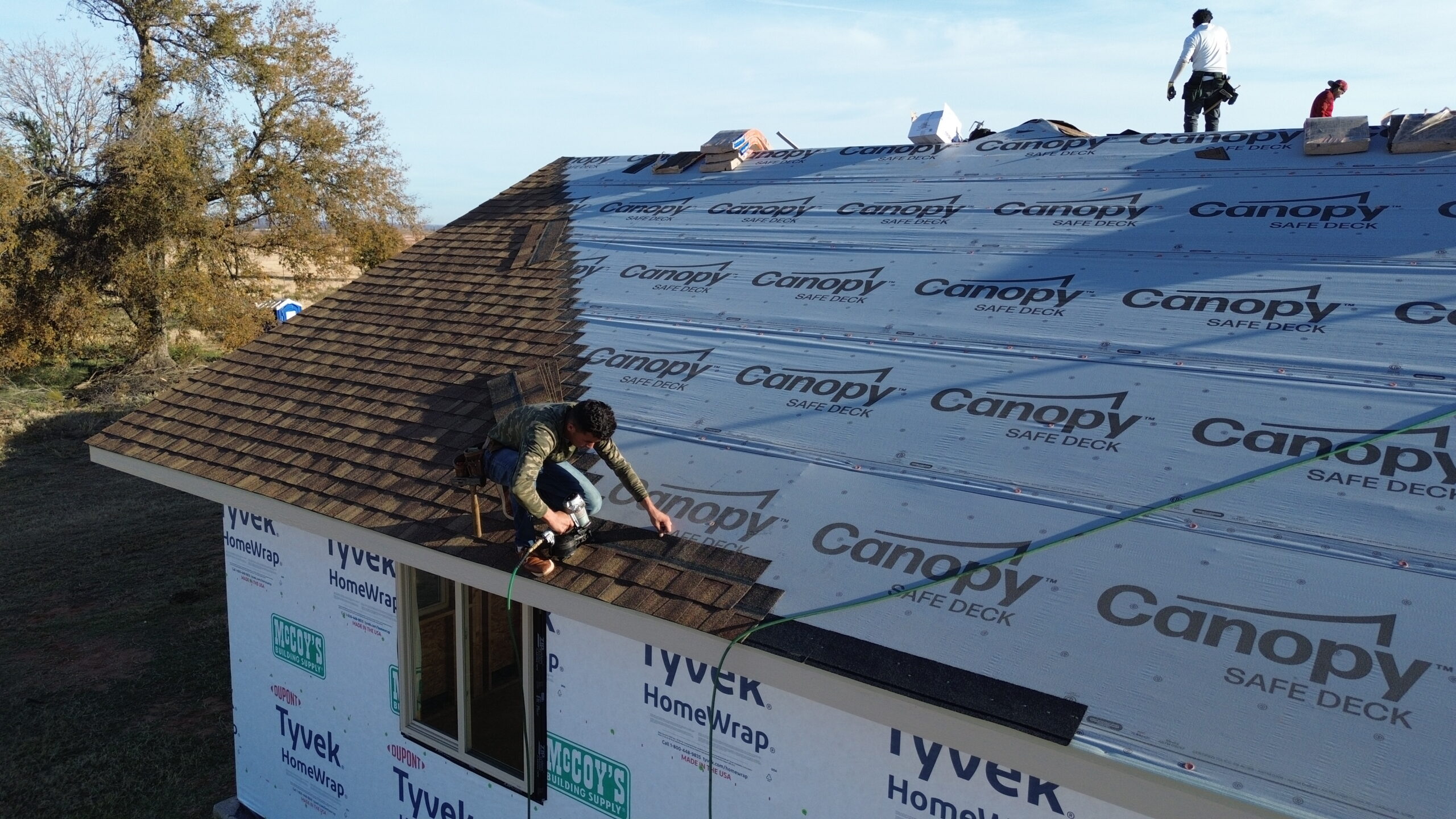
Proper preparation is one of the foundations of a successful roofing installation. Before new materials are installed, the contractor needs to ensure that the underlying surface is suitable, clean, stable, and properly prepared. Skipping preparation steps can cause problems that remain hidden beneath the finished roof.
One common mistake is installing new roofing over unsuitable existing materials. In some situations, an additional roofing layer may be permitted, but this depends on the existing roof, local requirements, material type, and manufacturer’s instructions. If the underlying surface is damaged or unsuitable, covering it does not eliminate the problem.
Roof decking should be checked for damage where accessible. Soft, deteriorated, cracked, or otherwise compromised sections may need replacement before new roofing materials are installed. Installing a new roof over weak decking can affect both structural support and material performance.
The roof surface should also be properly prepared for underlayment and other components. Debris, loose materials, protruding fasteners, and damaged sections can interfere with installation. A clean and stable surface helps create better contact between the various roofing layers.
Contractors should pay particular attention to roof edges and transitions. These areas often require specific preparation because they are exposed to wind and water movement. Poorly prepared edges can contribute to lifting, water intrusion, or premature deterioration.
Ventilation pathways should also be protected during preparation. Insulation or debris should not be allowed to block intended intake openings. If ventilation components are being upgraded, the contractor should ensure that the new system is integrated properly before completing the roof.
Weather conditions can affect preparation as well. Rain, excessive moisture, strong winds, or unsuitable temperatures may interfere with certain roofing materials and installation processes. Contractors should schedule work appropriately rather than rushing to complete a project under poor conditions.
Good preparation may take additional time, but it establishes the foundation for the rest of the installation. A contractor who invests time in preparing the roof correctly can reduce the likelihood of hidden defects and future repair requirements.
Improper Underlayment Installation
Underlayment is an important layer within many residential roofing systems because it provides an additional level of protection beneath the primary roof covering. It can help manage moisture that reaches beneath the exterior roofing material and can contribute to the overall weather resistance of the roof assembly.
One common contractor mistake is using an underlayment that is unsuitable for the roofing material or roof design. Different roofing systems may require specific types of underlayment, and local requirements can also influence the appropriate choice.
Incorrect installation can be just as problematic as selecting the wrong product. Underlayment needs to be positioned correctly, with appropriate overlaps and fastening methods according to the applicable installation requirements. Poorly installed sections can create pathways for water to move beneath the roof covering.
Valleys require particular attention because they collect and direct significant amounts of water. Contractors should follow the appropriate installation method for the roofing system and ensure that valley protection is properly integrated with surrounding materials.
Roof penetrations also need careful treatment. Chimneys, skylights, vents, pipes, and other openings can create vulnerable points where multiple materials meet. Underlayment should be coordinated with flashing and other weatherproofing components around these areas.
Another mistake is leaving underlayment exposed to weather for longer than recommended. Some products have limitations regarding exposure before the final roof covering is installed. Contractors should follow manufacturer instructions and project scheduling requirements.
Fastener placement can also affect performance. Incorrect fastening may damage the material or create gaps that reduce its effectiveness. The contractor should use suitable fasteners and follow the specified installation pattern.
Underlayment should never be viewed as a minor accessory that can be installed quickly without attention to detail. It forms an important part of the roof’s moisture-management system and must work together with the roof covering, flashing, drainage, and other protective layers.
Careful installation at this stage can prevent problems that would otherwise remain hidden until water begins entering the roof assembly. Proper underlayment installation is therefore an essential part of professional residential roofing workmanship.
Incorrect Shingle or Roofing Material Installation
Installing roofing materials correctly requires more than placing shingles, panels, tiles, or other coverings across the roof surface. Each material has specific requirements for alignment, fastening, spacing, overlaps, edges, and weather exposure. Contractors who treat different roofing products as though they all use the same installation methods can create defects that reduce the roof’s service life.
One common mistake is incorrect fastening. Shingles and other roofing components need the appropriate number and placement of fasteners according to the product requirements. Fasteners installed too high, too low, too few, or at incorrect angles may fail to hold the material securely during strong winds.
Overdriving fasteners can also cause problems. When a nail or screw is driven too deeply, it may damage the roofing material instead of securing it properly. Underdriven fasteners can remain raised and interfere with overlapping materials, while poorly positioned fasteners can create potential paths for water.
Incorrect alignment is another workmanship issue. Roofing materials should follow consistent courses and maintain the required exposure. Uneven rows may not only create an unattractive appearance but can also interfere with the intended water-shedding design.
Contractors sometimes rush around roof penetrations and difficult areas. Chimneys, skylights, vents, valleys, dormers, and roof-to-wall intersections require careful integration between the roofing material and flashing. Poor workmanship in these locations can lead to leaks even when the majority of the roof has been installed correctly.
Material handling also matters. Shingles, panels, tiles, and membranes can be damaged before installation if they are stored incorrectly or handled roughly. Cracked, bent, warped, or otherwise damaged components should not simply be installed to avoid wasting material.
Another mistake is failing to follow the manufacturer’s required installation pattern. Product instructions may specify fastening locations, minimum slopes, underlayment requirements, flashing details, or acceptable installation conditions. Ignoring these instructions can affect both performance and warranty protection.
Contractors should also avoid mixing materials from different systems without confirming compatibility. Roofing components are often designed to work together as an assembly, and substituting an unsuitable accessory can create problems at seams, edges, penetrations, or drainage points.
Quality installation should therefore be checked continuously rather than only at the end. A contractor can reduce mistakes by reviewing completed sections before moving to the next stage and correcting defects while access remains easy.
Poor Ventilation Planning and Installation
Roof ventilation plays an important role in managing heat and moisture in appropriately designed attic spaces. However, contractors sometimes install vents without considering how intake and exhaust openings will work together. Simply adding more vents does not guarantee effective airflow.
A properly designed vented attic generally needs a balanced pathway for air movement. Intake openings allow outdoor air to enter, while exhaust openings provide a route for warmer or moisture-laden air to leave. If one side of the system is inadequate, airflow may be reduced.
Blocking intake ventilation is a frequent installation problem. Insulation can accidentally cover soffit openings or ventilation channels when the roof and attic work are performed without coordination. This can prevent air from reaching the upper sections of the attic.
Contractors should also consider the placement of exhaust vents. If exhaust openings are positioned incorrectly or combined with incompatible ventilation strategies, the system may not operate as intended. The design should account for the roof shape, attic configuration, and available intake locations.
Powered attic fans can create additional concerns. A fan may move air effectively, but it requires an appropriate source of replacement air. If adequate intake ventilation is unavailable, the fan may draw air from unintended areas of the building.
Poor ventilation can contribute to excessive attic heat or moisture accumulation. Inappropriate moisture conditions can affect insulation, wood components, fasteners, and other parts of the roof assembly. These problems may develop gradually and remain unnoticed until visible damage appears.
Contractors should also avoid using ventilation as a substitute for proper air sealing. Air leaks between conditioned areas and the attic can allow warm, moisture-laden indoor air to enter the roof assembly. Sealing appropriate penetrations and gaps is an important part of controlling this problem.
Ventilation planning should occur before roofing materials are installed. The contractor should identify existing vents, determine whether they remain appropriate, and coordinate any improvements with insulation and roof construction.
A well-designed ventilation system should achieve several objectives:
- Provide appropriate intake and exhaust airflow.
- Avoid blocking ventilation pathways with insulation.
- Reduce unwanted moisture accumulation.
- Work with the roof’s structural and architectural design.
- Complement rather than replace proper air sealing.
Good ventilation requires planning rather than simply adding visible vents. Contractors who evaluate the entire attic and roof assembly are better positioned to create a system that supports long-term roof performance.
Improper Roof Drainage and Gutter Coordination
Water management is one of the most important responsibilities of a residential roofing system. A roof must direct rainfall away from vulnerable areas while preventing water from collecting around penetrations, valleys, edges, and low points. Poor drainage planning can cause leaks, material deterioration, foundation concerns, and landscape damage.
Contractors sometimes focus heavily on the roof covering while paying insufficient attention to gutters and downspouts. A new roof can perform poorly if the drainage system is undersized, blocked, incorrectly positioned, or unable to handle the amount of water generated by the roof.
Roof valleys deserve particular attention because they concentrate water from multiple roof sections. Incorrectly installed valley materials, poor alignment, or inadequate flashing can allow water to move beneath the roofing system.
Gutters also need suitable slope so that water moves toward downspouts rather than remaining in place. Sagging or improperly positioned gutters can create standing water and overflow during heavy rainfall.
Downspout capacity and placement should be considered as part of the complete drainage system. Concentrated water should be directed away from vulnerable foundation areas rather than discharged immediately beside the building.
Contractors may also overlook the effect of roof extensions and architectural changes. Dormers, additions, porches, and other structures can alter water flow and may require additional drainage solutions. The contractor should assess how each roof section connects to the others.
Poor flashing can make drainage problems worse. Water may travel behind roofing materials when flashing is missing, incorrectly positioned, or poorly sealed. These defects are especially concerning around chimneys, walls, skylights, and roof-to-roof intersections.
Drainage should be tested or carefully inspected before the project is considered complete. Contractors should verify that gutters, downspouts, valleys, and roof surfaces are functioning as intended.
A properly coordinated drainage system protects more than the roof. It helps protect exterior walls, foundations, landscaping, and other parts of the property from uncontrolled water movement.
Ignoring Roof Structure and Decking Problems
The roof covering depends on a stable and suitable structure beneath it. Contractors who focus only on replacing visible roofing materials may overlook problems in the decking, framing, or supporting structure. Covering these defects with new materials can hide the problem rather than solve it.
Roof decking can deteriorate because of long-term moisture exposure, previous leaks, poor ventilation, or other causes. Soft or damaged sections may not provide adequate support for the new roofing system. These areas should be identified and addressed before the final roof covering is installed.
Structural problems can sometimes be visible through sagging roof sections. Uneven areas may indicate damaged decking, framing concerns, excessive loads, or other conditions that require investigation. A contractor should not simply install new materials over visibly abnormal areas without determining the underlying cause.
Previous water damage is another important consideration. Long-term leaks may affect wood components beyond the immediate visible area. Removing damaged roofing materials can reveal conditions that were not apparent during a basic exterior inspection.
The weight of the proposed roofing material must also be considered. Replacing lightweight roofing with a significantly heavier product can change the load placed on the structure. Structural capacity should be evaluated when the proposed material creates substantially different loading conditions.
Contractors should document unexpected structural findings and communicate them to the homeowner. Additional work may affect the project cost or schedule, but hiding the problem or proceeding without proper correction can create greater risks later.
Proper decking installation also requires attention to fastening and spacing. Replacement panels should be installed according to applicable requirements so that they provide adequate support and remain stable as part of the roof assembly.
The condition of roof edges should also be considered. Areas near eaves and rakes may experience different loading and exposure conditions. Damaged or deteriorated decking in these areas can affect the stability of roofing materials and related components.
A contractor’s responsibility is not simply to make the roof look new. The finished system should have an appropriate foundation and should be capable of supporting the selected roofing materials under expected conditions.
Failure to Follow Manufacturer Installation Requirements
Roofing manufacturers develop installation instructions to explain how their products should be used. These requirements can cover fastening, underlayment, flashing, slope, ventilation, storage, temperature conditions, and other aspects of installation. Contractors who ignore these instructions may compromise the performance of the entire roofing system.
Different products can have significantly different requirements. Even materials that look similar may require different fastening patterns or accessory components. Assuming that a familiar installation method will work for every product can lead to avoidable errors.
Weather conditions can also influence installation. Some roofing materials have specific requirements regarding temperature, moisture, or wind during installation. Contractors should follow the manufacturer’s guidance rather than forcing the project forward under unsuitable conditions.
Storage instructions are sometimes overlooked. Roofing products may be damaged if they are stored improperly, exposed to excessive moisture, or stacked incorrectly. Damaged materials should be identified before installation rather than concealed within the finished roof.
Manufacturer requirements can also affect warranty coverage. If a product is installed outside the specified conditions, the homeowner may face difficulties if a future claim arises. Contractors should therefore understand the requirements before beginning work.
Proper documentation can help demonstrate that installation followed the intended procedures. Product information, invoices, installation records, and photographs of important stages can provide useful evidence of how the roof was constructed.
Contractors should also use compatible accessories when the manufacturer specifies them. Substituting materials simply because they are cheaper or readily available can affect the performance of seams, flashing, membranes, or other components.
Following manufacturer requirements is not merely administrative. These instructions are part of the technical process for achieving the performance expected from the roofing product.
Poor Jobsite Safety and Project Management
Residential roofing projects involve significant risks because workers operate at elevated heights while handling tools, materials, ladders, equipment, and debris. Poor safety practices can result in injuries, property damage, project delays, and legal complications. Safety should therefore be treated as an essential part of professional roofing management.
Contractors need to plan how workers will access the roof and move materials safely. Ladders, scaffolding, fall-protection systems, and other equipment should be appropriate for the project and used correctly.
The ground area around the property also needs attention. Roofing debris can fall from elevated areas and damage vehicles, landscaping, windows, or outdoor equipment. Contractors should establish suitable work zones and maintain an organized site.
Material storage can affect safety and efficiency. Roofing products should be placed where they can be accessed without creating unnecessary hazards or excessive loading on one roof area. Tools and debris should also be managed throughout the project rather than left scattered across work surfaces.
Weather can significantly change jobsite conditions. Rain can make surfaces slippery, while strong winds can affect materials and worker stability. Contractors should monitor conditions and postpone unsafe activities when necessary.
Project scheduling is another important responsibility. Delays can occur because of weather, material shortages, unexpected structural damage, or other conditions. Good planning allows contractors to communicate changes and coordinate work without rushing important installation stages.
A professional roofing project should also include regular cleanup. Nails, broken materials, packaging, and other debris should be removed from the work area as the project progresses. Final cleanup should include a careful inspection of the property so that leftover hazards are not ignored.
Clear communication among workers is equally important. Everyone involved should understand the project sequence, material requirements, safety procedures, and areas where special attention is needed.
Poor project management often creates pressure to finish quickly, and that pressure can lead to shortcuts. A properly managed roofing project gives workers enough time to complete preparation, installation, inspection, and cleanup without sacrificing safety or workmanship.
When contractors combine careful planning with appropriate safety procedures, the roofing project becomes more organized and predictable. This protects workers, homeowners, property, and the quality of the completed roof while reducing the likelihood of avoidable delays and costly mistakes.
Inadequate Quality Control and Final Inspection
Quality control is one of the most important stages of a residential roofing project, yet it is sometimes treated as a quick final check. A contractor may complete the visible installation and move directly toward cleanup without carefully examining the roof for small defects. This can allow workmanship problems to remain unnoticed until the homeowner experiences leaks, loose materials, drainage problems, or premature deterioration.
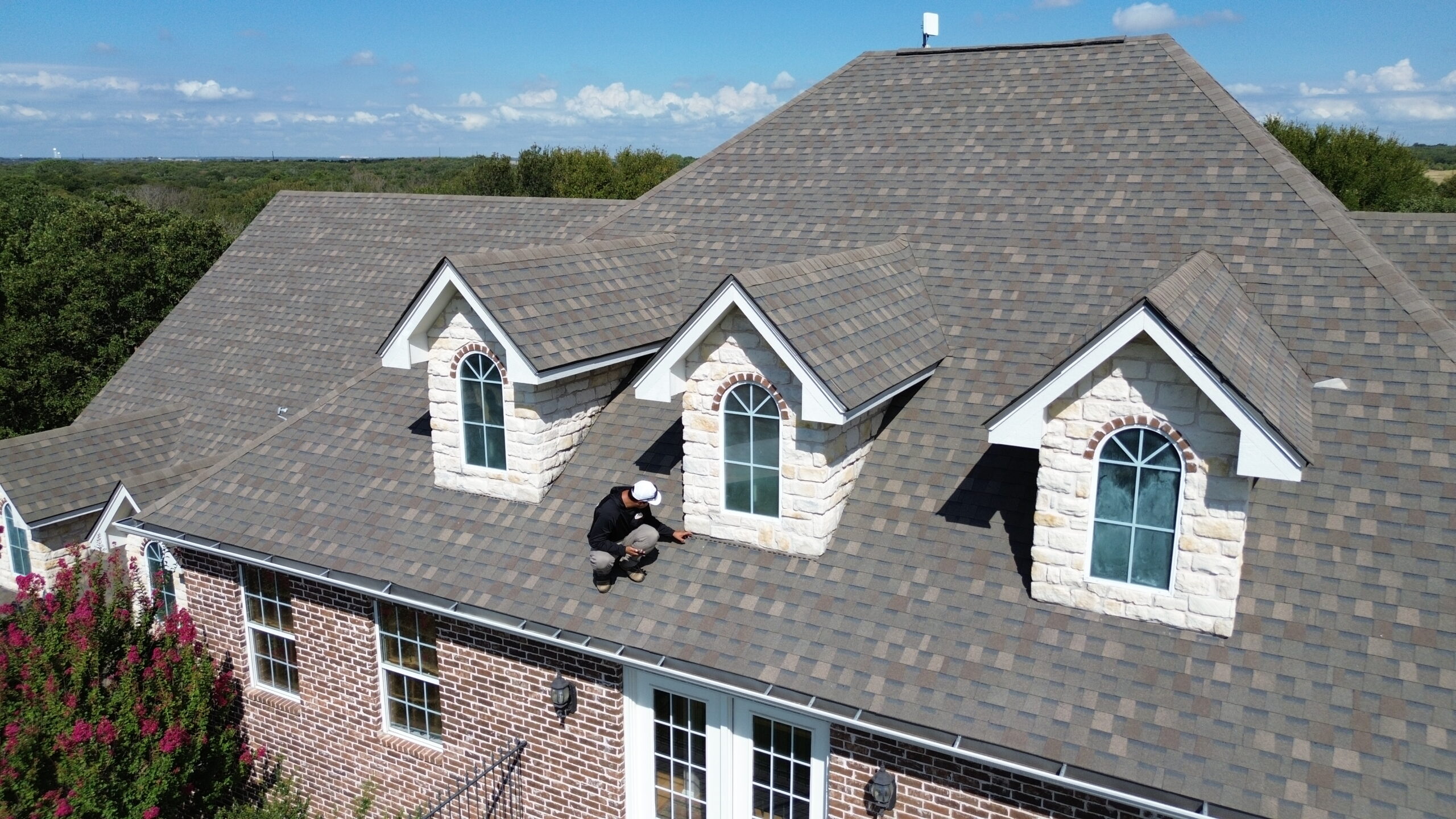
A proper final inspection should examine the roof as a complete system rather than focusing only on the shingles or exterior covering. Flashing, valleys, roof edges, penetrations, ventilation components, underlayment where accessible, gutters, and other details should be reviewed before the project is considered complete.
Contractors should pay particular attention to areas where different materials meet. Chimneys, skylights, vents, walls, dormers, and roof intersections can create potential water-entry points if flashing or surrounding materials have not been installed correctly.
Fasteners should also be checked where they remain visible or accessible. Missing, improperly positioned, exposed, or damaged fasteners can affect the security and weather resistance of roofing components. Small installation errors are easier and less expensive to correct immediately than after the roof has been exposed to several seasons of weather.
Roof edges deserve careful inspection as well. Shingles, metal panels, membranes, drip edges, and other edge components need to be properly secured and aligned. Edge defects can become particularly problematic during strong winds or heavy rainfall.
The drainage system should be reviewed before completion. Gutters should be properly positioned, downspouts should be connected appropriately, and water should have a clear path away from the building. Debris from construction should not be left inside gutters or drainage channels.
A useful final inspection can include the following areas:
| Inspection area | What the contractor should check |
|---|---|
| Roof surface | Alignment, damage, missing materials, and visible defects |
| Flashing | Proper placement around vulnerable intersections |
| Fasteners | Correct positioning and secure installation |
| Roof edges | Secure attachment and proper finishing |
| Ventilation | Clear intake and exhaust pathways |
| Drainage | Gutters, valleys, and downspouts functioning properly |
| Cleanup | Removal of debris, loose materials, and hazards |
Contractors should also document completed work where appropriate. Photographs can be useful for recording important installation details and can help homeowners understand work that is not easily visible from the ground.
A final inspection should not be considered an optional formality. It provides an opportunity to identify problems while workers and equipment are still available to correct them. Strong quality control can significantly improve the reliability and expected service life of the completed roof.
Poor Communication With Homeowners
Communication problems can create confusion even when the physical roofing work is performed correctly. Homeowners need to understand what work will be completed, what materials will be used, how long the project is expected to take, and what conditions could change the original estimate.
One common mistake is failing to explain the scope of work clearly before the project begins. A homeowner may believe that certain repairs or replacements are included, while the contractor may have intended them to be additional services. Written documentation can reduce this type of misunderstanding.
Unexpected roof damage can also change the project. Once old roofing materials are removed, contractors may discover damaged decking, structural concerns, or moisture-related problems that were not visible during the initial inspection. These findings should be explained before additional work is performed whenever practical.
Material substitutions should also be communicated clearly. If the specified roofing product becomes unavailable, the contractor should not simply install a different material without discussing the change. Differences in quality, appearance, warranty, or installation requirements can affect the homeowner’s expectations.
Schedule changes should be communicated as well. Weather, material delays, structural repairs, or other circumstances can affect the planned completion date. Homeowners are more likely to remain satisfied when contractors explain the reason for delays rather than leaving them uncertain.
Payment expectations should be clear from the beginning. The contract should identify the agreed pricing structure, payment stages, included services, and procedures for handling approved changes. Clear financial communication can prevent disputes during the project.
Contractors should also explain maintenance requirements after completion. Homeowners need to know whether inspections, cleaning, coating maintenance, gutter care, or other tasks are recommended for the selected roofing system.
Good communication should continue after installation. The homeowner should receive relevant warranty information, project documentation, and guidance about whom to contact if a problem develops.
Professional communication creates transparency throughout the roofing process. It allows the homeowner to make informed decisions and gives the contractor a clear record of what was agreed upon.
Cutting Costs Through Low-Quality Materials or Workmanship
Reducing project costs can be important for homeowners, but cutting costs through inferior materials or shortcuts can create much greater expenses later. Contractors sometimes attempt to remain competitive by using cheaper products, reducing necessary preparation, or minimizing labor time. These approaches may make an initial estimate look attractive while reducing the quality of the finished roof.
Low-quality materials may have shorter service lives or lower resistance to weather exposure. While not every affordable roofing product is poor quality, contractors should ensure that selected materials are appropriate for the roof and meet the required performance standards.
Reducing preparation work can be especially risky. Skipping damaged decking repairs, using inadequate underlayment, or ignoring deteriorated flashing can leave weaknesses beneath the new roof. These defects may remain hidden until water or wind exposes them.
Labor shortcuts can create similar problems. Incorrect fastening, poor alignment, rushed flashing installation, and incomplete sealing can all reduce roof performance. The finished roof may appear acceptable from the ground while containing significant workmanship defects.
Contractors should also avoid reducing ventilation components simply to save money. A properly designed roof requires appropriate airflow where ventilation is part of the system. Removing necessary intake or exhaust components can affect attic conditions and long-term roof performance.
Waste management should be handled efficiently without compromising installation quality. Contractors can reduce unnecessary material waste through accurate measurements and careful planning rather than by ordering insufficient quantities.
The table below illustrates the difference between responsible cost control and risky shortcuts:
| Cost-saving approach | Likely effect |
|---|---|
| Accurate measurements | Reduces unnecessary material waste |
| Efficient scheduling | Controls labor and project delays |
| Bulk material planning | Can improve purchasing efficiency |
| Proper preparation | Prevents expensive future repairs |
| Skipping required components | Can reduce performance and durability |
| Using unsuitable cheap materials | May increase long-term maintenance costs |
A professional contractor should focus on value rather than simply offering the lowest possible price. A properly installed durable roof can provide better long-term value than an inexpensive system that requires frequent repairs.
Homeowners should therefore compare estimates carefully and ask why major differences exist between contractors. A significantly lower quote may reflect differences in materials, preparation, labor, warranty coverage, or project scope.
Failing to Address Weather and Site Conditions
Weather can directly affect roofing installation, yet contractors sometimes attempt to maintain a schedule even when conditions are unsuitable. Rain, strong winds, extreme temperatures, and moisture can interfere with materials, worker safety, and installation quality.
Wet roofing surfaces can create dangerous working conditions. They can also interfere with the installation of certain materials and increase the possibility of moisture becoming trapped within the roof assembly.
Strong winds can create additional risks because roofing materials can become difficult to handle safely. Loose materials may also become airborne, creating hazards for workers and people around the property.
Temperature can affect certain roofing products as well. Some materials have specific installation requirements related to temperature or weather exposure. Contractors should follow product instructions rather than assuming every roofing material can be installed under identical conditions.
The surrounding property should also be considered. Trees, landscaping, outdoor structures, vehicles, power lines, and neighboring buildings can affect access and safety. Contractors should plan material delivery, equipment placement, and debris removal accordingly.
Seasonal conditions may influence the project schedule. A contractor who begins work during a period of frequent storms may need additional contingency planning. Rushing installation because of a narrow schedule can increase the likelihood of mistakes.
Site conditions can also reveal unexpected problems. Poor access may make material movement more difficult, while limited space can require additional planning for equipment and debris. These factors should be considered before work begins.
Professional contractors should therefore evaluate both weather and site conditions as part of project planning. Protecting unfinished areas from unexpected weather is particularly important when a roof cannot be completed in one working period.
Good planning does not eliminate every weather-related delay. Instead, it reduces the pressure to perform unsafe or poor-quality work when conditions are unsuitable.
Lack of Proper Documentation and Warranty Awareness
Documentation is often overlooked after a roofing project is completed. Homeowners should receive appropriate information about the materials installed, warranties, maintenance requirements, and major work performed. Without documentation, it can become difficult to determine what products were used or what responsibilities apply if a problem develops.
Material documentation can be particularly useful years after installation. Roofing products may have specific maintenance requirements or replacement procedures, and knowing the exact product can help future contractors perform compatible repairs.
Warranty information should also be clearly explained. Roofing warranties can differ significantly depending on the manufacturer, product, installer, and type of issue involved. Homeowners should understand what is covered and whether particular installation or maintenance requirements apply.
Contractors should avoid making warranty promises that are not supported by written documentation. Verbal statements can create confusion if they differ from the actual warranty terms.
Project photographs can provide useful records as well. Photos taken before, during, and after installation may document the condition of the roof, underlying repairs, flashing details, ventilation components, and other work that becomes hidden once the project is finished.
Invoices and contracts should also be retained. These documents can help establish the date of installation, materials purchased, work performed, and payments made.
Maintenance instructions are another important part of project documentation. Homeowners should know how often the roof should be inspected and which components require attention.
A professional documentation package can include:
- Final invoice and payment records
- Roofing material information
- Manufacturer warranty documentation
- Contractor workmanship warranty details
- Maintenance recommendations
- Relevant photographs and project records
Proper documentation benefits both parties. Homeowners have clearer records for future maintenance, while contractors have evidence of the agreed scope and completed work.
Conclusion
Residential roofing mistakes can occur at almost every stage of a project, from the initial inspection to the final cleanup. Many problems are not caused by one major error but by several small oversights involving measurements, preparation, materials, ventilation, flashing, drainage, communication, or quality control.
A professional contractor should begin with a detailed assessment of the existing roof and surrounding conditions. Accurate measurements, appropriate material selection, proper preparation, and careful installation provide the foundation for a reliable roofing system.
The hidden components of a roof are especially important. Underlayment, decking, flashing, ventilation, fasteners, and drainage systems may not receive much attention after installation, but their performance can strongly influence the roof’s ability to protect the home.
Contractors should also recognize that good workmanship involves more than technical installation. Safe jobsite practices, clear communication, realistic scheduling, accurate documentation, and proper final inspections all contribute to a successful project.
Homeowners can reduce their risk by asking detailed questions before hiring a contractor. They should understand the proposed materials, preparation requirements, project scope, warranty terms, expected schedule, and procedures for handling unexpected conditions.
The lowest estimate is not always the best choice. A reliable roofing contractor should provide a clear scope of work, appropriate materials, realistic pricing, and evidence of careful workmanship. Saving money through shortcuts can create repair costs that exceed the original savings.
Quality control should continue throughout the project rather than being left until the final day. Contractors who inspect their work at each stage can identify problems earlier and avoid covering defects with additional roofing layers.
Weather and site conditions should also influence scheduling. Protecting workers and maintaining installation quality are more important than completing a project according to an unrealistic deadline.
Finally, proper documentation helps preserve the value of the work after the contractor leaves the property. Warranty information, material records, maintenance guidance, and project photographs can make future repairs and inspections easier.
A residential roof is a long-term investment that protects the entire home. By avoiding common contractor mistakes and emphasizing careful planning, quality materials, proper installation, communication, safety, and inspection, homeowners can improve the likelihood of receiving a durable and dependable roofing system.
Leave A Comment