
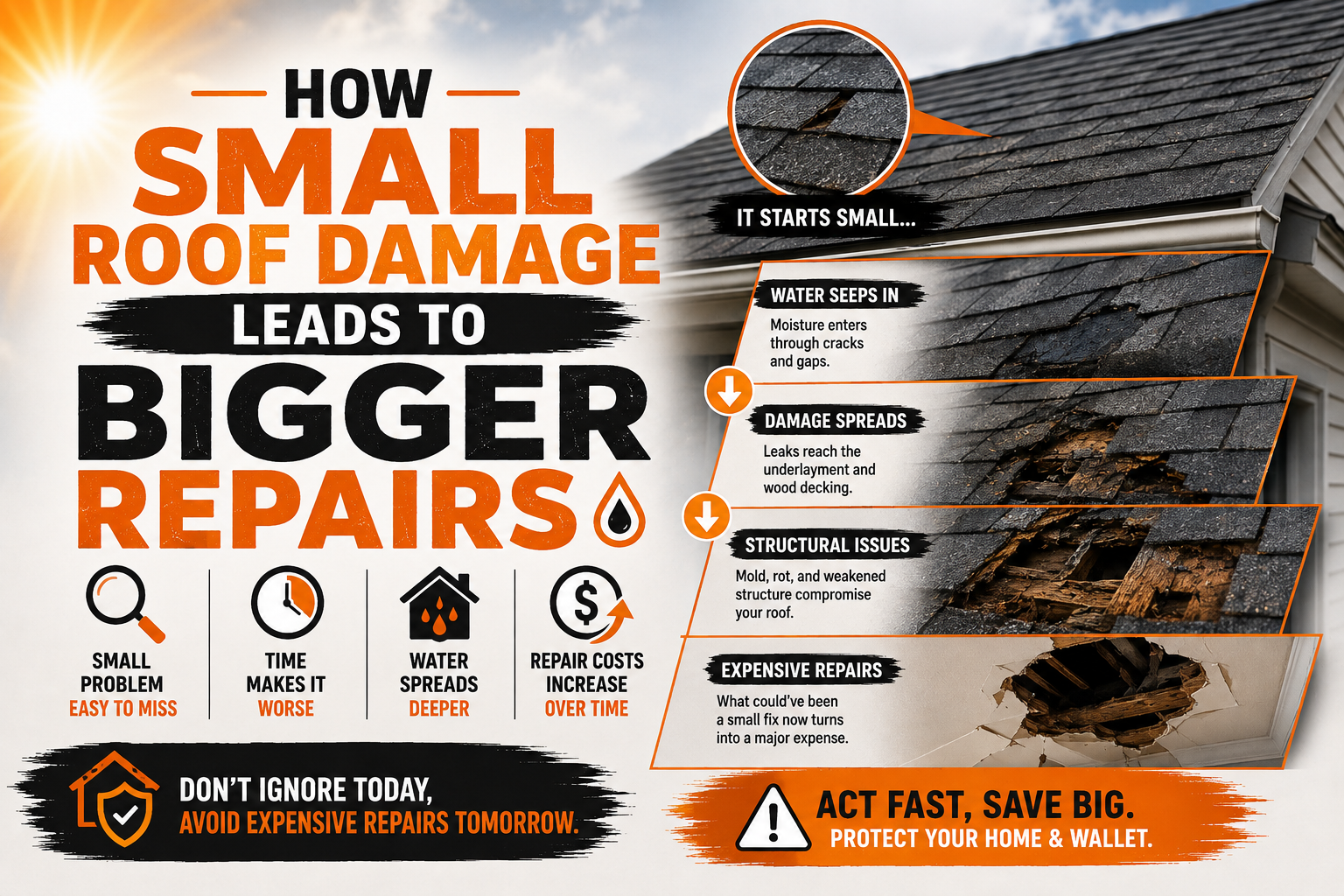
How Small Roof Damage Leads to Bigger Repairs
Introduction
Small roof damage can be easy for homeowners to overlook, especially when the problem does not immediately cause a noticeable leak inside the house. A single missing shingle, a small crack, loose flashing, or minor gutter issue may appear insignificant when compared with larger roofing problems. However, even limited damage can create an opening that allows moisture, wind, and other environmental factors to gradually affect the roofing system.
A roof is made up of several connected components that work together to protect the home. Shingles or other exterior materials form the first line of defense, while underlayment, flashing, decking, insulation, ventilation, and structural components provide additional protection. When one component becomes damaged, the surrounding parts may eventually be affected if the problem is not corrected.
Water is one of the biggest reasons minor roof problems become expensive repairs. Moisture can enter through a very small opening and travel beneath roofing materials before appearing somewhere else. By the time a homeowner notices a ceiling stain, the water may have already affected materials that are hidden from view.
Small damage can also become worse because of repeated exposure to weather. Rain, wind, sunlight, temperature changes, and storms place continuous stress on vulnerable areas. A damaged roofing material that might have remained manageable for a short period can deteriorate much faster when exposed to repeated weather conditions.
Early inspection and timely repair can help prevent this progression. Homeowners do not need to assume that every small roofing issue requires a major project, but they should avoid ignoring visible signs of deterioration. Identifying and addressing a problem while it is still localized can often reduce both repair complexity and overall cost.
Why Small Roof Damage Should Not Be Ignored
Small roof damage deserves attention because the visible defect may only represent the beginning of a larger problem. A missing shingle, for example, exposes the underlying layers to weather. If the opening remains unprotected, rainwater can reach areas that were designed to remain covered.
Wind can make the situation worse by lifting nearby roofing materials. Once one shingle becomes loose, surrounding materials may experience additional stress during subsequent storms. Over time, a small damaged section can develop into a wider area of deterioration.
Cracks and splits can also expand gradually. Roofing materials naturally experience movement as temperatures change, and existing weaknesses may become more pronounced through repeated heating and cooling. A small crack that initially allows little moisture to enter can eventually become a significant pathway for water.
Loose or damaged flashing is another common example. Flashing protects areas where the roof meets chimneys, walls, skylights, vents, and other structures. When flashing separates or deteriorates, water can enter around these vulnerable transitions and potentially reach the materials underneath.
Even minor damage around roof edges should be addressed. The edges are exposed to wind and are closely connected with gutters and other drainage components. If these areas deteriorate, water may move behind exterior materials and affect parts of the home that are difficult to inspect.
Ignoring small damage can also make future repairs more complicated. A contractor may initially be able to replace one damaged component, but prolonged deterioration may require removal of larger sections. This increases labor, material requirements, and project time.
Homeowners should therefore treat small roof problems as early warning signs rather than assuming they will resolve themselves. Prompt evaluation does not necessarily mean expensive work. In many cases, early repairs are much more manageable than repairs performed after months of water exposure.
How Minor Leaks Become Major Water Problems
A small roof leak can develop into a significant problem because water does not always travel directly downward. Once moisture enters beneath the roofing surface, it can move along underlayment, decking, rafters, insulation, or other materials before reaching the interior of the home. This makes it difficult to determine the true source simply by looking at an interior stain.
A small opening around a damaged shingle or flashing component may allow water to enter only during certain weather conditions. Heavy rain, wind-driven rain, or melting snow can push moisture into areas that remain dry during lighter rainfall. As a result, a homeowner may notice the leak only occasionally.
Repeated moisture exposure can gradually weaken roofing materials. Wooden decking may absorb water and become swollen, soft, or deteriorated. If the moisture continues, affected areas may require replacement rather than simple drying or surface repair.
Leaks can also affect attic insulation. Wet insulation may lose some of its effectiveness and can retain moisture for extended periods depending on the material and surrounding conditions. This can contribute to an attic environment where additional moisture-related problems develop.
Another concern is that a leak may remain hidden for a considerable period. Water can collect in small areas or follow structural components without immediately producing an obvious ceiling stain. When visible interior damage finally appears, the roofing problem may already be more extensive than it initially seemed.
Homeowners should pay attention to repeated signs such as water marks, damp areas, peeling paint, musty odors, or moisture around attic components. These signs do not identify the exact source, but they indicate that further inspection may be necessary.
Temporary sealing may sometimes reduce immediate water entry, but it should not replace proper diagnosis. Applying sealant to the visible area without identifying the source can leave the actual pathway open. A professional inspection can determine whether the issue involves shingles, flashing, underlayment, or another roofing component.
Addressing a minor leak early can therefore help prevent the progression from surface damage to widespread moisture damage. The earlier the source is identified, the more opportunities homeowners may have to limit the repair.
Damage to Roof Decking and Underlayment
The visible roofing material is only one part of the roof system. Beneath shingles, tiles, or other exterior coverings are layers that help protect the structure from moisture. When small roof damage allows water through these protective materials, the decking and underlayment can eventually become affected.
Roof decking provides a base for many roofing systems. It is commonly made from wood-based panels that support the exterior roofing materials. When water repeatedly reaches the decking, the material can absorb moisture and gradually lose its strength.
Early decking damage may not be visible from outside. A homeowner may see only a damaged shingle while the wood beneath it is already beginning to deteriorate. This is why a contractor may need to remove some roofing material before determining the full extent of a repair.
Underlayment serves as an additional moisture barrier beneath the primary roofing surface. If a shingle is missing or flashing has failed, water may reach this layer. Once the underlayment becomes damaged or deteriorated, water can move closer to the roof deck.
Small areas of deterioration may be repaired locally. However, if moisture has spread across multiple sections, the repair may become more extensive. The contractor may need to remove surrounding roofing materials to access the affected areas and restore the protective layers properly.
Previous repairs can also complicate the condition of the roof. If several patches have been applied over time, the contractor may find multiple layers of materials or areas where earlier repairs did not fully address the source of water entry.
The condition of the decking and underlayment is therefore an important consideration when evaluating seemingly minor roof damage. Repairing the exterior without addressing damaged underlying components may leave the home vulnerable to future leaks.
How Moisture Affects Attic Insulation and Ventilation
Small roof leaks can affect more than the roof surface because moisture may eventually reach the attic. The attic is an important part of the home’s building system, and excessive moisture can interfere with insulation, ventilation, and surrounding materials.
When water enters through a damaged roof, insulation may become damp. Depending on the material and the amount of moisture, drying may be possible in some situations, while severely affected insulation may require replacement. Continued moisture can also create unpleasant odors and contribute to deterioration.
Ventilation can become another concern. A properly functioning attic ventilation system helps manage heat and moisture, but a roof leak introduces moisture directly into the space. If the moisture remains trapped, the attic environment can become less suitable for the roofing system and surrounding materials.
Wooden rafters and other components may also be affected by prolonged moisture. Even when there is no immediate structural concern, continued exposure can weaken materials over time. This is one reason small roof leaks should not be treated as purely cosmetic issues.
Homeowners may notice warning signs inside the attic, including damp insulation, water marks, discolored wood, or unusual odors. These signs should be investigated rather than covered or ignored.
Repairing the roof source is essential, but the affected attic components may also need evaluation. Simply replacing a damaged shingle will not automatically reverse damage that has already occurred underneath.
Early attention can help keep moisture-related problems limited to the smallest possible area. When a roof defect is repaired promptly, homeowners have a better chance of protecting insulation, ventilation components, decking, and the interior structure from more extensive deterioration.
How Damaged Shingles Create Larger Roofing Problems
Damaged shingles are among the most common small roofing problems homeowners encounter. A shingle may become cracked, curled, loose, or completely missing because of age, wind, hail, falling branches, or improper installation. Although one damaged shingle may not appear serious, leaving it exposed can allow weather to affect the layers beneath it.
Shingles are designed to work together as a protective surface. When one section is missing or damaged, surrounding materials may become more exposed to rain and wind. Water can move beneath nearby shingles and gradually reach the underlayment or roof decking.
Wind can make localized damage worse. A loose shingle may lift repeatedly during windy conditions, putting stress on nearby fasteners and roofing materials. What began as one damaged section can therefore develop into several loose or displaced shingles.
Cracking and curling can also indicate that roofing materials are becoming less effective. Cracked areas may allow moisture to enter, while curled edges can create pathways beneath the shingle surface. Repeated exposure to sunlight and changing temperatures can cause these conditions to become more pronounced.
Granule loss is another warning sign, particularly with asphalt shingles. Some granule loss occurs naturally as shingles age, but significant or sudden loss can indicate damage. When the protective surface becomes compromised, the underlying material may become more vulnerable to weather exposure.
Homeowners should not assume that replacing one shingle will always solve the problem. The contractor may need to examine nearby shingles and the layers underneath to determine whether moisture has already entered. If the surrounding roof is in good condition, a localized repair may be sufficient.
When damaged shingles are ignored, the repair can become more expensive because additional materials may deteriorate. Prompt replacement of isolated damaged shingles can help preserve the surrounding roof and reduce the chance of a larger repair.
Flashing and Roof Penetration Failures
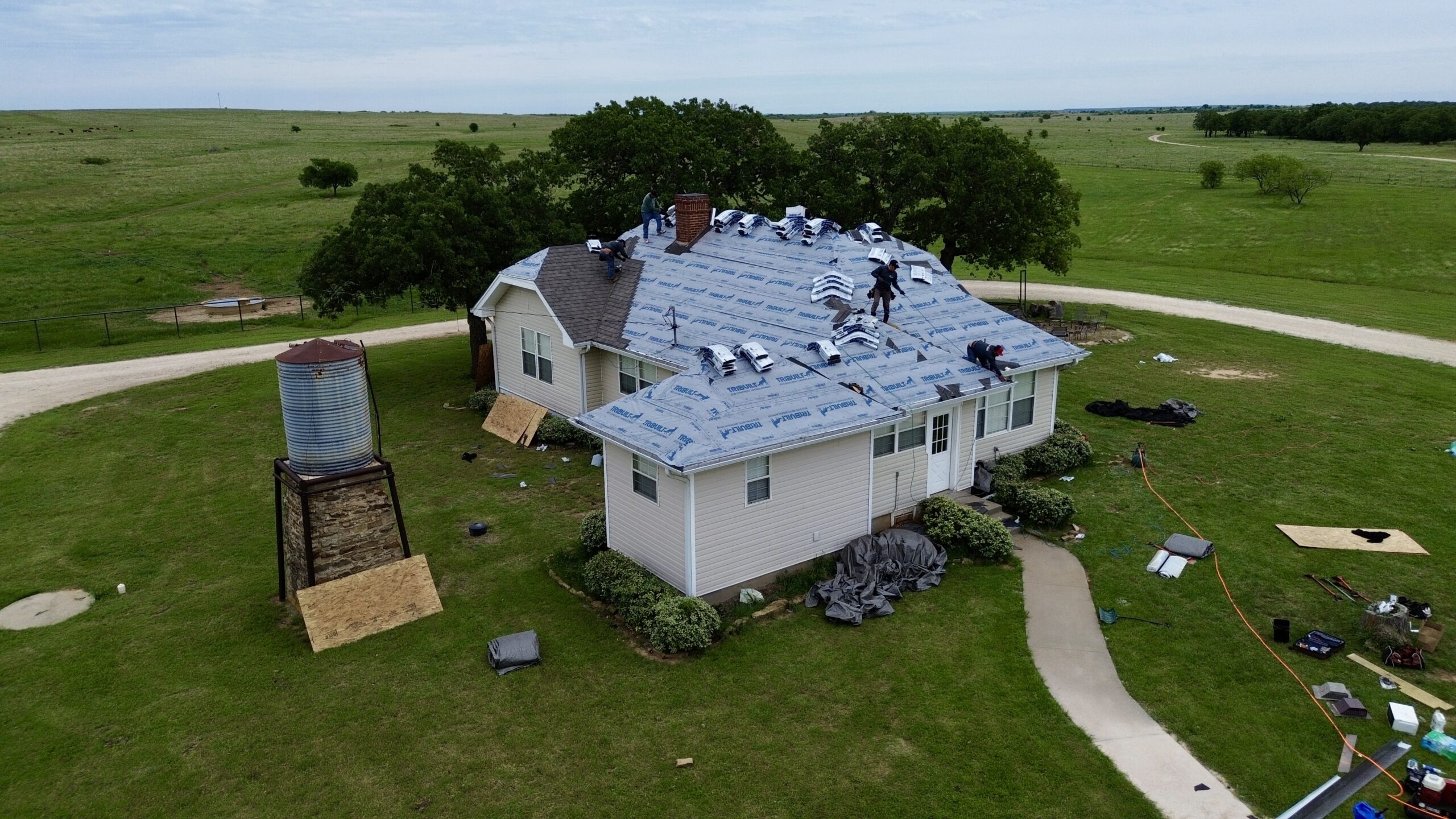
Flashing is installed around areas where roofing materials meet other structures or change direction. Common locations include chimneys, skylights, walls, vents, valleys, and roof edges. These areas are particularly vulnerable because water can collect or change direction around them.
Small flashing damage can therefore create a significant pathway for water. A loose section, cracked seal, corroded metal component, or poorly installed flashing detail may allow moisture to enter beneath the roofing surface.
The problem can be difficult to locate because water does not necessarily appear directly beneath the failed flashing. It may travel along decking or framing before becoming visible inside the house. This can lead homeowners to believe that the leak is coming from another part of the roof.
Sealant deterioration is another issue that can develop over time. Sealants may shrink, crack, or separate because of weather exposure and aging. Applying new sealant may sometimes help with a limited problem, but simply adding more material over a failed flashing system may not provide a durable repair.
Chimneys require particular attention because they involve several transitions between masonry and roofing materials. If flashing around the chimney deteriorates, water can enter the roof assembly and eventually affect nearby decking or attic components.
Skylights and vents can develop similar problems. Their flashing and seals must work with the surrounding roofing materials to prevent water from entering. If one component fails, the surrounding area may require inspection.
Homeowners should treat recurring leaks around roof penetrations as a reason for professional evaluation. A proper repair should address the underlying flashing problem rather than simply covering the visible opening.
Gutters, Drainage, and Water Accumulation
Roof drainage plays an important role in preventing small roofing problems from becoming larger ones. Gutters, downspouts, valleys, and roof slopes are designed to move water away from vulnerable parts of the home. When drainage becomes blocked or damaged, water can remain where it should not.
Blocked gutters are a common example. Leaves, branches, and other debris can prevent water from flowing normally. During heavy rainfall, water may overflow near the roof edge and repeatedly wet surrounding materials.
Damaged or improperly positioned gutters can create similar problems. Water may run behind the gutter or remain close to the roof edge instead of moving toward the downspout. Over time, repeated moisture exposure can contribute to deterioration.
Downspouts are also important because they direct collected water away from the building. If a downspout is blocked or releases water too close to the structure, it can contribute to moisture problems around the foundation and exterior walls.
Roof valleys require particular attention because they collect runoff from multiple roof sections. Debris or deterioration in a valley can interfere with water flow and increase the possibility of leaks. A small problem in this area may become more serious during periods of heavy rainfall.
Homeowners should maintain drainage systems as part of regular roof care. Cleaning gutters, checking downspouts, and removing accessible debris can help water move away efficiently. However, difficult or elevated drainage work should be handled safely rather than creating a fall risk.
If a roof continues to develop leaks despite repairs, drainage should be considered as a possible contributing factor. Fixing the roofing material without correcting a persistent water-management problem may allow the damage to return.
Storm Damage and Hidden Roof Deterioration
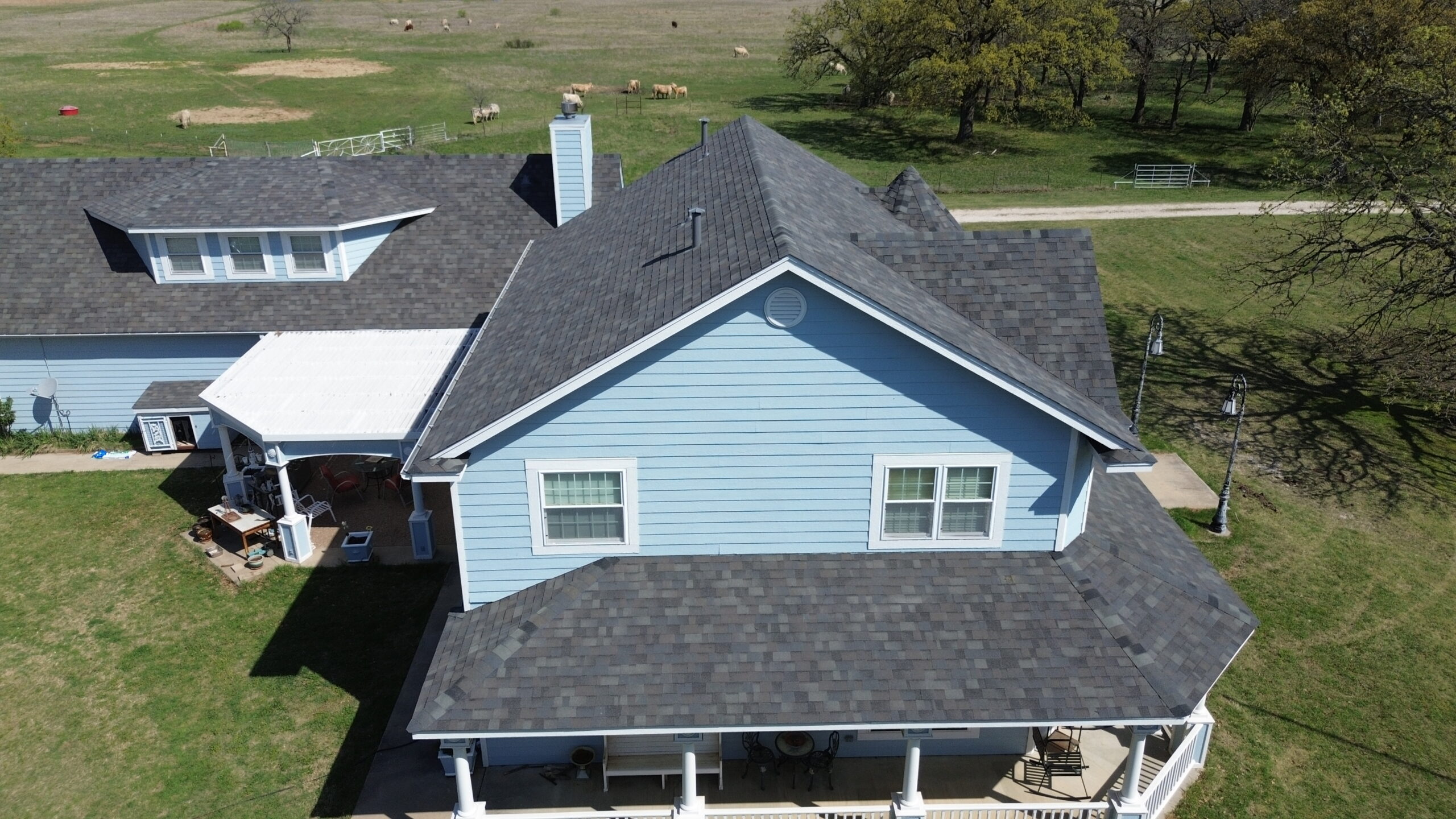
Storms can turn minor roof damage into a much larger problem in a short period. Strong winds, hail, heavy rain, and falling branches can affect roofing materials that were already weakened by age or previous damage. Even when the damage appears limited, hidden deterioration may be present.
Wind can lift or loosen shingles, break seals, and damage flashing. Hail can create small impacts that weaken roofing materials without immediately producing an obvious hole. Heavy rain can then take advantage of these weak areas and introduce moisture into the roof assembly.
Fallen branches can cause more direct damage. A branch may puncture a roofing surface, break several shingles, damage flashing, or affect the decking underneath. The visible opening may be only part of the total damage.
Storms can also expose weaknesses that existed before the event. Older roofing materials may already have reduced flexibility or deteriorated seals. A strong weather event can accelerate these existing problems and make them more noticeable.
After severe weather, homeowners should inspect the property from a safe location. Missing shingles, damaged gutters, fallen branches, and visible openings should be documented. Homeowners should avoid climbing onto a wet or damaged roof to investigate.
A professional inspection can determine whether the damage is localized or widespread. This is particularly useful when the roof appears intact from the ground but the homeowner notices leaks or interior moisture afterward.
Prompt storm-related repairs can help prevent secondary damage. A temporary opening that allows water inside may become increasingly problematic if another storm occurs before permanent repairs are completed.
Structural Problems Caused by Long-Term Moisture
When small roof damage allows water to enter repeatedly, the problem can eventually move beyond roofing materials and affect parts of the home’s structure. Long-term moisture exposure can weaken wood components and create conditions that require more extensive repairs.
Roof decking is particularly vulnerable because it sits directly beneath many roofing systems. Continued moisture can cause wood panels to swell, soften, warp, or deteriorate. Once the decking is compromised, replacing only the exterior roofing material may not be enough.
Rafters and other structural components can also be affected when moisture remains present for long periods. The seriousness of structural deterioration depends on its location and extent, which is why professional evaluation is important when sagging or significant moisture damage is suspected.
Structural problems may not always be visible from outside. The roof may continue to look relatively normal while hidden components are deteriorating. Interior signs such as sagging ceilings, persistent stains, or damp attic materials can indicate that moisture has moved beyond the original roof defect.
Long-term moisture can also affect insulation and other building materials. Once several components are involved, a repair can become more complicated and expensive than the original roofing problem.
Homeowners should not attempt structural repairs simply because the original leak appeared small. If a roof has developed sagging, extensive rot, or significant water damage, professional assessment should come before further work.
Early roof maintenance can reduce the likelihood of reaching this stage. Addressing damaged shingles, flashing, and drainage problems while they remain localized can protect the underlying structure.
How Repeated Temporary Repairs Increase Costs
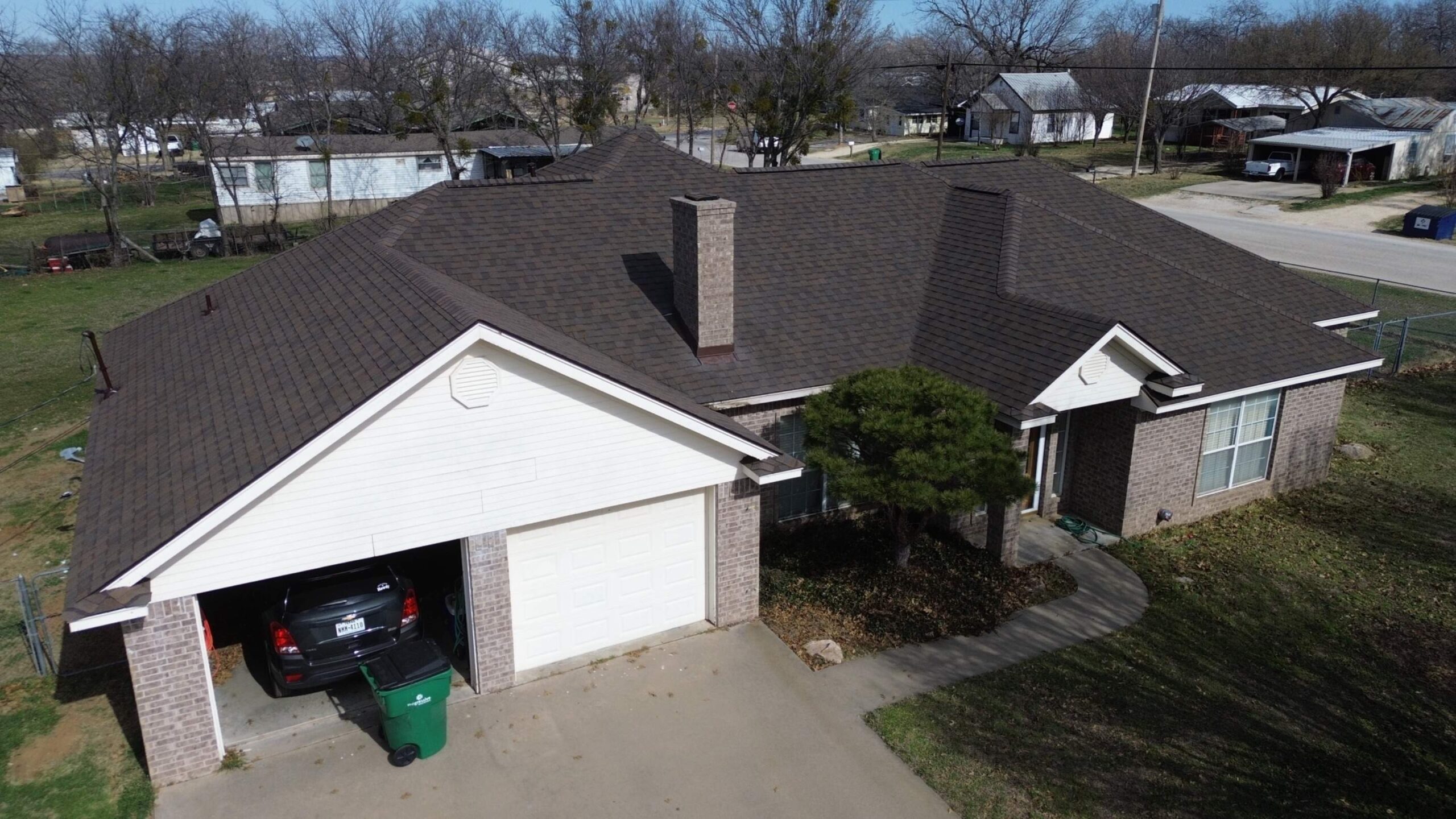
Temporary repairs can be useful when immediate protection is needed, particularly after severe weather or when permanent work cannot be completed immediately. However, repeated temporary fixes can become expensive when they replace proper diagnosis and permanent repair.
A patch may stop visible water temporarily while the underlying problem continues. For example, sealing one area of a roof may reduce a leak without correcting failed flashing or damaged underlayment. The moisture may then return during the next period of heavy rain.
Repeated repairs also add labor and material costs. Homeowners may pay several times to address the same area instead of investing in a complete repair once the actual cause becomes clear.
Multiple patches can make future repairs more difficult. Previous sealants, replacement materials, and overlapping patches may need to be removed before a contractor can properly access the damaged section.
A history of recurring repairs can also indicate that the roof is approaching the end of its useful life. If shingles, flashing, and other components are deteriorating across several areas, continued spot repairs may provide decreasing value.
Homeowners should therefore consider the overall repair history rather than viewing each problem separately. If the same leak returns repeatedly or new problems continue appearing, a professional inspection can help determine whether a broader solution is needed.
Temporary protection has an important role, but it should generally be viewed as a short-term measure. Permanent repairs should address the source of the problem and restore the roof’s ability to protect the home.
The earlier homeowners recognize this distinction, the easier it becomes to prevent small roof damage from turning into a cycle of repeated repairs, hidden moisture, and rising costs.
Warning Signs That Small Roof Damage Is Getting Worse
Small roof problems do not always become major issues immediately, but certain warning signs indicate that deterioration may be progressing. Homeowners should pay attention to changes in the roof and interior of the house instead of waiting until a serious leak develops.
Recurring water stains are one of the clearest warning signs. A stain that becomes darker or larger after rainfall may indicate that moisture is continuing to enter the roof. Even if the area dries between storms, repeated moisture exposure can gradually damage materials underneath.
Homeowners should also watch for visible changes to roofing materials. Missing shingles, curling edges, cracked surfaces, exposed fasteners, loose flashing, or damaged tiles can create openings for water. When several nearby components show deterioration, the problem may be more extensive than one isolated defect.
Inside the attic, damp insulation, water marks, discolored wood, or musty odors can indicate hidden moisture. These signs should not be covered or ignored because they may continue developing even when the exterior roof looks acceptable.
Sagging areas deserve particular attention because they can indicate moisture-related deterioration or other structural concerns. A roof or ceiling that appears uneven should be evaluated professionally rather than treated as a cosmetic issue.
Homeowners may also notice problems around chimneys, skylights, vents, and roof valleys. These areas contain transitions where water can enter if flashing or seals deteriorate.
A useful warning sign is a growing repair history. If the same section requires repeated patches or new leaks continue appearing in different locations, the roof may have broader deterioration. In such cases, continuing to repair individual symptoms may not be the most practical approach.
Early recognition gives homeowners more choices. A small problem can often be repaired without replacing large sections when it is identified before water spreads into the underlying roof system.
When Minor Roof Damage Requires Professional Inspection
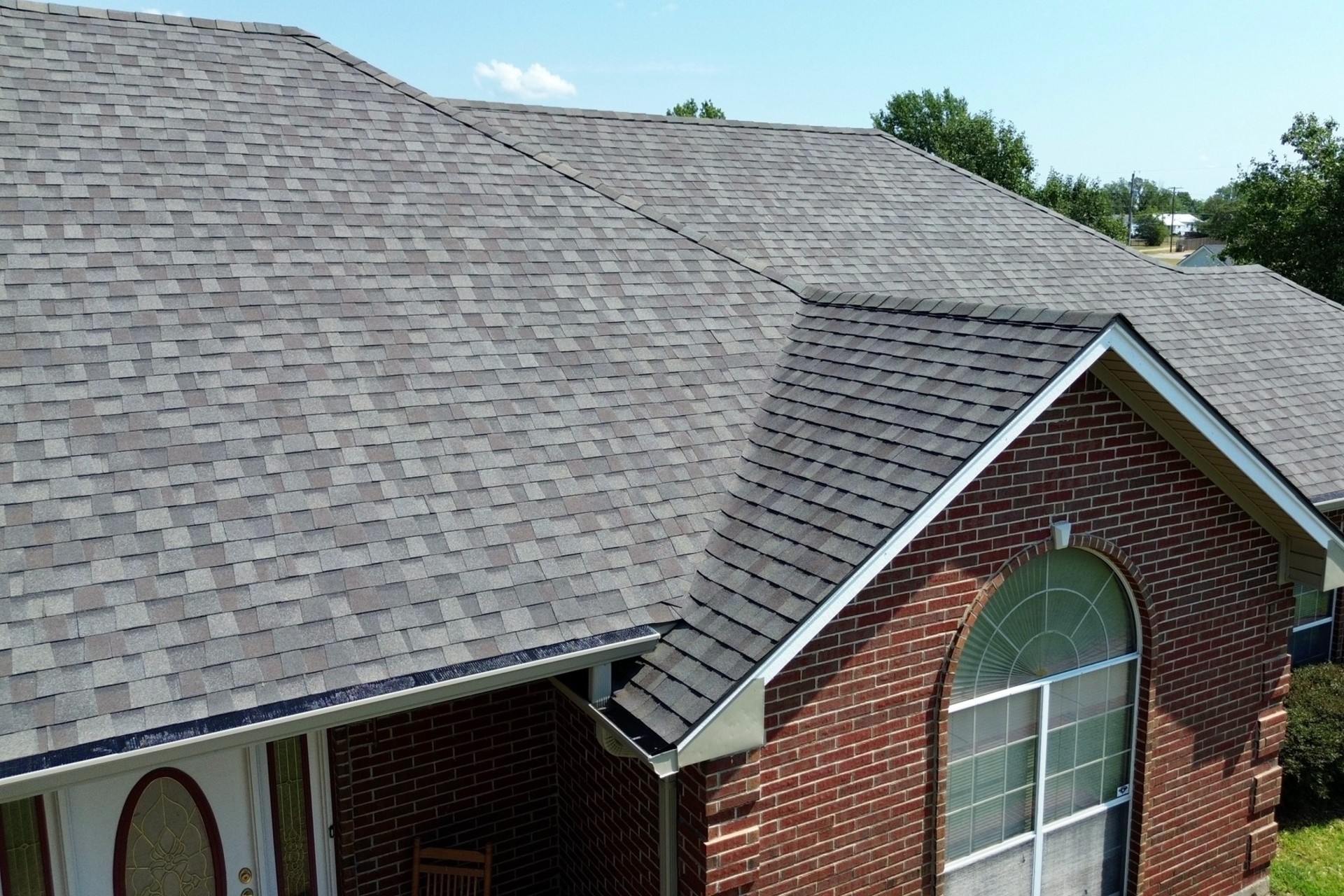
Not every small defect requires immediate professional repair, but certain conditions justify an inspection. The most important factor is uncertainty about the cause or extent of the damage.
A professional inspection is particularly useful when a leak continues after a previous repair. Recurring water entry suggests that the original repair may not have addressed the actual source. Water can travel beneath roofing materials, making the visible location misleading.
Professional help is also recommended when the roof is difficult to access. Steep slopes, multiple levels, fragile materials, and limited working areas increase fall risks and make DIY investigation more dangerous.
Damage involving flashing should receive careful attention. Flashing around chimneys, skylights, walls, and vents must work correctly with the surrounding roofing materials. A simple-looking separation may indicate a larger problem beneath the surface.
Storm damage is another reason to consider inspection. Hail, wind, and falling branches can create defects that are difficult to identify from the ground. A professional can assess whether roofing materials have been loosened or weakened even when there is no obvious opening.
Older roofs may also benefit from professional evaluation when small problems begin appearing more frequently. Age-related deterioration can affect several components at the same time, making repeated spot repairs less effective.
Professional inspection does not automatically mean full replacement. A qualified contractor can determine whether the problem can be addressed with a localized repair or whether more extensive work is necessary.
The purpose of inspection is to understand the condition of the roof before making a financial decision. This can help homeowners avoid both unnecessary replacement and insufficient repairs.
Preventing Small Roofing Problems From Becoming Major Repairs
Prevention is one of the most effective ways to control residential roofing costs. Homeowners cannot prevent every storm or aging-related problem, but regular attention can reduce the chance that minor damage will remain unnoticed.
Routine visual inspections can help identify obvious issues before they develop further. Homeowners can safely examine the roof from the ground for missing materials, fallen branches, damaged gutters, and other visible changes.
Gutters and downspouts should also be kept clear so rainwater can move away from the roof efficiently. Blocked drainage can cause water to overflow near vulnerable roof edges and contribute to repeated moisture exposure.
Trees near the home should be maintained as well. Overhanging branches can scrape roofing materials, drop debris into drainage systems, or fall onto the roof during storms. Proper trimming can reduce these risks.
After severe weather, homeowners should check for visible signs of damage. This does not require climbing onto the roof. A ground-level inspection can reveal missing shingles, fallen branches, damaged gutters, or other obvious problems that justify further evaluation.
Attic inspections can also help identify moisture problems when they can be performed safely. Homeowners may look for damp insulation, stains, or unusual odors, although complex or unsafe attic conditions should be assessed by a professional.
Maintenance records are useful because they provide a history of previous repairs and inspections. Keeping photographs, invoices, warranty information, and contractor reports can make it easier to recognize recurring problems.
The most important preventive practice is responding promptly when damage is discovered. A small repair performed at the right time can prevent moisture from reaching more expensive components.
Repair Versus Replacement Considerations
When roof damage becomes more extensive, homeowners may need to decide whether repairing the existing roof remains practical. A single damaged area does not normally mean that the entire roof requires replacement. However, widespread deterioration can change the financial and practical calculation.
Roof age is an important consideration. A relatively new roof with isolated damage may have many years of useful service remaining. Repairing a limited defect may therefore provide good value.
An older roof with repeated leaks may be a different situation. If shingles, flashing, underlayment, and other components are deteriorating in several areas, continuing to repair one problem at a time may become increasingly expensive.
The condition of the roof deck also matters. If multiple areas of decking are damaged by long-term moisture, the project may become more extensive. The homeowner should understand whether the proposed repair addresses only the exterior materials or also the underlying damage.
Repair history can provide valuable information. A roof that has required several repairs within a short period may be showing signs of broader deterioration. This does not automatically require replacement, but it is a reason to request a comprehensive assessment.
Material availability can also affect the decision. Older roofing systems may use products that are difficult to match or integrate with newer materials. A contractor can explain whether suitable repair materials are available.
Homeowners should compare the expected cost of repairs with the remaining service life of the roof. Spending repeatedly on repairs may make less financial sense when the roof is already near the end of its expected life.
The decision should be based on the actual condition of the roof rather than pressure or assumptions. A detailed inspection can help homeowners understand whether repair or replacement provides the better long-term solution.
Maintenance Practices That Protect the Roof
Good maintenance can extend the useful performance of a residential roof and reduce the likelihood of small problems becoming major repairs. Maintenance does not mean making constant changes to the roof. It means observing its condition and addressing developing issues before they become more difficult.
Keeping drainage systems functioning properly is one of the most important practices. Gutters and downspouts should be checked periodically for blockages, damage, and poor water flow.
Roof surfaces should also be kept reasonably clear of unnecessary debris. Leaves, branches, and accumulated materials can retain moisture or interfere with drainage. Homeowners should use safe ground-level methods or hire professionals when roof access is difficult.
Flashing and roof penetrations deserve special attention during inspections. Chimneys, skylights, vents, and other openings should be checked for visible deterioration. Problems in these areas can allow water to enter beneath otherwise healthy roofing materials.
Ventilation should also be considered as part of overall roof maintenance. Proper attic ventilation can help manage heat and moisture conditions, although homeowners should avoid changing ventilation systems without understanding how the existing system works.
After repairs, homeowners should monitor the previously damaged area during future rainfall. If water stains return or new signs of moisture appear, the contractor should be contacted rather than allowing the problem to continue.
Homeowners should avoid applying excessive sealants or patches without understanding the cause of a problem. Improvised repairs may temporarily hide symptoms while allowing underlying deterioration to continue.
Regular maintenance is most effective when combined with professional inspections when necessary. A homeowner’s observations can identify potential problems, while professional evaluation can provide a more detailed assessment of difficult or uncertain conditions.
Planning Timely Roof Repairs
Timely repairs require more than simply calling a contractor after water enters the home. Homeowners can plan ahead by responding to visible deterioration and arranging inspections before problems become emergencies.
When damage is discovered, homeowners should document it with photographs and notes. Recording when the issue appeared and whether it changes after rainfall can provide useful information during an inspection.
Obtaining a detailed written estimate is also important. The estimate should explain the damaged components, proposed repair, materials, labor, cleanup, and any conditions that could affect the final cost.
Homeowners should ask whether hidden damage could be discovered after roofing materials are removed. If additional work may be necessary, the contractor should explain how that work will be documented and approved.
Scheduling repairs before severe weather can also reduce risk when the problem is already known. A damaged roof may become more vulnerable during heavy rainfall or strong winds, so delaying an obvious repair can increase the potential for secondary damage.
Homeowners should avoid selecting a contractor based only on the lowest estimate. A significantly lower price may reflect a smaller scope of work or exclude important components. Comparing the details of each proposal provides a more accurate picture of value.
Planning also means considering safety. If a roof is steep, high, wet, or visibly damaged, homeowners should not attempt to inspect or repair it personally. Professional access equipment and experience can reduce unnecessary risk.
A timely repair does not always need to be a large project. The purpose is to address the problem while it remains manageable and prevent it from spreading.
Long-Term Cost Benefits of Early Roof Maintenance
The financial benefits of early roof maintenance become clearer when the potential progression of damage is considered. A small roofing defect may initially require only a localized repair, while prolonged water exposure can eventually involve several additional components.
For example, replacing one damaged shingle is generally a smaller project than replacing multiple sections of deteriorated roofing, underlayment, and decking. If moisture reaches insulation or interior finishes, additional restoration may also be necessary.
Early maintenance can also reduce emergency repair situations. Emergency work may require temporary protection, urgent scheduling, and additional labor. Addressing known problems during normal conditions can provide more time to compare options and plan the project.
Preventive maintenance can also help homeowners make better replacement decisions. Regular inspections provide information about how the roof is aging and whether problems are isolated or becoming widespread.
Keeping detailed records makes this process easier. Homeowners can compare previous repairs, identify recurring areas, and track the overall condition of the roof over time.
The goal is not to spend money on unnecessary maintenance. Instead, it is to spend appropriately on small problems before they create more expensive consequences.
Conclusion
Small roof damage can become a major repair when it is ignored, improperly repaired, or repeatedly exposed to weather. A missing shingle, cracked material, damaged flashing component, or drainage problem may create an opening through which water can reach underlayment, decking, insulation, and eventually the interior of the home.
The progression is often gradual, which makes early warning signs especially important. Recurring leaks, growing stains, damp attic materials, damaged roofing components, sagging areas, and repeated repairs can indicate that a seemingly minor issue is becoming more serious.
Regular maintenance can help prevent this progression. Keeping gutters clear, maintaining nearby trees, checking for visible damage after storms, monitoring previous repair areas, and arranging professional inspections when necessary can protect the roof and reduce unexpected costs.
Homeowners should also understand that repair and replacement are different decisions. A localized problem on an otherwise healthy roof may be effectively repaired, while an aging roof with widespread deterioration and repeated leaks may require a broader solution.
Professional inspection is particularly valuable when the source of a leak is unclear or when damage involves difficult access, flashing, structural components, or storm-related deterioration. A professional can identify hidden problems and determine the appropriate scope of work.
The most effective approach is to treat small roof damage as an early warning rather than an issue that can be postponed indefinitely. Prompt attention can keep repairs smaller, protect the home’s interior, reduce the likelihood of structural deterioration, and provide better long-term value. By combining regular maintenance with timely professional evaluation, homeowners can prevent minor roofing problems from developing into costly and disruptive repairs.
Leave A Comment