
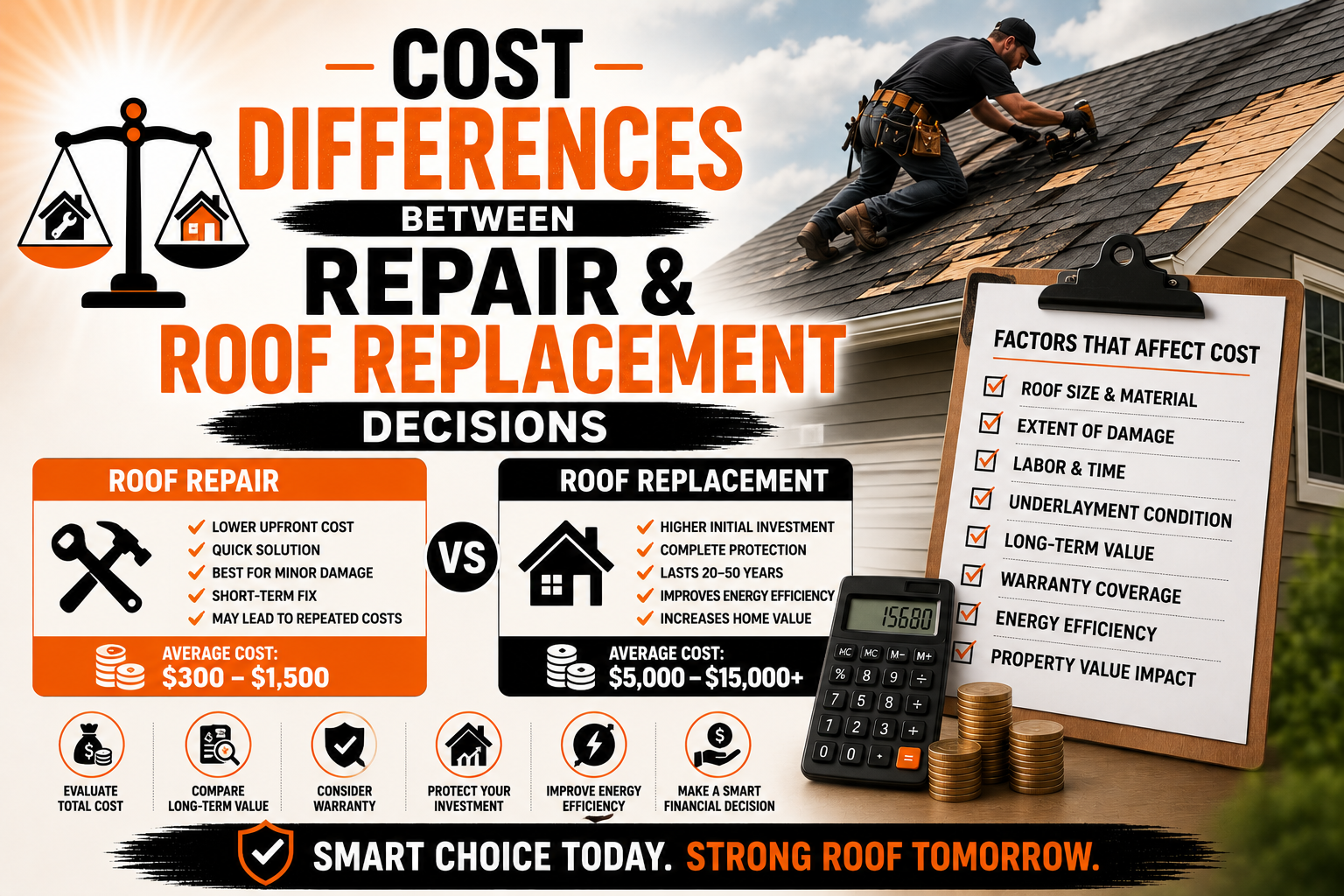
Cost Differences Between Repair and Roof Replacement Decisions
Introduction
Every homeowner eventually faces an important question when roofing problems appear. Should the roof be repaired, or is it time for a complete replacement? The answer is rarely simple because both options involve different costs, long-term benefits, and financial consequences. Choosing the right solution requires looking beyond the immediate price and understanding how each decision affects the home’s future.
Many homeowners naturally prefer repairs because they require a smaller upfront investment. Replacing a few shingles, repairing flashing, or sealing a leak often costs far less than installing an entirely new roof. However, a lower initial cost does not always represent the most economical choice if the roof continues requiring frequent repairs over the following years.
A full roof replacement involves a significantly larger financial commitment. The project includes removing the old roof, inspecting structural components, installing new roofing materials, and updating important elements such as underlayment and flashing. Although the initial expense is much higher, replacement often reduces future maintenance costs while extending the roof’s service life for decades.
The correct decision depends on several important factors. Roof age, damage severity, structural condition, roofing materials, repair history, and future ownership plans all influence whether repairing or replacing the roof provides better long-term value. Looking at only today’s repair bill can sometimes lead to higher overall expenses later.
Understanding the financial differences between repair and replacement helps homeowners make informed decisions instead of reacting only to immediate roofing problems. Evaluating both short-term affordability and long-term investment value creates a more balanced approach to roof maintenance.
This guide explores the cost differences between roof repair and complete roof replacement. By comparing initial expenses, ongoing maintenance, hidden costs, and long-term financial benefits, homeowners can determine which solution best protects both their property and their budget.
Understanding Roof Repair Versus Roof Replacement
Roof repair and roof replacement serve different purposes, even though both aim to protect the home from weather damage. Understanding the distinction between these two approaches helps homeowners evaluate which solution is most appropriate for their particular roofing situation.
Roof repair focuses on correcting specific problems while preserving the majority of the existing roofing system. Contractors typically replace damaged shingles, repair flashing, seal leaks, reinforce small structural areas, or correct isolated storm damage without disturbing the rest of the roof.
Repairs are generally most effective when the roof remains relatively young and most roofing materials are still in good condition. Addressing localized damage early often extends the roof’s lifespan while avoiding the larger investment associated with complete replacement.
Roof replacement involves removing the existing roofing materials and installing an entirely new roofing system. This process includes replacing shingles, underlayment, flashing, and other supporting components while inspecting the roof structure for hidden damage.
Replacement becomes the more practical option when roofing problems affect large sections of the roof or when the roofing materials have reached the end of their expected lifespan. Attempting repeated repairs on an aging roof often becomes less effective as deterioration continues spreading across multiple areas.
Another important difference involves long-term reliability. Repairs correct existing damage but do not reverse the natural aging process of surrounding roofing materials. Replacement, however, restores the entire roofing system and provides a fresh service life supported by new materials and modern installation techniques.
Professional roof inspections help homeowners determine whether repairs remain practical or whether replacement offers greater long-term value. Contractors evaluate the overall condition of the roof rather than focusing only on individual damaged areas.
Understanding the purpose of each option provides a strong foundation for comparing their financial impact. Choosing between repair and replacement involves much more than comparing prices because both solutions provide different long-term outcomes.
Major Factors That Influence the Cost Difference
The financial difference between repairing a roof and replacing it depends on numerous factors rather than a single fixed price. Understanding these variables helps homeowners recognize why two similar roofing problems sometimes require very different financial solutions.
Roof age is one of the most influential factors. Newer roofs often respond well to isolated repairs because the surrounding materials remain structurally sound. Older roofs, however, frequently develop multiple areas of deterioration at the same time, reducing the effectiveness of localized repairs.
The extent of damage also affects overall cost. A few missing shingles or minor flashing repairs typically require much smaller investments than widespread moisture damage affecting multiple roof sections. Larger damaged areas often increase labor requirements while making replacement more practical.
Roof size directly influences both repair and replacement costs. Larger roofs require more materials, longer installation times, and additional labor regardless of which solution is selected. However, the difference becomes even more noticeable during complete replacement because every roofing component must be installed across the entire surface.
Roofing material selection also plays a major role. Asphalt shingles generally remain less expensive to repair or replace than premium materials such as slate, clay tile, or metal roofing. Specialized roofing products may also require experienced installers, increasing labor costs.
Labor rates vary depending on project complexity, roof pitch, accessibility, and local market conditions. Steep roofs, multiple roof levels, dormers, skylights, and difficult access all increase installation time, affecting both repair and replacement expenses.
Regional pricing differences contribute additional variation. Local labor markets, building codes, permit requirements, transportation costs, and material availability all influence the overall cost of roofing projects in different geographic areas.
Previous repair history should also be considered. A roof that has already undergone multiple repairs may continue developing new problems despite additional maintenance. In these situations, replacement often becomes a more financially stable long-term solution.
Evaluating all these factors together provides a more accurate comparison than considering only the visible damage or the initial repair estimate.
Initial Cost Comparison Between Repairs and Replacement
One of the biggest differences between roof repair and roof replacement is the initial financial investment. Repairs generally require much lower upfront costs, making them appealing for homeowners seeking immediate solutions to isolated roofing problems.
Minor repairs often involve replacing damaged shingles, sealing leaks, repairing flashing, or correcting localized storm damage. Since contractors work only on affected areas, material requirements remain relatively limited while installation takes significantly less time than replacing an entire roof.
Complete roof replacement represents a much larger project. Contractors remove the old roofing materials, inspect the roof structure, replace damaged components if necessary, and install a completely new roofing system. This process requires substantially more labor, materials, equipment, and project coordination.
Although replacement costs are considerably higher initially, homeowners should avoid comparing only the first invoice. A lower repair cost today may lead to repeated maintenance expenses if the roof continues deteriorating over the following years.
Repair projects also become less predictable as roofs age. Replacing one damaged section may temporarily solve a problem, but nearby roofing materials approaching the end of their lifespan often require additional attention shortly afterward. These recurring repairs gradually increase total ownership costs.
Replacement offers the advantage of starting with an entirely new roofing system. Modern materials, updated underlayment, improved flashing, and current installation standards provide long-term protection that typically reduces maintenance expenses for many years.
The financial comparison therefore extends beyond the immediate price difference. While repairs minimize today’s costs, replacement often reduces future repair frequency while improving the overall reliability of the roofing system.
Understanding the relationship between initial investment and long-term ownership costs helps homeowners evaluate which option delivers greater overall financial value.
How Roof Age Affects Financial Decisions
Roof age plays a central role in determining whether repair or replacement provides the better financial outcome. Roofing materials naturally deteriorate over time, and the remaining expected lifespan strongly influences the value of additional repairs.
Roofs that are relatively new often respond well to localized repairs. If storm damage affects only a small area while the remaining shingles remain in excellent condition, repairing the damaged section usually restores full performance without requiring unnecessary replacement.
As roofs approach the middle of their expected lifespan, financial decisions become more balanced. Contractors evaluate the condition of surrounding roofing materials, previous repair history, and overall structural integrity before recommending either repairs or replacement.
Older roofs present a different financial situation. Years of sunlight, rain, wind, temperature changes, and normal aging gradually weaken roofing materials throughout the entire system. Even if visible damage appears limited, surrounding shingles may already be approaching failure.
Repeated repairs on aging roofs often produce diminishing returns. Homeowners may successfully stop one leak only to experience another problem elsewhere a few months later. As repair frequency increases, the combined expense gradually approaches the cost of complete replacement.
Matching replacement shingles also becomes more difficult as roofs age. Older roofing products fade because of weather exposure, making new repairs more noticeable while doing little to improve the remaining roof’s condition.
Future ownership plans also influence age-related decisions. Homeowners intending to remain in the property for many years often benefit more from investing in a complete replacement rather than continuing temporary repairs on an aging roof.
Professional roof inspections consider both chronological age and actual material condition. Some roofs age faster because of harsh climates, poor ventilation, or previous storm damage, making condition just as important as the roof’s actual age.
Evaluating roof age alongside repair costs helps homeowners choose solutions that maximize long-term financial value instead of simply minimizing immediate expenses.
Types of Roof Damage and Their Financial Impact
The type of roofing damage often determines whether repair or replacement provides the most practical financial solution. Some problems remain isolated and inexpensive to correct, while others indicate widespread deterioration that makes complete replacement more economical.
Minor leaks frequently result from damaged flashing, isolated missing shingles, or small weather-related defects. When discovered early, these issues usually require localized repairs that restore the roof without affecting the surrounding materials significantly.
Wind damage often creates another situation where repairs remain appropriate. Replacing several missing shingles after a storm generally costs much less than replacing an otherwise healthy roof. Prompt repairs also prevent moisture from reaching structural components beneath the roofing surface.
Widespread shingle deterioration presents a different financial picture. Curling, cracking, granule loss, blistering, and extensive surface wear across multiple roof sections usually indicate that the roofing materials have reached the end of their useful lifespan. Continuing repairs under these conditions often becomes increasingly expensive.
Structural damage greatly increases repair costs regardless of the roof’s age. Moisture-damaged roof decking, deteriorated framing, wood rot, or weakened fascia boards require more extensive repairs before new roofing materials can be installed safely.
Repeated leak locations also influence financial decisions. If water intrusion occurs in several areas over a relatively short period, the roof may be experiencing system-wide deterioration rather than isolated defects. Replacement often provides a more dependable long-term solution than continuing localized repairs.
Storm damage affecting an already aging roof frequently shifts the financial balance toward replacement. While repairing isolated damage on a newer roof may be cost-effective, severe weather can push older roofing materials beyond practical recovery.
Accurately identifying the type and extent of roof damage is essential before making financial decisions. Professional inspections help homeowners distinguish between problems that can be repaired economically and conditions where complete replacement provides greater long-term value.
Long-Term Maintenance Costs
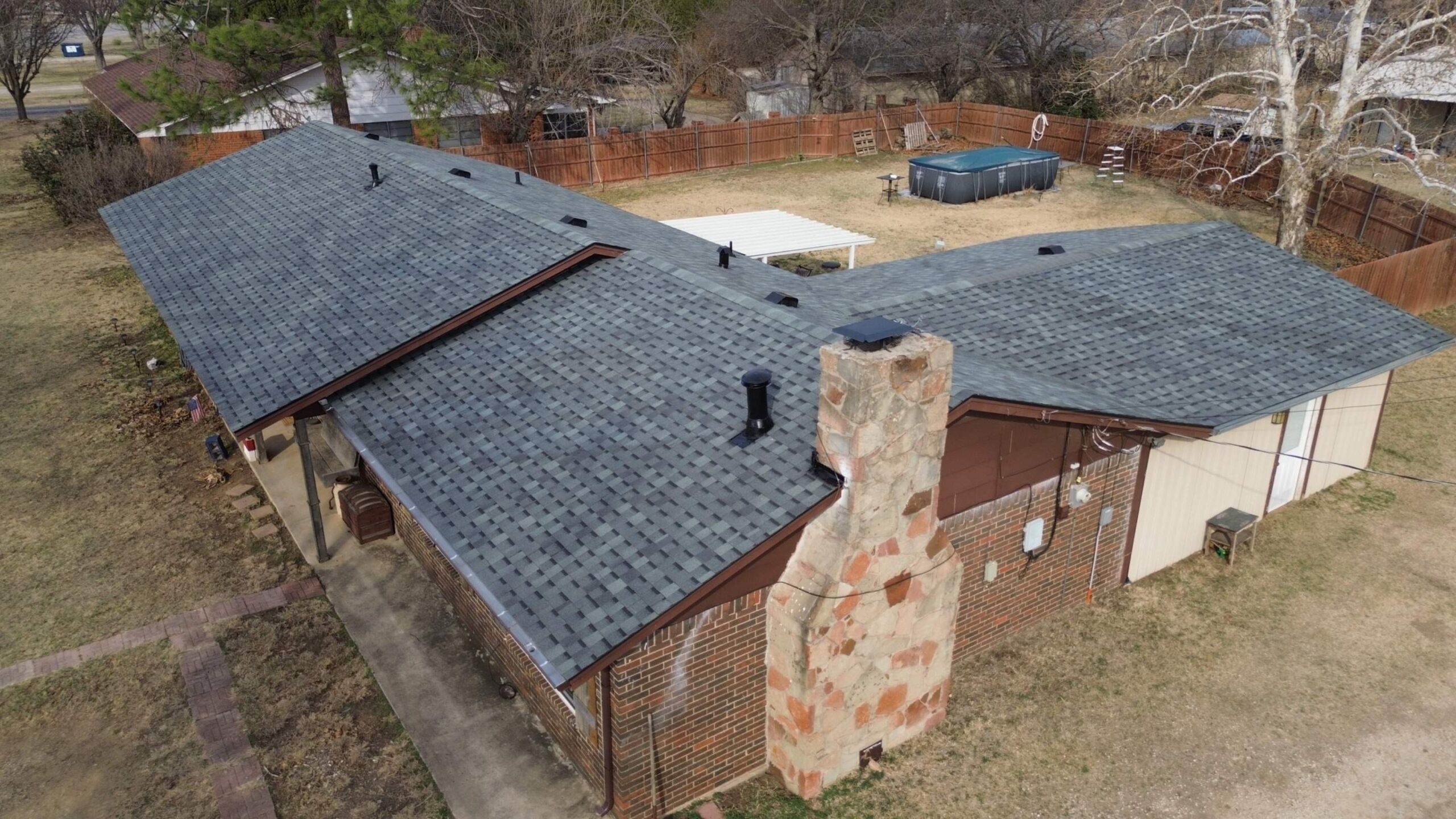
The financial comparison between roof repair and roof replacement extends far beyond the initial project cost. While repairs generally require a smaller investment upfront, long-term maintenance expenses often determine which option ultimately provides the best value over the life of the roof.
A well-executed repair can successfully resolve isolated roofing problems and extend the service life of a relatively new roof. Replacing a few damaged shingles, repairing flashing, or sealing a minor leak often prevents further deterioration while keeping maintenance costs low for several years.
The situation changes as roofs continue aging. Older roofing materials gradually become more vulnerable to weather, making new problems appear more frequently. Homeowners may repair one section only to discover another leak or damaged area shortly afterward.
Repeated maintenance visits gradually increase total ownership costs. Although each repair may seem affordable individually, the combined expense over several years can eventually approach or even exceed the cost of a complete roof replacement.
Recurring repairs also create indirect costs. Scheduling contractors, monitoring new leaks, repairing interior water damage, and dealing with repeated disruptions consume both time and money beyond the repair invoice itself.
A complete roof replacement usually requires very little maintenance during its early years. Routine inspections, gutter cleaning, and occasional preventive maintenance often become the primary responsibilities rather than frequent structural repairs or recurring leak corrections.
Modern roofing systems also include updated materials designed for improved durability. Better underlayment, enhanced flashing, and stronger shingles reduce the likelihood of premature failures while extending the intervals between maintenance visits.
When evaluating financial value, homeowners should compare expected maintenance expenses over many years rather than focusing only on the immediate repair bill. Long-term ownership costs often reveal that replacement provides greater financial stability despite its higher initial investment.
Energy Efficiency and Utility Savings
Energy efficiency is another important financial consideration when deciding between repairing an existing roof and installing a completely new roofing system. Although repairs restore localized damage, they rarely improve the overall thermal performance of an aging roof.
Many older roofs were installed using materials and ventilation systems that no longer reflect current construction practices. Heat buildup during summer and moisture accumulation during winter reduce energy efficiency while placing additional stress on heating and cooling systems.
A complete roof replacement provides the opportunity to improve several energy-related components simultaneously. Updated underlayment, balanced attic ventilation, improved insulation, and modern roofing materials work together to regulate attic temperatures more effectively.
Better ventilation helps remove excessive heat during warmer months while reducing moisture accumulation throughout the year. These improvements create a more stable indoor environment while reducing unnecessary workload on heating and cooling equipment.
Modern roofing materials also offer improved solar reflectivity in many cases. Certain shingles and roofing products reflect more sunlight than older materials, reducing roof surface temperatures and helping improve overall energy efficiency.
Repair projects generally focus only on correcting damaged areas without replacing the surrounding roofing system. As a result, older materials continue performing at their existing efficiency levels, limiting the opportunity for meaningful energy improvements.
Lower utility costs may gradually offset part of the replacement investment over many years. Although savings vary depending on climate, insulation quality, and roofing materials, improved energy performance contributes additional long-term financial value.
Considering future utility expenses alongside repair and replacement costs provides homeowners with a more complete understanding of total roof ownership costs rather than evaluating only immediate construction expenses.
Property Value and Return on Investment
The decision between repairing a roof and replacing it also affects the home’s market value and long-term return on investment. While both options help protect the property, they influence buyer perception and resale potential in different ways.
Roof repairs preserve the condition of a roof that still has significant remaining service life. When repairs are completed professionally and the roof remains in otherwise excellent condition, homeowners often maintain property value while avoiding unnecessary replacement expenses.
An aging roof with multiple visible repairs creates a different impression. Potential buyers may view recurring repairs as evidence that replacement will soon become necessary, reducing confidence in the property’s overall condition. This perception sometimes influences negotiations during the sale process.
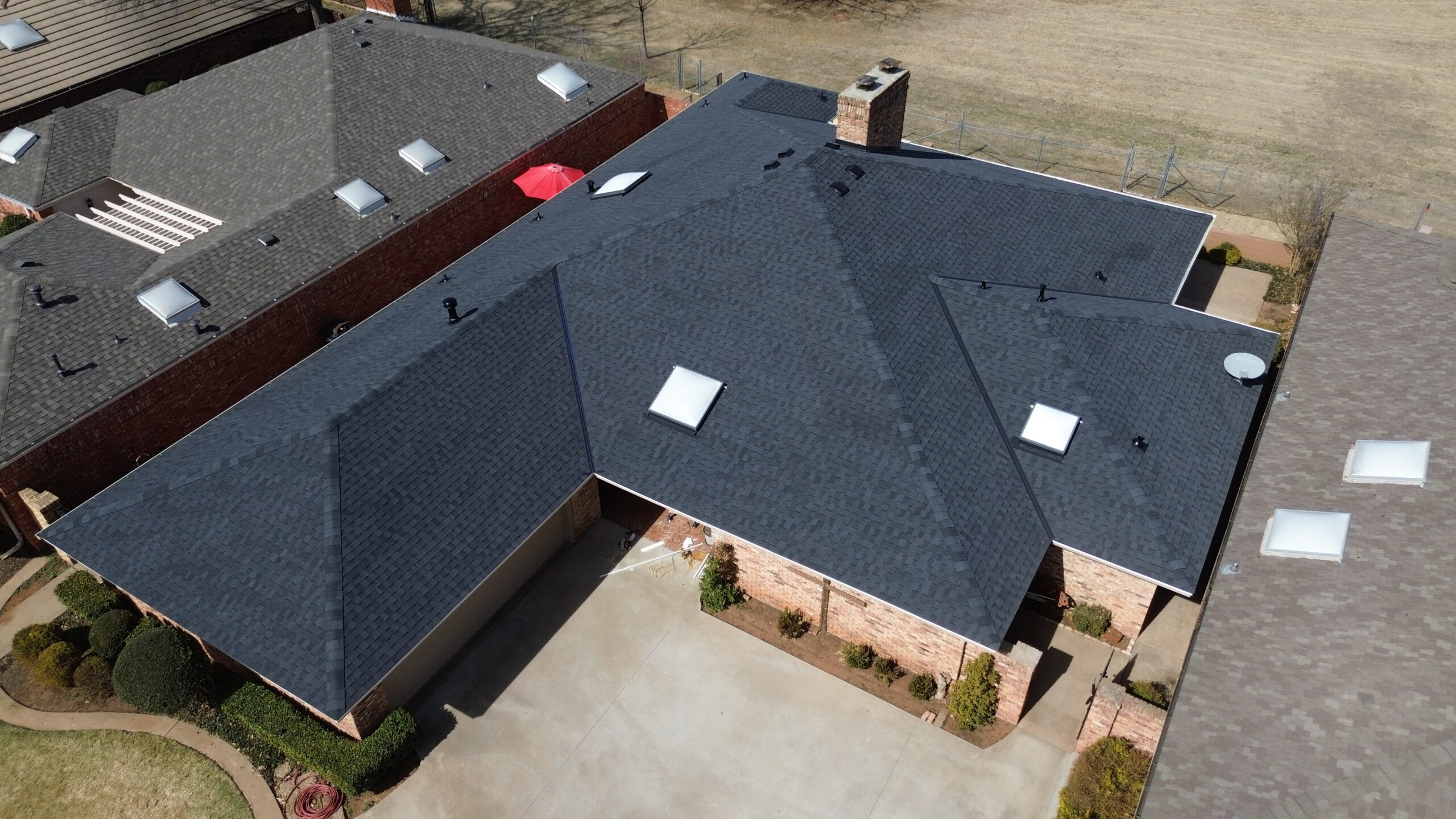
A newly installed roof often provides stronger resale advantages. Buyers recognize that they are less likely to face major roofing expenses immediately after purchasing the home, making the property more attractive compared to homes with aging roofing systems.
Curb appeal also improves significantly after complete roof replacement. Fresh roofing materials create a clean, well-maintained appearance that contributes positively to the home’s overall presentation and perceived value.
Real estate professionals frequently identify the roof as one of the most visible structural components affecting buyer confidence. A professionally installed roof supported by manufacturer warranties often provides reassurance regarding future maintenance responsibilities.
Long-term ownership plans also influence investment value. Homeowners intending to remain in their property for many years benefit from reduced maintenance costs and improved reliability, while those planning to sell may recover part of the replacement investment through increased property appeal.
Although replacement involves greater upfront cost, its contribution to property value and marketability often strengthens the overall financial return compared to repeated repairs on an aging roof.
Insurance Considerations
Insurance coverage plays an important role when homeowners compare roof repair and replacement costs. Understanding how insurance policies apply to different roofing situations helps homeowners evaluate their true financial responsibilities before making a decision.
Most homeowners insurance policies cover sudden damage caused by events such as hail, wind, falling trees, or severe storms when those events are specifically included in the policy. If the roof is damaged by a covered event, insurance may contribute toward repair or replacement costs after the applicable deductible has been paid.
Normal aging, gradual wear, and lack of maintenance are generally not covered by insurance. If roofing materials have simply reached the end of their expected lifespan, homeowners typically remain responsible for replacement costs without financial assistance from their insurance provider.
Insurance adjusters evaluate both the cause and extent of roof damage before determining whether repairs or complete replacement are appropriate. Their assessment considers the condition of the roof before the incident as well as the severity of the covered damage.
Policy deductibles directly influence out-of-pocket expenses. Even when insurance approves a claim, homeowners must usually pay the deductible before coverage applies. This amount should be considered when comparing repair and replacement costs.
Some insurance policies reimburse replacement costs differently depending on roof age. Policies based on actual cash value may reduce payments because of depreciation, while replacement cost policies may provide greater financial assistance if policy requirements are met.
Maintaining records of inspections, repairs, and roof maintenance may also benefit homeowners during the claims process. Well-documented maintenance demonstrates responsible ownership and helps establish the roof’s condition before damage occurred.
Reviewing insurance coverage carefully before making repair or replacement decisions provides a more complete understanding of the total financial impact associated with each option.
Hidden Costs That Affect Both Options
Whether homeowners choose repair or replacement, hidden costs sometimes emerge once roofing work begins. These additional expenses often involve structural components concealed beneath the roofing materials and should be considered when comparing total project costs.
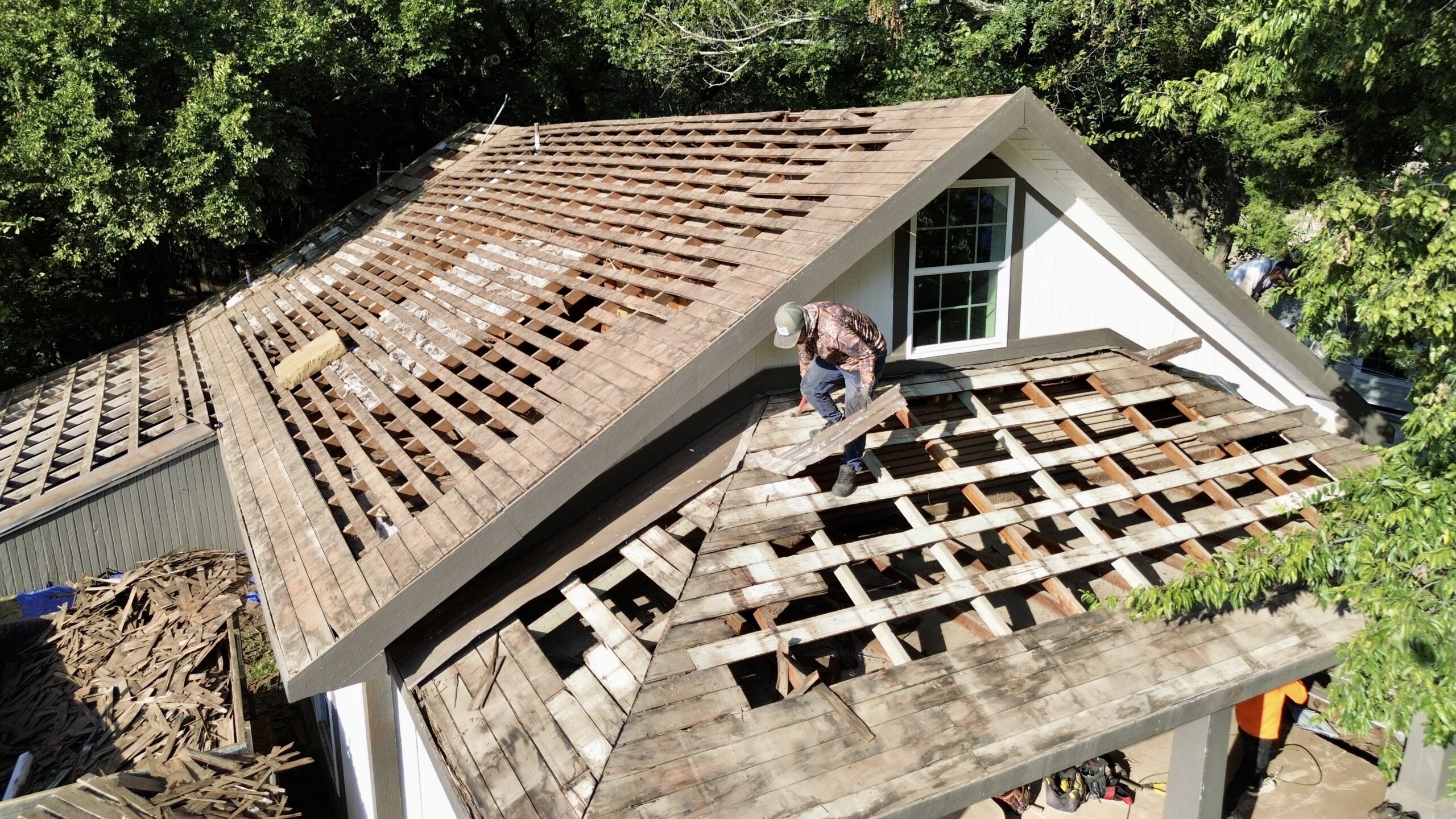
Roof decking is one of the most common hidden expenses. Moisture entering through damaged shingles may weaken plywood or oriented strand board beneath the roof surface. Once contractors remove roofing materials, deteriorated decking often requires replacement before work can continue.
Flashing also contributes to unexpected costs. Older flashing around chimneys, skylights, roof valleys, and plumbing vents may no longer provide dependable moisture protection. Even repair projects occasionally require flashing replacement to ensure long-term performance.
Underlayment represents another hidden component affecting project costs. Aging underlayment may have deteriorated over time, making replacement necessary even if only a portion of the roof is being repaired. During full replacement, installing new underlayment is generally considered standard practice.
Structural framing repairs occasionally become necessary as well. Wood rot, moisture damage, deteriorated fascia boards, or weakened rafters increase labor and material expenses regardless of whether homeowners initially planned repairs or replacement.
Permit fees, inspections, cleanup, and waste disposal also contribute to total project costs. Although these expenses are often smaller than structural repairs, they remain essential parts of professional roofing work and should not be overlooked during budgeting.
Temporary weather protection sometimes adds additional labor if changing weather interrupts construction. Contractors may install protective coverings to shield exposed roof sections until work resumes, particularly during larger replacement projects.
Recognizing these hidden expenses helps homeowners prepare more realistic budgets while understanding that both repairs and replacement occasionally involve costs beyond the original estimate.
Repair Versus Replacement Cost Comparison
Comparing roof repair and roof replacement side by side helps homeowners evaluate more than the immediate project price. Looking at maintenance, lifespan, efficiency, and long-term value provides a broader understanding of the financial impact associated with each option.
The following table summarizes the major financial differences between repairing an existing roof and investing in a complete replacement.
| Comparison Factor | Roof Repair | Roof Replacement |
|---|---|---|
| Initial Cost | Lower upfront investment | Higher upfront investment |
| Project Duration | Usually shorter | Typically longer |
| Maintenance Requirements | May require additional future repairs | Usually minimal during early years |
| Expected Remaining Lifespan | Depends on roof age and condition | New service life begins |
| Energy Efficiency | Limited improvement | Often significantly improved |
| Property Value Impact | Maintains value if roof remains in good condition | Often increases market appeal and resale value |
| Warranty Coverage | Limited to repaired area in many cases | New material and workmanship warranties |
| Long-Term Financial Value | Best for newer roofs with isolated damage | Best for aging roofs with widespread deterioration |
This comparison illustrates that the most affordable short-term solution is not always the least expensive over the long run. Homeowners should evaluate the overall condition of the roof, expected future maintenance costs, and long-term ownership plans before deciding between repair and replacement.
A professional roof inspection provides valuable guidance when making this comparison. Contractors evaluate structural condition, material age, damage severity, and repair history to recommend the option that offers the strongest financial value for the specific roofing system.
How to Decide Between Repair and Replacement
Choosing between repairing a roof and replacing it requires evaluating much more than the immediate cost. A careful assessment of the roof’s condition, age, repair history, and expected lifespan helps homeowners make a financially sound decision that balances short-term affordability with long-term value.
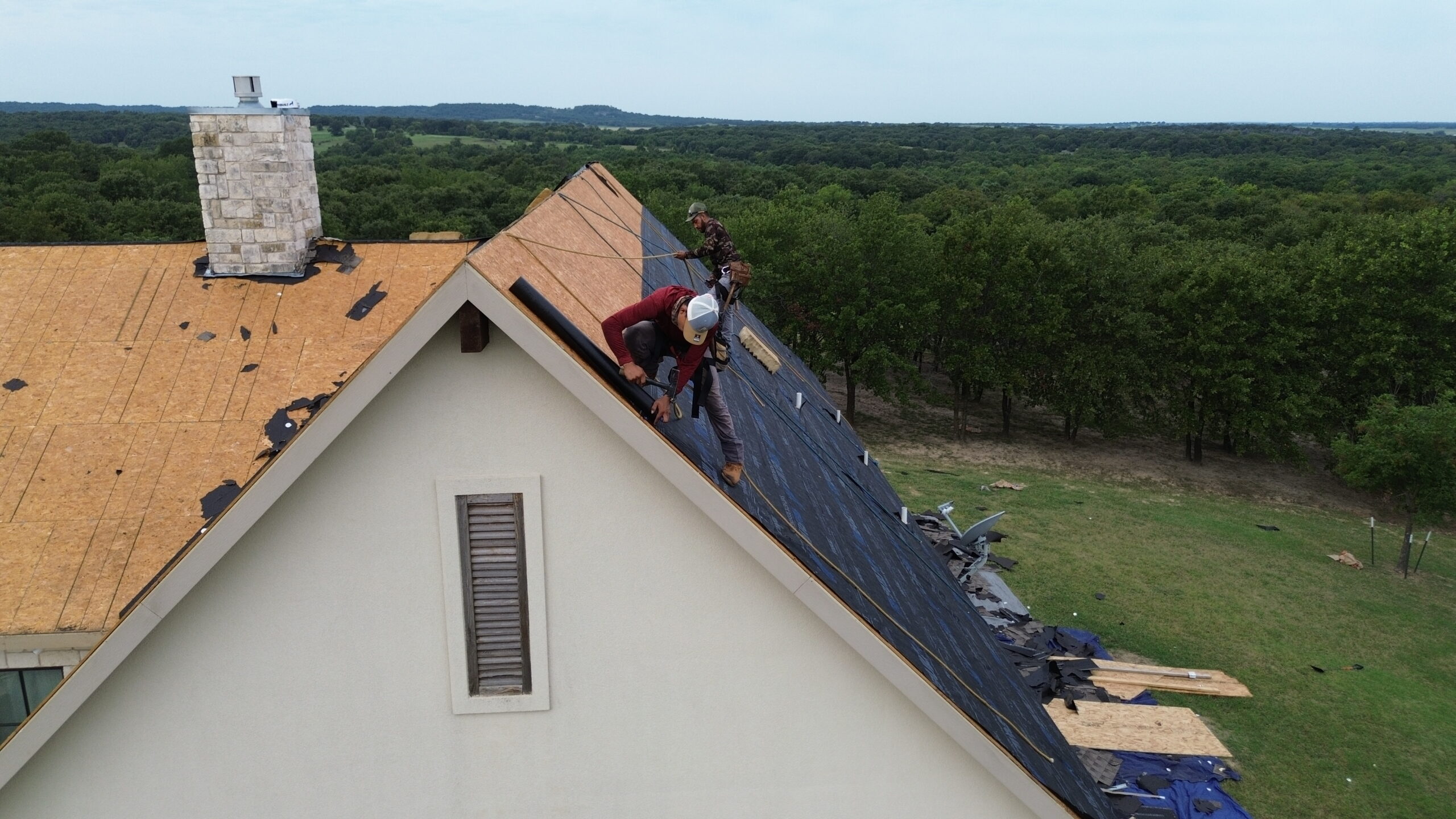
The first step is understanding the overall condition of the roofing system rather than focusing only on the visible problem. A small leak, for example, may result from a localized flashing issue, or it may indicate widespread deterioration affecting multiple roof sections. A professional inspection helps identify the true source of the problem.
Future ownership plans also influence the decision. Homeowners planning to remain in their property for many years often benefit from investing in a complete replacement if the roof is nearing the end of its lifespan. Those expecting to move soon may evaluate the situation differently depending on the roof’s condition and local real estate market.
The following checklist provides a practical approach for evaluating repair versus replacement.
- Determine the roof’s current age and expected remaining lifespan.
- Identify whether the damage is isolated or widespread.
- Review the history of previous roof repairs.
- Request a professional inspection of the roof structure and decking.
- Compare the cost of immediate repairs with long-term maintenance expenses.
- Evaluate available warranties for repair and replacement options.
- Consider future ownership plans and property value.
- Compare multiple contractor recommendations before making a final decision.
Following this process helps homeowners avoid making decisions based solely on immediate repair costs. Looking at the complete financial picture often leads to more confident and cost-effective roofing decisions.
Budget Planning for Either Decision
Whether homeowners choose roof repair or complete replacement, careful financial planning helps prevent unnecessary stress during the project. Creating a realistic budget allows for better decision-making while reducing the impact of unexpected expenses that may arise during construction.
The first step is requesting detailed written estimates from several experienced roofing contractors. Comparing multiple proposals helps homeowners understand average pricing while identifying differences in project scope, material quality, warranty coverage, and included services.
A contingency fund should be included regardless of the chosen solution. Hidden roof decking damage, flashing replacement, structural repairs, or ventilation improvements sometimes become necessary after roofing materials are removed. Setting aside additional funds allows these repairs to be completed without delaying the project.
Homeowners considering complete replacement may also explore financing options before work begins. Personal savings, contractor financing, home improvement loans, or home equity financing can help spread project costs over time while preserving financial flexibility.
Budget planning should also include future maintenance expenses. Repairs may require additional maintenance over the coming years, while replacement generally involves lower maintenance costs during the early portion of the roof’s lifespan.
Warranty coverage contributes additional financial value. Manufacturer warranties and workmanship guarantees may reduce future repair costs while increasing confidence in the quality of the completed project.
Reviewing payment schedules before signing a contract is equally important. Understanding deposit requirements, progress payments if applicable, and final payment expectations helps homeowners prepare financially throughout the roofing project.
A carefully prepared budget supports both repair and replacement decisions by ensuring homeowners understand the complete financial commitment rather than focusing only on the initial invoice.
Ways to Reduce Overall Roofing Costs
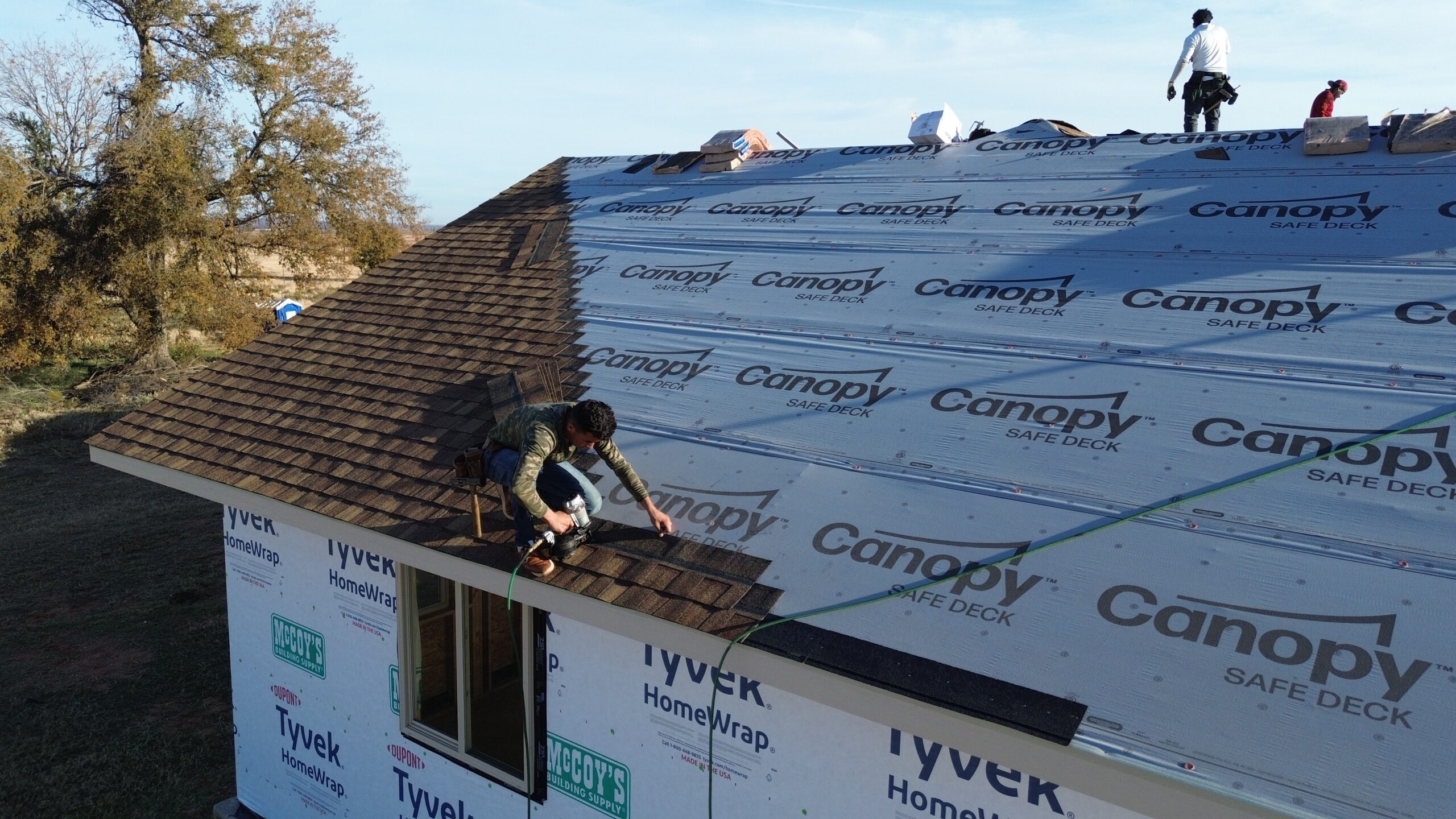
Although roofing projects represent significant investments, homeowners can often reduce total costs without sacrificing quality. Thoughtful planning and regular maintenance help control expenses while protecting the long-term performance of the roofing system.
The following practical strategies can help lower overall roofing costs.
- Schedule professional roof inspections regularly to identify small problems early.
- Repair isolated damage promptly before it spreads into structural components.
- Keep gutters and roof drainage systems clean to reduce moisture-related deterioration.
- Compare several detailed contractor estimates before making a decision.
- Choose roofing materials that provide strong long-term value rather than only the lowest purchase price.
- Maintain proper attic ventilation to extend roofing material lifespan.
- Replace aging roofs before widespread structural damage develops.
- Select experienced roofing professionals with strong workmanship warranties.
Reducing costs should never involve eliminating essential roofing components or accepting poor installation quality. Investing in dependable materials and experienced contractors generally produces lower ownership costs over the life of the roof.
Consistent preventive maintenance also reduces the likelihood of major repairs. Small investments in routine inspections often prevent expensive structural damage that develops when roofing problems remain unnoticed.
Common Financial Mistakes Homeowners Make
Many homeowners unintentionally increase roofing expenses by making decisions based only on immediate costs. Understanding these common financial mistakes helps avoid unnecessary spending while improving long-term roof performance.
One of the most frequent mistakes is delaying replacement after the roof has already reached the end of its service life. Continuing repairs on severely deteriorated roofing materials often results in recurring maintenance costs that eventually exceed the cost of installing a new roof.
Another mistake is automatically choosing the least expensive repair option without evaluating the roof’s overall condition. A low-cost repair may temporarily stop a leak while allowing hidden deterioration to continue spreading beneath the roofing surface.
Ignoring hidden structural damage also creates financial risks. Moisture-damaged decking, deteriorated flashing, inadequate ventilation, or wood rot often remain concealed until roofing materials are removed. Failing to address these problems during repairs or replacement usually increases future expenses.
Some homeowners compare roofing estimates based only on the total price. Proposals that omit flashing replacement, underlayment, permits, cleanup, or warranty coverage may appear less expensive initially but often cost more after additional services are added.
Waiting until emergency leaks develop is another common mistake. Emergency roofing projects frequently limit contractor availability, reduce material options, and create pressure to make quick financial decisions without adequate comparison.
Overlooking warranty protection may also reduce long-term value. Strong manufacturer warranties and workmanship guarantees provide important financial protection that should be considered when comparing repair and replacement options.
Avoiding these mistakes allows homeowners to make more informed roofing decisions while reducing unnecessary long-term ownership costs.
Why Long-Term Value Matters More Than Initial Cost
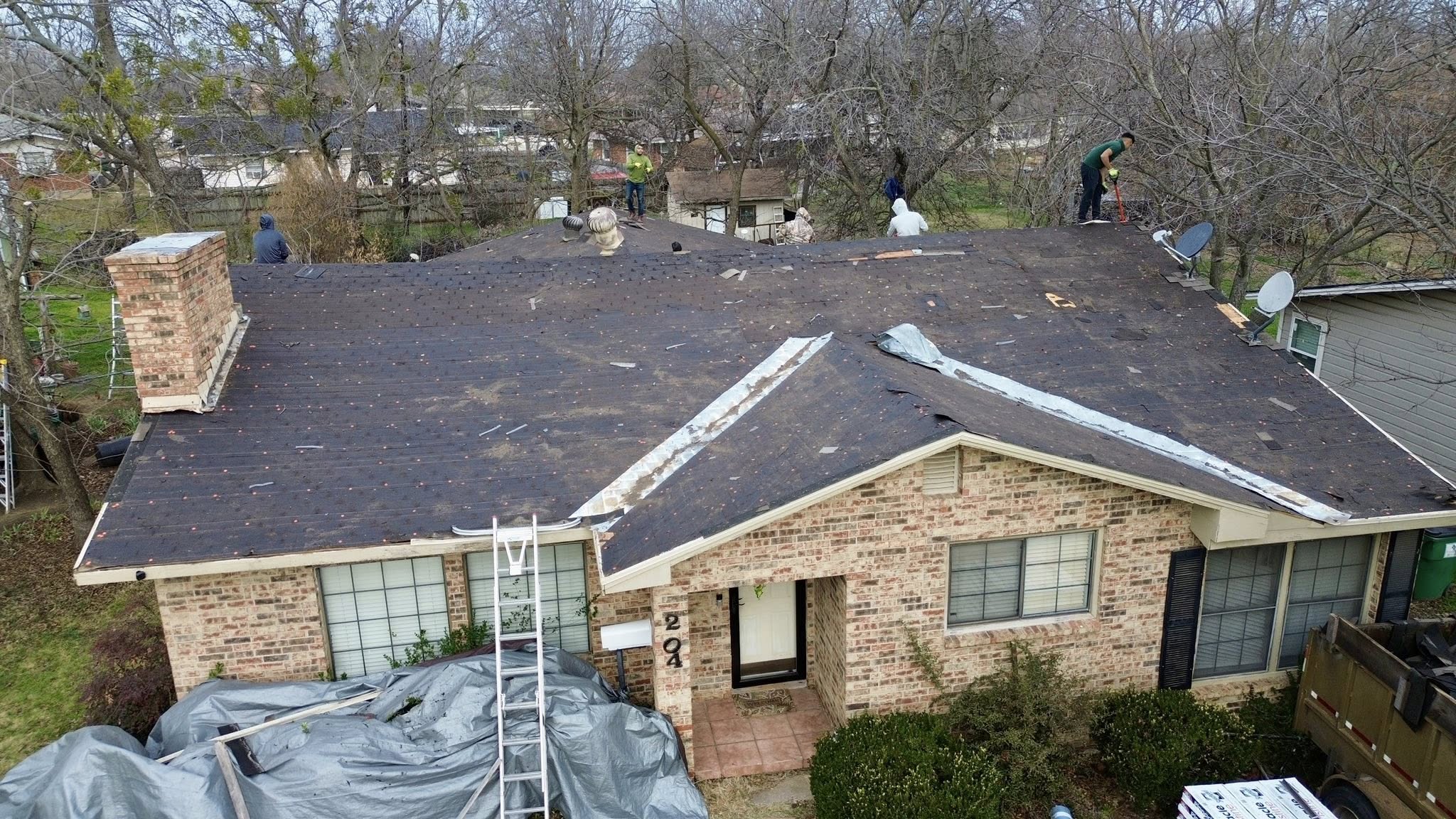
The initial cost of a roofing project often receives the most attention, but long-term ownership expenses usually provide a much more meaningful measure of financial value. Looking beyond today’s repair bill helps homeowners understand the total investment required throughout the roof’s lifespan.
Repeated repairs may appear inexpensive individually, yet ongoing maintenance gradually increases total ownership costs. Multiple service visits, recurring leaks, interior repairs, and continued material deterioration often create higher long-term expenses than homeowners initially expect.
Complete roof replacement provides a new roofing system designed to perform reliably for decades. Modern materials, improved underlayment, updated flashing, and better ventilation reduce maintenance requirements while improving weather protection and energy efficiency.
Warranty coverage also contributes to long-term value. New roofing systems often include manufacturer warranties on materials along with workmanship guarantees from the contractor. These protections reduce future repair costs while increasing confidence in the investment.
Energy savings further strengthen the financial benefits of replacement. Improved attic ventilation, updated insulation, and modern roofing materials often reduce heating and cooling expenses throughout the year, gradually offsetting part of the initial replacement cost.
Property value should also be considered. A professionally installed roof enhances curb appeal, increases buyer confidence, and often improves resale potential. These advantages provide financial returns that extend well beyond the roofing project itself.
Evaluating total ownership costs instead of focusing only on immediate expenses helps homeowners select roofing solutions that provide greater financial stability over many years.
Conclusion
Choosing between roof repair and roof replacement is one of the most important financial decisions homeowners make regarding their property. While repairs usually require a smaller upfront investment, replacement often delivers greater long-term value by reducing maintenance expenses, improving energy efficiency, increasing property value, and providing decades of dependable protection. Understanding these differences allows homeowners to evaluate the complete financial picture instead of focusing only on today’s costs.
Throughout this guide, we compared the major factors that influence repair and replacement decisions. Roof age, damage severity, maintenance history, roofing materials, energy performance, insurance considerations, hidden structural repairs, and future ownership plans all play significant roles in determining which option provides the better financial outcome. Every roofing situation is unique, making professional evaluation an essential part of the decision-making process.
The lowest immediate cost is not always the most economical choice over the life of the roof. Repeated repairs on an aging roofing system often become increasingly expensive while failing to address widespread deterioration. In contrast, a complete replacement requires greater initial investment but frequently reduces long-term maintenance costs while providing stronger warranty protection and improved overall performance.
Careful budgeting also supports better roofing decisions. Comparing detailed contractor estimates, maintaining a contingency fund, reviewing warranty coverage, and understanding financing options help homeowners prepare for both expected and unexpected project expenses. Financial planning reduces stress while allowing informed choices based on quality and long-term value rather than urgency.
Ultimately, the decision between repair and replacement should be based on the condition of the entire roofing system rather than the cost of a single repair. A professional roof inspection provides valuable insight into structural integrity, remaining service life, and hidden damage that may not be visible from the surface. By considering long-term ownership costs alongside immediate expenses, homeowners can invest confidently in the solution that offers the greatest protection for their home and the strongest financial value for years to come.